

guide • Coat Care
Weekly Coat Care Planner for Busy Pet Owners (That Actually Works)
A practical weekly coat care planner with clear options, tools, and tradeoffs—so your pet stays comfortable and your home stays less furry.
By Lucy Anderson • February 24, 2026 • 7 min read
Table of contents
- What actually matters in this comparison
- 1) Mat and tangle prevention (comfort + vet/groomer avoidance)
- 2) Shedding control (home cleanliness vs coat health)
- 3) Skin/scalp hygiene (dander, odor, itch)
- 4) Pet cooperation (the routine you can do, not the routine you admire)
- 5) Owner time friction (setup, cleanup, mental load)
- Baseline criteria and scoring method
- Criteria (score each 1–5)
- The four planner options we’ll compare
- Side-by-side workflow analysis
- Option A: Daily Micro-Sessions (5–7 minutes/day)
- Option B: Split Week (Mon/Wed/Fri, 10–15 minutes)
- Option C: Weekend Reset (1 session, 25–40 minutes)
- Option D: Hybrid + Seasonal Boost (the “real life” plan)
- Scoring snapshot (typical household)
- Cost, effort, and consistency tradeoffs
- The honest tradeoff triangle
- Tool selection: where money actually changes outcomes
- Effort budgeting: what busy owners underestimate
- Which option wins by user profile
- Profile 1: “I have 5 minutes, not 30.”
- Profile 2: “My dog mats if I blink.” (doodles, curly coats, long coats)
- Profile 3: “Double-coated, seasonal fur explosions.”
- Profile 4: “My pet hates grooming.”
- Profile 5: “Multi-pet home, limited bandwidth.”
- Transition strategy if changing tools
- Week 1: Reduce resistance, build the cue
- Week 2: Add the “power tool” strategically
- If you’re currently behind (tangles starting)
- Common decision mistakes
- 1) Picking a schedule that fits your ideal week
- 2) Using a de-shedding tool as your everyday brush
- 3) Ignoring friction zones
- 4) Pressing harder instead of changing technique
- 5) Overbuying tools before proving the routine
- Final recommendation framework
- Step 1: Identify coat risk level
- Step 2: Choose the smallest plan that covers your risk
- Step 3: Pick tools based on the job, not hype
- Step 4: Make it measurable
Busy schedule or not, coat care only works when it’s consistent. A solid weekly coat care planner isn’t about doing “more grooming”—it’s about choosing the smallest routine that reliably prevents mats, reduces shedding mess, and keeps skin healthy.
This guide is comparison-led: you’ll see a few realistic planner styles (not one-size-fits-all), how they score, and what you give up when you choose one.
What actually matters in this comparison
The best weekly coat care planner is the one you can repeat on your worst week. When you compare routines, focus on outcomes that matter to real pets and real households:
1) Mat and tangle prevention (comfort + vet/groomer avoidance)
- •High priority for doodles, long-haired cats, double-coated dogs with dense undercoat, seniors who groom themselves less.
- •Tradeoff: routines that prevent mats usually require either more frequent brushing or better technique (line-brushing), not just “a quick swipe.”
2) Shedding control (home cleanliness vs coat health)
- •High priority for short-haired cats and double-coated dogs during seasonal blowouts.
- •Tradeoff: aggressive de-shedding too often can irritate skin or damage coat; gentler tools take longer and may not satisfy “I need less fur today.”
3) Skin/scalp hygiene (dander, odor, itch)
- •Brushing isn’t just hair removal—it distributes oils and lets you spot flakes, redness, parasites, or hot spots.
- •Tradeoff: skipping the “check” step saves 60 seconds now but costs you later when a small issue becomes a vet visit.
4) Pet cooperation (the routine you can do, not the routine you admire)
- •A pet who tolerates 3 minutes daily often does better than one who fights a 30-minute weekly session.
- •Tradeoff: shorter sessions mean you need a plan that hits all body zones across the week.
5) Owner time friction (setup, cleanup, mental load)
- •The enemy is not brushing—it’s the “I should… but I don’t have time to start” feeling.
- •Tradeoff: a more “complete” toolkit can reduce time per session, but it increases purchase cost and decision fatigue.
Baseline criteria and scoring method
To compare planner styles honestly, use the same scoring lens. Here’s a simple 5-point system (5 = best) that balances results with real-life consistency.
Criteria (score each 1–5)
- Consistency likelihood: Will you actually do it on a busy week?
- Mat prevention power: Does it reliably prevent tangles/mats for your coat type?
- Shedding reduction: Does it noticeably reduce loose hair in the home?
- Pet tolerance: Does your pet stay calm enough to finish?
- Time efficiency: Results per minute (including cleanup).
- Cost efficiency: Tool cost + replacement needs vs benefit.
The four planner options we’ll compare
- •Option A: Daily Micro-Sessions (5–7 minutes/day)
- •Option B: Split Week (Mon/Wed/Fri, 10–15 minutes each)
- •Option C: Weekend Reset (1 longer session, 25–40 minutes)
- •Option D: Hybrid + Seasonal Boost (short sessions + a targeted de-shed block during shedding weeks)
Why these? Because they match how busy people actually schedule life: tiny daily habits, a few fixed weekdays, a weekend chore, or a hybrid anchored by seasons.
Side-by-side workflow analysis
Below is the practical difference between the four approaches—who they fit and what tends to break.
Option A: Daily Micro-Sessions (5–7 minutes/day)
Best for: anxious pets, owners with unpredictable schedules, homes that hate shed hair.
Workflow:
- Set a timer for 5–7 minutes.
- Do one body “zone” per day (rotate): back/sides, chest/legs, belly/armpits, tail/butt fluff, neck/ruff.
- End with a 20-second skin check (fleas, redness, dandruff, lumps).
What you gain:
- •Highest compliance for many busy owners because it doesn’t feel like a project.
- •Great for building tolerance in cats and sensitive dogs.
What you give up:
- •You might not fully “finish” the coat in one sitting, so you need a rotation plan.
- •Severe undercoat blowouts may outpace a tiny daily routine unless you add a shedding boost.
Tools that make this easier:
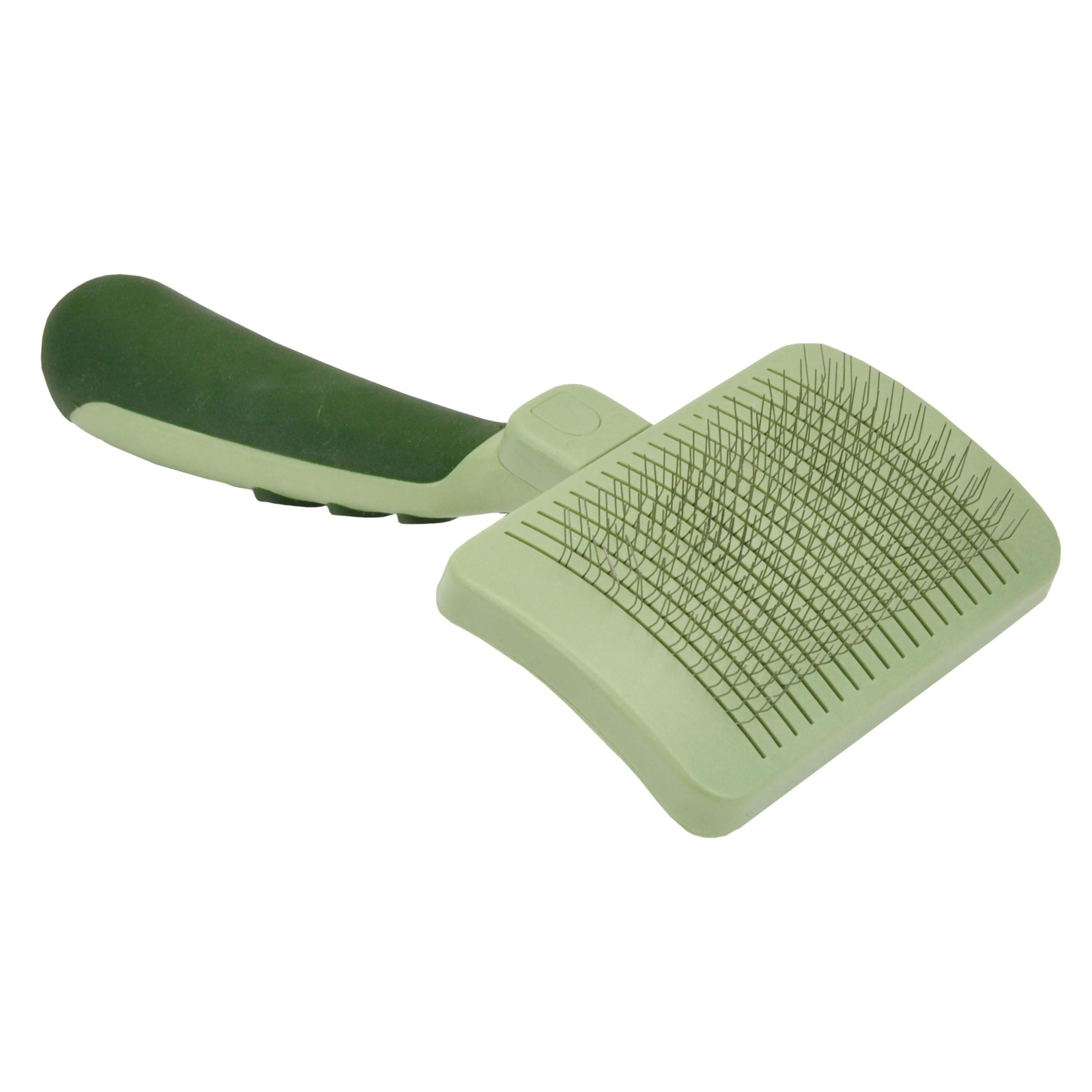
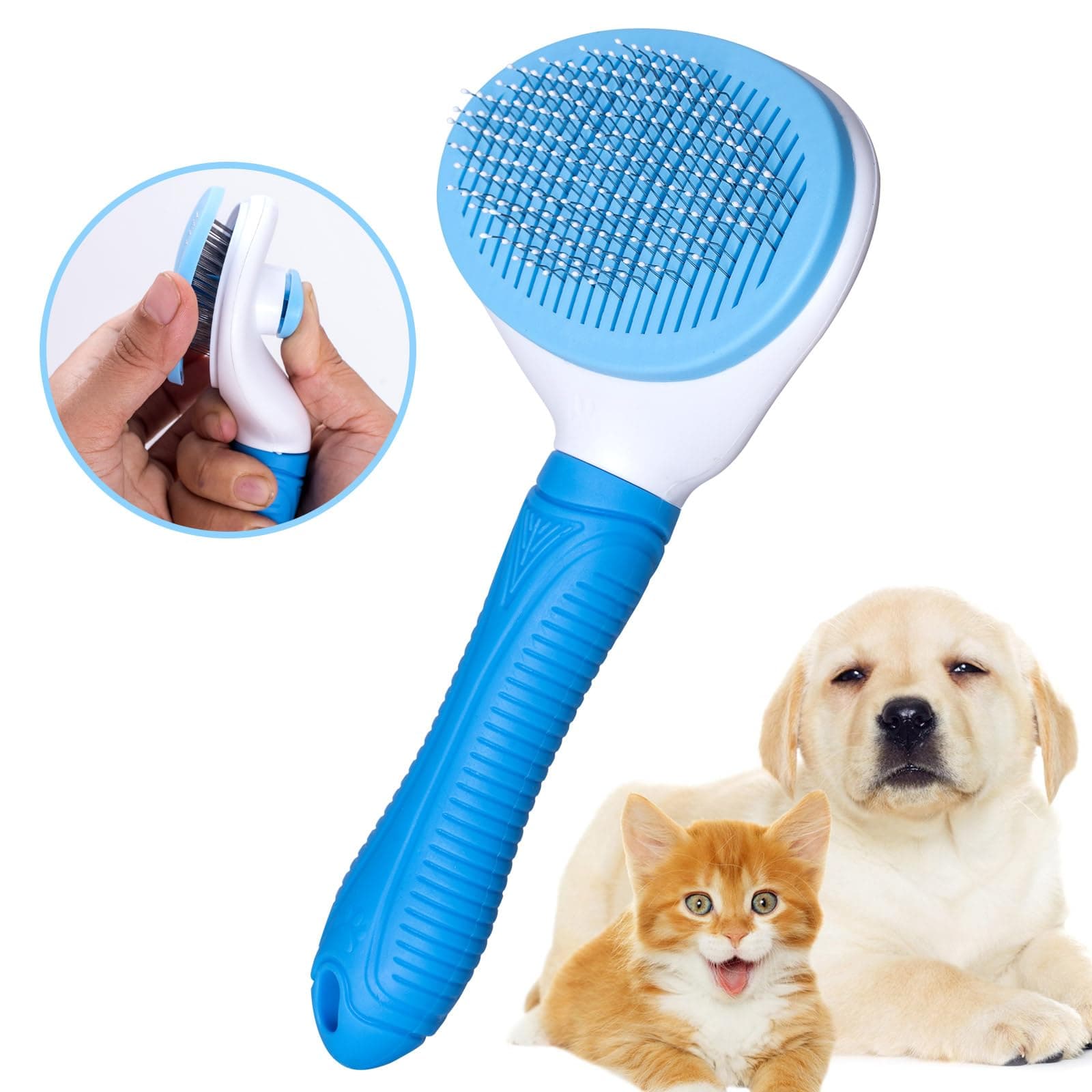
- •For cats who dislike long brushing sessions: a self-cleaning slicker can reduce stop-and-start frustration. Consider the Coastal Pet Safari - Cat Self-Cleaning Slicker Brush - Cat Grooming Supplies for quick daily passes and faster cleanup.
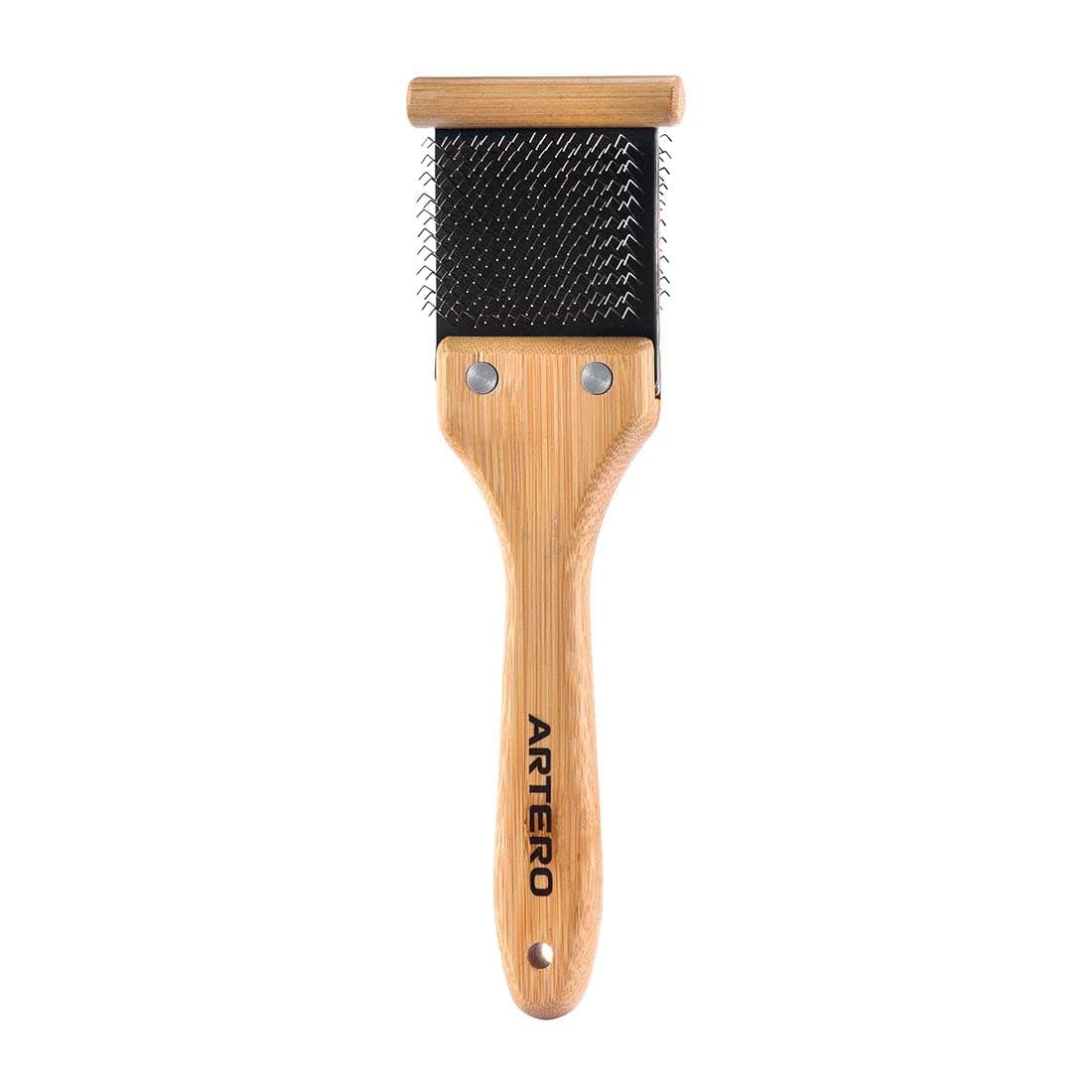
- •For sensitive pets or owners who want one brush that can do “good enough” across zones: the flexible design of the Artero Double Flexible Brush (2 in 1) (S - Nature Collection) can be a practical daily driver, especially for light tangles and routine smoothing.
Option B: Split Week (Mon/Wed/Fri, 10–15 minutes)
Best for: owners who like a schedule, medium-to-high grooming needs, multi-pet homes.
Workflow:
- •Mon: detangle + friction zones (collar area, behind ears, armpits, groin)
- •Wed: undercoat/shedding pass (if applicable)
- •Fri: full-body tidy + nail/ear quick check
What you gain:
- •More “complete” coverage than daily micro-sessions, but still not a giant block.
- •Easy to attach to existing routines (trash night, gym days, etc.).
What you give up:
- •Miss one session and you feel behind; two missed sessions can snowball into tangles.
- •Some pets reset emotionally between sessions and still resist.
Tool pairing that fits this option:
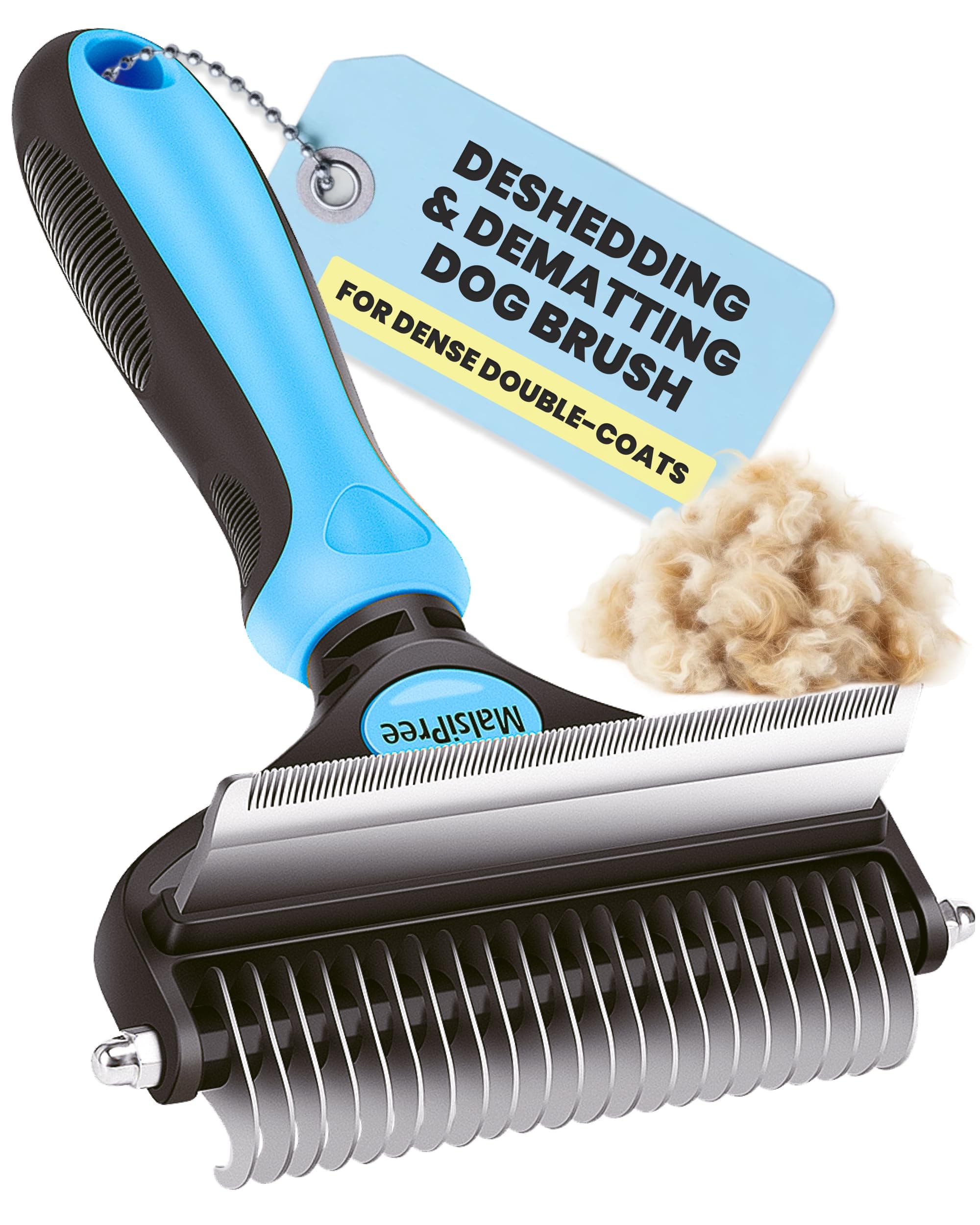
- •Double-coated dogs (Huskies, Goldens, German Shepherds) do well with a dual-purpose tool on the detangle day. The MalsiPree Dog Brush for Shedding - Large, Blue, 2-in-1 - Deshedding Dog Grooming Brush & Undercoat Rake with Dematting Comb for medium to Large Double Coated is useful when your weekly coat care planner needs both dematting capability and undercoat reach—just keep pressure light and prioritize short strokes.
Option C: Weekend Reset (1 session, 25–40 minutes)
Best for: owners who genuinely cannot do weekdays, low-mat-risk coats, pets who tolerate long handling.
Workflow:
- 5 minutes: prep (treats, towel under pet, brush + comb ready).
- 15–25 minutes: methodical full-body brushing.
- 3 minutes: paw pad check + skin scan.
- 2 minutes: quick wipe-down or coat finishing pass.
What you gain:
- •One calendar block—simple mental load.
- •Easy to pair with laundry/house cleaning day.
What you give up (important):
- •Higher mat risk for curly coats and long coats because tangles have a full week to set.
- •Higher pet resistance if your pet gets overstimulated; long sessions often end with both of you frustrated.
Who should avoid this:
- •Doodles, Poodles, long-haired cats, and any pet who already has friction mats (behind ears/armpits). If you choose weekend-only anyway, you’ll likely pay for it with grooming appointments or shaving.
Option D: Hybrid + Seasonal Boost (the “real life” plan)
Best for: most households—especially double-coated dogs and heavy-shedding cats.
Workflow (example):
- •Tue/Thu: 6–8 minute micro-brush (friction zones + quick body pass)
- •Weekend: 15–20 minute full-body session
- •Shedding weeks (spring/fall): add one targeted de-shed block (10 minutes) midweek
What you gain:
- •The best balance of consistency and results.
- •You prevent mats and control shedding without needing daily grooming.
What you give up:
- •Requires you to recognize “shedding season” and adjust; if you ignore the boost, your couch will tell you.
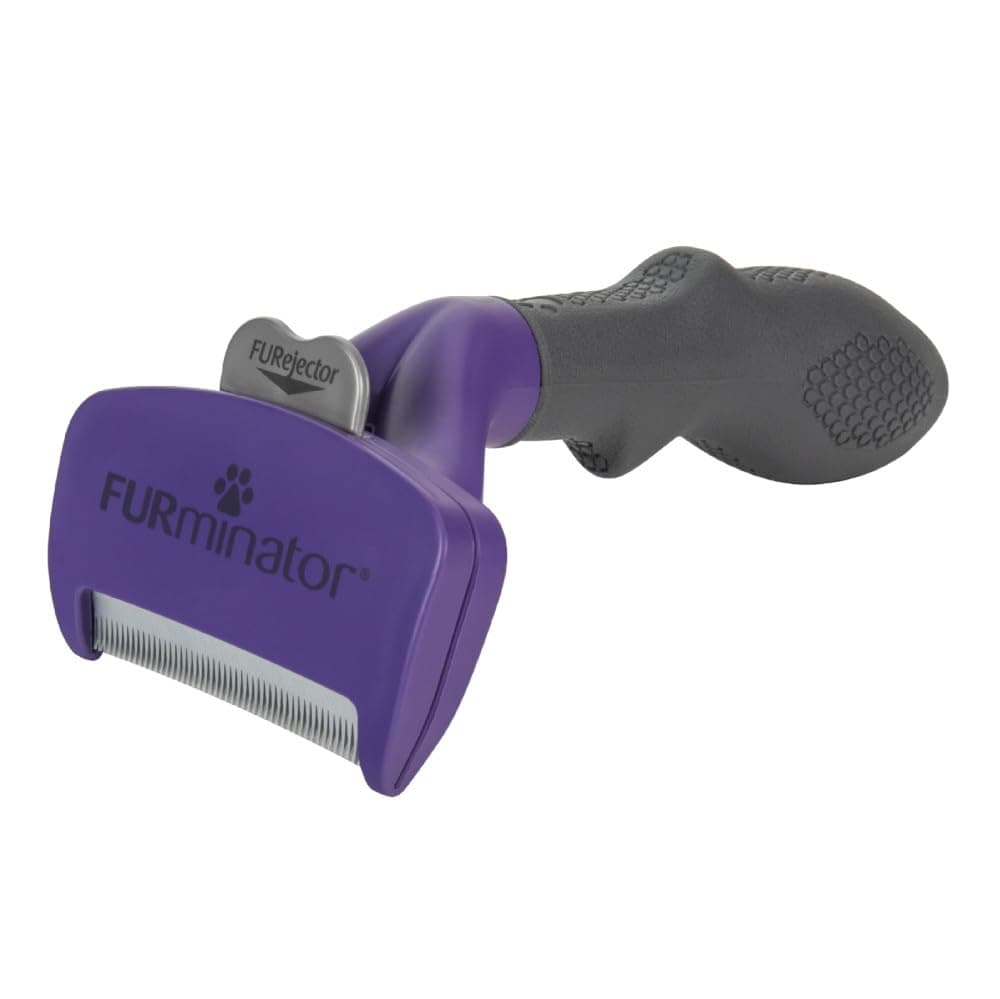
Cat-specific shedding tool note: For short-haired cats that carpet the house during shedding surges, a de-shedding tool can be efficient—when used correctly and not overused. The FURminator deShedding Tool For Medium/Large Cats, Short Hair, Removes Loose Hair From Shedding can reduce loose hair fast, but the tradeoff is that heavy pressure or too-frequent sessions may irritate skin. In a weekly coat care planner, treat it like a “boost” tool (1x/week or less during peaks), not your daily brush.
Scoring snapshot (typical household)
(Your results vary by coat type, but this is a realistic baseline.)
- •Option A (Daily Micro): Consistency 5, Mats 4, Shedding 3, Tolerance 5, Time efficiency 4, Cost 4
- •Option B (Split Week): Consistency 4, Mats 4, Shedding 4, Tolerance 4, Time efficiency 4, Cost 4
- •Option C (Weekend Reset): Consistency 3, Mats 2, Shedding 3, Tolerance 2–4, Time efficiency 3, Cost 5
- •Option D (Hybrid + Boost): Consistency 4, Mats 5, Shedding 5, Tolerance 4, Time efficiency 5, Cost 3–4
Cost, effort, and consistency tradeoffs
A weekly coat care planner fails for three predictable reasons: the routine is too long, the tool is wrong, or the plan ignores coat biology.
The honest tradeoff triangle
You can reliably optimize two of these; the third usually suffers:
- •Low effort (short sessions)
- •Low cost (minimal tools)
- •High results (mats prevented + shedding reduced)
Examples:
- •If you want low effort + high results, you usually need better tools (higher upfront cost).
- •If you want low cost + high results, you’ll pay with time/technique (more frequent brushing, line-brushing).
- •If you want low effort + low cost, accept moderate results (some shedding, higher mat vigilance).
Tool selection: where money actually changes outcomes
- •Slicker brush (cats and many dogs): Great for surface coat and light tangles; faster daily compliance. Tradeoff: can scratch if you press too hard or use on very sensitive skin.
- •Flexible 2-in-1 brush: Convenient “one tool” approach that reduces decision fatigue. Tradeoff: may not penetrate dense undercoat as effectively as a dedicated rake.
- •Undercoat rake / dematting comb combo: Strong for double coats and packed undercoat. Tradeoff: more technique required; misuse can yank hair and create aversion.
- •De-shedding blade-style tools: Very efficient for loose hair on short coats. Tradeoff: overuse can irritate; not ideal for mats.
Effort budgeting: what busy owners underestimate
- •Cleanup time matters. A self-cleaning feature can be the difference between “I’ll do it” and “I’ll do it later.”
- •Friction zones create most emergencies: behind ears, collar line, armpits, inner thighs, tail base. A planner that ignores these is not a real planner.
Which option wins by user profile
Use these profiles to pick a default plan, then adjust.
Profile 1: “I have 5 minutes, not 30.”
- •Winner: Option A (Daily Micro) or Option D (Hybrid)
- •Why: Your bottleneck is starting. Micro-sessions reduce procrastination.
- •Example: A short-haired cat who sheds heavily: 5 minutes daily with a slicker + 1 weekly shedding boost is often more sustainable than a weekend marathon.
Profile 2: “My dog mats if I blink.” (doodles, curly coats, long coats)
- •Winner: Option D (Hybrid + Boost)
- •Why: Mat prevention requires frequency and zone priority.
- •Non-negotiable: friction-zone checks 2–3x/week. If you find tight tangles behind the ears, your weekly coat care planner needs more touchpoints, not a longer once-weekly session.
Profile 3: “Double-coated, seasonal fur explosions.”
- •Winner: Option B or D
- •Why: Undercoat management responds well to scheduled sessions.
- •Example: A Golden Retriever in spring: Mon detangle, Wed undercoat rake, Sat full-body. Skip Wednesday and you’ll feel it on your floors.
Profile 4: “My pet hates grooming.”
- •Winner: Option A, then graduate to D
- •Why: You’re training tolerance as much as removing hair.
- •Practical rule: stop while it’s going well. Two minutes of calm brushing beats ten minutes of wrestling.
Profile 5: “Multi-pet home, limited bandwidth.”
- •Winner: Option B
- •Why: Fixed days prevent decision fatigue.
- •Tip: assign each pet a day “theme” (Cat A: slicker day, Cat B: shedding day) so you don’t switch tools constantly.
Transition strategy if changing tools
If you’re switching from random brushing to a weekly coat care planner—or changing tools—make it a two-week transition to avoid setbacks.
Week 1: Reduce resistance, build the cue
- •Keep sessions short and predictable (2–6 minutes).
- •Pair grooming with a consistent reward (treat, lick mat, favorite window perch).
- •Use a gentler “daily driver” brush first (for many, a slicker or flexible brush), even if it’s not the most powerful shedding tool.
Week 2: Add the “power tool” strategically
- •Introduce undercoat rake or de-shedding tool 1x during the week, not daily.
- •Watch for warning signs: skin redness, dandruff flare, pet avoiding touch the next day. If you see these, scale back frequency or pressure.
If you’re currently behind (tangles starting)
- •Don’t jump straight to a long session. Do two short sessions in one day (morning/evening) focusing only on friction zones.
- •If a mat is tight to the skin, avoid yanking—this is where a professional groomer is safer than “powering through” at home.
Common decision mistakes
These are the mistakes that make owners think coat care “doesn’t work,” when the plan was just mismatched.
1) Picking a schedule that fits your ideal week
If your planner only works when you have extra time, it’s not a planner—it’s a wish.
2) Using a de-shedding tool as your everyday brush
Tools like the FURminator deShedding Tool For Medium/Large Cats, Short Hair, Removes Loose Hair From Shedding can be great, but daily use is a common path to irritation. Put it in the “boost” slot, not the “daily habit” slot.
3) Ignoring friction zones
Most painful mats form where collars rub and legs move. Your weekly coat care planner should explicitly name: behind ears, armpits, groin, tail base.
4) Pressing harder instead of changing technique
If brushing “isn’t working,” pressing harder usually makes pets hate it. Better options: smaller sections, shorter strokes, different tool, or more frequent sessions.
5) Overbuying tools before proving the routine
A perfect toolkit doesn’t matter if it stays in a drawer. Prove consistency with one brush first, then add a specialized shedding or undercoat tool if the results justify it.
Final recommendation framework
Use this step-by-step framework to choose a weekly coat care planner you’ll keep.
Step 1: Identify coat risk level
- •Low risk: short-haired, low-undercoat pets with minimal tangling.
- •Medium risk: regular shedding, mild tangles.
- •High risk: curly/long coats, dense undercoat, frequent mats.
Step 2: Choose the smallest plan that covers your risk
- •Low risk: Option A or C (but add a midweek 3-minute friction-zone check).
- •Medium risk: Option B or D.
- •High risk: Option D (non-negotiable), with friction zones 2–3x/week.
Step 3: Pick tools based on the job, not hype
- •Cats (daily maintenance): Coastal Pet Safari - Cat Self-Cleaning Slicker Brush - Cat Grooming Supplies
- •Cats (shedding boost, short hair): FURminator deShedding Tool For Medium/Large Cats, Short Hair, Removes Loose Hair From Shedding
- •One-brush simplicity (light tangles, routine grooming): Artero Double Flexible Brush (2 in 1) (S - Nature Collection)
- •Dogs with undercoat + tangles: MalsiPree Dog Brush for Shedding - Large, Blue, 2-in-1 - Deshedding Dog Grooming Brush & Undercoat Rake with Dematting Comb for medium to Large Double Coated
Step 4: Make it measurable
Pick one “proof metric” for 14 days:
- •Less fur on your shirt after holding your pet
- •No new tangles behind ears/armpits
- •Pet cooperates without dodging
If your metric doesn’t improve, don’t quit—change one variable: frequency, tool, or session length. That’s how a weekly coat care planner becomes a reliable system instead of another unfinished project.
Coat Care Cluster
More in this topic

guide
Best Dog Brush by Coat Type: Pick the Right Tool Fast

guide
Deshedding Double Coated Dogs: The Ultimate Guide
guide
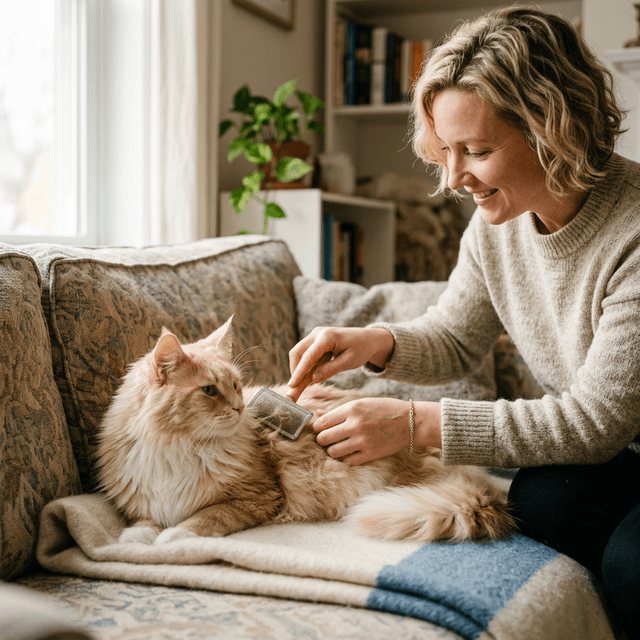
5 Cat Grooming Tips: Signs Your Cat Needs Better Coat Care

guide
Best Grooming Routine by Coat Type: Short, Double, and Curly Coats (Behavior-First Guide)

guide
De-Shedding Routine for Double-Coat Breeds: A Weekly System That Works
guide
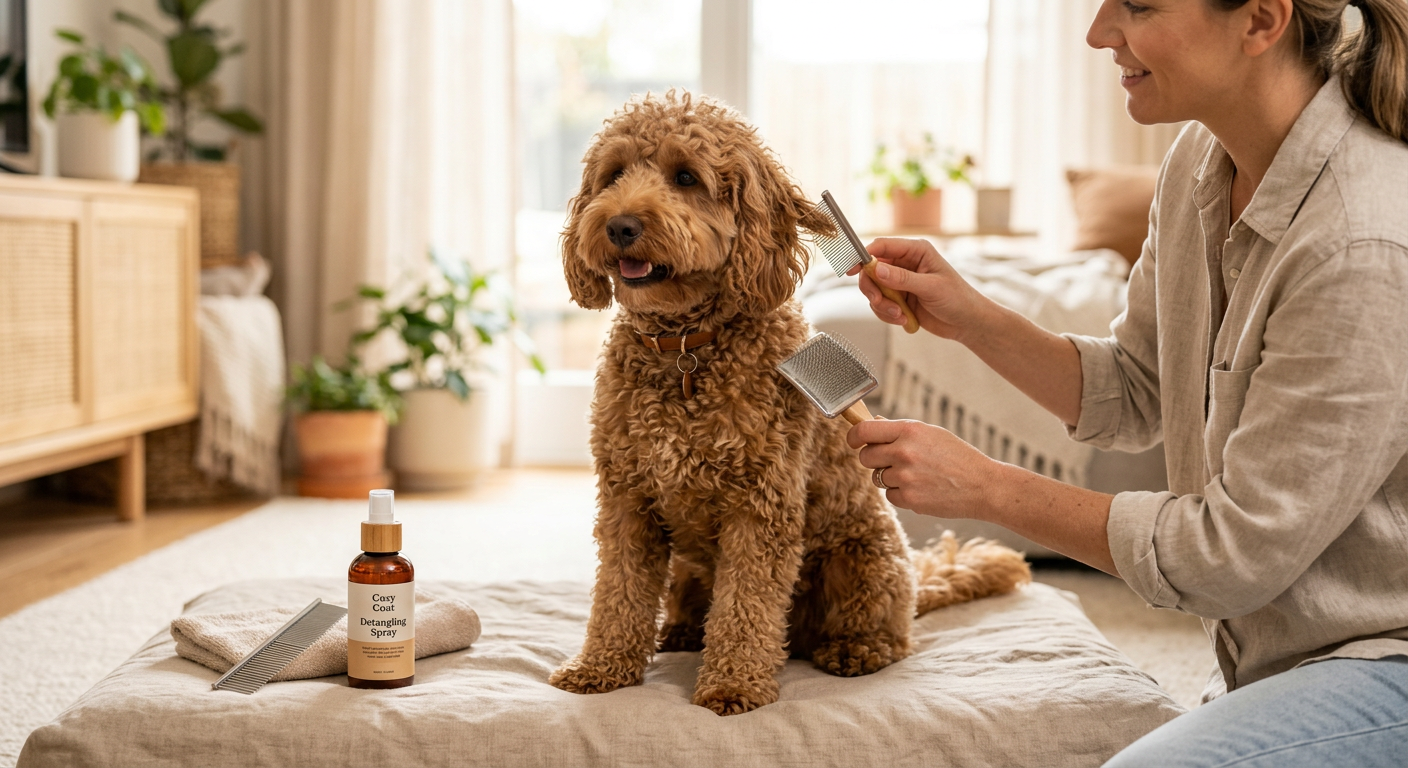
Curly Coat Detangling Routine: Prevent Mats Without Over-Brushing
Frequently asked questions
How often should I use a de-shedding tool in a weekly coat care planner?
For most pets, treat a de-shedding tool as a boost, not a daily brush. During normal weeks, 1x per week is often enough; during peak shedding, you can add one extra short session if your pet’s skin stays calm. Use light pressure and stop if you see redness, flaking, or increased sensitivity the next day.
What’s the best weekly coat care planner for a doodle or curly-coated dog prone to mats?
A hybrid plan wins: two short friction-zone sessions midweek plus one longer full-body session on the weekend. Focus on behind the ears, collar line, armpits, and inner thighs—these areas mat first. If you can only groom once weekly, you’ll likely see mat buildup; increasing frequency (even briefly) matters more than buying another tool.
My cat tolerates brushing for only a minute—what should I do?
Use micro-sessions and end early on purpose. Brush one small zone (like shoulders or back) for 30–60 seconds, reward, and stop before your cat gets annoyed. Repeat daily or every other day. Over time, you can build to 3–5 minutes. Consistency and calm handling beat longer sessions that create avoidance.
