
guide • Coat Care
Deshedding Double Coated Dogs: The Ultimate Guide
Learn how to safely remove loose undercoat without damaging guard hairs. Get the best tools, timing, and technique for cleaner shedding seasons.
By PetCareLab Editorial • March 6, 2026 • 13 min read
Table of contents
- Double Coats 101: What Youre Actually Trying to Remove
- Guard Hair vs Undercoat (And Why It Matters)
- The Shedding Cycle: Why It Comes in Waves
- Set the Goal: Less Hair Everywhere (Not Zero Shedding)
- Normal vs Excessive Shedding: Quick Reality Check
- The Deshedding Toolkit: What Works (And What Causes Damage)
- Tool Comparison: Which One for Which Coat?
- Product Recommendations (Safe, Common Grooming Staples)
- Step-by-Step: The At-Home Deshedding Routine (That Actually Works)
- Step 1: Pre-Check (2 Minutes That Prevent Problems)
- Step 2: Dry Loosening (Great for Light-to-Moderate Shedding)
- Step 3: The Bath + Blowout Method (Best for Coat Blows)
- Step 4: Frequency and Scheduling (A Simple Plan That Sticks)
- Breed Game Plans: What Changes Based on Coat Type
- Nordic and Spitz Types (Husky, Malamute, Akita, Samoyed)
- Herding Double Coats (Aussie, Sheltie, Border Collie)
- Retrievers and Sporting Breeds (Golden Retriever, Labrador Retriever)
- Big Fluffy Guardians (Great Pyrenees, Bernese Mountain Dog)
- Common Mistakes (And What to Do Instead)
- Mistake 1: Shaving a Double Coat "For Summer"
- Mistake 2: Going Too Hard with a Deshedding Blade/Tool
- Mistake 3: Brushing Only the Top Layer
- Mistake 4: Bathing Without Fully Drying
- Mistake 5: Ignoring the Skin
- Pro-Level Tips That Make Deshedding Faster and Kinder
- The "Two-Pass" Rule
- Troubleshooting: When Deshedding Still Feels Like It Does Nothing
- Problem: Impacted Undercoat (Brush Glides Over, Nothing Comes Out)
- Problem: Your Dog Gets Itchy After Grooming
- Problem: Sudden Coat Changes or Patchy Shedding
- Recommended Deshedding Kits (Pick One That Matches Your Life)
- The Starter Kit (Most Homes)
- The Coat-Blow Kit (For Husky Season)
- The Sensitive Skin Kit
- A Simple Weekly Plan You Can Stick To
Double Coats 101: What Youre Actually Trying to Remove
If you want to get good at deshedding double coated dogs, it helps to picture the coat as a layered system, not just "a lot of hair."
Guard Hair vs Undercoat (And Why It Matters)
- •Guard hairs (topcoat): Longer, coarser hairs that repel dirt and moisture and protect the skin from UV and abrasion.
- •Undercoat: Softer, denser fibers that insulate (warmth in winter, cooling buffer in summer).
When you deshed correctly, youre mostly removing loose undercoat and dead hair trapped underneath. When you deshed incorrectly (too aggressive or wrong tool), you can:
- •break guard hairs (leading to frizz and a "moth-eaten" look),
- •irritate the skin,
- •create coat that tangles more easily.
The Shedding Cycle: Why It Comes in Waves
Most double-coated dogs shed year-round, but many do a major coat blow in spring and/or fall. Triggers include:
- •Day length (big driver for seasonal sheds)
- •Indoor heating/AC (can make shedding feel constant)
- •Stress (moving, boarding, new baby, surgery recovery)
- •Hormones/medical issues (thyroid disease, Cushing's, allergies)
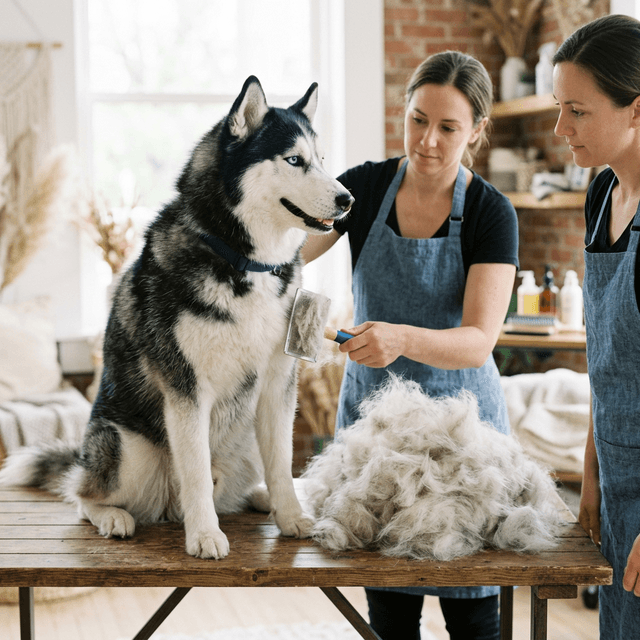
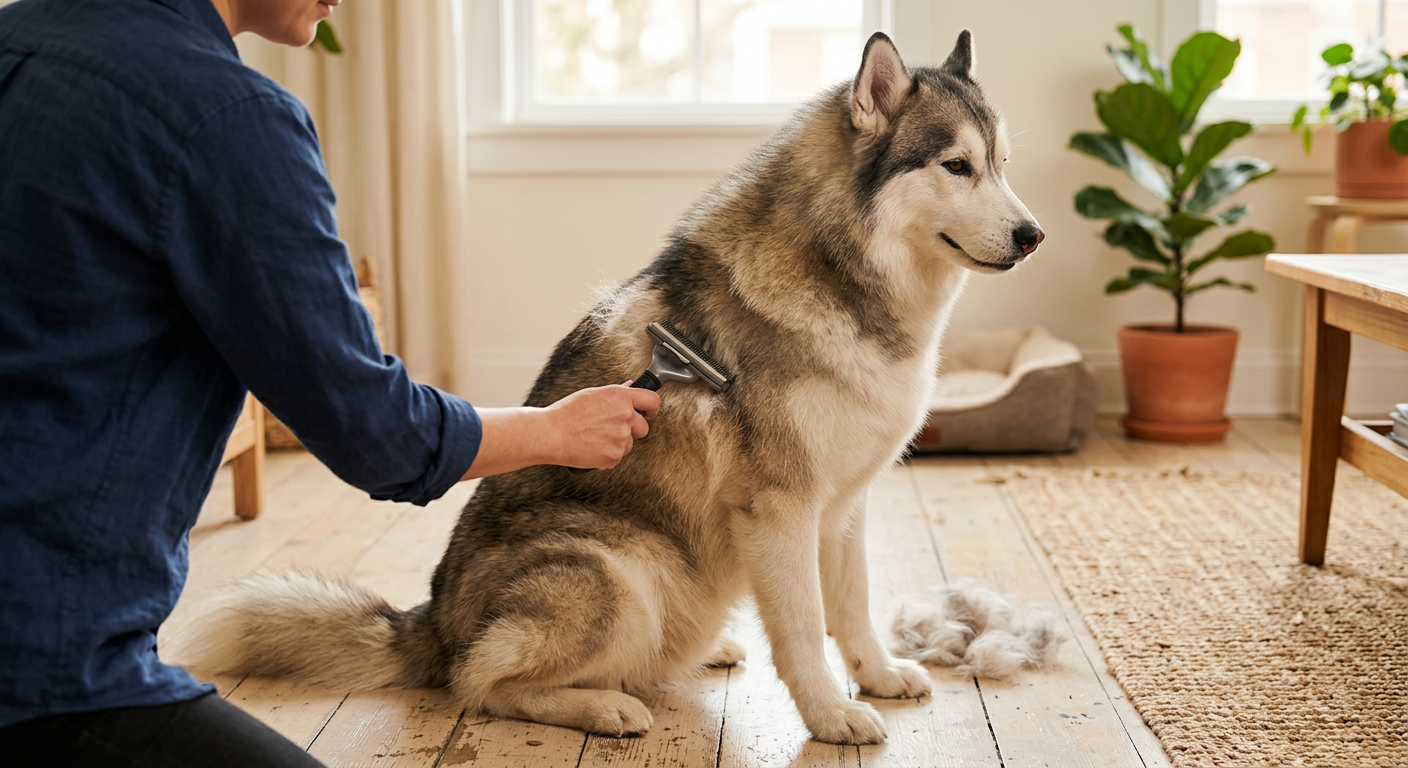
A classic example: Your Siberian Husky looks fine for months, then over 7-14 days youre pulling out handfuls of fluff that seems endless. Thats normal coat-blow behavior, not "something you did wrong."
[IMAGE_PLACEHOLDER_1]
Set the Goal: Less Hair Everywhere (Not Zero Shedding)
A healthy double coat will always shed. The realistic goal is:
- •remove loose undercoat before it matts,
- •keep the skin clean and comfortable,
- •reduce tumbleweeds in the house,
- •prevent hotspots and "wet dog" odor from trapped debris.
Normal vs Excessive Shedding: Quick Reality Check
Shedding may be more than "normal" if you also see:
- •bald patches, broken coat, or a dull, greasy feel
- •intense itching, chewing paws, or frequent ear infections
- •dandruff, scabs, or a strong odor even after bathing
- •thinning along the sides, tail, or neck (endocrine patterns)
If thats your dog, deshedding alone wont fix it. A vet exam (and sometimes a skin scrape, allergy plan, or thyroid bloodwork) saves you months of frustration.
The Deshedding Toolkit: What Works (And What Causes Damage)
The right tool depends on coat type, skin sensitivity, and how packed the undercoat is. For deshedding double coated dogs, think in layers: loosen, lift, remove, finish.
Tool Comparison: Which One for Which Coat?
| Tool | Best For | Avoid If | Why |
|---|---|---|---|
| Slicker brush (gentle pins) | Finishing, light tangles, daily maintenance | Very sensitive skin or heavy impacted undercoat (alone) | Great "catch" for loose hair, but not always strong enough to de-pack |
| Undercoat rake (wide teeth, rounded tips) | Thick, plush undercoats (GSD, Husky, Akita) | Tight curls or very fine coats without a lot of undercoat | Separates coat and pulls loose undercoat efficiently |
| Greyhound comb (metal comb) | Checking your work, feathering, behind ears | None (use gently) | If the comb glides to the skin, youre truly detangled |
| Rubber curry (grooming mitt/curry) | Short double coats (Labs, Corgis) | Long, silky coats where it can snag | Great for loosening and bringing hair to the surface |
| Deshedding blade/tool (fine teeth, often marketed heavily) | Some short coats, occasional use with light pressure | Long coats, sensitive skin, daily use | Can cut/break guard hairs if overused or used aggressively |
| High-velocity dryer ("blaster") | Coat blows, heavy sheds, after baths | Dogs terrified of noise (start slow), untreated heart/resp issues (ask vet) | Safest way to eject loose undercoat without scraping skin |
Product Recommendations (Safe, Common Grooming Staples)
You dont need a hundred gadgets. Build a small kit you actually use.
Brushing tools
- •A quality slicker brush (soft-to-medium pin firmness): Look for a comfortable handle and pins that dont feel sharp when you test on your own forearm.
- •Undercoat rake with rounded teeth: Choose tooth spacing that matches coat density (wider for thick plush, narrower for medium coats).
- •Greyhound comb: Medium/coarse combination comb is the workhorse for checking mats behind ears, armpits, and tail base.
Bath and coat care
- •Gentle dog shampoo (hypoallergenic or oatmeal-based if skin is sensitive)
- •Conditioner or deshedding treatment: A light conditioner helps hair slip out during drying and reduces static.
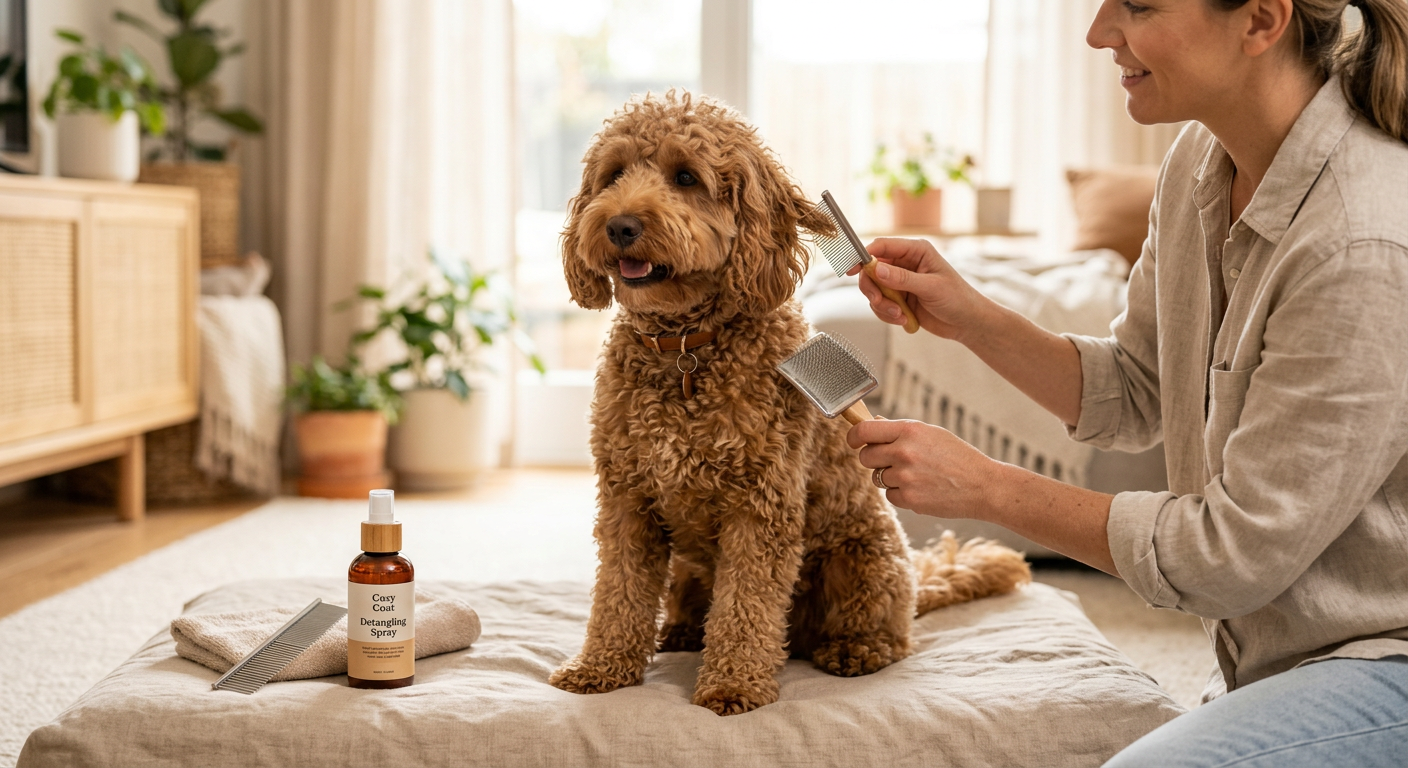
- •Leave-in detangler (optional): Helpful for feathering on Golden Retrievers and Aussies.
Drying
- •High-velocity dryer (home units work): This is the closest thing to a professional secret weapon for coat-blow season.
Pro-tip: The dryer does not "create shedding." It reveals and removes hair that was already loose but trapped. Most owners are shocked by the amount because theyve never seen the undercoat come out efficiently.
[IMAGE_PLACEHOLDER_2]
Step-by-Step: The At-Home Deshedding Routine (That Actually Works)
This routine is designed to remove undercoat while protecting guard hair and skin. Adjust duration to your dogs tolerance. A productive session for many dogs is 10-20 minutes, not an hour of wrestling.
Step 1: Pre-Check (2 Minutes That Prevent Problems)
Before brushing, do a quick scan:
- Look for redness, bumps, scabs, fleas/flea dirt, or damp patches.
- Check friction zones: behind ears, collar area, armpits, groin, tail base.
- If you find mats close to skin or angry red areas, skip aggressive brushing and switch to gentle detangling (or book a groomer).
Step 2: Dry Loosening (Great for Light-to-Moderate Shedding)
- Mist lightly with a leave-in conditioner/detangler (optional but helpful for static and breakage).
- Use an undercoat rake with light pressure in the direction of hair growth.
- Follow with a slicker to lift remaining loose hair.
- Finish with a comb check: if the comb snags, youve still got tangles.
Real-world scenario: Your Australian Shepherd comes home from daycare with a fluffy neck and a few tangles behind the ears. A short slicker session plus a comb check prevents those tangles from turning into tight mats.
Step 3: The Bath + Blowout Method (Best for Coat Blows)
If your dog is actively blowing coat (Husky snowstorm season), bathing and drying correctly can remove more hair in one session than weeks of dry brushing.
- Brush first (lightly) to remove surface hair and small tangles.
- Wet thoroughly to the skin. Double coats repel water; take your time.
- Shampoo and massage down to the skin (avoid rough circular scrubbing that tangles).
- Rinse until the water runs clear (then rinse another minute). Leftover shampoo causes itchiness and dandruff.
- Apply conditioner (especially on plush coats). Let it sit per label directions.
- Rinse very well again.
- Towel blot (dont rub like youre drying your own hair).
- High-velocity dry outdoors or in an easy-clean space:
- •Start at a lower setting and increase as your dog relaxes.
- •Hold the nozzle a safe distance from skin.
- •Work methodically: neck, shoulders, back, sides, pants, tail.
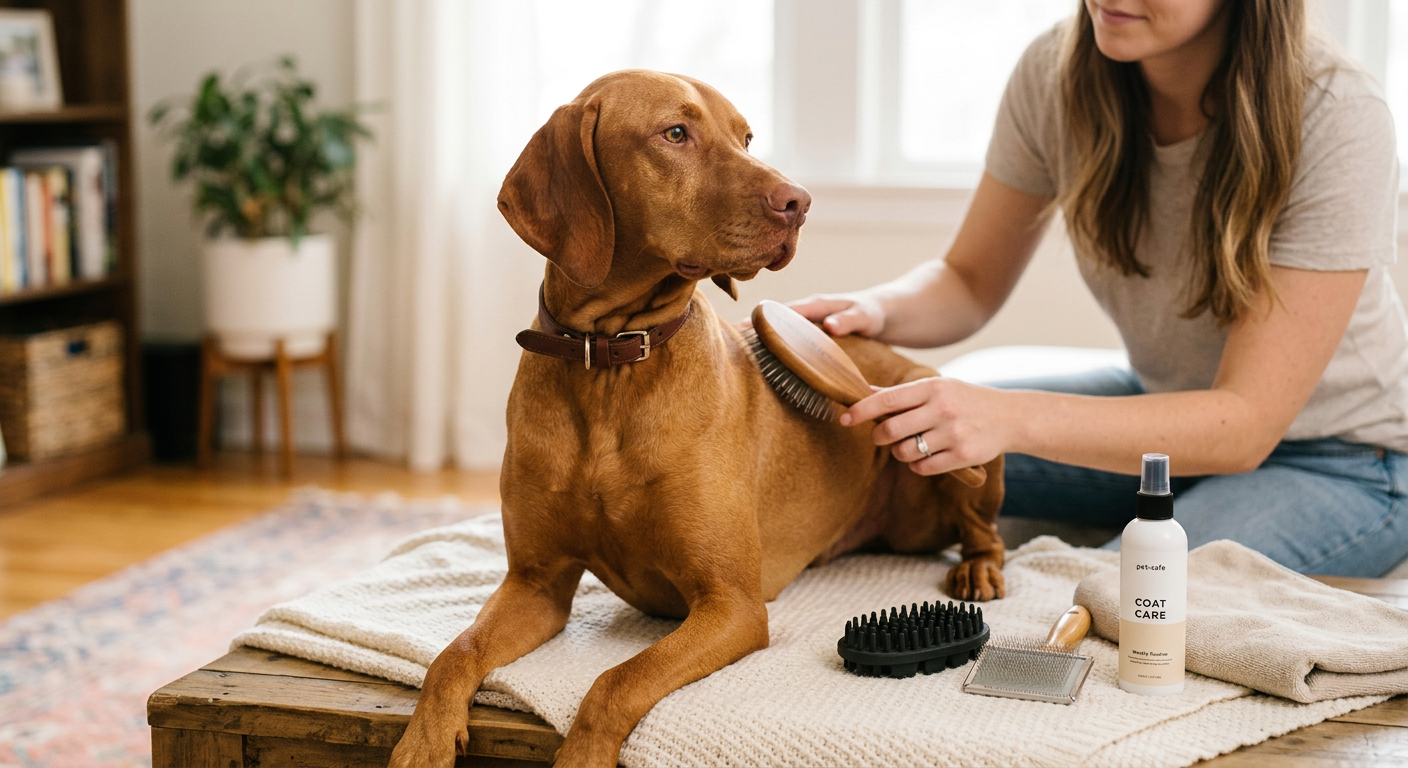
- Line brush as you dry (optional but powerful): lift a layer of coat and brush/dry section by section.
- Final comb check in friction zones.
[IMAGE_PLACEHOLDER_3]
Step 4: Frequency and Scheduling (A Simple Plan That Sticks)
- •Short double coats (Lab, Corgi): Curry brush 2-4x/week; bath + blowout every 4-8 weeks during heavy shed.
- •Medium double coats (GSD, Aussie): Brush 2-3x/week; blowout during seasonal sheds; bath every 4-6 weeks (or as needed).
- •Heavy plush coats (Husky, Malamute, Akita, Chow, Samoyed): Brush 3x/week in peak shed; blowout sessions are the big win; bath every 6-10 weeks depending on lifestyle.
If your dog hates grooming, do micro-sessions: 3-5 minutes daily beats 45 minutes once a week with everyone stressed.
Breed Game Plans: What Changes Based on Coat Type
Not all double coats behave the same. Heres how I tailor deshedding double coated dogs by breed category.
Nordic and Spitz Types (Husky, Malamute, Akita, Samoyed)
Common situation: "My Husky is shedding in clumps and the brush does nothing."
What works:
- •Prioritize high-velocity drying during coat blows.
- •Use an undercoat rake to de-pack, then slicker to refine.
- •Avoid overusing aggressive deshedding blades; these coats rely on healthy guard hairs.
Expert note: These breeds often have very dense undercoat that compacts near the skin. If you only brush the surface, you create a "shell" that hides impacted undercoat underneath.
Herding Double Coats (Aussie, Sheltie, Border Collie)
Common situation: Feathering tangles (behind ears, pants) plus undercoat shed.
What works:
- •Slicker + comb check on feathering areas.
- •Light undercoat rake on body during seasonal shed.
- •Detangler spray can reduce breakage on silky sections.
Watch-outs:
- •Behind ears can mat quickly. If the comb wont pass, slow down and detangle gently rather than yanking (ear skin tears easily).
Retrievers and Sporting Breeds (Golden Retriever, Labrador Retriever)
Common situation: The house is covered in hair, and the dog has a "sticky" undercoat after swimming.
What works for Goldens:
- •Slicker/comb for feathering; undercoat rake for body.
- •Conditioner helps after lake days to prevent coat from gripping debris.
What works for Labs:
- •Rubber curry + short-bristle brush to loosen, then bath/blowout.
- •Labs often respond incredibly well to blowouts because the coat is short but dense.
Big Fluffy Guardians (Great Pyrenees, Bernese Mountain Dog)
Common situation: Undercoat compacts, and you find mats near the tail base and armpits.
What works:
- •Commit to sectioning: line brushing is your friend.
- •Use a rake for bulk removal, then slicker, then comb.
- •Do not skip drying after baths; damp undercoat + thickness = skin trouble.
Common Mistakes (And What to Do Instead)
Most deshedding problems come down to tool choice, pressure, and timing.
Mistake 1: Shaving a Double Coat "For Summer"
Shaving often doesnt reduce shedding long-term and can:
- •disrupt insulation (these coats also protect from heat),
- •increase sunburn risk,
- •cause coat damage (patchy regrowth, fuzzy texture),
- •worsen matting as guard hair regrows unevenly.
Do this instead:
- •Remove loose undercoat, keep guard hairs intact, and use a blowout during coat blows.
Mistake 2: Going Too Hard with a Deshedding Blade/Tool
If youre seeing:
- •a lot of short broken hairs,
- •coat that feels rough or looks thin,
- •skin that turns pink after brushing,
youre likely using too much pressure or the wrong tool.
Do this instead:
- •Swap to an undercoat rake + slicker combo, use gentle strokes, and take breaks.
Mistake 3: Brushing Only the Top Layer
This is how "mystery mats" happen: the surface looks fine, but the undercoat is impacted near skin.
Do this instead:
- •Use line brushing (lift a layer, brush underneath) and confirm with a comb.
Mistake 4: Bathing Without Fully Drying
A damp undercoat can lead to:
- •hotspots,
- •yeast odor,
- •dandruff,
- •tighter tangles.
Do this instead:
- •Towel blot + thorough drying (high-velocity dryer is ideal; at minimum, use a pet-safe dryer on low heat and keep air moving).
Mistake 5: Ignoring the Skin
If your dog is itchy, has chronic ear issues, or smells "yeasty," the coat is not the only issue.
Do this instead:
- •Treat grooming as skin care: gentle products, full rinses, and veterinary help for allergies/parasites when needed.
Pro-Level Tips That Make Deshedding Faster and Kinder
These are the little things we do in clinic and grooming shops to keep dogs comfortable and get better results.
Pro-tip: If your dog flinches when you brush, assume skin sensitivity first. Switch to softer tools, lighter pressure, and shorter sessions. Pain turns grooming into a lifelong fight.
Pro-tip: Reward positioning matters. Feed treats while the brush is touching the coat (calm, steady), not only when you stop. Youre teaching "brush time pays."
Pro-tip: For the tail base and pants (common mat zones), hold the hair close to the skin with your free hand to reduce pulling, then brush the ends first and work inward.
The "Two-Pass" Rule
- First pass: remove bulk with the most efficient safe tool (often rake or curry).
- Second pass: refine and verify (slicker + comb check).
This prevents overworking one tool until youre tempted to use too much force.
Troubleshooting: When Deshedding Still Feels Like It Does Nothing
If youre brushing and brushing and hair never stops coming out, troubleshoot systematically.
Problem: Impacted Undercoat (Brush Glides Over, Nothing Comes Out)
Signs:
- •coat feels thick and spongy,
- •skin smells musty,
- •hair releases in chunks only during baths.
Fix:
- •Do a bath + conditioner + high-velocity blowout session.
- •Then line brush and comb check.
- •Consider a professional groomer for a "deshed treatment" if its severely compacted.
Problem: Your Dog Gets Itchy After Grooming
Common causes:
- •shampoo residue (most common)
- •too-frequent bathing with harsh shampoos
- •tool irritation from pressure or sharp pins
- •underlying allergies
Fix:
- •Rinse longer than you think you need.
- •Use a gentle shampoo and a light conditioner.
- •Reduce pressure and session length.
- •If itching persists, talk to your vet about allergy management.
Problem: Sudden Coat Changes or Patchy Shedding
Consider medical causes:
- •fleas (even if you dont see them), mites
- •hypothyroidism (often with weight gain, lethargy, thinning coat)
- •Cushing's disease
- •hormonal changes (post-spay/neuter coat changes happen in some dogs)
Fix:
- •Bring photos and a timeline to your vet. Its much easier to diagnose patterns with specifics.
Recommended Deshedding Kits (Pick One That Matches Your Life)
You can get excellent results without buying everything at once. Here are practical kits by commitment level.
The Starter Kit (Most Homes)
- •Slicker brush (soft-to-medium)
- •Greyhound comb
- •Rubber curry (especially for short coats)
- •Gentle shampoo + conditioner
Best for: Labs, Aussies, Goldens who arent in full coat blow.
The Coat-Blow Kit (For Husky Season)
- •Undercoat rake (rounded teeth)
- •Slicker brush
- •Greyhound comb
- •High-velocity dryer
- •Conditioner/deshedding treatment
Best for: Huskies, Malamutes, Akitas, Samoyeds, Chows, Great Pyrenees.
The Sensitive Skin Kit
- •Very soft slicker or soft pin brush
- •Comb (used gently)
- •Hypoallergenic shampoo
- •Light conditioner
- •Optional leave-in spray
Best for: Dogs prone to redness, itchiness, or mild allergy skin.
A Simple Weekly Plan You Can Stick To
Consistency beats marathon grooming.
- •2-4 days/week: 5-15 minutes of brushing (tool depends on coat type)
- •Weekly: comb check behind ears, armpits, collar line, tail base
- •Every 4-10 weeks: bath + full dry (more often for oily/active dogs, less often for clean indoor loungers)
- •During heavy shed: add a blowout session (even without a full bath, a dryer can help eject loose coat)
If you want one takeaway for deshedding double coated dogs, its this: remove loose undercoat efficiently (often with drying), protect the guard hairs, and treat the skin like part of the grooming job. Thats how you get a cleaner house, a more comfortable dog, and a coat that stays plush and healthy instead of brittle and broken.
Coat Care Cluster
More in this topic
guide
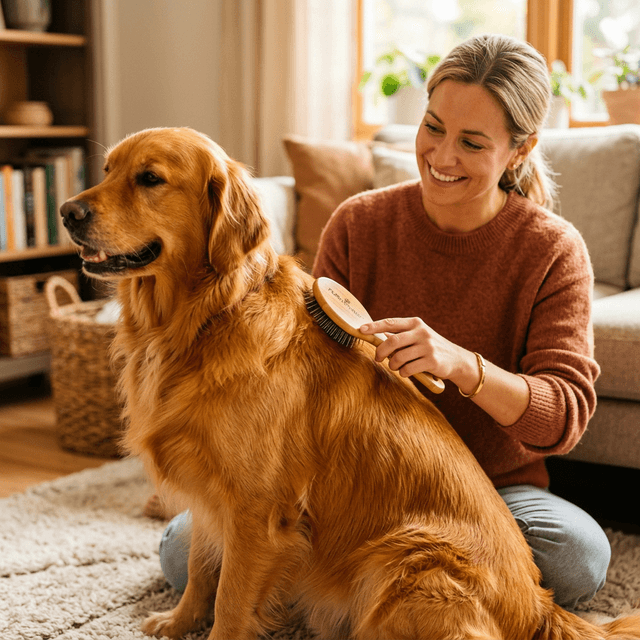
Best Dog Brush by Coat Type: Pick the Right Tool Fast
guide
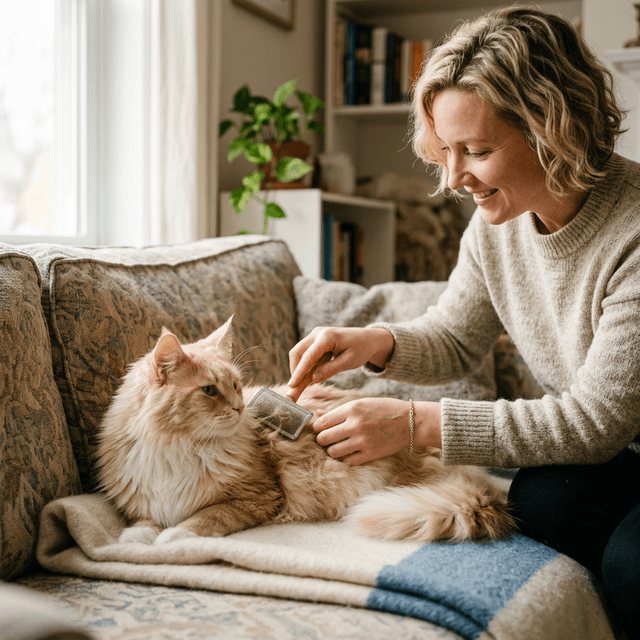
5 Cat Grooming Tips: Signs Your Cat Needs Better Coat Care
guide
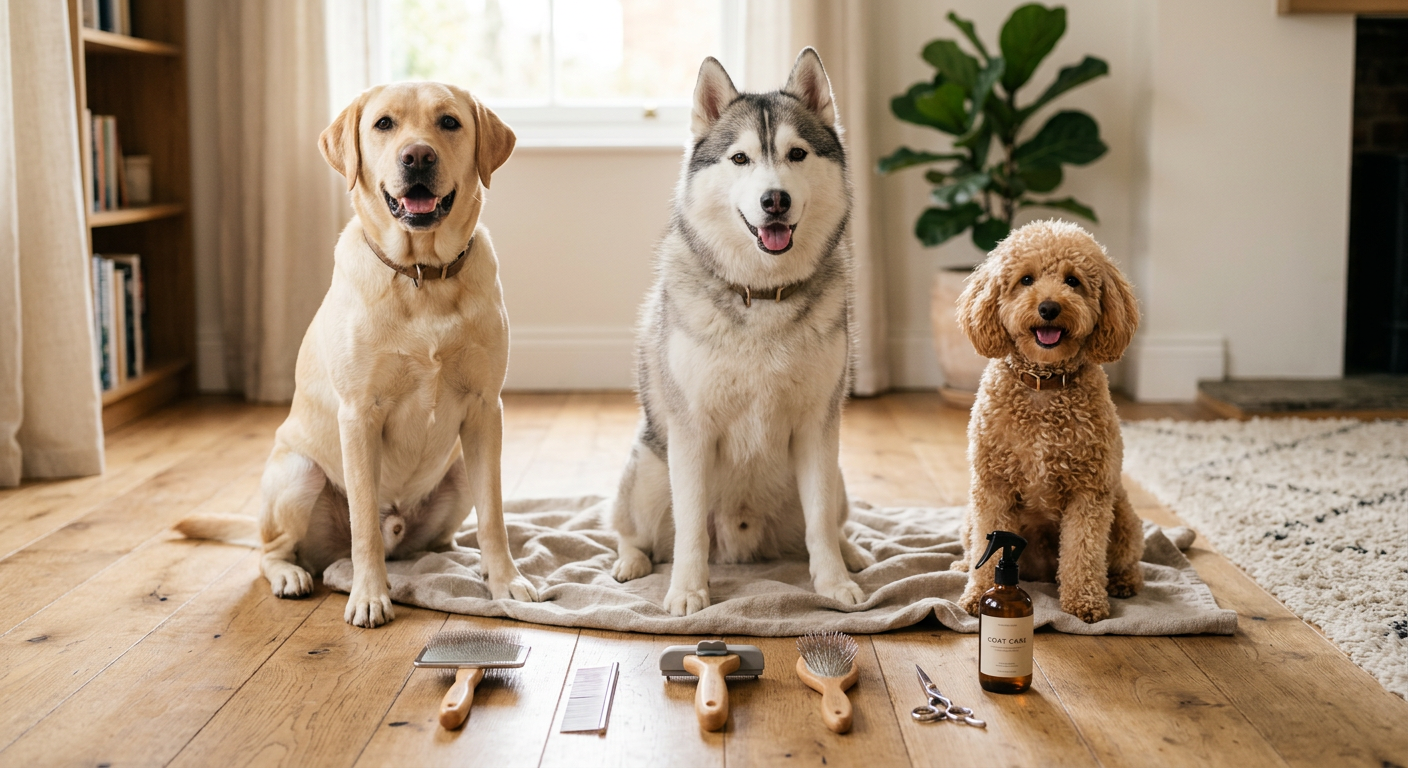
Best Grooming Routine by Coat Type: Short, Double, and Curly Coats (Behavior-First Guide)
guide
De-Shedding Routine for Double-Coat Breeds: A Weekly System That Works
guide
Curly Coat Detangling Routine: Prevent Mats Without Over-Brushing
guide
Short-Coat Maintenance Routine: A Fast Weekly Grooming Plan That Actually Cuts Shedding
Frequently asked questions
What is the difference between guard hair and undercoat when deshedding?
Guard hairs are the longer, coarser topcoat that protects the skin from weather and UV, while the undercoat is the soft, dense insulating layer. Proper deshedding targets loose undercoat so airflow improves without thinning or cutting the protective guard hair.
How often should I deshed a double-coated dog?
Most double-coated dogs do best with light brushing several times per week and more frequent sessions during heavy seasonal coat blows. The goal is consistency and comfort: stop when you’re mainly removing loose fluff, not pulling healthy coat.
What tools are safest for deshedding double coated dogs?
A slicker brush, an undercoat rake, and a metal comb are common, safe staples when used gently and on a clean, dry coat. Avoid tools that cut hair or scrape skin; use short strokes, check for redness, and focus on lifting loose undercoat rather than stripping the topcoat.
