
guide • Coat Care
Best Dog Brush by Coat Type: Pick the Right Tool Fast
The best dog brush depends on coat type, sensitivity, and your goal. Use this guide to choose the right brush for detangling, shedding, and smoothing.
By PetCareLab Editorial • March 6, 2026 • 17 min read
Table of contents
- Why the “Best Dog Brush” Depends on Coat Type (Not Hype)
- Quick Coat-Type Quiz: Identify What You’re Working With
- Step 1: Look at the hair length and texture
- Step 2: Part the coat to check for undercoat
- Step 3: Check high-risk mat zones
- Brush Types 101: What Each Tool Actually Does (And Who It’s For)
- Slicker brush
- Pin brush
- Bristle brush (or “soft brush”)
- Undercoat rake
- De-shedding tool (furminator-style)
- Rubber curry brush / grooming glove
- Metal comb (greyhound comb)
- Dematting tool / mat splitter
- The Best Dog Brush for Short, Smooth Coats (Boxer, Beagle, Dalmatian)
- What to buy (simple kit)
- How to brush (5–10 minutes, 2–4x/week)
- Real-world scenario: “My Lab sheds nonstop”
- The Best Dog Brush for Double Coats (Husky, German Shepherd, Corgi, Golden Retriever)
- What to buy (most effective combo)
- Step-by-step: De-shedding session (15–25 minutes)
- Breed notes
- Mistakes to avoid with double coats
- The Best Dog Brush for Long, Silky Coats (Yorkie, Afghan Hound, Setter Feathering)
- What to buy
- Step-by-step: Daily maintenance (10 minutes)
- Real-world scenario: “My Yorkie gets little knots overnight”
- The Best Dog Brush for Curly and Doodle Coats (Poodles, Goldendoodles, Labradoodles)
- What to buy (minimum effective kit)
- The technique that changes everything: Line brushing
- Step-by-step line brushing (15–30 minutes)
- High-mat zones for curly coats
- Breed examples and coat realities
- Common mistakes with Doodle coats
- The Best Dog Brush for Wire Coats (Schnauzer, Wire Fox Terrier, Border Terrier)
- What to buy (pet wire coat)
- How to brush a pet wire coat (10–15 minutes, 1–3x/week)
- Real-world scenario: “My Schnauzer’s beard is always a mess”
- Product Recommendations: Reliable Brush Picks by Coat Type
- Best dog brush options for smooth coats
- Best dog brush options for double coats
- Best dog brush options for curly/Doodle coats
- Best dog brush options for long silky coats
- How to Brush Correctly: A Simple Routine You Can Actually Stick To
- Smooth coat routine (5–10 minutes)
- Double coat routine (10–20 minutes)
- Curly/Doodle routine (15–30 minutes)
- The “comb test” (fast check)
- Comparisons That Actually Matter: Brush vs. Brush
- Slicker vs. pin brush
- Undercoat rake vs. de-shedding tool
- Rubber curry vs. bristle brush
- Common Mistakes to Avoid (These Cause Most Coat Problems)
- Brushing dry, tangled hair aggressively
- Skipping the comb
- Bathing before detangling
- Using the wrong tool for the job
- Overbrushing sensitive areas
- Expert Tips: Make Brushing Easier for You and Your Dog
- Train cooperation, not tolerance
- Use the right setup
- Brush with purpose: zones over full-body chaos
- Know when to call a groomer
- A Practical Buying Checklist: Choose the Best Dog Brush for Your Home
- Match the brush to the coat
- Choose quality where it counts
- Consider your dog’s sensitivity
- If You Only Buy Two Tools: The Smart “Starter Kit” by Coat Type
- Smooth coat starter kit
- Double coat starter kit
- Curly/Doodle starter kit
- Long silky starter kit
- Final Takeaway: Pick the Brush That Solves Your Dog’s Real Coat Problem
Why the “Best Dog Brush” Depends on Coat Type (Not Hype)
If you search for the best dog brush, you’ll see a lot of confident claims—often tied to one tool. In real life (and in grooming rooms), the “best” brush is the one that matches your dog’s coat type, skin sensitivity, shedding pattern, and your goal (detangling, de-shedding, smoothing, or undercoat removal).
A brush that’s perfect for a Labrador can be frustrating—or even painful—for a Shih Tzu. And a brush that makes a Poodle coat look flawless may do almost nothing for a Husky’s undercoat.
Here’s the core concept to keep in mind:
- •Coat type determines tool type.
- •Tool technique determines results.
- •Frequency prevents problems (mats, hot spots, impacted undercoat, and excessive shedding).
In this guide, I’ll walk you through how to choose the right brush (or brush combo), how to use it correctly, and which mistakes I see most often when owners try to DIY grooming at home.
Quick Coat-Type Quiz: Identify What You’re Working With
Before buying anything, you need a realistic picture of your dog’s coat. Use this quick assessment:
Step 1: Look at the hair length and texture
- •Short, smooth, close to the body (e.g., Boxer, Beagle): likely a smooth coat
- •Short-to-medium with visible fluff underneath (e.g., Lab, German Shepherd): likely a double coat
- •Long, silky, flowing (e.g., Yorkshire Terrier, Afghan Hound): likely a long silky coat
- •Soft, dense, “cottony,” prone to tangles (e.g., Shih Tzu, Maltese): often a long, fine coat with undercoat
- •Curly or wavy, springy, tends to matt (e.g., Poodle, Doodle mixes): curly coat
- •Wiry, rough, often with beard/eyebrows (e.g., Schnauzer, Wire Fox Terrier): wire coat
Step 2: Part the coat to check for undercoat
Use your fingers to part the hair to the skin:
- •If you see a soft, downy layer beneath the topcoat, you’re dealing with an undercoat.
- •If hair seems uniform and there’s not much “fluff,” you may have a single coat.
Step 3: Check high-risk mat zones
Even dogs that “don’t matt” can tangle in friction spots:
- •Behind ears
- •Under collar/harness areas
- •Armpits
- •Groin
- •Base of tail
- •Feathering on legs/belly
Pro-tip (vet-tech perspective): If you can’t easily run a metal comb to the skin in those friction zones, you’re already behind schedule—mats start small, then tighten fast.
Brush Types 101: What Each Tool Actually Does (And Who It’s For)
Most frustration comes from using a tool outside its “job description.” Here’s what each brush is designed to do.
Slicker brush
A flat or slightly curved pad filled with fine, bent wire pins.
Best for:
- •Curly coats (Poodles, Doodles)
- •Long coats prone to tangles (Collies, Shelties, Shih Tzu)
- •Light-to-moderate mat prevention and line brushing
Not ideal for:
- •Very short smooth coats (it won’t do much)
- •Heavy undercoat removal by itself (you’ll need an undercoat rake or deshedding tool)
Watch-out: Slickers can cause brush burn (skin irritation) if you press too hard or brush dry hair aggressively.
Pin brush
Looks like a human hairbrush with long pins (often with rounded tips).
Best for:
- •Long, silky coats (Yorkie, Afghan, Setter feathering)
- •Light detangling and finishing
Not ideal for:
- •Dense undercoats (won’t reach through)
- •Curly coats (often too gentle to prevent mats alone)
Bristle brush (or “soft brush”)
Packed boar-style or synthetic bristles.
Best for:
- •Smooth coats for shine and light hair removal (Boxer, Pit Bull-type mixes)
- •Sensitive dogs who hate metal tools
Not ideal for:
- •Undercoat removal
- •Detangling
Undercoat rake
Wide head with long, sturdy teeth (single or double row).
Best for:
- •Double-coated breeds (Husky, Malamute, Shepherd, Chow)
- •Seasonal “blowing coat”
- •Removing loose undercoat without cutting topcoat (when used correctly)
Not ideal for:
- •Curly or fine single coats (can snag)
- •Matted coats (rakes are not dematters)
De-shedding tool (furminator-style)
A guarded blade edge that pulls undercoat (and sometimes topcoat if overused).
Best for:
- •Some double coats in small sessions
- •Owners who want quick visible results
Not ideal for:
- •Sensitive skin
- •Dogs with sparse coats or skin issues
- •Daily use (overuse can thin coat and irritate skin)
Rubber curry brush / grooming glove
Rubber nubs that pull loose hair and stimulate skin.
Best for:
- •Smooth coats (Labs, Beagles, Frenchies)
- •Bath-time deshedding (excellent on wet, soapy coat)
- •Dogs who dislike “brushy” sensations
Not ideal for:
- •Detangling
- •Heavy undercoat removal alone
Metal comb (greyhound comb)
A straight comb with medium and/or fine spacing.
Best for:
- •Verifying your brushing worked (comb test)
- •Finishing long/curly coats
- •Checking for small mats behind ears and in feathering
Not optional if your dog mats: A comb is your truth serum.
Dematting tool / mat splitter
Blades designed to cut mats.
Best for:
- •Spot-mats when used carefully and sparingly
Not ideal for:
- •Large or tight mats near skin
- •Inexperienced owners (high risk of cutting skin)
Pro-tip: If the mat is tight, close to the skin, or covers more than a small patch, it’s often safer (and kinder) to have a groomer clip it out. Home dematting can become painful fast.
The Best Dog Brush for Short, Smooth Coats (Boxer, Beagle, Dalmatian)
Smooth coats look low-maintenance, but they can shed like crazy. The goal here is to remove loose hair, distribute oils, and support healthy skin—without scraping.
What to buy (simple kit)
- •Rubber curry brush or grooming glove (primary tool)
- •Soft bristle brush (for finishing shine)
- •Optional: fine-tooth comb for flea dirt checks or sensitive areas
How to brush (5–10 minutes, 2–4x/week)
- Start with rubber curry in circular motions on shoulders, back, and thighs.
- Switch to long strokes in the direction of hair growth to pull hair away.
- Finish with a bristle brush for shine and to lift remaining loose hair.
- Wipe down with a damp microfiber cloth if hair is “clingy.”
Real-world scenario: “My Lab sheds nonstop”
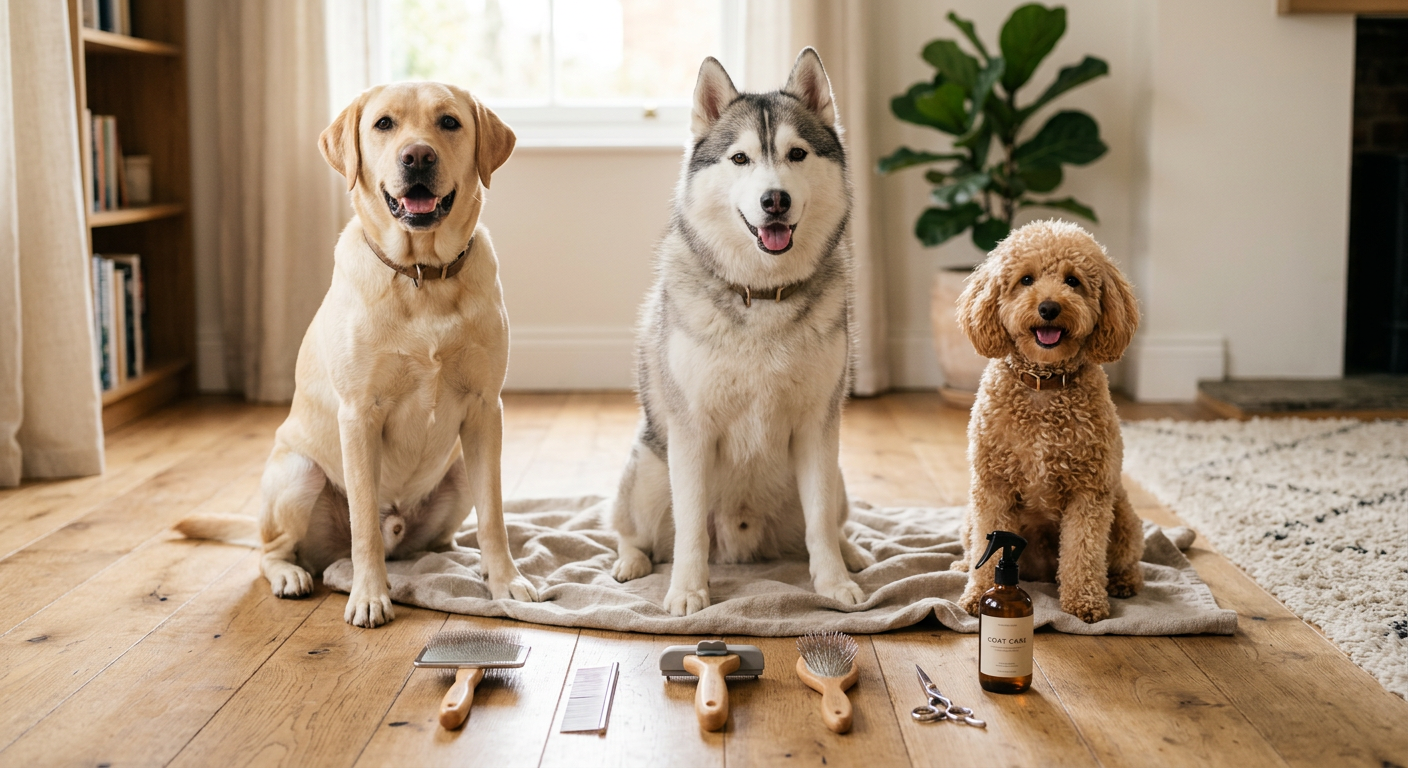
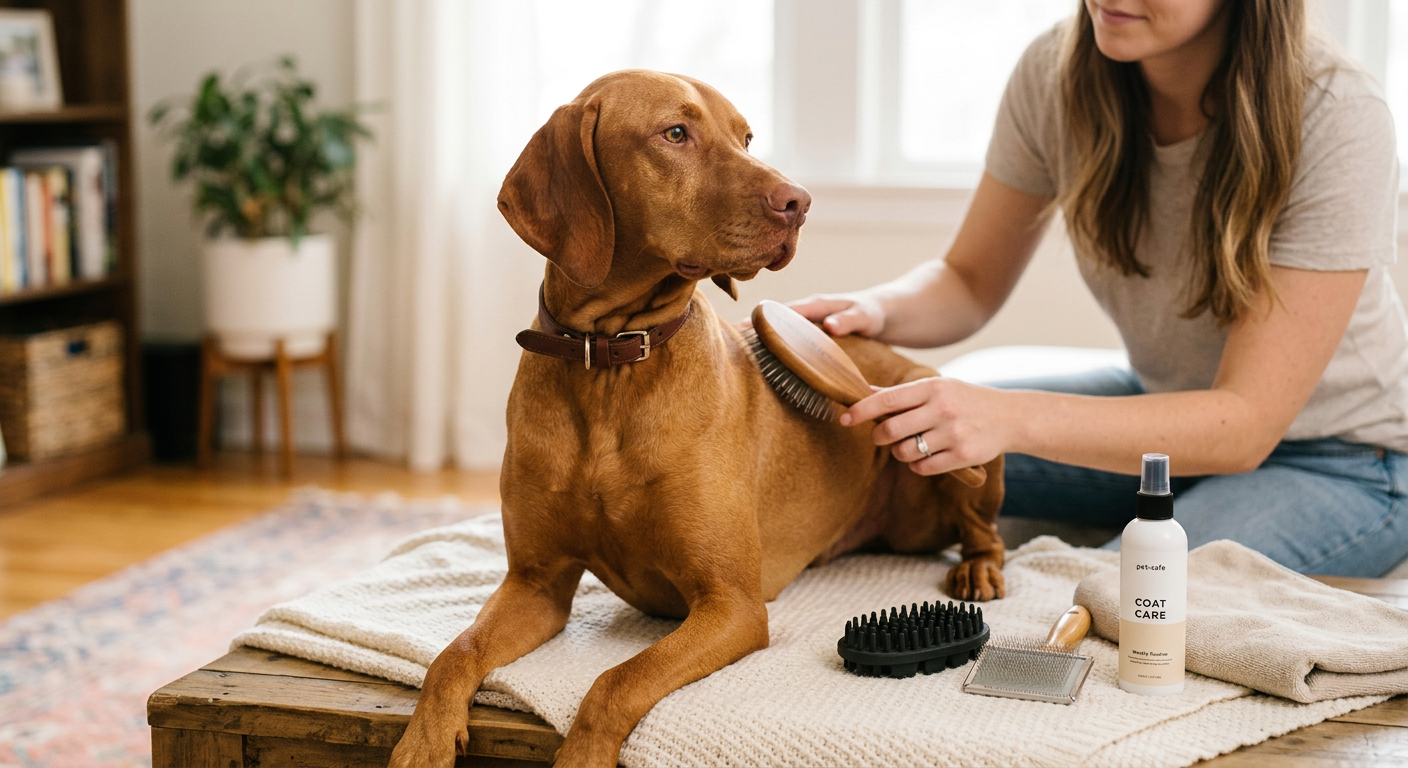
Labs are short-coated, but most are also double-coated, meaning they often need more than a curry. If you see fluffy undercoat, add:
- •An undercoat rake (gentle passes, 1–2x/week during shedding season)
- •Or a de-shedding tool used carefully (short sessions, not daily)
Common mistake: brushing only the top layer. Your couch disagrees.
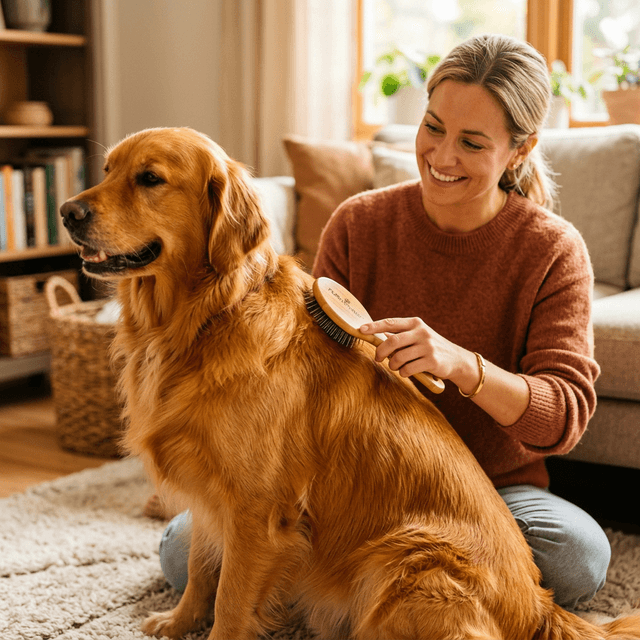
The Best Dog Brush for Double Coats (Husky, German Shepherd, Corgi, Golden Retriever)
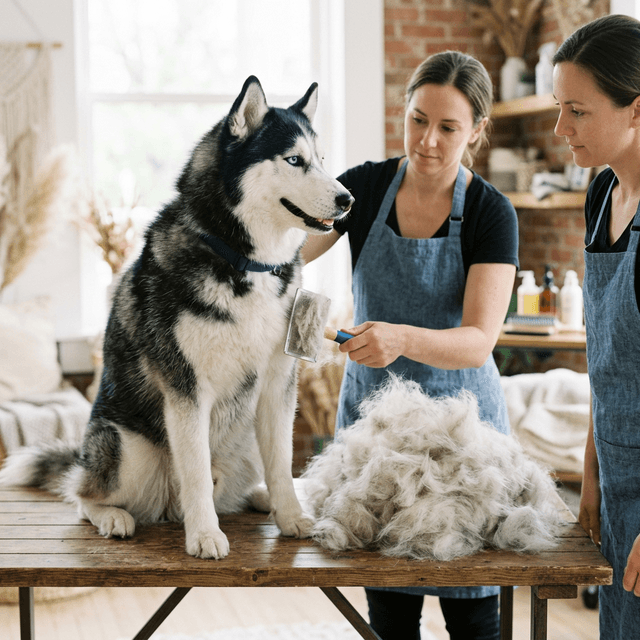
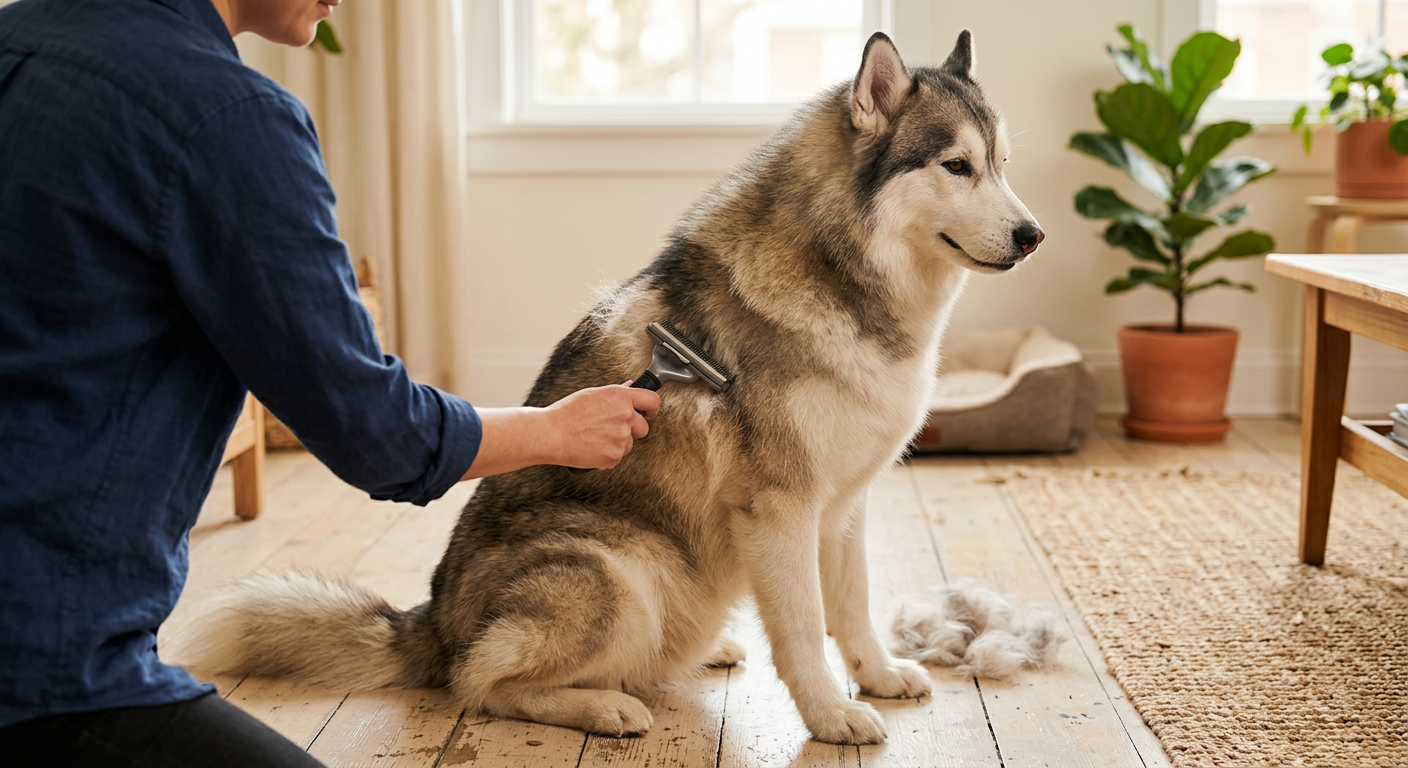
Double coats have a protective topcoat and a dense undercoat. Your mission is to prevent impacted undercoat, reduce shedding, and avoid pulling or cutting the guard hairs.
[IMAGE_PLACEHOLDER_1]
What to buy (most effective combo)
- •Undercoat rake (workhorse tool)
- •Slicker brush (for feathering and fluffing)
- •Metal comb (to check your work, especially on feathering)
- •Optional: rubber curry for bath-time and daily maintenance
Step-by-step: De-shedding session (15–25 minutes)
- Mist lightly with a coat spray or brushing spray (never soak). This reduces static and breakage.
- Line brush with a slicker on feathering areas (behind ears, legs, tail):
- •Lift a layer of coat, brush small sections from the skin outward.
- Use the undercoat rake on the body:
- •Gentle, short strokes; don’t “dig” into the coat.
- •Focus on thighs, rump, and neck—common undercoat zones.
- Comb test:
- •Run a metal comb through. If it snags, slow down and revisit that section.
- Finish with a quick curry brush or slicker pass to lift remaining loose hairs.
Breed notes
- •Husky/Malamute: Expect seasonal coat blow. Brushing daily during peak shedding can be necessary.
- •German Shepherd: Dense undercoat + heavy shedding. Rake + slicker combo shines here.
- •Corgi: Small body, huge coat volume. Regular undercoat removal prevents “puffy shedding tufts.”
- •Golden Retriever: Feathering mats easily. Slicker + comb on legs/tail is non-negotiable.
Mistakes to avoid with double coats
- •Using a de-shedding blade daily: can thin guard coat and irritate skin.
- •Shaving the coat to “stop shedding”: doesn’t fix shedding and can disrupt coat insulation and regrowth.
- •Skipping the comb test: the coat may look brushed, but the undercoat can still be packed.
Pro-tip: If you’re pulling out undercoat in thick clumps and your dog seems itchy afterward, you may be overdoing it. Aim for steady reduction, not “strip the coat” results.
The Best Dog Brush for Long, Silky Coats (Yorkie, Afghan Hound, Setter Feathering)
Silky coats tangle from friction and can form mats quickly behind ears and under collars. Here the goal is detangling without breakage and keeping hair smooth.
What to buy
- •Pin brush (gentle daily brush)
- •Slicker brush (for small tangles and friction zones)
- •Metal comb (verification and finishing)
- •Detangling spray/conditioning mist (highly recommended)
Step-by-step: Daily maintenance (10 minutes)
- Lightly mist with detangling spray (especially feathering).
- Pin brush the coat in the direction of growth.
- For snaggy areas (behind ears, armpits), switch to a soft slicker with light pressure.
- Use the comb from ends to roots:
- •If comb sticks, don’t rip—hold the hair near the skin to reduce pulling and work the tangle out in small sections.
Real-world scenario: “My Yorkie gets little knots overnight”
That’s normal. Overnight friction + fine hair = tangles. Solutions:
- •Brush friction zones daily (behind ears, collar area)
- •Consider a silk/satin-lined harness or reduce collar wear indoors
- •Keep a shorter pet trim if you can’t maintain full-length hair
The Best Dog Brush for Curly and Doodle Coats (Poodles, Goldendoodles, Labradoodles)
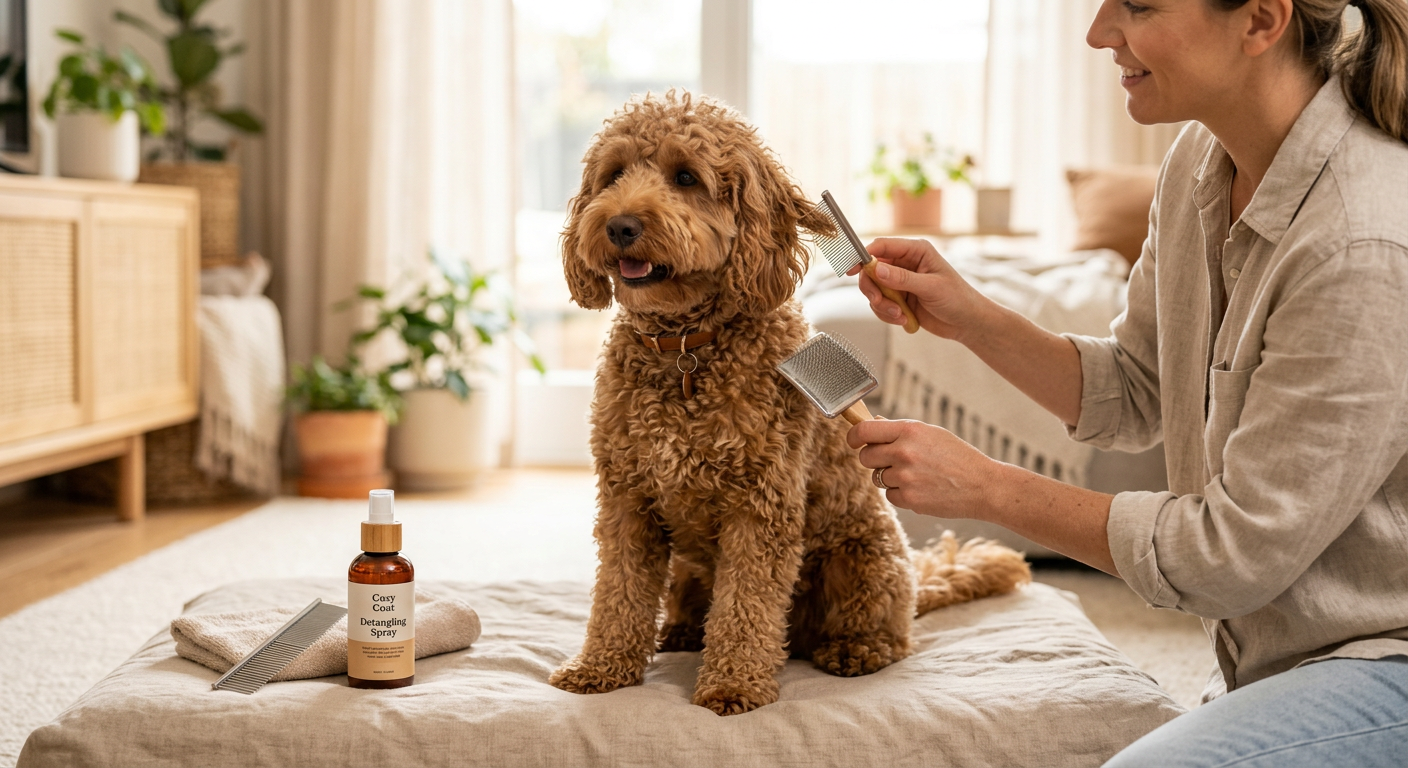
Curly coats are the #1 mat-makers I see in family homes, especially on Doodle mixes. The coat can look fluffy on top while the base is already matting. Your best dog brush here is usually a slicker, but only if you use it with the right technique.
[IMAGE_PLACEHOLDER_2]
What to buy (minimum effective kit)
- •Slicker brush (medium-firm, quality matters)
- •Metal comb (non-negotiable)
- •Detangling/conditioning spray
- •Optional: clipper-safe grooming spray if you plan to do home trims
The technique that changes everything: Line brushing
Line brushing means brushing layer by layer down to the skin so you don’t just fluff the surface.
Step-by-step line brushing (15–30 minutes)
- Mist a small section with conditioning spray.
- Start at the lowest point (like the ankle) and lift a thin “line” of hair upward.
- Brush the exposed hair from skin outward with the slicker.
- Move up in small increments, creating new lines as you go.
- After slicker brushing, use the metal comb through that section:
- •If the comb won’t go through smoothly, keep working before you move on.
High-mat zones for curly coats
- •Behind ears (especially if the ears are floppy)
- •Under harness straps
- •Collar line
- •Armpits
- •Tail base
- •Inner thighs
Breed examples and coat realities
- •Standard Poodle: predictable curl; consistent grooming works great.
- •Goldendoodle: coat can be anything from wavy to tightly curled; often dense and prone to hidden mats.
- •Labradoodle: can have mixed textures; pay attention to any “cottony” areas that matt faster.
Common mistakes with Doodle coats
- •Brushing only with a slicker and skipping the comb. You’ll miss mats.
- •Trying to “save” severe mats at home. This can be painful and can cause skin bruising.
- •Bathing a matted dog. Water tightens mats like felt. Brush/comb out first, or have a groomer handle it.
Pro-tip: If you can’t comb through the coat, it’s not “a little tangled”—it’s matted. The comb is your pass/fail test.
The Best Dog Brush for Wire Coats (Schnauzer, Wire Fox Terrier, Border Terrier)
Wire coats are unique: they often need stripping or specialized grooming to maintain texture, especially for show coats. Many pet dogs are clipped instead, which softens the coat over time. Brushing still matters for skin health and preventing tangles in beard/legs.
What to buy (pet wire coat)
- •Slicker brush (for legs, furnishings, beard)
- •Metal comb (beard and leg feathering)
- •Optional: stripping knife or stone (only if you know how to use it safely)
How to brush a pet wire coat (10–15 minutes, 1–3x/week)
- Slicker brush the legs and beard gently to remove debris and prevent tangles.
- Comb through beard and eyebrows carefully (food and moisture create tangles fast).
- If the coat is hand-stripped (or you’re maintaining texture), learn proper technique from a groomer before using stripping tools.
Real-world scenario: “My Schnauzer’s beard is always a mess”
Beards trap water + food. Helpful routine:
- •Comb beard daily
- •Rinse after meals if needed and dry thoroughly
- •Use a light conditioning spray to reduce breakage
Product Recommendations: Reliable Brush Picks by Coat Type
PetCareLab style note: specific models change over time, so I’m recommending types and well-known examples that are consistently available and reputable. Always choose the right size for your dog.
Best dog brush options for smooth coats
- •Rubber curry brush: Kong ZoomGroom (great during baths), Hertzko rubber brush
- •Soft bristle finishing brush: any dense, soft-bristle dog brush for shine
Best dog brush options for double coats
- •Undercoat rake: Safari Undercoat Rake, Andis Undercoat Rake (choose tooth length based on coat depth)
- •Slicker brush (for feathering): Chris Christensen Big G (premium), Hertzko Self Cleaning Slicker (budget-friendly)
- •Metal comb: stainless steel greyhound-style comb (medium + fine)
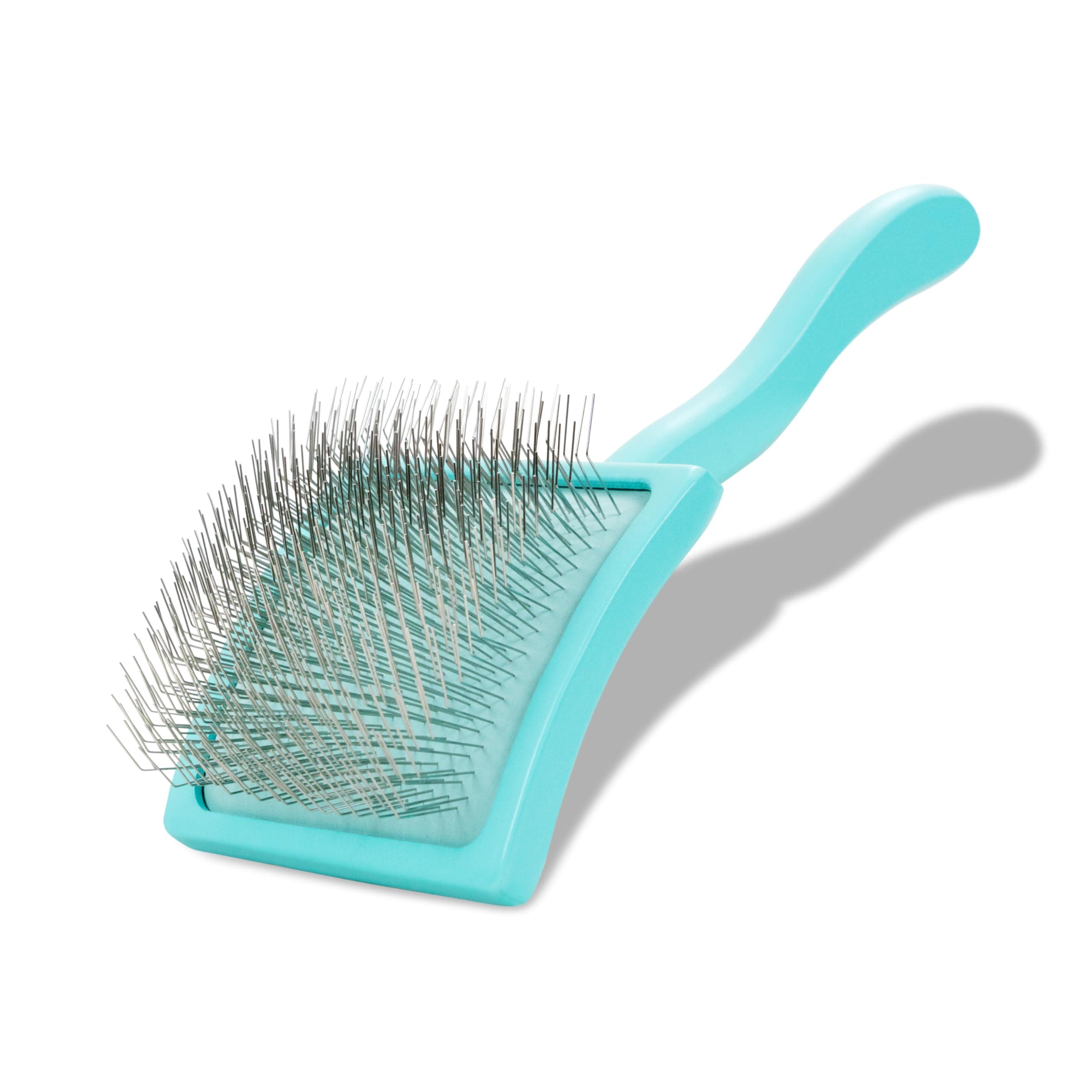
Chris Christensen Big G Dog Slicker Brush for Dogs (Goldendoodles, Labradoodles, Poodles), Groom Like a Professional, Fluff Detangle Style, Saves Time Energy, Teal, Large
Chris Christensen Chris Christensen
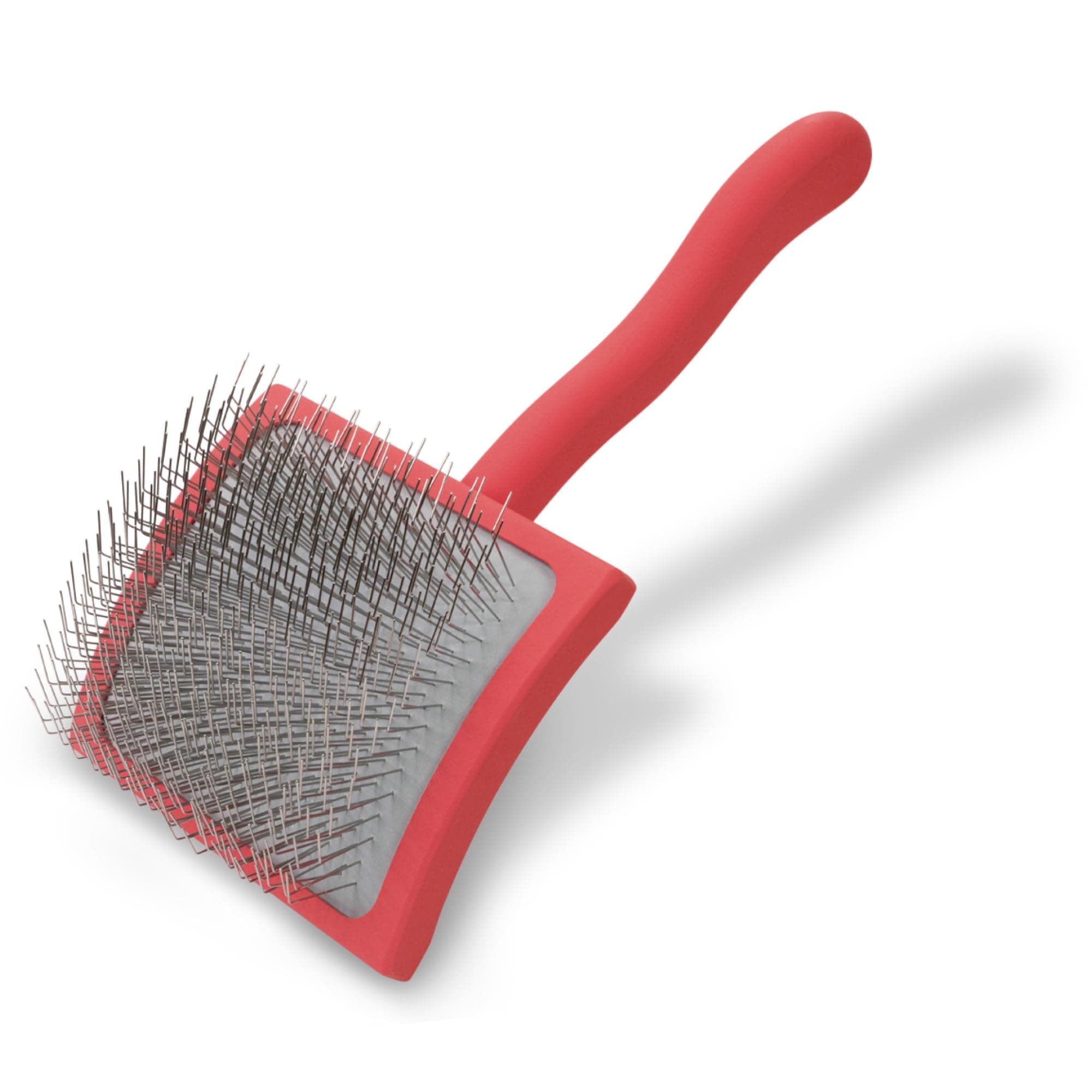
Chris Christensen Big G Dog Slicker Brush for Dogs (Goldendoodles, Labradoodles, Poodles), Groom Like a Professional, Fluff Detangle Style, Saves Time Energy, Coral, Large
Chris Christensen Chris Christensen
Best dog brush options for curly/Doodle coats
- •Slicker brush: Chris Christensen Big G (excellent performance), Artero slickers (groomer-trusted)
- •Metal comb: Utsumi-style grooming combs are premium, but any sturdy stainless steel comb works well if the spacing is right
- •Detangling spray: The Stuff, Cowboy Magic detangler (use lightly)
Best dog brush options for long silky coats
- •Pin brush: Chris Christensen pin brush (premium), quality pin brushes with long pins and comfortable handle
- •Comb: fine/medium combo comb for face and feathering
Pro-tip: Spend more on the tools you use most (usually slicker + comb). Cheap slickers often have weak pins that bend and snag, making brushing more uncomfortable and less effective.
How to Brush Correctly: A Simple Routine You Can Actually Stick To
The “perfect” routine doesn’t matter if it’s too complicated. Here are realistic templates by coat type.
Smooth coat routine (5–10 minutes)
- Curry brush (circles, then strokes)
- Bristle brush finish
- Quick skin check for bumps, redness, fleas/ticks
Double coat routine (10–20 minutes)
- Slicker on feathering/friction zones
- Undercoat rake on body (gentle passes)
- Comb test on feathering and behind ears
Curly/Doodle routine (15–30 minutes)
- Mist coat lightly
- Line brush with slicker section-by-section
- Comb test everywhere you brushed
- Spot-check friction zones daily between full sessions
[IMAGE_PLACEHOLDER_3]
The “comb test” (fast check)
Run a metal comb:
- •Behind ears
- •Under collar/harness
- •Armpits
- •Tail base
- •Legs/feathering
If it snags, you’ve found your priority zone.
Comparisons That Actually Matter: Brush vs. Brush
When you’re deciding between two popular tools, ask what problem you’re solving.
Slicker vs. pin brush
- •Choose slicker if you need tangle prevention, mat control, or you have a curly/dense coat
- •Choose pin brush if you have silky hair and want gentle smoothing with minimal breakage
Undercoat rake vs. de-shedding tool
- •Choose undercoat rake for regular seasonal undercoat removal with less risk of cutting coat
- •Choose de-shedding tool if you want quick results, but use it sparingly and stop if skin gets pink or coat looks thinned
Rubber curry vs. bristle brush
- •Choose rubber curry for shedding control and bath-time hair removal
- •Choose bristle brush for shine and light hair pickup on smooth coats
Common Mistakes to Avoid (These Cause Most Coat Problems)
These are the issues I see repeatedly—often from well-meaning owners.
Brushing dry, tangled hair aggressively
This increases breakage and can cause brush burn. Use a light mist of conditioning spray and go slowly.
Skipping the comb
A coat can look fine but still be matted at the base. If your dog’s coat mats, a metal comb is essential, not optional.
Bathing before detangling
Water tightens tangles. Always brush/comb first, or mats can turn into felt.
Using the wrong tool for the job
- •Slicker on a Boxer: wasted effort
- •Bristle brush on a Husky: won’t touch the undercoat
- •Undercoat rake on a tightly curled coat: can snag and irritate
Overbrushing sensitive areas
Armpits, groin, belly, and behind ears are easy to irritate. Use lighter pressure and shorter sessions.
Pro-tip: Redness that shows up right after brushing is a sign you need to change something: softer tool, lighter pressure, more spray, or shorter sessions.
Expert Tips: Make Brushing Easier for You and Your Dog
Train cooperation, not tolerance
Use “micro-sessions”:
- •1–2 minutes of brushing
- •Treat
- •Break
- •Repeat
This is especially helpful for puppies, rescues, and dogs with grooming anxiety.
Use the right setup
- •Non-slip mat (bath mat or grooming mat)
- •Good lighting so you can see tangles
- •Sit your dog sideways to you (more control, less twisting)
Brush with purpose: zones over full-body chaos
Pick a few zones per day:
- •Day 1: ears + collar line
- •Day 2: legs + armpits
- •Day 3: tail base + rump
This is how busy households stay ahead of mats.
Know when to call a groomer
Professional help is the kinder choice when:
- •Mats are tight and close to skin
- •Your dog flinches or seems painful
- •Skin is red, moist, smelly, or has sores (possible hot spots)
- •You see parasites or suspicious lumps
A Practical Buying Checklist: Choose the Best Dog Brush for Your Home
When you’re shopping, use this checklist to avoid regret purchases.
Match the brush to the coat
- •Smooth coat: rubber curry + bristle
- •Double coat: undercoat rake + slicker + comb
- •Curly/Doodle: slicker + comb (plus spray)
- •Silky long: pin brush + comb
- •Wire coat: slicker + comb (plus grooming plan)
Choose quality where it counts
- •Pins/teeth: smooth, sturdy, evenly spaced
- •Handle: comfortable grip (you’ll use it a lot)
- •Size: appropriate for your dog’s body (small brush for small dogs; big slicker for big coats)
Consider your dog’s sensitivity
- •Puppies and seniors often do better with softer tools and shorter sessions.
- •Dogs with allergies may have sensitive skin—avoid aggressive de-shedding and ask your vet if there’s underlying irritation driving scratching.
If You Only Buy Two Tools: The Smart “Starter Kit” by Coat Type
If budget is tight, start here.
Smooth coat starter kit
- •Rubber curry brush
- •Soft bristle brush
Double coat starter kit
- •Undercoat rake
- •Metal comb (or slicker if your dog has feathering)
Curly/Doodle starter kit
- •Slicker brush
- •Metal comb
Long silky starter kit
- •Pin brush
- •Metal comb
The truth: the best dog brush is often a pair—a brush that does the work plus a comb that confirms you actually got it done.
Final Takeaway: Pick the Brush That Solves Your Dog’s Real Coat Problem
Choosing the best dog brush isn’t about finding a universal winner—it’s about matching the tool to the coat and using the right technique:
- •Smooth coats: remove loose hair and boost shine (curry + bristle)
- •Double coats: manage undercoat safely (rake + slicker + comb)
- •Curly/Doodle coats: prevent mats at the skin level (slicker + comb + line brushing)
- •Long silky coats: detangle gently and consistently (pin brush + comb)
- •Wire coats: maintain furnishings and plan grooming approach (slicker + comb, possibly stripping guidance)
If you tell me your dog’s breed (or mix), age, and whether the coat is shedding, matting, or both, I can recommend a specific brush combo and a realistic weekly routine.
Coat Care Cluster
More in this topic
guide
Deshedding Double Coated Dogs: The Ultimate Guide
guide
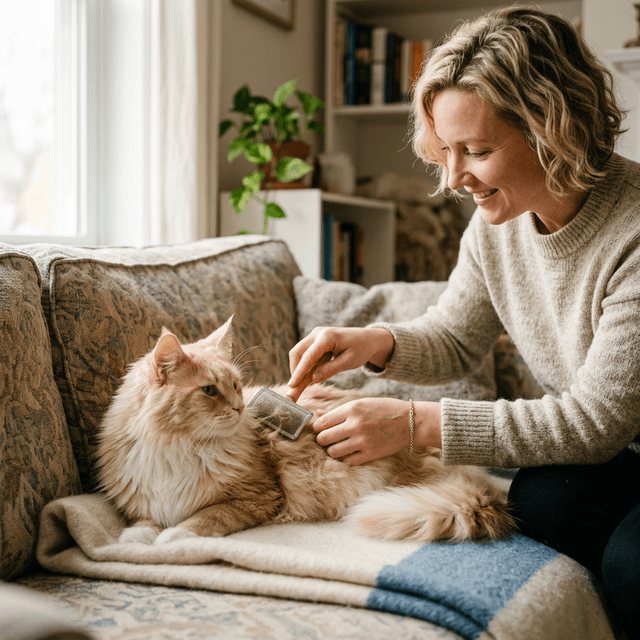
5 Cat Grooming Tips: Signs Your Cat Needs Better Coat Care
guide
Best Grooming Routine by Coat Type: Short, Double, and Curly Coats (Behavior-First Guide)
guide
De-Shedding Routine for Double-Coat Breeds: A Weekly System That Works
guide
Curly Coat Detangling Routine: Prevent Mats Without Over-Brushing
guide
Short-Coat Maintenance Routine: A Fast Weekly Grooming Plan That Actually Cuts Shedding
Frequently asked questions
What is the best dog brush for my dog's coat type?
The best dog brush is the one matched to your dog's coat type and your grooming goal (detangling, de-shedding, smoothing, or undercoat removal). Short coats often do well with rubber curry or bristle brushes, while long or curly coats typically need a slicker plus a comb to check for tangles.
Is a slicker brush safe for all dogs?
A slicker brush can be safe, but it is not ideal for every coat or skin type. Use light pressure, choose a softer-pin slicker for sensitive skin, and stop if you see redness or discomfort—some dogs do better with a rubber brush or bristle brush instead.
How do I choose between an undercoat rake and a de-shedding tool?
An undercoat rake is usually best for thick double coats when you need to lift and remove loose undercoat without scraping the topcoat. De-shedding tools can work quickly but may irritate skin or thin coat if overused, so follow instructions and use gentle, limited passes.
