
guide • Coat Care
5 Cat Grooming Tips: Signs Your Cat Needs Better Coat Care
Learn five clear signs your cat needs better grooming, plus simple, gentle ways to fix mats, dandruff, and greasy fur at home.
By PetCareLab Editorial • March 5, 2026 • 13 min read
Table of contents
- Why Grooming Matters More Than “Looking Cute”
- Quick Coat-Care Baseline (So You Know What “Normal” Looks Like)
- Coat-Type Grooming Frequency (Realistic, Not Idealized)
- Basic Tool Kit (What Each Tool Is Actually For)
- Common Mistake: Brushing Only the Top Layer
- Sign #1: Mats, Tangles, or “Felted” Fur (Especially in Hidden Spots)
- Who’s Most at Risk (Breed + Body Examples)
- Real-World Scenario
- How to Check for Mats (60-Second Routine)
- How to Fix Mats Safely (Step-by-Step)
- Product Recommendations (Tools That Actually Help)
- Mistakes to Avoid
- Sign #2: Excess Shedding, Hairballs, or “Dust Bunny” Fur Everywhere
- What’s Normal vs. What’s Not
- Breed Examples
- Step-by-Step: A De-Shedding Routine That Works
- Product Recommendations + Comparisons
- Extra “Cat Grooming Tips” for Hairball-Prone Cats
- Sign #3: Greasy Coat, Dandruff, or “Stinky” Fur
- What You Might Notice
- Common Causes (Grooming + Health)
- Real-World Scenario
- Step-by-Step: Degrease and Reset the Coat (Cat-Safe)
- Product Recommendations
- Common Mistakes to Avoid
- Sign #4: Overgrooming (Bald Spots, Broken Hair, or “Barbering”)
- What Overgrooming Looks Like
- Breed/Personality Notes
- What Helps (Practical, Not Hand-Wavy)
- When to Call the Vet (Don’t Wait)
- Sign #5: Dirty Rear End, Litter Stuck to Fur, or “Messy Paws”
- Who’s Most at Risk
- Real-World Scenario
- Step-by-Step: Sanitary Clean-Up (Gentle and Effective)
- Product Recommendations
- Mistakes to Avoid
- How to Build a Stress-Free Grooming Habit (Even If Your Cat “Hates It”)
- The 7-Day “Reset” Plan (Works for Most Cats)
- Handling Techniques That Prevent Scratching and Fear
- Treat Strategy (Simple and Effective)
- Breed-Specific Grooming Notes (Because One Routine Doesn’t Fit All)
- Persian: Daily Maintenance + Face Care
- Maine Coon: Undercoat Management
- Siamese / Short-Haired Sleek Coats: Gentle Tools, Less Is More
- Ragdoll: “Looks Easy” Coat That Still Mats
- Product Recommendations (What’s Worth Buying vs. Skipping)
- Best Starter Set (Most Cats)
- Nice-to-Have Upgrades
- What to Skip (Often Causes Problems)
- When Better Grooming Isn’t Enough: Red Flags That Need a Vet
- The Takeaway: Use These 5 Signs as Your Grooming Checklist
Why Grooming Matters More Than “Looking Cute”
Cats are famously self-cleaning, but self-grooming has limits—especially for indoor cats, seniors, long-haired breeds, overweight cats, and cats with skin or dental discomfort. When grooming slips, it’s not just a cosmetic issue. Matted fur can bruise the skin, dandruff can signal dryness or parasites, and greasy coats can point to stress, pain, or underlying illness.
This guide covers five clear signs your cat needs better grooming, plus cat grooming tips you can start today: what tools to use, how often to groom by coat type, what mistakes to avoid, and when to call your vet or a professional groomer.
Pro-tip: A cat who “suddenly” stops grooming is often telling you something hurts. Don’t just fix the coat—look for the reason.
Quick Coat-Care Baseline (So You Know What “Normal” Looks Like)
Before we get into red flags, here’s a practical baseline. Think of it as the minimum routine most cats do well with:
Coat-Type Grooming Frequency (Realistic, Not Idealized)
- •Short-haired cats (e.g., American Shorthair, Siamese): brush 1–2x/week
- •Medium-haired cats (e.g., Turkish Van, some mixed coats): brush 2–3x/week
- •Long-haired cats (e.g., Maine Coon, Persian, Ragdoll): brush daily or at least 5x/week
- •Seniors / overweight / arthritic cats: often need more frequent help, regardless of coat length
Basic Tool Kit (What Each Tool Is Actually For)
- •Slicker brush: surface tangles + fluffing (great for medium/long hair)
- •Stainless steel comb (wide + fine teeth): finds hidden mats; must-have for long hair
- •Rubber curry brush / grooming glove: gentle de-shedding for short coats; good for sensitive cats
- •Dematting tool or mat splitter: targeted mat removal (use carefully; skin can get caught)
- •Cat-safe wipes: quick clean-ups between baths (paws, rear, face)
- •Enzymatic shampoo (cat-specific): for true grime/grease; avoid “human” shampoos
Common Mistake: Brushing Only the Top Layer
Many owners brush until the coat “looks” smooth. But mats form under the topcoat, especially:
- •behind the ears
- •armpits (“arm pits”)
- •belly and groin
- •base of tail
- •under collar/harness areas
Sign #1: Mats, Tangles, or “Felted” Fur (Especially in Hidden Spots)
If you can feel tight clumps or see rope-like tangles, your cat needs grooming help—and quickly. Mats pull the skin, trap moisture and debris, and can cause painful inflammation or even skin infections underneath.
Who’s Most at Risk (Breed + Body Examples)
- •Persians: dense, fine coat that tangles easily; face folds can also trap moisture
- •Maine Coons: long guard hairs with thick undercoat—mats form at armpits and belly
- •Ragdolls: silky coat but still prone to belly mats, especially if sedentary
- •Overweight cats: can’t reach lower back and rear easily
- •Arthritic seniors: reduced flexibility leads to gradual mat buildup
Real-World Scenario
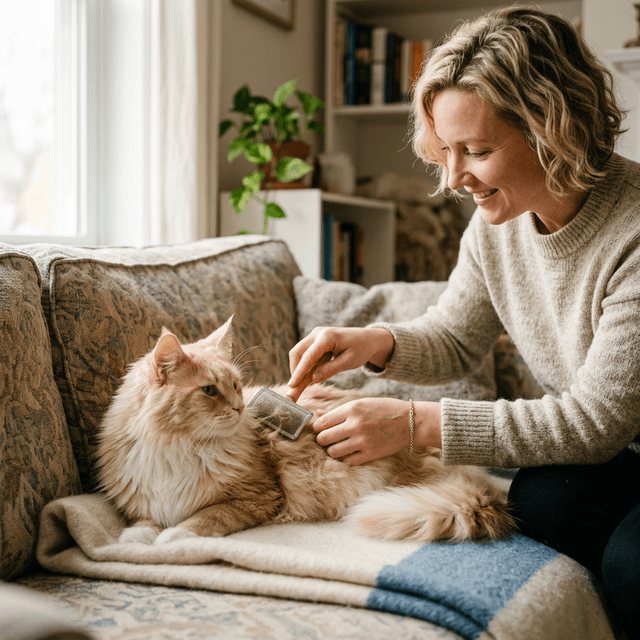
You pet your cat and notice a “crunchy” patch near the hindquarters. You try brushing, but your cat flinches and walks away. That’s often a mat close to the skin—tugging hurts.
[IMAGE_PLACEHOLDER_1]
How to Check for Mats (60-Second Routine)
- Run your fingers against the grain in high-risk areas (behind ears, armpits, belly).
- Use a wide-tooth comb and gently slide it through. If it stops suddenly, don’t force it.
- Look for skin redness or a damp odor—both can signal irritation under the mat.
How to Fix Mats Safely (Step-by-Step)
If the mat is small and not tight to the skin:
- Hold the fur at the base (near the skin) to reduce pulling.
- Use your fingers to tease the mat apart.
- Work a wide-tooth comb from the ends of the fur toward the base—never root-first.
- Finish with a slicker brush lightly to smooth.
If the mat is tight, large, or close to skin:
- •Don’t try to “yank it out.”
- •Avoid scissors—cat skin is thin and can fold into the mat.
- •Use a dematting tool only if you’re experienced and can clearly see the skin line.
- •Best option: professional groomer or vet groom (especially for pelted coats).
Pro-tip: If you can’t slide a comb under the mat at all, treat it as a “professional-level” mat.
Product Recommendations (Tools That Actually Help)
- •Stainless steel greyhound-style comb: the single best “mat detector” for long coats
- •Soft slicker brush (rounded pins): daily maintenance without scratching
- •Dematting rake (for thick undercoats): useful for Maine Coons and mixes with dense fluff—use gently
Mistakes to Avoid
- •Cutting mats with scissors (high risk of lacerations)
- •Bathing a matted cat—water can tighten mats like shrink wrap
- •Waiting “until the weekend”—mats worsen fast once they start
Sign #2: Excess Shedding, Hairballs, or “Dust Bunny” Fur Everywhere
Shedding is normal, but when it spikes—or you’re finding hair clumps daily—it’s often a grooming gap. More loose fur = more swallowed fur = more hairballs, especially in long-haired cats.
What’s Normal vs. What’s Not
Normal:
- •seasonal shedding (often spring/fall)
- •mild daily shedding in indoor cats
Concerning:
- •sudden heavy shedding
- •frequent hairballs (e.g., weekly or more)
- •hair clumps that come out in tufts
- •signs of itch (overgrooming certain spots)
Breed Examples
- •British Shorthair: plush coat sheds heavily; benefits from regular de-shedding
- •Norwegian Forest Cat: seasonal coat blow can overwhelm self-grooming
- •Domestic longhair: hairballs are common without structured brushing
Step-by-Step: A De-Shedding Routine That Works
- Pick the right tool:
- •Short hair: rubber curry or grooming glove
- •Medium/long: slicker + comb combo
- Groom before meals or playtime (cats tolerate it better when calm and motivated).
- Do 5 minutes daily instead of 30 minutes once a week.
- Finish with a comb check to catch what the brush missed.
Product Recommendations + Comparisons
- •Rubber curry brush vs. slicker brush
- •Rubber curry: best for sensitive short-haired cats; removes loose fur without scratch risk
- •Slicker: best for medium/long coats; lifts undercoat but can irritate if pressed hard
- •Deshedding tools (Furminator-style)
- •Can be effective but easy to overuse; too much pressure can cause coat breakage or skin irritation
- •If you use one, keep sessions short and follow with a gentle brush
Pro-tip: If your cat’s skin looks pink after brushing, you’re using too much pressure or the wrong brush type.
Extra “Cat Grooming Tips” for Hairball-Prone Cats
- •Offer wet food or add water to food (hydration supports coat condition)
- •Consider a vet-approved hairball gel if hairballs are frequent
- •Increase enrichment: stress can trigger overgrooming, which worsens hair issues
Sign #3: Greasy Coat, Dandruff, or “Stinky” Fur
A healthy cat coat typically feels clean and slightly silky—not oily, scaly, or musty. Grease and dandruff can be grooming issues, but they can also hint at medical problems.
What You Might Notice
- •oily “spikes” along the back or tail base
- •dandruff flakes when you pet them (especially on dark coats)
- •a sour or yeasty smell
- •coat looks dull or clumped even after brushing
Common Causes (Grooming + Health)
Grooming-related:
- •not enough brushing to distribute oils
- •overweight/arthritis limiting self-grooming
- •dirty litter or environmental dust
Possible medical contributors (worth a vet chat if persistent):
- •parasites (fleas, mites)
- •skin infection (bacterial/yeast)
- •allergies
- •dental pain (cats groom less when mouths hurt)
- •thyroid issues (less common, but possible)
Real-World Scenario
Your older cat used to feel soft, but now their back feels greasy and you notice dandruff near the tail. They also hesitate to jump. That combination often points to mobility discomfort reducing self-grooming.
[IMAGE_PLACEHOLDER_2]
Step-by-Step: Degrease and Reset the Coat (Cat-Safe)
- Brush first to remove loose debris and prevent tangles tightening if wet.
- Spot-clean with cat-safe wipes for mild grease.
- If grease persists, use a cat-specific shampoo:
- •Choose a gentle, fragrance-light formula
- •Avoid tea tree oil products (cats are sensitive to many essential oils)
- Rinse thoroughly—residue can cause itching and more dandruff.
- Dry fully and brush again once the coat is mostly dry.
Product Recommendations
- •Cat-specific gentle shampoo (hypoallergenic, fragrance-free if possible)
- •Waterless foam shampoo for cats who hate baths (still avoid the face; wipe off well)
- •Fine-tooth flea comb if dandruff is accompanied by “peppery” debris (possible flea dirt)
Common Mistakes to Avoid
- •Using human shampoo (pH mismatch can irritate skin)
- •Bathing too often (can worsen dryness and dandruff)
- •Ignoring the tail base—oily buildup there can be stubborn and uncomfortable
Sign #4: Overgrooming (Bald Spots, Broken Hair, or “Barbering”)
Needing better grooming isn’t always about brushing more. Sometimes the problem is the opposite: your cat is grooming too much, often because something is itchy, painful, or stressful.
What Overgrooming Looks Like
- •thinning fur on belly, inner thighs, forelegs
- •“stubbly” broken hairs (barbered coat)
- •symmetrical bald patches
- •skin may look normal or mildly irritated
Breed/Personality Notes
- •High-strung or sensitive cats (often seen in busy households) may overgroom with stress.
- •Some breeds like Siamese and related breeds can be more vocal and stress-reactive—overgrooming can be part of that picture.
What Helps (Practical, Not Hand-Wavy)
- Rule out fleas first. One flea bite can trigger weeks of itching in allergic cats.
- Consider environmental causes:
- •new detergent, scented litter, plug-in air fresheners
- •dry winter air (low humidity)
- Add structured enrichment:
- •scheduled play (10 minutes, 1–2x/day)
- •puzzle feeders
- •vertical space (cat tree, shelves)
- Use grooming to support skin health:
- •gentle brushing to remove allergens and distribute oils
- •avoid aggressive de-shedding that can irritate skin
When to Call the Vet (Don’t Wait)
- •open sores, scabs, or skin odor
- •rapid spread of bald spots
- •intense itching, head shaking, ear scratching
- •your cat seems uncomfortable when touched
Pro-tip: Overgrooming is often a medical or stress signal, not “bad behavior.” Treat the cause, not just the coat.
Sign #5: Dirty Rear End, Litter Stuck to Fur, or “Messy Paws”
If your cat has poop stuck to the fur (“dingleberries”), litter clumps on toes, or a consistently dirty rear, grooming support is needed—and it’s also a hygiene and infection-prevention issue.
Who’s Most at Risk
- •Long-haired cats (Persians, Maine Coons, domestic longhairs)
- •overweight cats who can’t reach well
- •cats with diarrhea/soft stool
- •seniors with limited flexibility
- •cats with painful joints or dental disease
Real-World Scenario
A long-haired cat exits the litter box with clumps stuck between toes and a small smear under the tail. They lick frantically afterward, spreading bacteria to the coat and sometimes leading to skin irritation.
[IMAGE_PLACEHOLDER_3]
Step-by-Step: Sanitary Clean-Up (Gentle and Effective)
- Trim approach (safest done by a groomer):
- •Ask for a sanitary trim: hair shortened around the anus and underside of tail.
- At-home spot clean (for minor mess):
- •Use warm water and a soft cloth or cat-safe wipes.
- •Hold fur at the base to avoid pulling.
- •Pat dry (don’t rub aggressively).
- Paw care:
- •Check between toes weekly.
- •Remove litter gently with damp cloth.
- •Trim excessive toe tufts on long-haired cats (or have a groomer do it).
Product Recommendations
- •Unscented pet wipes (avoid strong fragrance)
- •Rounded-tip grooming scissors (for small, careful trims only—never near skin folds)
- •Electric trimmer designed for pets (quiet models reduce stress; still use caution)
Mistakes to Avoid
- •Bathing the whole cat for a small mess (creates stress and may worsen future handling)
- •Pulling litter clumps off toe fur (painful; can cause aversion to the litter box)
- •Ignoring repeated mess—recurring stool-on-fur often means stool is too soft or the coat is too long
How to Build a Stress-Free Grooming Habit (Even If Your Cat “Hates It”)
Most grooming problems aren’t solved by one epic brushing session. They’re solved by tiny, consistent sessions that keep the coat manageable and teach your cat that grooming is predictable and safe.
The 7-Day “Reset” Plan (Works for Most Cats)
Day 1–2:
- •2–3 minutes of gentle brushing in favorite spots (cheeks, shoulders)
- •treat immediately after
Day 3–4:
- •add a comb check in one high-risk area (behind ears or armpit)
- •stop before your cat gets annoyed
Day 5–6:
- •introduce brief handling of paws or belly (1–2 seconds), reward, stop
Day 7:
- •5 minutes total, split into two mini sessions if needed
Pro-tip: End grooming on a win. If you stop at the first tail flick, you’re training calm cooperation—not conflict.
Handling Techniques That Prevent Scratching and Fear
- •Groom when your cat is naturally relaxed (post-meal, sunny nap time)
- •Place your cat on a non-slip surface (towel on a table or your lap)
- •Use slow strokes; avoid rapid “scrubbing” motions
- •Watch body language:
- •tail twitching, skin rippling, ears rotating back = pause or stop
Treat Strategy (Simple and Effective)
- •Use high-value lickable treats (small amounts)
- •Reward after a short set of strokes, not only at the end
- •For cats who don’t take treats during grooming, reward afterward with play or a meal
Breed-Specific Grooming Notes (Because One Routine Doesn’t Fit All)
Persian: Daily Maintenance + Face Care
- •Daily combing to prevent dense mats
- •Wipe face folds/tear stains with vet-approved wipes; keep the area dry
- •Consider professional grooming if mats form quickly
Maine Coon: Undercoat Management
- •Focus on belly, “pantaloons,” and armpits
- •Use comb + slicker; de-shed during seasonal coat blow
- •Trim fur around rear if hygiene issues pop up
Siamese / Short-Haired Sleek Coats: Gentle Tools, Less Is More
- •Rubber curry or glove 1–2x/week
- •Watch for overgrooming if stress is high—coat issues can be behavioral/medical
Ragdoll: “Looks Easy” Coat That Still Mats
- •Regular comb checks on belly and under collar area
- •Short daily sessions prevent surprise mats
Product Recommendations (What’s Worth Buying vs. Skipping)
You don’t need a drawer full of tools. Most households do best with a few high-quality basics.
Best Starter Set (Most Cats)
- •Rubber curry brush (short hair) OR soft slicker (longer hair)
- •Stainless steel comb (even short-haired cats benefit for checks)
- •Cat-safe wipes for spot cleaning
Nice-to-Have Upgrades
- •Quiet pet trimmer for sanitary trims (or schedule with groomer)
- •Waterless foam shampoo for cats who tolerate it
- •Lint roller + washable throws to manage shedding without over-brushing
What to Skip (Often Causes Problems)
- •Strongly scented sprays (can irritate and make cats avoid grooming)
- •Essential-oil-heavy products (cats are sensitive; risk isn’t worth it)
- •Harsh deshedding blades used frequently (can over-strip coat)
When Better Grooming Isn’t Enough: Red Flags That Need a Vet
Grooming can support skin and coat health, but it shouldn’t replace medical care. Contact your vet if you notice:
- •sudden coat change (greasy, dull, heavy shedding) lasting more than 2–3 weeks
- •persistent dandruff with redness, scabs, or odor
- •frequent hairballs with vomiting, appetite change, or constipation
- •bald patches, sores, or intense itching
- •your cat resists grooming due to pain (especially older cats)
Pro-tip: The coat is a health “dashboard.” When it changes fast, it’s often a clue—not a coincidence.
The Takeaway: Use These 5 Signs as Your Grooming Checklist
If you remember nothing else, remember this: the most effective cat grooming tips are the ones you can do consistently. Use these five signs as your quick check:
- •Mats/tangles: act early; comb-check hidden zones; avoid scissors
- •Heavy shedding/hairballs: short daily sessions beat weekly marathons
- •Grease/dandruff/odor: brush first, bathe only if needed, watch for medical causes
- •Overgrooming: treat itch/stress/pain, not just the fur
- •Messy rear/paws: spot clean + sanitary trims prevent bigger problems
If you tell me your cat’s breed, age, coat length, and what sign you’re seeing most, I can suggest a tailored routine (tools + schedule) that fits your cat’s tolerance level.
Coat Care Cluster
More in this topic
guide
Best Dog Brush by Coat Type: Pick the Right Tool Fast
guide
Deshedding Double Coated Dogs: The Ultimate Guide
guide
Best Grooming Routine by Coat Type: Short, Double, and Curly Coats (Behavior-First Guide)
guide
De-Shedding Routine for Double-Coat Breeds: A Weekly System That Works
guide
Curly Coat Detangling Routine: Prevent Mats Without Over-Brushing
guide
Short-Coat Maintenance Routine: A Fast Weekly Grooming Plan That Actually Cuts Shedding
Frequently asked questions
How often should I groom my cat?
Most short-haired cats do well with brushing 1–2 times per week, while long-haired cats often need daily brushing to prevent tangles and mats. Adjust based on shedding season, age, and mobility—cats that are overweight or senior may need extra help.
What should I do if my cat has matted fur?
Avoid cutting mats with scissors because the skin can be thin and easy to nick. Start with gentle brushing around the mat, use a mat-splitting tool or dematting comb if your cat tolerates it, and see a groomer or vet if mats are tight, widespread, or causing skin irritation.
Is dandruff or a greasy coat a grooming problem or a health issue?
It can be both: mild flakes may come from dry skin and inadequate brushing, but persistent dandruff or a greasy coat can also signal parasites, allergies, stress, pain, or underlying illness. If changes last more than a couple of weeks or come with itching, hair loss, odor, or lethargy, book a vet check.
