
guide • Hair Removal (Home)
How to Remove Pet Hair from Blankets and Bedding Without Extra Wash Cycles (Real-World Methods That Work)
Stop re-washing just to chase fur. Here are the most effective ways to remove pet hair from blankets and bedding using the right tool, order, and fabric-specific approach.
By Lucy Anderson • February 27, 2026 • 7 min read
Table of contents
- What actually matters in this comparison
- The five variables that change everything
- The non-negotiable: order of operations
- Baseline criteria and scoring method
- Criteria
- Scoring notes (so you can calibrate)
- Side-by-side workflow analysis
- Option A: Rubber/electrostatic glove (best for embedded hair; slower for large duvets)
- Option B: Reusable roller (best balance of speed + neat collection)
- Option C: Sticky lint roller (best for precision; worst for long-term cost)
- Option D: Scraper/rake-style pet hair tools (best for heavy embed; higher fabric risk)
- Option E: “Laundry catcher” add-ons (best when you must wash anyway; not a standalone solution)
- Cost, effort, and consistency tradeoffs
- If you want the lowest ongoing cost
- If you want the least effort per week
- If you need bedding to look clean for longer (consistency)
- The fabric-safety tradeoff (important)
- Which option wins by user profile
- Profile 1: “My cat sleeps on the bed every night, and the duvet cover always looks furry”
- Profile 2: “Short dog hair is embedded in my fleece blanket and survives the wash”
- Profile 3: “I have allergies and need pillowcases and sheets truly hair-light”
- Profile 4: “Heavy shedding season, multiple pets, and hair tumbleweeds”
- Profile 5: “No dryer / line-dry only”
- Transition strategy if changing tools
- Week 1: Establish a baseline (one-time reset)
- Week 2+: Maintain with the “two-minute rule”
- If you’re adding a second tool, do it for a reason
- Common decision mistakes
- Mistake 1: Using the right tool in the wrong direction
- Mistake 2: Treating all fabrics the same
- Mistake 3: Pressing harder instead of changing methods
- Mistake 4: Skipping containment and creating a second mess
- Mistake 5: Expecting one pass to solve a heavy-shed household
- Final recommendation framework
- If hair is mostly visible on the surface
- If hair is embedded and “survives the wash”
- If you care most about cost control
- The “no extra wash cycles” winning routine (most homes)
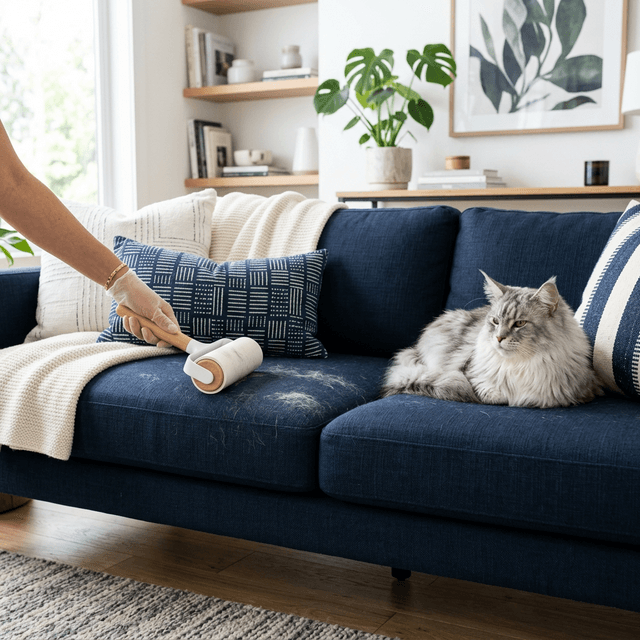
Pet hair has a special talent for clinging to blankets and bedding: it weaves into fibers, grabs onto static, and resurfaces the moment you think you’ve handled it. If you’re trying to remove pet hair from blankets without running “one more wash,” the win usually comes from two things:
- using the right removal tool for your fabric and hair type, and
- doing steps in the right order so you lift hair before it gets embedded deeper.
This guide is comparison-led on purpose. No single method wins for everyone. A lint roller can beat a reusable roller on a pillowcase, while a rubber glove can smoke both on a fleece throw. The best choice depends on tradeoffs: speed vs. cost, fabric safety vs. aggressiveness, and “looks clean now” vs. “stays clean until bedtime.”
What actually matters in this comparison
If you’re avoiding extra wash cycles, you’re solving a different problem than “clean laundry.” You’re trying to remove hair efficiently before or between washes so one normal wash is enough.
The five variables that change everything
1) Fabric type (how hair anchors)
- •Fleece/microfiber/plush throws: hair buries and tangles; static makes it worse.
- •Cotton percale sheets: hair tends to sit on top, easier to lift.
- •Flannel: grabs hair like Velcro; needs more mechanical action.
- •Quilts/duvets: seams trap hair in channels; you need edge-focused passes.
2) Hair type (what you’re fighting)
- •Short, stiff hair (labs, pugs): needle-like; embeds in weaves and doesn’t ball up.
- •Fine, long hair (many cats): forms wispy mats; often lifts in sheets.
- •Double-coat blowouts: heavy volume; removal becomes a “collection” problem.
3) Where the hair is sitting
- •Surface hair: can be rolled, vacuumed, or wiped.
- •Embedded hair: needs friction (rubber/silicone, scraping tools) to pull it out.
4) Your tolerance for repeat maintenance
- •A tool that’s 20% less effective but 3x faster often “wins” because you’ll actually use it.
5) The mess you can handle
- •Some methods collect hair neatly into a bin; others drop tumbleweeds on the floor unless you plan containment.
The non-negotiable: order of operations
If you only change one thing, change the order:
- •Dry removal first (shake/brush/roll/scrape)
- •Then wash once (normal cycle)
- •Then dry with hair-control help (if you use a dryer)
Doing it backward (wash first, then try to de-hair) is how you end up with lint screens packed like felt and bedding that still looks furry.
Baseline criteria and scoring method
To keep this practical, each option below is scored 1–5 in six categories. The “best” tool is the one that matches your priorities, not the highest raw total.
Criteria
- •Effectiveness (surface): removes visible hair quickly.
- •Effectiveness (embedded): pulls hair out of fleece/flannel seams.
- •Fabric safety: low risk of pilling, snagging, or roughening.
- •Speed (per blanket): realistic time for a throw or duvet cover.
- •Cost per use: ongoing refill cost vs. reusable.
- •Consistency: results stay good through the next nap/sleep.
Scoring notes (so you can calibrate)
- •A “5” in embedded effectiveness means it can pull hair out of fleece throws and quilt stitching without requiring a second full attempt.
- •A “5” in fabric safety means low snag risk on delicate cotton sateen, bamboo, or loosely woven knits.
Side-by-side workflow analysis
Below are the most common hair-removal workflows that avoid extra wash cycles. In practice, many households combine two.
Option A: Rubber/electrostatic glove (best for embedded hair; slower for large duvets)
Recommended tool: Pet Hair Removal Glove for Dogs & Cats
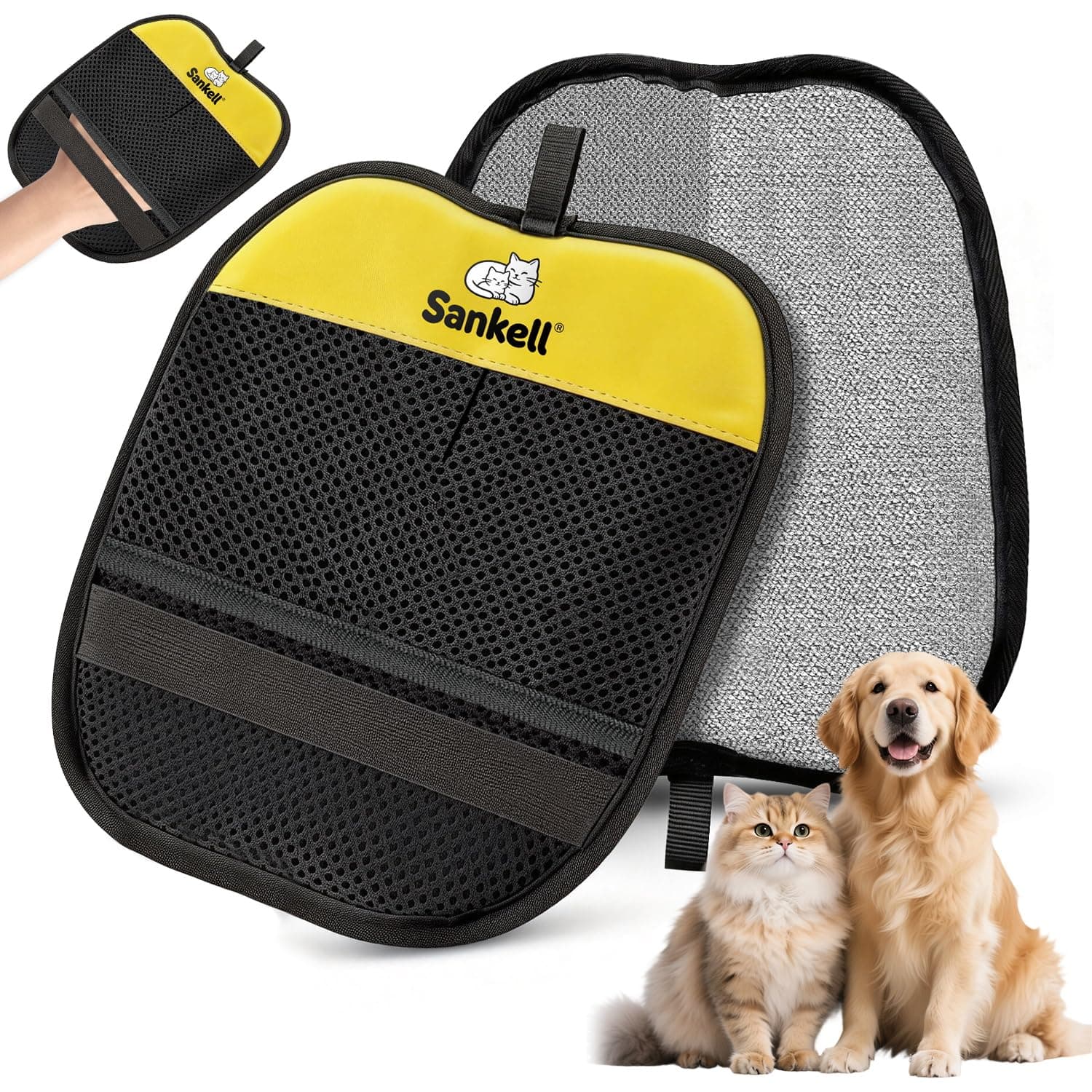
Pet Hair Removal Glove for Dogs & Cats, Newly Upgraded Reusable Electrostatic Pet Hair Remover Glove, Pet Hair Remover Mitt Tool for Couch, Furniture, Bed, Clothing, Carpet, Car Seat (Yellow)
Sankell
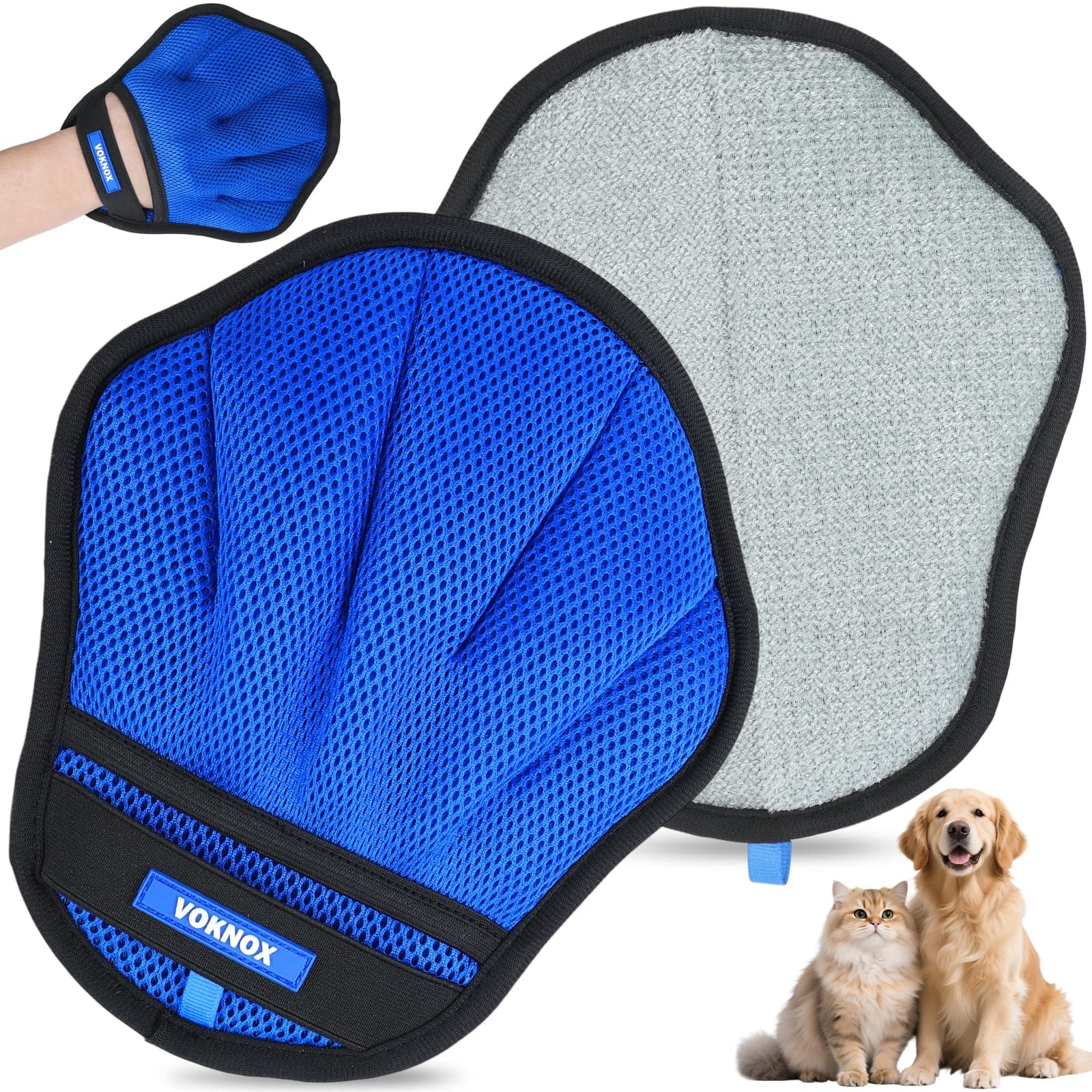
Pet Hair Removal Glove for Dogs & Cats, Electrostatic Five-Finger Hair Remover for Furniture, Couch, Carpet & Car Seat, Reusable Washable Pet Fur Cleaning Tool, Not for Grooming (1 PCS)
Brand: VOKNOX
Best for: fleece throws, flannel sheets, upholstery-like blanket fabrics, seams and edges.
Workflow (no extra wash): 1) Take the blanket outside or into a bathtub (containment matters). Shake hard 3–5 times. 2) Lay the blanket flat and use the glove with firm, long strokes in one direction. 3) When hair pills into ropes, pinch and peel it off the glove. 4) Flip the blanket and repeat where pets sit most.
Tradeoffs:
- •Wins: strong on embedded hair; cheap to reuse; good control around piping and quilt squares.
- •Loses: takes longer on king-size bedding; your arm will feel it; results depend on pressure and direction.
Scores (1–5):
- •Surface: 4
- •Embedded: 5
- •Fabric safety: 4 (use lighter pressure on loose knits)
- •Speed: 3
- •Cost per use: 5
- •Consistency: 4
Option B: Reusable roller (best balance of speed + neat collection)
Recommended tool: ChomChom Roller Pet Hair Remover
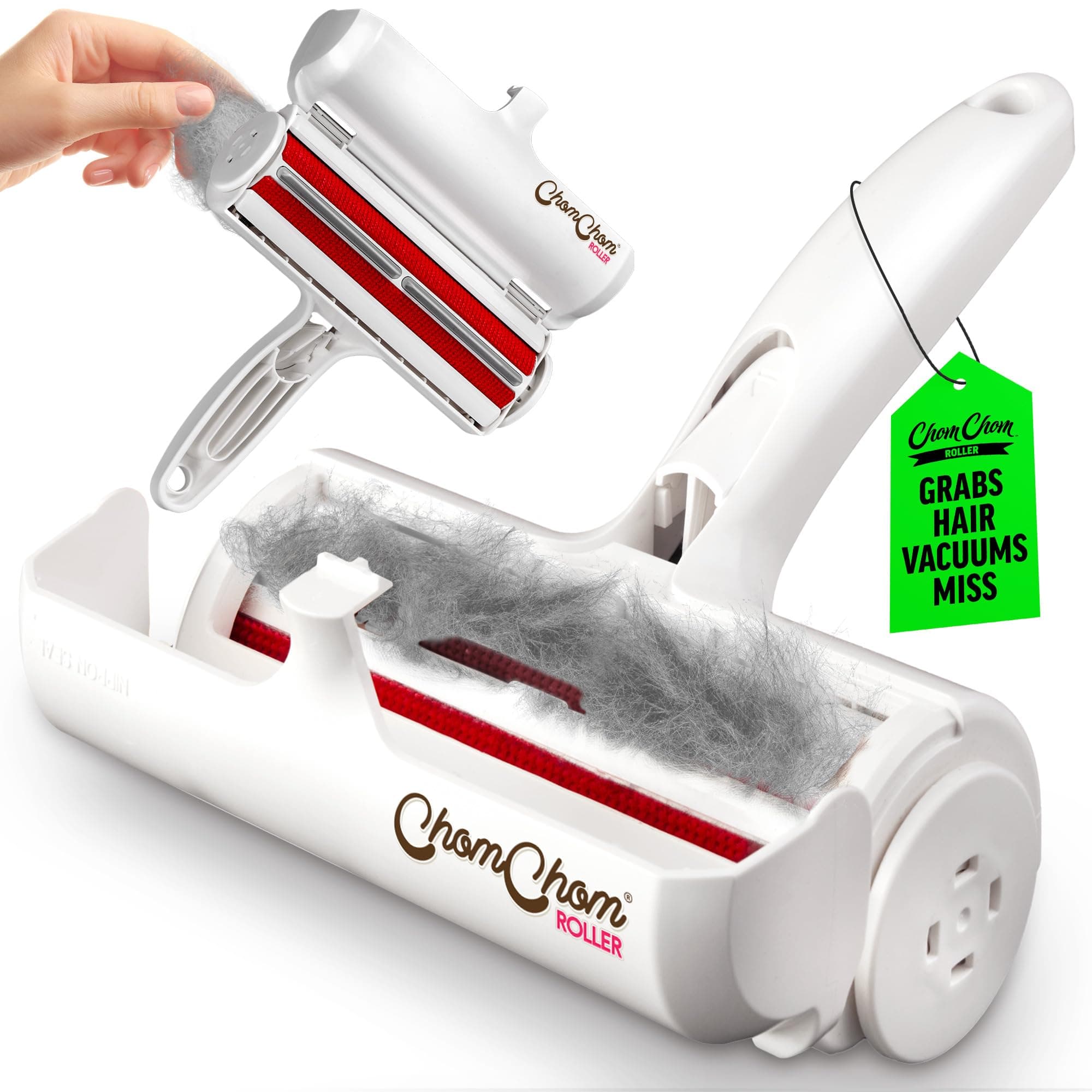
ChomChom Roller Pet Hair Remover – Original Size Reusable Lint Roller for Cat & Dog Hair on Furniture, Couch, Carpet, Car, Rugs & Bedding – Portable, Eco-Friendly (White)
ChomChom Roller
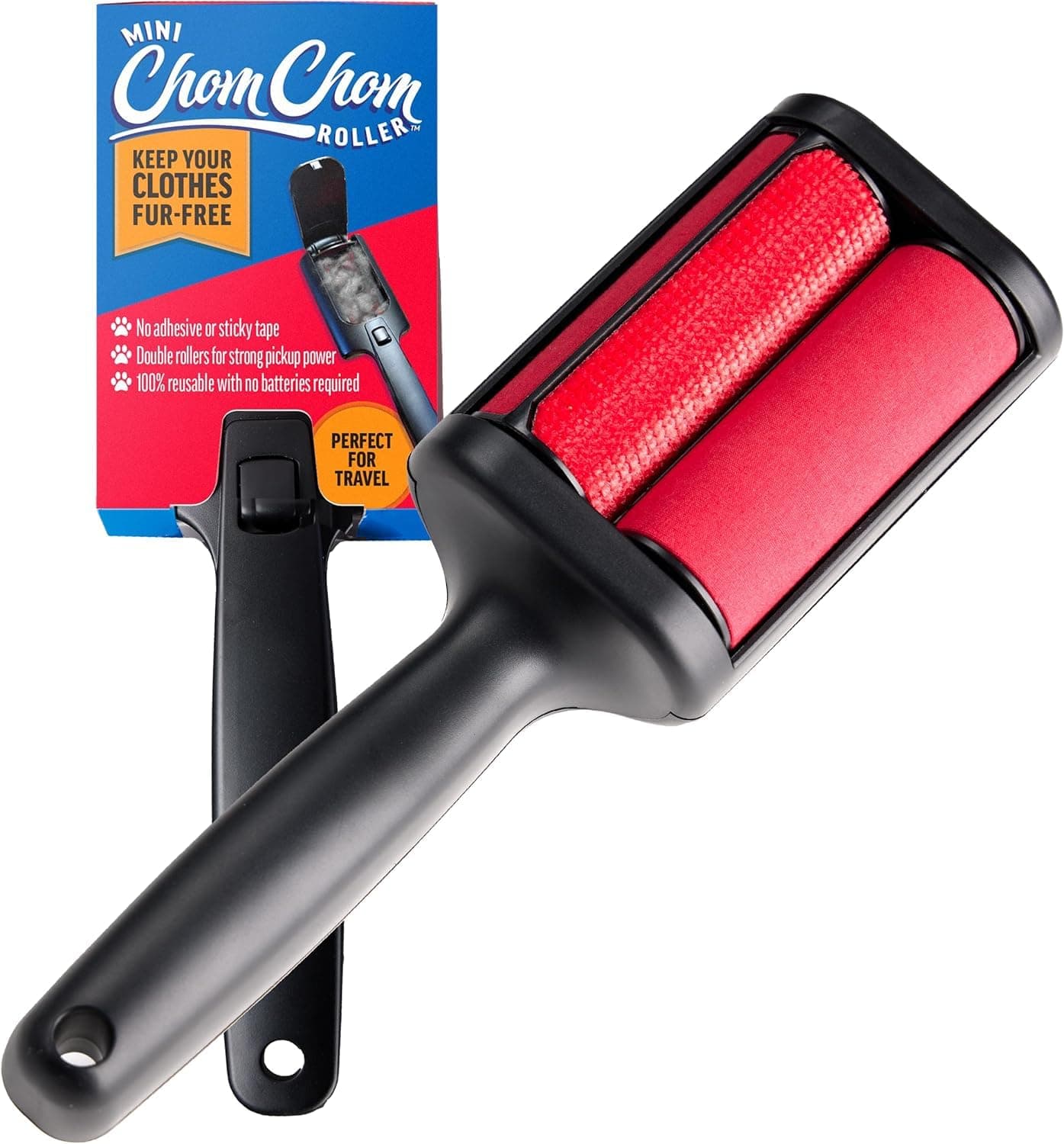
ChomChom Roller Pet Hair Remover – Reusable Lint Roller Pet Hair Removal Tool for Clothes, Couches, Cars and Travel - Cat Dog Hair Remover, Compact, No Sticky Refills Needed (Mini Roller)
ChomChom
Best for: duvet covers, cotton sheets, comforters, “hair on top” situations, quick resets before guests.
Workflow (no extra wash): 1) Make the bed so fabric is taut (rollers work better on tension). 2) Roll in overlapping passes, focusing on the center where pets curl. 3) Finish with edge passes along seams (hair accumulates there). 4) Empty the chamber before it overfills—performance drops when it’s packed.
Tradeoffs:
- •Wins: fast; hair goes into a compartment (less floor mess); great for daily maintenance.
- •Loses: less effective on deeply embedded hair in fleece; can miss hair trapped in quilting channels.
Scores (1–5):
- •Surface: 5
- •Embedded: 3
- •Fabric safety: 5
- •Speed: 5
- •Cost per use: 5
- •Consistency: 4
Option C: Sticky lint roller (best for precision; worst for long-term cost)
Recommended tool: Lint Rollers for Pet Hair (5 pack)
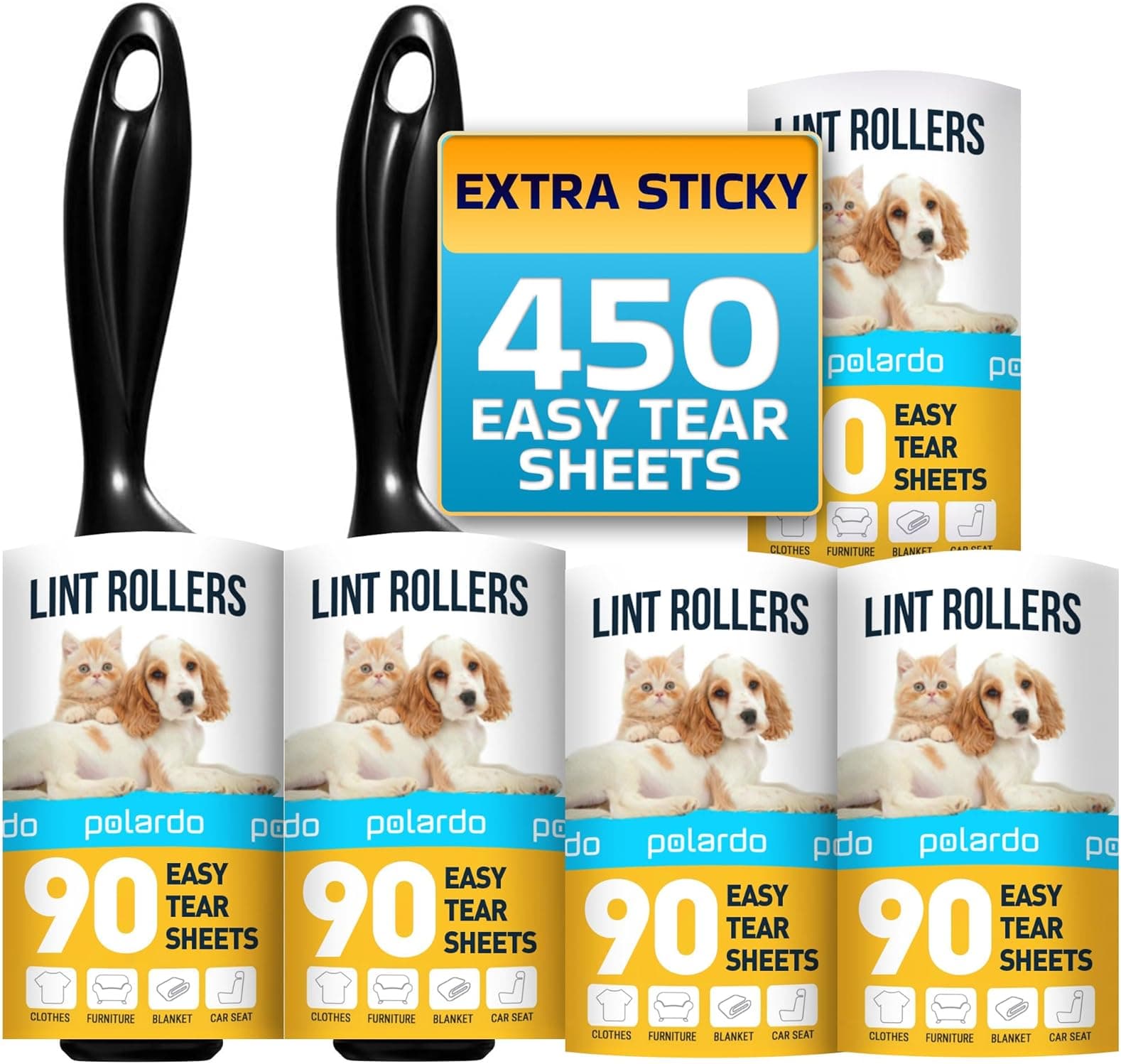
Best for: pillowcases, sheet edges, guest-room “last 5%,” dark-colored bedding that shows everything.
Workflow (no extra wash): 1) Use short, firm taps and rolls—don’t press so hard you wrinkle delicate fabric. 2) Tear sheets often. Once the adhesive loads up, you’re smearing hair around. 3) Target high-visibility zones: where your face rests, top third of the duvet, bed corners.
Tradeoffs:
- •Wins: very satisfying for detail work; good on short, stiff hairs that don’t ball up.
- •Loses: refills add up; waste; can struggle on heavy shedding days; adhesive may feel “grabby” on some weaves.
Scores (1–5):
- •Surface: 5
- •Embedded: 2
- •Fabric safety: 4
- •Speed: 4 (small areas), 2 (whole bedding set)
- •Cost per use: 2
- •Consistency: 3
Option D: Scraper/rake-style pet hair tools (best for heavy embed; higher fabric risk)
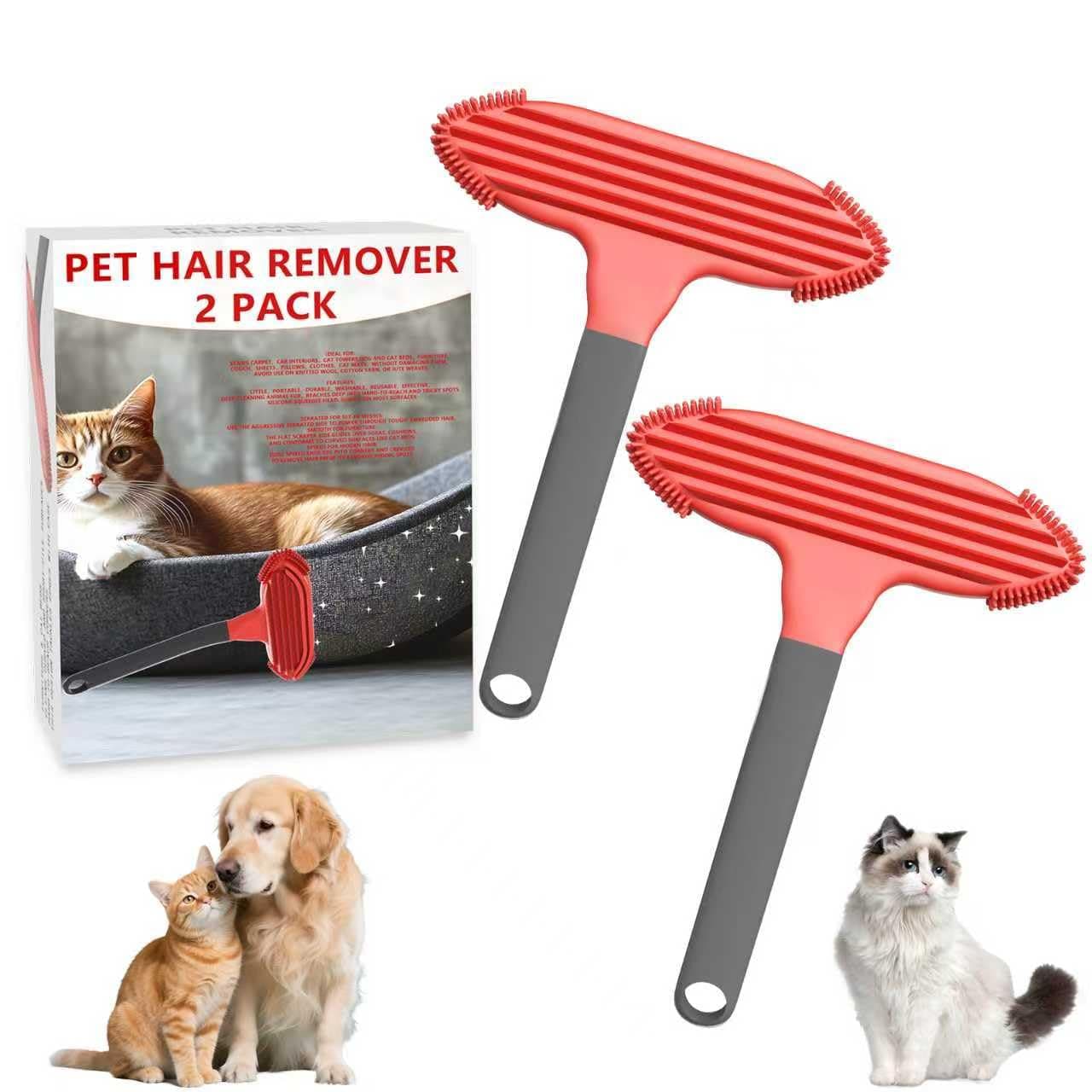
Recommended tool: Pet Hair Removal Tool (6 pcs)
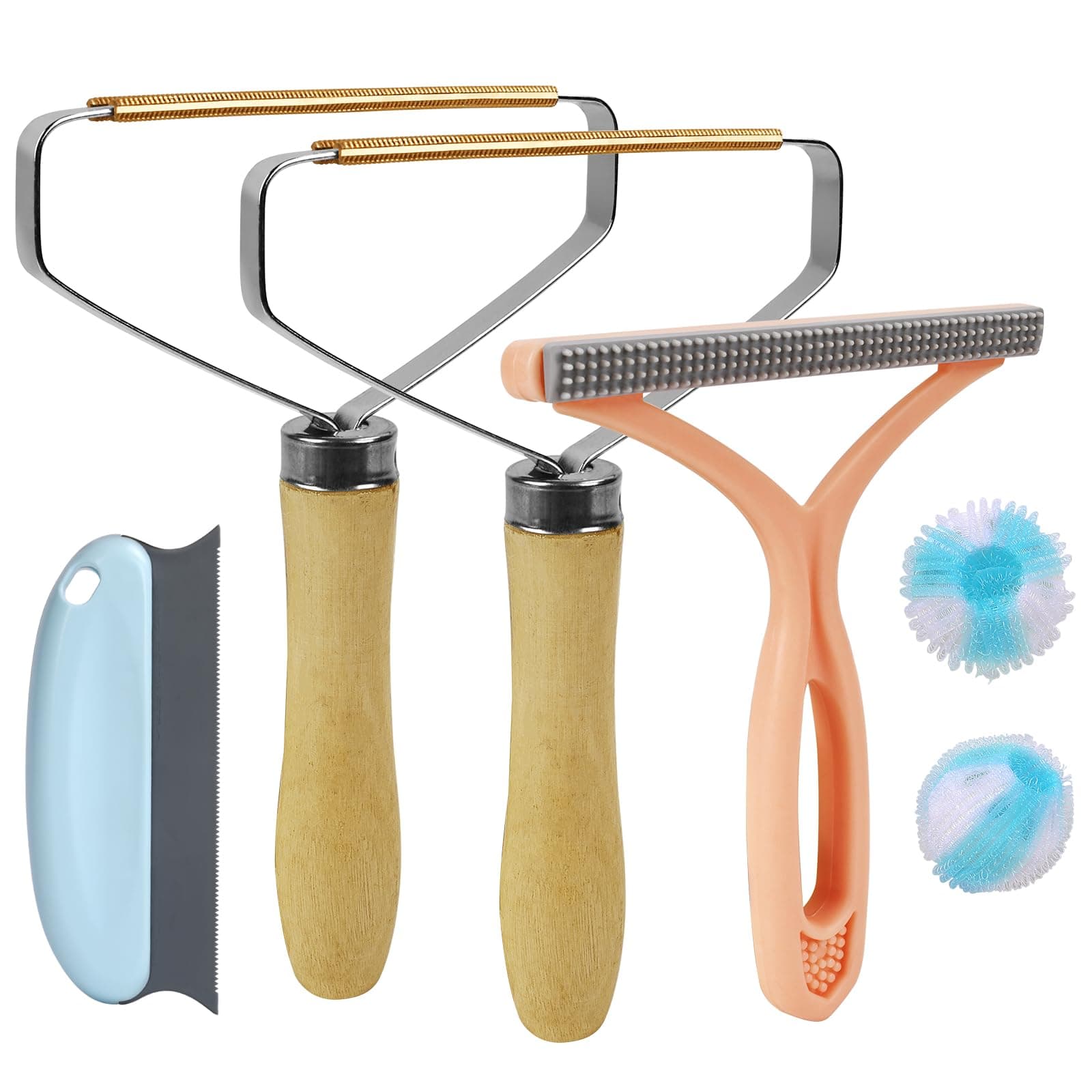
Pet Hair Removal Tool: 6 Pcs Dog Cat Hair Remover - Reusable Pet Hair Remover with Laundry Pet Hair Catcher - Portable Carpet Rake Scraper Fur Removal Tool for Rugs Car Mats Couch Furniture
Brand: Numhosai
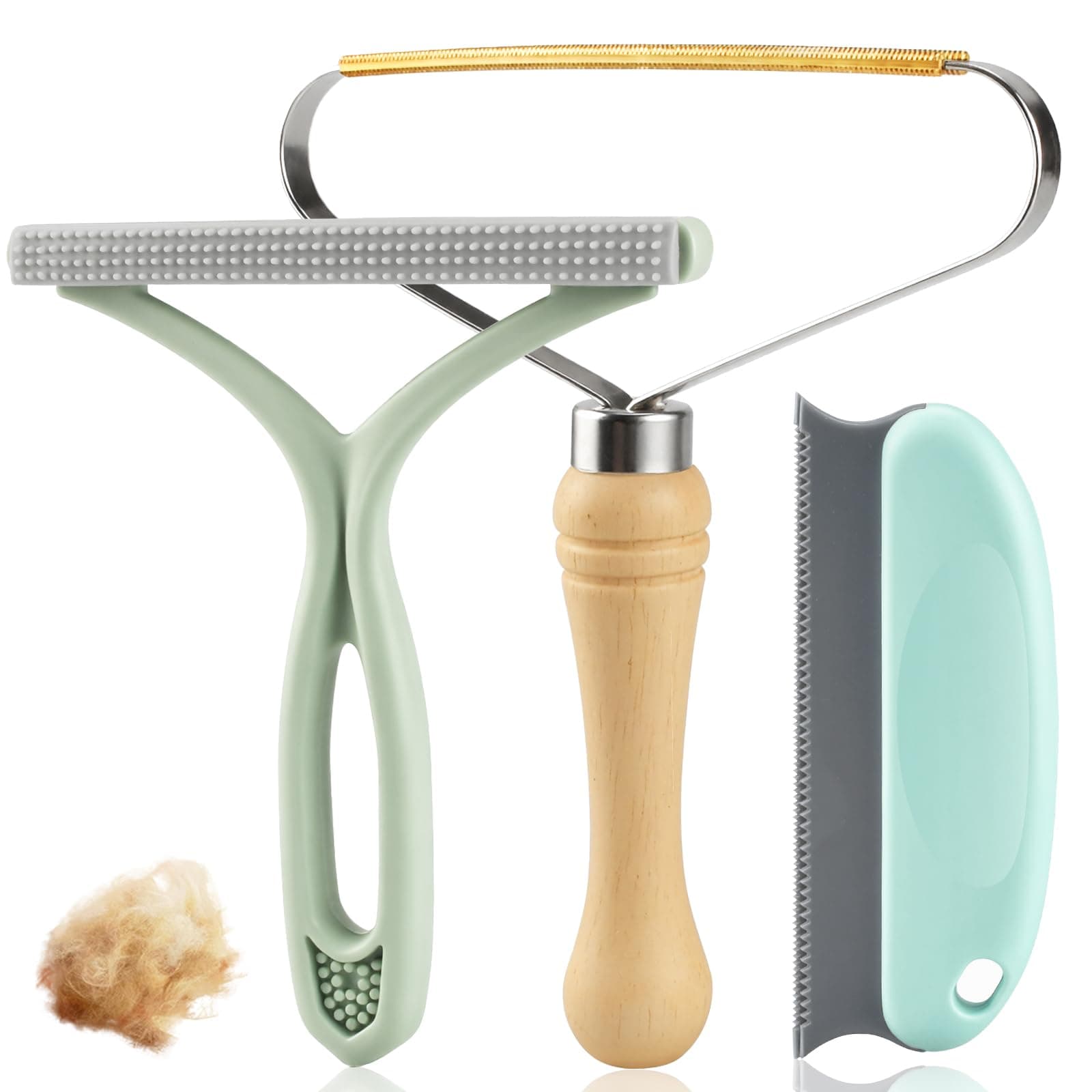
Pet Hair Removal Tool 3 Pack Dog Cat Hair Remover Carpet Scraper Rake Fur Removal Brush Lint Remover Shaver for Car Furniture Couch Green
Brand: AXEGY
Best for: thick throws, rugged blankets, pet beds used as bedding, and situations where hair is felted in.
Workflow (no extra wash): 1) Test a small corner first—some tools are aggressive. 2) Hold fabric taut and use very light pressure. 3) Work in one direction so hair collects into lines you can pick up. 4) Finish with a gentler tool (glove or reusable roller) to remove loosened hair.
Tradeoffs:
- •Wins: can pull out hair that rollers leave behind; useful during seasonal shedding.
- •Loses: higher risk of fuzzing/pilling on soft fleece or delicate knits; requires a careful hand.
Scores (1–5):
- •Surface: 4
- •Embedded: 5
- •Fabric safety: 2–4 (depends on blanket; always spot-test)
- •Speed: 4
- •Cost per use: 5
- •Consistency: 4
Option E: “Laundry catcher” add-ons (best when you must wash anyway; not a standalone solution)
Some multi-piece kits include laundry pet hair catchers (often silicone). If you already have them (or they come with a tool set), they can help reduce hair redepositing during the one wash you were going to run.
Tradeoffs:
- •Wins: can reduce the amount of hair left in the wash; low effort once you own them.
- •Loses: performance varies widely by washer type and load size; won’t replace dry removal.
Scores (1–5):
- •Surface: 1
- •Embedded: 1
- •Fabric safety: 5
- •Speed: 5
- •Cost per use: 5
- •Consistency: 2–3
Cost, effort, and consistency tradeoffs
Think of tools in three buckets: “fast reset,” “deep extraction,” and “precision cleanup.” Your best system usually uses two.
If you want the lowest ongoing cost
- •Reusable roller and glove are the long-game winners.
- •Sticky lint rollers are convenient but become a subscription you didn’t ask for.
If you want the least effort per week
- •The reusable roller is the best “I will actually do this nightly” option.
- •A glove is more work, but it’s a better choice if hair is embedded and you’re tired of seeing it after washing.
If you need bedding to look clean for longer (consistency)
- •Deep extraction tools (glove or careful scraper) prevent the “hair comes back as soon as it dries” problem.
- •Surface-only tools can look perfect immediately, then the first flop of a comforter releases more hair from seams.
The fabric-safety tradeoff (important)
- •Soft fleece throws: glove or reusable roller first; scraper only if spot-tested and used lightly.
- •Delicate sateen/bamboo: reusable roller and sticky lint roller are safest.
- •Flannel: glove shines; rollers work but may take more passes.
Which option wins by user profile
Here’s the practical match-up based on real household scenarios.
Profile 1: “My cat sleeps on the bed every night, and the duvet cover always looks furry”
- •Winner: ChomChom Roller Pet Hair Remover
- •Why: fastest daily reset; neat collection; minimal fuss.
- •Add-on: keep a sticky roller for pillowcases and the top edge where your face goes.
ChomChom Roller Pet Hair Remover – Original Size Reusable Lint Roller for Cat & Dog Hair on Furniture, Couch, Carpet, Car, Rugs & Bedding – Portable, Eco-Friendly (White)
ChomChom
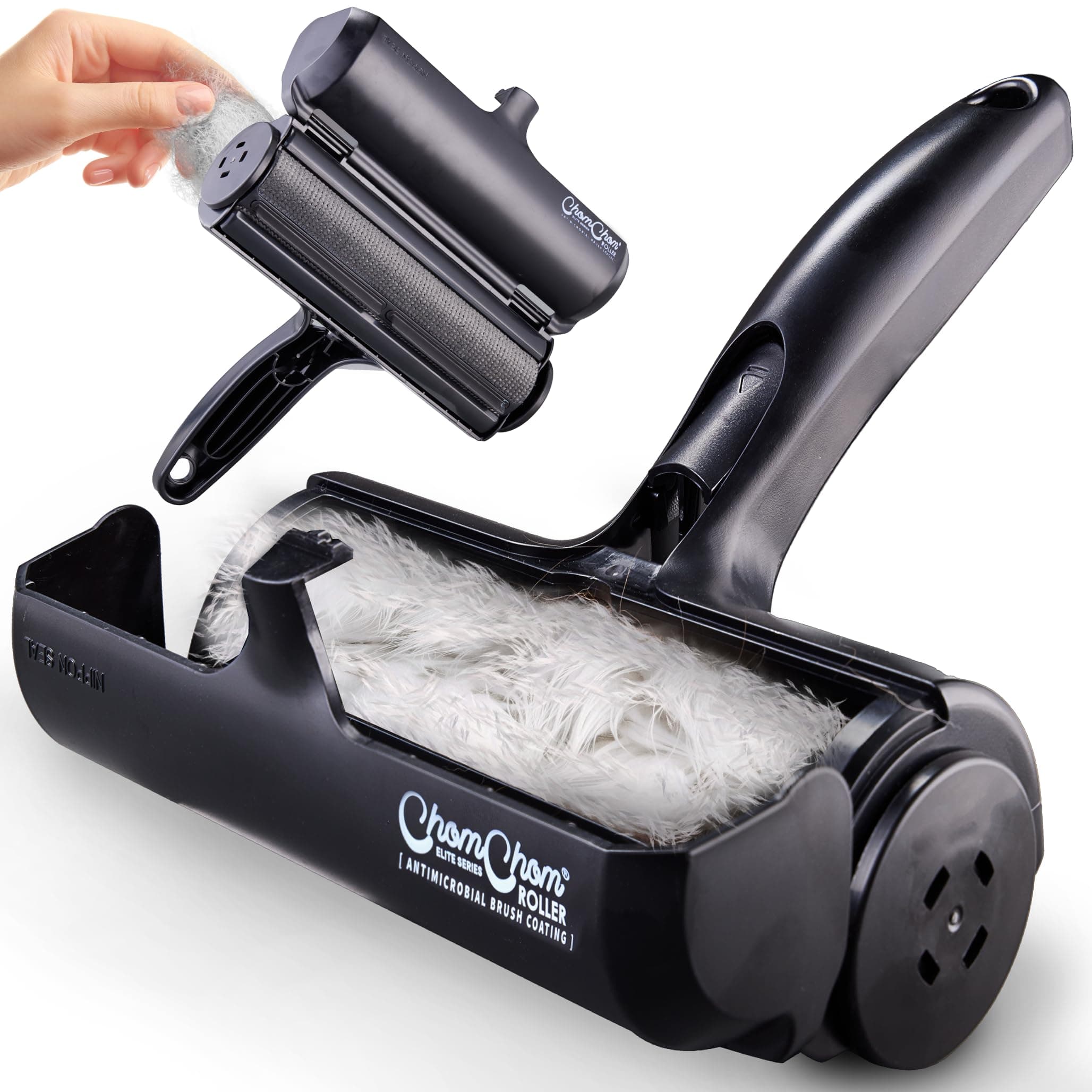
ChomChom Roller Pet Hair Remover – Original Size Reusable Lint Roller for Cat & Dog Hair on Furniture, Couch, Carpet, Car, Rugs & Bedding – Portable, Eco-Friendly (Black)
ChomChom
Profile 2: “Short dog hair is embedded in my fleece blanket and survives the wash”
- •Winner: Pet Hair Removal Glove for Dogs & Cats
- •Why: friction + directionality pulls needle hairs out of fleece.
- •Backup plan: spot-test a Pet Hair Removal Tool (6 pcs) on a corner for the worst areas.
Profile 3: “I have allergies and need pillowcases and sheets truly hair-light”
- •Winner: a two-step: reusable roller for the big areas + Lint Rollers for Pet Hair for precision.
- •Why: the reusable roller does 80–90% quickly; sticky adhesive gets the last visible strands and edge fuzz.
Profile 4: “Heavy shedding season, multiple pets, and hair tumbleweeds”
- •Winner: deep extraction first (glove or carefully chosen scraper tool), then reusable roller.
- •Why: you need to remove volume before you can polish.
Profile 5: “No dryer / line-dry only”
- •Winner: glove + reusable roller.
- •Why: you can’t rely on a dryer’s tumbling and lint screen to capture what you missed. Dry removal has to do more of the work.
Transition strategy if changing tools
If you’re switching from “just wash it again” to a tool-based system, the goal is to build a routine that prevents hair buildup instead of fighting it later.
Week 1: Establish a baseline (one-time reset)
- Strip the bed.
- Dry-remove hair from the duvet cover/blanket using your chosen deep method (glove or reusable roller; scraper only if necessary).
- Wash once as usual.
- After drying/air-drying, do a final pass on the most visible zones.
This first reset matters because old hair is often embedded and keeps shedding out of seams.
Week 2+: Maintain with the “two-minute rule”
- •Keep the reusable roller or glove in the room where you make the bed.
- •Do 60–120 seconds on the pet’s favorite spot daily.
Why this works: hair removal is non-linear. If you remove a little every day, you avoid the day where the bedding is so hairy that it requires a full intervention.
If you’re adding a second tool, do it for a reason
- •Add a sticky roller only if you need precision (pillowcases, guest room, allergies).
- •Add a scraper tool only if hair is consistently embedded and surviving glove/roller passes.
Common decision mistakes
Mistake 1: Using the right tool in the wrong direction
Most hair removal improves when you work in one direction to collect hair into lines. Random circles often re-embed hair.
Mistake 2: Treating all fabrics the same
If you try to remove pet hair from blankets made of fleece the same way you treat cotton sheets, you’ll think “nothing works.” Fleece needs friction; cotton often just needs rolling.
Mistake 3: Pressing harder instead of changing methods
More pressure can mean more pilling, especially on plush throws. If you’re grinding the tool into the fabric, switch from sticky to rubber friction, or from roller to glove.
Mistake 4: Skipping containment and creating a second mess
If you de-hair a blanket on the bed, the hair often migrates to the mattress, carpet, and your clothes.
- •Better: bathtub, outdoors, or a dedicated “pet hair towel” underneath.
Mistake 5: Expecting one pass to solve a heavy-shed household
In multi-pet homes, perfection is expensive. Aim for “clean enough to sleep comfortably” on weekdays and do a deeper extraction once a week.
Final recommendation framework
If you want a simple way to choose (and stop wasting time), decide based on what’s failing right now.
If hair is mostly visible on the surface
Choose the reusable roller:
- •Primary pick: ChomChom Roller Pet Hair Remover
- •Add sticky sheets only for detail cleanup: Lint Rollers for Pet Hair
If hair is embedded and “survives the wash”
Start with friction:
- •Primary pick: Pet Hair Removal Glove for Dogs & Cats
- •Escalate only if needed (and after spot-testing): Pet Hair Removal Tool (6 pcs)
If you care most about cost control
- •Reusable roller + glove covers most households with zero refills.
- •Keep a sticky roller pack for emergencies, not as your daily driver.
The “no extra wash cycles” winning routine (most homes)
- Shake/contain
- Deep extraction where needed (glove or careful scraper)
- Fast reset everywhere else (reusable roller)
- Wash once normally
- Optional final touch: sticky roller on pillowcases
That’s the shortest path to consistently removing pet hair from blankets and bedding without turning laundry day into a rerun.
Hair Removal Cluster
More in this topic
guide
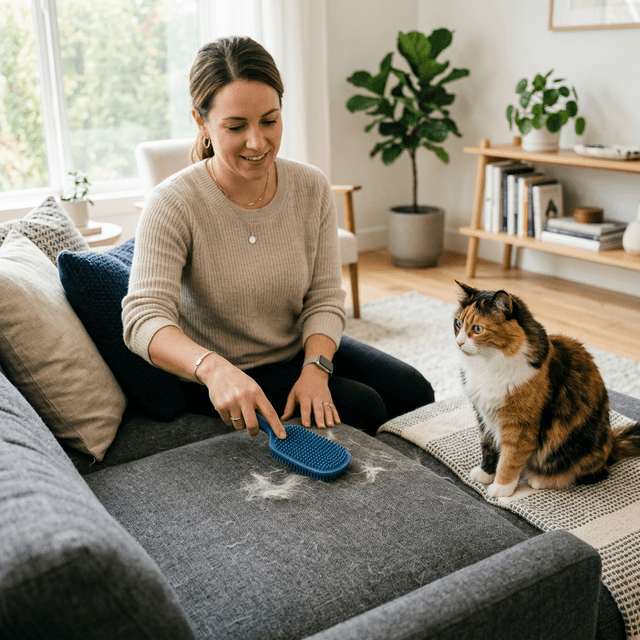
How to Remove Pet Hair from Furniture and Clothes Fast
guide
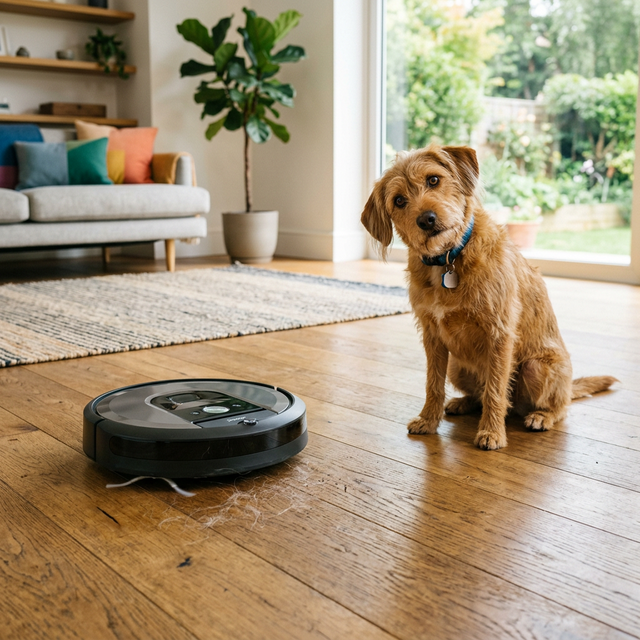
Best robot vacuum for pet hair: what to look for in 2026
guide
How to remove pet hair from car seats fast (no stress)
guide
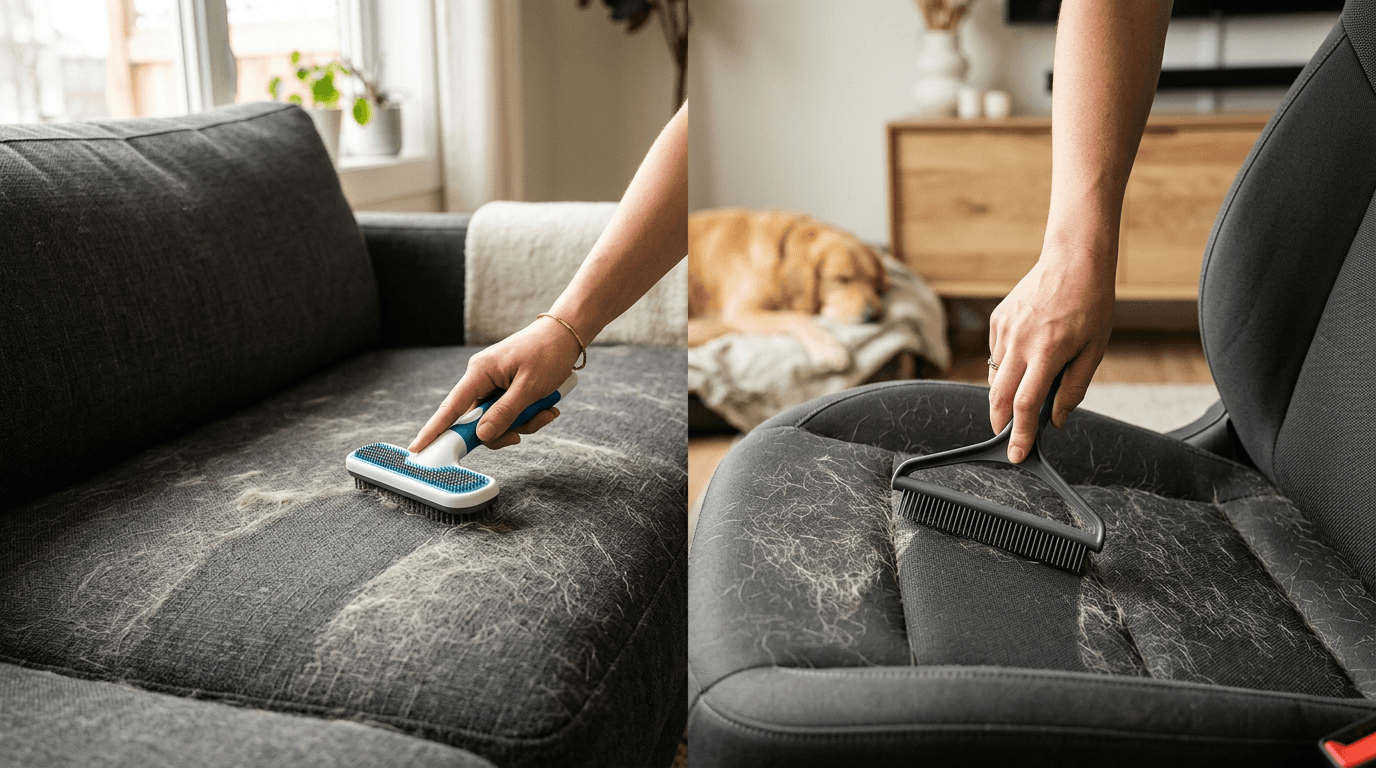
How to Remove Pet Hair from Couch and Car Seats Without Damaging Fabric (A Comparison-Led Guide)
guide
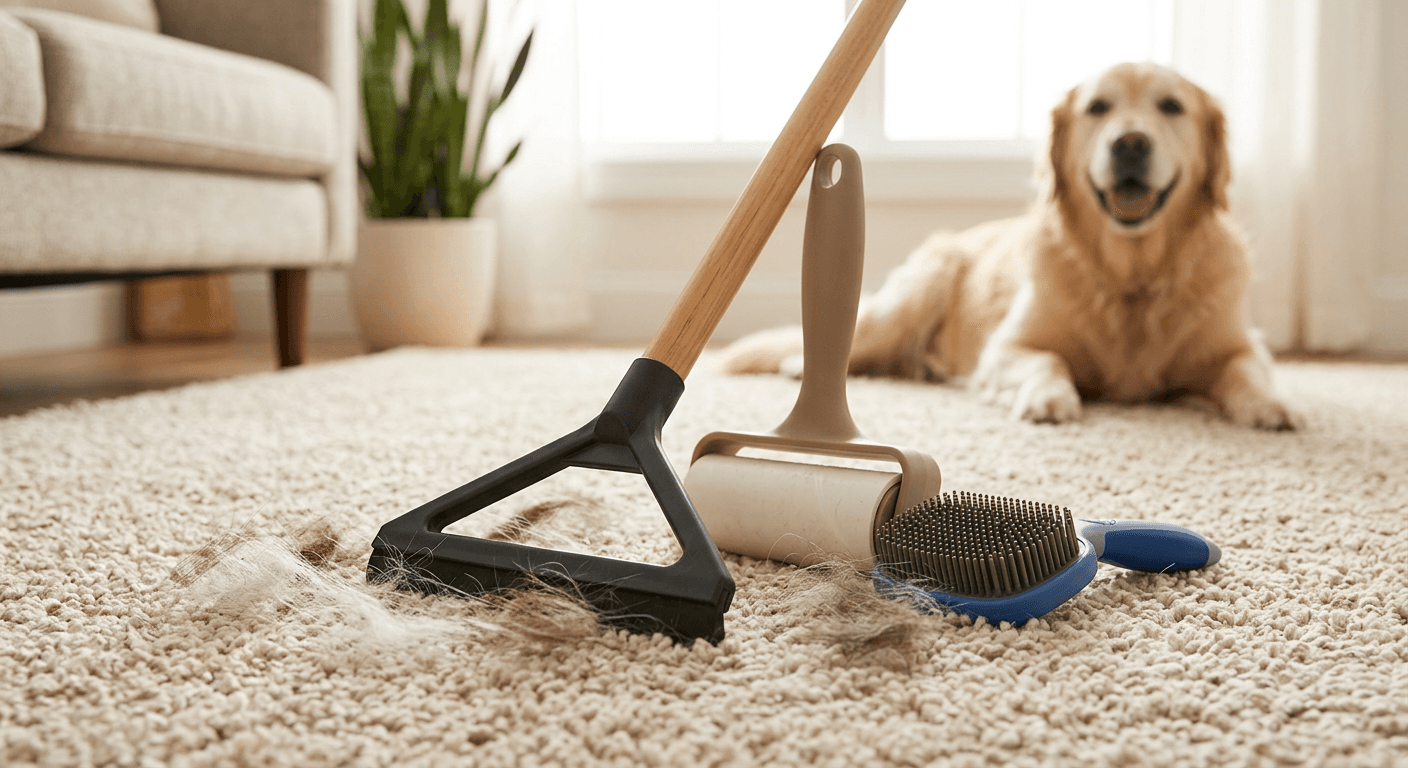
Best Pet Hair Remover for Rugs and Carpet: What Actually Works (Real-World Guide)
guide
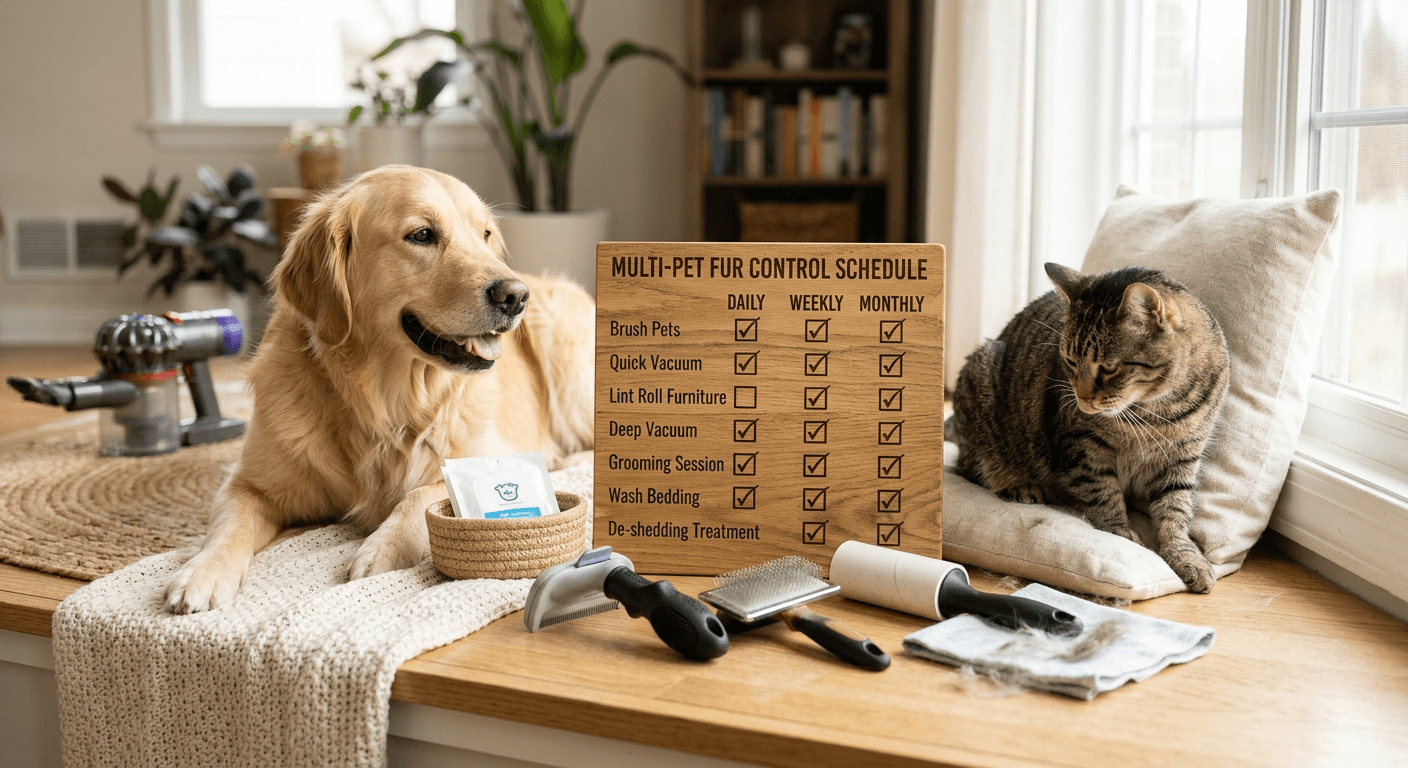
Pet Hair Removal Routine for Multi-Pet Homes: A Comparison-Led Guide That Actually Sticks
Frequently asked questions
What’s the fastest way to remove pet hair from blankets without rewashing?
For most households, the fastest method is dry removal with a reusable roller on a taut surface (make the bed first), then targeted detail work on edges. A reusable option like the ChomChom-style roller is quick because it collects hair into a built-in chamber instead of creating floor mess. If your blanket is fleece and the hair is embedded, switch to a rubber/electrostatic glove first—rollers are fast, but gloves pull hair out of the pile.
Why does pet hair still stick to bedding after a normal wash and dry?
Usually it’s because the hair was embedded before washing, and agitation doesn’t reliably pull it out—especially with fleece, flannel, and quilt seams. Hair can also redeposit during the wash if there’s a lot of it in the load. The fix is to remove as much hair as possible while the fabric is dry (glove/roller/scraper), then wash once. You’ll get better results and you’ll keep your lint screen and washer filter from getting overloaded.
Are scraper-style pet hair tools safe for blankets and sheets?
They can be, but the tradeoff is fabric risk. Scrapers and rake-style tools are excellent at extracting embedded hair, but they can fuzz or pill soft fleece and can snag loosely knit throws if you use too much pressure. Always spot-test on a corner, use light pressure, and treat them as an “escalation tool” for heavy embed—then finish with a gentler glove or reusable roller.
