
guide • Hair Removal (Home)
Pet Hair Removal Routine for Multi-Pet Homes: A Comparison-Led Guide That Actually Sticks
A practical pet hair removal routine for multi-pet homes—compare tools, build a weekly workflow, and keep fur off couches, carpets, and clothes with less effort.
By Lucy Anderson • March 4, 2026 • 7 min read
Table of contents
- What actually matters in this comparison
- 1) Where hair is created vs. where hair is discovered
- 2) Hair type + surface pairing beats “tool quality”
- 3) Consistency is the real metric
- 4) Containment matters as much as removal
- Baseline criteria and scoring method
- Criteria (with weights)
- Tool categories we’ll compare
- High-level scoring (typical multi-pet home)
- Side-by-side workflow analysis
- Workflow A: Groom-first routine (reduces shedding at the source)
- Workflow B: Furniture-first routine (fastest visible results)
- Workflow C: Floor-first routine (for rugs, runners, and car mats)
- Workflow D: Outfit-and-entry routine (hair you see at the worst times)
- Cost, effort, and consistency tradeoffs
- Reusable vs. disposable: the real trade
- Effort: what feels easy is what happens daily
- Consistency hacks for multi-pet homes
- Which option wins by user profile
- Profile 1: “My couch is always furry” (high-visibility surfaces)
- Profile 2: “My rugs and car mats feel permanently hairy” (embedded hair)
- Profile 3: “I’m exhausted; I need the lowest-effort routine”
- Profile 4: “I want less hair overall, not just moved around”
- Transition strategy if changing tools
- Phase 1 (Days 1–3): Create one “hair control zone”
- Phase 2 (Week 1): Add the “hair highway”
- Phase 3 (Week 2): Fix the clothing pain point
- Phase 4 (Ongoing): Decide what gets deep-cleaned vs. maintained
- Common decision mistakes
- Mistake 1: Using only a vacuum for everything
- Mistake 2: Buying the strongest tool and ignoring speed
- Mistake 3: Treating clothes like furniture
- Mistake 4: Not separating “pet textiles”
- Mistake 5: Missing the “creation points”
- Final recommendation framework
- Step 1: Pick your primary surface problem
- Step 2: Add one “instant win” tool for emergencies
- Step 3: Define your minimum viable weekly routine
Multi-pet homes don’t just have “more hair”—they have different types of hair in different places, at different times, for different reasons. A husky’s seasonal blow, a cat’s fine undercoat that weaves into upholstery, and a short-haired dog’s stiff “needle hairs” embedded in car mats all behave differently.
That’s why the best pet hair removal routine is less about finding one miracle tool and more about building a workflow where each step has a clear job.
Below is a comparison-led routine built around realistic tradeoffs: what’s fastest, what’s most thorough, what’s cheapest long-term, and what stays consistent when life gets busy.
What actually matters in this comparison
A multi-pet hair routine succeeds or fails on a few practical realities:
1) Where hair is created vs. where hair is discovered
- •Created: beds, favorite couch corner, hallway “traffic lanes,” near litter boxes, under dining table.
- •Discovered: black leggings, guest blanket, car seats, rugs when sunlight hits.
The tradeoff: If you only clean where you discover hair, you’ll always feel behind. If you only clean where hair is created, you’ll still get surprised on clothes and in the car.
2) Hair type + surface pairing beats “tool quality”
- •Fine cat fur bonds to woven fabric; it needs a grabby tool (roller or rake-style) more than suction.
- •Short, stiff hairs lodge in carpet; they often need mechanical agitation before vacuuming.
- •Long hair forms tumbleweeds; it’s easy to gather but can clog brushrolls and filters.
The tradeoff: A tool can be excellent but wrong for your surfaces, which looks like “it doesn’t work.”
3) Consistency is the real metric
A routine that’s 80% effective but easy to repeat beats a “perfect” deep clean that happens once a month.
The tradeoff: Disposable tools can be frictionless but ongoing-costly; reusable tools are cheaper long-term but only win if you’ll actually use them.
4) Containment matters as much as removal
In multi-pet homes, hair spreads through:
- •Laundry (socks, fleece throws, pet blankets)
- •HVAC returns / fans
- •High-traffic pathways
The tradeoff: If you don’t manage laundry and “hair highways,” your couch-cleaning will feel temporary.
Baseline criteria and scoring method
To keep this grounded, we’ll score common tool categories on a simple 1–5 scale (5 = best), with weights that reflect multi-pet reality.
Criteria (with weights)
- Capture effectiveness (35%): How much hair it actually pulls on first pass.
- Surface versatility (20%): Couch + bedding + rugs + car + clothes.
- Speed to deploy (15%): Can you do it in 2 minutes before guests arrive?
- Ongoing cost (15%): Refills, replacements, and how often.
- Mess control (10%): Does it scatter hair or contain it neatly?
- Pet tolerance (5%): Especially relevant for grooming-first routines.
Tool categories we’ll compare
- •Grooming mitt/glove (hair removed at the source): Pet Hair Removal Glove for Dogs & Cats
- •Reusable manual roller for furniture: ChomChom Roller Pet Hair Remover
- •Disposable sticky lint rollers for quick hits: Lint Rollers for Pet Hair (5 pack)
- •Rake/scraper style for rugs and embedded hair + laundry helpers: Pet Hair Removal Tool (6 pcs) with laundry catcher
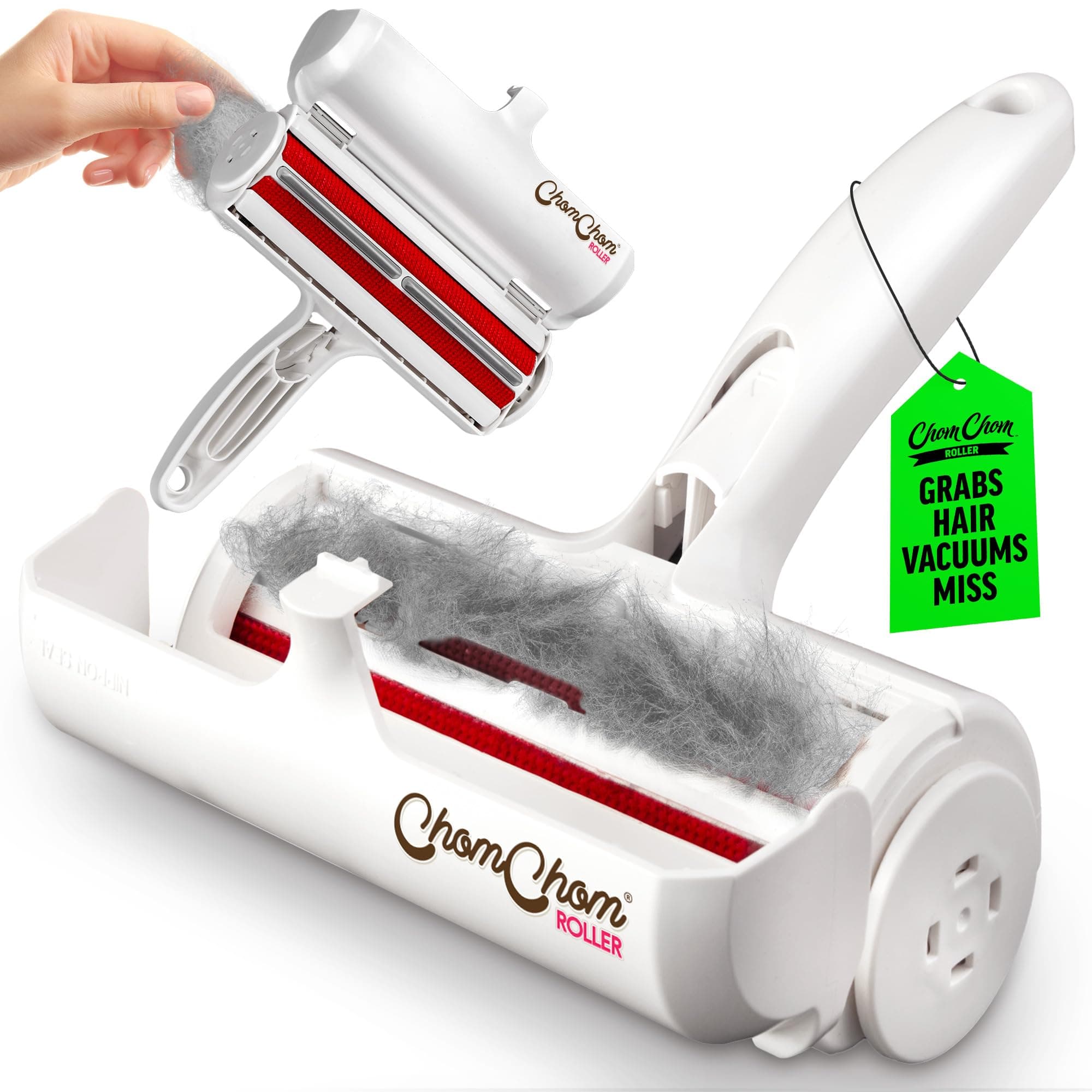
ChomChom Roller Pet Hair Remover – Original Size Reusable Lint Roller for Cat & Dog Hair on Furniture, Couch, Carpet, Car, Rugs & Bedding – Portable, Eco-Friendly (White)
ChomChom Roller
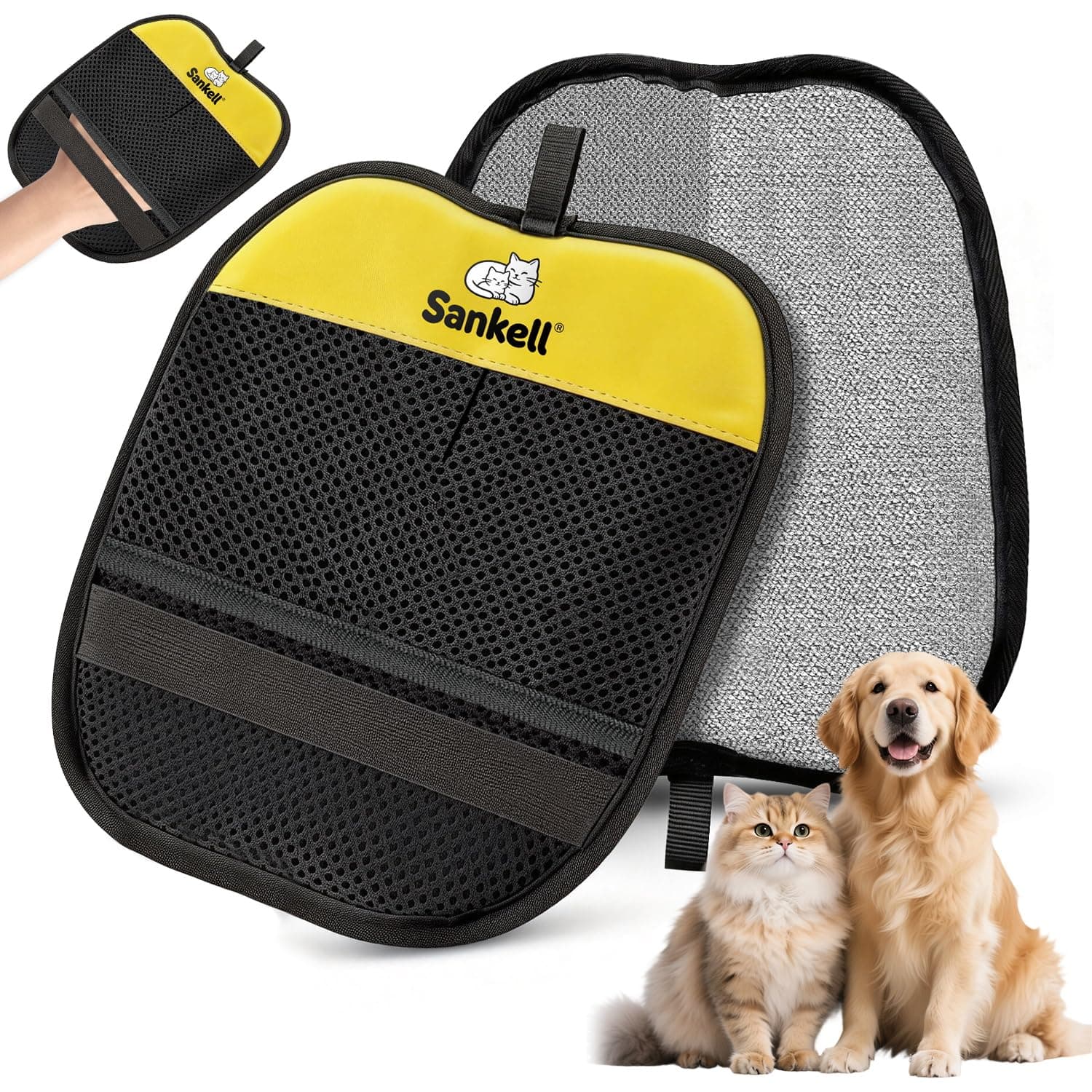
Pet Hair Removal Glove for Dogs & Cats, Newly Upgraded Reusable Electrostatic Pet Hair Remover Glove, Pet Hair Remover Mitt Tool for Couch, Furniture, Bed, Clothing, Carpet, Car Seat (Yellow)
Sankell
High-level scoring (typical multi-pet home)
These aren’t “universal truths”—they’re starting points you can adjust based on your surfaces.
- •Grooming glove: effectiveness 3/5 (on furniture), versatility 3/5, speed 4/5, ongoing cost 5/5, mess control 3/5, pet tolerance 4/5
- •ChomChom-style reusable roller: effectiveness 4/5, versatility 4/5, speed 5/5, ongoing cost 5/5, mess control 4/5, pet tolerance N/A
- •Sticky lint rollers: effectiveness 3/5 (great on clothes, mixed on upholstery), versatility 4/5, speed 5/5, ongoing cost 2/5, mess control 5/5
- •Carpet rake/scraper tools: effectiveness 5/5 (on rugs/mats), versatility 3/5, speed 3/5, ongoing cost 5/5, mess control 3/5
Key tradeoff to notice: the best “deep removal” tools often aren’t the best “daily consistency” tools.
Side-by-side workflow analysis
Instead of comparing tools in a vacuum, compare workflows. Multi-pet homes do best with a 3-layer routine: daily control, weekly reset, and laundry containment.
Workflow A: Groom-first routine (reduces shedding at the source)
Best if: your pets tolerate handling, and hair builds up everywhere quickly.
Daily (3–5 minutes):
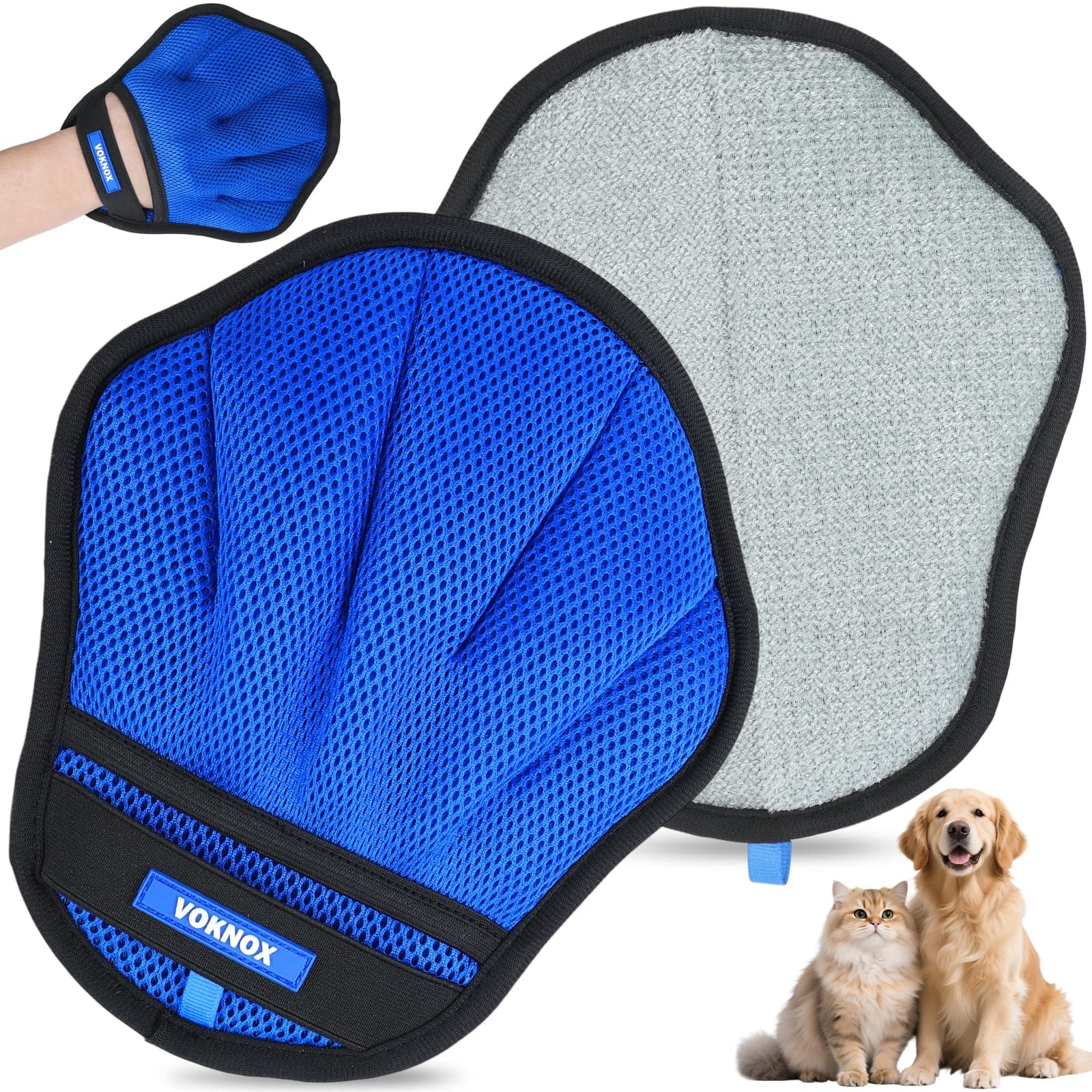
- •Use a grooming mitt like the Pet Hair Removal Glove for Dogs & Cats on the “usual shedders.”
- •Focus on friction zones: chest, sides, back legs, and along the rump where hair loosens.
Weekly (10–15 minutes per pet):
- •Longer grooming session, then immediately run a roller on the couch/bed to catch what fell during grooming.
Tradeoffs:
- •Wins on long-term load reduction (you’re removing hair before it lands on textiles).
- •Loses if your cat hates it, your dog thinks it’s playtime, or you skip days—because the home still needs surface removal.
Real-world scenario: Two indoor cats + one short-haired dog.
- •The dog sheds constantly, the cats shed “invisibly.” Daily glove grooming helps the dog, but you’ll still need a roller for fine cat fur on throws.
Workflow B: Furniture-first routine (fastest visible results)
Best if: your main frustration is couch/chairs/blankets looking furry within 24 hours.
Daily (2–4 minutes):
- •Keep a reusable roller like the ChomChom Roller Pet Hair Remover in the living room.
- •Do one “lap”: couch seats, couch back, pet blanket.
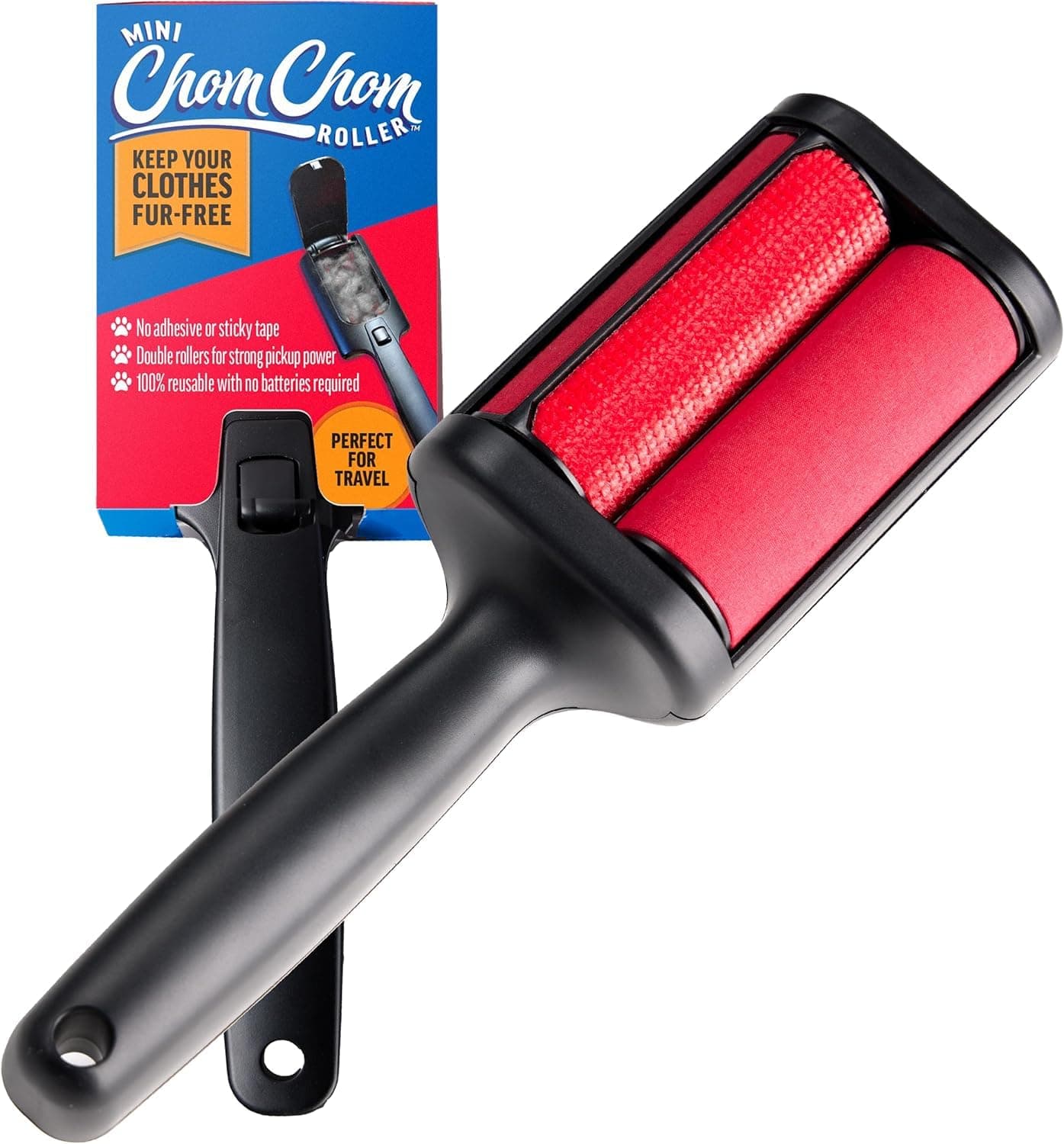
ChomChom Roller Pet Hair Remover – Reusable Lint Roller Pet Hair Removal Tool for Clothes, Couches, Cars and Travel - Cat Dog Hair Remover, Compact, No Sticky Refills Needed (Mini Roller)
ChomChom
ChomChom Roller Pet Hair Remover – Original Size Reusable Lint Roller for Cat & Dog Hair on Furniture, Couch, Carpet, Car, Rugs & Bedding – Portable, Eco-Friendly (White)
ChomChom
Weekly (15–25 minutes):
- •Strip washable throws/coverlets.
- •Use the roller again after the wash cycle is running (hair that’s been sitting loosens as you move textiles).
Tradeoffs:
- •Wins on consistency and speed—this is the routine most people actually maintain.
- •Loses on embedded carpet hair and on clothing (you’ll still need a sticky roller for outfits).
Decision detail: Reusable rollers are excellent on many fabrics, but they can struggle on very plush, high-pile textures where hair sinks deep.
Workflow C: Floor-first routine (for rugs, runners, and car mats)
Best if: you have carpeted rooms, runners, area rugs, or pets that “explode” hair in hallways.
Twice weekly (10–20 minutes):
- •Use a rake/scraper tool (like the multi-piece Pet Hair Removal Tool (6 pcs) with laundry catcher) on rugs and car mats.
- •Pull in one direction with firm pressure until you see hair gather into lines; then collect.
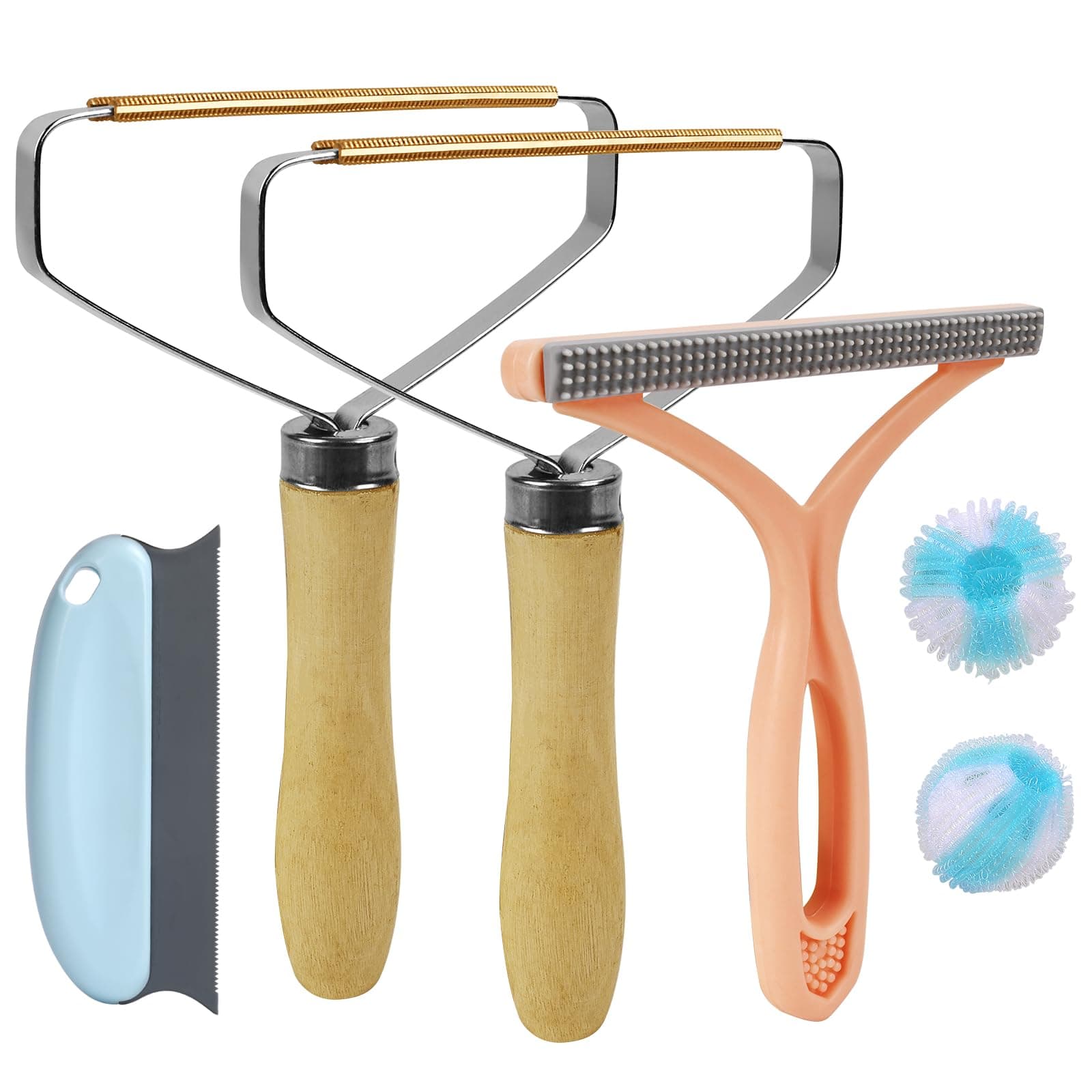
Pet Hair Removal Tool: 6 Pcs Dog Cat Hair Remover - Reusable Pet Hair Remover with Laundry Pet Hair Catcher - Portable Carpet Rake Scraper Fur Removal Tool for Rugs Car Mats Couch Furniture
Brand: Numhosai
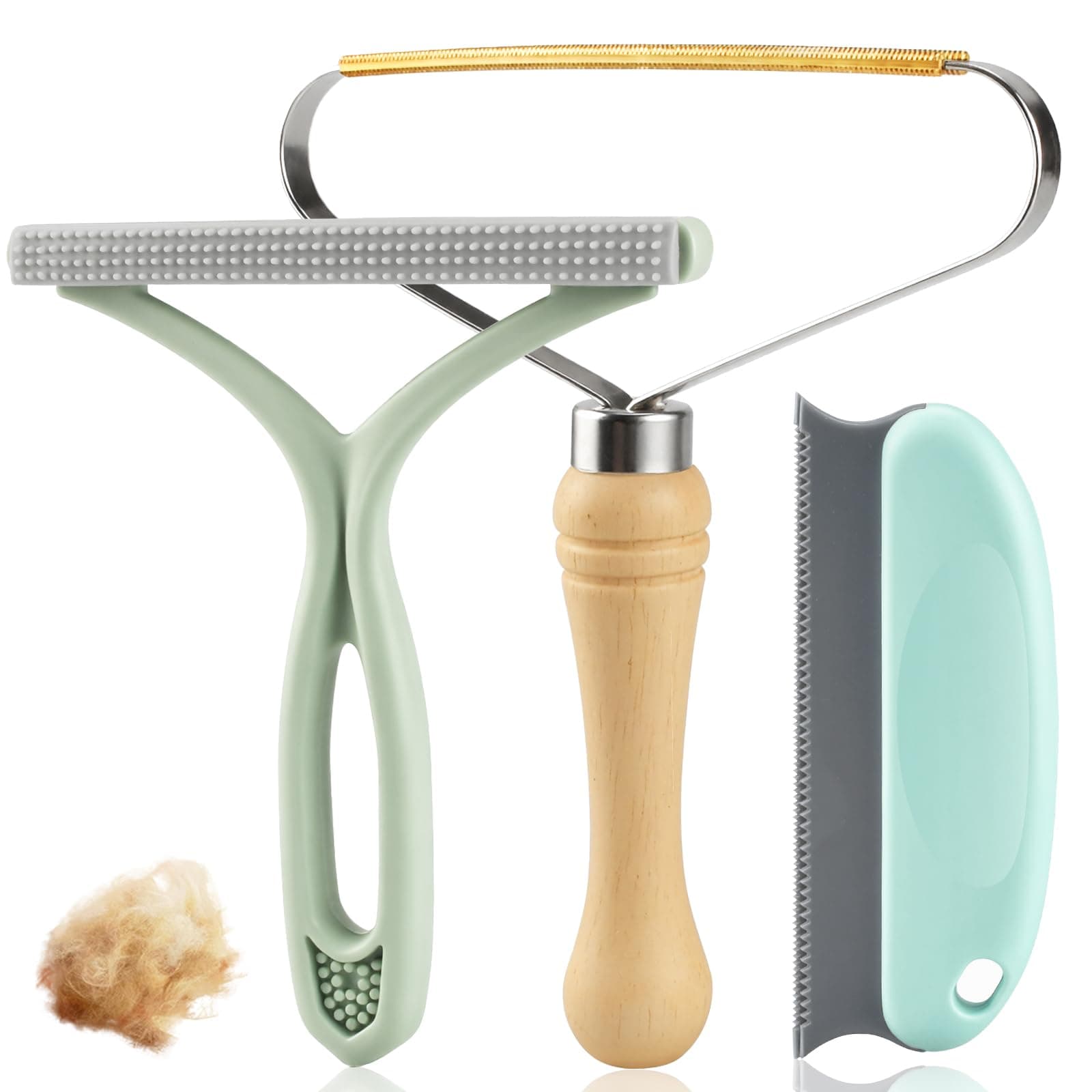
Pet Hair Removal Tool 3 Pack Dog Cat Hair Remover Carpet Scraper Rake Fur Removal Brush Lint Remover Shaver for Car Furniture Couch Green
Brand: AXEGY
Then vacuum:
- •Vacuuming alone can leave embedded hairs behind; raking first pulls them up so suction can actually remove them.
Tradeoffs:
- •Wins on “stuck” hair that makes carpets look permanently dirty.
- •Loses on speed and mess control (raking can create loose piles you must gather).
Real-world scenario: One German Shepherd + one long-haired cat.
- •You’ll get both tumbleweeds and undercoat fuzz. Raking keeps rugs from becoming hair-felt, but it’s too slow for daily couch touch-ups.
Workflow D: Outfit-and-entry routine (hair you see at the worst times)
Best if: you’re mostly okay at home but show up to work/events covered in hair.
Daily (30 seconds to 2 minutes):
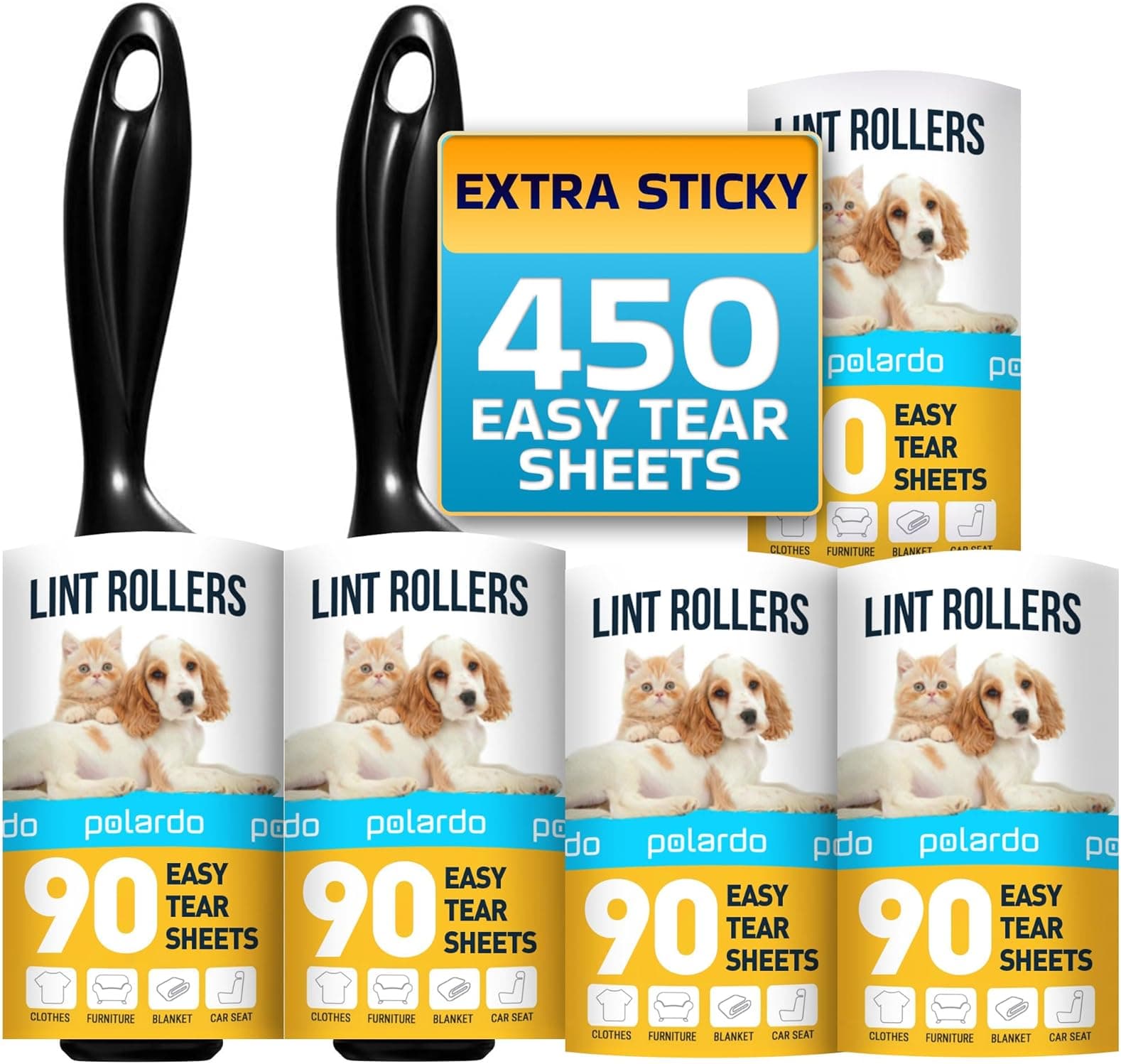
- •Keep a disposable sticky roller near the door and in your car.
- •Use Lint Rollers for Pet Hair (5 pack) for:
- •Black pants, sweaters, coats
- •Backpack straps and car seat edges
Tradeoffs:
- •Wins on clean, fast results on clothing.
- •Loses on ongoing cost and waste (you’ll burn through sheets fast in shedding season).
Tip that changes the game: Put “hair magnet” items (fleece, plush throws) in a separate laundry stream so they don’t redistribute fur onto everything else.
Cost, effort, and consistency tradeoffs
Think in three currencies: money, minutes, and willpower.
Reusable vs. disposable: the real trade
- •Reusable tools (ChomChom-style rollers, rakes, gloves) win on long-term cost, but you must store them where you’ll use them.
- •Disposable sticky rollers win on convenience and neatness, but the refill cost adds up fast in multi-pet homes.
If you routinely lint-roll 2 outfits/day, a disposable roller becomes a “subscription” whether you intended it or not.
Effort: what feels easy is what happens daily
- •A 2-minute couch pass after dinner is realistic.
- •A 45-minute whole-house reset on Sundays sounds nice and fails in busy weeks.
The best pet hair removal routine is often:
- •Small daily wins (visible control)
- •Short weekly resets (prevent buildup)
- •Targeted deep work only where hair embeds (rugs, mats, scratchy upholstery)
Consistency hacks for multi-pet homes
- •Duplicate tools where hair happens: one roller upstairs, one downstairs.
- •Assign “zones” so you’re not cleaning the entire house every time.
- •Use washable throws as sacrificial layers on favorite pet spots (clean the throw, not the whole couch).
Which option wins by user profile
Use these profiles to pick a routine you’ll actually maintain.
Profile 1: “My couch is always furry” (high-visibility surfaces)
Winner: Furniture-first routine.
- •Primary tool: ChomChom Roller Pet Hair Remover
- •Backup: Lint Rollers for Pet Hair (5 pack) for last-minute outfits
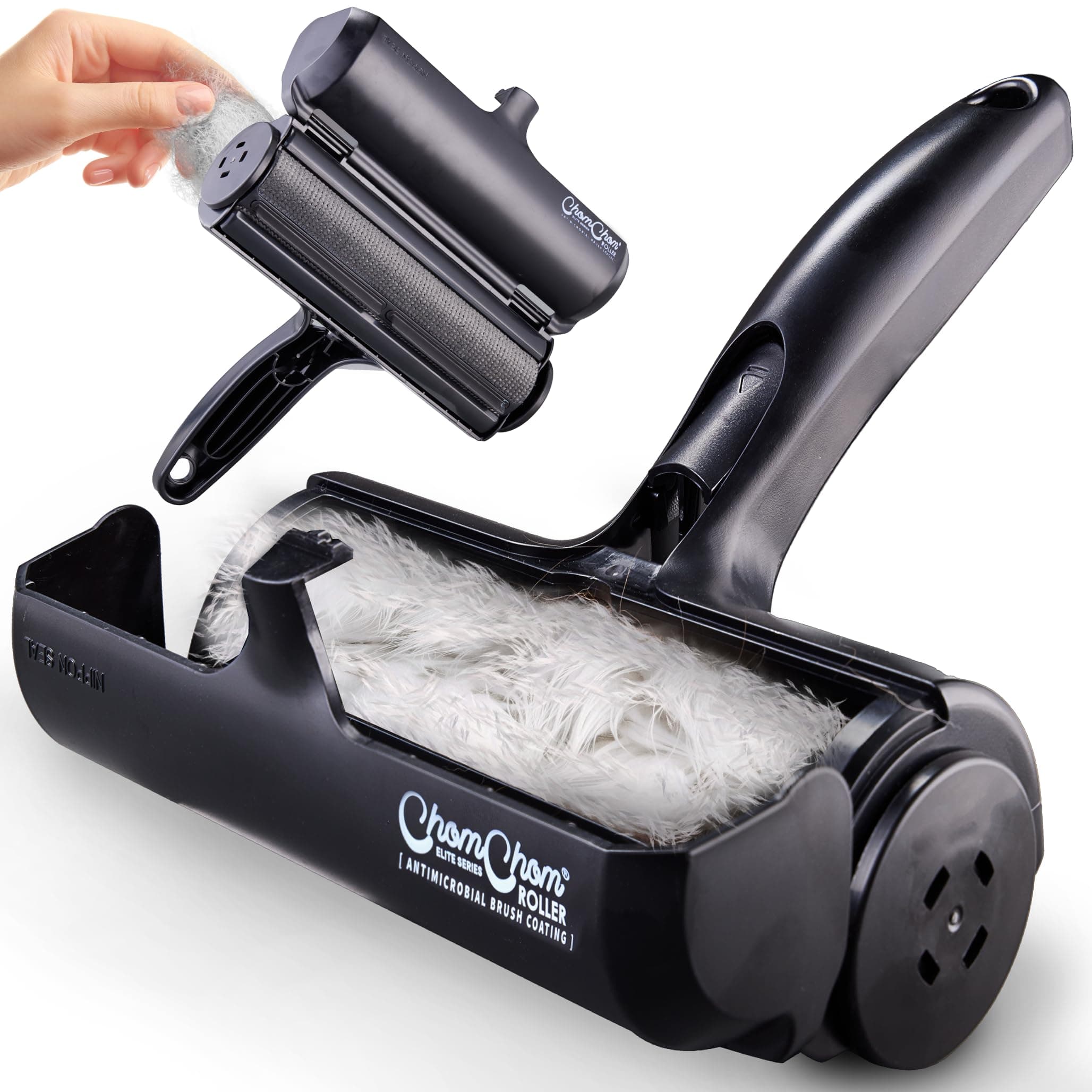
ChomChom Roller Pet Hair Remover – Original Size Reusable Lint Roller for Cat & Dog Hair on Furniture, Couch, Carpet, Car, Rugs & Bedding – Portable, Eco-Friendly (Black)
ChomChom
ChomChom Roller Pet Hair Remover – Original Size Reusable Lint Roller for Cat & Dog Hair on Furniture, Couch, Carpet, Car, Rugs & Bedding – Portable, Eco-Friendly (Black)
ChomChom Roller
Tradeoff: You’ll still need something stronger for rugs if you have carpet.
Profile 2: “My rugs and car mats feel permanently hairy” (embedded hair)
Winner: Floor-first routine.
- •Primary tool: Pet Hair Removal Tool (6 pcs) with laundry catcher
- •Pair with: vacuum after raking
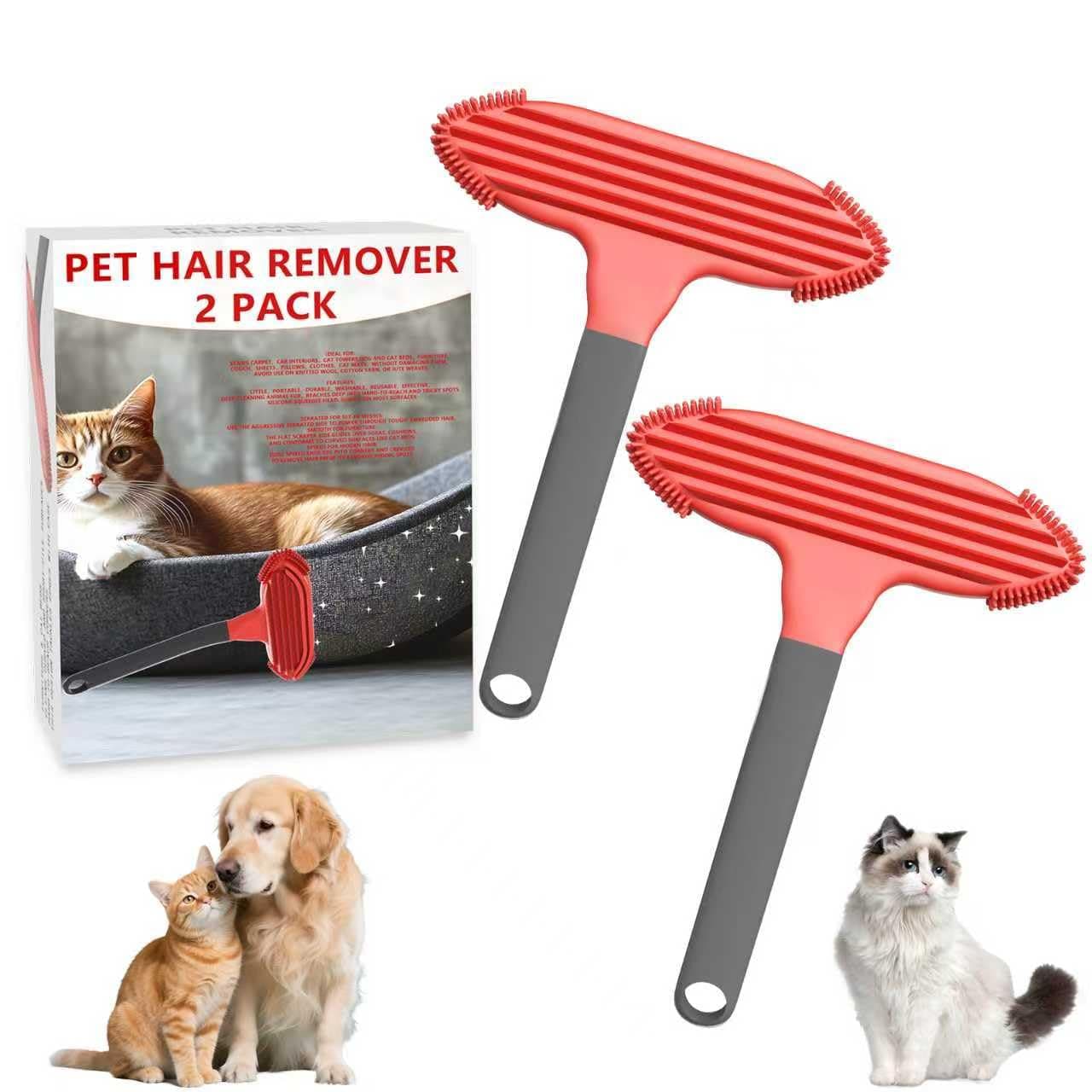
Tradeoff: It’s not the fastest for upholstery touch-ups.
Profile 3: “I’m exhausted; I need the lowest-effort routine”
Winner: Hybrid minimal routine.
- •Daily: 2 minutes with the ChomChom Roller Pet Hair Remover on the main sitting area
- •Leaving the house: 30 seconds with Lint Rollers for Pet Hair (5 pack)
Tradeoff: You’re choosing “good enough” over perfection on carpets.
Profile 4: “I want less hair overall, not just moved around”
Winner: Groom-first routine + weekly fabric reset.
- •Primary: Pet Hair Removal Glove for Dogs & Cats
- •Secondary: reusable roller for furniture
Tradeoff: This only works if pets tolerate grooming and you can do it consistently.
Transition strategy if changing tools
Switching tools fails when you expect one new purchase to instantly fix a system problem. Transition in phases so you see results quickly and keep momentum.
Phase 1 (Days 1–3): Create one “hair control zone”
- •Pick a single area: the main couch + one throw blanket.
- •Put your chosen tool there (roller or glove).
- •Do a 2-minute pass daily.
Goal: immediate visible improvement so you stick with it.
Phase 2 (Week 1): Add the “hair highway”
- •Identify your worst pathway: hallway runner, entry rug, stairs.
- •If it’s carpet/rug heavy, add a rake/scraper session using the Pet Hair Removal Tool (6 pcs) with laundry catcher before vacuuming.
Goal: stop recontaminating clean rooms.
Phase 3 (Week 2): Fix the clothing pain point
- •Put a sticky roller where it solves the “I’m late” problem: by shoes, in the car.
- •Use Lint Rollers for Pet Hair (5 pack) for clothing only (not the whole couch), so refills last.
Goal: reduce ongoing cost by reserving disposable sheets for high-value tasks.
Phase 4 (Ongoing): Decide what gets deep-cleaned vs. maintained
- •Maintain daily: couch seats, pet blanket, one favorite chair.
- •Deep-clean weekly: rugs, car mats, pet bedding.
Common decision mistakes
Mistake 1: Using only a vacuum for everything
Vacuuming is necessary, but it often skips the embedded layer. If your carpet still looks hairy right after vacuuming, you need agitation first (rake/scraper), then suction.
Mistake 2: Buying the strongest tool and ignoring speed
A tool you hate using turns into clutter. In multi-pet homes, the best “technical” option often loses to the fastest option you’ll actually repeat—like keeping a reusable roller in arm’s reach.
Mistake 3: Treating clothes like furniture
Using disposable lint sheets on a whole couch works, but it’s a refill trap. Save sticky sheets for outfits, car headrests, and quick guest-ready fixes.
Mistake 4: Not separating “pet textiles”
If pet blankets mix with your everyday laundry, hair redistributes. A simple rule helps: pet throws and pet beds get their own load or at least get shaken out and pre-rolled.
Mistake 5: Missing the “creation points”
If three pets share one bed in the corner, cleaning the entire house while ignoring that bed is backwards. Clean where hair is produced first, then maintain everywhere else.
Final recommendation framework
Use this framework to choose (and stick to) a pet hair removal routine that fits your home.
Step 1: Pick your primary surface problem
- •Upholstery-heavy home: start with a reusable roller like the ChomChom Roller Pet Hair Remover
- •Rug/car mat problem: start with a rake/scraper set like the Pet Hair Removal Tool (6 pcs) with laundry catcher
- •You want less hair overall: add grooming with the Pet Hair Removal Glove for Dogs & Cats
Step 2: Add one “instant win” tool for emergencies
- •Keep Lint Rollers for Pet Hair (5 pack) by the door for clothes and guests.
This is a tradeoff you choose on purpose: higher ongoing cost, but fewer stressful moments.
Step 3: Define your minimum viable weekly routine
If you only do three things this week:
- Two-minute daily couch/blanket pass (reusable roller)
- One rug/runner session (rake/scraper + vacuum)
- One pet-textile laundry run (throws, beds)
That combination is what makes a multi-pet pet hair removal routine feel controlled instead of endless.
If you want to optimize further, track one metric for two weeks: “How often am I embarrassed by hair?” When that number drops, your routine is working—even if your house isn’t perfect.
Hair Removal Cluster
More in this topic
guide
How to Remove Pet Hair from Furniture and Clothes Fast
guide
Best robot vacuum for pet hair: what to look for in 2026
guide
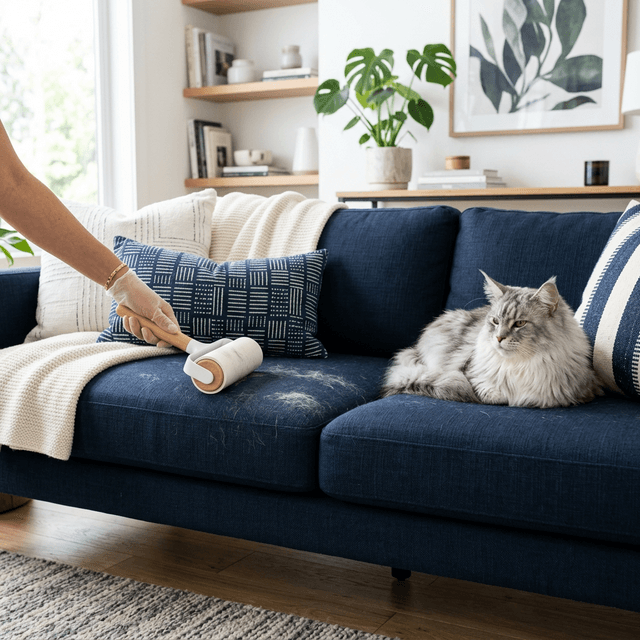
How to remove pet hair from car seats fast (no stress)
guide
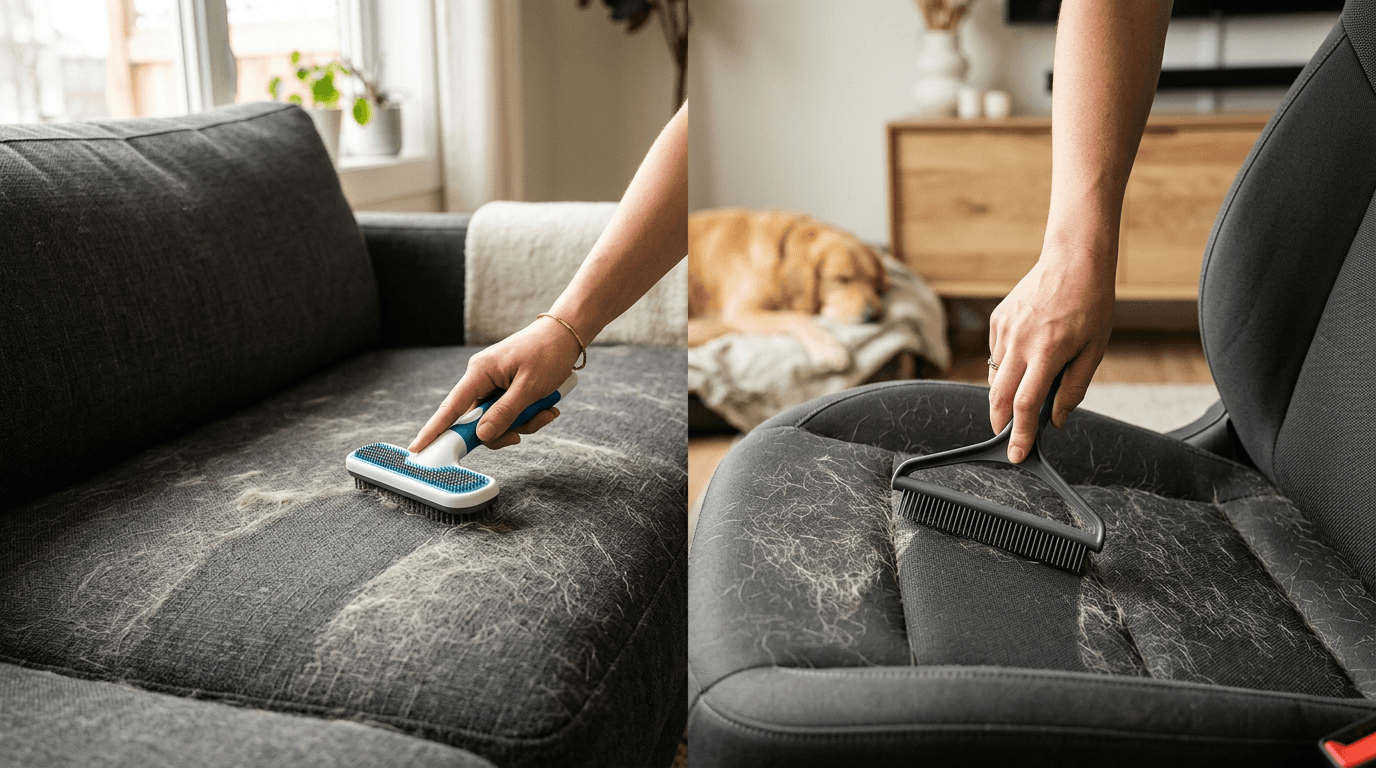
How to Remove Pet Hair from Couch and Car Seats Without Damaging Fabric (A Comparison-Led Guide)
guide
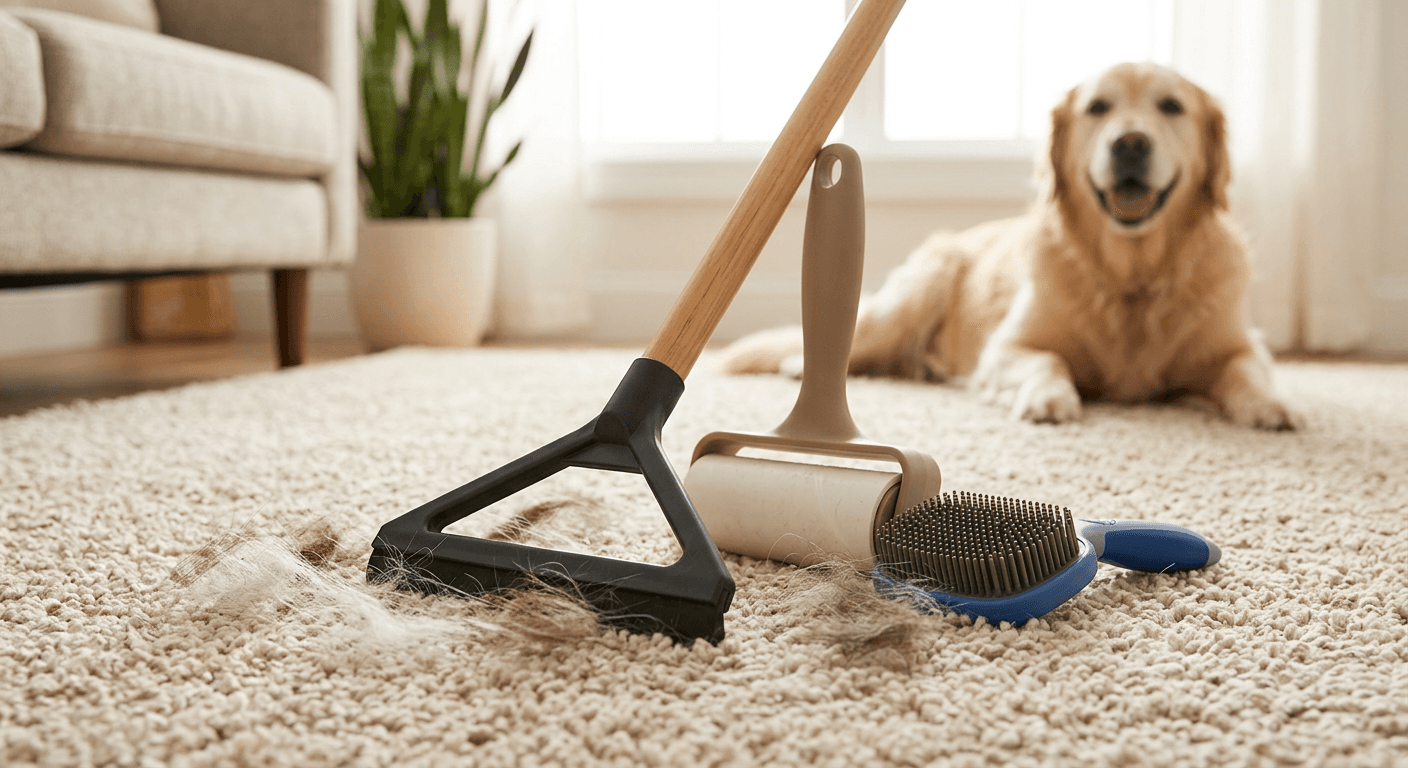
Best Pet Hair Remover for Rugs and Carpet: What Actually Works (Real-World Guide)
guide
Pet Hair Cleanup Routine for Small Apartments: A Fast Daily System That Actually Sticks
Frequently asked questions
What’s the most realistic daily pet hair removal routine for a busy multi-pet home?
Do a 2–4 minute “visibility pass” on the main sitting area and pet blanket using a reusable roller (like a ChomChom-style tool). Keep a disposable lint roller by the door for outfits only. This tradeoff prioritizes consistency and noticeable results over perfect whole-house hair removal.
Why does vacuuming sometimes leave pet hair behind on carpets and rugs?
Many hairs embed and hook into carpet fibers, especially short, stiff hairs and fine undercoat. Suction alone can glide over what’s stuck. Agitating first with a rake/scraper tool lifts hair to the surface so the vacuum can remove it, which usually reduces the “still hairy after vacuuming” problem.
How do I keep pet hair from spreading through laundry?
Separate pet blankets/throws when possible, shake them out, and pre-remove hair with a roller or glove before washing. Treat “pet textiles” as a containment layer: it’s cheaper and easier to clean one throw frequently than to constantly de-fur the entire couch and then recontaminate it via laundry.
