
guide • Hair Removal (Home)
How to Remove Pet Hair from Furniture and Clothes Fast
Learn proven, low-mess methods to lift stubborn pet hair from upholstery and clothing, plus simple habits that keep it from building up again.
By PetCareLab Editorial • March 5, 2026 • 12 min read
Table of contents
- Why Pet Hair Sticks (and Why Some Homes Have It Worse)
- Start With the Right Game Plan: Remove vs. Prevent
- Best Ways to Remove Pet Hair From Furniture (Couches, Chairs, and Cushions)
- Method 1: Rubber Tools (Fastest for Upholstery)
- Method 2: Upholstery Vacuuming (Only After You Loosen Hair)
- Method 3: Pet Hair Removal Brushes (Fabric “Rakes”)
- Method 4: Damp Microfiber + “Hand Roll” (For Delicate Fabrics)
- Method 5: Tape/Lint Rollers (Best for Spot Jobs)
- Best Ways to Remove Pet Hair From Clothes (Without Ruining Fabric)
- Before Washing: Do This First (It Matters)
- Washer + Dryer Strategy (The Least Annoying Way)
- Fabric-Specific Clothing Tips
- Product Recommendations (What’s Worth Buying vs. What’s Hype)
- Best for Furniture: Top Picks by Use Case
- Best for Clothes: What Actually Helps
- Room-by-Room Real-World Scenarios (What I’d Do as a Vet Tech)
- Scenario 1: “My Husky Owns the Sofa”
- Scenario 2: “My Cat Sleeps on My Black Work Pants”
- Scenario 3: “My Beagle’s Short Hair Is Stuck in Everything”
- Common Mistakes That Make Pet Hair Worse
- Expert-Level Tips to Prevent Hair Build-Up (So You Clean Less)
- Grooming and Coat Management (Most Impact for the Least Effort)
- Furniture and Fabric Choices That Don’t Trap Hair
- Covers, Throws, and “Pet Zones”
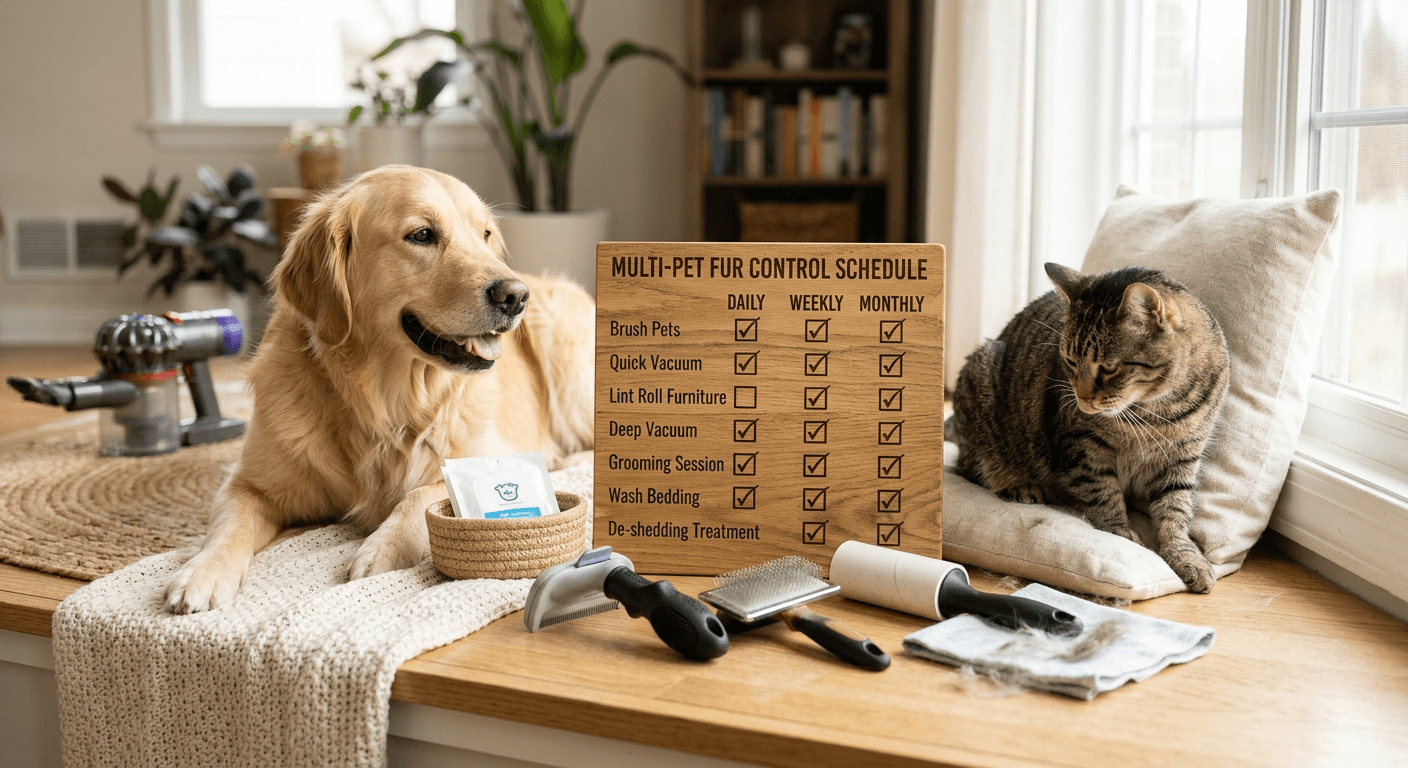
- Step-by-Step: A Weekly Hair Removal Routine That Actually Works
- Daily (2–5 minutes)
- Weekly (15–25 minutes)
- Monthly (30–60 minutes)
- Quick Troubleshooting: When Hair Still Won’t Come Off
Why Pet Hair Sticks (and Why Some Homes Have It Worse)
If you’re trying to remove pet hair from furniture, it helps to understand what you’re fighting. Hair doesn’t just “sit” on fabric—it hooks, weaves, and charges its way in.
Here’s what makes pet hair cling:
- •Static electricity: Dry air + synthetic fabrics (polyester, microfiber, fleece) = hair that behaves like it’s magnetized.
- •Fiber structure: Upholstery and clothing fibers create tiny “loops” that grab hair. Think of velvet, chenille, and tweed as hair traps.
- •Oil + dander: Natural skin oils and dander act like glue, especially on frequently used cushions and armrests.
- •Hair type:
- •Double-coated shedders (Labrador Retriever, German Shepherd, Siberian Husky) drop dense undercoat that mats into fabric.
- •Fine, short hair (Pug, Boxer, Beagle) can be worse because it’s stiff and needles into upholstery.
- •Curly coats (Poodle mixes) shed less but still leave hair—especially after brushing or when coats are kept longer.
- •Long, silky hair (Maine Coon cats) forms “strings” that wrap around seams and corners.
Real-world example: If you have a Golden Retriever and a microfiber sectional, you’ll notice hair “prints” where the dog sleeps—microfiber holds onto hair through static and texture. If you have a short-haired cat and a wool sweater, those tiny hairs work into the knit and won’t budge without friction and lift.
Start With the Right Game Plan: Remove vs. Prevent
There are two ways to win: remove what’s already there and stop new hair from embedding. Most frustration comes from mixing up the order.
Use this simple sequence:
- Lift and gather hair from surfaces (dry methods first).
- Pull embedded hair using friction tools.
- Vacuum with the right attachments to capture what you loosened.
- Finish with anti-static/anti-redeposit steps so hair doesn’t reattach.
- Prevent with covers, grooming habits, and fabric choices.
Common mistake: Spraying fabric with water or cleaner first. That can turn hair + oil into a sticky paste that smears deeper into upholstery.
Best Ways to Remove Pet Hair From Furniture (Couches, Chairs, and Cushions)
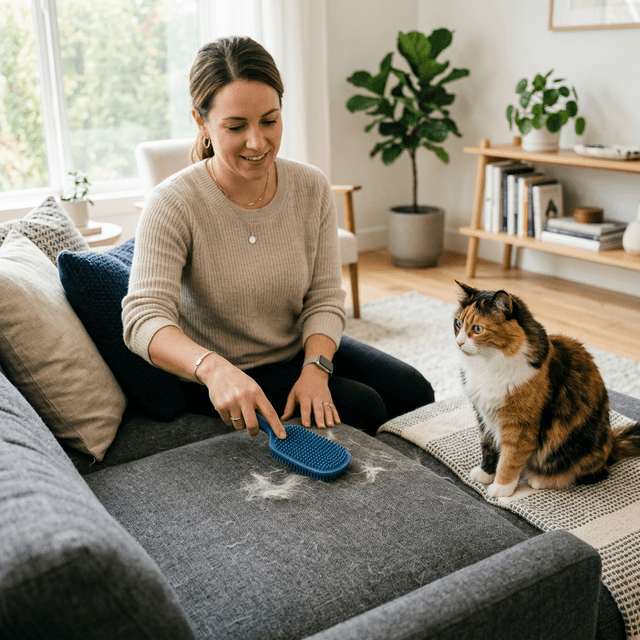
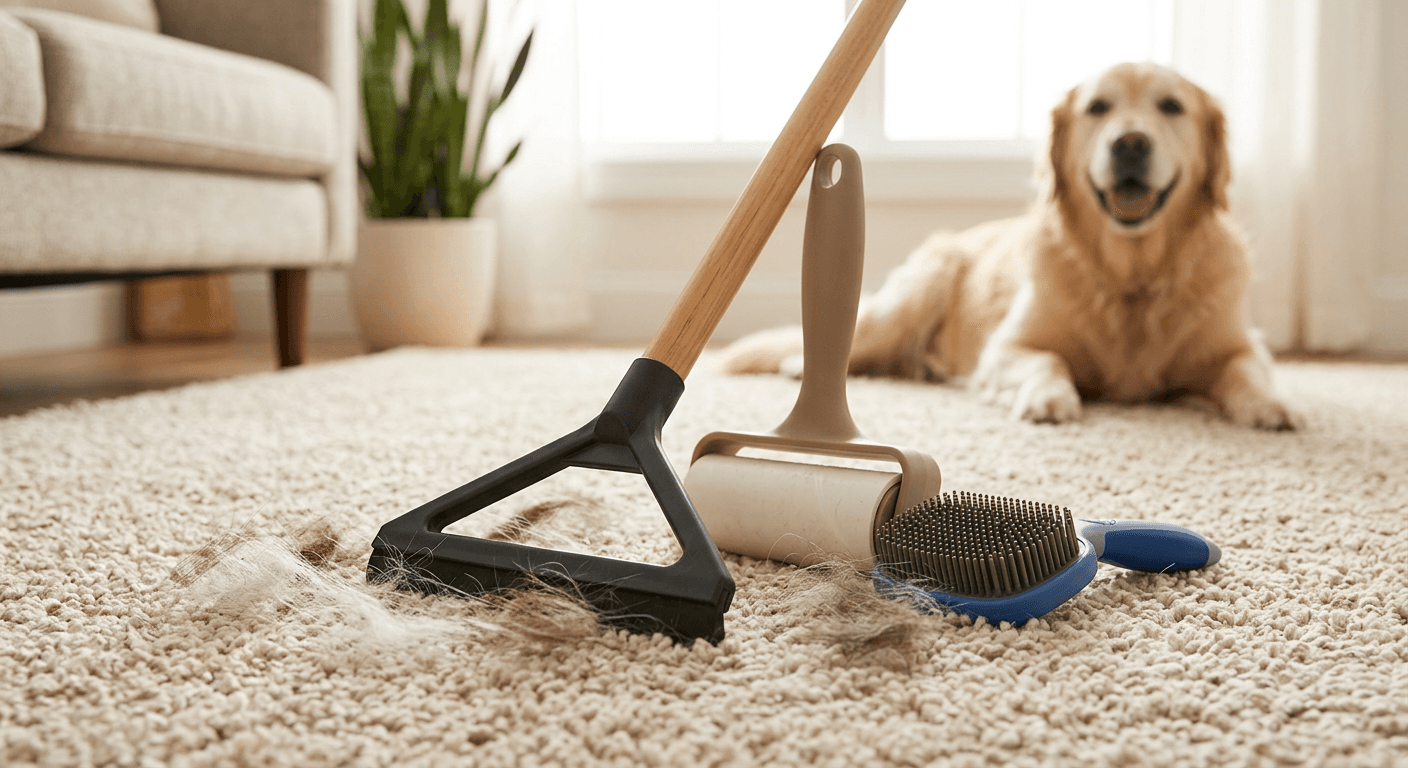
Method 1: Rubber Tools (Fastest for Upholstery)
If I could only pick one category for daily couch cleanup, it’s rubber. Rubber creates friction and static-neutral “grab” that rolls hair into clumps.
Best tools:
- •Rubber pet hair broom (for rugs and fabric sofas)
- •Rubber squeegee (surprisingly excellent on couch cushions)
- •Rubber grooming glove (great for quick passes on throw pillows)
Step-by-step (couch cushions and backrests):
- Remove throw blankets and pillows and shake them outside.
- Lightly mist your hands with water (optional—just a tiny bit).
- Drag the rubber tool in one direction using medium pressure.
- Collect hair clumps by hand and toss immediately (keeps hair from drifting back).
- Repeat in the opposite direction for woven fabrics.
Works best on:
- •Microfiber, canvas, suede-like upholstery, tightly woven fabric
Less effective on:
- •Loose knits, delicate boucle (can snag—test first)
Pro-tip:
If your couch is a hair magnet in winter, run a humidifier to keep indoor humidity around 40–50%. Less static = easier hair removal.
[IMAGE_PLACEHOLDER_1]
Method 2: Upholstery Vacuuming (Only After You Loosen Hair)
Vacuuming alone often “combs” hair deeper. You’ll get better results if you loosen hair first with rubber or a brush.
What to look for in a vacuum:
- •Motorized upholstery tool or mini power brush (best for embedded hair)
- •Rubberized fins/agitators (grabs hair without shredding fabric)
- •HEPA filtration (helps with dander and allergens)
- •Strong suction + easy-to-clean bin (hair can clog filters fast)
Step-by-step (deep clean):
- Use a rubber tool or hair remover brush first (2–5 minutes).
- Vacuum seams and creases with a crevice tool.
- Switch to an upholstery head and vacuum in slow, overlapping rows.
- Finish by vacuuming in the opposite direction (crosshatch pattern).
- Clean the vacuum brush roll/attachment immediately—hair reduces performance.
Real-world scenario: A German Shepherd undercoat will pack into couch seams. Don’t skip the crevice tool—those seams are basically hair storage compartments.
Method 3: Pet Hair Removal Brushes (Fabric “Rakes”)
These are the tools with angled bristles or micro-blades designed to lift embedded hair. Used correctly, they’re incredibly effective. Used aggressively, they can damage delicate upholstery.
Great options:
- •Reusable lint brush (self-cleaning base) for quick runs
- •Upholstery rake for heavy shedding homes (think Husky season)
- •Velvet-style lint brush for formal fabrics
How to use safely:
- Test on a hidden spot first.
- Use light pressure and short strokes.
- Always brush in the direction the fabric nap naturally lies.
- Vacuum after brushing to collect loosened hair.
Common mistake: Scraping hard on boucle, linen blends, or loosely woven fabric—this can pill the upholstery.
Method 4: Damp Microfiber + “Hand Roll” (For Delicate Fabrics)
When you’re dealing with a chair you care about (or a fabric that’s snag-prone), go gentle.
Step-by-step:
- Dampen a microfiber cloth (not wet—just slightly moist).
- Wipe in one direction to gather hair.
- Flip the cloth as it loads up.
- Rinse and repeat.
Works well on:
- •Cotton upholstery, some synthetics, fabric headboards
Not great for:
- •Heavy embedded undercoat (you’ll be there all day)
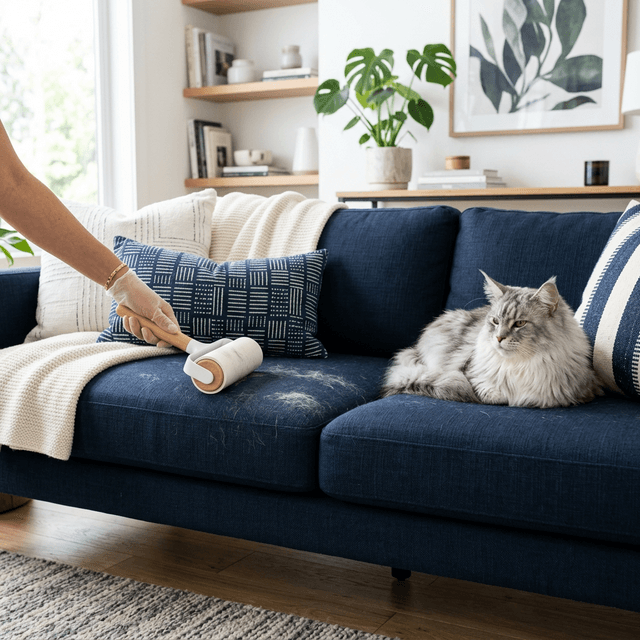
Method 5: Tape/Lint Rollers (Best for Spot Jobs)
Lint rollers are perfect for:
- •Quick touch-ups before guests arrive
- •Spot cleaning armrests, throw pillows, lamp shades
- •Clothing (more on that later)
Choose wisely:
- •Extra-sticky sheets for short, stiff hairs (Pug/Beagle hair)
- •Standard lint rollers for fluffy hair clumps (Golden Retriever)
Pro move: Keep a small roller in:
- •The entryway
- •Your car
- •Your laundry area
Best Ways to Remove Pet Hair From Clothes (Without Ruining Fabric)
Clothing is tricky because you’re working with different fabrics, plus heat can set hair into fibers. The goal is to remove as much hair as possible before washing.
Before Washing: Do This First (It Matters)
Step-by-step pre-wash:
- Shake garments outside (especially fleece and hoodies).
- Use a lint roller or reusable lint brush on high-hair zones:
- •Chest and lap (where cats sit)
- •Sleeves and cuffs (where dogs brush past you)
- •Back of legs (where hair collects when you sit)
- For stubborn hair, use a damp rubber glove and swipe downward.
- Turn clothing inside out before washing (reduces redeposit on visible surfaces).
Common mistake: Tossing hair-covered clothing directly into the washer. Hair can:
- •Stick to other clothes
- •Clog filters
- •End up pasted onto fabric after the cycle
Washer + Dryer Strategy (The Least Annoying Way)
Use your dryer as a hair-removal tool—before you wash.
Step-by-step:
- Put dry, hairy clothes in the dryer for 10 minutes on air-fluff/no heat.
- Clean the lint trap (you’ll be amazed).
- Then wash normally.
Why it works: Tumbling loosens hair; the lint trap catches it before water makes it cling.
Laundry boosters that actually help:
- •Dryer balls (wool or rubber): Reduce static, help knock hair loose.
- •Anti-static spray (lightly used): Helpful for synthetics and winter dryness.
- •Pet hair dissolver additives: Some brands help release hair in the wash—results vary, but they can improve outcomes on towels and fleece.
What to avoid:
- •Fabric softener overuse: It can leave residue that attracts hair and reduces towel absorbency.
- •Overloading the washer: Clothes can’t agitate properly to release hair.
[IMAGE_PLACEHOLDER_2]
Fabric-Specific Clothing Tips
- •Fleece/hoodies: Pre-dry air-fluff + lint roll is your best combo. Fleece is a hair magnet.
- •Wool sweaters: Use a velvet lint brush or gentle tape. Avoid aggressive rakes.
- •Athletic wear (poly blends): Static is the enemy—use dryer balls and avoid overdrying.
- •Denim: Usually releases hair easily with a lint roller or damp glove.
Breed example: Boxer hair is short and stiff; it loves to embed in knit tops and socks. A sticky lint roller beats most “soft” brushes for this kind of hair.
Product Recommendations (What’s Worth Buying vs. What’s Hype)
You don’t need 20 gadgets. A smart “hair removal kit” usually includes one friction tool, one vacuum approach, and one quick touch-up tool.
Best for Furniture: Top Picks by Use Case
For daily couch cleanup:
- •Rubber squeegee or rubber broom
Why: Fast, washable, no refills.
For deep cleaning upholstery and carpets:
- •Vacuum with a motorized pet tool
Why: Pulls embedded hair from seams and cushions.
For delicate fabrics and quick touch-ups:
- •Velvet lint brush or reusable lint brush
Why: Gentle, no tape waste, great for chairs and clothing.
Best for Clothes: What Actually Helps
For pre-wash hair removal:
- •Extra-sticky lint roller sheets
- •Reusable lint brush
- •Damp rubber glove
For wash-day performance:
- •Dryer balls (wool/rubber)
- •“Air-fluff” dryer pre-cycle habit (free, effective)
Quick comparison: reusable vs. disposable
- •Reusable brushes: Great long-term value, less waste, consistent performance; need cleaning.
- •Lint rollers: Best instant results; cost adds up; can be annoying if you run out.
Room-by-Room Real-World Scenarios (What I’d Do as a Vet Tech)
Scenario 1: “My Husky Owns the Sofa”
Problem: Dense undercoat + static + embedding in seams.
Best approach:
- Rubber squeegee to clump hair
- Crevice tool for seams
- Motorized upholstery tool in crosshatch passes
- Finish with a lightly damp microfiber wipe
Expert tip: Rotate and vacuum cushions weekly. Hair accumulates on the “hidden” underside and migrates.
Scenario 2: “My Cat Sleeps on My Black Work Pants”
Problem: Fine hair + dark fabric = instantly visible.
Best approach:
- Keep a lint roller at the door
- Pre-dry air-fluff 10 minutes before washing
- Use dryer balls to reduce static
- Store work clothes in a closed closet (not on open racks near cat hangouts)
Scenario 3: “My Beagle’s Short Hair Is Stuck in Everything”
Problem: Short hairs needle into fabric and can feel prickly.
Best approach:
- Extra-sticky lint roller or tape for clothing
- Upholstery rake (gentle) for heavy-traffic chair arms
- Vacuum after raking to prevent redeposit
Common Mistakes That Make Pet Hair Worse
Avoid these and you’ll cut your workload in half:
- •Vacuuming first on fabric upholstery: you’ll leave embedded hair behind and feel like your vacuum “doesn’t work.”
- •Using too much water or cleaner: wet hair clumps smear oils and can set into fabric.
- •Ignoring seams and creases: most hair hides there; it will “reappear” after you sit down.
- •Over-scraping with rakes: damages delicate upholstery, causes pilling, and can pull threads.
- •Washing hair-covered items with everything else: hair redistributes to towels, knits, and socks.
- •Skipping lint trap cleaning: reduces dryer performance and can be a fire hazard.
Pro-tip:
If you’re dealing with heavy shedding, do a quick “dry de-hair” session (rubber tool or lint roller) before you ever introduce water—water is the point of no return for hair redeposit.
Expert-Level Tips to Prevent Hair Build-Up (So You Clean Less)
If you want to remove pet hair from furniture less often, prevention is the secret. Think: capture hair at the source and use barriers where it matters.
Grooming and Coat Management (Most Impact for the Least Effort)
- •Brush high-shedding dogs 3–5 times/week during seasonal blowouts:
- •Huskies, Malamutes, Shepherds, Labs
- •Use the right brush type:
- •Deshedding rake for undercoat (double coats)
- •Slicker brush for tangles and moderate shedding
- •Rubber curry brush for short-haired breeds (Pugs, Boxers) to lift loose hair
- •For cats:
- •A rubber grooming glove or fine-tooth comb works well for many short-haired cats
- •Long-haired cats (Maine Coon) benefit from a comb that reaches through the topcoat
Important: If your pet’s shedding suddenly increases, check for:
- •Fleas
- •Skin infection
- •Stress
- •Diet changes
- •Thyroid issues (especially in older pets)
Furniture and Fabric Choices That Don’t Trap Hair
If you’re shopping or replacing items:
- •Best upholstery for pet homes:
- •Tightly woven fabrics, leather (wipes clean), some performance fabrics
- •Harder options:
- •Boucle, tweed, velvet (beautiful, but hair-grabby)
- •Color strategy:
- •Match upholstery and throws to your pet’s coat color range (reduces visible hair between cleanings)
Covers, Throws, and “Pet Zones”
The simplest furniture hack: give the pet a designated blanket and wash that—rather than your entire couch.
Set up:
- Choose a washable throw (smooth weave works best).
- Train “place” on the throw (treats + consistency).
- Wash weekly; shake outside between washes.
Bonus: Put a washable mat in your pet’s favorite window perch. Cat hair concentrates there.
[IMAGE_PLACEHOLDER_3]
Step-by-Step: A Weekly Hair Removal Routine That Actually Works
If you want a routine that’s realistic for busy people:
Daily (2–5 minutes)
- Rubber squeegee or glove on favorite pet spots (couch seat, armrest)
- Quick lint roll on clothing you’ll wear out
Weekly (15–25 minutes)
- Remove throws/pillow covers; shake outside
- Rubber tool on upholstery to clump hair
- Vacuum seams/creases with crevice tool
- Vacuum cushions with upholstery head (crosshatch)
- Launder throws; run “air-fluff” pre-dry for hairy laundry
Monthly (30–60 minutes)
- Rotate cushions; vacuum under and behind furniture
- Clean vacuum filters/attachments thoroughly
- Consider a deeper grooming session (especially during shedding season)
If you stick to this, you’ll spend far less time fighting the “hair explosion” that happens when it’s been ignored for weeks.
Quick Troubleshooting: When Hair Still Won’t Come Off
If you feel like you’ve tried everything, it’s usually one of these issues:
- •Wrong tool for the hair type: short, stiff hair needs extra-sticky lift; undercoat needs friction + vacuum.
- •Static overload: add humidity, use dryer balls, avoid overdrying synthetics.
- •Fabric is a hair trap: consider a washable cover for the worst zones.
- •You’re skipping the loosen-then-vacuum sequence: always loosen first, then vacuum.
- •The vacuum head isn’t suitable: a motorized pet tool can be a night-and-day difference for embedded hair.
If you tell me what kind of pet (breed or coat type) and what furniture fabric you have (microfiber, leather, woven, velvet, etc.), I can recommend the exact fastest method combo for your situation.
Hair Removal Cluster
More in this topic
guide
Best robot vacuum for pet hair: what to look for in 2026
guide
How to remove pet hair from car seats fast (no stress)
guide
How to Remove Pet Hair from Couch and Car Seats Without Damaging Fabric (A Comparison-Led Guide)
guide
Best Pet Hair Remover for Rugs and Carpet: What Actually Works (Real-World Guide)
guide
Pet Hair Removal Routine for Multi-Pet Homes: A Comparison-Led Guide That Actually Sticks
guide
Pet Hair Cleanup Routine for Small Apartments: A Fast Daily System That Actually Sticks
Frequently asked questions
What is the fastest way to remove pet hair from furniture?
Start with a rubber glove or damp microfiber cloth to gather hair into clumps, then finish with a lint roller or pet-hair brush for what’s left. For heavy buildup, use a vacuum with an upholstery attachment and make slow passes in multiple directions.
Why does pet hair stick so much to microfiber and fleece?
These fabrics have tight, synthetic fibers that create friction and static, which helps hair cling like it’s magnetized. Dry indoor air makes it worse, so lightly misting fabric with water or using an anti-static spray can help release hair.
How do I remove pet hair from clothes in the wash and dryer?
Run a 10-minute air-fluff/no-heat dryer cycle first with dryer balls to knock hair loose, then wash normally. After washing, dry with dryer balls or a pet-hair dryer sheet and clean the lint trap immediately to prevent re-depositing hair.
