
guide • Hair Removal (Home)
Best robot vacuum for pet hair: what to look for in 2026
Pet homes demand more than basic suction. Learn which 2026 robot-vac features actually prevent tangles, track messes, and handle mixed debris.
By PetCareLab Editorial • March 5, 2026 • 16 min read
Table of contents
- Why 2026 Robot Vacuums Are Finally “Pet-Home Ready” (And Where They Still Fail)
- Pet Hair Reality Check: Match the Vacuum to Your Pet (Breed Scenarios)
- Short, dense “needle hair” shedders (Labs, Pugs, Beagles)
- Long, wispy hair (Goldens, Collies, Shelties)
- Curly coats and dander-heavy homes (Poodles, Doodles, many cats)
- Double-coat seasonal blowouts (Huskies, German Shepherds, Corgis)
- The 2026 Feature Checklist: What Actually Matters for Pet Owners
- 1) Brush system: the #1 determinant for pet hair
- 2) Suction + airflow: don’t get fooled by Pa alone
- 3) Obstacle avoidance: toys, bowls, and “the accident”
- 4) Auto-empty + dock design: the difference between “use it” and “hate it”
- 5) Mopping: helpful, but risky if it smears
- 6) Filtration and sealing: critical for allergy households
- 7) Navigation and mapping that supports “pet logic”
- How to Choose the Best Robot Vacuum for Pet Hair (Decision Framework)
- Step 1: Identify your “hair problem”
- Step 2: Rank your floors (it changes everything)
- Step 3: Decide your automation tolerance
- Step 4: Set safety rules for pets
- Step 5: Match to a product tier (what you actually get)
- Product Recommendations (2026 Picks) + Who Each Is For
- Best overall for most pet homes (mid-to-premium): Roborock S8 / Q Revo lines
- Best at avoiding tangles (long hair households): iRobot Roomba j-series (Combo models if you need mop)
- Best value for pet hair + auto-empty: Shark AI / Matrix lines with self-empty base
- Best for allergy households (sealed docking and filtration focus): Ecovacs/Roborock premium docks (model-dependent)
- Head-to-Head Comparisons That Matter in Pet Homes
- Anti-tangle performance: what to look for in the brush head
- Auto-empty reliability: “does it actually empty pet hair?”
- Obstacle avoidance: pets create dynamic floors
- Mopping: helpful for paw prints, risky for rugs
- Step-by-Step: Set Up Your Robot Vacuum for a Pet Home (So It Actually Works)
- Step 1: Do a one-time “pet-proof mapping run”
- Step 2: Create no-go zones where pets create chaos
- Step 3: Build a schedule that matches shedding biology
- Step 4: Set the right cleaning modes
- Step 5: Train your pets to accept the robot (seriously)
- Maintenance for Pet Owners: The Simple Routine That Prevents 90% of Problems
- Daily (30 seconds)
- Weekly (5–10 minutes)
- Monthly (10–20 minutes)
- After “the incident” (accident, vomit, wet mess)
- Common Mistakes Pet Owners Make (And How to Fix Them)
- Mistake 1: Buying on suction numbers alone
- Mistake 2: Running mopping everywhere on day one
- Mistake 3: Letting hair build up and expecting one run to solve it
- Mistake 4: Ignoring edge zones and “fur borders”
- Mistake 5: Skipping filter care in allergy homes
- Expert Tips: Make Any Good Robot Vacuum Perform Better With Pets
- Use “zones” like a pro
- Pair the robot with one manual tool
- Adjust expectations by season
- If you have multiple pets, prioritize bin/dock capacity
- Quick Buying Checklist (Print This Mentally Before You Shop)
Why 2026 Robot Vacuums Are Finally “Pet-Home Ready” (And Where They Still Fail)
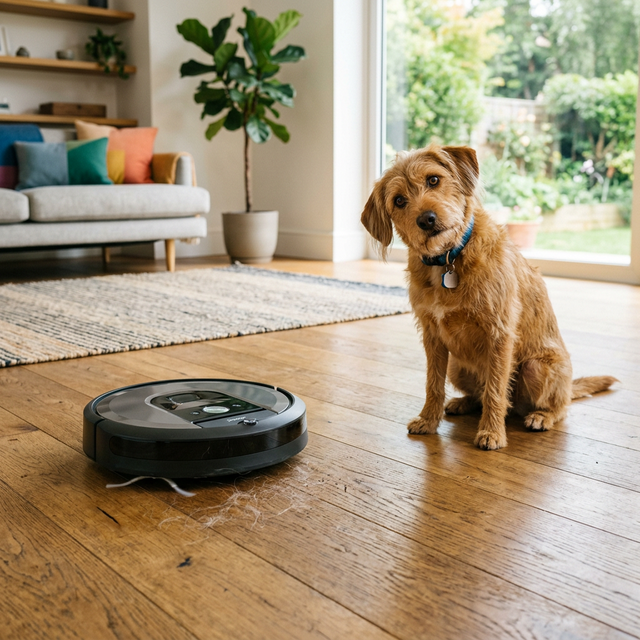
If you owned a robot vacuum a few years ago and felt like it just pushed fur around, got tangled every other day, or smeared wet paw prints into your rugs, you weren’t imagining it. Pet homes are uniquely hard on floor-care tech because you’re dealing with:
- •Mixed debris (fine dander + long hair + litter + kibble + mud)
- •Variable moisture (water bowl splashes, accidents, drool)
- •Soft obstacles (toys, beds, tails, cords)
- •High-frequency shedding cycles (seasonal “blowouts” and daily topcoats)
In 2026, the biggest improvements aren’t just “more suction.” The best robot vacuum for pet hair is usually the one that doesn’t tangle, doesn’t smear, doesn’t get stuck, and stays consistent with minimal babysitting. That means better brush engineering, smarter obstacle avoidance, and better dock automation.
But there are still failure points pet owners need to shop around—especially poop avoidance, edge cleaning, and long hair tangles on budget models. This guide breaks down what to look for, how to match features to your pets and home, and how to avoid the most expensive mistakes.
[IMAGE_PLACEHOLDER_1]
Pet Hair Reality Check: Match the Vacuum to Your Pet (Breed Scenarios)
Not all “pet hair” is the same. Coat type changes everything—how hair clumps, how it embeds, and how quickly brushes jam.
Short, dense “needle hair” shedders (Labs, Pugs, Beagles)
These hairs are stiff and love to embed in carpets and upholstery. If you’ve ever tried to vacuum a Labrador retriever rug and still felt hairs after, that’s the problem.
Look for:
- •High airflow + strong carpet agitation (not just high Pa numbers)
- •A rubberized brush or anti-tangle design that keeps bristles from becoming a hair comb
- •Carpet boost that actually triggers on rugs
Real-world scenario: You have a Black Lab and medium-pile rugs. Hair builds up where the dog turns around (hallways, couch edges). You need a robot that can deep-clean lanes and doesn’t quit when the bin fills early.
Long, wispy hair (Goldens, Collies, Shelties)
Long hair wraps around anything rotating. A robot can have excellent suction and still underperform if it tangles every run.
Look for:
- •True anti-tangle main brush (split rollers, comb-like guards, or all-rubber brush)
- •Auto-cutting/auto-detangling features (useful, but check maintenance costs)
- •A dock that can empty frequently (hair is bulky)
Real-world scenario: A Golden Retriever plus a human with long hair is the ultimate tangle test. Your priority is minimizing brush maintenance, even above raw suction.
Curly coats and dander-heavy homes (Poodles, Doodles, many cats)
Curly hair sheds differently, but dander and fine dust can be high. Cats add litter tracking and fine “floaty” fur.
Look for:
- •Excellent filtration (ideally HEPA-rated) and a well-sealed dustbin
- •Edge cleaning and corner reach for litter scatter
- •Mopping only if it can avoid rugs reliably
Real-world scenario: Two cats + a litter box in a bathroom. You want a robot that can run daily without spreading litter dust into the hallway and without getting confused by bath mats.
Double-coat seasonal blowouts (Huskies, German Shepherds, Corgis)
This is where robots either shine or surrender. During coat blow, your home creates hair tumbleweeds daily.
Look for:
- •Big auto-empty bag and a dock that doesn’t clog
- •High-frequency scheduling and multi-pass cleaning
- •A brush that resists packing (hair “felt” can form in brush chambers)
Real-world scenario: A Husky in spring. The correct strategy isn’t “one powerful clean,” it’s daily maintenance + targeted zones so hair never has time to accumulate.
The 2026 Feature Checklist: What Actually Matters for Pet Owners
Marketing terms are loud. Pet-home performance is quiet: it’s how the robot behaves on day 7, not day 1.
1) Brush system: the #1 determinant for pet hair
If you’re comparing models, start here.
Prioritize:
- •All-rubber or rubber-forward rollers for less wrapping
- •Anti-tangle combs/guards that prevent hair from migrating to the axle
- •Easy access to end-caps (if you do have to clean them)
Avoid:
- •Stiff bristle brushes with narrow brush wells (hair packs and stalls)
- •Models that require a screwdriver for brush removal
Quick test in reviews: Search for “wrapped,” “tangled,” “end cap,” and “scissors.” If owners mention weekly cutting, it’s not truly pet-ready.
2) Suction + airflow: don’t get fooled by Pa alone
Pa (pressure) is only part of the story. For pet hair, you also need airflow and a design that keeps the suction path from clogging with fluffy hair.
Look for:
- •Strong performance on carpet and rugs
- •A wide, unclog-prone intake
- •Auto-empty docks with consistent evacuation (not “sometimes it empties”)
3) Obstacle avoidance: toys, bowls, and “the accident”
In a pet home, obstacle avoidance is less about fancy mapping and more about avoiding:
- •Cat toys
- •Chew bones
- •Wand strings
- •Socks (pet owners somehow always have socks)
- •Water bowl mats
And yes: accidents. No robot is perfect, but in 2026 you can do much better than roulette.
Prioritize:
- •Reactive obstacle detection (camera/structured light/LiDAR + front sensors)
- •“Pet mess” recognition if available
- •The ability to turn on “avoidance mode” for cluttered rooms
Pro tip: If you have a puppy, senior pet, or a cat with digestive issues, treat “poop avoidance” as a safety feature, not a convenience.
4) Auto-empty + dock design: the difference between “use it” and “hate it”
For pet hair, auto-empty isn’t optional in many homes. Hair fills bins fast, and a full bin means hair gets dropped back onto the floor.
Look for:
- •Sealed bags (better for allergies)
- •A dock that resists hair clogging in the chute
- •Replaceable bags that are easy to source
- •Quiet or scheduled emptying (some docks are loud)
5) Mopping: helpful, but risky if it smears
Mopping is great for muddy paw prints and drool trails—until it:
- •drags a wet pad over rugs
- •spreads a spill across the room
- •smears an accident
If you want mopping, prioritize:
- •Reliable carpet/rug avoidance or mop pad lifting
- •Separate vacuum-only schedules for carpeted rooms
- •Easy-to-clean mop components (pet grime is… memorable)
6) Filtration and sealing: critical for allergy households
Pet homes have elevated allergens: dander, saliva proteins, litter dust, and pollen tracked in fur.
Look for:
- •HEPA-grade filtration (or equivalent) at minimum on the dock
- •A bin and dock that don’t leak dust when emptying
- •Easy filter access and affordable replacements
7) Navigation and mapping that supports “pet logic”
Pet homes need:
- •No-go zones (around food bowls, litter, fragile areas)
- •Room-based schedules (kitchen daily, bedrooms less)
- •Zone cleaning (under the couch, by the litter box)
A robot that can’t reliably follow those rules will create daily friction.
[IMAGE_PLACEHOLDER_2]
How to Choose the Best Robot Vacuum for Pet Hair (Decision Framework)
Use this quick framework like a vet-tech triage sheet—match your needs first, then pick a model class.
Step 1: Identify your “hair problem”
Choose the closest match:
- Tangles are my main issue (long hair pets/humans)
- Embedded carpet hair (short stiff hairs on rugs)
- Litter + fine fur + dust (cats, allergy homes)
- Mud and paw prints (yard access, rainy climates)
- High volume seasonal shed (double coats)
Step 2: Rank your floors (it changes everything)
- •Mostly hard floors: prioritize anti-scatter, edge cleaning, and mop strategy
- •Mixed floors: you need smart carpet detection and a brush that transitions well
- •Mostly carpet: prioritize carpet agitation + suction path and expect more maintenance
Step 3: Decide your automation tolerance
Be honest. Are you okay with:
- •Weekly brush cleaning?
- •Emptying the bin every run?
- •Washing mop pads daily?
If not, spend for:
- •Better anti-tangle engineering
- •Auto-empty
- •Easy-wash mop systems (or skip mopping)
Step 4: Set safety rules for pets
If you have a puppy, senior pet, or a cat with occasional vomiting, add:
- •Strong obstacle avoidance
- •Scheduled runs only when you’re home (or after “potty check”)
- •No-go zones around common accident areas
Step 5: Match to a product tier (what you actually get)
- •Budget (basic mapping, limited avoidance): fine for tidy, hard-floor homes with light shedding
- •Midrange (better brush + auto-empty): sweet spot for most pet owners
- •Premium (advanced avoidance + robust docks + mop lifting): best for messy pet households or allergy homes
Product Recommendations (2026 Picks) + Who Each Is For
Because model names change often, I’m recommending well-established product lines that consistently perform well for pet owners. When you shop, match the feature set (anti-tangle brush, obstacle avoidance, dock type) to the current model year.
Best overall for most pet homes (mid-to-premium): Roborock S8 / Q Revo lines
Why it’s strong:
- •Excellent mapping and room controls
- •Strong everyday pickup on mixed floors
- •Many models offer mop lifting and good carpet handling
Best for:
- •Mixed flooring (hard floors + area rugs)
- •Dogs with moderate-to-heavy shedding (Labs, GSDs)
- •Owners who want a reliable app and scheduling
Watch-outs:
- •Check the specific model’s obstacle avoidance performance; it varies by generation.
- •Keep mop routines separate if your home has lots of rugs.
Best at avoiding tangles (long hair households): iRobot Roomba j-series (Combo models if you need mop)
Why it’s strong:
- •Historically excellent at pet hair pickup and brush design that resists tangles
- •Strong ecosystem and parts availability
Best for:
- •Golden Retrievers, Collies, Shelties
- •Homes with long human hair + pet hair combo
- •People who want predictable maintenance and widely available consumables
Watch-outs:
- •Some models can be louder and may require more frequent bin management without a dock.
- •Mop performance varies; prioritize carpet safety if you choose a combo.
Best value for pet hair + auto-empty: Shark AI / Matrix lines with self-empty base
Why it’s strong:
- •Often competitive pricing with auto-empty included
- •Good pickup on hard floors and rugs for the money
Best for:
- •Budget-conscious pet owners who still want auto-empty
- •Homes with mostly hard floors and low clutter
Watch-outs:
- •Obstacle avoidance may be less “pet-proof” than premium models—be extra cautious with toys and accidents.
- •Check replacement availability for filters/brushes.
Best for allergy households (sealed docking and filtration focus): Ecovacs/Roborock premium docks (model-dependent)
Why it can be strong:
- •Some premium docks do a better job keeping dust contained during emptying
- •Good multi-surface cleaning with frequent scheduling
Best for:
- •Cat homes with litter dust
- •Households where dander control is a top priority
Watch-outs:
- •Dock complexity can mean more maintenance points (water tanks, wash trays).
- •Verify that your chosen model’s filtration is truly sealed and effective.
Pro tip: For the “best robot vacuum for pet hair,” favor the model that keeps performance consistent between deep cleans. A robot that cleans 8/10 every day beats a robot that cleans 10/10 once a week—because pet hair is a daily event.
Head-to-Head Comparisons That Matter in Pet Homes
Here’s how to compare models without getting lost in spec sheets.
Anti-tangle performance: what to look for in the brush head
Compare:
- •Rubber rollers vs bristles: rubber tends to tangle less and is easier to wipe clean
- •Brush chamber clearance: more space can reduce “hair felt” packing
- •End-cap design: tool-free access matters
If you have:
- •Golden Retriever + long human hair: prioritize anti-tangle first
- •Corgi + rugs: balance anti-tangle with carpet agitation
Auto-empty reliability: “does it actually empty pet hair?”
Ask these questions:
- •Does the dock have a reputation for chute clogs with fluffy hair?
- •Does it detect a full bag properly?
- •Does it allow emptying frequency control?
Real-world sign of trouble: you open the robot bin and it’s still half full after “emptying,” or you find hair piles near the dock.
Obstacle avoidance: pets create dynamic floors
A good obstacle system:
- •Slows down around clutter
- •Doesn’t “bulldoze” toys into corners
- •Identifies cords and avoids them
- •Handles low-profile pet bowls and mats
If you live with:
- •Kittens (tiny toys everywhere): prioritize avoidance
- •Puppies (accident risk): prioritize avoidance + supervised schedules
Mopping: helpful for paw prints, risky for rugs
Compare:
- •Pad lifting height (higher is safer for thicker rugs)
- •Rug detection reliability
- •Whether it supports vacuum-only rooms in the map
If your dog comes in from rain, mopping can be fantastic—but only if you can confine it to hard-floor zones.
[IMAGE_PLACEHOLDER_3]
Step-by-Step: Set Up Your Robot Vacuum for a Pet Home (So It Actually Works)
This is the setup I recommend to clients and friends because it prevents 90% of “my robot vacuum is terrible” complaints.
Step 1: Do a one-time “pet-proof mapping run”
- Pick up obvious hazards: socks, strings, charging cables, wand toys.
- Move lightweight bowls or place them on a heavy mat.
- Open doors to rooms you want included.
- Run a mapping-only pass if your robot supports it.
Goal: create a stable map before you ask the robot to clean aggressively.
Step 2: Create no-go zones where pets create chaos
Common no-go areas:
- •Litter box perimeter (leave a small buffer)
- •Water bowl station (especially if your dog splashes)
- •Pet bed with fringe/tassels
- •Kids’ play area or toy bin spill zone
This prevents repeated entrapment and stops the robot from dragging toys around.
Step 3: Build a schedule that matches shedding biology
Use schedules instead of “one big clean.”
Examples:
- •Husky in shedding season: run daily in high-traffic rooms + hallway
- •Lab year-round: run daily in living room + entryway, 3x/week bedrooms
- •Two cats: run daily around litter box zone and kitchen
Step 4: Set the right cleaning modes
- •Use two-pass in high-shed zones (hallways, couch area)
- •Increase suction on rugs if the robot supports per-room settings
- •For mopping, start with low water until you trust rug avoidance
Step 5: Train your pets to accept the robot (seriously)
For anxious dogs and skittish cats:
- Let the robot sit powered off in the room for a day.
- Turn it on briefly without running a clean.
- Run it while you’re home, reward calm behavior.
- Avoid chasing/teasing with the robot (it can increase fear).
If your dog is a herder breed (like a Border Collie), the robot can become a “moving job.” Supervised introductions reduce obsessive behavior.
Pro tip: If your cat likes to ambush the robot, add a “cat toy sweep” to your nightly routine. A robot vacuum can’t outsmart a bored kitten with 12 feather wands.
Maintenance for Pet Owners: The Simple Routine That Prevents 90% of Problems
Pet hair performance declines gradually. Maintenance resets it.
Daily (30 seconds)
- •Quick floor scan: cords, strings, accidents
- •Check the robot’s main brush area for visible hair ropes
Weekly (5–10 minutes)
- •Remove and clean the main brush/roller
- •Clean the side brush (common tangle point)
- •Wipe sensors and charging contacts
- •Empty bin if you don’t have a dock (or check dock bag status)
Monthly (10–20 minutes)
- •Replace/clean filters as recommended (more often in heavy-shed homes)
- •Inspect wheels for wrapped hair
- •Clean dock air path and debris channel if accessible
After “the incident” (accident, vomit, wet mess)
- •Turn the robot off immediately
- •Remove brushes, bin, and any mop pad
- •Clean with mild soap and water where safe (avoid soaking electronics)
- •Replace filters if contaminated (don’t try to “save” a filter that touched waste)
If accidents are a realistic risk in your home, run the robot only after a quick inspection or while you’re home. No feature beats prevention.
Common Mistakes Pet Owners Make (And How to Fix Them)
Mistake 1: Buying on suction numbers alone
Fix: prioritize brush design + clog resistance + dock performance. Suction without brush engineering is like a strong fan pointed at a hairball.
Mistake 2: Running mopping everywhere on day one
Fix: start vacuum-only, then add mopping on hard-floor rooms only, with rug boundaries set.
Mistake 3: Letting hair build up and expecting one run to solve it
Fix: schedule frequent light cleans. Robots are maintenance tools, not emergency responders.
Mistake 4: Ignoring edge zones and “fur borders”
Hair accumulates along:
- •Baseboards
- •Under couch lips
- •Around table legs
- •Doorway thresholds
Fix: use edge mode or targeted zone cleans 2–3x/week.
Mistake 5: Skipping filter care in allergy homes
Fix: choose a model with a sealed auto-empty dock and replace filters on schedule. Pet dander is tiny; a clogged filter reduces airflow fast.
Expert Tips: Make Any Good Robot Vacuum Perform Better With Pets
Use “zones” like a pro
Set dedicated zones for:
- •Entryway (dirt, pollen, mud)
- •Feeding area (kibble crumbs)
- •Litter box approach (tracked litter)
- •Couch perimeter (hair drift line)
Run these zones more often than full-house cleans.
Pair the robot with one manual tool
Even the best robot vacuum for pet hair won’t replace:
- •A strong upright for deep carpet grooming, or
- •A handheld for stairs and furniture
If you only add one thing, add a rubber squeegee or carpet rake for rugs—5 minutes before a robot run can dramatically improve pickup during heavy shedding.
Adjust expectations by season
- •Spring/fall blowout: robot runs daily, manual vacuum weekly
- •Off-season: robot runs 3–5x/week, manual vacuum every 2–3 weeks
If you have multiple pets, prioritize bin/dock capacity
Two pets aren’t “double the hair”—they can be triple once hair clumps start forming and bins fill early.
Quick Buying Checklist (Print This Mentally Before You Shop)
Before you choose your next model, confirm:
- •Brush: truly anti-tangle (rubber rollers preferred for long hair)
- •Dock: auto-empty is robust with pet hair; sealed bag if allergies
- •Navigation: reliable mapping + no-go zones + room scheduling
- •Avoidance: good enough for toys/cords; extra caution if accident-prone pets
- •Floors: proven carpet performance if you have rugs (not just hard-floor pickup)
- •Maintenance: easy tool-free access to brushes and filters, affordable replacements
If you tell me your pet breed(s), flooring (hard floor vs carpet), whether you want mopping, and your clutter level (tidy vs “toy minefield”), I can narrow it down to the best feature set—and help you pick the best robot vacuum for pet hair for your exact home.
Hair Removal Cluster
More in this topic
guide
How to Remove Pet Hair from Furniture and Clothes Fast
guide
How to remove pet hair from car seats fast (no stress)
guide
How to Remove Pet Hair from Couch and Car Seats Without Damaging Fabric (A Comparison-Led Guide)
guide
Best Pet Hair Remover for Rugs and Carpet: What Actually Works (Real-World Guide)
guide
Pet Hair Removal Routine for Multi-Pet Homes: A Comparison-Led Guide That Actually Sticks
guide
Pet Hair Cleanup Routine for Small Apartments: A Fast Daily System That Actually Sticks
Frequently asked questions
What features matter most in a robot vacuum for pet hair in 2026?
Prioritize strong real-world pickup on carpet and hard floors, plus a truly tangle-resistant roller or comb system to reduce daily maintenance. A self-emptying dock with good filtration helps with dander, and obstacle avoidance should reliably detect pet toys and accidents.
Do self-emptying robot vacuums help with pet hair and dander?
Yes—self-emptying docks reduce how often you handle dust and fur, which is especially helpful for allergy-prone households. Look for a sealed bag or well-designed bin and effective filtration to keep fine dander from puffing back into the air.
Can robot vacuums handle wet paw prints, water spills, or pet accidents?
Most robot vacuums are not designed to vacuum liquids, and they can smear moisture into rugs if they run through it. Choose models with strong obstacle detection and “no-go” controls, and spot-check floors before scheduling runs—especially around water bowls and litter areas.
