
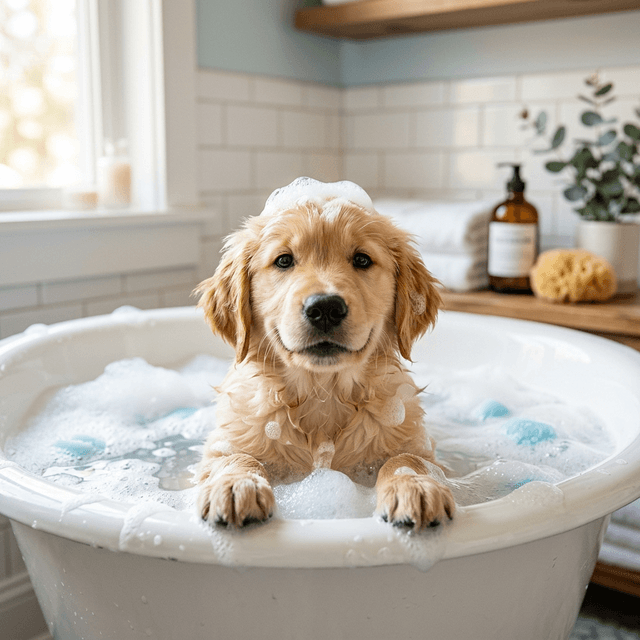
guide • Bath Time
How Often to Bathe a Dog? Vet-Approved Schedule by Coat Type
Find the right bathing schedule for your dog based on coat type, lifestyle, and skin health. Get vet-approved tips to keep your dog clean without drying out their skin.
By PetCareLab Editorial • March 5, 2026 • 13 min read
Table of contents
- The Vet-Approved Baseline: How Often to Bathe a Dog (And Why It Varies)
- Quick “Right Now” Rule of Thumb
- Best Bathing Frequency by Coat Type (With Breed Examples)
- Short, Smooth Coats (Often Low Maintenance)
- Double Coats (The “Do Not Over-Bathe” Group)
- Curly/Wavy “Hair” Coats (Need More Frequent Bathing + Trims)
- Wire Coats (Often Less Frequent Baths)
- Long, Silky Coats (More Frequent Baths + Conditioning)
- Hairless or Very Thin Coats (Special Case)
- Lifestyle-Based Bath Schedules (Real-World Scenarios)
- Scenario 1: The Suburban Family Dog (Backyard + Walks)
- Scenario 2: The Daycare Regular (Doggy Daycare 2–5x/week)
- Scenario 3: The Trail Dog (Hiking, Lakes, Swamps)
- Scenario 4: The Allergy Dog (Seasonal Itch, Pollen Sensitive)
- Scenario 5: The Senior Dog (Arthritis, Sensitive Skin)
- When You Should Bathe More (Or Less): The Skin-and-Coat Clues
- Signs Your Dog Needs a Bath Soon
- Signs You May Be Bathing Too Often (Or Using the Wrong Shampoo)
- “Smell” Isn’t Always a Bath Problem
- The Ideal Bath: Step-by-Step Instructions (Vet-Tech Style)
- Before You Start: Set Yourself Up for Success
- Step-by-Step Dog Bath (The Gold Standard)
- Product Recommendations That Actually Make a Difference (And How to Choose)
- Shampoo Types: What They’re For
- Conditioner: When It Helps (And When It Hurts)
- Brush + Comb Pairings (Underrated “Products”)
- My Practical Product Shortlist (What to Look For)
- How Bathing Changes With Puppies, Seniors, and Medical Conditions
- Puppies: Less Is More (But Clean Matters)
- Seniors: Comfort + Skin Protection
- Allergies and Itchy Skin: Sometimes Weekly Is Correct
- Skin Infections: Follow the Prescription Exactly
- Bathing Alternatives Between Full Baths (Cleaner Dog, Healthier Skin)
- When a Rinse Beats a Shampoo
- Grooming Wipes and Waterless Foams
- Spot-Cleaning the “High Grime Zones”
- Common Mistakes That Make Dogs Itchy, Smelly, or Greasy (And Fixes)
- Mistake 1: Using Human Shampoo
- Mistake 2: Not Rinsing Enough
- Mistake 3: Bathing a Matted Dog
- Mistake 4: Letting the Coat Air-Dry (When It Shouldn’t)
- Mistake 5: Overusing Deodorizing Sprays
- Breed-Specific Bath Schedules (A Practical Cheat Sheet)
- When to Call the Vet or Groomer Instead of Bathing Again
- Call Your Vet If You Notice
- See a Professional Groomer If
- The Bottom Line: A Healthy “How Often to Bathe a Dog” Schedule
The Vet-Approved Baseline: How Often to Bathe a Dog (And Why It Varies)
If you’re Googling how often to bathe a dog, you’re already doing the right thing—because the best schedule isn’t “once a week” or “once a month.” It’s a balance between:
- •Skin health (protecting the natural oil barrier and microbiome)
- •Coat type (short vs. double vs. curly vs. hairless)
- •Lifestyle (city couch potato vs. trail runner vs. daycare regular)
- •Medical needs (allergies, infections, seborrhea, parasites)
A helpful starting point for most healthy dogs is:
- •Every 4–6 weeks with a gentle, dog-specific shampoo
From there, you adjust up or down based on coat, smell/soil, and skin condition. Bathing too often can strip oils and worsen itchiness; bathing too rarely can allow dirt, allergens, and yeast/bacteria to build up—especially in skin folds, under collars, or in dense coats.
Quick “Right Now” Rule of Thumb
Use this simple checkpoint:
- •If your dog is visibly dirty, smells, has greasy coat, or has allergens/pollen on the fur after outdoor time → a bath (or targeted rinse) is reasonable.
- •If your dog has dry flakes, increased itching after baths, or dull, brittle coat → you may be bathing too frequently or using the wrong products.
Pro-tip: “Smelly dog” is often less about needing more baths and more about needing a better dry, ear care, and the right shampoo (or treating an underlying skin/ear issue).
Best Bathing Frequency by Coat Type (With Breed Examples)
Different coats hold oil, debris, and moisture differently—so bathing schedules should follow biology, not calendar pages.
Short, Smooth Coats (Often Low Maintenance)
Examples: Beagle, Boxer, Doberman, Greyhound, Whippet Typical schedule: Every 6–10 weeks, or when dirty/smelly
These coats don’t trap as much debris, and over-bathing can dry the skin quickly (especially in winter).
Best practices:
- •Use a mild, moisturizing dog shampoo
- •Focus on rinsing thoroughly (residue can cause itch)
- •Spot-clean muddy paws/belly between baths
Double Coats (The “Do Not Over-Bathe” Group)
Examples: Labrador Retriever, Golden Retriever, German Shepherd, Husky, Akita, Australian Shepherd Typical schedule: Every 6–12 weeks (sometimes longer)
Double coats insulate and shed. Bathing too frequently (or drying poorly) can lead to:
- •Hot spots (moisture trapped near skin)
- •Dandruff and itch
- •A coat that feels “cottony” from product buildup
Keys for double coats:
- •Prioritize brushing and blow-drying over frequent shampooing
- •Use deshedding conditioner sparingly (too much can weigh down the undercoat)
- •Never leave the coat damp—especially around the neck, rump, and armpits
Curly/Wavy “Hair” Coats (Need More Frequent Bathing + Trims)
Examples: Poodle, Labradoodle, Goldendoodle, Portuguese Water Dog, Bichon Frise Typical schedule: Every 3–6 weeks
These coats can trap allergens, saliva, and debris. Many curly-coated dogs also need:
- •Regular conditioning to prevent matting
- •Blow-drying and brushing after baths to avoid tangles
If your doodle “always smells,” it’s often a combination of:
- •Damp coat near skin
- •Ear issues
- •Skin yeast
- •Incomplete rinsing/drying
Wire Coats (Often Less Frequent Baths)
Examples: Schnauzer, Wire Fox Terrier, Border Terrier Typical schedule: Every 6–10 weeks
Wire coats can be prone to dryness if washed too often. Hand-stripped coats often do best with gentle products and less frequent full baths.
Long, Silky Coats (More Frequent Baths + Conditioning)
Examples: Shih Tzu, Maltese, Yorkshire Terrier, Lhasa Apso, Afghan Hound Typical schedule: Every 3–6 weeks
These coats show dirt fast and mat easily. Baths are only helpful if paired with:
- •Conditioner
- •Careful drying
- •Daily/near-daily brushing for longer styles
Hairless or Very Thin Coats (Special Case)
Examples: Chinese Crested (hairless), Xoloitzcuintli Typical schedule: Often weekly to every 2–4 weeks, depending on skin oils and veterinary guidance
Hairless dogs can get blackheads, clogged pores, and oily buildup. But harsh products can irritate quickly—this group benefits most from a vet-guided routine.
Lifestyle-Based Bath Schedules (Real-World Scenarios)
Even within the same breed, lifestyle can change the answer to how often to bathe a dog.
Scenario 1: The Suburban Family Dog (Backyard + Walks)
- •Baseline: Every 4–8 weeks
- •Between baths: Wipe paws/belly after muddy walks; brush weekly
Scenario 2: The Daycare Regular (Doggy Daycare 2–5x/week)
- •Baseline: Every 3–6 weeks
- •Between baths: Use hypoallergenic grooming wipes or a waterless foam for quick refreshes
- •Watch for: “Frito feet” odor (yeast), ear irritation, and collar area grime
Scenario 3: The Trail Dog (Hiking, Lakes, Swamps)
- •Baseline: Every 2–6 weeks depending on dirt and water exposure
- •After swimming: A fresh-water rinse is often more important than shampoo
- •If your dog swims in chlorinated pools or saltwater, rinse and condition as needed to avoid dryness
Scenario 4: The Allergy Dog (Seasonal Itch, Pollen Sensitive)
- •Baseline: Often weekly to every 2 weeks during flare season, but only with the right product
- •Goal: Remove pollen/allergens from the coat and soothe skin
- •Many vets recommend frequent baths with medicated or hypoallergenic shampoos as part of an itch-control plan.
Pro-tip: Allergy baths work best when you add a 10-minute contact time (let the lather sit) before rinsing—unless your vet says otherwise.
Scenario 5: The Senior Dog (Arthritis, Sensitive Skin)
- •Baseline: Every 6–10 weeks, plus targeted cleaning as needed
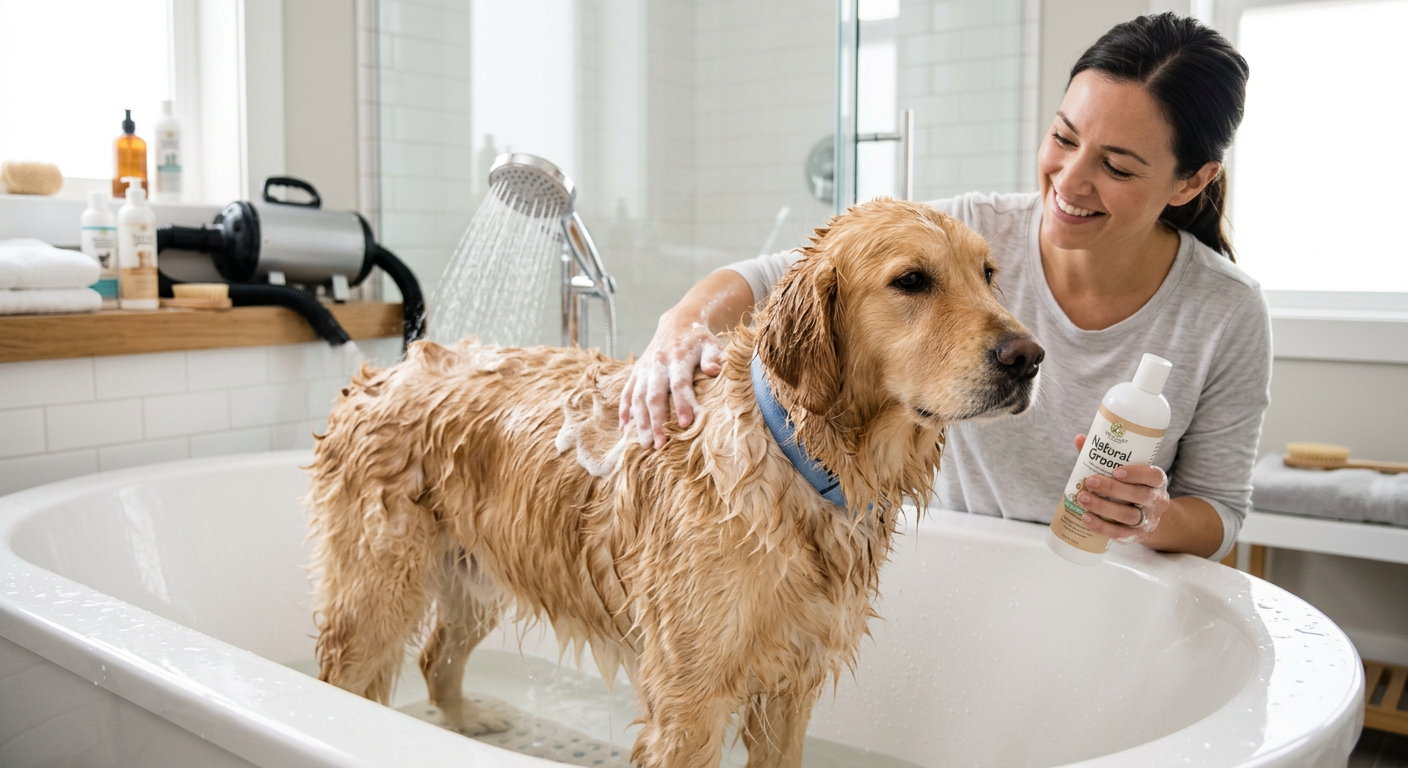
- •Make it easier with: non-slip mat, handheld sprayer, warm room, towel robe, and shorter sessions
[IMAGE_PLACEHOLDER_1]
When You Should Bathe More (Or Less): The Skin-and-Coat Clues
Your dog’s body gives strong feedback about bath frequency and product fit.
Signs Your Dog Needs a Bath Soon
- •Coat feels greasy or sticky
- •Visible dirt or “dusty” coat after petting
- •Musty odor, especially when damp
- •Dander + debris buildup in brush
- •Increased itching due to pollen exposure (seasonal)
Signs You May Be Bathing Too Often (Or Using the Wrong Shampoo)
- •Skin looks dry, tight, or flaky
- •Coat feels brittle or loses shine
- •Itching increases within 24–48 hours after bathing
- •Red patches where soap may linger: armpits, groin, under collar
“Smell” Isn’t Always a Bath Problem
A persistent odor (even after bathing) often points to:
- •Ear infection (yeast/bacteria)
- •Dental disease (breath transferring to coat from licking)
- •Skin yeast overgrowth (often in paws, armpits, belly)
- •Anal gland issues
- •Wet dog odor from incomplete drying or trapped moisture
If odor returns within a day or two, a vet visit is smarter than another bath.
The Ideal Bath: Step-by-Step Instructions (Vet-Tech Style)
Bathing is 50% shampoo and 50% technique. Here’s a routine that works for most dogs.
Before You Start: Set Yourself Up for Success
Gather:
- •Dog shampoo (and conditioner if needed)
- •2–3 towels (one for body, one for face, one spare)
- •Cotton balls (optional for ear openings—do not push into ear canal)
- •Brush/comb
- •Non-slip mat
- •Treats
- •Hair dryer on low/medium heat (optional but helpful)
Step-by-Step Dog Bath (The Gold Standard)
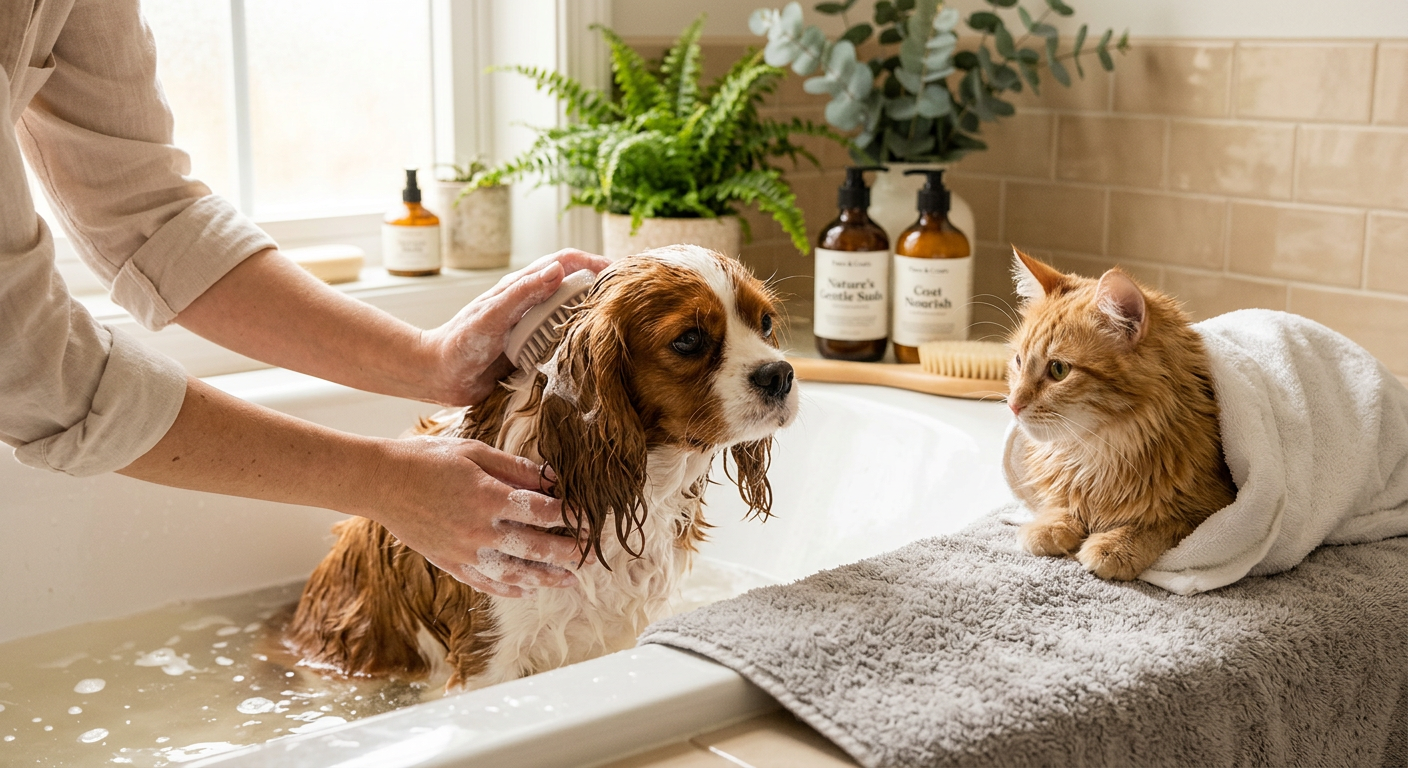
- Brush first (dry coat).
Removes loose hair, breaks up dirt, and prevents water from locking in mats.
- Use lukewarm water.
Too hot dries skin; too cold makes many dogs panic.
- Wet thoroughly to the skin.
Dense coats can look wet on top while staying dry underneath—especially double coats.
- Dilute shampoo when appropriate.
Many professional groomers dilute shampoo for even distribution and easier rinsing. (Check label; some medicated shampoos should not be diluted.)
- Start at the neck, work back.
This helps prevent fleas (if present) from rushing to the face. Keep soap away from eyes/nose/mouth.
- Massage to the skin.
Think “scalp massage,” not “surface rub.” Focus on armpits, chest, groin, paws, and under collar.
- Let it sit (contact time) when needed.
For deodorizing or medicated shampoos, 5–10 minutes can matter.
- Rinse longer than you think.
Residue is a top cause of post-bath itch. Rinse until the coat squeaks clean and water runs clear.
- Condition if coat type benefits (silky/curly/long).
Apply, detangle gently with fingers, rinse well.
- Towel-dry, then fully dry.
Pat and squeeze—don’t aggressively rub long/curly coats (it causes tangles). Use a dryer on low heat and keep it moving. Ensure the coat is dry at the skin.
Pro-tip: For dogs prone to hot spots, always dry the “hot spot zones” completely: neck under collar, behind ears, armpits, groin, and rump.
[IMAGE_PLACEHOLDER_2]
Product Recommendations That Actually Make a Difference (And How to Choose)
You don’t need a shelf of products—but the right few prevent the most common bath problems.
Shampoo Types: What They’re For
- •Gentle everyday/moisturizing shampoo:
Best for routine bathing every 4–8 weeks.
- •Hypoallergenic/fragrance-free shampoo:
Good for sensitive skin, dogs who itch after baths, or households with scent sensitivity.
- •Medicated shampoo (chlorhexidine, miconazole/ketoconazole, benzoyl peroxide, sulfur/salicylic acid):
For infections, yeast, seborrhea—use only with veterinary guidance.
- •Deodorizing shampoo:
Helpful for “doggy smell,” but avoid overly perfumed formulas that mask underlying skin issues.
Conditioner: When It Helps (And When It Hurts)
Conditioner is most useful for:
- •Long, silky coats (Shih Tzu, Yorkie)
- •Curly coats (Poodle mixes)
- •Dry skin dogs that tolerate conditioner well
Conditioner can backfire if:
- •You don’t rinse thoroughly (itch + greasiness)
- •Your dog is prone to folliculitis or yeast and the product is too heavy
Brush + Comb Pairings (Underrated “Products”)
Bathing frequency drops when brushing is consistent:
- •Short coat: rubber curry brush + soft bristle brush
- •Double coat: slicker brush + undercoat rake + metal comb
- •Curly/long coat: slicker brush + metal comb (line-brushing)
My Practical Product Shortlist (What to Look For)
Instead of chasing brands, use these criteria:
- •Dog-specific pH-balanced formula
- •Clear labeling for coat type or skin need
- •Minimal fragrance if your dog is itchy
- •For medicated needs, choose vet-recommended actives:
- •Chlorhexidine (bacteria)
- •Miconazole/ketoconazole (yeast)
- •Benzoyl peroxide (oily skin/comedones; can be drying)
If you want a low-risk routine for most dogs:
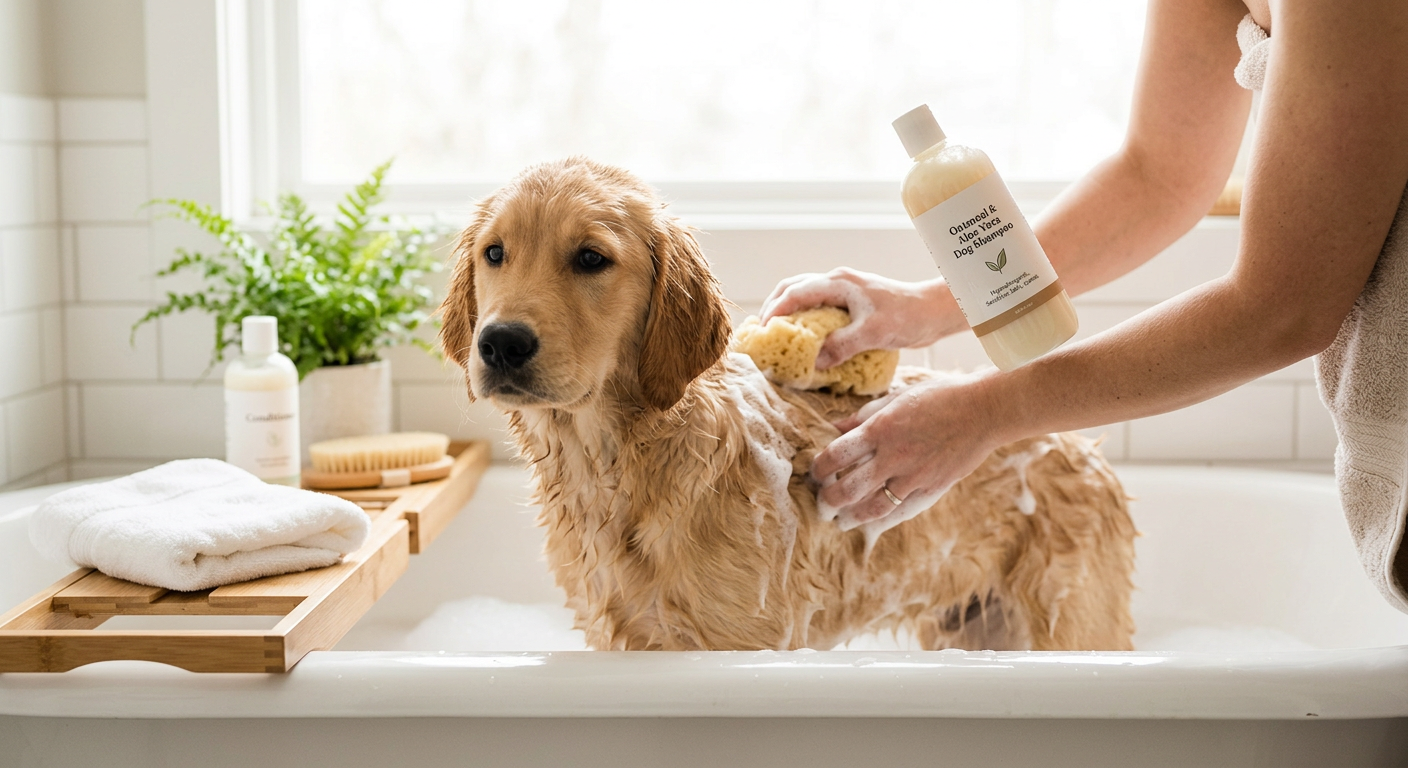
- •A gentle oatmeal or hypoallergenic shampoo
- •A light conditioner for long/curly coats
- •Grooming wipes for paws/belly between baths
How Bathing Changes With Puppies, Seniors, and Medical Conditions
Puppies: Less Is More (But Clean Matters)
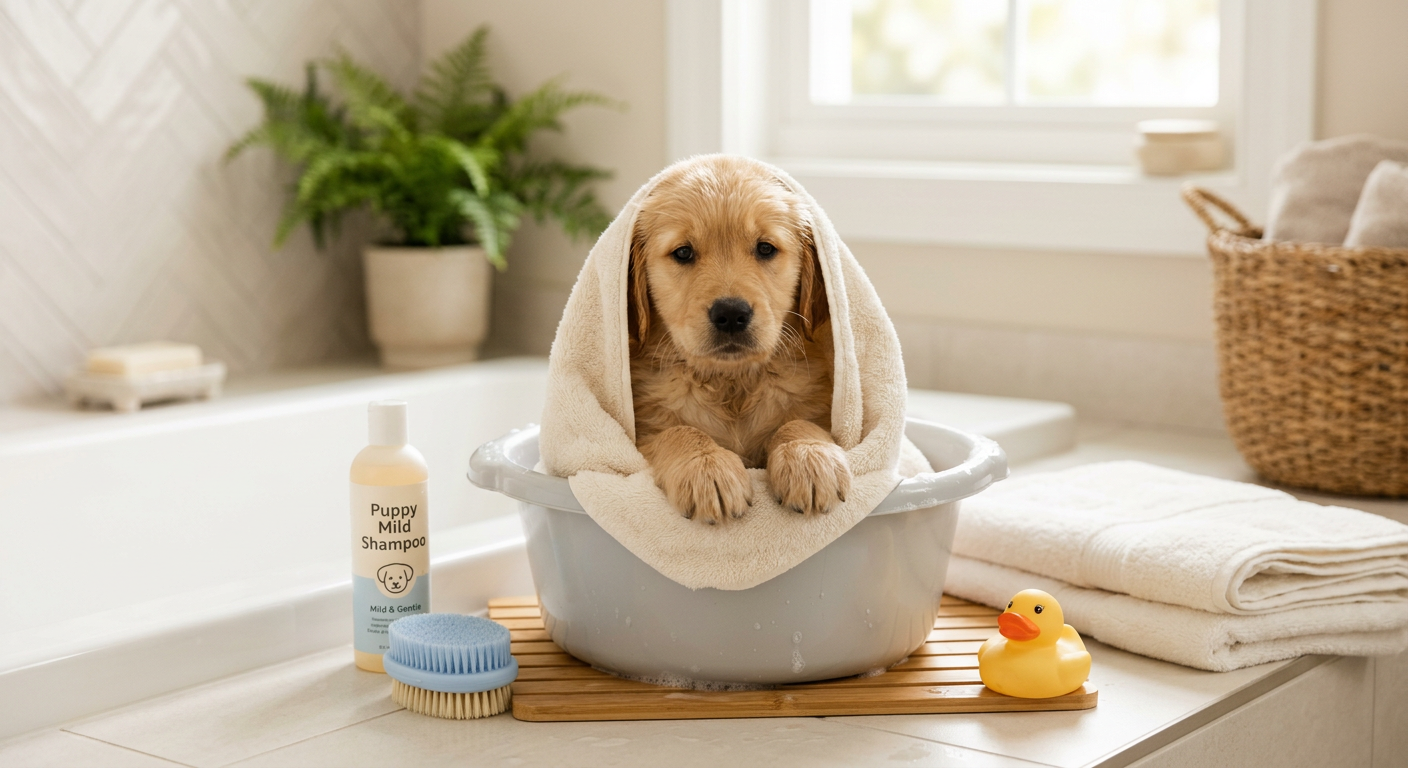
- •Many puppies don’t need full baths often: every 4–8 weeks or when they get into something.
- •Use puppy-formulated, tearless (dog-safe) shampoo—but still avoid eyes.
- •Keep them warm: puppies chill quickly.
If a puppy has fleas, don’t just bathe repeatedly—talk to your vet about safe flea prevention for their age/weight.
Seniors: Comfort + Skin Protection
- •Aim for every 6–10 weeks, unless medical needs dictate otherwise.
- •Prioritize warmth, traction, and short sessions.
- •Consider no-rinse cleansing for “sanitary” areas between full baths if standing is difficult.
Allergies and Itchy Skin: Sometimes Weekly Is Correct
For allergic dogs, bathing can be a treatment—not just grooming. Many vets recommend:
- •1–2 times per week during flares
- •A fragrance-free or medicated shampoo with proper contact time
- •Follow-up with leave-on sprays or mousses if prescribed
Important: If your dog has recurrent ear infections, paw licking, or belly redness, bathing alone won’t fix it. Think of baths as one tool in a bigger plan.
Skin Infections: Follow the Prescription Exactly
If your vet prescribes a medicated shampoo:
- •Stick to the frequency and contact time
- •Use it on the full affected area (often more than you think)
- •Don’t mix multiple medicated products without guidance (you can over-dry or irritate skin)
Bathing Alternatives Between Full Baths (Cleaner Dog, Healthier Skin)
If your dog gets stinky or dusty but a full bath would be too frequent, use targeted hygiene.
When a Rinse Beats a Shampoo
Use plain lukewarm water to rinse:
- •After swimming in chlorine/saltwater
- •After rolling in dust/pollen
- •When coat feels “environmentally dirty” but skin is stable
Grooming Wipes and Waterless Foams
Best for:
- •Paws, belly, butt area
- •After daycare
- •Quick refresh before guests
Avoid:
- •Heavy fragrances on itchy dogs
- •Alcohol-heavy wipes (can sting irritated skin)
Spot-Cleaning the “High Grime Zones”
These areas often need cleaning more than the whole dog:
- •Paws and between toes
- •Under collar/harness contact points
- •Beard/muzzle (especially in water-loving breeds)
- •Butt and tail base (especially fluffy breeds)
A small routine here can extend time between full baths without sacrificing hygiene.
[IMAGE_PLACEHOLDER_3]
Common Mistakes That Make Dogs Itchy, Smelly, or Greasy (And Fixes)
Mistake 1: Using Human Shampoo
Human products have different pH and surfactants and can trigger:
- •Dryness
- •Irritation
- •Dull coat
Fix: Use a dog-specific shampoo, especially for sensitive skin.
Mistake 2: Not Rinsing Enough
Residue causes:
- •Itching
- •Dandruff-like flakes
- •“Dirty again” feeling
Fix: Rinse at least 2–3 minutes longer than you think, especially in thick coats.
Mistake 3: Bathing a Matted Dog
Water tightens mats, trapping moisture and pulling skin.
Fix: Detangle first or see a groomer. For severe mats, don’t attempt a bath—get professional help.
Mistake 4: Letting the Coat Air-Dry (When It Shouldn’t)
Air-drying dense coats can create a damp microclimate—perfect for yeast and hot spots.
Fix: Towel-dry thoroughly and use a dryer on low/medium heat, especially for:
- •Double coats
- •Dogs with skin folds
- •Dogs prone to hot spots
Mistake 5: Overusing Deodorizing Sprays
Covering odor can delay treatment for infections.
Fix: If odor is persistent, check ears, skin folds, paws, and dental health—and call your vet if it’s recurrent.
Breed-Specific Bath Schedules (A Practical Cheat Sheet)
Use this as a starting point, then adjust for lifestyle and skin health.
- •Labrador Retriever (double coat): Every 6–12 weeks; rinse after swims; dry well
- •Golden Retriever (double coat/feathering): Every 6–10 weeks; brush often; conditioner on feathering if needed
- •French Bulldog (short coat + folds): Every 4–8 weeks; clean/dry facial folds more frequently
- •German Shepherd (double coat): Every 8–12 weeks; prioritize brushing and undercoat care
- •Poodle (curly coat): Every 3–5 weeks; conditioner + blow-dry; regular trims
- •Goldendoodle/Labradoodle (varied coats): Usually 3–6 weeks; strict drying + comb-through to prevent mats
- •Shih Tzu (long silky): Every 3–4 weeks; conditioner; frequent brushing
- •Beagle (short coat): Every 6–10 weeks; spot clean as needed
- •Husky (dense double coat): Every 8–12+ weeks; avoid over-bathing; dry thoroughly
- •Cocker Spaniel (prone to ear/skin issues): Every 4–6 weeks; keep ears dry and monitored
Pro-tip: If your dog’s coat is changing (puppy coat to adult coat, seasonal shed, post-spay/neuter coat changes), bath frequency may need temporary adjustment—brushing and drying become even more important during these transitions.
When to Call the Vet or Groomer Instead of Bathing Again
More baths are not the answer if the underlying problem is medical or coat-related.
Call Your Vet If You Notice
- •Strong odor that returns within 24–72 hours
- •Red, moist patches (possible hot spots)
- •Circular hair loss, scabs, or pustules
- •Persistent paw licking or brown saliva staining
- •Recurrent ear odor, head shaking, or redness
- •Itch that doesn’t improve with a gentle routine
See a Professional Groomer If
- •Your dog is matted
- •You can’t dry the coat fully at home (common with doodles/double coats)
- •Nails, trimming, or sanitary grooming is overdue (hygiene affects odor)
The Bottom Line: A Healthy “How Often to Bathe a Dog” Schedule
For most healthy dogs, bathing every 4–6 weeks is a solid baseline—but the best answer depends on coat, lifestyle, and skin needs.
Use this decision framework:
- •Start with coat type: short (less), curly/long (more), double coat (less but thorough)
- •Adjust for lifestyle: daycare/trails/allergies may require more frequent cleaning
- •Watch the skin: dry/itchy after baths = reduce frequency or change products; greasy/smelly = improve technique or investigate medical causes
- •Perfect the basics: brush before, rinse forever, dry completely
If you tell me your dog’s breed (or mix), coat type, lifestyle (daycare, hikes, swimming), and whether they itch or have ear issues, I can help you dial in an ideal bath schedule and product routine.
Bath Time Cluster
More in this topic
guide
Oatmeal Dog Shampoo Benefits: Soothe Itchy Skin Safely
guide
How to bathe a cat: tips for a stress-free experience
guide
How Often Should You Bathe a Dog or Cat? Practical Schedule by Coat Type (Behavior-First Guide)
guide
Puppy First Bath Checklist: Safe Home Setup and Sequence (Behavior-First Guide)
guide
Sensitive Skin Bath Routine for Dogs: Lower Irritation, Better Recovery
guide
Double-Coat Bath and Drying Routine: Prevent Undercoat Issues Without Stress
Frequently asked questions
How often should I bathe my dog in general?
Most healthy dogs do well with baths every 4-6 weeks, but the ideal schedule depends on coat type, activity level, and skin sensitivity. If your dog has dandruff, itchiness, or a strong odor returning quickly, adjust frequency and check with your vet.
Can I bathe my dog too often?
Yes—overbathing can strip natural oils and disrupt the skin barrier, leading to dryness, itching, and increased irritation. If you need more frequent clean-ups, use a vet-approved gentle shampoo and consider spot cleaning or wipes between full baths.
How often should I bathe a dog with allergies or skin infections?
Dogs with allergies or infections may need more frequent medicated baths, often 1-3 times per week, but only under veterinary guidance. Follow the shampoo contact-time instructions and your vet’s schedule to avoid worsening irritation or reducing treatment effectiveness.
