
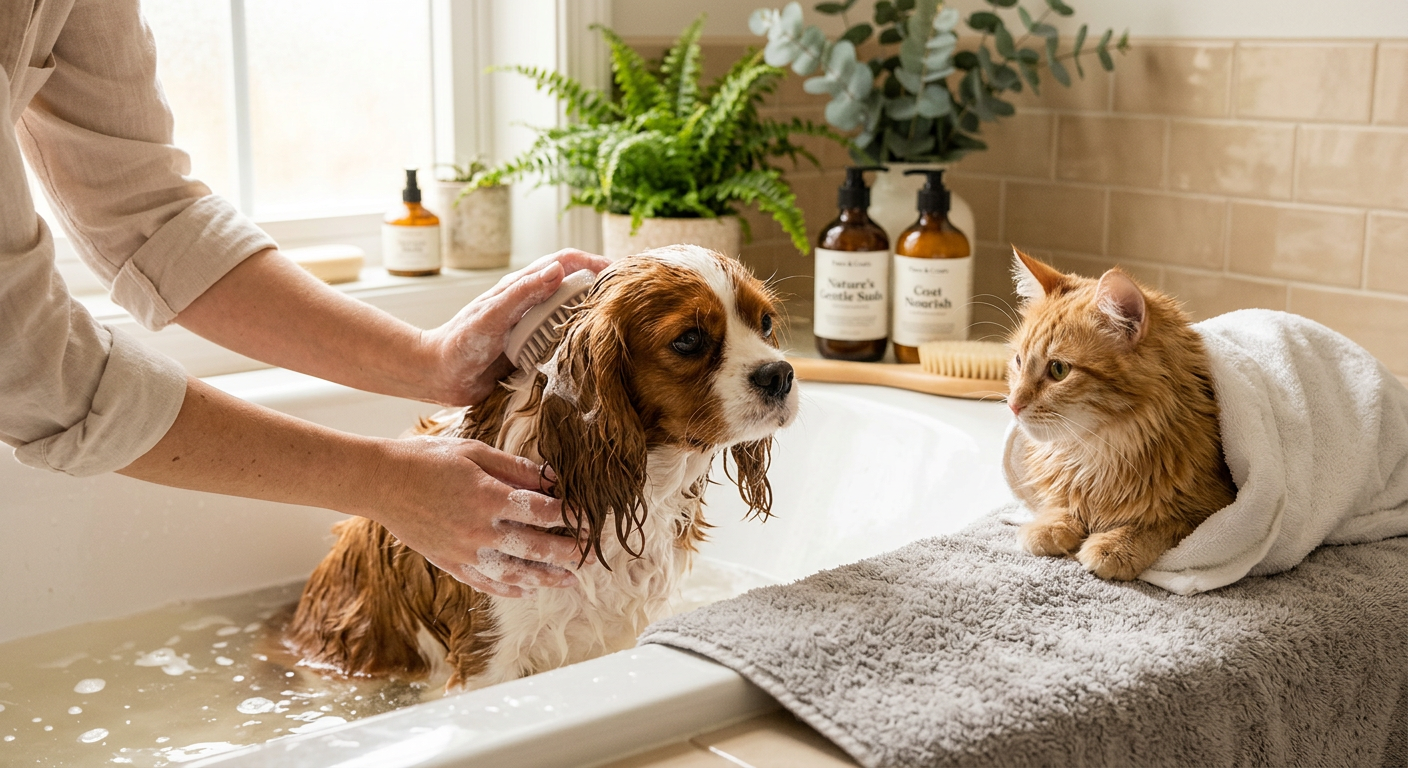
guide • Bath Time
How Often Should You Bathe a Dog or Cat? Practical Schedule by Coat Type (Behavior-First Guide)
A behavior-first bathing schedule for dogs and cats by coat type, lifestyle, and skin needs—plus low-stress routines that actually work at home.
By Lucy Anderson • March 3, 2026 • 7 min read
Table of contents
- Pet behavior signals that shape the routine
- Green-light signals (you can follow a normal schedule)
- Yellow-light signals (use shorter sessions and partial cleaning)
- Red-light signals (change the plan before you change the shampoo)
- Low-stress setup before any tool is used
- Choose the right location for the pet in front of you
- Control the sensory triggers
- Pre-stage the routine (so you don’t leave mid-bath)
- Consider tools that reduce “handling seconds”
- Handling protocol for better compliance
- The 3 rules: predictable, brief, rewarded
- Consent-based micro-cues (especially helpful for cats)
- Pressure points: where most baths go wrong
- Example: the “two-person” protocol for a large, wiggly dog
- Tactical workflow by session phase
- Phase 1: Pre-bath (2–5 minutes)
- Phase 2: Wetting (30–90 seconds)
- Phase 3: Shampoo/contact time (3–8 minutes)
- Phase 4: Rinsing (the make-or-break step)
- Phase 5: Drying and recovery (5–20 minutes)
- Product choices by temperament and tolerance
- For thick coats and “rinse fatigue” dogs
- For pets who hate shampoo application (texture-sensitive)
- For sensitive skin, frequent bathing, or “stinky but itchy” dogs
- For fearful pets who panic at spray near the head
- Error recovery after a bad session
- If your pet slipped, fought, or screamed
- The 72-hour rule (when you should pause and reassess)
- When to call a pro or your vet
- Progress tracking template
- Simple log (copy/paste)
- How to use the stress score
- Practical long-term maintenance plan
- Dog schedules by coat type (starting points)
- Cat schedules (most cats need less bathing)
- Scenario-based adjustments (this is where schedules become practical)
- 1) “My dog goes to daycare twice a week and smells by Friday.”
- 2) “My double-coated dog sheds like crazy; should I bathe weekly?”
- 3) “My cat got poop on the back legs and is furious.”
- 4) “My dog has seasonal allergies and licks paws nonstop.”
- The “behavior-first” bath cadence
Bath frequency isn’t one-size-fits-all. The best answer to how often bathe dog (or cat) comes from three things working together: coat type, skin condition, and—most overlooked—your pet’s emotional tolerance for the process.
A pet who panics in the tub will do better with shorter, more frequent “micro-sessions” (even if they aren’t full baths) than a once-a-month marathon. A pet who enjoys warm water may do fine with a classic schedule, as long as you don’t strip skin oils or aggravate itchy areas.
Below is a practical, behavior-first guide with schedules by coat type, real-life scenarios, and step-by-step routines that reduce stress while still getting your pet clean.
Pet behavior signals that shape the routine
Before you decide on a calendar, watch how your dog or cat feels about handling, water, and confinement. Tolerance drives what’s realistic.
Green-light signals (you can follow a normal schedule)
- •Loose body, neutral tail, normal blinking
- •Accepts gentle restraint and paw handling
- •Will take treats in the bathroom/laundry room
- •Recovers quickly if startled (shower turning on, towel rustle)
Yellow-light signals (use shorter sessions and partial cleaning)
- •Avoids the room, freezes when lifted, lip licking, yawning
- •Refuses treats once the water runs
- •Mild trembling or trying to step out repeatedly
If you see these, build a routine around partial baths: paws/belly, “dirty zones,” or a rinse-only session. Many owners get better results bathing more often in smaller doses.
Red-light signals (change the plan before you change the shampoo)
- •Growling, snapping, frantic scrambling, or shutting down
- •Dilated pupils, whale eye, heavy panting in non-hot rooms
- •Struggles that risk injury (especially in cats)
For red-light pets, the schedule should start with behavior goals, not cleanliness goals. Think: “Can I wet one paw and end on a win?” You may also need professional grooming support or veterinary guidance if anxiety is extreme.
Low-stress setup before any tool is used
The lowest-stress bath often begins 10 minutes before water appears.
Choose the right location for the pet in front of you
- •Small dogs and most cats: sink or laundry tub reduces the “open space” feeling.
- •Large dogs: walk-in shower or tub with a non-slip mat.
- •Fearful pets: consider bathing in the quietest room, not the most convenient one.
Control the sensory triggers
- •Sound: run water at a lower pressure; keep bathroom fan off if it’s loud.
- •Flooring: a non-slip mat is not optional—slipping creates instant panic.
- •Temperature: aim for comfortably warm, not hot. Lukewarm water reduces startle.
Pre-stage the routine (so you don’t leave mid-bath)
Set towels, treats, brush, and shampoo within arm’s reach. If you must walk away to grab something, many pets interpret it as “escape time,” and the next bath gets harder.
Consider tools that reduce “handling seconds”
The more efficient the rinse, the less time your pet spends tolerating the process.
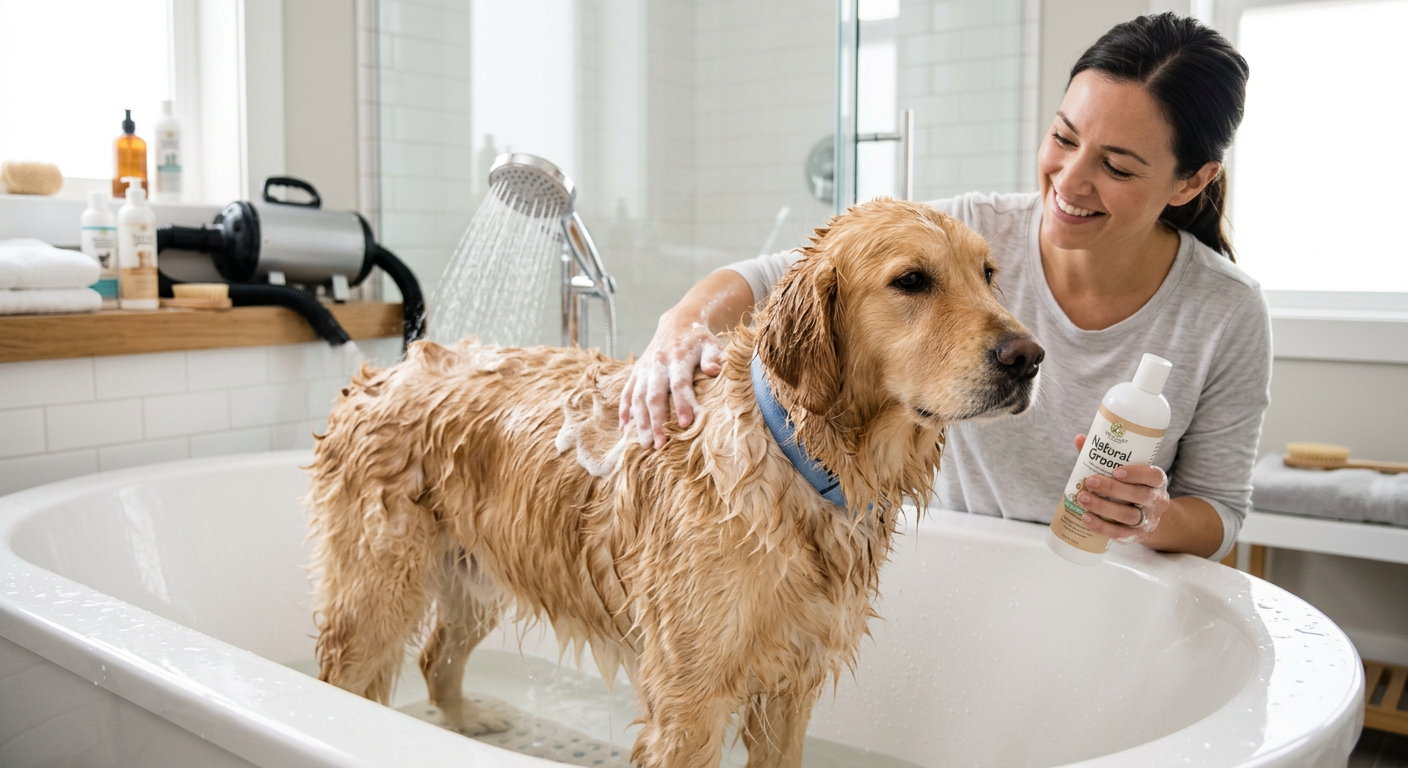
- •For thick coats or big dogs, a hose sprayer can speed rinsing and reduce repeated repositioning. The SR SUN RISE Dog Shower Attachment for Thick Haired Dogs is the type of tool that can shorten the hardest part for many dogs: getting all the soap out.
- •For face/ear areas where pets hate direct spray, a controlled pour is often calmer. A Dog Bath Rinse Cup helps you rinse without the “hissing snake” effect of a shower head.
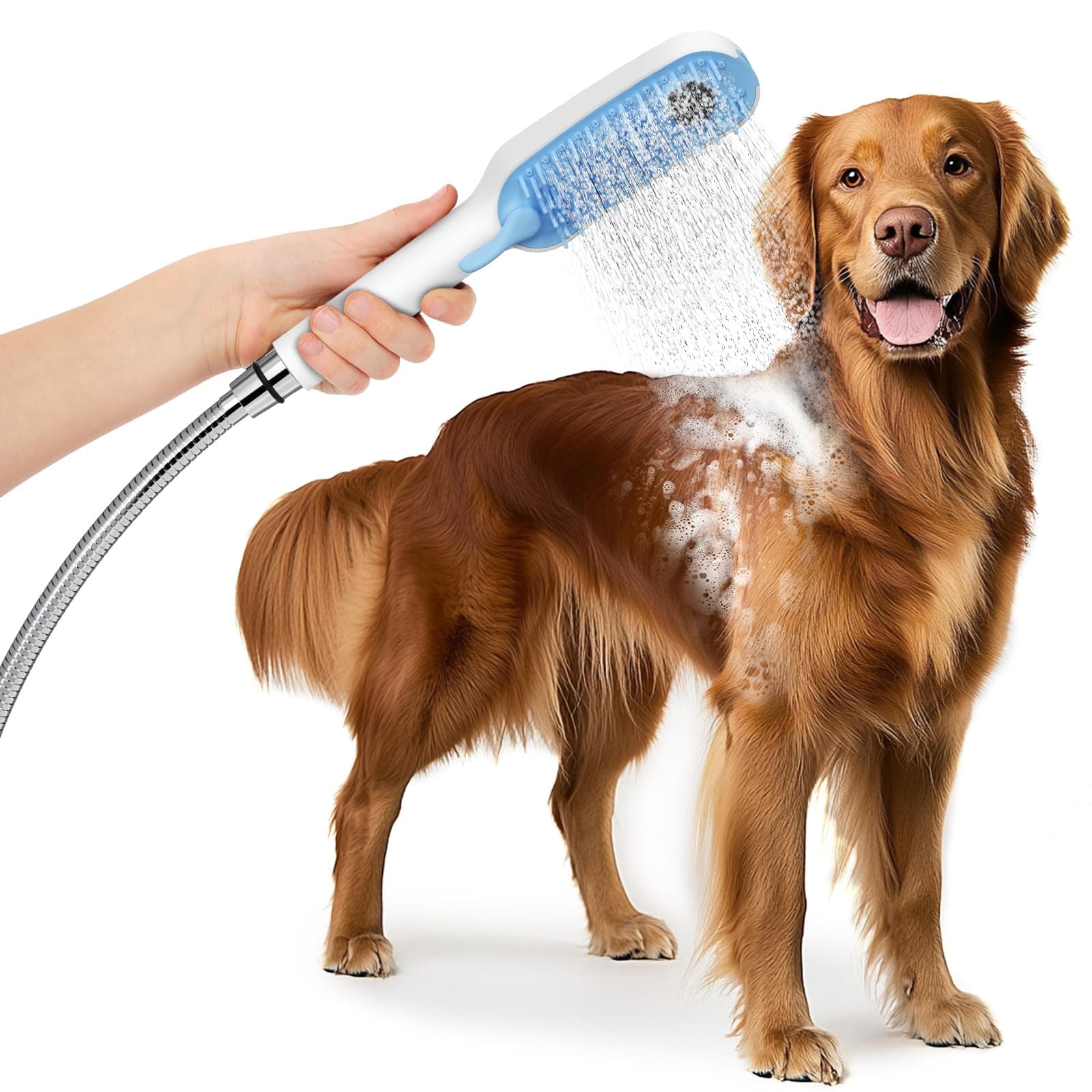
SR SUN RISE Dog Shower Attachment for Thick Haired Dogs, 4 Spray Mode Pet Bath Sprayer with Stainless Steel Diverter Valve & 6.5 Foot Hose, Indoor & Outdoor Dog Washing Grooming Supplies, Blue/White
SR SUN RISE
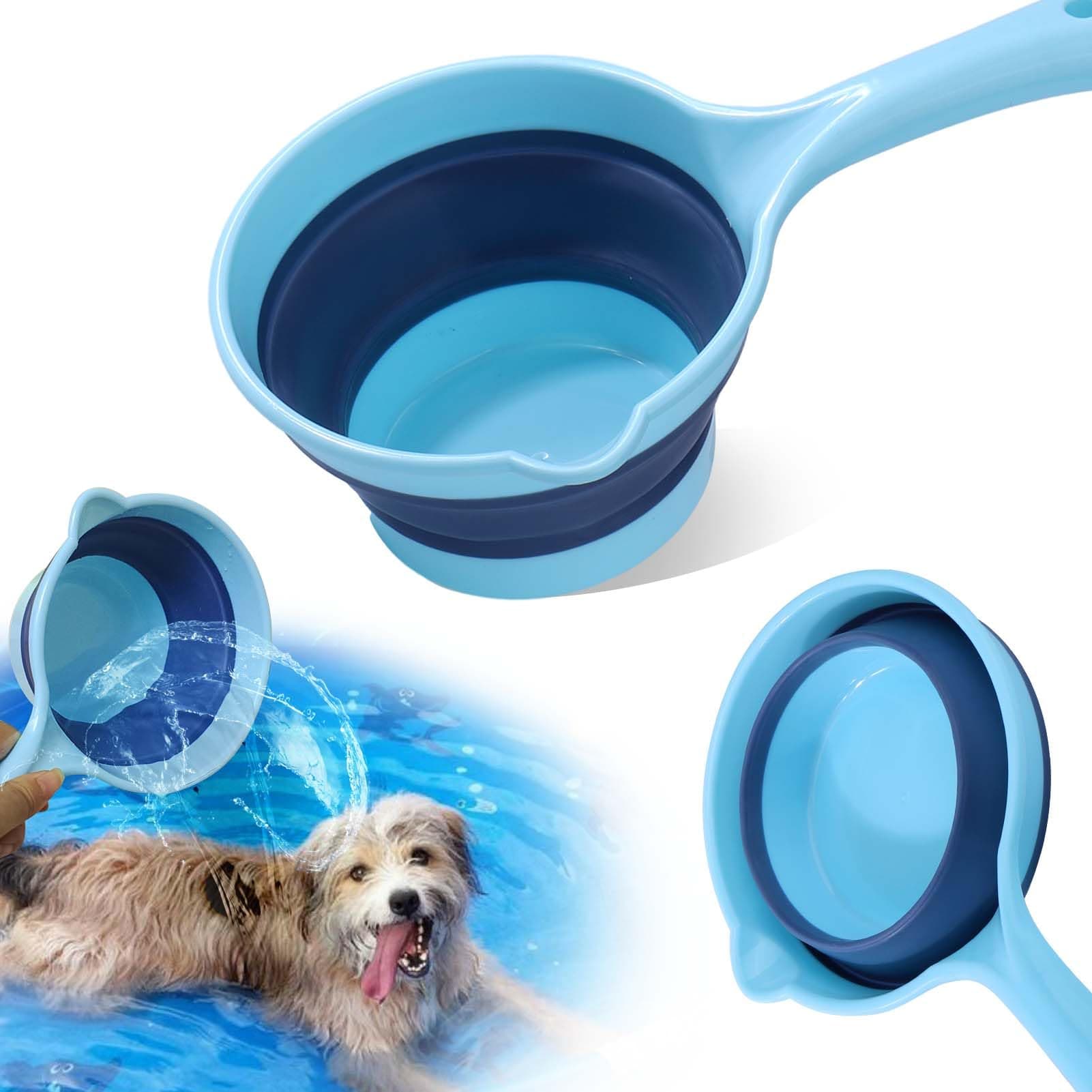
Dog Bath Rinse Cup,Portable Foldable Dog Bath Tubs Accessories,Dog Shower Bathtub Dog Pool Supplies,Dog Washing Tools,Dog Shower Attachment
Vodolo Vodolo
Handling protocol for better compliance
“Good handling” is what keeps baths from turning into wrestling.
The 3 rules: predictable, brief, rewarded
- Predictable: do the same steps in the same order.
- Brief: end early before tolerance collapses.
- Rewarded: pay for cooperation in real time (treats, licking mat, gentle praise).
Consent-based micro-cues (especially helpful for cats)
Try a simple cue like “ready?” before you lift or wet an area. Pause for one second. If your pet stays, proceed; if they pull away, reduce intensity.
This isn’t about giving your pet total control—it’s about avoiding surprises. Surprises create defensive behavior.
Pressure points: where most baths go wrong
- •Feet and nails: many pets hate foot handling. Start by washing legs last.
- •Face and ears: avoid direct spray; use a rinse cup or damp cloth.
- •Tail base and hindquarters: common ticklish zones—slow down, keep one hand steady on the body.
Example: the “two-person” protocol for a large, wiggly dog
- •Person A: steadying hand at chest/shoulder, feeding treats.
- •Person B: wets and shampoos in sections.
You’re not “pinning” the dog. You’re giving stable contact so the dog doesn’t feel like they’re sliding around.
Tactical workflow by session phase
A low-stress bath is a sequence of tiny wins.
Phase 1: Pre-bath (2–5 minutes)
- •Brush out tangles first (especially double coats). Mats tighten when wet.
- •Take a short potty break so they’re not holding it during the bath.
- •For anxious pets: do a “dry run” where you step into the bathroom, feed treats, then leave.
Phase 2: Wetting (30–90 seconds)
Start at shoulders and back—avoid blasting the head.
- •Thick coat dogs often need slower saturation. A sprayer with multiple modes can help you find a gentler setting; tools like the SR SUN RISE Dog Shower Attachment can reduce the time you spend re-wetting areas.
- •If your pet startles at running water, wet using a rinse cup first.
Phase 3: Shampoo/contact time (3–8 minutes)
Use a pet-specific shampoo and follow label directions. Many shampoos need a short contact time to lift oils and odor.
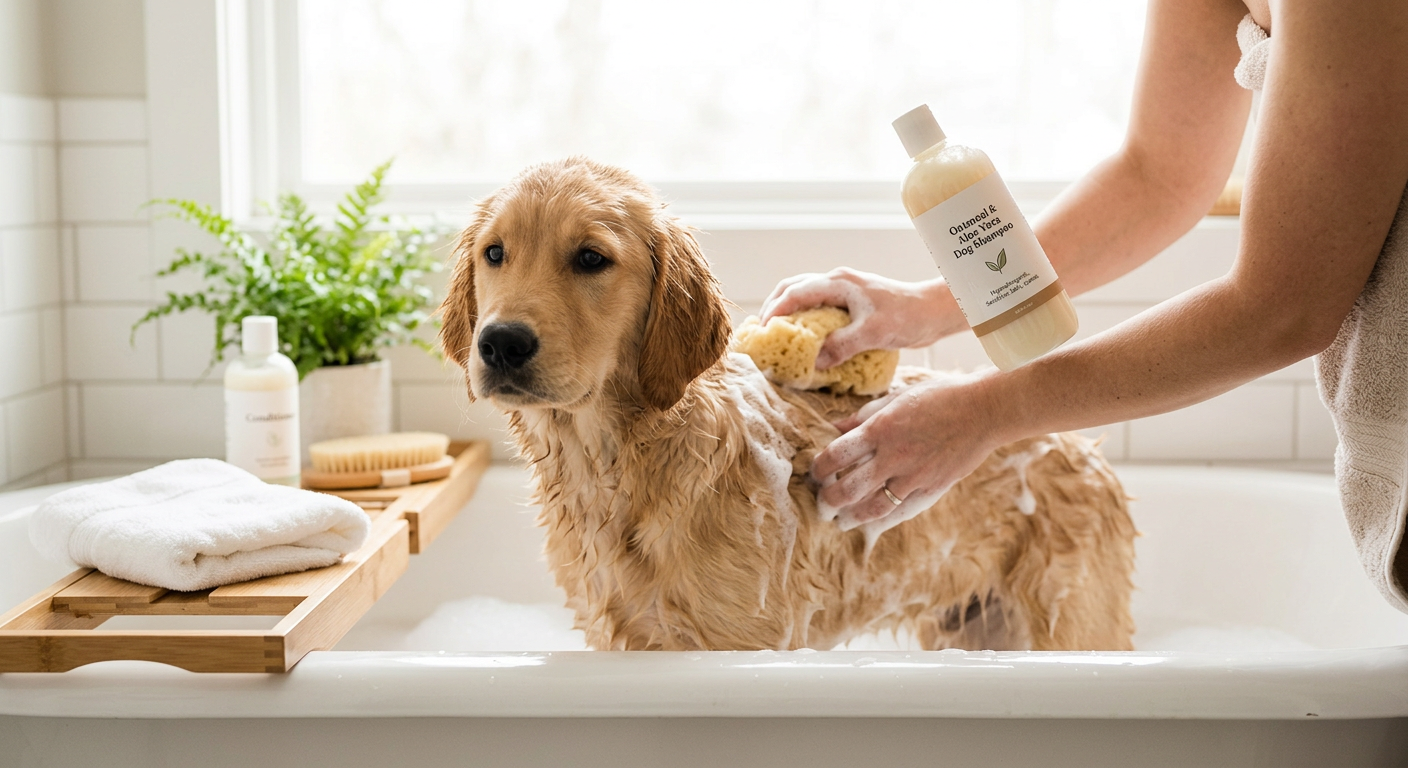
- •For itchy, dry, or allergy-prone dogs, a soothing formula can make baths more comfortable (and reduce post-bath scratching). The Lillian Ruff PRO Formula Deodorizing Oatmeal Dog Shampoo & Conditioner Set is the style of product owners often choose when skin is easily irritated.
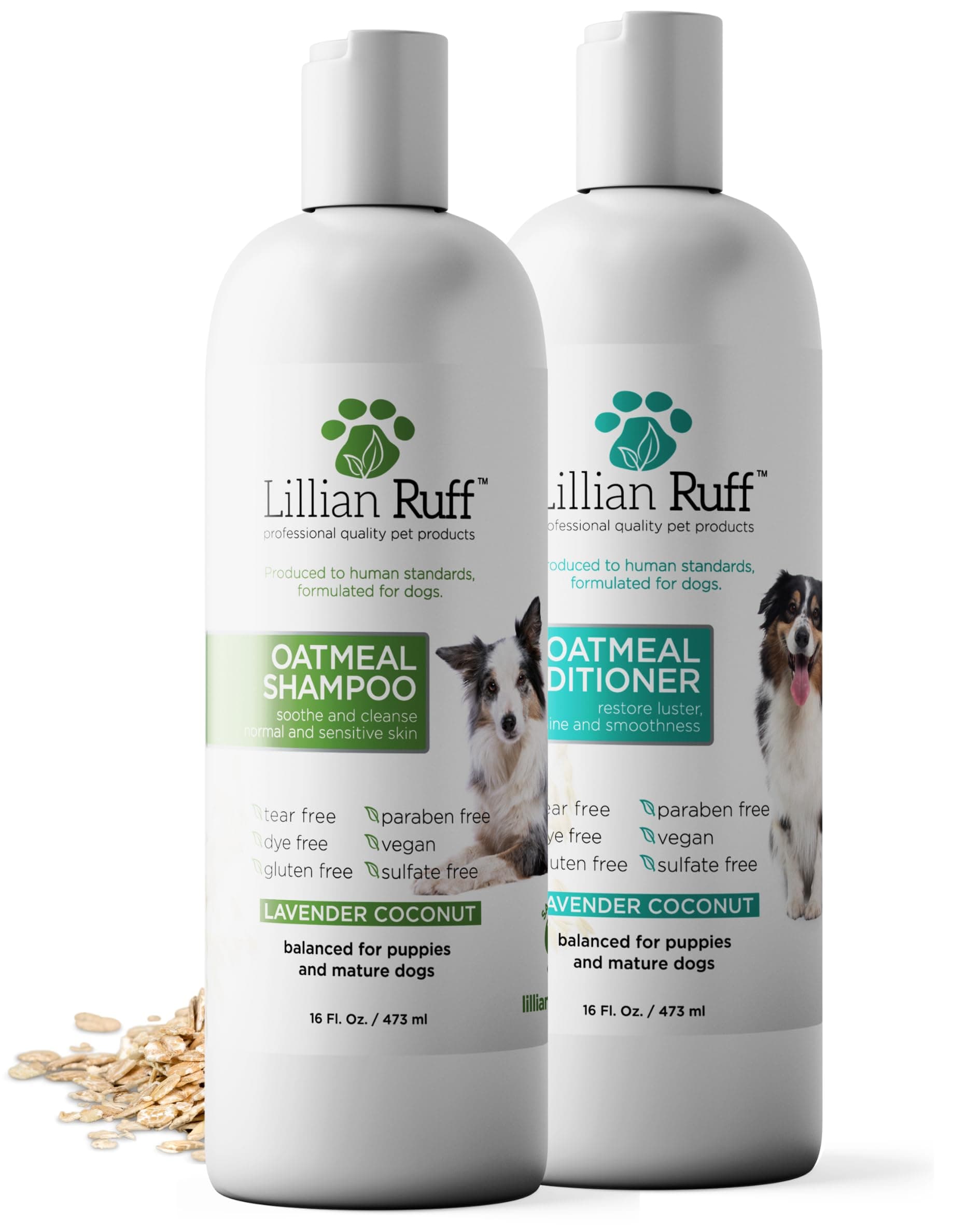
Lillian Ruff PRO Formula Deodorizing Oatmeal Dog Shampoo & Conditioner Set - Calm Itching & Allergies, Ultra-Nourishing Dry Skin Relief - Oatmeal, Aloe, Coconut Oil, Lavender & Provitamin B5, USA Made
Lillian Ruff Lillian Ruff
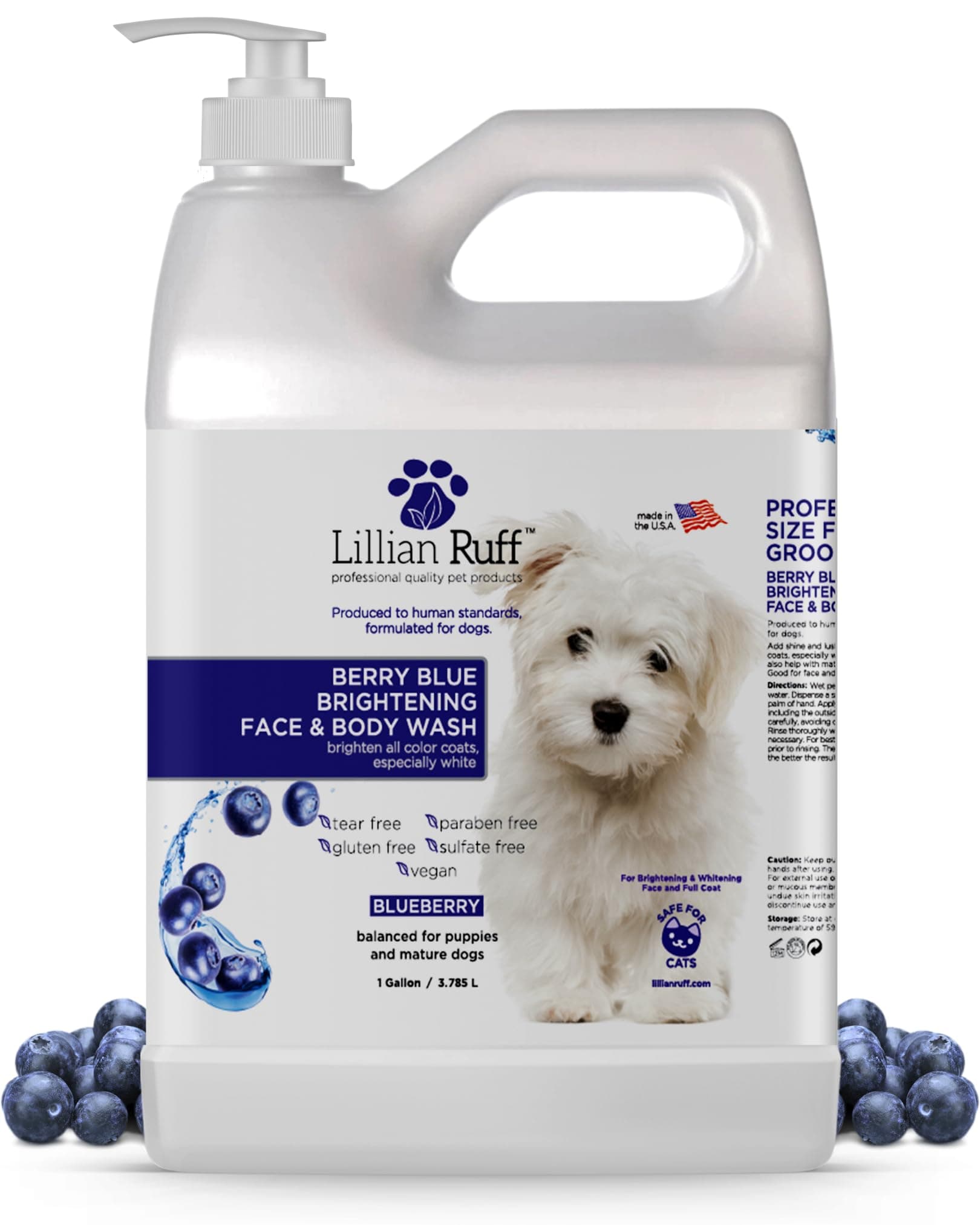
Lillian Ruff PRO Formula Berry Blue Brightening Pet Shampoo - Ultra-Hydrating Professional Whitening Dog Shampoo, Vivid Show-Quality Coat Enhancer, Tear Stain & Odor Eliminator, Vitamin B5, 128oz+Pump
Lillian Ruff Lillian Ruff
Behavior tip: break shampooing into zones. 1) back/shoulders, 2) sides, 3) legs, 4) belly, 5) tail. After each zone: treat.
Phase 4: Rinsing (the make-or-break step)
Most “my dog got itchy after the bath” stories are actually leftover shampoo.
- •Rinse longer than you think, especially under armpits, groin, and between toes.
- •Use a controlled pour for the face. A Dog Bath Rinse Cup helps you avoid getting water in eyes and ears.
Phase 5: Drying and recovery (5–20 minutes)
- •Towel blot, don’t aggressively rub (rubbing can tangle long coats and stress sensitive pets).
- •For double coats: towel, then airflow (pet dryer on low/no heat if you have one).
- •For cats: keep drying quiet and brief; many cats do best with towel-only and a warm room.
End with something your pet loves (a chew, play, a meal). You’re building a positive “bath predicts good things” association.
Product choices by temperament and tolerance
The right tool is the one that reduces fear and time spent struggling.
For thick coats and “rinse fatigue” dogs
If your dog is tolerant but gets restless mid-rinse, upgrade rinsing efficiency.
- •A hose sprayer like the SR SUN RISE Dog Shower Attachment can help you rinse down to the undercoat without repeatedly refilling cups.
For pets who hate shampoo application (texture-sensitive)
Some dogs and many cats react to cold, gloopy shampoo being rubbed in.
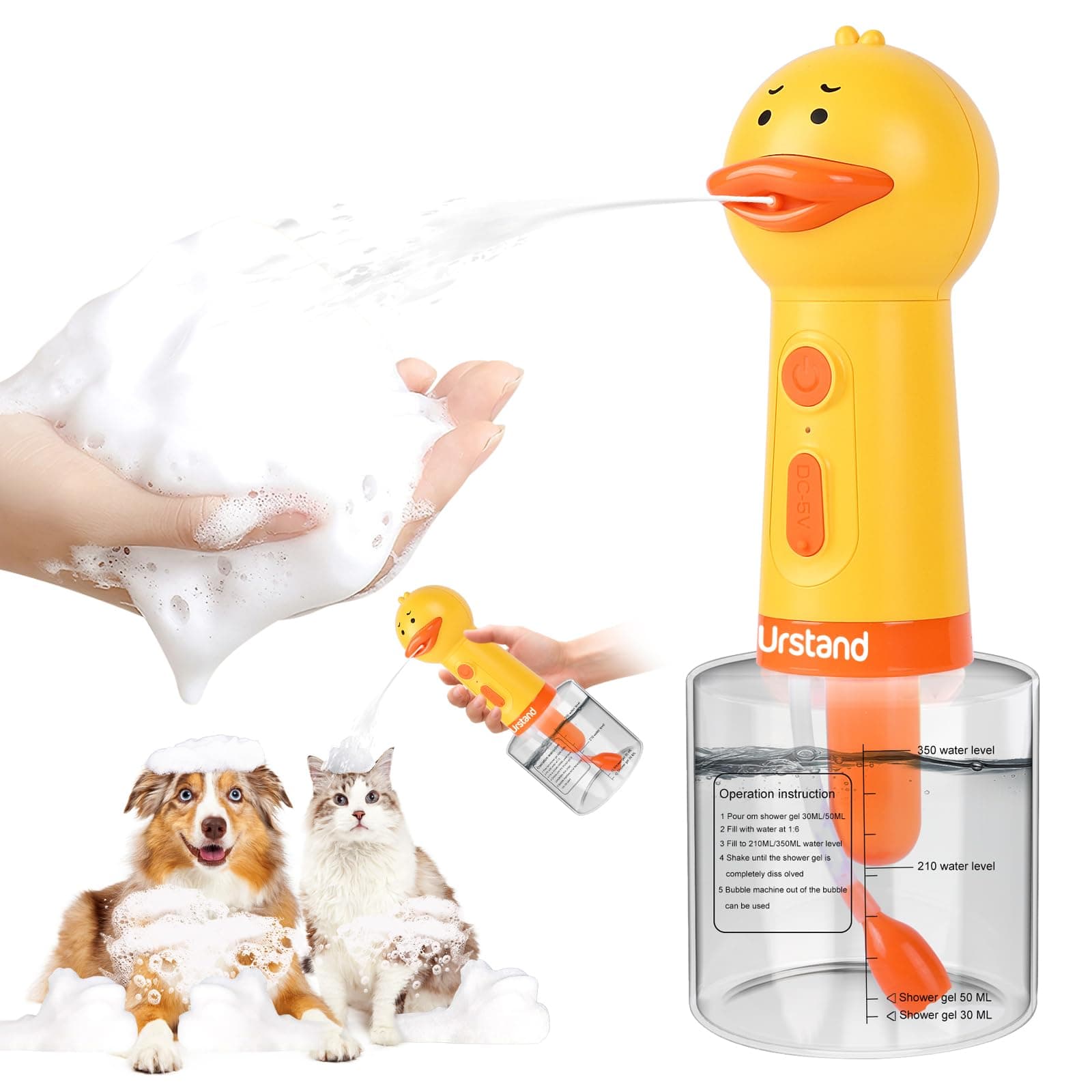
- •A foaming tool can make application faster and more even, with less “scrub time.” The Dog Foaming Soap Dispenser is the kind of option owners try for bath-averse pets because foam spreads quickly and can feel less invasive than repeated squirts.
For sensitive skin, frequent bathing, or “stinky but itchy” dogs
If you need to bathe more often (allergies, daycare, rolling in who-knows-what), choose a gentle, moisturizing formula.
- •The Lillian Ruff PRO Formula Deodorizing Oatmeal Dog Shampoo & Conditioner Set fits the “comfort-first” approach when you’re trying to keep skin calm while still managing odor.
For fearful pets who panic at spray near the head
- •Use a rinse cup for the face and neck rather than a direct stream. The Dog Bath Rinse Cup is handy here.
- •Pair with a damp washcloth for cheeks and around the ears.
Error recovery after a bad session
A bad bath doesn’t mean you’ve “ruined” bathing forever—but repeating the same setup often makes it worse.
If your pet slipped, fought, or screamed
- •Stop chasing cleanliness. Next session should be a 2-minute “good experience,” not a full wash.
- •Change the environment: different room, non-slip mat upgrade, quieter water.
- •Split tasks: one day brush + treats; next day feet rinse; next day full body.
The 72-hour rule (when you should pause and reassess)
If your pet is still avoiding the bathroom, flinching at towels, or showing defensive behavior for days, don’t force another bath immediately. Rebuild with tiny, treat-based steps.
When to call a pro or your vet
- •Persistent skin odor despite regular bathing (could be yeast/bacterial issues)
- •Hot spots, intense itching, hair loss, scabs
- •Ear infections (bathing can worsen discomfort)
If medical issues are driving odor/grease, changing the bathing schedule alone won’t fix it.
Progress tracking template
Consistency improves behavior faster than “random heroic baths.” Track both cleanliness and emotional comfort.
Simple log (copy/paste)
- •Date:
- •Pet (dog/cat):
- •Coat type:
- •What triggered bath (mud, odor, allergy flare, fleas, routine):
- •Session type (full bath / rinse only / paws-belly / face wipe):
- •Tools used (sprayer, rinse cup, foamer):
- •Stress score (0–5):
- •Treats taken? (Y/N):
- •Biggest struggle moment:
- •What helped:
- •Next session goal (one sentence):
How to use the stress score
- •0–1: maintain schedule, increase efficiency
- •2–3: shorten session, increase rewards, simplify steps
- •4–5: stop full baths temporarily; do training sessions and partial cleaning
Practical long-term maintenance plan
Below are realistic bathing schedules by coat type. Adjust based on lifestyle (hiking, swimming, daycare), skin health, and tolerance.
Dog schedules by coat type (starting points)
| Coat type | Typical bath schedule | Why | Notes |
|---|---|---|---|
| Short coat (beagle, boxer) | Every 4–8 weeks | Less hair holds less debris | Use brush + wipe-down between baths |
| Double coat (husky, shepherd) | Every 6–12 weeks | Undercoat holds soap; over-bathing dries skin | Brush weekly; focus on thorough rinsing |
| Long/silky (shih tzu, yorkie) | Every 2–4 weeks | Hair traps oils + dirt; mats form fast | Conditioners help; brush often |
| Curly/doodle/poodle | Every 2–4 weeks | Curls trap moisture/odor; mat risk | Never bathe before de-matting |
| Wire coat (terriers) | Every 4–8 weeks | Texture can get dry | Hand-stripping routines may change needs |
| Hairless (xolo, chinese crested) | Every 1–2 weeks (gentle) | Skin oils accumulate | Use very mild products; moisturize per vet advice |
Real-world tradeoff: If your dog smells “fine” but has allergies, you might bathe more often to remove pollen—as long as the shampoo is gentle and you rinse extremely well. If your dog’s skin gets flaky after baths, you may need longer intervals or a different formula.
Cat schedules (most cats need less bathing)
Cats generally self-groom well. Many healthy adult cats only need bathing when something is on the coat (grease, feces, allergens, flea dirt) or when grooming ability is limited.
Starting points:
- •Healthy short-hair cat: only as needed (sometimes a few times per year)
- •Long-hair cat (persian types): every 4–8 weeks or frequent spot-cleaning + brushing; full baths only if coat quality demands it
- •Senior/overweight/arthritic cats: more “assisted grooming” (wipes, combing) and occasional baths if soiling occurs
Behavior note: Many cats do best with sink baths using a rinse cup rather than a running sprayer. Keep it short and warm, and towel-dry in a quiet room.
Scenario-based adjustments (this is where schedules become practical)
1) “My dog goes to daycare twice a week and smells by Friday.”
Try: mini rinse on paws/belly mid-week + full bath every 3–4 weeks.
- •Use a tool that shortens the rinse phase (sprayer) and a gentle shampoo.
- •If your dog hates scrubbing, consider a foaming applicator like the Dog Foaming Soap Dispenser to reduce handling time.
2) “My double-coated dog sheds like crazy; should I bathe weekly?”
Weekly bathing can dry skin for many double coats. Instead:
- •Brush 3–5x/week during blowout
- •Bathe every 6–10 weeks, but do a very thorough rinse (this is where a tool like the SR SUN RISE Dog Shower Attachment can help)
3) “My cat got poop on the back legs and is furious.”
Skip a full bath.
- •Warm damp cloth + small rinse cup pour on legs only
- •Towel blot, then release
- •Next day: short brushing session with treats to rebuild tolerance
4) “My dog has seasonal allergies and licks paws nonstop.”
Many vets recommend more frequent bathing/rinsing during peak pollen.
- •Try paw rinses after walks
- •Full body bath every 1–2 weeks with a soothing formula (consider something like the Lillian Ruff Oatmeal Shampoo & Conditioner Set)
- •Watch skin: if you see increased dandruff, scale back or ask your vet about a medicated plan
The “behavior-first” bath cadence
If you’re rebuilding trust, use this cadence for 2–4 weeks:
- •Week 1: bathroom treats + dry towel handling (no water)
- •Week 2: paws/belly rinse only + treat jackpot
- •Week 3: half bath (back/shoulders only) + stop while it’s still going well
- •Week 4: full bath, short and efficient
This approach often solves the real problem behind “how often bathe dog”: the dog can only tolerate baths when you’ve made them predictable, brief, and worth it.
Bath Time Cluster
More in this topic
guide
How Often to Bathe a Dog? Vet-Approved Schedule by Coat Type
guide
Oatmeal Dog Shampoo Benefits: Soothe Itchy Skin Safely
guide
How to bathe a cat: tips for a stress-free experience
guide
Puppy First Bath Checklist: Safe Home Setup and Sequence (Behavior-First Guide)
guide
Sensitive Skin Bath Routine for Dogs: Lower Irritation, Better Recovery
guide
Double-Coat Bath and Drying Routine: Prevent Undercoat Issues Without Stress
Frequently asked questions
How often should I bathe my dog if they have sensitive or itchy skin?
It depends on the cause of the itch, but many sensitive-skin dogs do better with less frequent baths (every 4–8 weeks) unless allergies are involved. If pollen or environmental allergens are driving the itch, more frequent bathing (every 1–2 weeks) can help remove irritants—as long as you use a gentle, moisturizing shampoo and rinse extremely well. If itching worsens after baths, the problem is often leftover shampoo, water that’s too hot, or an underlying skin infection that needs veterinary care.
Is it bad to bathe a dog every week?
Weekly bathing isn’t automatically bad, but it’s more likely to cause dryness or irritation if the shampoo is harsh or rinsing is incomplete—especially for double-coated breeds. If you need weekly baths for daycare, allergies, or frequent messes, choose a gentle formula, keep water lukewarm, and prioritize thorough rinsing and calm handling. Many owners also alternate a full bath with partial cleaning (paws/belly) to reduce skin stress.
Do cats need baths, or is grooming enough?
Most healthy adult cats don’t need routine baths because self-grooming usually maintains the coat. Baths become useful when something is on the fur (grease, feces, allergens), when the cat can’t groom well (senior, obese, arthritic), or for certain coat types where matting and buildup are common. For many cats, spot-cleaning plus brushing is better tolerated than full baths, and a short sink bath with a rinse cup is often less stressful than a running shower.
