
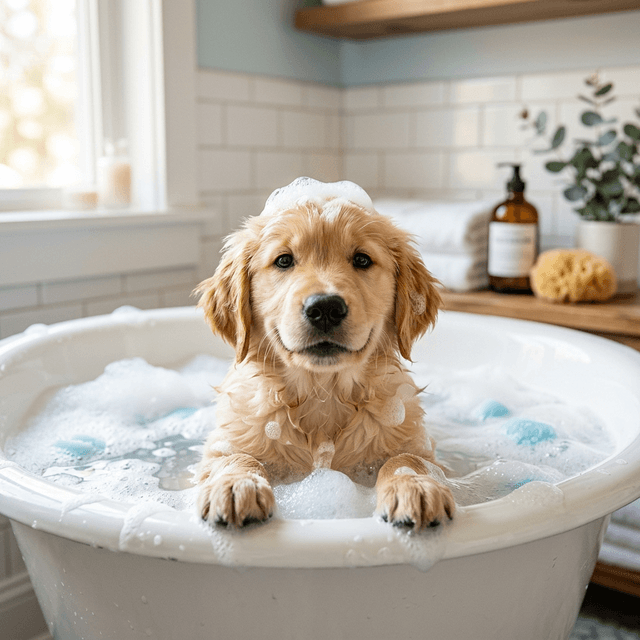
guide • Bath Time
How to bathe a cat: tips for a stress-free experience
Learn how to bathe a cat safely with less stress. Find out when baths are truly needed, what to prep, and steps that keep your cat calm.
By PetCareLab Editorial • March 5, 2026 • 15 min read
Table of contents
- Do Cats Really Need Baths?
- When a Bath *Is* the Right Call
- Cats That Often Need More Bath Help (Breed Examples)
- Before You Start: Safety, Stress, and a Realistic Goal
- Quick Safety Check (Don’t Skip This)
- Set a “Win Condition”
- What You’ll Need (And What to Avoid)
- Cat Bath Kit Checklist
- Product Recommendations (Vet-Tech Style: Practical and Safe)
- What Not to Use (Important)
- Prep Your Cat and Your Bathroom Like a Pro
- 10 Minutes Before the Bath
- Brush First (Especially Long-Haired Cats)
- Trim Nails (Optional but Helpful)
- Choose the Right Location
- How to Bathe a Cat: Step-by-Step (Fast, Calm, and Effective)
- Step 1: Start With Calm Handling (30–60 seconds)
- Step 2: Wet the Coat Strategically (1–2 minutes)
- Step 3: Apply Shampoo (1 minute)
- Step 4: Rinse Like Your Success Depends on It (2–4 minutes)
- Step 5: Face Cleaning (Optional, and Usually Separate)
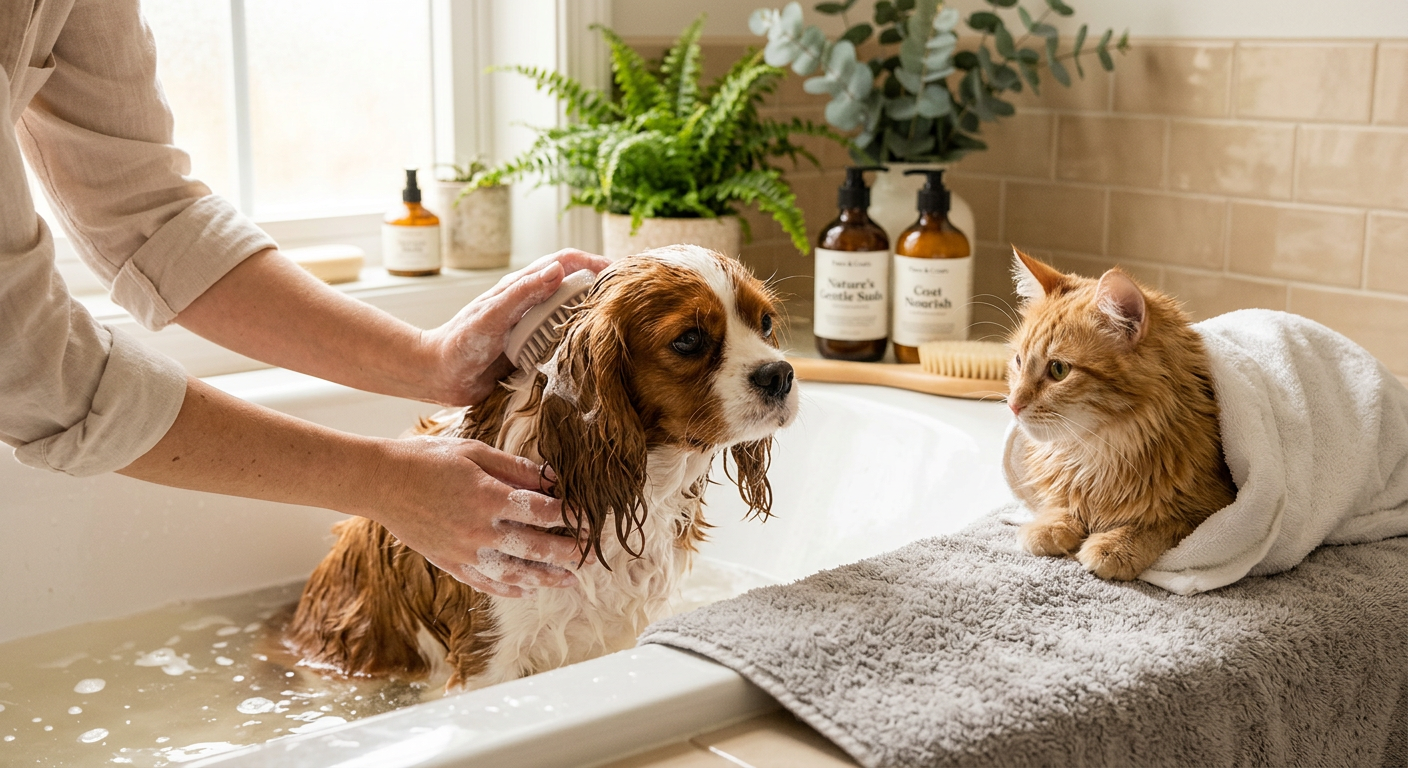
- Step 6: Towel Wrap Immediately (The Burrito Method)
- Drying and Aftercare: Prevent Chills, Mats, and Skin Issues
- Towel Drying (Most Cats Prefer This)
- Blow Drying (Only If Your Cat Tolerates It)
- Reward and Reset
- Special Situations (Because Real Life Is Messy)
- If Your Cat Has Fleas
- If Your Cat Has Diarrhea on the Coat
- If Your Cat Got Into Something Toxic (Oil, Chemicals, Essential Oils)
- If You Have a Kitten
- If Your Cat Is Hairless (Sphynx)
- Stress Reduction Strategies That Actually Work
- Make Water Less Scary
- Use Handling That Builds Security
- Timing Matters
- Two-Person Technique (When Needed)
- Product Comparisons: What Helps Most (And What’s Overhyped)
- Best Value Helpers
- Helpful for Some Cats
- Often Overhyped (Or High-Risk)
- Common Mistakes to Avoid (The Stuff That Causes Most “Bath Disasters”)
- Expert Tips for Specific Coat Types
- Short-Haired Cats (Most Domestic Shorthairs, Siamese)
- Medium/Long-Haired Cats (Maine Coon, Ragdoll, Persian)
- Thick Undercoats (Norwegian Forest Cat)
- Hairless Cats (Sphynx)
- When to Call a Pro (And When to Call the Vet)
- Consider a Professional Groomer If:
- Call Your Vet If:
- A Simple “First Bath” Training Plan (For Future You)
- Week 1: Bathroom = Treat Zone
- Week 2: Sink/Tub Practice
- Week 3: Add “Dry” Water Sounds
- Week 4: Add a Tiny Wet Paw
- Quick Reference: The Least-Stress Bath Workflow
Do Cats Really Need Baths?
Most cats don’t need regular baths. Healthy adult cats are self-cleaning machines: their tongues and saliva distribute natural oils, remove loose fur, and help control odor. In many cases, bathing is more stressful than helpful—so it should be done only when there’s a clear reason.
That said, there are plenty of real-life situations where learning how to bathe a cat is a genuine pet-parent superpower.
When a Bath Is the Right Call
You’ll usually want to bathe your cat if:
- •They got into something unsafe or sticky (paint, oil, motor grease, sap, food spills)
- •They have diarrhea or fecal smearing on the coat (common in seniors or long-haired cats)
- •They’re unable to groom properly (arthritis, obesity, post-surgery e-collar)
- •They have certain skin conditions (only with vet guidance—some need medicated baths)
- •They’re severely dirty after a rescue situation (fleas/soot/mud, etc.)
- •They’re a hairless breed (often benefit from scheduled bathing)
Cats That Often Need More Bath Help (Breed Examples)
- •Sphynx: Hairless cats can build up oily residue on the skin and in skin folds; bathing may be needed every 1–4 weeks depending on oiliness and your vet’s advice.
- •Persian: Dense coat + flat face means grooming challenges; baths can help manage grease, debris, and matting (but require careful drying).
- •Maine Coon / Norwegian Forest Cat / Ragdoll: Long coats may trap litter dust or feces; occasional baths can prevent mats and skin irritation.
- •Scottish Fold: Not automatically “bath-needed,” but if ear wax builds up, grooming may be more involved; baths aren’t the solution for ears, but these cats sometimes benefit from an overall hygiene routine.
- •Senior domestic shorthair with arthritis: Not a breed, but a common scenario—reduced grooming can lead to dandruff, greasy patches, and odor.
Pro-tip: If your cat is generally clean but has one dirty spot, try a targeted “spot clean” (damp cloth, pet wipes, or a tiny amount of cat shampoo diluted in water) instead of a full bath. Less stress, same result.
Before You Start: Safety, Stress, and a Realistic Goal
A stress-free bath isn’t about making your cat “love” water. It’s about creating a setup where your cat feels secure and you can finish quickly without scratches, panic, or trauma.
Quick Safety Check (Don’t Skip This)
Before bathing, ask:
- •Is the substance on the coat potentially toxic (motor oil, pesticides, essential oils, cleaning chemicals)?
- •Does your cat have open wounds, severe skin redness, or pain?
- •Is your cat severely matted (bathing can tighten mats and worsen skin injury)?
- •Is your cat extremely anxious, aggressive, or has a history of panic at handling?
If yes to any: call your vet first. Some messes require specific decontamination methods, and highly stressed cats can overheat, injure themselves, or trigger underlying medical issues.
Set a “Win Condition”
Your goal is not a perfect show-cat groom. Your goal is:
- •Remove the offending substance
- •Prevent licking/ingestion
- •Leave the coat clean enough to dry comfortably
- •Keep stress and handling to a minimum
In the real world, a 3–7 minute wash done safely beats a 25-minute battle every time.
What You’ll Need (And What to Avoid)
The biggest mistake people make when learning how to bathe a cat is improvising mid-bath. Preparation prevents chaos.
Cat Bath Kit Checklist
Have everything within arm’s reach:
- •Cat-safe shampoo (fragrance-free is ideal)
- •2–3 large towels (one for the tub counter, one for drying, one backup)
- •A non-slip mat or folded towel for the sink/tub floor
- •A cup or small pitcher for rinsing (often less scary than running water)
- •Cotton balls (optional, to loosely place in outer ear—don’t push in)
- •Brush/comb appropriate for coat type
- •Treats (high value: Churu-style lick treats, chicken baby food without onion/garlic, or your cat’s favorite)
- •Nail clippers (done earlier, not right before if your cat hates it)
- •Optional: grooming gloves, pet-safe wipes, a second person
Product Recommendations (Vet-Tech Style: Practical and Safe)
Look for shampoos labeled specifically for cats or kittens, and ideally:
- •Soap-free and pH-balanced for cats
- •Fragrance-free (cats can be scent-sensitive)
- •No essential oils (especially tea tree)
Commonly recommended, widely used options:
- •Earthbath Hypo-Allergenic Fragrance Free (gentle, good for sensitive skin)
- •Burt’s Bees for Cats Hypoallergenic Shampoo (mild option; patch-test if sensitive)
- •Veterinary medicated shampoos (chlorhexidine, miconazole, etc.) only if prescribed
For waterless situations:
- •Cat-safe grooming wipes (unscented)
- •Waterless cat shampoo/foam (only as a bridge when a full bath is too much)
What Not to Use (Important)
Avoid:
- •Human shampoo (wrong pH; can irritate and dry skin)
- •Dog shampoo (may contain insecticides or concentrations unsafe for cats)
- •Dish soap (can strip oils and irritate; only used in very specific vet-guided decontamination cases)
- •Essential oils (many are toxic to cats; even “natural” isn’t safe)
Pro-tip: If you’re dealing with grease (like cooking oil), start by blotting with paper towels and then use a small amount of cat shampoo diluted in warm water. Scrubbing hard spreads grease and stresses the skin.
Prep Your Cat and Your Bathroom Like a Pro
This section is where most stress is prevented—before any water touches fur.
10 Minutes Before the Bath
- •Close doors and windows. You do not want a wet cat sprinting through the house.
- •Warm the room. Cats chill quickly when wet.
- •Set up a quiet environment (no kids running in, no barking dogs, no loud music).
- •Put down your non-slip mat/towel in the sink or tub.
- •Pre-fill rinse water in a pitcher (lukewarm).
- •Lay towels out in the order you’ll use them.
Brush First (Especially Long-Haired Cats)
Brushing removes loose fur and small tangles and helps shampoo penetrate evenly.
- •For Persians/Maine Coons/Ragdolls: focus on armpits, belly, behind ears, and “pants” area (back legs).
- •If you hit mats: do not soak them. Mats tighten when wet.
- •If mild, work them out gently with a comb and detangler spray designed for cats.
- •If severe or close to skin, ask a groomer or vet—shaving may be safer than painful tugging.
Trim Nails (Optional but Helpful)
If your cat tolerates it, trim nails earlier in the day or the day before.
- •Don’t attempt nail trimming right before the bath if your cat already hates it—you’re stacking stressors.
- •If you can only do one thing: prioritize non-slip footing over nail trimming.
Choose the Right Location
- •Sink: best for small cats/kittens; less water depth and easier control
- •Bathtub: better for large cats or multi-cat households
- •Shower spray: often too loud/intense; a cup rinse is calmer for many cats
[IMAGE_PLACEHOLDER_1]
How to Bathe a Cat: Step-by-Step (Fast, Calm, and Effective)
Here’s a vet-tech style workflow that minimizes drama. Read once, set up, then execute.
Step 1: Start With Calm Handling (30–60 seconds)
- •Bring your cat in gently—avoid chasing.
- •Let them sniff the room.
- •Offer a small lick treat while you position them.
Real-world scenario: Your cat got into a dusty litter spill. They’re annoyed but not panicking. Use the sink, keep the water minimal, and aim for a quick wash.
Step 2: Wet the Coat Strategically (1–2 minutes)
Use lukewarm water. Not hot, not cool.
- •Start at the back and shoulders, not the face.
- •Use a cup/pitcher and pour slowly.
- •Keep water away from ears and eyes.
- •For long-haired cats, gently press water into the coat so the undercoat gets wet (don’t rub aggressively).
If your cat is extremely reactive, consider a partial bath:
- •Wet and wash only the dirty zone (rear end, paws, belly)
Step 3: Apply Shampoo (1 minute)
- •Dilute shampoo in a cup of warm water (many shampoos spread better diluted and rinse faster).
- •Massage gently from neck down.
- •Avoid face, ears, and nose.
- •Pay attention to:
- •Paws (if they stepped in something)
- •Rear end (if fecal smearing)
- •Belly (for oily buildup)
Common mistake: Using too much shampoo. It increases rinse time—the #1 reason baths drag on and stress escalates.
Step 4: Rinse Like Your Success Depends on It (2–4 minutes)
Rinsing thoroughly is the difference between a clean cat and a cat who feels itchy and gross later.
- •Use multiple small pours of clean water.
- •Keep going until water runs clear and coat feels “squeaky” but not stripped.
- •Lift fur layers in long-haired cats to rinse the undercoat.
Pro-tip: If your cat starts to escalate (growling, stiff body, fast breathing), stop shampooing and switch to rinsing immediately. A partially shampooed coat is better than a panic event.
Step 5: Face Cleaning (Optional, and Usually Separate)
Skip face washing during the bath unless necessary.
For a dirty face:
- •Use a damp washcloth with plain water
- •Wipe outward from eyes
- •Use a second cloth for chin/muzzle
- •No soap near eyes
Flat-faced breeds like Persians may have tear staining; ask your vet about safe tear-stain management. Many “whitening” products are irritating.
Step 6: Towel Wrap Immediately (The Burrito Method)
As soon as rinsing is done:
- Lift your cat onto a towel
- Wrap snugly (not tight) around body
- Blot—don’t rub (rubbing tangles fur and can stress skin)
Have a second dry towel ready. Many cats calm down once they’re wrapped.
[IMAGE_PLACEHOLDER_2]
Drying and Aftercare: Prevent Chills, Mats, and Skin Issues
Drying is half the bath. A wet cat can become cold quickly, especially kittens, seniors, and thin cats.
Towel Drying (Most Cats Prefer This)
- •Blot firmly to absorb water
- •Swap towels when the first gets saturated
- •Keep your cat in a warm room until fully dry
For short-haired cats, towel drying may be enough.
Blow Drying (Only If Your Cat Tolerates It)
Some cats can handle a dryer if introduced slowly, but many find it terrifying.
If you try:
- •Use low heat / cool setting
- •Keep the dryer at a distance
- •Point airflow along the coat direction
- •Stop immediately if your cat shows distress
Breed note: Long-haired cats (Maine Coon, Persian) are more prone to matting if air-dried without brushing. If you can’t blow dry, do extra towel blotting and then gently comb once the coat is damp—not dripping.
Reward and Reset
After:
- •Offer a high-value treat
- •Give a quiet “recovery zone” (blanket, warm bed)
- •Avoid additional handling tasks (ear cleaning, nail trimming) the same day if your cat is stressed
Special Situations (Because Real Life Is Messy)
If Your Cat Has Fleas
Bathing is not the best primary flea control. Most flea problems require vet-approved flea prevention (topical or oral) and environmental treatment.
If you must bathe:
- •Use a cat-safe flea shampoo only if directed by your vet
- •Don’t combine random flea products (risk of toxicity)
- •Dry thoroughly and start vet-approved prevention after guidance
Common mistake: Using dog flea shampoo on a cat. Some contain permethrins, which can be deadly for cats.
If Your Cat Has Diarrhea on the Coat
This is one of the most common “emergency bath” reasons.
Best approach:
- •Do a butt bath in the sink with shallow water
- •Wash only the rear and back legs
- •Use diluted cat shampoo
- •Rinse thoroughly
- •Dry well, especially around the tail base
Then: address the cause of diarrhea with your vet if it persists beyond 24–48 hours or your cat seems lethargic, isn’t eating, or is dehydrated.
If Your Cat Got Into Something Toxic (Oil, Chemicals, Essential Oils)
Time matters because cats lick themselves.
- •Prevent licking: use an e-collar if you have one
- •Call your vet or pet poison hotline immediately for specific instructions
- •Don’t guess with home remedies—some substances require special handling
If You Have a Kitten
Kittens chill fast.
- •Keep bath very short
- •Use warm room + warm towels
- •Dry completely
- •If the kitten is under 8 weeks or fragile, consult a vet before bathing unless it’s truly necessary
If Your Cat Is Hairless (Sphynx)
Hairless cats can accumulate oils that stain surfaces and clog pores.
- •Use a gentle, fragrance-free cat shampoo
- •Pay attention to skin folds (rinse well)
- •Dry thoroughly in folds to prevent irritation
- •Ear wax often accumulates more—ear care is separate from bathing
Stress Reduction Strategies That Actually Work
If your cat panics, the solution isn’t “hold tighter.” It’s changing the environment and the sequence.
Make Water Less Scary
- •Use standing water or a pitcher instead of loud running taps
- •Keep water shallow (you rarely need more than an inch or two)
- •Choose a sink/tub with secure footing
Use Handling That Builds Security
- •Support the body fully (chest and hips)
- •Keep movements slow and predictable
- •Avoid scruffing (it can increase fear and struggle in adult cats)
Timing Matters
- •Aim for a time when your cat is naturally calmer (after play, not at peak zoomies)
- •Avoid bath time right after a stressful event (vet visit, guests, construction noise)
Two-Person Technique (When Needed)
One person focuses on gentle restraint and treats; the other washes and rinses quickly.
Pro-tip: A lick treat smeared on a spoon or silicone mat can keep many cats focused long enough to complete a quick rinse-and-dry—especially food-motivated breeds like Ragdolls and many domestic shorthairs.
Product Comparisons: What Helps Most (And What’s Overhyped)
There are a lot of “cat bath” gadgets. Here’s what tends to matter.
Best Value Helpers
- •Non-slip mat: huge impact on confidence and reduces scrambling
- •Pitcher/cup rinse: quieter than sprayers; better control
- •Big absorbent towels: faster dry = lower stress
Helpful for Some Cats
- •Waterless shampoo foam: good for mild dirt or cats that can’t handle water; not ideal for heavy grease
- •Grooming wipes: great for spot cleaning paws/butt
- •Soft cone/e-collar: prevents licking if substance is questionable
Often Overhyped (Or High-Risk)
- •Bath bags: can reduce scratching but may spike panic; use only with professional guidance
- •Strongly scented shampoos: can irritate skin and overwhelm cats’ sensitive noses
- •High-pressure sprayers: fast for dogs, often terrifying for cats
[IMAGE_PLACEHOLDER_3]
Common Mistakes to Avoid (The Stuff That Causes Most “Bath Disasters”)
If you take nothing else away from this guide on how to bathe a cat, avoid these.
- •Skipping brushing on long-haired cats: tangles become mats once wet
- •Using too much shampoo: increases rinse time and itchiness afterward
- •Rinsing poorly: leftover residue leads to dandruff, overgrooming, and irritation
- •Running water loudly the whole time: noise + vibration is a stress amplifier
- •Trying to wash the face with shampoo: risk to eyes and nose; use a cloth instead
- •Bathing a severely matted cat: can cause pain and skin injury; seek professional help
- •Combining flea products without veterinary guidance: toxicity risk
- •Letting your cat air-dry in a cold room: chills and stress; long coats may mat
Expert Tips for Specific Coat Types
Short-Haired Cats (Most Domestic Shorthairs, Siamese)
- •Keep it simple: wet, shampoo, rinse, towel dry
- •Focus on rinse and warmth afterward
- •A full bath is rarely needed unless there’s a mess or medical reason
Medium/Long-Haired Cats (Maine Coon, Ragdoll, Persian)
- •Brush first, always
- •Dilute shampoo to spread through the coat
- •Rinse in sections: shoulders, back, belly, legs, tail
- •Extra towel drying; comb once damp to prevent mats
Thick Undercoats (Norwegian Forest Cat)
- •Water needs time to penetrate; pour slowly and press in
- •Rinse longer than you think
- •Dry thoroughly to prevent damp undercoat (can irritate skin)
Hairless Cats (Sphynx)
- •Gentle, regular bathing beats infrequent “deep clean” scrubs
- •Rinse folds thoroughly
- •Moisturizers are not automatically safe—ask your vet before applying anything to skin
When to Call a Pro (And When to Call the Vet)
Sometimes the best “stress-free bath” is the one you don’t do at home.
Consider a Professional Groomer If:
- •Your cat is long-haired and matting is recurring
- •You need a sanitary trim (“potty patch”)
- •You’ve had a scratch incident already
- •Drying and brushing is the main challenge
Look for groomers experienced with cats (not just dogs). Cat handling is its own skill.
Call Your Vet If:
- •Skin is red, oozing, scabby, or very itchy
- •You suspect ringworm (contagious) or mites
- •Your cat has severe dandruff/greasiness suddenly
- •There’s lethargy, fever, poor appetite, or behavior change
- •The coat is contaminated with chemicals or essential oils
Pro-tip: If your cat needs medicated baths, ask your vet for a specific contact time (how long shampoo stays on the coat) and exact frequency. Guessing can make skin issues worse.
A Simple “First Bath” Training Plan (For Future You)
If your cat might need baths occasionally (long-haired, hairless, medical conditions), a little conditioning goes a long way.
Week 1: Bathroom = Treat Zone
- •Bring your cat into the bathroom
- •Give treats and leave
- •No water involved
Week 2: Sink/Tub Practice
- •Place a towel in the sink or tub
- •Let your cat step in and out
- •Treat and praise calmly
Week 3: Add “Dry” Water Sounds
- •Turn on water briefly in another sink or at a trickle
- •Keep sessions under 1 minute
- •Treat, then stop
Week 4: Add a Tiny Wet Paw
- •Wet your hand and touch a paw lightly
- •Treat immediately
- •End session before stress escalates
This isn’t about forcing acceptance—it’s about teaching your cat that bath-related cues predict good things and end quickly.
Quick Reference: The Least-Stress Bath Workflow
If you want the simplest version of how to bathe a cat, follow this sequence:
- Prep supplies + warm room + non-slip surface
- Brush (especially long-haired cats)
- Wet from neck down using a cup (lukewarm)
- Apply diluted cat shampoo (minimal amount)
- Rinse thoroughly (longer than you think)
- Towel burrito + blot dry
- Warm recovery room + treats
Done right, most baths can be finished before your cat hits their stress threshold—and you’ll both recover faster.
Bath Time Cluster
More in this topic
guide
How Often to Bathe a Dog? Vet-Approved Schedule by Coat Type
guide
Oatmeal Dog Shampoo Benefits: Soothe Itchy Skin Safely
guide
How Often Should You Bathe a Dog or Cat? Practical Schedule by Coat Type (Behavior-First Guide)
guide
Puppy First Bath Checklist: Safe Home Setup and Sequence (Behavior-First Guide)
guide
Sensitive Skin Bath Routine for Dogs: Lower Irritation, Better Recovery
guide
Double-Coat Bath and Drying Routine: Prevent Undercoat Issues Without Stress
Frequently asked questions
Do cats really need baths?
Most healthy adult cats don’t need regular baths because they groom themselves effectively. A bath is usually only helpful when there’s a clear reason, like something sticky, greasy, or unsafe on the coat.
How can I bathe a cat with less stress?
Prepare everything first (towels, cat-safe shampoo, warm water) so the bath is quick and predictable. Keep the environment calm, use gentle handling, and focus on a fast rinse and thorough towel-dry afterward.
What should I do if my cat panics during a bath?
Pause and prioritize safety—avoid restraining harder, which can increase fear and scratching. If your cat is escalating, stop, towel-dry as best you can, and consider a groomer or vet-guided options for next time.
