
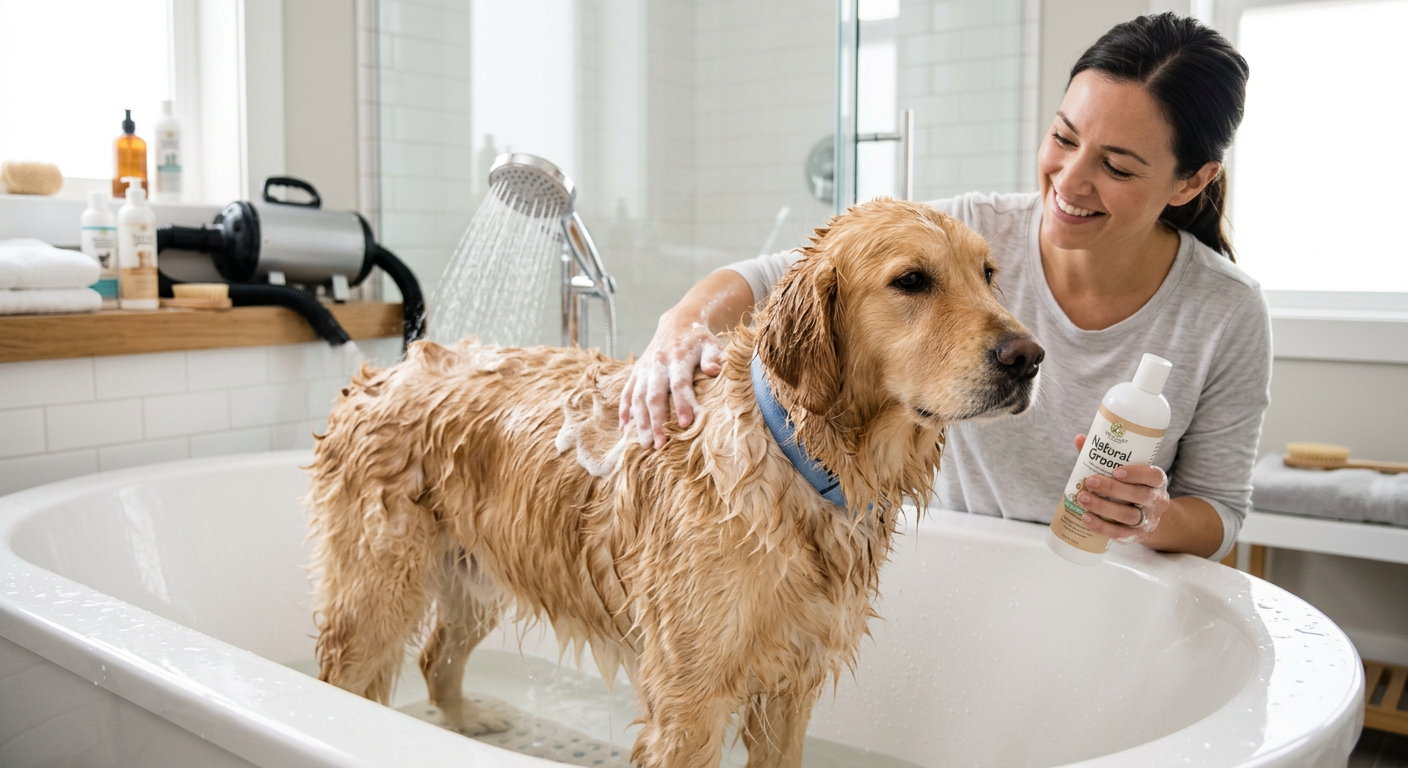
guide • Bath Time
Double-Coat Bath and Drying Routine: Prevent Undercoat Issues Without Stress
A behavior-first double coat bath routine that protects the undercoat, prevents trapped moisture, and keeps your dog comfortable from wet-down to fully dry.
By Lucy Anderson • March 2, 2026 • 7 min read
Table of contents
- Pet behavior signals that shape the routine
- What “green, yellow, red” looks like in a bath
- Coat and skin signals that change your plan
- Low-stress setup before any tool is used
- Control three stress multipliers: footing, temperature, noise
- Pick the right water delivery for thick coats
- Pre-load reinforcement and keep it boring
- Handling protocol for better compliance
- The consent-based “start button” behavior
- Pressure and placement: how to touch double coats
- Two-person rule (when it’s worth it)
- Tactical workflow by session phase
- Phase 1: Pre-bath coat prep (3–8 minutes)
- Phase 2: Wet-down (4–10 minutes)
- Phase 3: Shampoo application (3–6 minutes)
- Phase 4: Contact time (1–3 minutes, if tolerated)
- Phase 5: Rinse (5–12 minutes)
- Phase 6: Water removal before drying (2–5 minutes)
- Phase 7: Drying (the undercoat-protection phase) (10–40 minutes)
- Product choices by temperament and tolerance
- For dogs who hate direct spray
- For dogs who tolerate handling but dislike slippery shampoo
- For itchy, allergy-prone, or dry-skin dogs
- For very thick coats where speed improves behavior
- Error recovery after a bad session
- The 24-hour rule: don’t “re-do” immediately
- If shampoo residue is likely (itching, greasy feel)
- If the undercoat stayed damp
- Rebuild trust with micro-sessions
- Progress tracking template
- Practical long-term maintenance plan
- Bath frequency: what’s realistic for double coats
- Between-bath routine (10 minutes/week)
- Seasonal shed plan
- When to call a pro groomer (and what to ask for)
Double-coated dogs (Huskies, Goldens, German Shepherds, Samoyeds, Aussies, Pomeranians, and many mixes) don’t just have “more fur.” They have two different coat systems with two different jobs: a guard coat that sheds water and debris, and an undercoat that insulates.
That undercoat is where most bath mistakes show up: trapped moisture, itchy skin, “wet dog” odor that won’t quit, hot spots, compacted shed, and the dreaded post-bath matting that seems to appear out of nowhere.
This guide walks you through a behavior-first, tolerance-based double coat bath routine that prioritizes your dog’s comfort and cooperation, so you can actually get them clean and fully dry—without turning bath day into a wrestling match.
Pet behavior signals that shape the routine
Behavior decides the order of operations. If your dog is worried, rushing the “right” steps (like a thorough rinse) often backfires—because they learn that the bath is overwhelming and start resisting earlier next time.
What “green, yellow, red” looks like in a bath
Use these signals to choose your pace, tools, and where you pause.
Green (comfortable/engaged):
- •Loose body, soft eyes, normal blinking
- •Sniffing the room, taking treats, offering sits
- •Shaking water off normally, not frantic
Yellow (stressed but still learning):
- •Turning head away, lip licking, whale eye
- •Paws lifting repeatedly, leaning away from spray
- •Taking treats but chewing hard/fast or spitting them
Red (over threshold):
- •Trying to escape, scrambling, freezing hard
- •Growling/snapping, frantic vocalizing
- •Refusing treats entirely, panting with wide eyes
A double-coated dog who hits “red” during rinsing is the dog most likely to end up partially rinsed and partially dried, which is exactly how undercoat issues start.
Coat and skin signals that change your plan
- •Dense “cottony” undercoat (e.g., Husky): requires slower wet-down and a longer dry phase.
- •Sensitive/itchy skin: needs gentle products and extra rinse time.
- •Recent heavy shed: you’ll get a better result by de-shedding before the bath (and again after drying).
- •Hot spot history: drying becomes non-negotiable—damp undercoat can trigger flare-ups fast.
Low-stress setup before any tool is used
Your environment determines how much handling your dog will tolerate. Aim for “predictable and warm,” not “fast.”
Control three stress multipliers: footing, temperature, noise
- •Footing: Put a non-slip mat in the tub or shower. Slipping makes even confident dogs panic and scramble.
- •Temperature: Keep the room warm. Double coats hold water in the undercoat; a chilly room makes dogs want to bail early.
- •Noise: Many dogs hate the sharp “hiss” of a shower head. If your sprayer is loud, start it away from your dog so the sound isn’t paired with surprise.
Pick the right water delivery for thick coats
A double coat needs water to penetrate down to the skin. A weak stream wets the top, then you think the dog is “soaked” when the undercoat is still dry.
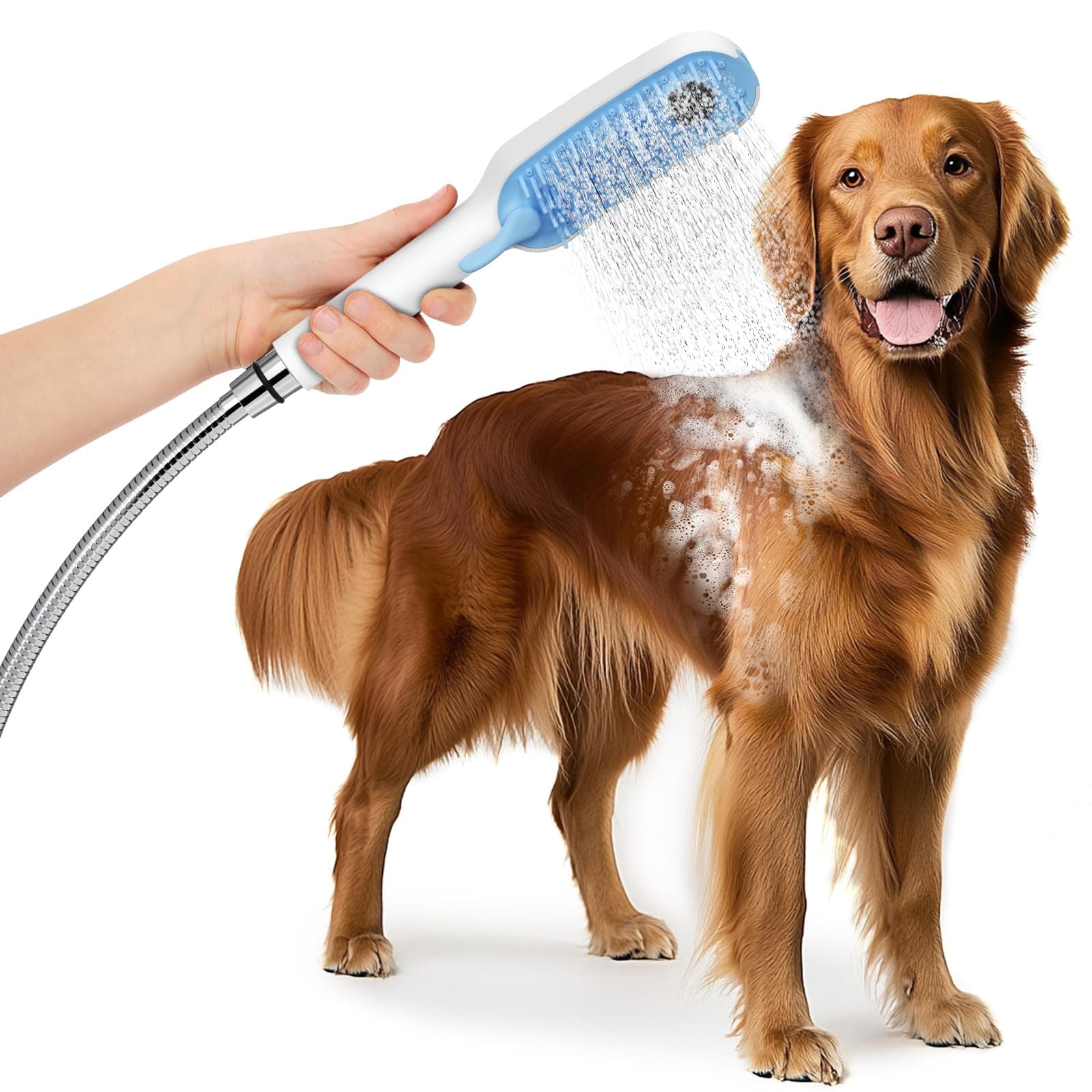
If you’re washing a dense-coated dog regularly, a dedicated sprayer can make wet-down and rinse faster (less time in the tub = better behavior). The SR SUN RISE Dog Shower Attachment for Thick Haired Dogs is a practical upgrade because it gives you control over spray intensity and helps you reach the undercoat without blasting one spot.
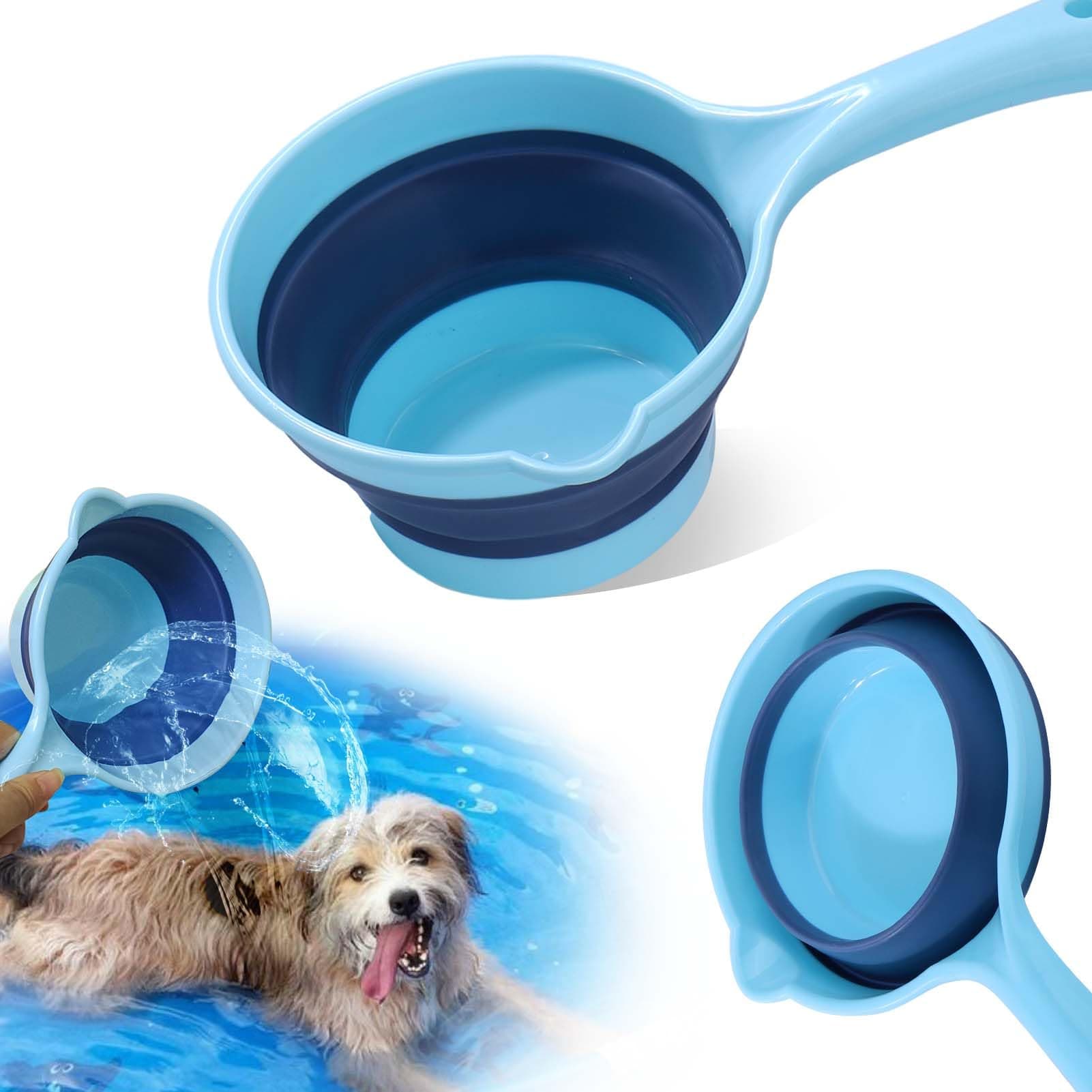
For dogs who stress with direct spray to the face or legs, keep a rinse tool on standby. A Dog Bath Rinse Cup lets you wet and rinse sensitive areas with less noise and less “pressure surprise.”
Pre-load reinforcement and keep it boring
Have 20–40 tiny treats ready (pea-sized). Use a lick mat with smearable food if your dog stays calmer licking than chewing.
Your goal is not to distract them from fear; it’s to pay them for calm, cooperative choices:
- •standing still for 3 seconds
- •letting you lift a leg
- •tolerating water on the chest
Handling protocol for better compliance
This is the part that prevents undercoat issues long-term: the dog learns the routine is predictable and they can handle it.
The consent-based “start button” behavior
Teach one simple cue that means, “We’re about to continue.” Examples:
- •chin rest in your hand
- •front paws on a towel
- •standing on the mat with a relaxed body
If the dog steps off or breaks the position, you pause (not punish). This single concept reduces thrashing during rinsing—the phase most owners rush.
Pressure and placement: how to touch double coats
Double coats can be surprisingly sensitive when wet.
- •Use a flat palm to part the coat and let water flow to the skin.
- •Avoid scrubbing in circles on dense undercoat; it can tangle shed hair into a felted mess.
- •Support joints when lifting legs. Many dogs resist baths because they feel unstable, not because they “hate water.”
Two-person rule (when it’s worth it)
If your dog is in the yellow zone and you’re consistently failing at rinse/dry, recruit help:
- •Person A: treats + calm talking + hand on chest
- •Person B: wet-down/rinse
This shortens total time, which protects behavior and coat health.
Tactical workflow by session phase
Think in phases. Each phase has a goal, a success marker, and a point where you stop if your dog is spiraling.
Phase 1: Pre-bath coat prep (3–8 minutes)
Goal: remove loose undercoat so water and shampoo can reach skin, and so drying doesn’t trap shed.
- •Line-brush or rake through high-density zones: neck ruff, behind ears, thighs, pants, tail base.
- •If you hit a snag, don’t yank—hold the fur close to the skin and gently tease it out.
Decision criteria:
- •If the brush is pulling clumps and your dog is already annoyed, do a shorter brush session today and plan a longer de-shed tomorrow. Over-brushing when they’re stressed makes the bath harder.
Phase 2: Wet-down (4–10 minutes)
Goal: saturate down to skin. The coat should feel wet when you part it with your fingers.
- •Start on the shoulder/chest (less sensitive), then back, then sides.
- •Save legs, paws, belly, and tail for later.
- •Use lukewarm water. Too hot can increase itch; too cold can spike stress.
Pro tip for thick coats:
- •Use your hand like a squeegee: part hair, spray into the part, then move 2 inches over.
Tool strategy:
- •For confident dogs: a sprayer like the SR SUN RISE Dog Shower Attachment speeds up full penetration.
- •For spray-sensitive dogs: wet the body with the sprayer and use the Dog Bath Rinse Cup for legs and belly.
Stop point:
- •If your dog is trying to climb out repeatedly, switch to a “partial bath”: clean the paws, belly, and rear only, then end on a success. Full baths require cooperation to be safe.
Phase 3: Shampoo application (3–6 minutes)
Goal: get product to the skin without overusing it.
For many double coats, an oatmeal-based shampoo/conditioner set is a solid starting point, especially if your dog gets dry or itchy after baths. The Lillian Ruff PRO Formula Deodorizing Oatmeal Dog Shampoo & Conditioner Set fits well in routines where you want deodorizing plus skin support.
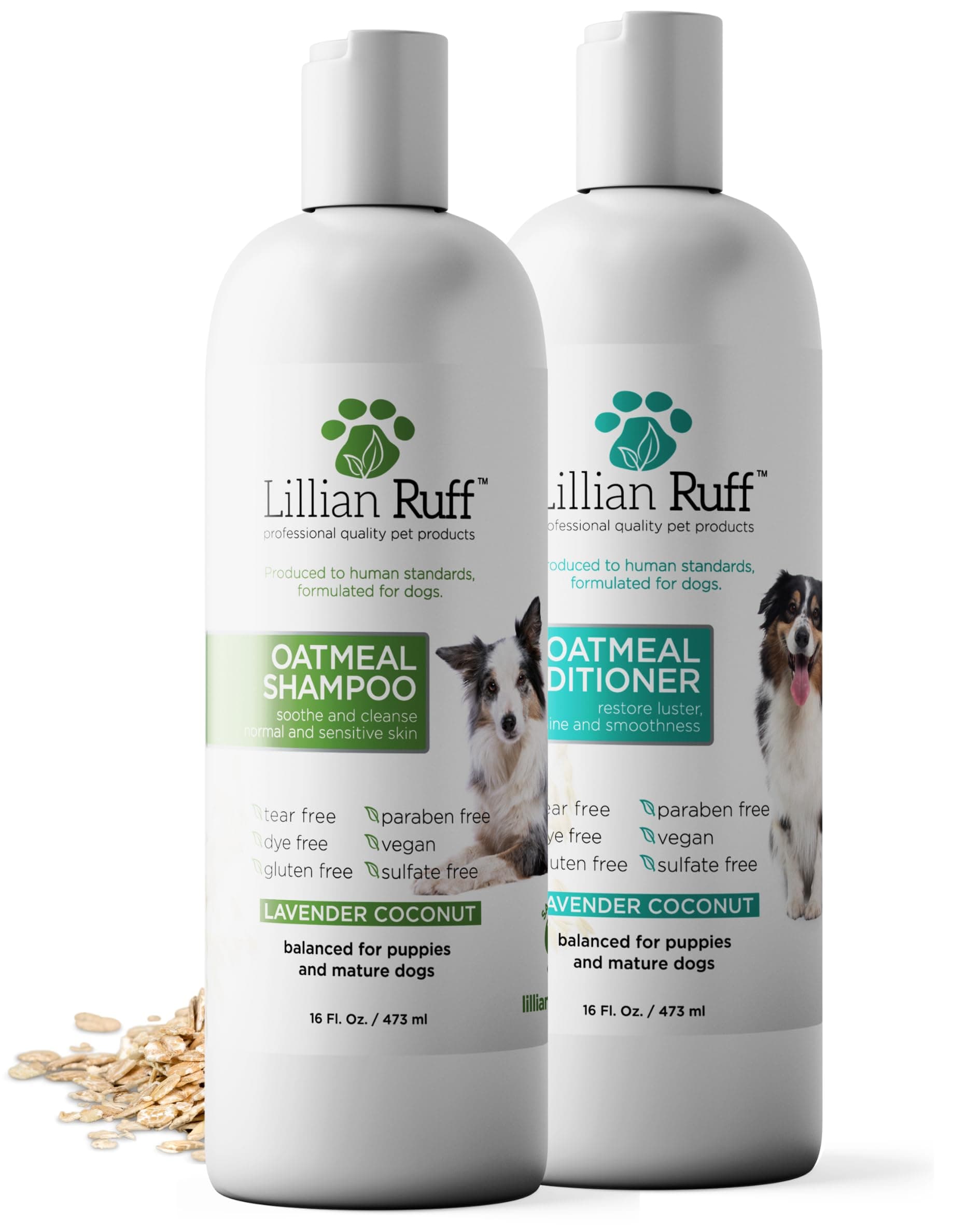
Lillian Ruff PRO Formula Deodorizing Oatmeal Dog Shampoo & Conditioner Set - Calm Itching & Allergies, Ultra-Nourishing Dry Skin Relief - Oatmeal, Aloe, Coconut Oil, Lavender & Provitamin B5, USA Made
Lillian Ruff Lillian Ruff
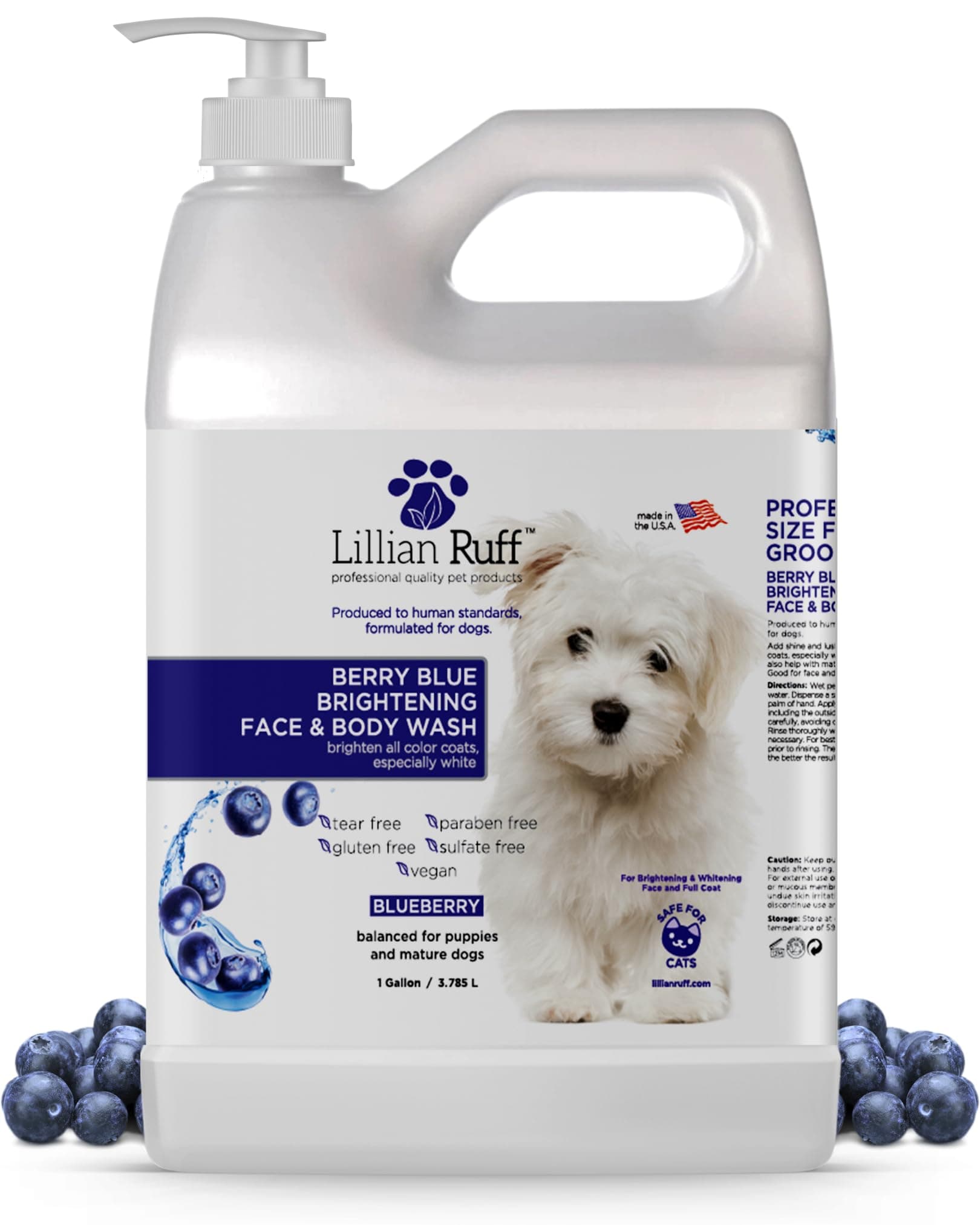
Lillian Ruff PRO Formula Berry Blue Brightening Pet Shampoo - Ultra-Hydrating Professional Whitening Dog Shampoo, Vivid Show-Quality Coat Enhancer, Tear Stain & Odor Eliminator, Vitamin B5, 128oz+Pump
Lillian Ruff Lillian Ruff
Behavior-first sequencing:
- •Apply shampoo to “easy zones” first: shoulders, back.
- •Then sides.
- •Then rear and tail base.
- •Save armpits, groin, paws for last.
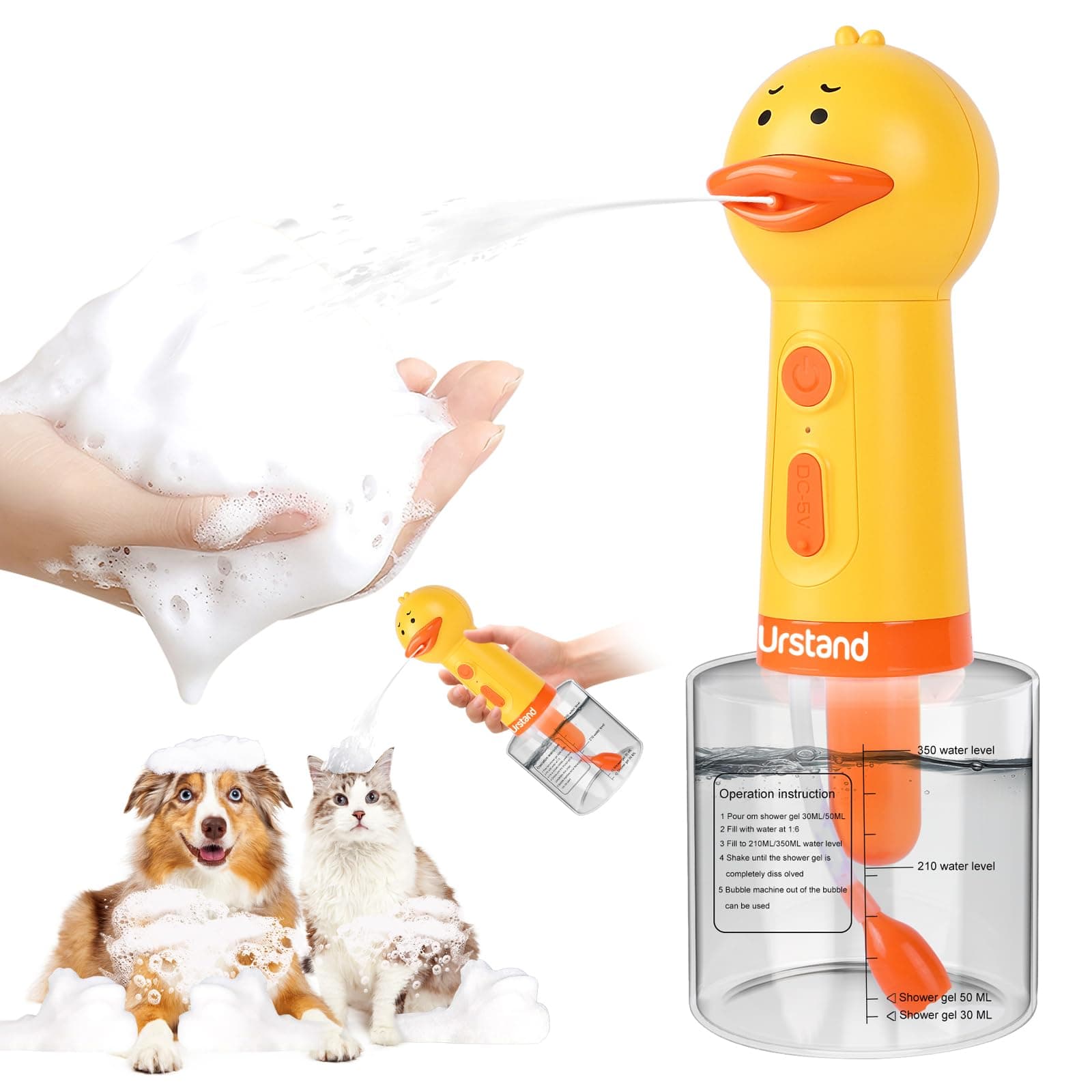
Foam vs liquid (and why it matters): A foaming applicator can reduce the “cold glop” sensation and speed up coverage—useful for dogs who tense at the first squirt. If that’s your dog, consider a foamer like the Dog Foaming Soap Dispenser. Foam spreads quickly through dense coat with less rubbing, which can reduce tangling and handling resistance.
Technique:
- •Use straight strokes to work shampoo in.
- •Avoid aggressive circular scrubbing in thick undercoat zones.
Phase 4: Contact time (1–3 minutes, if tolerated)
Goal: let the shampoo do the work.
If your product recommends contact time, set a short timer and occupy your dog with a lick mat. If your dog is in yellow, skip contact time and rinse sooner—cooperation beats “perfect protocol.”
Phase 5: Rinse (5–12 minutes)
Goal: remove all product from the undercoat.
Undercoat issues after bathing often come from leftover shampoo, not “bad drying.” Residue makes skin itchy and traps dirt.
Rinse rules that actually work:
- •Rinse in the same order as wet-down.
- •Part the coat and rinse to skin.
- •When you think you’re done, rinse one more pass over high-density zones.
Success marker:
- •Water runs clear and the coat feels “squeaky” (not slimy) when you squeeze a handful.
Face and ears:
- •Use a rinse cup or damp washcloth for the face.
- •Keep water out of ears; clean ears separately if needed.
Phase 6: Water removal before drying (2–5 minutes)
Goal: remove as much water as possible without friction.
- •Use hands to squeegee down legs and body.
- •Towel press and blot; don’t rub vigorously.
This step shortens drying time dramatically, which makes your dog more likely to tolerate the full dry—critical for preventing damp undercoat.
Phase 7: Drying (the undercoat-protection phase) (10–40 minutes)
Goal: get the undercoat fully dry.
Double coats can feel dry on top while the undercoat stays damp near the skin, especially around:
- •neck and collar area
- •armpits
- •behind ears
- •groin
- •tail base
If using a dryer:
- •Start on the lowest setting and introduce airflow at the shoulder.
- •Keep the nozzle moving; don’t park on one spot.
- •Pair airflow with treats and short breaks.
If towel/air drying only:
- •Plan more time and keep your dog in a warm, draft-free space.
- •Rotate towels; a saturated towel just moves water around.
Reality check: If your dog’s undercoat is still damp two hours later (common with heavy coats), that’s a risk window for hot spots and odor. In that situation, it’s worth revisiting your water-removal phase and considering a lower-stress dryer introduction plan.
Product choices by temperament and tolerance
The “best” tools are the ones your dog will allow you to use thoroughly.
For dogs who hate direct spray
- •Use a gentle sprayer setting for the body, then switch to the Dog Bath Rinse Cup for legs/belly.
- •Stand to the side; avoid spraying head-on, which can feel confrontational.
For dogs who tolerate handling but dislike slippery shampoo
- •Try foam delivery. The Dog Foaming Soap Dispenser can reduce the amount of rubbing you need to do, which helps prevent coat compaction and decreases “too much touching” stress.
For itchy, allergy-prone, or dry-skin dogs
- •Choose a soothing formula and commit to longer rinsing. The Lillian Ruff PRO Formula Deodorizing Oatmeal Dog Shampoo & Conditioner Set is a reasonable fit when you want deodorizing plus calming ingredients.
- •Tradeoff: conditioners can be harder to rinse from dense undercoat, so reduce the amount and extend rinse time.
For very thick coats where speed improves behavior
- •A high-reach sprayer like the SR SUN RISE Dog Shower Attachment for Thick Haired Dogs can cut wet-down and rinse time—often the difference between a tolerable bath and a meltdown.
Error recovery after a bad session
Bad sessions happen: a slip in the tub, a sudden loud noise, water in the face, a tangle that pulled.
The 24-hour rule: don’t “re-do” immediately
If the bath went poorly, avoid forcing another full session the next day. Your dog will anticipate stress sooner and fight earlier.
Instead:
- •Do a calm brush session (2–3 minutes) with treats.
- •Practice stepping into the bathroom/tub and stepping out, no water.
If shampoo residue is likely (itching, greasy feel)
Sometimes you have to fix it. Do the smallest effective rinse session:
- •Put your dog on a non-slip mat.
- •Rinse only the itchy zones for 2–3 minutes.
- •Use a rinse cup for control.
Then focus on drying those areas thoroughly.
If the undercoat stayed damp
Don’t just “hope it dries.”
- •Move your dog to a warm room.
- •Towel blot again.
- •If your dog can tolerate it, do 30–60 seconds of low airflow, then a treat break.
Rebuild trust with micro-sessions
Over the next week, do 5 short sessions (60–120 seconds) that end early:
- •touch sprayer to shoulder (off) + treat
- •water on paws for 3 seconds + treat
- •towel press on chest + treat
You’re teaching, “You can handle this, and you control the pace.”
Progress tracking template
Use this simple template after each bath to improve your double coat bath routine instead of repeating the same struggle.
Copy/paste into your notes:
- •Date/time:
- •Coat status (shedding heavy / moderate / light):
- •Stress level (green/yellow/red) by phase:
- •What worked (specific):
- •What triggered stress (specific):
- •Rinse quality (squeaky / slightly slippery / residue likely):
- •Dryness check at 30 min (dry top / damp undercoat / damp zones):
- •Hot spot/itching in next 48 hrs (yes/no + where):
- •Next change to try (one thing):
Example entry: “Yellow during rinse when sprayer hit back legs. Next time: rinse legs with cup, treat for paw lifts, keep sprayer on shoulders/sides only.”
Practical long-term maintenance plan
Undercoat problems are less about the one perfect bath and more about the rhythm you can maintain.
Bath frequency: what’s realistic for double coats
Most double-coated dogs do well with baths every 4–8 weeks, adjusted for lifestyle:
- •Muddy hikes/weekend swimmers: closer to 4 weeks (or targeted rinse sessions)
- •Mostly indoor, low odor: 6–10 weeks
Tradeoff: bathing too often can dry skin, but waiting too long can mean more compacted undercoat and longer drying time.
Between-bath routine (10 minutes/week)
- •1–2 short brush sessions focusing on friction zones (collar, armpits, pants)
- •Quick paw/belly rinse after грязy walks (use a rinse cup if spray is stressful)
- •Check skin under the coat once a week—part the fur and look for redness or dampness
Seasonal shed plan
When the undercoat is “blowing,” plan shorter, more frequent grooming sessions rather than one marathon:
- •5–8 minutes every other day for 2 weeks
- •Then a bath with an emphasis on rinse + full dry
When to call a pro groomer (and what to ask for)
Get help if:
- •your dog’s undercoat stays damp for hours after home drying
- •you find tight mats near skin
- •your dog is consistently red-zone in the tub
Ask for:
- •behavior-aware handling
- •thorough rinse
- •full dry to undercoat (confirm they check armpits/neck/tail base)
A professional dry and de-shed occasionally can keep your home routine shorter and kinder.
If you take only one thing from this guide: in a double coat, drying is part of cleaning. A calm, complete rinse and a fully dry undercoat are what prevent the itch, odor, and skin flare-ups that make bath time miserable for everyone.
Bath Time Cluster
More in this topic
guide
How Often to Bathe a Dog? Vet-Approved Schedule by Coat Type
guide
Oatmeal Dog Shampoo Benefits: Soothe Itchy Skin Safely
guide
How to bathe a cat: tips for a stress-free experience
guide
How Often Should You Bathe a Dog or Cat? Practical Schedule by Coat Type (Behavior-First Guide)
guide
Puppy First Bath Checklist: Safe Home Setup and Sequence (Behavior-First Guide)
guide
Sensitive Skin Bath Routine for Dogs: Lower Irritation, Better Recovery
Frequently asked questions
How do I know if my double-coated dog’s undercoat is still damp?
Part the coat with your fingers in high-density areas (neck, armpits, behind ears, tail base) and press a dry towel to the skin. If the towel picks up moisture or the hair near the skin feels cool and clumped, the undercoat is still damp even if the top looks dry. Damp undercoat is a common cause of lingering odor and hot spots, so extend drying or use short, low-stress airflow sessions with breaks.
Why does my dog smell worse after a bath?
The usual culprits are leftover shampoo/conditioner residue or a damp undercoat that never fully dried. Residue can make the coat feel slightly slimy and attract dirt quickly; trapped moisture feeds bacteria/yeast and creates that persistent “wet dog” smell. Fix it by rinsing longer (especially in dense zones) and prioritizing water removal (squeegee + towel press) before drying to the skin.
Should I use conditioner on a double coat?
You can, but it depends on skin sensitivity and how well you can rinse. Conditioner may help dry, itchy skin and improve comb-through, but dense undercoat can hold onto product, increasing the risk of residue and itch if rinsing is rushed. If you use conditioner, apply lightly, avoid the heaviest undercoat zones if your dog is residue-prone, and plan extra rinse time until the coat feels clean (not slick) when you squeeze it.
