
guide • Hair Removal (Home)
Daily Pet Hair Control for Hardwood Floors: A 10-Minute System That Actually Sticks
A comparison-led 10-minute daily routine for pet hair on hardwood floors—plus the tools, tradeoffs, and how to pick what fits your home.
By Lucy Anderson • February 22, 2026 • 7 min read
Table of contents
- What actually matters in this comparison
- 1) Containment beats brute-force suction
- 2) Edge performance matters more than center-floor performance
- 3) Static and clumping are your invisible “helpers” (or enemies)
- 4) The finish you want: spotless vs. “good enough to look clean”
- 5) Scratch risk is real
- Baseline criteria and scoring method
- The criteria (10-point scale each)
- Scoring assumptions
- Side-by-side workflow analysis
- Workflow A: Dry sweep + quick spot-detail (the “minimum friction” system)
- Workflow B: Vacuum lanes + edge touch-up (the “precision + allergy” system)
- Workflow C: Static-controlled routine (the “hair clings to everything” system)
- Workflow D: Disposable lint roller “triage” (the “I need instant visible results” system)
- Cost, effort, and consistency tradeoffs
- Lowest effort (most repeatable): Dry sweep + reusable fabric tool
- Best for allergies: Vacuum lanes + targeted edge work
- Lowest ongoing cost/waste: Reusable tools (ChomChom/mitt) + washable microfiber
- Most “instant visible” (but expensive over time): Disposable lint rollers
- Which option wins by user profile
- Profile 1: One heavy-shedding dog + open-plan hardwood
- Profile 2: Cats + litter tracking + hair around feeding station
- Profile 3: Winter static, hair clings to baseboards and upholstery
- Profile 4: You wear black work clothes; pet hair is a daily embarrassment
- Profile 5: Mixed surfaces (hardwood + area rugs + couch that traps hair)
- Transition strategy if changing tools
- Step 1: Choose one “anchor location”
- Step 2: Run a 7-day overlap (old tool stays, new tool proves itself)
- Step 3: Create a “two-zone standard”
- Step 4: Add one fabric tool, not five
- Common decision mistakes
- Mistake 1: Cleaning the center first
- Mistake 2: Over-wetting hardwood to “grab the hair”
- Mistake 3: Using a scratch-prone tool without managing grit
- Mistake 4: Treating lint rollers as a whole-home solution
- Mistake 5: Buying “more tools” instead of fixing the routine
- Final recommendation framework
- 1) Where does hair bother you most?
- 2) Do you have grit (litter/sand) along with fur?
- 3) What’s your biggest consistency barrier?
- 4) What’s your “minimum clean” standard?
Pet hair on hardwood floors is a special kind of annoying: it’s visible, it drifts into corners like tumbleweeds, and it somehow reappears right after you cleaned. The good news is you don’t need a weekend deep-clean every time. You need a daily system that’s fast enough to repeat—and specific enough to work on hardwood’s real problem areas (edges, under furniture, and “hair highways”).
This guide breaks down a 10-minute routine and compares the most practical tool combos for real homes. We’ll use explicit tradeoffs (speed vs. reach, cost vs. waste, shine vs. slip risk) so you can choose a setup you’ll keep using.
What actually matters in this comparison
Hardwood floors behave differently than carpet. Hair doesn’t embed—it skates. That changes what “works.”
1) Containment beats brute-force suction
On hardwood, most daily mess is loose: fur, litter dust, dried mud flakes, kibble crumbs. Your biggest win is containing it quickly so it stops migrating into corners and under sofas.
- •A tool that pulls hair into a pile reliably is often better than a tool that “kind of gets it” everywhere.
- •Example: If you have a shedding Labrador and a hallway with baseboards, you’ll lose time if hair keeps blowing out from the edges after you pass.
2) Edge performance matters more than center-floor performance
Most people clean the open center and ignore edges until it looks bad. But hair gathers at:
- •Baseboards and door thresholds
- •Under toe-kicks (kitchen cabinets)
- •Around table legs
- •Under radiators and low couches
If a tool is great in the middle but weak along edges, your floor will still look furry.
3) Static and clumping are your invisible “helpers” (or enemies)
Dry winter air makes hair cling to socks and cling to floors. Humid air makes hair clump into heavier “worms” that are easier to pick up.
- •Static-heavy homes benefit from tools that intentionally leverage electrostatic attraction (mitts, certain microfiber heads).
- •If your hair is already clumping, a quick dry sweep into piles is faster than vacuuming.
4) The finish you want: spotless vs. “good enough to look clean”
A daily system should prioritize “looks clean under normal light” rather than “museum perfect.” If your daily routine is too fussy, you’ll skip it—and then you’ll spend more time later.
5) Scratch risk is real
Some tools are great at pulling hair but can scuff if used wrong.
- •Anything stiff or with an exposed edge is a potential scratch risk if grit gets caught.
- •If you have high-gloss or darker stained hardwood, micro-scratches show faster, so your tool choice matters more.
Baseline criteria and scoring method
We’ll score each workflow (not each product) because the system is what makes daily cleaning sustainable.
The criteria (10-point scale each)
- Hair pickup on hardwood (loose fur in the open)
- Edge/corner pickup (baseboards, thresholds, under toe-kicks)
- Speed for a 10-minute session (how much area you can realistically cover)
- Low-effort consistency (will you actually do it daily?)
- Mess control (does it scatter hair into the air?)
- Floor-safety (scratch risk + finish friendliness)
- Multi-surface usefulness (couch, bed, car—because hair travels)
- Ongoing cost/waste (refills, disposables)
Scoring assumptions
- •Home size: 800–2000 sq ft with main living areas + kitchen + entry
- •Pets: 1–2 cats or medium/large dog (or both)
- •Goal: “presentable daily,” plus fewer deep-clean emergencies
Side-by-side workflow analysis
Below are four daily workflows that fit inside 10 minutes. Choose based on where your hair accumulates and what you’re willing to maintain.
Workflow A: Dry sweep + quick spot-detail (the “minimum friction” system)
Tools: a microfiber mop or soft broom + a reusable hair tool for fabric and corners
10-minute script
- •Minute 0–2: Start at the entry and do a fast perimeter pass (baseboards/edges first).
- •Minute 2–7: Zig-zag through high-traffic lanes (hallway, kitchen path, around sofa).
- •Minute 7–10: Spot-detail the two hair magnets: couch edge and pet bed area.
Where it wins
- •Fastest “looks clean” results for pet hair hardwood floors.
- •Low noise; easy to do daily.
Tradeoffs
- •Doesn’t remove fine dust film as well as a damp routine.
- •If your broom scatters hair, you’ll hate it.
Helpful add-on for fabric hotspots
- •For the couch, bedding, and pet blankets, a reusable tool like the ChomChom Roller Pet Hair Remover is often faster than sticky sheets because you can do 30–60 seconds and move on.
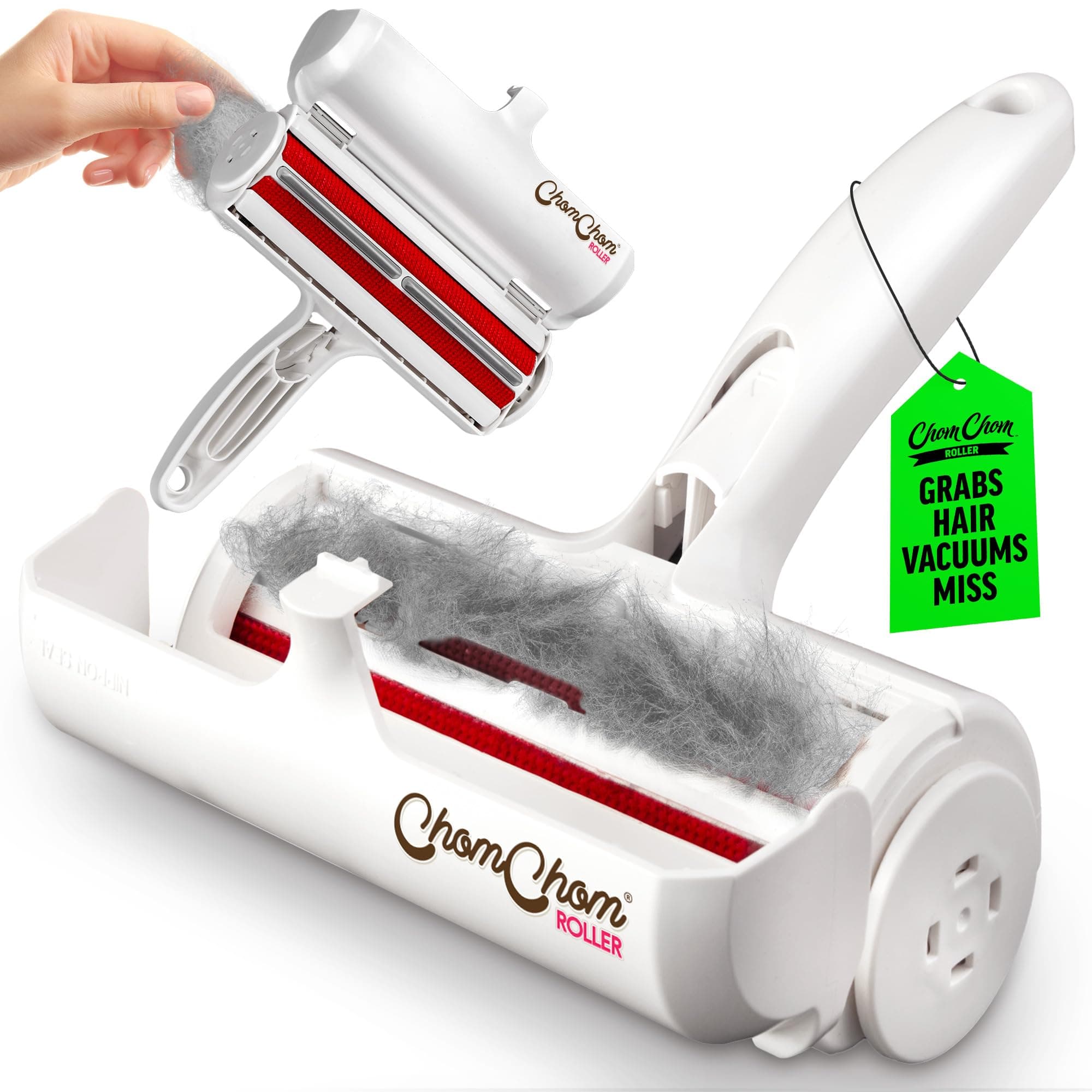
ChomChom Roller Pet Hair Remover – Original Size Reusable Lint Roller for Cat & Dog Hair on Furniture, Couch, Carpet, Car, Rugs & Bedding – Portable, Eco-Friendly (White)
ChomChom Roller
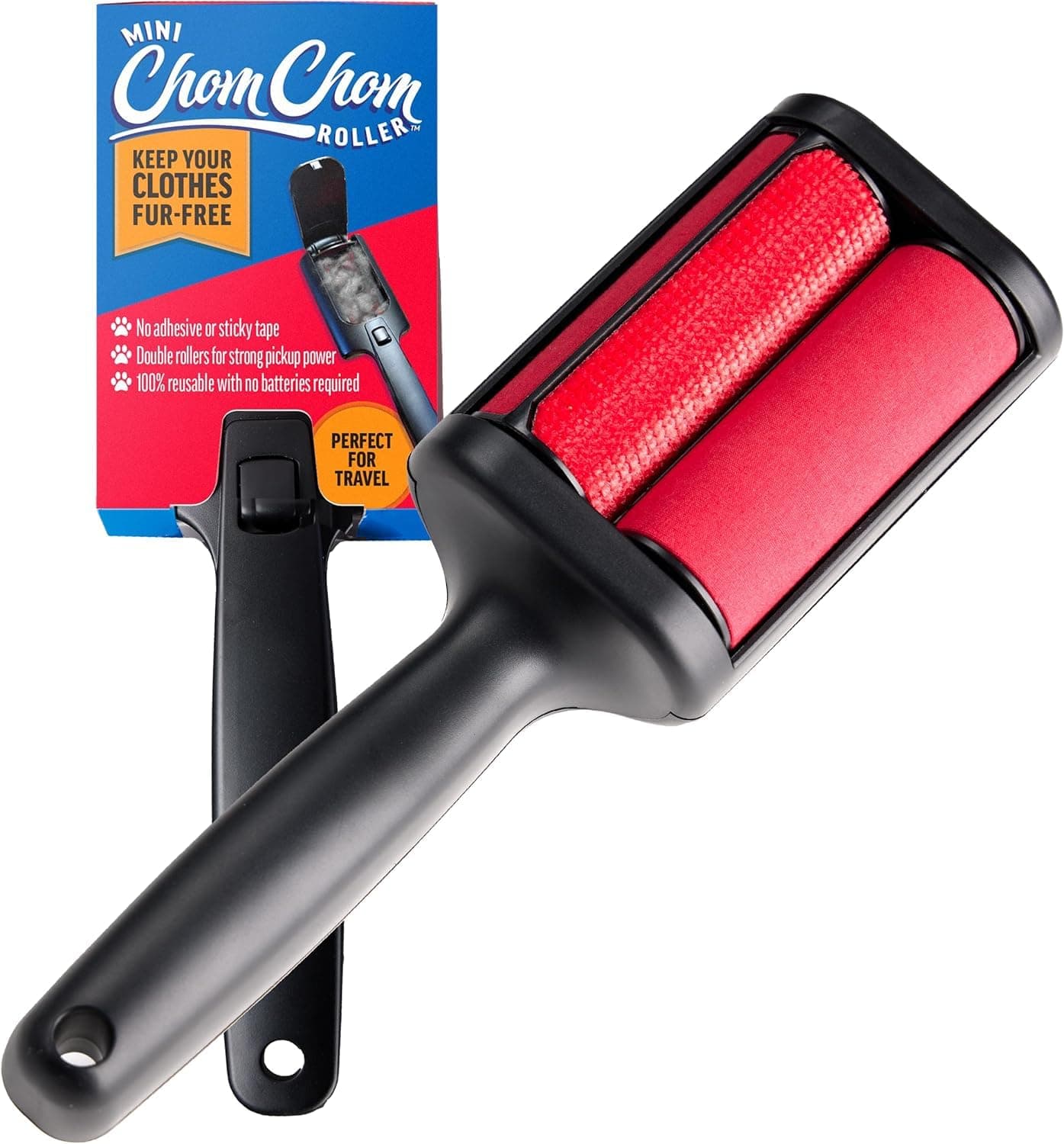
ChomChom Roller Pet Hair Remover – Reusable Lint Roller Pet Hair Removal Tool for Clothes, Couches, Cars and Travel - Cat Dog Hair Remover, Compact, No Sticky Refills Needed (Mini Roller)
ChomChom
Workflow B: Vacuum lanes + edge touch-up (the “precision + allergy” system)
Tools: vacuum (ideally with a hard floor head) + a quick edge tool
10-minute script
- •Minute 0–1: Empty/check the bin if it’s near full (a clogged bin reduces pickup dramatically).
- •Minute 1–6: Vacuum only “lanes” (the paths you actually walk): kitchen triangle, hallway, around litter box or feeding station.
- •Minute 6–9: Run the vacuum along baseboards where hair gathers.
- •Minute 9–10: Touch up stubborn corner clumps.
Where it wins
- •Best for households with allergies because suction captures dander instead of pushing it around.
- •Better on mixed debris (hair + litter + grit).
Tradeoffs
- •Higher effort and noise; easier to skip when you’re tired.
- •Some vacuum heads can “snowplow” hair on hardwood if the airflow or brush design isn’t right.
Corner/clump backup
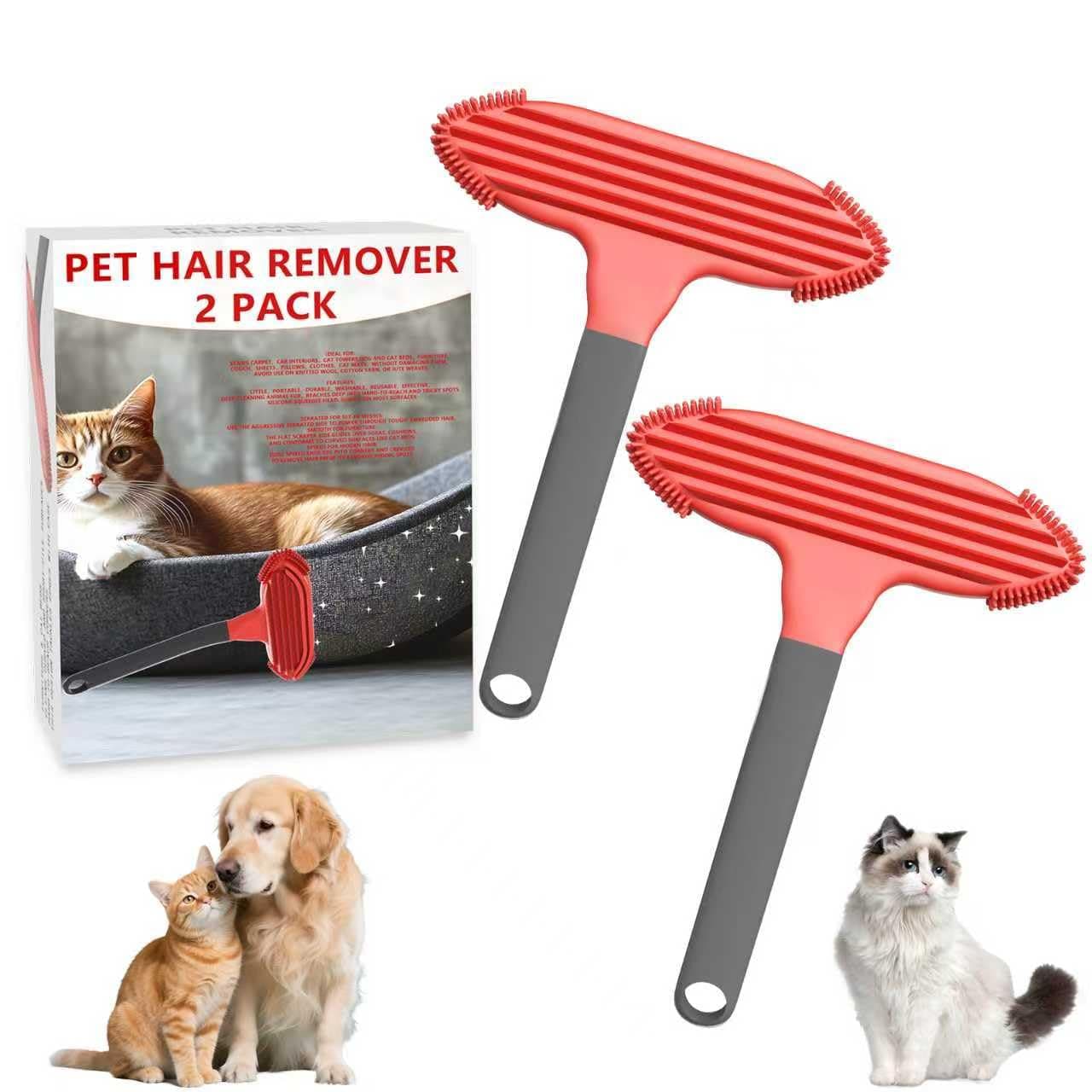
- •If you frequently get hair snakes under furniture or near rugs, a small scraper/rake-style kit can help on non-delicate surfaces. The Pet Hair Removal Tool: 6 Pcs Dog Cat Hair Remover can be useful for rugs, mats, and couch seams—just keep it away from easily scratched finishes and test lightly first.
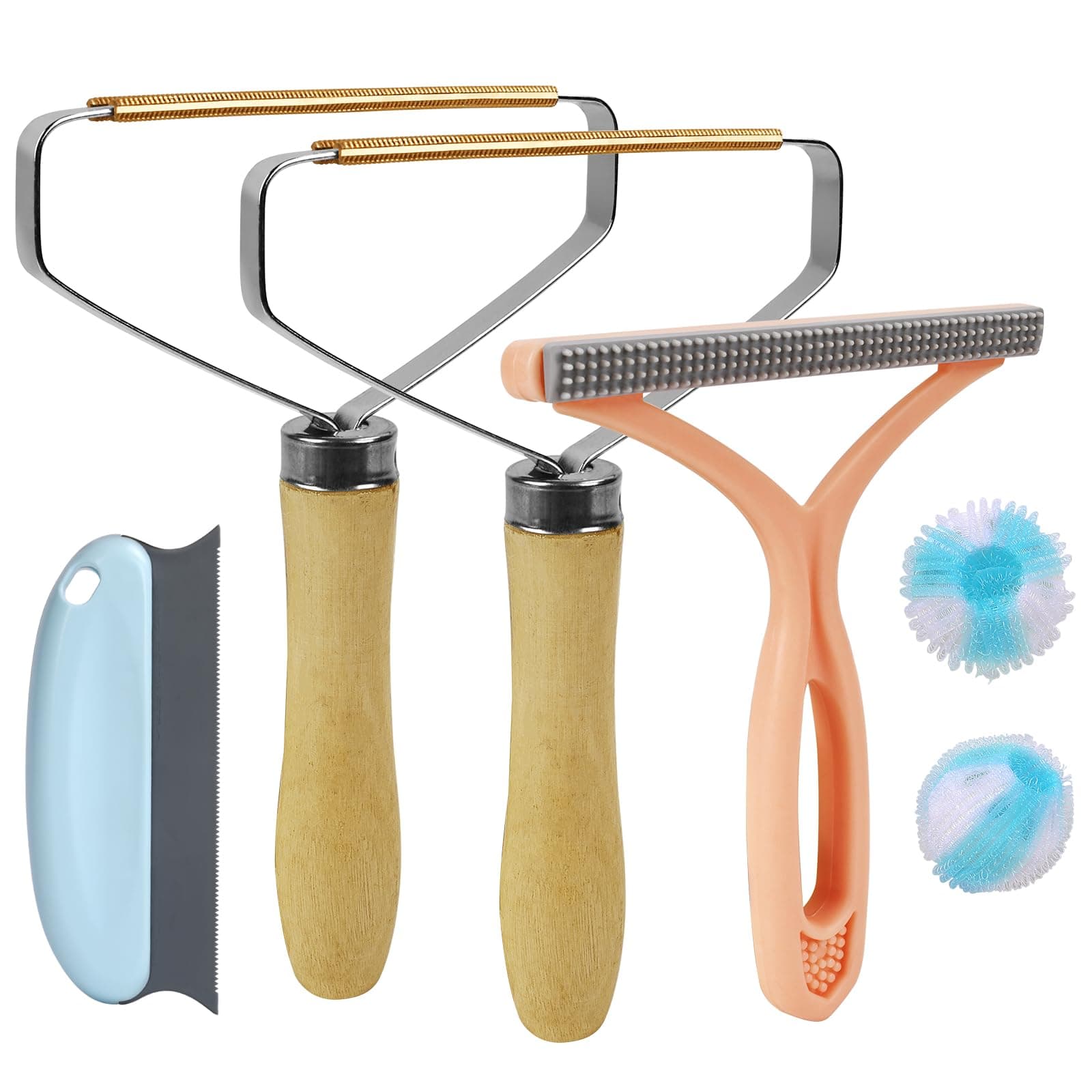
Pet Hair Removal Tool: 6 Pcs Dog Cat Hair Remover - Reusable Pet Hair Remover with Laundry Pet Hair Catcher - Portable Carpet Rake Scraper Fur Removal Tool for Rugs Car Mats Couch Furniture
Brand: Numhosai
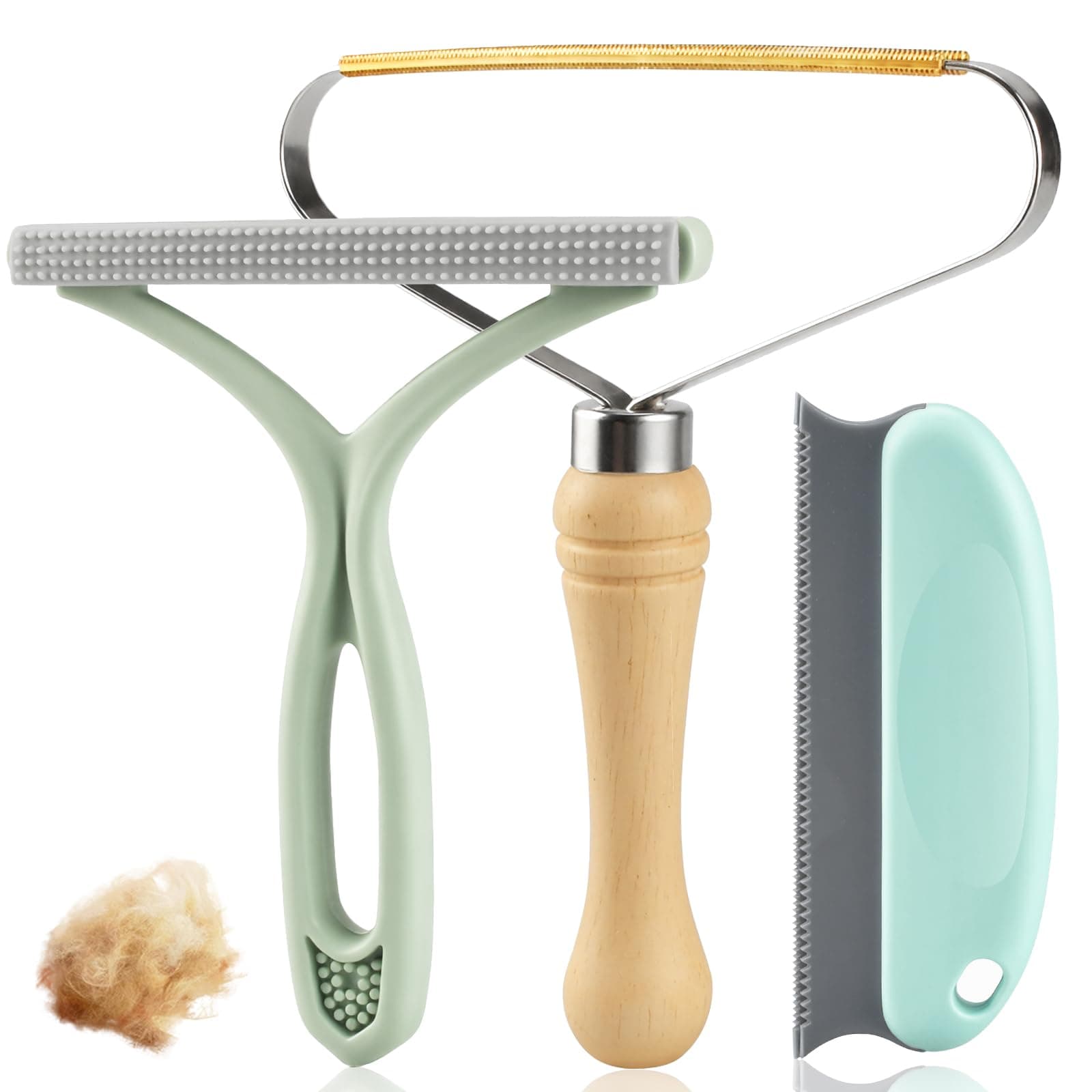
Pet Hair Removal Tool 3 Pack Dog Cat Hair Remover Carpet Scraper Rake Fur Removal Brush Lint Remover Shaver for Car Furniture Couch Green
Brand: AXEGY
Workflow C: Static-controlled routine (the “hair clings to everything” system)
Tools: microfiber mop + electrostatic glove/mitt for quick grabs
10-minute script
- •Minute 0–6: Microfiber mop perimeter first, then open areas.
- •Minute 6–8: Use a glove/mitt to pick up hair on stairs edges, baseboards, and low upholstery edges.
- •Minute 8–10: Do a fast pass on your pet’s favorite nap spot (couch corner or bed).
Where it wins
- •In dry climates or winter heating season, when fur clings instead of piling.
- •Great for quick “hand-level” pickup where tools don’t fit.
Tradeoffs
- •You must clean the mitt regularly or it just smears hair around.
- •Not as efficient for larger debris (kibble, grit).
Product fit
- •A dedicated mitt like the Pet Hair Removal Glove for Dogs & Cats is handy for quick pickups on furniture, bedding edges, and even car seats—especially when you only have 60 seconds before guests arrive.
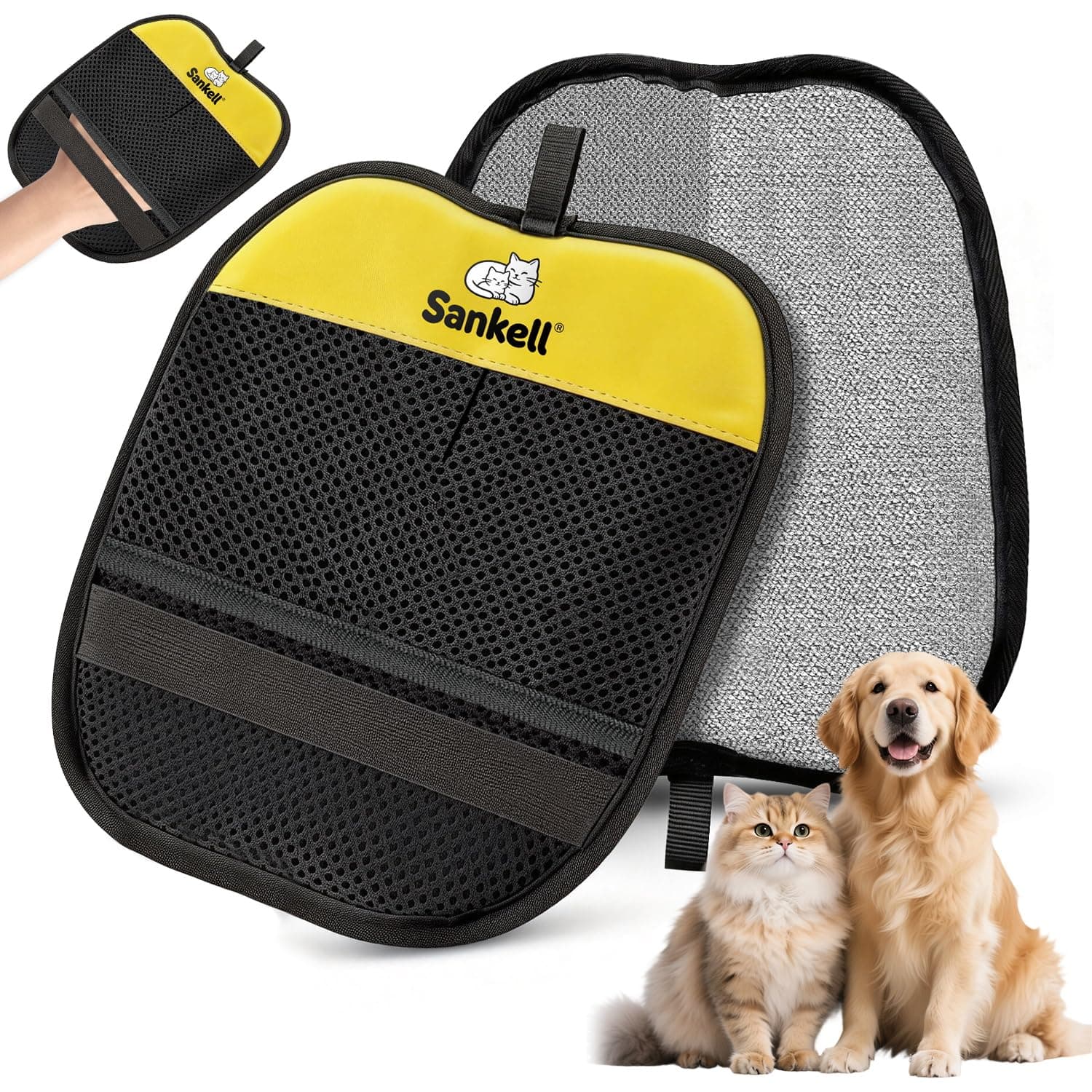
Pet Hair Removal Glove for Dogs & Cats, Newly Upgraded Reusable Electrostatic Pet Hair Remover Glove, Pet Hair Remover Mitt Tool for Couch, Furniture, Bed, Clothing, Carpet, Car Seat (Yellow)
Sankell
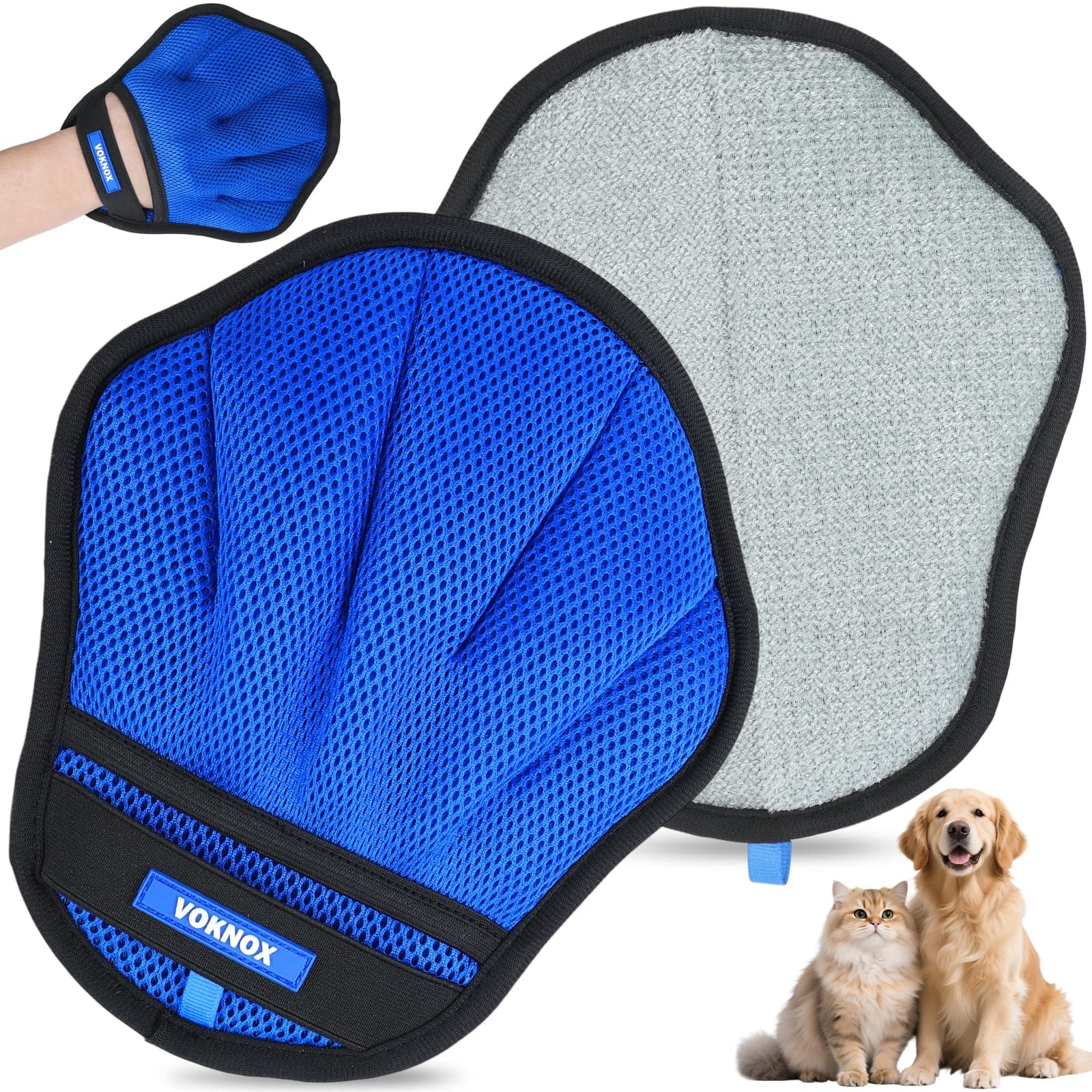
Pet Hair Removal Glove for Dogs & Cats, Electrostatic Five-Finger Hair Remover for Furniture, Couch, Carpet & Car Seat, Reusable Washable Pet Fur Cleaning Tool, Not for Grooming (1 PCS)
Brand: VOKNOX
Workflow D: Disposable lint roller “triage” (the “I need instant visible results” system)
Tools: disposable lint rollers + fast floor sweep
10-minute script
- •Minute 0–6: Fast sweep or mop to push floor hair into piles.
- •Minute 6–10: Lint-roll your clothing, couch arms, and pet blanket edges.
Where it wins
- •Ultra-fast for clothing and small fabric zones.
- •Great for last-minute cleanup before leaving the house.
Tradeoffs
- •Ongoing cost and waste add up.
- •Slow for large surfaces; you’ll burn through sheets.
Product fit
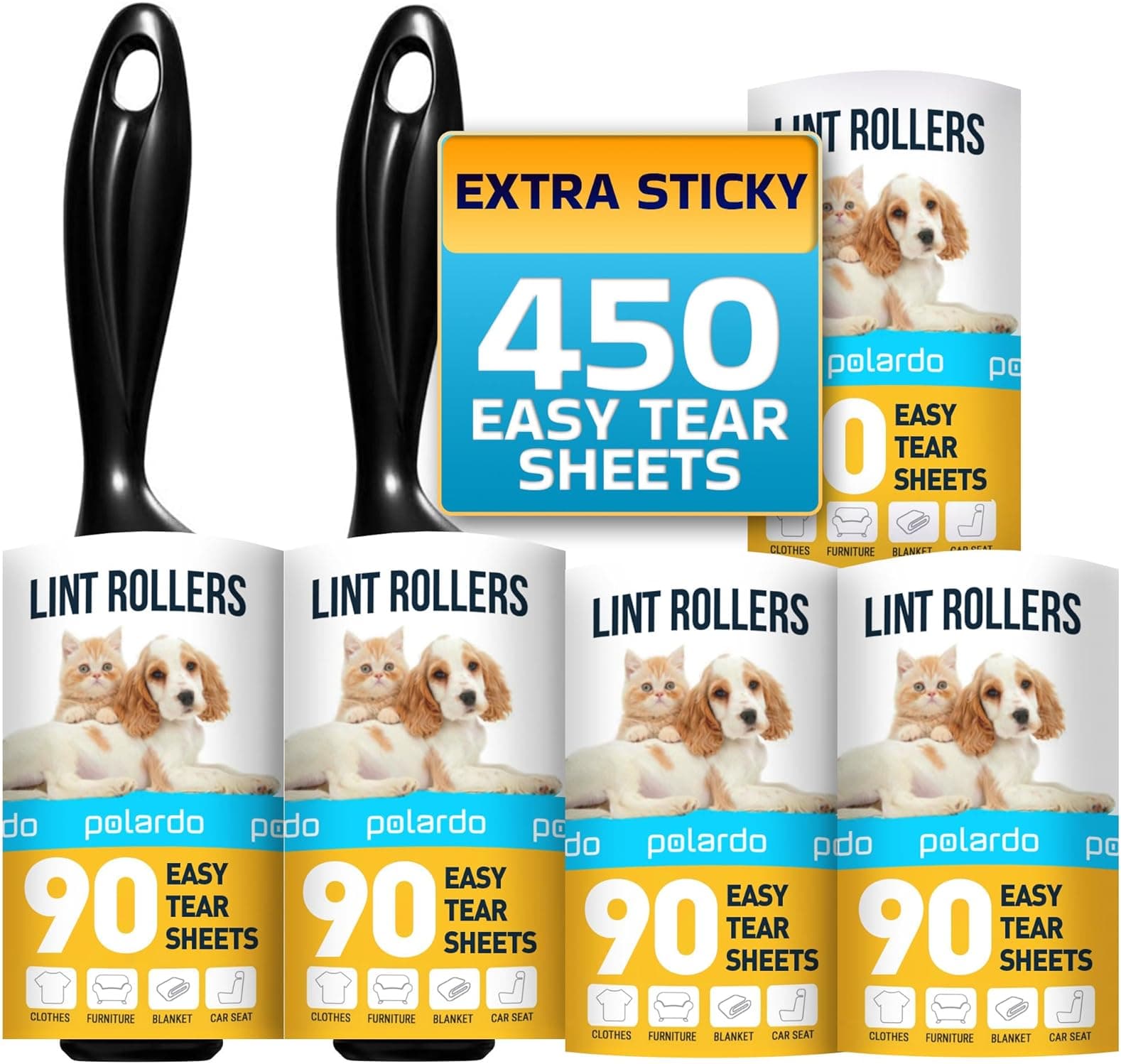
- •If you prefer sticky sheets for clothing and quick fabric fixes, Lint Rollers for Pet Hair (5 Large Rollers) are best treated as a “triage tool,” not your primary daily system.
Cost, effort, and consistency tradeoffs
If you want daily pet hair control on hardwood floors, consistency is the real “secret ingredient.” Here’s how the tradeoffs usually play out.
Lowest effort (most repeatable): Dry sweep + reusable fabric tool
- •Pros: quiet, fast, minimal setup, easy to do even when tired
- •Cons: can leave fine dust film; may push allergens around
- •Who it suits: busy households, people who hate noisy cleaning, anyone who quits routines that feel like chores
Best for allergies: Vacuum lanes + targeted edge work
- •Pros: captures fine particles; handles mixed debris better
- •Cons: more friction (noise, cord/battery, bin maintenance)
- •Who it suits: allergy-prone households, pets that track litter/grit
Lowest ongoing cost/waste: Reusable tools (ChomChom/mitt) + washable microfiber
- •Pros: fewer refills; sustainable; always ready
- •Cons: you must wash/clean tools to keep performance high
- •Who it suits: consistent cleaners who don’t mind rinsing a mitt or washing mop pads
Most “instant visible” (but expensive over time): Disposable lint rollers
- •Pros: immediate satisfaction; great for outfits and car seats
- •Cons: recurring cost; not scalable for whole-home hair
- •Who it suits: people who value speed over long-term cost, or need a backup for work clothes
Which option wins by user profile
Pick the winner based on your home’s hair pattern, not on what sounds “most powerful.”
Profile 1: One heavy-shedding dog + open-plan hardwood
Winner: Workflow A (dry sweep + quick fabric detail)
- •Why: Open spaces make hair visible; you need speed and containment.
- •Add: Use a reusable fabric tool like the ChomChom Roller on couch corners daily for 60 seconds.
Profile 2: Cats + litter tracking + hair around feeding station
Winner: Workflow B (vacuum lanes)
- •Why: Litter grit behaves like sandpaper; suction reduces scratch risk compared to pushing grit.
- •Habit tip: Keep the vacuum where you actually need it (near the litter zone) so “5 minutes” stays 5 minutes.
Profile 3: Winter static, hair clings to baseboards and upholstery
Winner: Workflow C (microfiber + electrostatic mitt)
- •Why: Static makes hair fight you; a glove like the Pet Hair Removal Glove lets you grab what mops miss on edges and fabric.
Profile 4: You wear black work clothes; pet hair is a daily embarrassment
Winner: Workflow D as a supplement, not the whole plan
- •Why: Clothing needs sticky pickup; floors need a faster scalable method.
- •Best pairing: Quick sweep + keep Lint Rollers at the door.
Profile 5: Mixed surfaces (hardwood + area rugs + couch that traps hair)
Winner: Hybrid: Vacuum lanes + reusable fabric tool
- •Why: Rugs hold hair; hardwood shows hair. You need both.
- •Rug note: A kit like the 6 Pcs Pet Hair Removal Tool set can be a strong occasional helper on rugs and mats—use gentle pressure and keep it off delicate wood finishes.
Transition strategy if changing tools
Switching tools fails when the new setup adds steps. Make the transition about placement and timing, not willpower.
Step 1: Choose one “anchor location”
Put your primary daily tool where the mess starts:
- •Near the entry if your dog tracks hair and dirt
- •Near the litter box for cats
- •Near the living room if the couch is the main hair source
If the tool is in a closet across the house, you’ll skip it.
Step 2: Run a 7-day overlap (old tool stays, new tool proves itself)
For a week:
- •Use the new routine daily for 10 minutes.
- •Keep the old method available for backup (no guilt).
At day 7, keep what you actually used—not what you thought you would use.
Step 3: Create a “two-zone standard”
Instead of trying to clean everything daily, define two non-negotiable zones:
- •Zone A: Entry + hallway lanes
- •Zone B: Kitchen triangle (sink–stove–fridge) or litter box perimeter
Everything else becomes optional “bonus time.” This is how the routine survives busy weeks.
Step 4: Add one fabric tool, not five
Most homes only need one good fabric hair tool. If you choose reusable, commit to it.
- •Couch + bedding: ChomChom Roller
- •Tight spots + quick grabs: Pet Hair Removal Glove
- •Clothes in a hurry: Lint Rollers
Common decision mistakes
These are the traps that keep pet hair hardwood floors looking messy even after “cleaning.”
Mistake 1: Cleaning the center first
Edges are the problem. If you start in the middle, you push hair toward baseboards and create more work.
Better: Perimeter pass first, then lanes.
Mistake 2: Over-wetting hardwood to “grab the hair”
A soaking wet mop can temporarily pick up hair, but it risks swelling boards and dulling the finish over time.
Better: Dry microfiber daily; damp only when needed, and wring it out until it’s barely moist.
Mistake 3: Using a scratch-prone tool without managing grit
Hair is soft; grit isn’t. If there’s litter, sand, or tiny stones, aggressive scraping can drag grit across the finish.
Better: Vacuum or pick up grit first, then use hair tools on rugs/mats where they shine.
Mistake 4: Treating lint rollers as a whole-home solution
Sticky sheets are great for a shirt, slow for a living room.
Better: Use lint rollers for clothing and small fabric areas; use sweep/vacuum for floors.
Mistake 5: Buying “more tools” instead of fixing the routine
Two tools in the right place beat five tools in a closet.
Better: One floor method + one fabric method + clear daily zones.
Final recommendation framework
If you want a daily system you’ll repeat, decide using these four questions.
1) Where does hair bother you most?
- •Floors look fuzzy by noon: prioritize a fast dry sweep routine (Workflow A).
- •Couch/bed looks hairy constantly: add a reusable fabric tool like the ChomChom Roller.
- •Clothes are the pain point: keep Lint Rollers by the door and in the car.
2) Do you have grit (litter/sand) along with fur?
- •Yes: vacuum lanes more often (Workflow B) to reduce scratch risk.
- •No: sweeping/microfiber containment is typically faster.
3) What’s your biggest consistency barrier?
- •Noise/time: choose the quietest routine you can do daily (A or C).
- •Waste/cost: lean reusable (microfiber + mitt/ChomChom).
- •Motivation: set a timer for 10 minutes and stop when it ends. The goal is repetition, not perfection.
4) What’s your “minimum clean” standard?
Pick two zones and protect them daily. Everything else becomes a rotating bonus.
If you’re starting from scratch, a reliable baseline for pet hair hardwood floors is:
- •Daily: Dry perimeter + lanes (6–8 minutes)
- •Daily: 1–2 fabric hotspots (2–4 minutes) using either the Pet Hair Removal Glove or the ChomChom Roller
- •Weekly (optional): Vacuum under furniture and do a damp microfiber pass if dust film builds up
That’s the system that holds up in real life: short, repeatable, and designed around where hair actually accumulates—not where we wish it did.
Hair Removal Cluster
More in this topic
guide
How to Remove Pet Hair from Furniture and Clothes Fast
guide
Best robot vacuum for pet hair: what to look for in 2026
guide
How to remove pet hair from car seats fast (no stress)
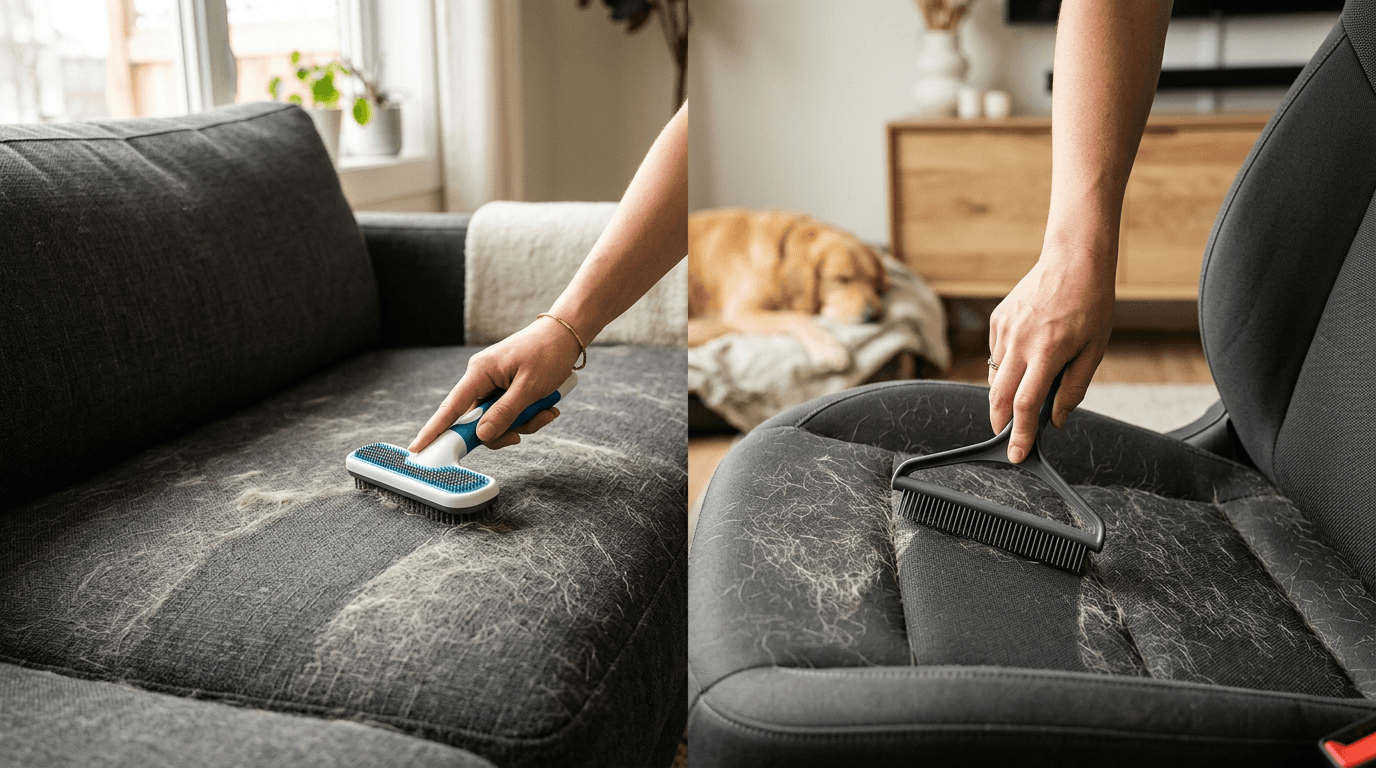
guide
How to Remove Pet Hair from Couch and Car Seats Without Damaging Fabric (A Comparison-Led Guide)
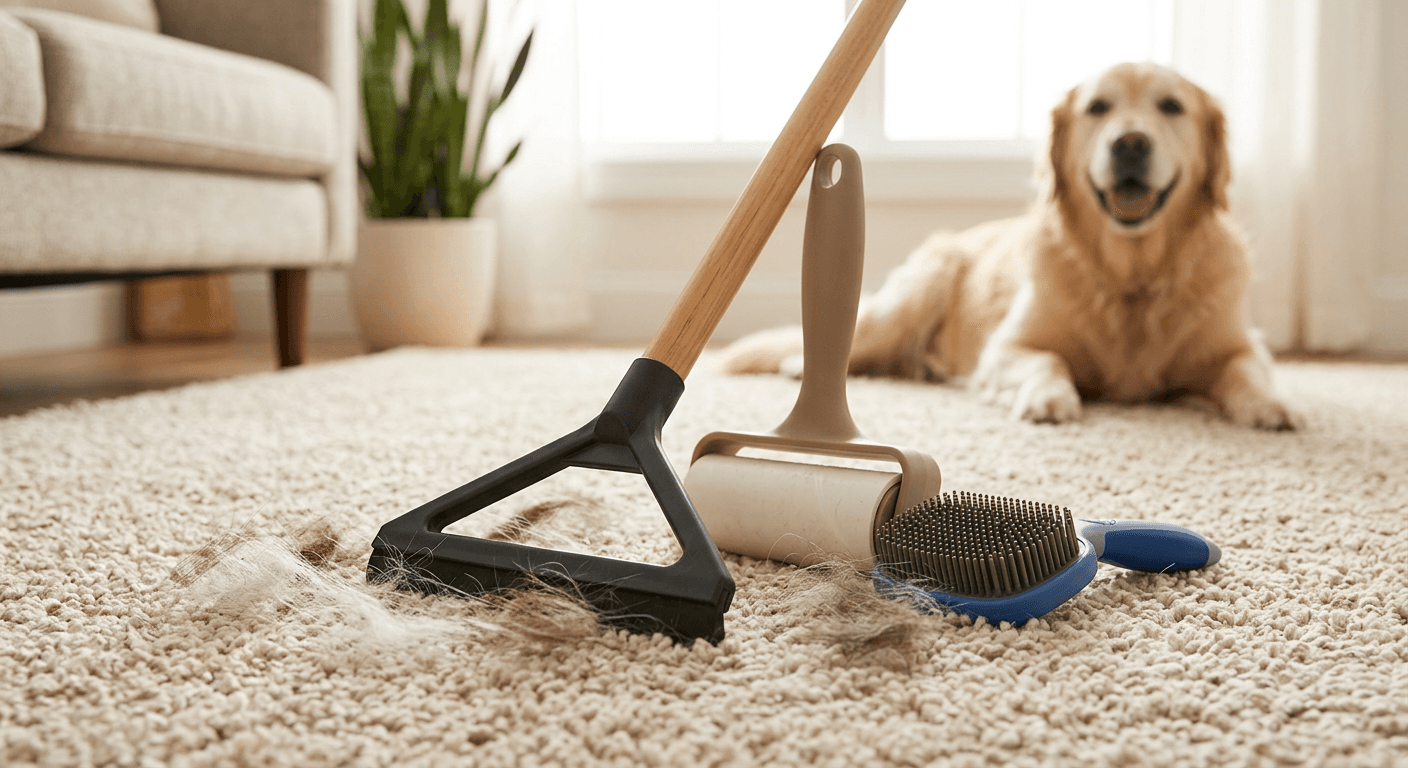
guide
Best Pet Hair Remover for Rugs and Carpet: What Actually Works (Real-World Guide)
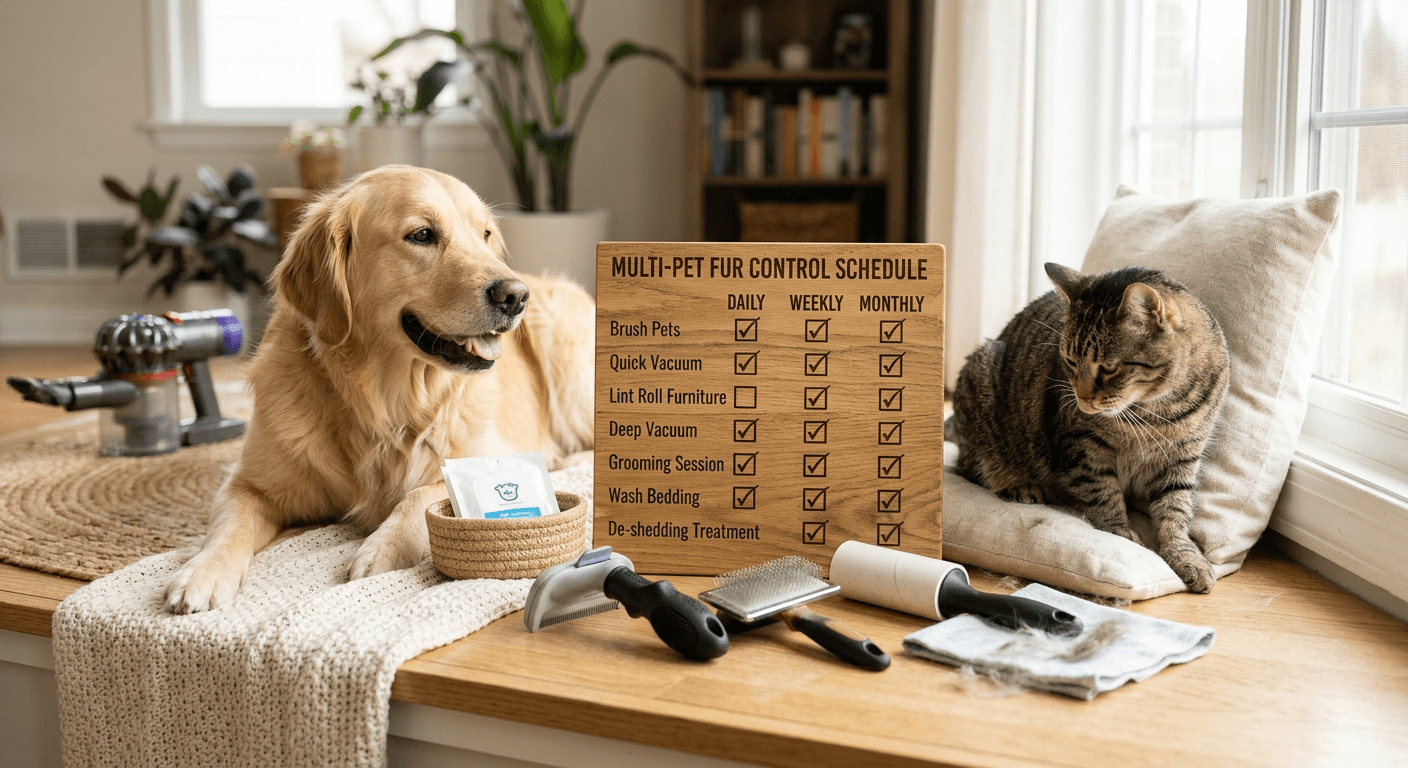
guide
Pet Hair Removal Routine for Multi-Pet Homes: A Comparison-Led Guide That Actually Sticks
Frequently asked questions
What’s the fastest daily routine for pet hair on hardwood floors?
Do edges first, then walk lanes. Spend 2 minutes on a perimeter pass along baseboards and thresholds, 4–5 minutes sweeping or microfiber-mopping high-traffic lanes, and the last 2–4 minutes on your biggest fabric hotspot (usually a couch corner or pet bed). This prevents hair from migrating into corners and keeps the home looking clean without a full-house deep clean.
Is sweeping or vacuuming better for pet hair hardwood floors?
Sweeping/microfiber is usually faster for visible loose hair and is easier to repeat daily. Vacuuming is often better if you also have grit (litter, sand) or allergies, because it captures fine particles instead of moving them around. Many homes do best with a hybrid: sweep daily for speed, vacuum lanes a few times per week for deeper pickup.
How do I keep pet hair from collecting along baseboards and under cabinets?
Clean those areas first, not last. Start every session with a quick perimeter pass so you pull hair away from edges before it gets packed in. Focus on thresholds, toe-kicks, and the underside of low furniture. If hair clings due to static, use an electrostatic mitt for the baseboard line and tight corners, then finish with your normal sweep to contain it.
