
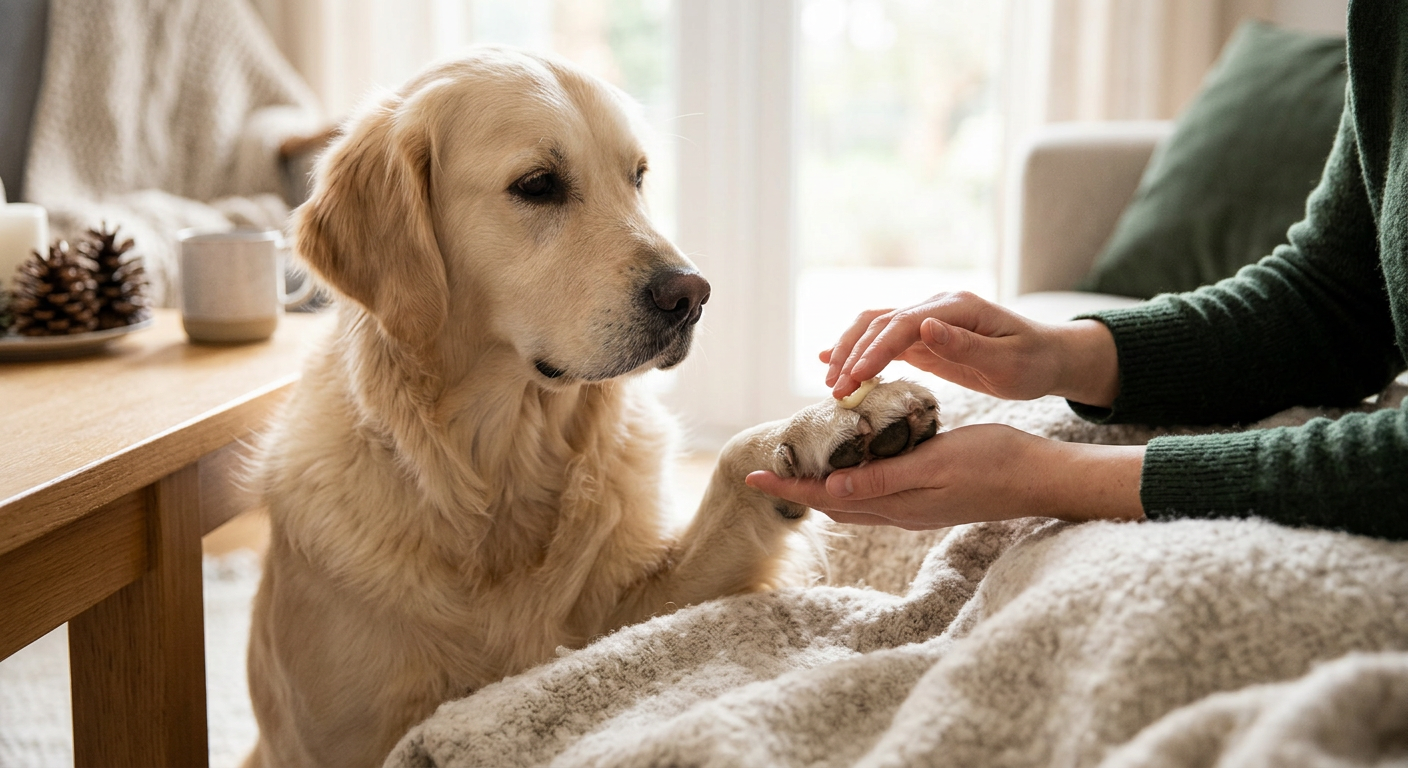
guide • Paw Care
Winter Paw Care for Dogs: Salt, Dry Cracks, and Daily Protection
Road salt and dry air can turn winter walks into painful paw problems. Use scenario-based routines to prevent cracks, irritation, and licking—without adding hours to your day.
By Lucy Anderson • February 23, 2026 • 7 min read
Table of contents
- Scenario map: apartment, family home, multi-pet
- Scenario A: Apartment building + sidewalk exposure
- Scenario B: Family home + yard + driveway
- Scenario C: Multi-pet home (dogs, or dogs + cats)
- Constraints and risk profile per scenario
- Salt/de-icer risk (high in apartments)
- Dry-crack risk (high in heated homes)
- Snow/ice mechanical risk (varies)
- Lick risk (multi-pet + anxious dogs)
- Tailored workflow by scenario
- Apartment workflow: salt-first prevention
- Before the walk (30–60 seconds)
- After the walk (2–4 minutes)
- Scenario example
- Family home workflow: crack prevention + controlled exposure
- At home (ongoing)
- Before the walk (60 seconds)
- After the walk (1–3 minutes)
- Scenario example
- Multi-pet workflow: consistency + lick control
- Set up a one-spot paw station
- Sequence (repeatable for each pet)
- Scenario example
- Product picks matched to workload
- If you’re fighting road salt daily
- If your main issue is dry, rough pads and tiny cracks
- If you need frequent cleaning and don’t mind a scent
- Time-saving tactics under pressure
- Make “doorway compliance” easier
- Use the 20-second scan
- Split the work across the day
- What breaks in real life and how to adapt
- “My dog licks the balm off immediately”
- “The paws look worse after I clean them”
- “Boots would solve this, but my dog hates them”
- “We track salt everywhere”
- Weekly review framework
- Step 1: Inspect
- Step 2: Score and decide
- Step 3: Adjust the environment
- Final execution checklist
Winter is rough on paws for two reasons that often hit at the same time: chemical exposure (salt, de-icers, garage runoff) and moisture loss (cold air + heated indoor air). A dog can look “fine” during the walk, then start licking, limping, or leaving tiny blood smears on the floor once home.
This guide is built for real life. You’ll see practical routines for different homes, what to do when you’re late, and how to choose between boots, balm, and cleaners. If you’re searching for winter paw care dog tips that actually hold up in a busy week, start with your scenario.
Scenario map: apartment, family home, multi-pet
Think of winter paw care like a commute problem: your “route” (where you walk) and your “traffic” (how chaotic homecoming is) determine the best routine.
Scenario A: Apartment building + sidewalk exposure
You rely on sidewalk routes and building entrances that get heavily salted. You also deal with:
- •Lobby + elevator floors where melted saltwater collects
- •Limited space to rinse paws
- •Quick potty breaks that turn into frequent exposure
Common winter paw problems here: stinging between toes, sudden licking after walks, red pads, and gritty residue in fur.
Scenario B: Family home + yard + driveway
You have more control over the immediate environment, but you also have more surfaces:
- •Driveway/sidewalk you may treat with de-icer
- •Garage floors with snowmelt chemicals
- •Yard snow that can form sharp ice crust
Common problems: cracked pads from dry indoor air, salt tracked in from school drop-off zones, and irritation from driveway products.
Scenario C: Multi-pet home (dogs, or dogs + cats)
Your biggest “paw care” challenge may be behavior and logistics:
- •One dog hates handling; another is fine
- •Licking spreads (dogs lick each other’s paws)
- •Shared floors mean residue is everyone’s problem
Common problems: inconsistent routines, over-licking after balm, and cross-tracking salt onto rugs and bedding.
Constraints and risk profile per scenario
Use this section to decide how aggressive your routine needs to be. Winter paw care isn’t one-size-fits-all; it’s risk management.
Salt/de-icer risk (high in apartments)
De-icers can irritate skin, dry pads, and sting micro-cracks you can’t see yet. You’ll notice:
- •“Tip-toe” walking on the first minute outside
- •Stopping to chew at a paw
- •Pink skin between toes
If your dog has long toe hair, salt crystals cling and travel inside like sand.
Dry-crack risk (high in heated homes)
Cracks usually come from cumulative dryness + friction. Dogs at higher risk:
- •Very active dogs (more abrasion)
- •Senior dogs (skin barrier changes)
- •Dogs who sprawl near heat vents/fireplaces
Cracks often show up at the edges of pads first, then deepen.
Snow/ice mechanical risk (varies)
Even without salt, snow can cause problems:
- •Ice balls between toes in fluffy-coated dogs
- •Sharp ice crust cutting pad edges
- •Frosty metal stairs chilling paws fast
Lick risk (multi-pet + anxious dogs)
If your dog licks compulsively, your product choices change. A heavier balm may protect better but can trigger licking and defeat the point.
Rule of thumb: the higher the lick risk, the more you should lean on “clean + protect + distract” instead of “apply and hope.”
Tailored workflow by scenario
These are realistic routines you can run daily. Each includes a “minimum viable version” for chaotic days.
Apartment workflow: salt-first prevention
Goal: remove chemicals fast and put a thin barrier in place before the next exposure.
Before the walk (30–60 seconds)
- Trim the toe fringe if your dog collects salt like a paintbrush. Even a small tidy reduces buildup.
- Apply a thin barrier balm to pads and between toes (not a thick frosting). A lick-safe option designed for winter surfaces is Lick-Safe Dog Paw & Nose Balm | 2.1 oz All Natural Wax with Coconut Oil & Shea Butter | Winter Snow, Road Salt & Hot Pavement Protector | Moisturizer for Dry, Rough Pads & Snouts.
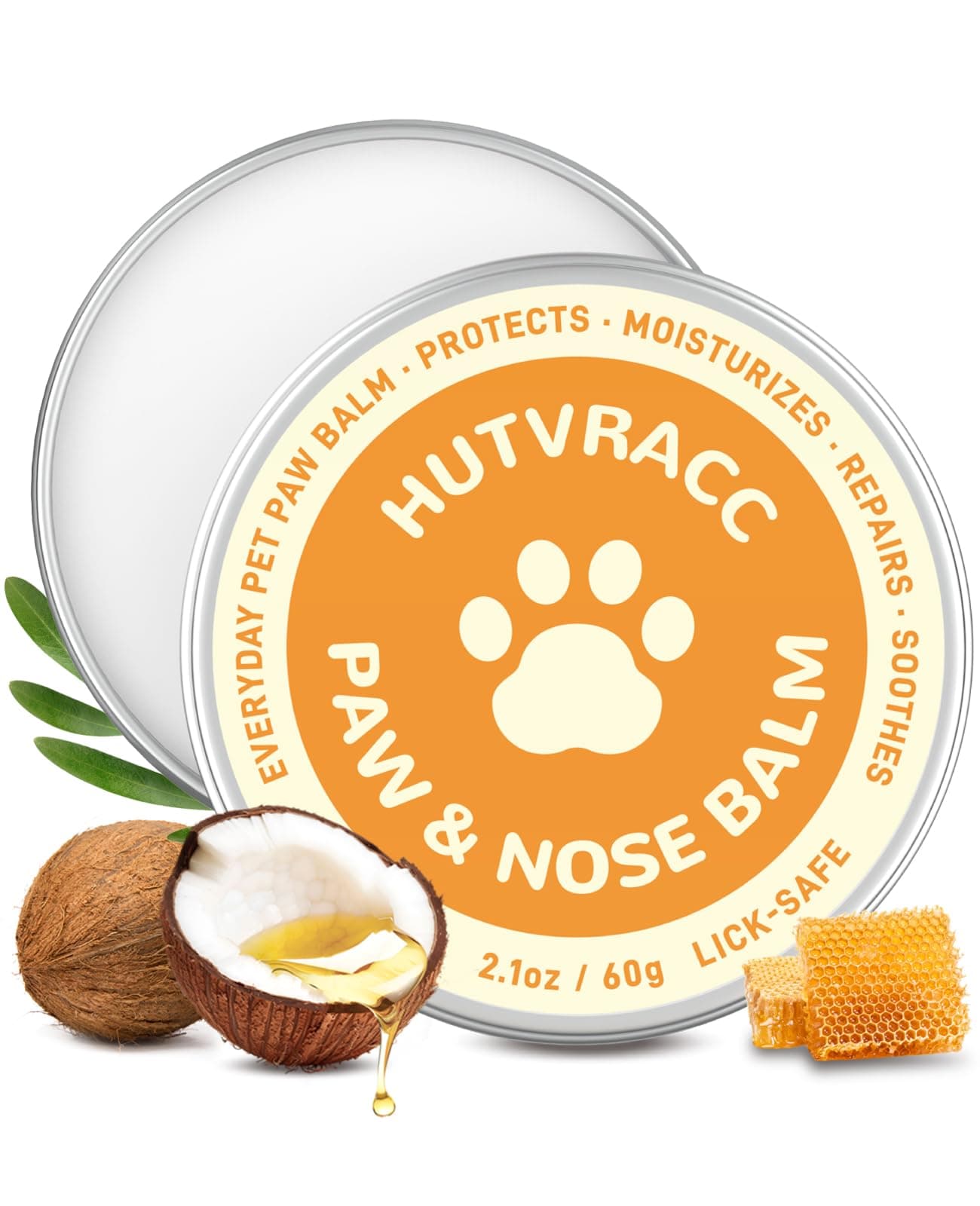
Lick-Safe Dog Paw & Nose Balm | 2.1 oz All Natural Wax with Coconut Oil & Shea Butter | Winter Snow, Road Salt & Hot Pavement Protector | Moisturizer for Dry, Rough Pads & Snouts
Brand: HUTVRACC
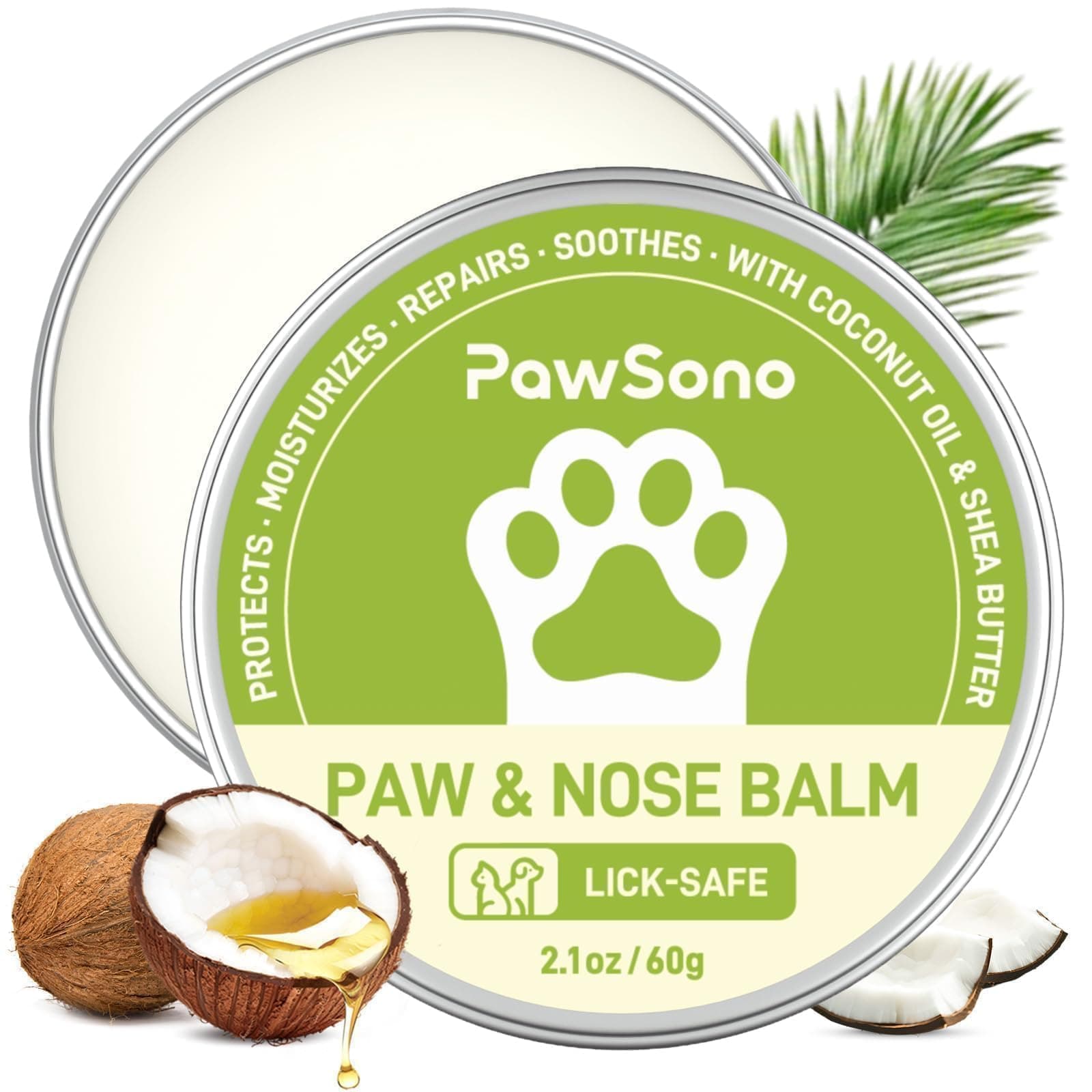
Lick-Safe Dog Paw & Nose Balm with Coconut Oil | Winter Road Salt & Cold Pavement Protector | All-Natural Moisturizer & Soother for Dry, Cracked Pads & Snout, Nose Butter for Bulldogs (60 g /2.1 oz)
Lick-Safe
Tradeoff: balm can reduce salt contact, but it can also make paws slightly more “grippy” for grit—so cleaning after still matters.
After the walk (2–4 minutes)
- Station a towel + paw cleaner at the door. Do not let your dog wander first.
- Foam-clean each paw, focusing between toes and nail beds where salt hides. An unscented, no-rinse option is Paw Cleaner for Dogs & Cats | Gentle Dog Paw Washer | No Rinse Foaming | Unscented | Pet Foot Cleaner with Built-in Silicone Brush for Muddy Paws | Puppy & Kitten Paw Wash | 5 fl oz.
- Dry thoroughly (especially between toes). Moisture trapped between toes = irritation + yeast risk.
- Spot-balm only if needed: if pads look ashy, rough, or you see tiny edge cracks.
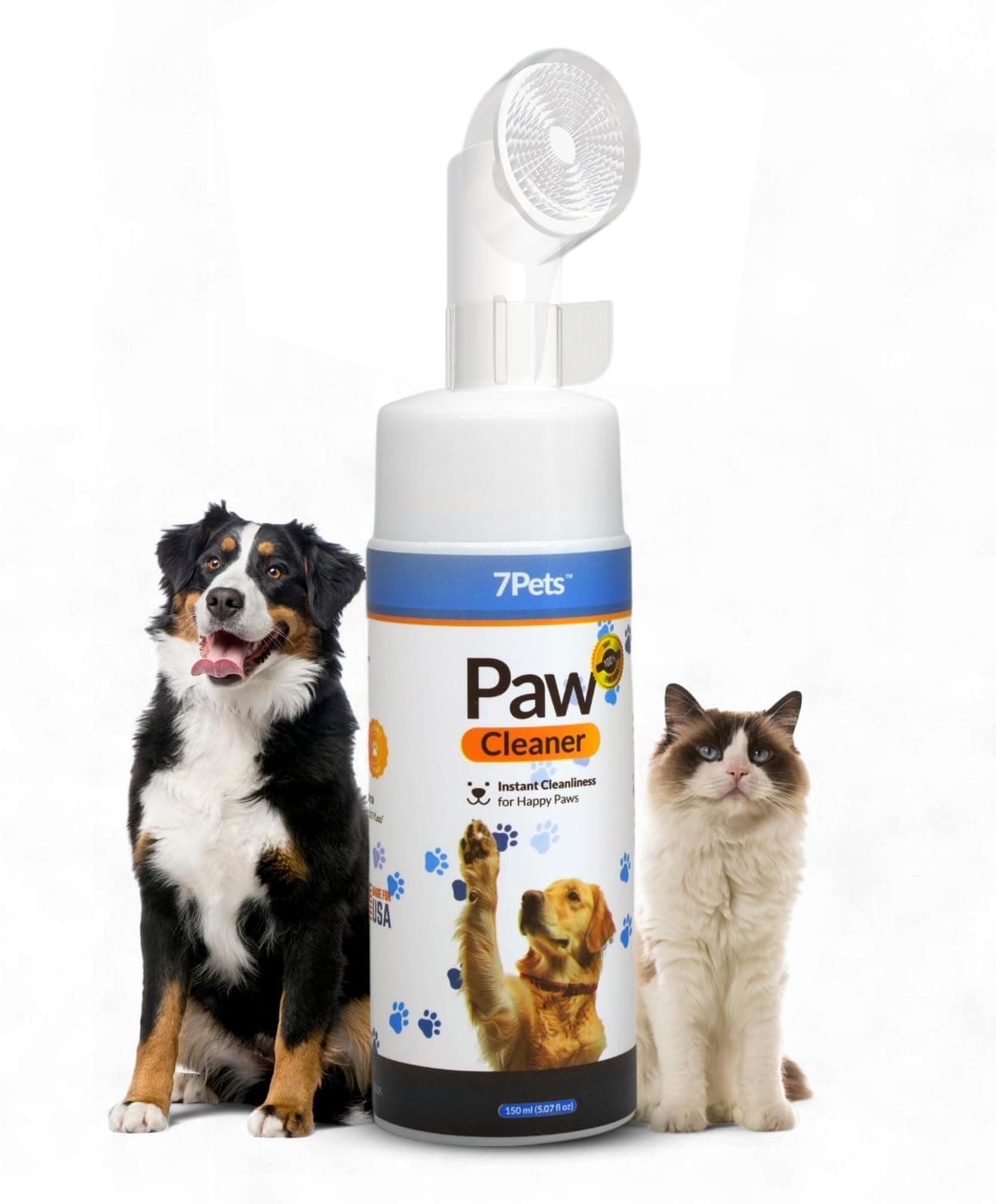
Paw Cleaner for Dogs & Cats | Gentle Dog Paw Washer | No Rinse Foaming | Unscented | Pet Foot Cleaner with Built-in Silicone Brush for Muddy Paws | Puppy & Kitten Paw Wash | 5 fl oz
Brand: 7PETS
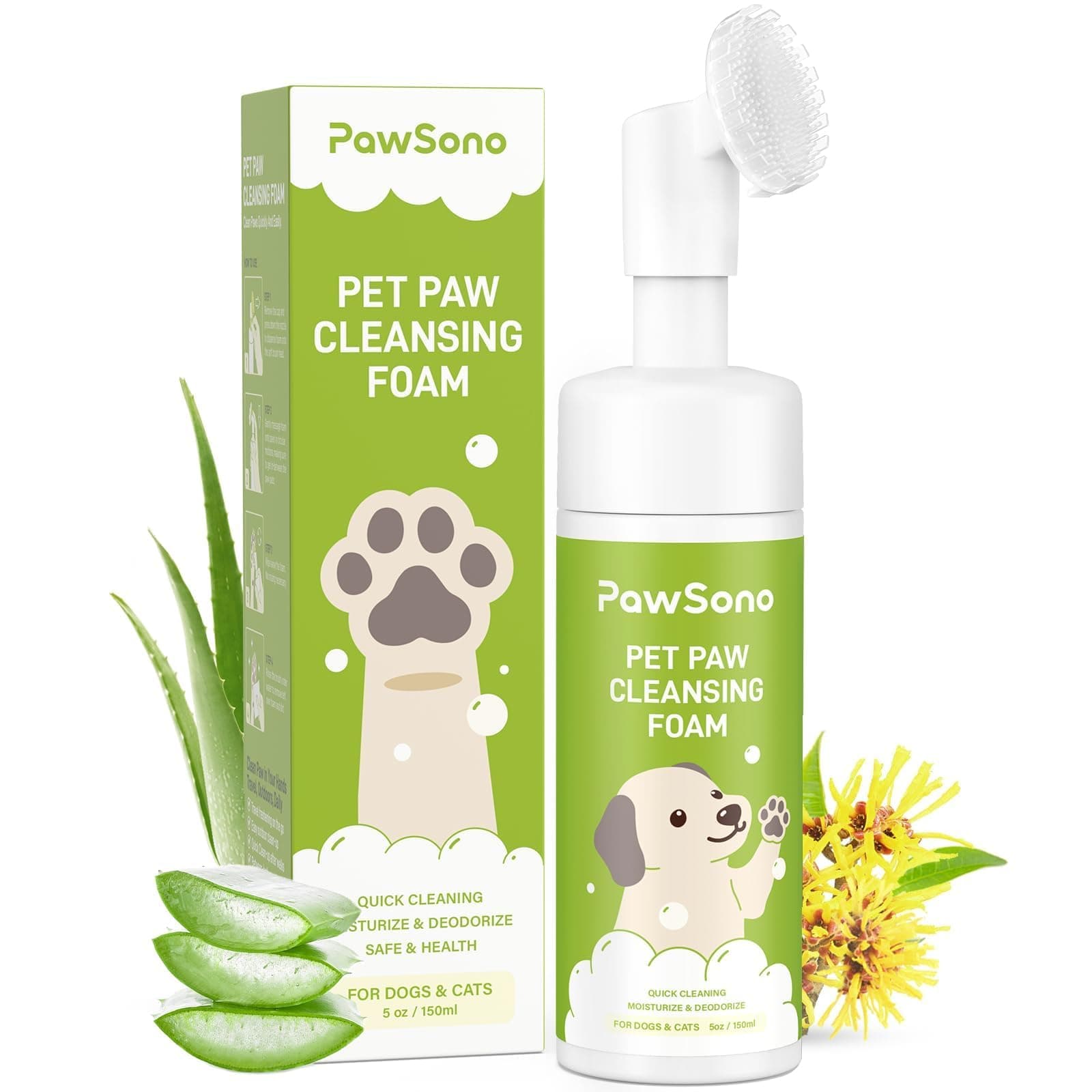
Paw Cleaner for Dogs & Cats, No-Rinse Foaming Pet Foot Washer with Built-in Scrubber Brush for Dirty, Muddy Paws – Suitable for Small, Medium & Large Dogs, Puppies, Kittens (5 fl oz)
PawSono
Minimum viable version (when you’re late): foam the paws, wipe once, dry between toes. Skip balm if your dog will lick nonstop.
Scenario example
You take your dog out at 6:30am. The building’s front steps are heavily salted. Your dog starts paw-lifting halfway down the block. That’s your cue: shorten exposure today and increase cleaning precision. After the walk, foam-clean and spend extra time on the paw that lifted—there’s usually a crystal wedged near a toe web.
Family home workflow: crack prevention + controlled exposure
Goal: reduce drying indoors and limit chemical exposure from your own surfaces.
At home (ongoing)
- Humidity check: if your house is very dry in winter, consider a humidifier in the main room. Cracks often improve when indoor air is less harsh.
- Rug strategy: put a washable runner by the door to catch salt granules before they spread.
Before the walk (60 seconds)
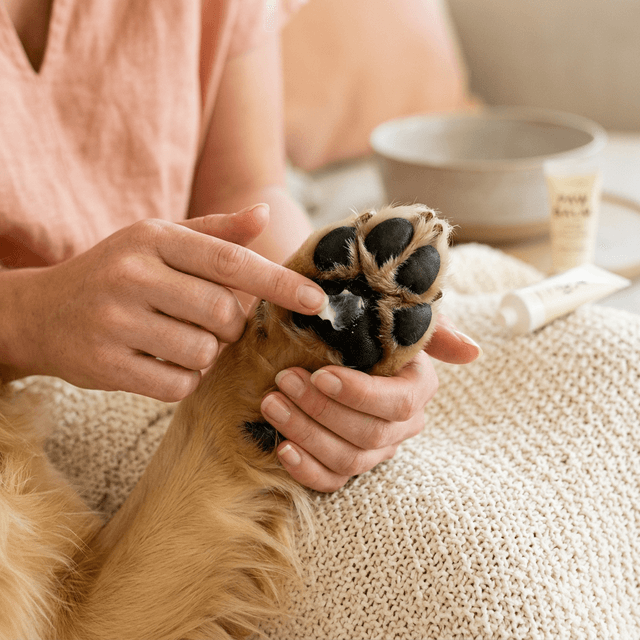
- •If you’re walking on treated roads/sidewalks, apply a thin balm layer.
- •If you mostly walk in your yard, balm is optional unless pads are already rough.
A straightforward moisturizer option for daily maintenance is Dog Paw Balm, Paw Moisturizer for Dogs and Cats, Contains Coconut Oil, Nourishing and Moisturizing, Suitable for Dry, Cracked Paws and Noses, 60g.
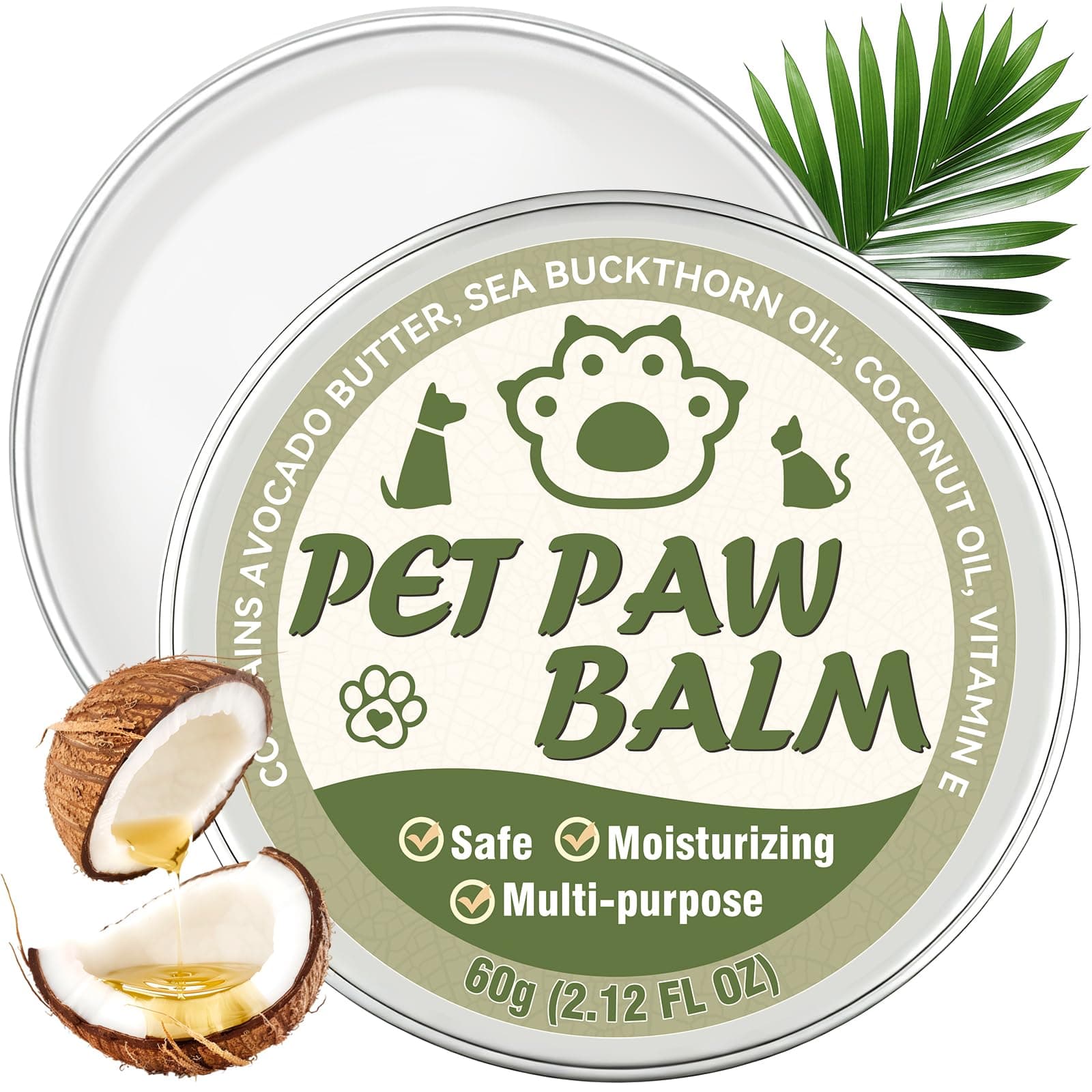
Tradeoff: richer moisturizers can soften pads too much if overused (pads need some toughness). Use a thin layer and reassess weekly.
After the walk (1–3 minutes)
- •If the walk included salted areas, clean paws at the door.
- •If it was yard-only with clean snow, dry paws and check for ice balls.
Minimum viable version: dry with a towel and do a quick visual check for redness between toes.
Scenario example
Your driveway is treated, and your dog trots through slushy saltwater to get to the car. Even if your “walk” is short, the exposure is intense. Treat it like an apartment scenario: clean immediately, dry well, then apply balm only to rough spots.
Multi-pet workflow: consistency + lick control
Goal: make the routine repeatable and reduce the “one dog ruins it” problem.
Set up a one-spot paw station
- •Two towels (one for gross, one for dry)
- •One foaming cleaner
- •One balm
- •A jar of high-value treats
Sequence (repeatable for each pet)
- Dog comes in → sits/stands on a mat.
- Foam-clean quickly.
- Dry between toes.
- Treat + release.
- Balm only for dogs with visible dryness/cracks.
If one dog licks any balm obsessively, prioritize cleaning and drying, and limit balm to bedtime when you can supervise or distract.
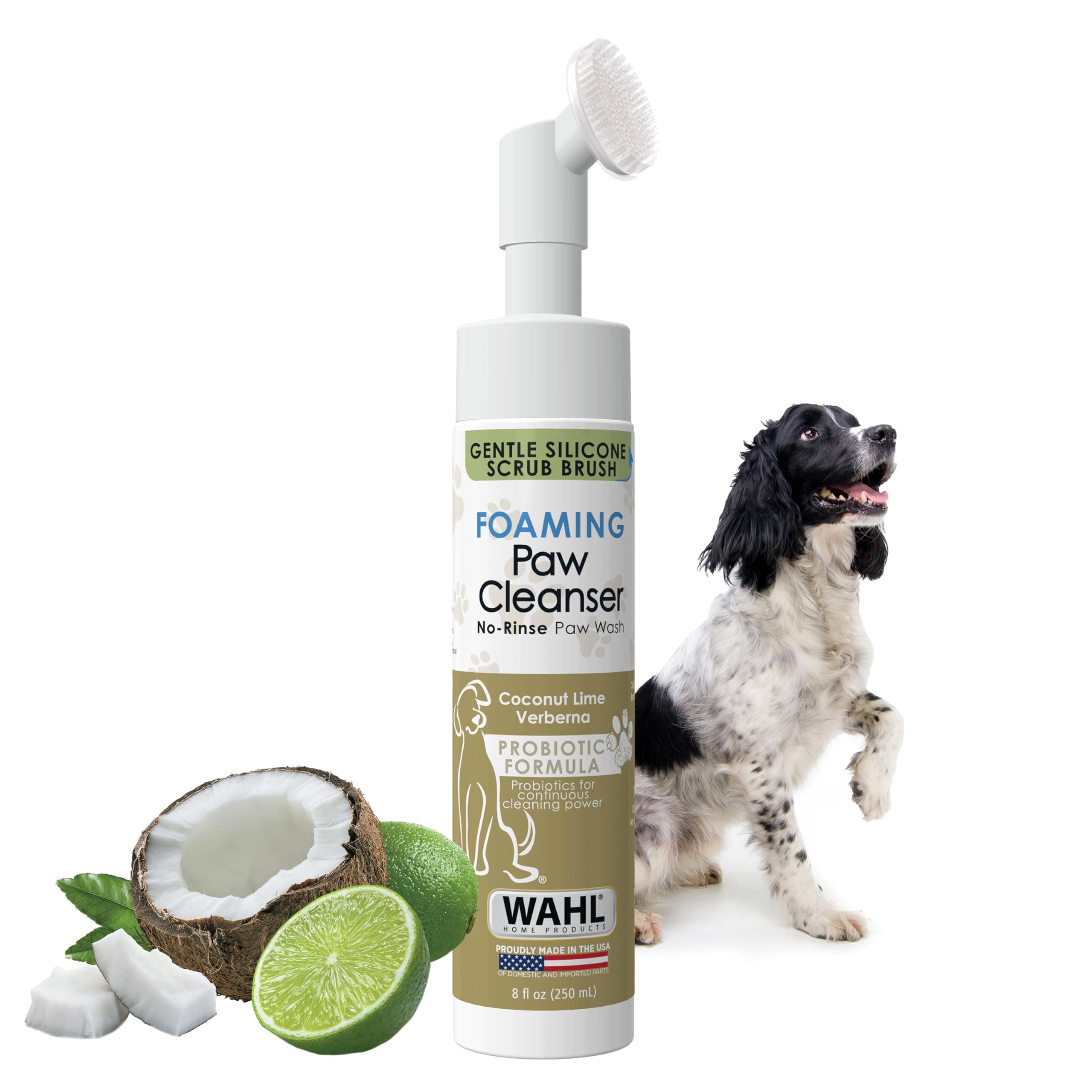
Scent can matter in multi-pet homes: scented products may trigger licking. If your household tolerates scent and you want a slightly “nicer” experience for frequent cleaning, Wahl USA Gentle Foaming Dog Paw Cleaner, No-Rinse Probiotic Formula with Soft Silicone Paw Scrubber Brush, Coconut Lime Verbena Scent, 8 fl oz – Model 3028477 can fit well. If licking ramps up, switch to unscented.
Scenario example
Two dogs come in at once. One is calm; one spins and tries to bolt. Put the calm dog on a “place” cue with a chew while you do the wiggly dog first. The goal is not perfection—it’s preventing salt from spreading across the house.
Product picks matched to workload
Choose products based on how often you’ll realistically use them and what you’re trying to prevent.
If you’re fighting road salt daily
- •Primary tool: a no-rinse foaming cleaner for fast chemical removal.
- •Good fit: Paw Cleaner for Dogs & Cats | Gentle Dog Paw Washer | No Rinse Foaming | Unscented | Pet Foot Cleaner with Built-in Silicone Brush for Muddy Paws | Puppy & Kitten Paw Wash | 5 fl oz
Decision criteria:
- •Unscented if your dog licks or you have multiple pets
- •Built-in silicone brush if grit gets trapped around nails
If your main issue is dry, rough pads and tiny cracks
- •Primary tool: a balm that supports the skin barrier without making paws greasy.
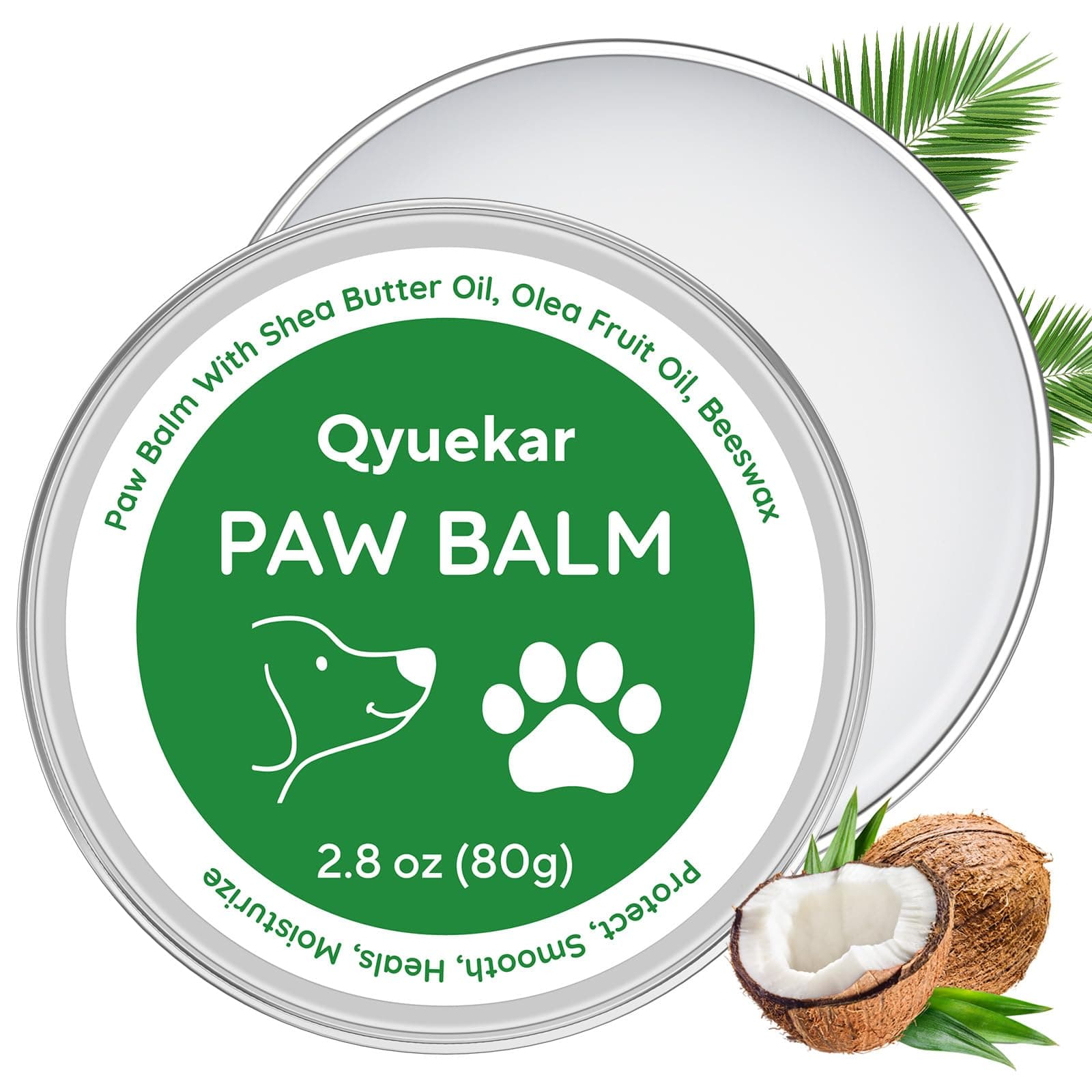
- •Good fit for winter exposure: Lick-Safe Dog Paw & Nose Balm | 2.1 oz All Natural Wax with Coconut Oil & Shea Butter | Winter Snow, Road Salt & Hot Pavement Protector | Moisturizer for Dry, Rough Pads & Snouts
- •Alternate moisturizer option: Dog Paw Balm, Paw Moisturizer for Dogs and Cats, Contains Coconut Oil, Nourishing and Moisturizing, Suitable for Dry, Cracked Paws and Noses, 60g
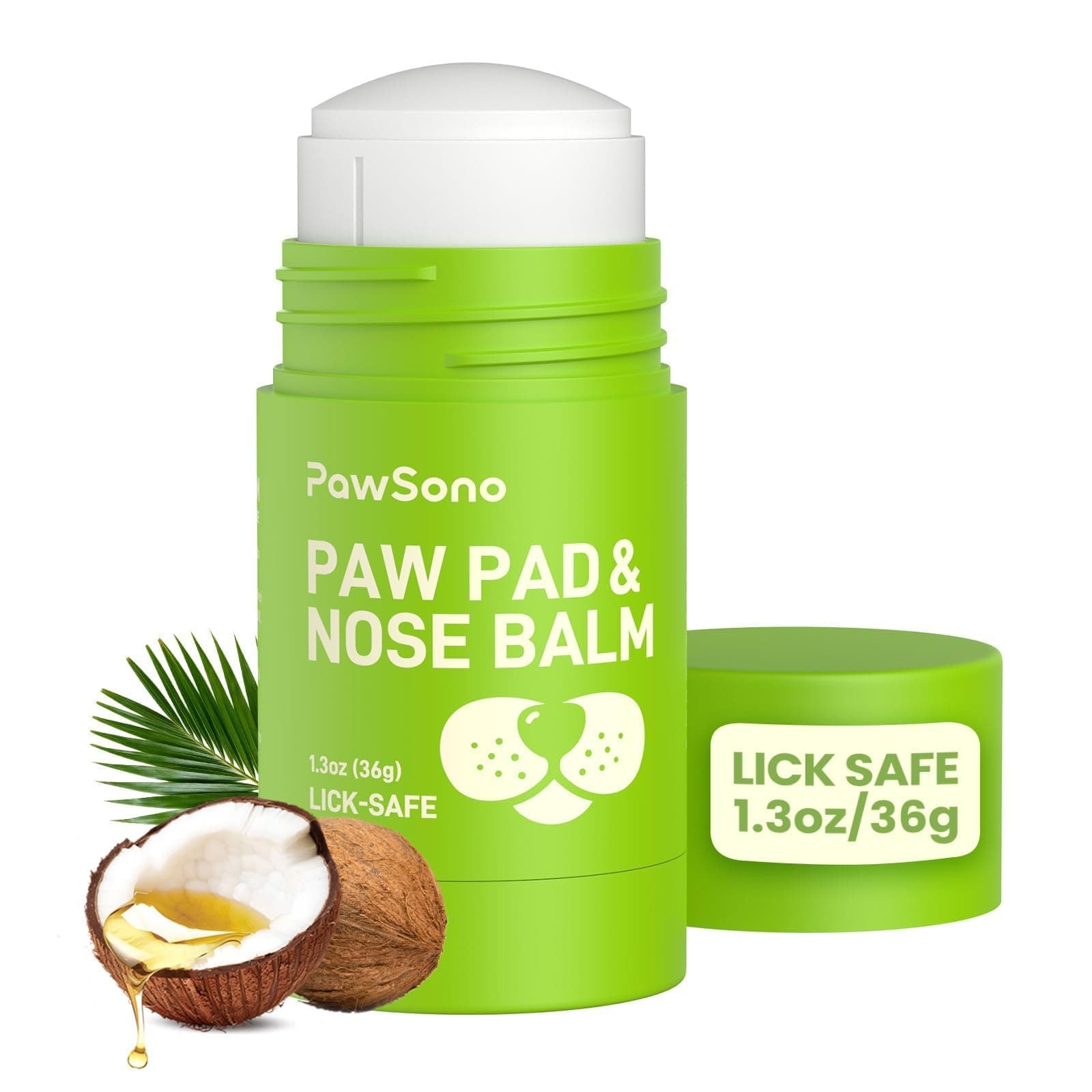
Lick-Safe Dog Paw & Nose Balm with Coconut Oil | Winter Snow, Road Salt & Cold Pavement Protector | All-Natural Moisturizer & Soother for Dry, Cracked Pads & Snout | Horse Hoof, Joint Care
Lick-Safe
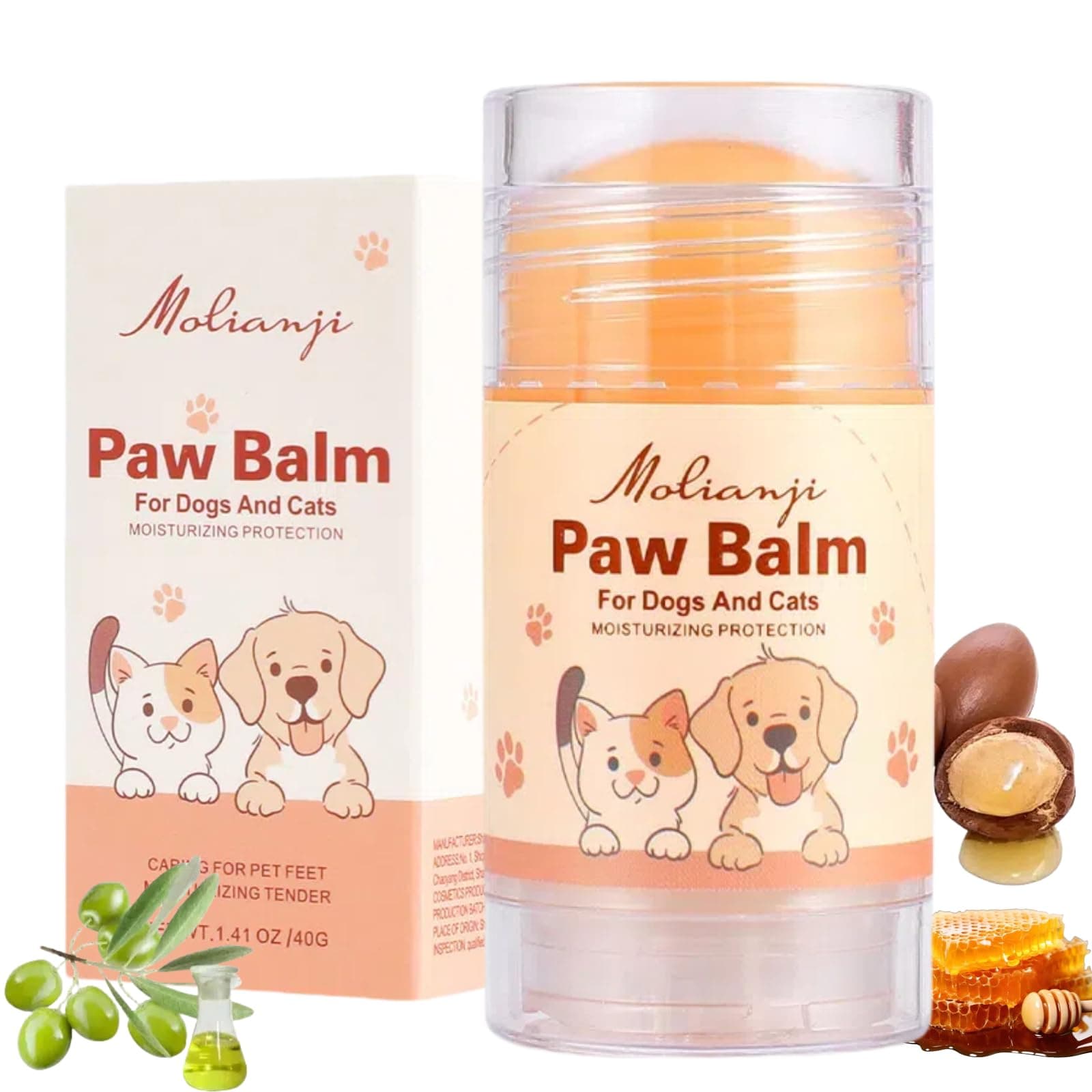
Dog Paw&Nose Balm Lick Safe1.4oz(40g),All-Natural Ingredients Pets Paw Wax,Healing Moisturizer with Coconut Oil&Honey,for Dry Cracked Dog & Cat Paws,Nose & Elbows, Horse Hoof, Joint Care
Brand: Steigullage
Decision criteria:
- •Choose the product your dog will tolerate (less licking = more benefit)
- •Apply thin layers; reassess after 3–5 days
If you need frequent cleaning and don’t mind a scent
- •Primary tool: a foaming cleaner that’s pleasant enough to use consistently.
- •Good fit: Wahl USA Gentle Foaming Dog Paw Cleaner, No-Rinse Probiotic Formula with Soft Silicone Paw Scrubber Brush, Coconut Lime Verbena Scent, 8 fl oz – Model 3028477
Tradeoff: some dogs (and cats) fixate on scented residue. If licking increases, go unscented.
Time-saving tactics under pressure
You don’t need an elaborate spa routine to protect paws. You need frictionless systems.
Make “doorway compliance” easier
- •Put the paw station where the leash comes off.
- •Use a dedicated mat so your dog learns: mat = paws handled.
- •Keep towels at knee height (hook/rail), not buried in a closet.
Use the 20-second scan
Every time you clean, do a fast check:
- •Any paw held up?
- •Pink/red between toes?
- •Gray-white “ashiness” on pad edges?
- •Tiny cracks at the pad border?
If you catch problems early, you’ll use less product and avoid forced rest days.
Split the work across the day
If your dog hates paw handling, do:
- •Post-walk: quick foam + towel dry
- •Evening: balm on the worst two paws only
This reduces wrestling and improves consistency.
What breaks in real life and how to adapt
This is where most winter paw care plans fail—so here are fixes.
“My dog licks the balm off immediately”
Adaptations:
- •Apply less (a thin film, not a visible layer).
- •Apply at mealtime so licking is interrupted.
- •Use balm only on crack-prone edges, not the whole pad.
- •If licking is frantic or obsessive, focus on cleaning/drying and talk to your vet—licking can be pain-driven.
“The paws look worse after I clean them”
Usually one of these:
- •You’re not drying between toes, leaving damp skin.
- •The walk is so salty that quick wiping isn’t enough.
- •The pad already has micro-cracks and anything stings.
Adaptation:
- •Add a second towel pass dedicated to toe webs.
- •Shorten exposure routes for a few days.
- •Use balm at night (thin) to restore the barrier.
“Boots would solve this, but my dog hates them”
Boots are great for heavy salt, but they’re not mandatory.
Adaptations if boots are a no-go:
- •Use balm as a light barrier + foam clean after.
- •Trim toe hair to reduce salt cling.
- •Choose routes with less treated pavement (plowed paths, packed snow, grass edges).
Tradeoff: without boots, you’re relying on cleaning discipline. If you know you won’t clean every time, revisit boots later with gradual training.
“We track salt everywhere”
Adaptations:
- •Put a damp towel on the mat for the first wipe, then a dry towel.
- •Add a runner from the door to the living area.
- •Clean paws before the dog greets anyone—this is the moment that spreads everything.
Weekly review framework
Once a week (pick a day), do a 5-minute paw review so small issues don’t become a vet visit.
Step 1: Inspect
- •Look at pad edges for cracks.
- •Check between toes for redness or residue.
- •Smell for a yeasty odor (can indicate damp irritation).
Step 2: Score and decide
Use a simple score:
- •0 = normal
- •1 = mild dryness/roughness
- •2 = visible cracking or persistent redness
- •3 = limping, bleeding, or intense licking
Actions:
- •Score 1: increase balm frequency to 3–4 nights/week.
- •Score 2: daily balm at night + stricter post-walk cleaning; consider a vet call if no improvement in a week.
- •Score 3: stop long walks on treated surfaces and contact your vet promptly.
Step 3: Adjust the environment
- •If pads are drying out: consider indoor humidity, reduce heat vent lounging, and shorten high-friction runs on rough ice.
- •If salt irritation is the driver: change routes and tighten your cleaning station.
Final execution checklist
- •Identify your scenario (apartment, family home, multi-pet) and the main risk: salt, cracks, or both.
- •Put a paw station by the door: towel, foaming cleaner, treats, optional balm.
- •Before salty walks: apply a thin balm layer as a barrier (skip thick application that triggers licking).
- •After every salty walk: foam-clean all paws, including between toes and around nail beds, then dry thoroughly.
- •For dryness/cracks: apply balm at night in thin layers; reassess after 3–5 days.
- •Do a weekly paw review and adjust routes, cleaning intensity, and balm frequency based on what you see.
If you want the simplest starting point for most households dealing with salt: pair a fast cleaner like Paw Cleaner for Dogs & Cats | Gentle Dog Paw Washer | No Rinse Foaming | Unscented | Pet Foot Cleaner with Built-in Silicone Brush for Muddy Paws | Puppy & Kitten Paw Wash | 5 fl oz with a winter barrier balm like Lick-Safe Dog Paw & Nose Balm | 2.1 oz All Natural Wax with Coconut Oil & Shea Butter | Winter Snow, Road Salt & Hot Pavement Protector | Moisturizer for Dry, Rough Pads & Snouts, then tailor from there based on your dog’s licking habits and your schedule.
Paw Care Cluster
More in this topic
guide
Winter Dog Paw Care: Stop Ice, Salt, and Cracked Pads
guide
Cracked Dog Paw Pads Treatment: Causes, Fixes & Prevention
guide
Dog Paw Balm Guide: When and How to Use It Safely
comparison
Best Paw Cleaners for Daily Use: Which Type Works for Real Routines?
guide
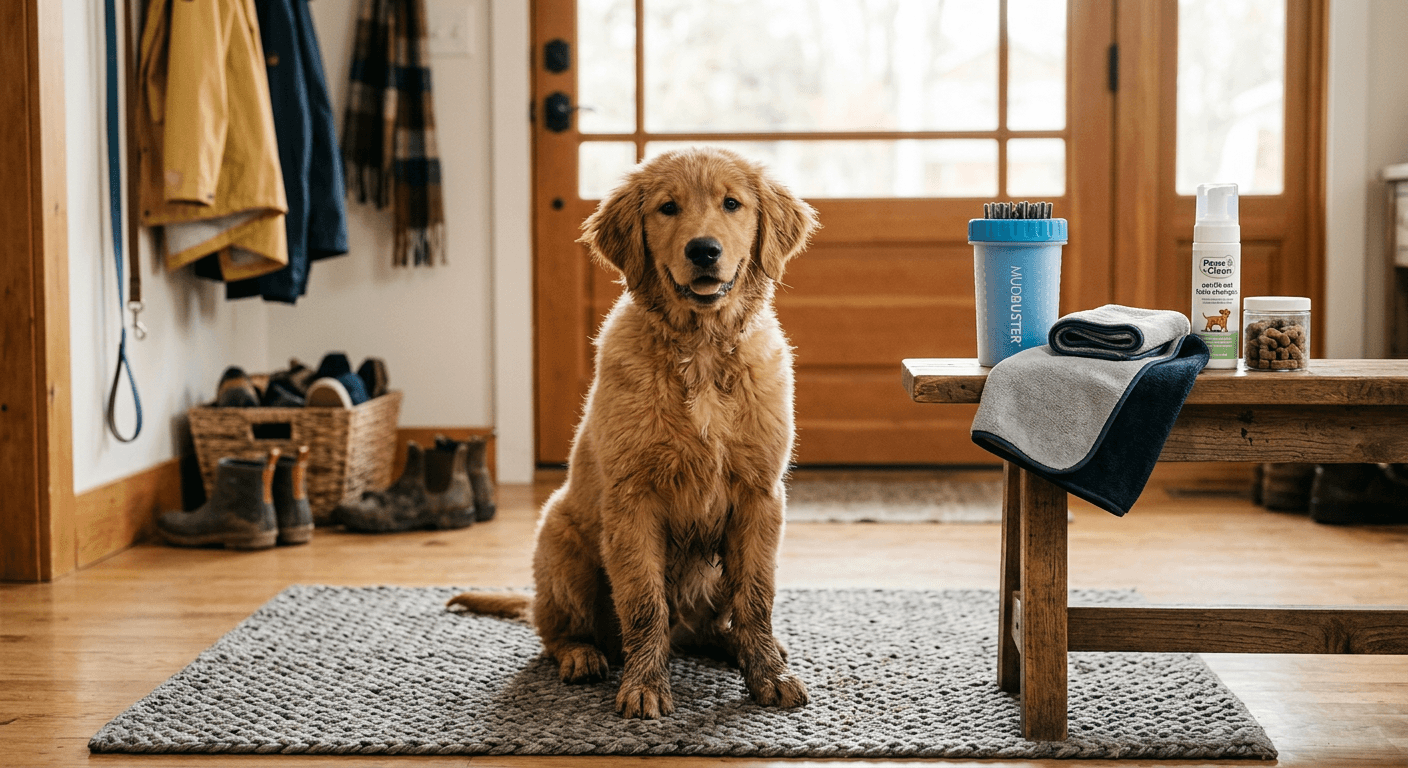
Mud Season Paw Cleaning Routine for Busy Entryways (Apartment to Multi-Pet Homes)
guide
Hot Pavement Paw Protection Checklist for Summer Walks (Real-World Guide)
Frequently asked questions
How do I know if road salt is hurting my dog’s paws or if it’s just dry skin?
Salt irritation usually shows up fast: paw lifting on walks, sudden licking right after coming inside, and redness between toes. Dryness is more gradual: rough, dull pads and small edge cracks that worsen over days. Many dogs have both in winter, so the safest approach is to clean after salty walks and use a thin balm at night for barrier repair.
Can I use paw balm every day all winter?
Yes, but daily use works best as thin, targeted layers rather than heavy coating. Over-applying can make pads too soft or trigger constant licking. If your dog’s pads look normal, you can switch to 3–4 nights per week and increase frequency during cold snaps, longer walks, or when you see roughness at the pad edges.
What’s the fastest effective routine when I’m rushing?
Do three things: (1) stop at the door so salt doesn’t spread, (2) use a no-rinse foaming cleaner on each paw with a quick toe-web pass, and (3) dry between toes. Skip balm until bedtime if time is tight or your dog licks immediately; cleaning and drying prevent the most common winter flare-ups.
