
guide • Paw Care
Cracked Dog Paw Pads Treatment: Causes, Fixes & Prevention
Learn what causes cracked paw pads, how to treat them safely at home, and when to see a vet to prevent infection and pain.
By PetCareLab Editorial • March 5, 2026 • 13 min read
Table of contents
- What Cracked Paw Pads Look Like (And Why They Matter)
- Why Dog Paw Pads Crack: The Most Common Causes
- Dry air + indoor heating (winter) and hot pavement (summer)
- Rough terrain and mileage overload
- Allergies and chronic licking
- Chemical irritants: de-icers, lawn products, cleaners
- Nutritional and medical contributors
- Natural texture differences (some dogs are “rough-padded”)
- When Cracked Pads Are an Emergency: Red Flags You Shouldn’t Ignore
- Step-by-Step: Cracked Dog Paw Pads Treatment at Home (Mild to Moderate Cases)
- Step 1: Do a calm paw exam (2–3 minutes per paw)
- Step 2: Clean gently (no harsh antiseptic baths)
- Step 3: Protect the crack (reduce friction first)
- Step 4: Rehydrate with a paw balm (the right way)
- Step 5: Stop the lick cycle (this is half the battle)
- Step 6: Reassess daily and escalate if not improving
- Product Recommendations (And What to Look For)
- Paw balms: what to choose
- Boots vs balm: which is better?
- Wipes and rinses for allergy-prone dogs
- Common Mistakes That Keep Pads From Healing
- Over-walking too soon
- Using harsh antiseptics or soaking too long
- Letting balm become a substitute for protection
- Ignoring nail length and gait
- Skipping the “lick prevention” piece
- Prevention: Build Tough, Supple Pads (Without Making Them Brittle)
- Create a simple weekly paw-care routine
- Condition pads gradually for active dogs
- Protect paws from seasonal hazards
- Support skin health from the inside
- Breed-specific considerations (who needs extra attention?)
- A Practical “If-Then” Guide for Cracked Dog Paw Pads Treatment
- If the pad is dry and rough but not split
- If there are shallow cracks (no bleeding, mild licking)
- If there’s a deeper crack or a small bleed
- If there’s swelling, pus, strong odor, or persistent limping
- Expert Tips for Faster Healing (The Stuff That Actually Helps)
- FAQ: Quick Answers to Common Paw Pad Questions
- Should I use Vaseline or coconut oil?
- How long does it take cracked pads to heal?
- Can I walk my dog with cracked pads?
- Do boots cause problems?
- What if only one paw pad keeps cracking?
- Bottom Line: A Simple Plan That Works
What Cracked Paw Pads Look Like (And Why They Matter)
Cracked paw pads aren’t just a cosmetic issue. Your dog’s paw pads are thick, shock-absorbing tissue designed to protect nerves, bones, and joints during every step. When they dry out, split, or peel, walking can become painful—and cracks can turn into portals for infection.
Common signs you’re dealing with cracked paw pads (not just a little dryness):
- •Visible fissures (thin lines or deeper splits) across the pad surface
- •Flaking or peeling “sheet-like” layers of pad skin
- •Rough, sandpaper texture that catches on fabric
- •Licking/chewing paws, especially after walks
- •Limping or reluctance to walk on hard surfaces
- •Redness, swelling, or discharge (suggests inflammation or infection)
Real-world scenario: You take your Lab on a long weekend hike. On day two, he starts slowing down and licking his feet at camp. Back home you notice thin, pale cracks on the big metacarpal pad (the “main” pad). That’s classic over-drying + abrasion—very treatable if you intervene early.
Why Dog Paw Pads Crack: The Most Common Causes
Cracking is usually a combo of environment + friction + underlying skin health. Here are the big culprits, with breed examples and what it looks like in real life.
Dry air + indoor heating (winter) and hot pavement (summer)
- •Winter: Heated indoor air strips moisture from skin. Walks on ice melt salts and frozen ground add chemical irritation + micro-abrasions.
- •Summer: Hot asphalt literally cooks moisture out of pads and can cause thermal injury that later peels and cracks.
Breed example: Greyhounds and Whippets often have thinner skin and less “callus” on pads, so they can crack faster on extreme surfaces.
Rough terrain and mileage overload
Long runs, rocky hikes, sand, and abrasive trails create repeated friction. Even a healthy pad can crack if the workload jumps too quickly.
Real-world scenario: Your Australian Shepherd goes from short neighborhood walks to a 6-mile trail run. The next day: peeling edges and tender cracks—an overuse injury, not “weak paws.”
Allergies and chronic licking
Environmental allergies (pollens, grasses) and food sensitivities can inflame the skin between toes and the pads. Dogs lick to soothe itch, but licking worsens dryness and can create cracks.
Breed example: French Bulldogs, Boxers, and Bulldogs are prone to allergic skin disease, including paws.
Chemical irritants: de-icers, lawn products, cleaners
Ice melts, fertilizers, herbicides, driveway cleaners, and even some household disinfectants can irritate paw pads and lead to chemical dermatitis and cracking.
Nutritional and medical contributors
Cracking can also be a symptom of deeper issues:
- •Low-quality diet lacking essential fatty acids
- •Hormonal disease (e.g., hypothyroidism) causing dry skin
- •Autoimmune/keratinization disorders (rare)
- •Zinc-responsive dermatosis (seen in some Nordic breeds like Huskies and Malamutes)
If cracks are recurring despite good care, it’s worth discussing bloodwork and a dermatology workup with your vet.
Natural texture differences (some dogs are “rough-padded”)
Some dogs naturally have more callused pads, especially working breeds (e.g., German Shepherds). Callus isn’t automatically bad—but it can become brittle and crack without conditioning.
When Cracked Pads Are an Emergency: Red Flags You Shouldn’t Ignore
Most mild cracking can be handled at home. But certain signs mean you should call your vet the same day (or go urgent):
- •Deep split that bleeds or you can see raw tissue
- •Limping that persists after rest
- •Swelling, warmth, pus, or a bad odor (infection)
- •A flap of pad skin that’s partly detached
- •Fever, lethargy, or loss of appetite
- •Cracks on multiple paws plus hair loss/skin lesions elsewhere (systemic issue)
- •Foreign body suspicion (foxtail, thorn, glass)
If your dog is licking nonstop and you can’t stop it, treat that as urgent too—licking can turn a small crack into a crater overnight.
Step-by-Step: Cracked Dog Paw Pads Treatment at Home (Mild to Moderate Cases)
The goal of cracked dog paw pads treatment is simple: clean, protect, rehydrate, and prevent further trauma. Here’s a vet-tech-style protocol you can follow.
[IMAGE_PLACEHOLDER_1]
Step 1: Do a calm paw exam (2–3 minutes per paw)
Pick a well-lit spot. If your dog is wiggly, enlist a helper with treats.
Check:
- •Each pad (main pad + toe pads + carpal pad “stopper”)
- •Between toes for redness, debris, or odor
- •Nail beds (overgrown nails can change gait and stress pads)
- •Any focal point that’s especially painful (foreign body risk)
Tip: Use your phone flashlight and take a photo. It helps you track healing day to day.
Step 2: Clean gently (no harsh antiseptic baths)
For most cracks:
- Rinse with lukewarm water to remove grit.
- Wash with a mild, fragrance-free pet shampoo or a saline rinse.
- Pat dry thoroughly—especially between toes.
Avoid:
- •Hydrogen peroxide (delays healing)
- •Alcohol-based products (burns and dries)
- •Strong iodine solutions without dilution (can irritate)
If your vet has recommended it, a diluted chlorhexidine rinse can help for mild infection risk—but don’t “sterilize” aggressively. Pads heal best when the skin barrier can rebuild.
Step 3: Protect the crack (reduce friction first)
If your dog keeps walking on a cracked pad, no balm can outwork the mechanical stress.
Options:
- •Rest + shorter walks for 3–7 days (best for most cases)
- •Dog boots for outdoor trips (great for hot pavement, ice melt, rough trails)
- •A nonstick pad + light wrap for a deeper crack (only if you can wrap safely)
Wrapping safety basics (important):
- Place a nonstick gauze pad over the cracked area.
- Wrap with rolled gauze—snug, not tight.
- Add self-adhesive wrap (VetWrap-style) as the outer layer.
- Check toes for swelling and nail color after 10 minutes.
Common mistake: Wrapping too tight. If toes swell or feel cold, remove it immediately. When in doubt, skip wrapping and use boots + rest.
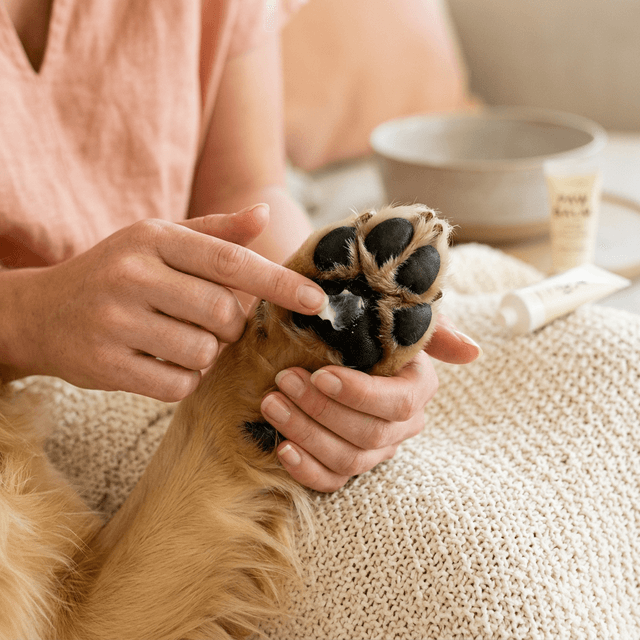
Step 4: Rehydrate with a paw balm (the right way)
You want a product that adds moisture and reduces water loss without being toxic if licked. Apply after cleaning and drying.
How to apply:
- Warm a pea-sized amount between your fingers.
- Massage into the pad surface for 20–30 seconds.
- Prevent licking for 5–10 minutes (treats, lick mat, or an e-collar if needed).
Frequency:
- •Mild cracking: 1–2x/day
- •Moderate cracking: 2–3x/day for 3–5 days, then taper
Pro-tip: Apply balm right before your dog settles for the night. You get longer “contact time,” which is what actually makes balms effective.
Step 5: Stop the lick cycle (this is half the battle)
Even the best cracked dog paw pads treatment fails if your dog licks it off and re-irritates the skin.
Tools that work:
- •E-collar (fastest, most reliable for healing)
- •Soft recovery cone for calmer dogs
- •Boots indoors for short periods (only if supervised; moisture can build up)
- •Distraction: frozen lick mat, chew, training games
Common mistake: Using bitter sprays on cracked pads. Many sting and can increase licking.
Step 6: Reassess daily and escalate if not improving
You should see:
- •Less licking within 24–48 hours
- •Less tenderness and fewer “fresh” splits by day 3–5
- •Noticeable smoothing/healing by 1–2 weeks (depending on severity)
If the crack looks deeper, redder, or starts oozing, you likely need vet-grade meds (antibiotics/anti-inflammatories) and pain control.
Product Recommendations (And What to Look For)
Not all paw products are equal. Some are basically scented wax (nice feel, minimal healing), while others are formulated for barrier repair.
[IMAGE_PLACEHOLDER_2]
Paw balms: what to choose
Look for:
- •Pet-safe, lick-safe ingredients
- •A combination of humectants (pull moisture in) and occlusives (seal it)
- •Minimal fragrance and essential oils (many are irritating)
Avoid:
- •Heavy essential oil blends (tea tree is a hard no)
- •Strong menthol/camphor “cooling” products
- •Human foot creams with ingredients unsafe for pets if ingested
Practical picks (types, not sponsored):
- •Everyday conditioning balm: great for mild dryness and prevention
- •Repair-focused balm: thicker, designed for cracks and rough pads
- •Wax-based protectant: helpful as a “shoe-like” barrier for snow/salt/hot sidewalks, but pair with actual moisturizing care
Boots vs balm: which is better?
They do different jobs, and many dogs need both.
Choose boots when:
- •Pavement is hot/cold
- •Trails are rocky
- •Your dog’s cracks reopen every walk
- •You need protection from salt and chemicals
Choose balm when:
- •Pads are dry, rough, or mildly cracked
- •You’re rebuilding skin barrier between outings
- •You want conditioning as part of routine grooming
Comparison in plain terms:
- •Boots reduce mechanical damage immediately.
- •Balm improves skin quality over days to weeks.
Wipes and rinses for allergy-prone dogs
If allergies are the root cause, adding a quick post-walk routine helps a lot:
- •Fragrance-free paw wipes for pollen/grass residue
- •Rinse-and-dry method for sensitive dogs (often better than wipes)
- •Medicated wipes/rinses (vet-recommended) if yeast/bacteria is recurring
Breed example: West Highland White Terriers and Retrievers often benefit from consistent post-walk paw cleaning during high-pollen seasons.
Common Mistakes That Keep Pads From Healing
These are the patterns I see most often when owners feel like “nothing works.”
Over-walking too soon
A crack is like a split in a callus—if you keep stressing it, it keeps splitting. Even a few days of reduced mileage can be the difference between quick healing and a 3-week saga.
Using harsh antiseptics or soaking too long
Over-cleaning strips oils and delays barrier repair. Also, long soaks can waterlog the pad and make it more prone to tearing.
Letting balm become a substitute for protection
Balm won’t stop injury from:
- •Hot asphalt
- •Salt crystals
- •Sharp gravel
- •Repetitive trail mileage
Ignoring nail length and gait
Overgrown nails shift weight backward onto pads and can worsen cracking. If you hear nails clicking on the floor regularly, it’s time for a trim.
Skipping the “lick prevention” piece
If your dog licks, the pad stays wet, inflamed, and mechanically damaged. Consider licking a symptom that requires management, not a habit you can “train away” in a day.
Prevention: Build Tough, Supple Pads (Without Making Them Brittle)
Prevention is about conditioning—think “athlete’s skin,” not “callus armor.”
[IMAGE_PLACEHOLDER_3]
Create a simple weekly paw-care routine
Try this low-effort plan:
- •2–3x/week: Inspect paws (30 seconds each)
- •After messy walks: Rinse + dry between toes
- •1–3x/week: Apply balm before bedtime
- •Monthly: Check nail length and paw hair (especially between pads)
For fluffy-footed breeds (e.g., Poodles, Doodles, Shih Tzus), trimming the hair between pads reduces matting and trapped moisture that can lead to irritation.
Condition pads gradually for active dogs
If you’re training for hikes or running:
- Start with short walks on mixed surfaces.
- Increase distance by 10–20% per week.
- Add rough terrain gradually.
- Use boots during the conditioning phase if your dog’s pads are tender.
Real-world scenario: A Border Collie that goes from backyard play to weekend agility competitions often develops pad wear fast. Conditioning + a protective wax on competition days reduces splits.
Protect paws from seasonal hazards
Summer:
- •Avoid midday asphalt; walk early/late.
- •Do the “5-second hand test” on pavement.
- •Use boots for unavoidable hot surfaces.
Winter:
- •Rinse off salt after walks.
- •Use boots or a wax protectant barrier.
- •Keep pads dry; moisture + cold = cracking.
Support skin health from the inside
Skin barrier health depends on nutrition and hydration.
- •Feed a complete, reputable diet; if your dog has chronic skin issues, discuss omega-3s (EPA/DHA) with your vet.
- •Address underlying allergies (diet trials, medications, immunotherapy if needed).
- •Keep water available and consider indoor humidification during very dry months.
Breed-specific considerations (who needs extra attention?)
- •Brachycephalic breeds (Bulldogs, Frenchies, Pugs): more allergy-prone; watch for paw licking and yeast.
- •Sled/Nordic breeds (Huskies, Malamutes): can have zinc-related or keratinization issues; recurring cracks merit a vet check.
- •Sighthounds (Greyhounds/Whippets): thinner skin; benefit from boots on rough ground.
- •Working breeds (GSDs, Malinois): high mileage + drive; cracks often come from overuse—rest is part of prevention.
A Practical “If-Then” Guide for Cracked Dog Paw Pads Treatment
Use this quick decision map to match treatment to what you’re seeing.
If the pad is dry and rough but not split
- •Clean, dry, apply balm 1x/day
- •Add protection for harsh surfaces
- •Recheck weekly
If there are shallow cracks (no bleeding, mild licking)
- •Clean, dry, balm 2x/day
- •Reduce walks for 3–5 days
- •Boots outside if needed
- •Prevent licking (distraction or e-collar)
If there’s a deeper crack or a small bleed
- •Clean gently, nonstick pad + light wrap (or boots)
- •Strict lick prevention
- •Rest and monitor closely
- •Vet visit if pain is significant or healing stalls in 48–72 hours
If there’s swelling, pus, strong odor, or persistent limping
- •Skip home experiments and book a vet visit
- •Your dog may need prescription treatment and pain control
Expert Tips for Faster Healing (The Stuff That Actually Helps)
Pro-tip: Pads heal faster when you combine “barrier repair” (balm) with “load reduction” (rest/boots). If you only do one, choose load reduction.
Pro-tip: The best time to apply balm is after a rinse and full dry, right before your dog naps. More contact time beats more product.
Pro-tip: If your dog has recurring paw issues, photograph paws monthly. Patterns (seasonal allergies, certain routes, specific surfaces) become obvious when you can compare.
FAQ: Quick Answers to Common Paw Pad Questions
Should I use Vaseline or coconut oil?
In a pinch, a simple occlusive can reduce water loss, but it won’t address irritation or infection, and many dogs lick oily products immediately. A pet-formulated paw balm is usually better for cracked dog paw pads treatment because it’s designed to be lick-safer and more functional.
How long does it take cracked pads to heal?
Mild cracks can improve in 3–7 days with rest and balm. Moderate cracks often take 1–2 weeks. Deeper fissures, infections, or ongoing licking can extend healing to 3+ weeks.
Can I walk my dog with cracked pads?
If your dog is licking, limping, or the crack is opening after walks, reduce activity and add protection. Short potty walks with boots are often okay; long hikes are not.
Do boots cause problems?
Boots can trap moisture and cause rubbing if they don’t fit well. Use them for walks, then remove at home and dry paws. Check for rubbing around dewclaws and toe webbing.
What if only one paw pad keeps cracking?
Think: localized trauma (your dog pivots on that paw), a foreign body, uneven nails, or a gait issue. If it’s the same spot repeatedly, it’s worth a vet exam.
Bottom Line: A Simple Plan That Works
Most cases of cracked paw pads improve quickly when you:
- •Identify the trigger (hot pavement, salt, rough terrain, allergies)
- •Clean gently and keep paws dry
- •Use a quality balm consistently
- •Protect pads with rest and/or boots
- •Prevent licking so the skin barrier can rebuild
If you want, tell me your dog’s breed, typical walking surfaces, and what the cracks look like (shallow vs deep, any redness/odor), and I can help you choose the most effective cracked dog paw pads treatment routine for your situation.
Paw Care Cluster
More in this topic
guide
Winter Dog Paw Care: Stop Ice, Salt, and Cracked Pads
guide
Dog Paw Balm Guide: When and How to Use It Safely
comparison
Best Paw Cleaners for Daily Use: Which Type Works for Real Routines?
guide
Mud Season Paw Cleaning Routine for Busy Entryways (Apartment to Multi-Pet Homes)
guide
Winter Paw Care for Dogs: Salt, Dry Cracks, and Daily Protection
guide
Hot Pavement Paw Protection Checklist for Summer Walks (Real-World Guide)
Frequently asked questions
What causes cracked paw pads in dogs?
Cracked paw pads are often caused by dry air, hot pavement, ice-melting salts, rough terrain, or frequent licking that strips natural oils. Allergies, parasites, or underlying skin conditions can also contribute and may need veterinary evaluation.
How can I treat cracked dog paw pads at home safely?
Gently clean the paws, pat them dry, and apply a dog-safe paw balm to moisturize and protect the pads. Limit walks on harsh surfaces and consider booties to prevent further cracking while the pads heal.
When should I take my dog to the vet for cracked paw pads?
See a vet if cracks are deep, bleeding, swollen, or oozing, or if your dog is limping or constantly licking the paws. Veterinary care is also important if there are signs of infection or if the problem keeps returning despite at-home care.
