
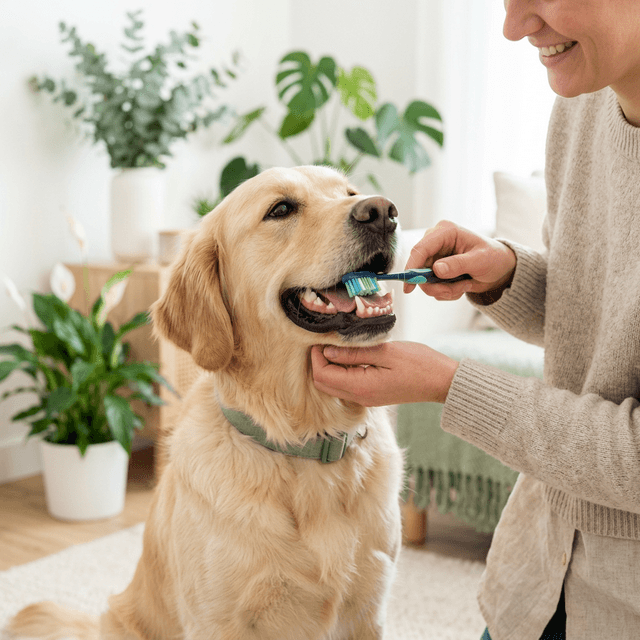
guide • Oral Care
Oral Care Routine for Small Breed Dogs With Plaque Risk (Behavior-First Guide)
A step-by-step, low-stress small breed dog dental care routine for plaque-prone mouths—built around comfort, consent, and practical tools that real dogs tolerate.
By Lucy Anderson • February 20, 2026 • 7 min read
Table of contents
- Pet behavior signals that shape the routine
- Green, yellow, red signals
- Behavior can signal pain—not “stubbornness”
- Small-breed scenarios that change your approach
- Low-stress setup before any tool is used
- Pick the right location for small dogs
- Build a “start button” so your dog has control
- Reinforcers: choose rewards that don’t sabotage teeth
- Handling protocol for better compliance
- The support hold (small-dog friendly)
- Consent-based lip lift
- When a towel wrap helps (and when it backfires)
- Tactical workflow by session phase
- Phase 1: Approach (5–15 seconds)
- Phase 2: Contact (10–30 seconds)
- Phase 3: Clean (30–90 seconds)
- Phase 4: Finish (10–20 seconds)
- Product choices by temperament and tolerance
- If your dog hates brushing but tolerates face touch
- If your dog tolerates brushing but you need “more power” for plaque risk
- If your dog is chew-motivated (and you want passive help)
- If your dog is mouth-sensitive or older
- Error recovery after a bad session
- The 3-step reset (same day)
- The 48-hour rebuild (if your dog starts avoiding you)
- When to involve the vet
- Progress tracking template
- What “good progress” looks like
- Practical long-term maintenance plan
- The baseline schedule (most small dogs with plaque risk)
- Rotate tools strategically
- Visual checks that matter (30 seconds)
- Common mistakes in small breed dog dental care (and better alternatives)
- A realistic “starting today” plan
Small dogs have big dental stakes. Toy and small breeds often pack the same number of teeth into a smaller jaw, with tighter spacing that traps food, holds plaque, and accelerates tartar. Add common small-breed factors—crowding, retained baby teeth, mouth sensitivity, and “I hate my face being touched”—and it’s easy to fall into an all-or-nothing routine.
This guide is built around one goal: make oral care doable often enough to matter. The best small breed dog dental care plan is the one your dog will allow consistently.
Below, you’ll build a behavior-informed routine that starts with tolerance, adds effective tools only when your dog is ready, and gives you a clear workflow for those days when everything goes sideways.
Pet behavior signals that shape the routine
A small dog’s mouth is a high-value “nope zone.” Reading behavior accurately helps you choose the right starting point and avoid turning dental care into a daily argument.
Green, yellow, red signals
Use these cues to decide whether to proceed, scale down, or stop.
Green (proceed as planned):
- •Soft body, loose tail, normal breathing
- •Sniffs the tool, stays in place, takes treats easily
- •Allows lip lift for 1–2 seconds without pulling away
Yellow (scale down):
- •Lip licking when you reach toward the face
- •Turning head away, closing mouth tightly, pawing at your hand
- •Whale eye (white of eye showing), mild trembling
Red (stop and reset):
- •Growling, snapping, freezing stiff
- •Sudden yelp, rapid panting, trying to flee
- •Won’t take treats (often stress, pain, or nausea)
Behavior can signal pain—not “stubbornness”
If your dog is suddenly sensitive about the mouth, consider a dental problem, not a training failure. Watch for:
- •Bad breath that returns quickly after cleaning
- •Dropping food, chewing on one side, or refusing kibble
- •Gum bleeding, visible tartar “ledge,” broken or discolored teeth
If you see these, schedule a vet dental exam. Home care helps plaque control, but it can’t fix painful disease.
Small-breed scenarios that change your approach
- •The “wiggly chihuahua”: micro-sessions (10–20 seconds) and high-rate reinforcement beat long holds.
- •The “rescued yorkie who hates hands”: start with non-hand tools (wipes on finger cot or wrapped gauze) before brushing.
- •The “sweet but mouthy maltese”: train a chin-rest behavior so the mouth is predictable and safe to approach.
Low-stress setup before any tool is used
Your setup determines whether dental time feels like a predictable routine or an ambush.
Pick the right location for small dogs
Small dogs often feel safest when they’re supported.
- •Best options: a non-slip bath mat on the floor, or a sturdy table with a yoga mat (only if your dog is comfortable being handled elevated).
- •Avoid: couches (dogs can launch off), slippery tile, or tight corners where your dog feels trapped.
Build a “start button” so your dog has control
A start button is a simple behavior that means “I’m ready.” Examples:
- •Nose touch to your fist
- •Chin resting in your palm
- •Standing still with paws on a mat
If the start button stops, you pause. This one change dramatically improves compliance because the dog learns they can opt out without escalating.
Reinforcers: choose rewards that don’t sabotage teeth
You don’t need perfect treats—just strategic ones.
- •Use pea-sized soft treats during training, then finish with a dental chew later.
- •If your dog gains weight easily, reserve a portion of daily kibble as “face-touch pay.”
Tip: For tiny dogs, lickable rewards (a smear of dog-safe paste on a spoon) can keep the head oriented without needing restraint.
Handling protocol for better compliance
The goal is “secure and calm,” not “pinned.” Good handling reduces fear and increases the time you can spend on real cleaning.
The support hold (small-dog friendly)
- •Place your dog on a non-slip surface.
- •Stand or sit beside them, not over them.
- •Use your forearm gently against their side to prevent backing up.
- •Keep one hand free for a quick lip lift and short strokes.
This avoids the common mistake of grabbing the muzzle, which often triggers panic.
Consent-based lip lift
Train this separately from cleaning.
- Touch cheek for 1 second → treat.
- Slide finger to lip line → treat.
- Lift lip 1–2 mm (barely) → treat.
- Lift enough to see the gumline for 1 second → treat.
If your dog head-turns or tightens the mouth, go back one step. In small breed dog dental care, the sequence matters more than speed.
When a towel wrap helps (and when it backfires)
A light towel wrap can reduce flailing in tiny dogs, but only if introduced gradually.
- •Use it if: your dog relaxes in a wrap (many do) and you can keep the head free.
- •Avoid it if: your dog panics when restrained or has a bite history. In that case, stick to floor sessions and shorter phases.
Tactical workflow by session phase
Think in phases. You’re not trying to “do everything” every time—you’re building a repeatable loop.
Phase 1: Approach (5–15 seconds)
Goal: dog stays present and opts in.
- •Ask for the start button (nose touch/chin rest).
- •Touch cheek, then lift lip briefly.
- •Treat immediately.
If you can’t get through Phase 1 calmly, skip cleaning and do only training reps that day.
Phase 2: Contact (10–30 seconds)
Goal: introduce a cleaning sensation your dog can tolerate.
Option A: Wipe-based contact (excellent starter) Dental wipes are often tolerated earlier than a brush because they’re quiet and familiar (your finger).
- •Start with one side only: upper back teeth (where plaque builds fastest).
- •Use 3–5 gentle swipes along the gumline.
A practical choice here is the HealthyPal Pet Dental Finger Wipes for Dogs & Cats – 50 Mint Flavor Dog Dental Wipes + Mint Fresh Breath Spray, Dog Tooth Brushing Kit. Wipes are not as mechanically effective as brushing, but they’re a high-compliance bridge—especially for tiny mouths.
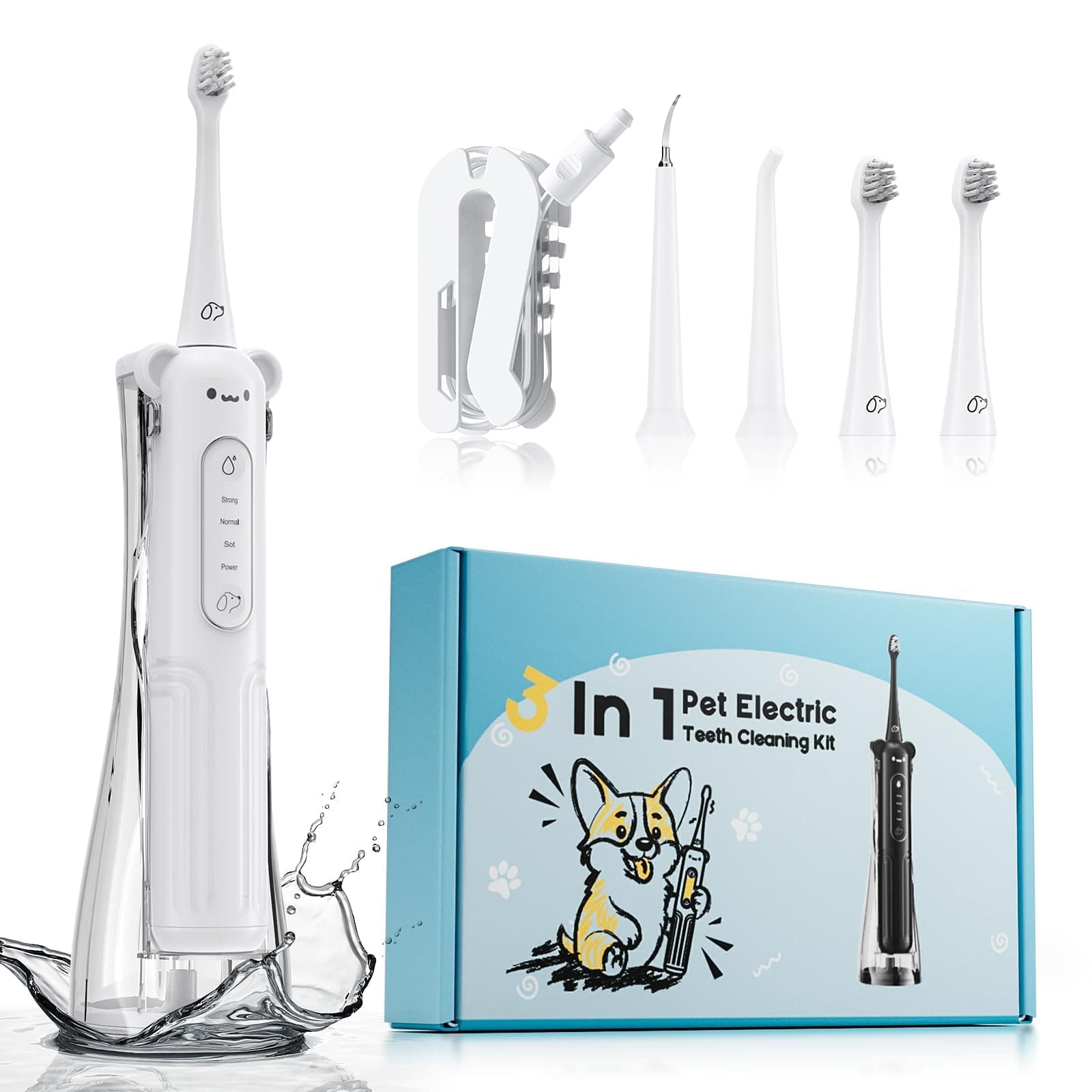
Dog Tooth Brushing Kit, 3-in-1 Dog Electric Toothbrush with Water Flosser, Dog Teeth Cleaning Tools with 3 Modes, Deep Cleaning Kit for Dogs and Cats, IPX7, 1100mAh Battery, White
Brand: UNINGOPI
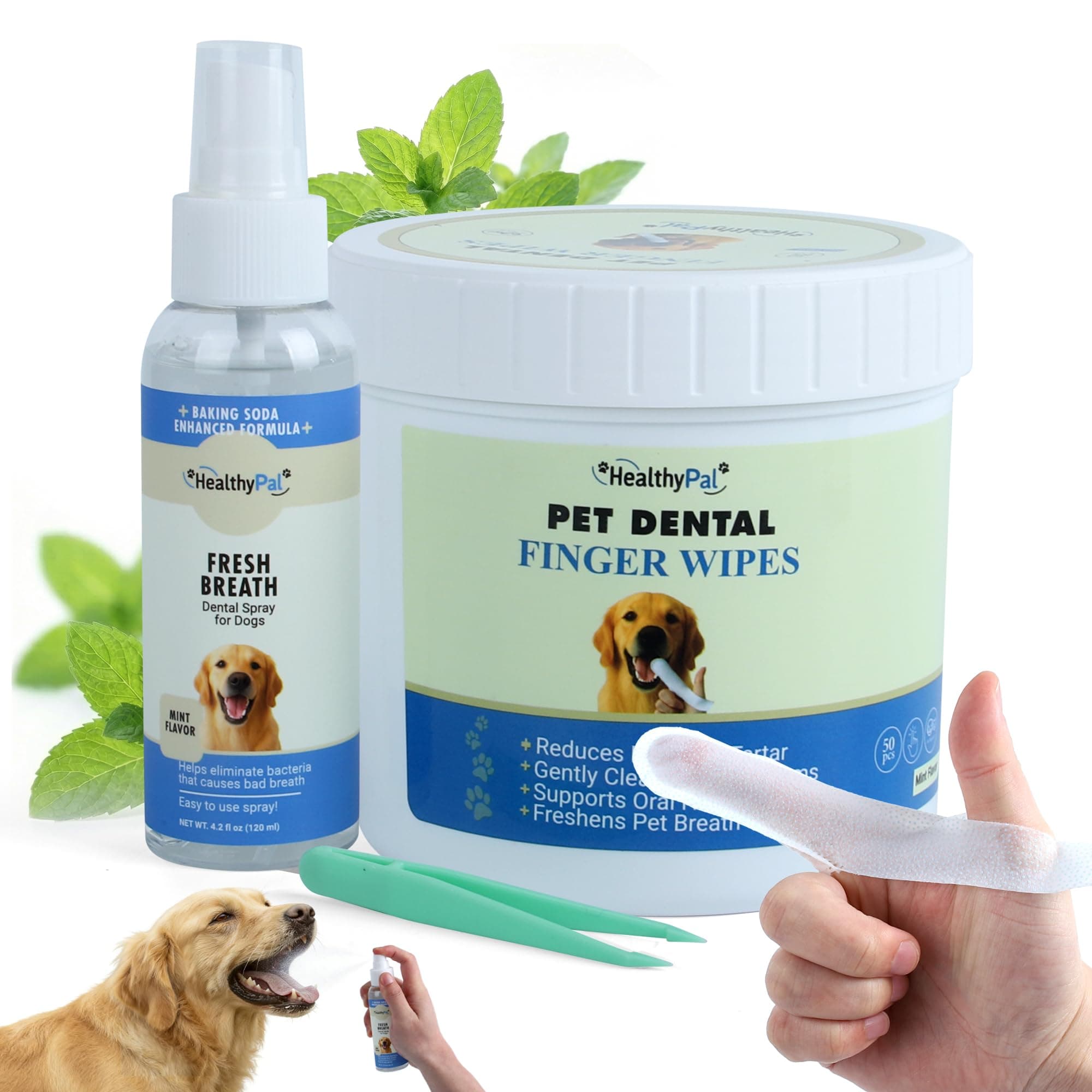
Pet Dental Finger Wipes for Dogs & Cats – 50 Mint Flavor Dog Dental Wipes + Mint Fresh Breath Spray, Dog Tooth Brushing Kit, Helps Remove Bad Breath & Plaque & Tartar Buildup
HealthyPal
Option B: Brush-based contact (gold standard when tolerated)
- •Use a soft, small-head brush or finger brush.
- •Angle bristles toward the gumline.
- •Focus on the outer surfaces of upper molars and premolars first.
Phase 3: Clean (30–90 seconds)
Goal: effective plaque disruption without triggering avoidance.
The “two zones” rule for small dogs:
- •Zone 1: upper back teeth (left)
- •Zone 2: upper back teeth (right)
If you do nothing else, do these zones. Many small dogs develop heavy tartar here because saliva ducts and cheek contact contribute to buildup.
Micro-session example (for a 6 lb dog):
- •10 sec: lip lift + 5 swipes left upper
- •Treat
- •10 sec: lip lift + 5 swipes right upper
- •Big reward + done
That’s enough to be meaningful if you repeat it consistently.
Phase 4: Finish (10–20 seconds)
End before your dog tries to escape.
- •Say a consistent end cue (“All done”).
- •Offer a drink of water.
- •Provide a calm chew later, not immediately if your dog is too excited (excitement can convert to nipping).
Product choices by temperament and tolerance
Tools should match the dog in front of you, not the ideal routine in your head.
If your dog hates brushing but tolerates face touch
Start with wipes, then graduate.
- •Best entry tool: HealthyPal Pet Dental Finger Wipes for Dogs & Cats – 50 Mint Flavor Dog Dental Wipes + Mint Fresh Breath Spray, Dog Tooth Brushing Kit
- •Tradeoff: less plaque disruption than bristles; still valuable for routine-building and gumline contact.
Decision criteria:
- •Choose wipes if you’re currently doing nothing (compliance beats perfection).
- •Switch to brushing once your dog allows 60–90 seconds of calm handling.
If your dog tolerates brushing but you need “more power” for plaque risk
Consider powered tools cautiously. Noise and vibration can be deal-breakers for small dogs.
The UNINGOPI Dog Tooth Brushing Kit, 3-in-1 Dog Electric Toothbrush with Water Flosser can be appealing for deeper cleaning, but introduce it like a sound-desensitization project:
- Let your dog see it (off) → treat.
- Turn it on across the room → treat.
- Bring it closer over sessions.
- Touch cheek with the inactive handle → treat.
- Brief tooth contact (1 second) → treat.
Tradeoffs to weigh:
- •Pros: consistent motion; may help owners who struggle with manual technique.
- •Cons: some dogs find it startling; water flossing can be messy and may stress dogs who dislike spray sensations.
If your dog is noise-sensitive, a manual brush (or wipes) will often outperform an electric brush that the dog won’t allow.
If your dog is chew-motivated (and you want passive help)
Dental chews can support plaque reduction between brush sessions, especially for owners building tolerance.
Two common options:
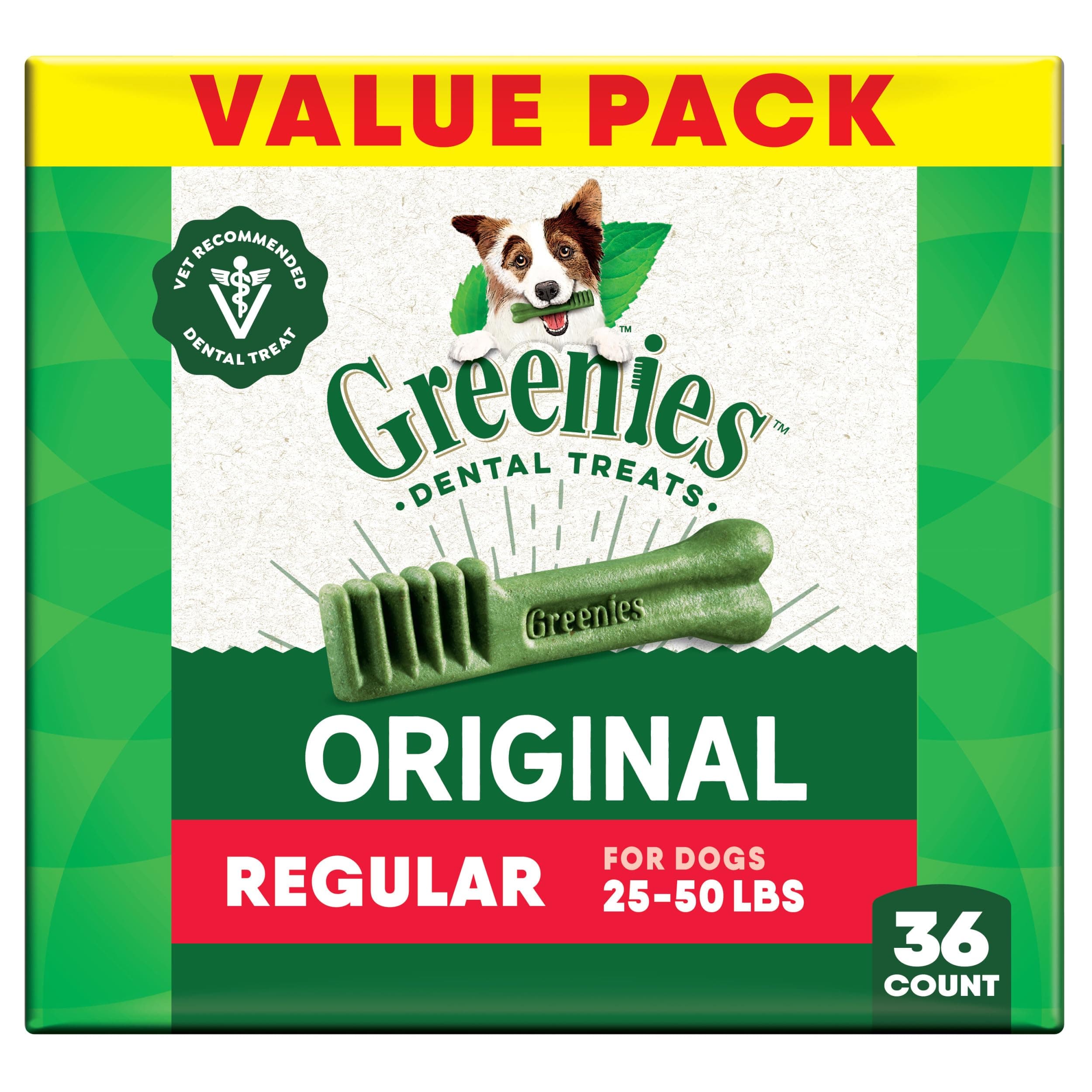
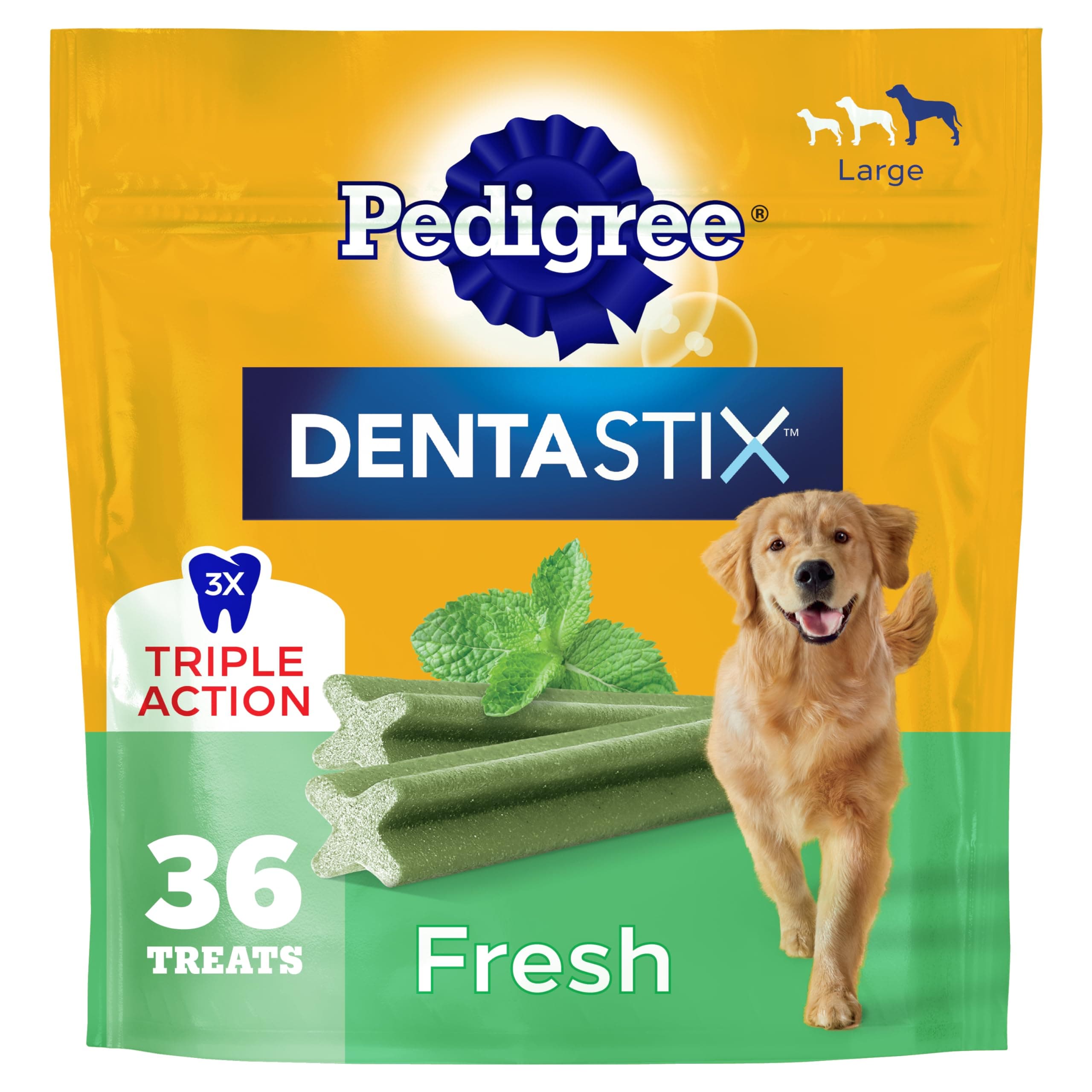
Important small-breed note: size matters. A “large breed” dental stick may be too big for small dogs, increase choking risk, or cause gulping instead of chewing. If you use a larger chew, supervise closely, consider breaking into appropriate portions (if the product allows), and prioritize a chew that forces chewing time rather than fast swallowing.
Tradeoffs:
- •Pros: easy compliance, adds routine structure, can help with light plaque.
- •Cons: calories add up; not a replacement for gumline brushing; some dogs swallow chunks.
If your dog is mouth-sensitive or older
Go gentler and shorter, but more frequent.
- •Prefer wipes or ultra-soft brushing.
- •Keep sessions under 30 seconds.
- •Avoid forcing the mouth open; work on outer surfaces.
Error recovery after a bad session
Bad sessions happen: a sudden noise, you bumped a sore spot, your dog wasn’t feeling it. What you do next decides whether tomorrow is easier or harder.
The 3-step reset (same day)
- Stop immediately at red/yellow escalation.
- Switch to a win: one nose touch, one cheek touch, treat.
- End the session with your “all done” cue.
This prevents your dog from learning that they must escalate to escape.
The 48-hour rebuild (if your dog starts avoiding you)
For the next 2 days, do training only—no cleaning attempts.
- •5 reps of cheek touch → treat
- •3 reps of lip lift for 1 second → treat
- •End
Then reintroduce contact using the easiest tool (often wipes) for 1–2 swipes total.
When to involve the vet
If you had a yelp, sudden bleeding, or a sharp behavior shift, assume pain until proven otherwise. You’ll get better long-term compliance by treating discomfort than by “pushing through.”
Progress tracking template
Tracking keeps you honest about what’s working and helps you spot patterns (time of day, location, tool choice).
Use this simple template in a notes app:
| Date | Tool used | Duration | Teeth touched | Dog signal (G/Y/R) | Notes / triggers | Next session plan |
|---|---|---|---|---|---|---|
| 3/5 | Wipe | 20 sec | Upper left molars | G | Calm on mat | Repeat + add right side |
| 3/6 | Wipe | 15 sec | Upper right molars | Y | Doorbell rang | Do training only tomorrow |
| 3/7 | Training only | 3 min | Lip lift practice | G | Used chicken | Try 2 swipes per side |
What “good progress” looks like
- •Week 1: dog stays present; accepts cheek touch and brief lip lift.
- •Week 2: dog tolerates wipes/brush on upper back teeth.
- •Week 3–4: dog accepts 30–60 seconds of brushing/wiping across both sides.
For plaque-prone small breeds, consistency beats intensity. A calm 30 seconds daily outperforms a stressful 3 minutes twice a month.
Practical long-term maintenance plan
A realistic plan prevents backsliding and helps you adapt to life (travel, busy weeks, grooming days).
The baseline schedule (most small dogs with plaque risk)
- •Daily (ideal): 30–60 seconds gumline cleaning (brush or wipe)
- •3–5x/week (good): focus on upper back teeth; add fronts when tolerated
- •2–4x/week: dental chew as a supplement (adjust for calories)
If you’re starting from zero, begin with 3 sessions per week and build up.
Rotate tools strategically
Many owners burn out trying to brush perfectly every day. Instead:
- •Mon/Wed/Fri: brushing or wipe cleaning
- •Tue/Thu: short training-only session (lip lifts + touch)
- •Sat: longer clean if dog is relaxed
- •Sun: chew day + quick visual check of gums
This rotation keeps your dog’s comfort high and your routine sustainable.
Visual checks that matter (30 seconds)
Once a week, look for:
- •Gumline redness or swelling
- •New tartar “ledge” (often yellow/brown near upper back teeth)
- •Cracked teeth (common in small dogs who chew hard items)
If tartar is building despite good home care, your dog may need a professional dental cleaning. After that, home care helps extend the clean period.
Common mistakes in small breed dog dental care (and better alternatives)
- •Mistake: forcing the mouth open.
Better: outer surfaces only + lip lift; that’s where plaque accumulates most.
- •Mistake: brushing until the dog struggles.
Better: end early, leave the dog wanting more.
- •Mistake: switching tools constantly.
Better: keep one primary tool for 2–3 weeks, track tolerance, then adjust.
- •Mistake: relying only on chews.
Better: use chews as support while you build brush/wipe tolerance.
A realistic “starting today” plan
If your dog is plaque-prone and you need traction fast:
- Days 1–3: cheek touch + lip lift practice (no cleaning).
- Days 4–7: 5 swipes on one upper back zone with a wipe.
- Week 2: both upper back zones, 5–10 swipes each.
- Week 3: transition to gentle brushing if tolerated; keep wipes as backup.
That’s behavior-first sequencing: comfort, then contact, then cleaning—without turning oral care into a daily fight.
Oral Care Cluster
More in this topic
guide
Dog Dental Care Importance: Why Brushing Matters
guide
Best Dental Chews for Dogs: Vet-Smart Buyer's Guide
guide
Cat Dental Disease Signs: 10 Clues Your Cat Needs a Vet
guide
Daily Pet Oral Care in 5 Minutes: A Practical Pet Oral Care Routine for Fresher Breath
guide
How to Brush Dog Teeth Without Stress: A Practical Home Workflow That Actually Sticks
guide
Dog Bad Breath Home Care Plan: What to Do Before It Gets Worse
Frequently asked questions
How often should I brush a small breed dog's teeth if they get plaque fast?
Daily is ideal for plaque-prone small breeds, even if it's only 30–60 seconds focused on the outer gumline of the upper back teeth. If daily isn't realistic yet, aim for 3–5 times per week and add short “training-only” sessions on off days so your dog doesn’t lose tolerance.
Are dental wipes effective for small dogs, or do I have to use a toothbrush?
Dental wipes can be an effective starting tool because they’re quiet, fast, and often better tolerated—especially for small dogs that dislike brushing. They help remove soft plaque and get your dog comfortable with gumline contact. For the strongest plaque control long-term, most dogs do best graduating to gentle brushing once they can stay calm for 60–90 seconds.
Why does my small dog fight toothbrushing even when I'm being gentle?
Common reasons include mouth pain (gingivitis, cracked tooth, loose tooth), fear of restraint, noise/vibration sensitivity, or simply being over-threshold from sessions that are too long. Scale back to lip-lift training and 10–20 second micro-sessions, and consider a vet dental exam if there’s sudden sensitivity, bad breath that returns quickly, bleeding gums, or one-sided chewing.
