
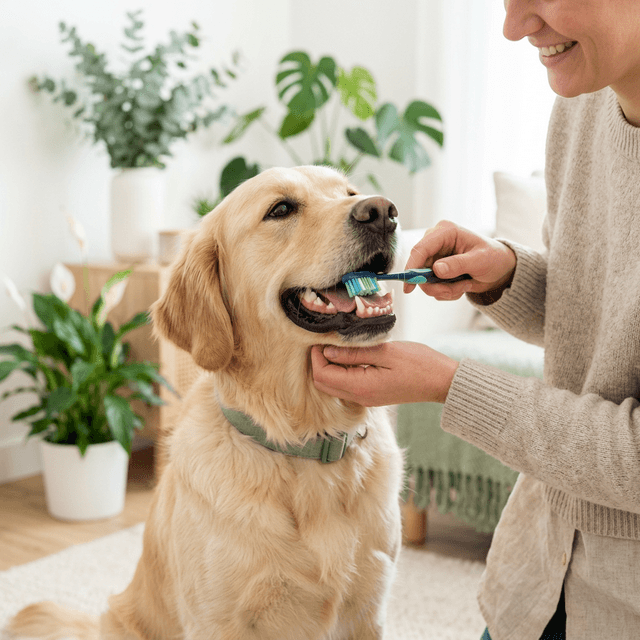
guide • Oral Care
Dog Dental Care Importance: Why Brushing Matters
Bad breath can signal dental disease that affects your dog’s whole-body health. Learn why brushing matters and how it helps prevent pain and illness.
By PetCareLab Editorial • March 5, 2026 • 13 min read
Table of contents
- The Dog Dental Care Importance: What’s Really at Stake
- How Dental Disease Develops (Plaque → Tartar → Periodontal Disease)
- Step 1: Plaque forms (hours to days)
- Step 2: Tartar hardens (days to weeks)
- Step 3: Gingivitis (weeks to months)
- Step 4: Periodontitis (months to years)
- Why Brushing Matters More Than Chews (And What It Actually Prevents)
- What brushing prevents
- Whole-body effects: mouth bacteria don’t stay in the mouth
- Breed-Specific Risk: Which Dogs Need Extra Dental Vigilance?
- Small and toy breeds (highest risk)
- Flat-faced breeds (brachycephalics)
- Large breeds and “power chewers”
- Senior dogs and dogs with medical issues
- How to Brush Your Dog’s Teeth (Step-by-Step, Vet-Tech Style)
- What you need (simple and effective)
- The 2-minute training approach (start where your dog is)
- Day 1–3: Mouth handling
- Day 4–7: Introduce toothpaste taste
- Week 2: Add brushing motion
- Week 3 and beyond: Build a full routine
- The “best angle” that actually works
- Choosing Products That Help (And Avoiding Gimmicks)
- Toothpaste: what to look for
- Toothbrushes: which type is best?
- Dental chews: helpful, but choose wisely
- Water additives and gels: good “support players”
- The gold standard label to know
- Product recommendations (practical picks, not overhyped)
- Chews, Bones, and Toys: What Helps vs. What Breaks Teeth
- The “thumbnail test” for hardness
- Safer chewing options (generally)
- Common Mistakes That Undermine Dental Care (And How to Fix Them)
- Mistake 1: Brushing too hard
- Mistake 2: Brushing only the front teeth
- Mistake 3: Expecting chews to replace brushing
- Mistake 4: Waiting for bad breath to act
- Mistake 5: Skipping professional cleanings when needed
- Mistake 6: Using unsafe toothpaste or products
- When to See the Vet: Red Flags You Shouldn’t Ignore
- What a professional dental cleaning includes (and why anesthesia matters)
- Building a Realistic Dental Routine (For Puppies, Adults, and Seniors)
- Puppies: set the foundation early
- Adult dogs: maintain and prevent relapse
- Senior dogs: go slower, be gentler
- Quick Comparison: What Works Best for Plaque Control?
- A Simple 30-Day Plan to Make Brushing Stick
- Days 1–7: Comfort and compliance
- Days 8–14: Tools and technique
- Days 15–21: Coverage expansion
- Days 22–30: Routine lock-in
- Bottom Line: Dog Dental Care Importance Is Bigger Than Breath
The Dog Dental Care Importance: What’s Really at Stake
“Dog breath” isn’t just a nuisance—it’s often the first visible sign of dental disease. And dental disease is not a cosmetic issue. It’s a whole-body health issue that can shorten your dog’s life and make everyday things (like chewing, playing, even being petted on the face) uncomfortable.
Here’s the plain truth about dog dental care importance:
- •Most dogs develop some level of periodontal disease by age 3 if teeth aren’t routinely cleaned at home and professionally as needed.
- •Dental problems often hide below the gumline—your dog may still eat normally while infection progresses.
- •The mouth is full of bacteria; when gums are inflamed, those bacteria can enter the bloodstream and stress major organs.
If you only take one thing from this article, make it this: brushing your dog’s teeth is one of the highest-impact, lowest-cost health habits you can build. It reduces pain, prevents expensive procedures, and helps your dog stay healthier long-term.
How Dental Disease Develops (Plaque → Tartar → Periodontal Disease)
Dental disease doesn’t happen overnight. It follows a predictable timeline, which is why routine care matters more than occasional “catch-up” cleanings.
Step 1: Plaque forms (hours to days)
Plaque is a sticky film of bacteria and food debris. It starts forming within hours after meals. You typically can’t see it easily, but it’s there.
Step 2: Tartar hardens (days to weeks)
If plaque isn’t removed, minerals in saliva harden it into tartar (calculus)—that yellow-brown buildup you can see, especially on the back teeth.
Important: Once tartar forms, brushing alone can’t remove it. It usually requires professional scaling.
Step 3: Gingivitis (weeks to months)
Tartar irritates gums and feeds bacteria. Gums become red, puffy, and may bleed. This stage is often reversible with improved care.
Step 4: Periodontitis (months to years)
This is the destructive stage. Infection damages the structures supporting the teeth (ligaments and bone). Teeth loosen, abscesses can form, and pain becomes significant.
Real-world scenario: A 6-year-old Miniature Schnauzer comes in “just for bad breath.” On exam, the dog has deep pockets around molars and a loose premolar—classic periodontal disease. After dental X-rays, the tooth roots show bone loss. Treatment requires extraction, antibiotics (sometimes), and a change to daily home care.
Why Brushing Matters More Than Chews (And What It Actually Prevents)
Dental chews can help, but brushing is the gold standard because it physically disrupts plaque at the gumline where disease starts.
What brushing prevents
Brushing helps reduce:
- •Plaque accumulation (daily disruption is key)
- •Gum inflammation and bleeding
- •Progression to periodontal disease
- •Painful complications like:
- •tooth root abscesses
- •fractured infected teeth hidden under tartar
- •oral-nasal fistulas (especially in small breeds)
Whole-body effects: mouth bacteria don’t stay in the mouth
When gums are inflamed, bacteria can enter the bloodstream. Over time, this bacterial load can contribute to systemic stress—particularly in dogs with existing conditions.
While research varies on direct causation in every case, veterinary professionals widely agree on this practical takeaway:
- •Less oral inflammation = less chronic bacterial burden
- •Healthier gums support overall wellness, especially in older dogs
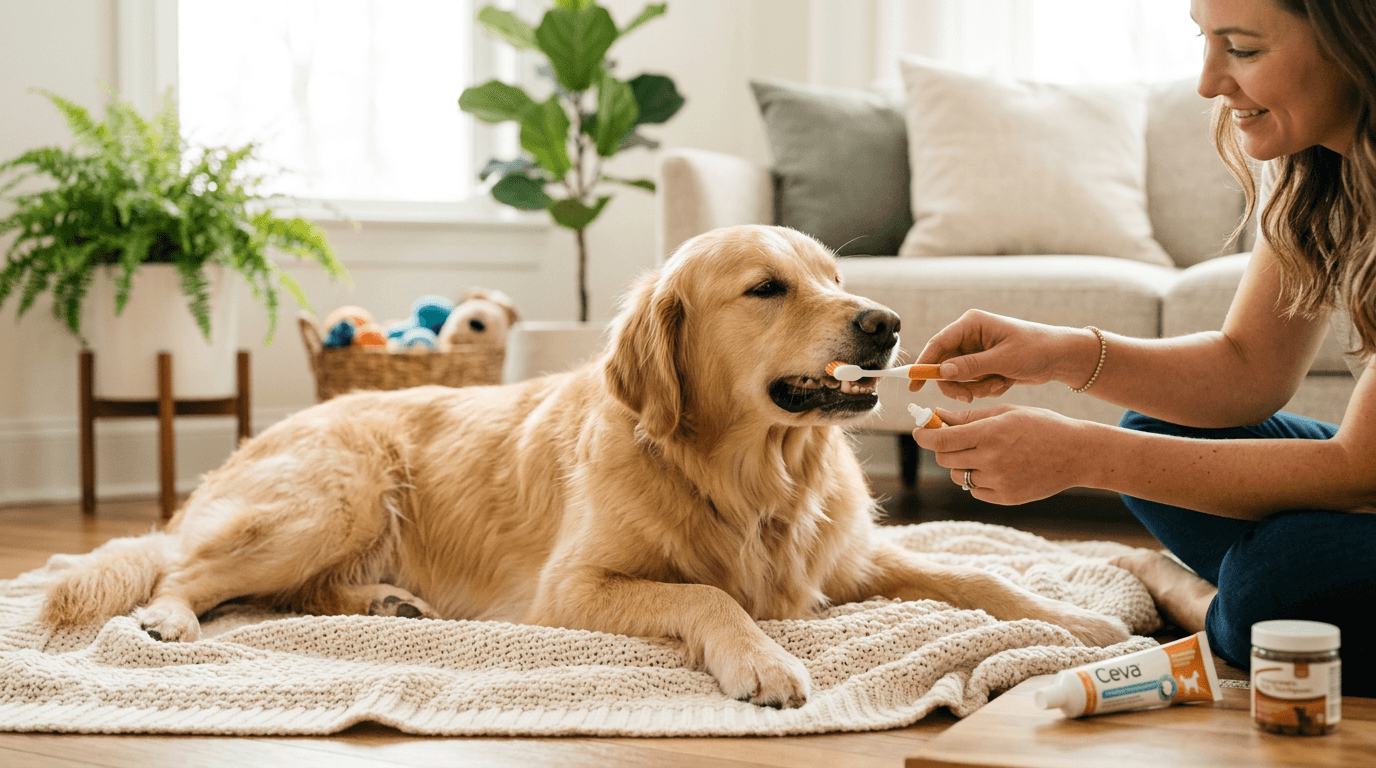
Pro-tip: If your dog’s gums bleed when you brush, don’t stop—bleeding is a sign of inflammation, and gentle daily brushing usually improves it within 1–2 weeks. If bleeding is heavy or persistent, schedule a vet exam.
[IMAGE_PLACEHOLDER_1]
Breed-Specific Risk: Which Dogs Need Extra Dental Vigilance?
Some dogs are basically “born” to collect tartar. Breed anatomy, crowding, saliva composition, and chew habits all matter.
Small and toy breeds (highest risk)
Crowded teeth in small mouths create plaque traps. Common high-risk breeds:
- •Chihuahua
- •Yorkshire Terrier
- •Toy Poodle
- •Pomeranian
- •Shih Tzu
- •Miniature Schnauzer
- •Dachshund
Real-world scenario: A Yorkie may have perfect energy and appetite, yet have severe tartar by age 2. Why? Tight spacing between teeth holds plaque. Without brushing, periodontal disease can progress fast.
Flat-faced breeds (brachycephalics)
French Bulldogs, Pugs, Boston Terriers often have crowded, rotated teeth due to shortened skull structure. That means more nooks for plaque and more gumline inflammation.
Large breeds and “power chewers”
Big dogs aren’t immune. Labradors, German Shepherds, Golden Retrievers may get less crowding but can:
- •fracture teeth from hard chews
- •get tartar on back molars if not brushed
- •develop painful slab fractures that look “fine” until infected
Senior dogs and dogs with medical issues
Older dogs often have:
- •reduced immune resilience
- •existing periodontal damage
- •chronic inflammation
For seniors, brushing is still valuable—but you may need a gentler technique and professional guidance.
How to Brush Your Dog’s Teeth (Step-by-Step, Vet-Tech Style)
If brushing has failed for you before, it’s usually not because you “did it wrong.” It’s because the process moved too fast, the toothpaste was unappealing, or the dog never learned that mouth handling is safe.
What you need (simple and effective)
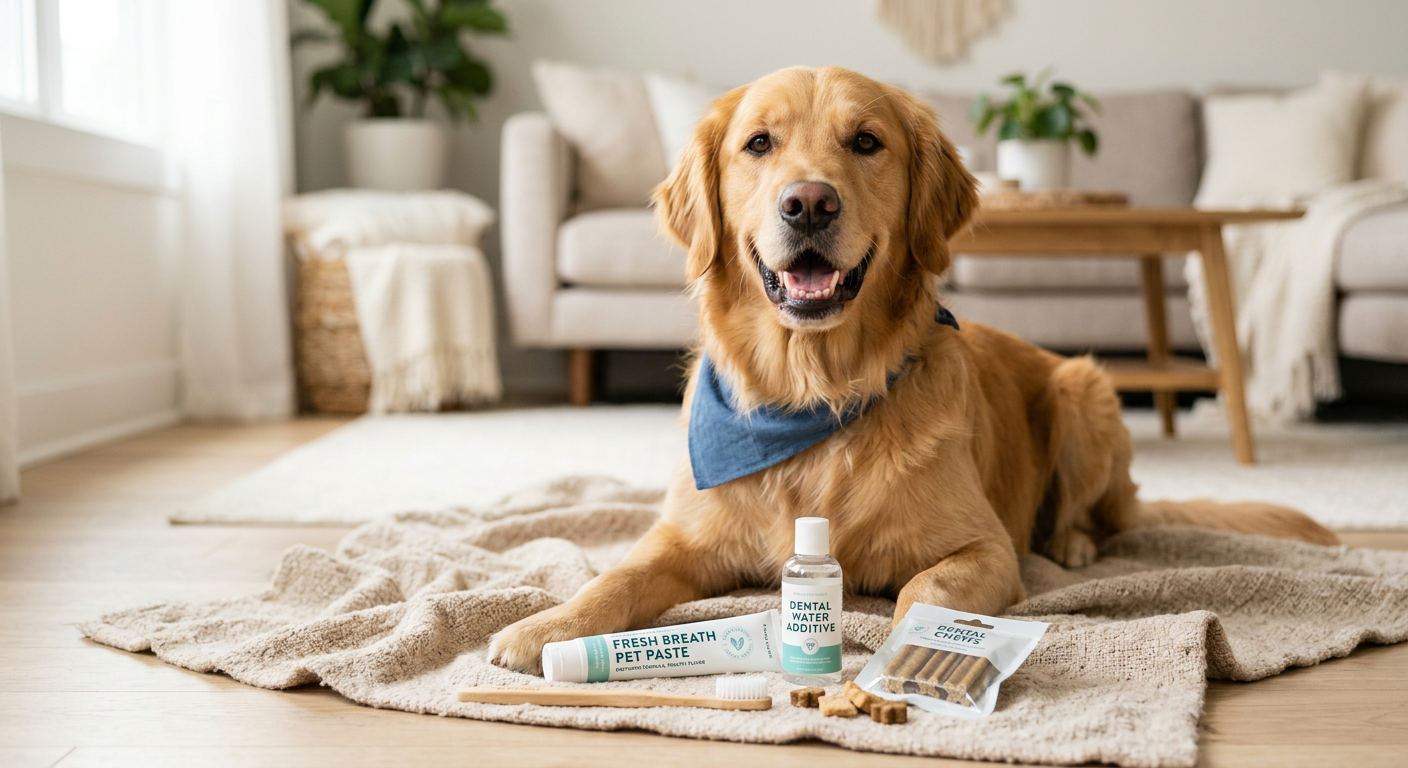
- •Dog-specific toothpaste (never human toothpaste—many contain xylitol, which is toxic)
- •A soft-bristled dog toothbrush or finger brush
- •Optional but helpful: gauze wrap for beginners
- •Treats to reward calm behavior
The 2-minute training approach (start where your dog is)
Goal: Make brushing boring and normal.
Day 1–3: Mouth handling
- Sit with your dog in a calm spot.
- Lift the lip for 1 second, then treat.
- Repeat 5–10 times.
- Gradually increase duration.
Day 4–7: Introduce toothpaste taste
- Put a pea-sized amount of dog toothpaste on your finger.
- Let your dog lick it.
- Touch the toothpaste finger to outer teeth for 1–2 seconds, then treat.
Week 2: Add brushing motion
- Start with the outer surfaces of the teeth (cheek side). That’s where tartar builds most.
- Use small circles or gentle back-and-forth strokes at the gumline.
- Focus on:
- •upper canines
- •upper premolars/molars (these collect tartar fast)
- Keep sessions short (20–30 seconds) and end on success.
Week 3 and beyond: Build a full routine
- Brush once daily if possible (best).
- If daily isn’t realistic, aim for at least 3–4 times per week (still beneficial).
- Gradually include more teeth.
The “best angle” that actually works
- •Lift the lip; don’t force the mouth open.
- •Aim bristles at a 45-degree angle to the gumline.
- •Gentle pressure—think “massage,” not “scrub.”
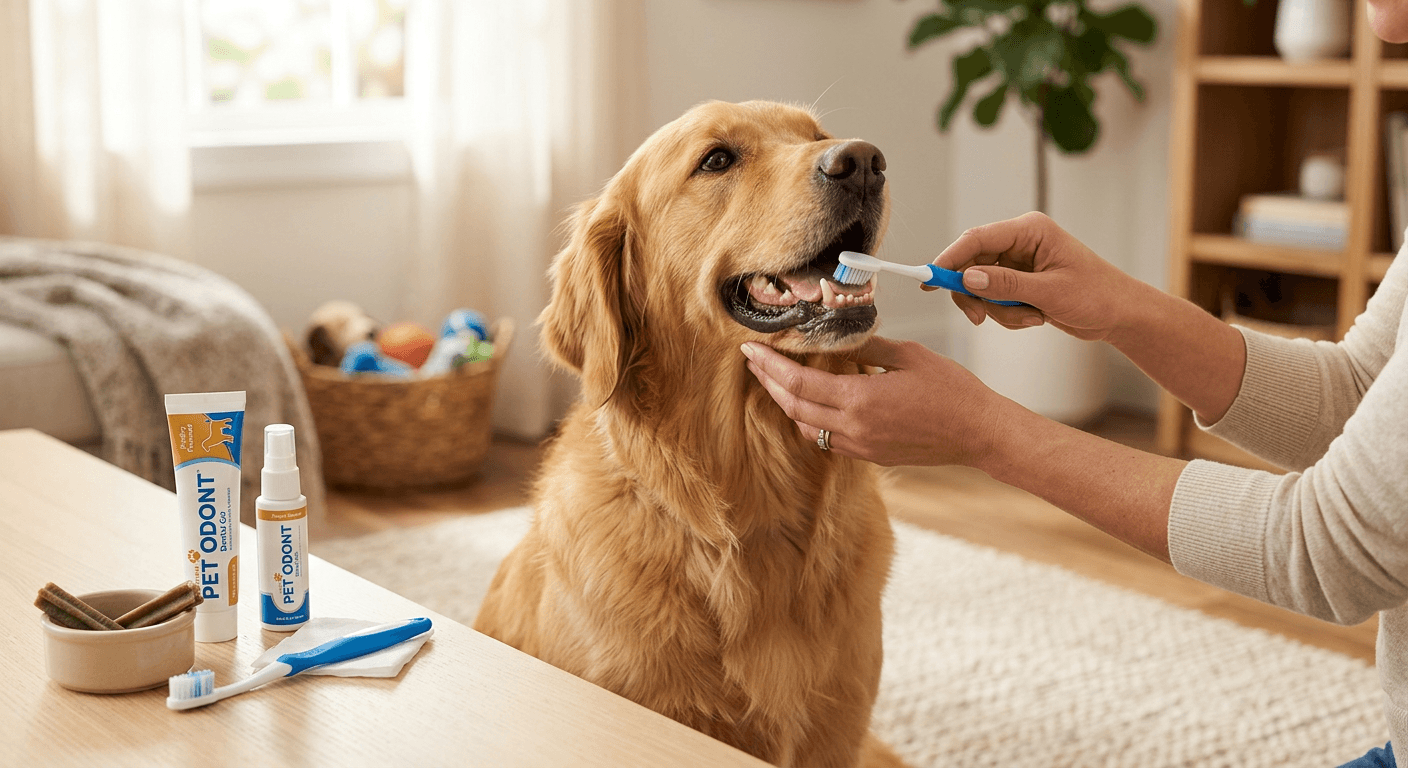
Pro-tip: Most dogs tolerate brushing better when you stand or kneel beside them facing the same direction (not face-to-face). It feels less confrontational.
[IMAGE_PLACEHOLDER_2]
Choosing Products That Help (And Avoiding Gimmicks)
The pet dental aisle is crowded. Here’s how to choose tools that actually move the needle.
Toothpaste: what to look for
Pick a dog toothpaste that:
- •is enzymatic (helps break down plaque film)
- •has a flavor your dog likes (poultry, beef, vanilla-mint—yes, that’s a thing)
- •is from a reputable brand with clear ingredients
Avoid:
- •human toothpaste
- •whitening products not made for dogs
- •anything with xylitol (toxic)
Toothbrushes: which type is best?
- •Soft bristle dog toothbrush: best control and effectiveness
- •Finger brush: good for training and small mouths; less effective long-term for heavy tartar formers
- •Double-headed brush: useful for medium/large dogs and quick coverage
Dental chews: helpful, but choose wisely
Chews can reduce plaque mechanically, especially if your dog gnaws rather than swallows whole.
Look for:
- •appropriately sized chews (not too small)
- •products designed for dental use (textures that “scrape”)
- •brands that publish testing or have veterinary endorsements
Avoid:
- •ultra-hard items that risk fractures (see below)
Water additives and gels: good “support players”
These are not substitutes for brushing, but they can help reduce bacterial load.
- •Water additives: easy for multi-dog homes; choose unflavored if your dog is picky
- •Dental gels/sprays: useful for seniors or mouth-shy dogs
The gold standard label to know
If you want a simple filter: look for products accepted by the VOHC (Veterinary Oral Health Council). VOHC acceptance means the product has evidence for reducing plaque and/or tartar.
Product recommendations (practical picks, not overhyped)
These are common, widely used options many vet clinics and experienced owners rely on:
- •Toothpaste (enzymatic):
- •Virbac C.E.T. Enzymatic Toothpaste
- •Vetoquinol Enzadent
- •Toothbrushes:
- •Virbac C.E.T. Dual-Ended Toothbrush
- •Soft baby toothbrush (human baby brush can work if it’s very soft and used gently)
- •Dental chews (look for VOHC where possible):
- •Greenies Dental Treats (size appropriately)
- •Virbac C.E.T. Veggiedent
- •Water additive:
- •VetriScience Perio Support (or other reputable, clearly labeled formulas)
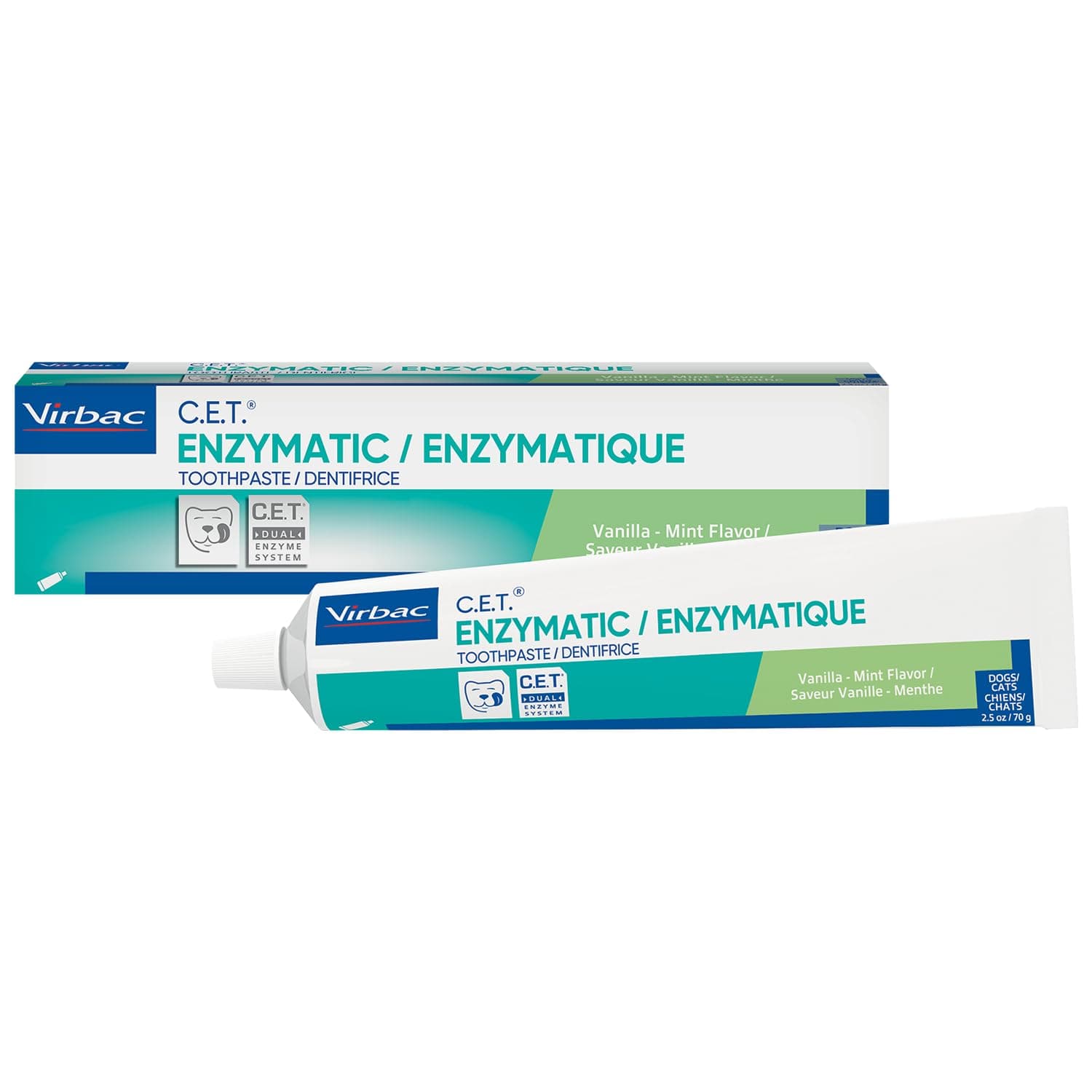
Virbac C.E.T.® Enzymatic Toothpaste| Tartar & Plaque Control for Fresh Breath | Pet Dental Care Toothpaste |Vanilla Mint Flavor, 2.5 oz
Virbac Virbac
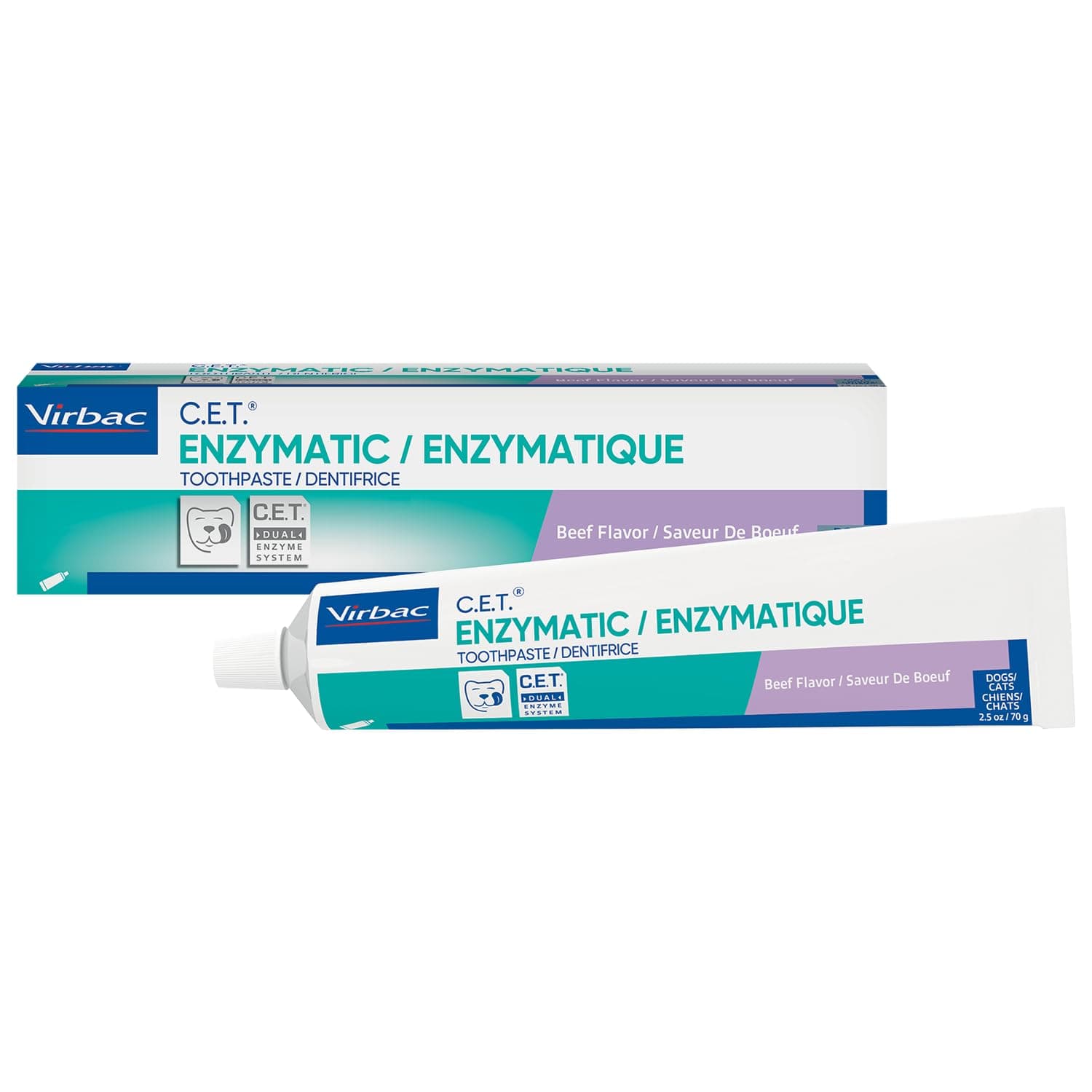
Virbac C.E.T.® Enzymatic Toothpaste| Tartar & Plaque Control for Fresh Breath | Pet Dental Care Toothpaste |Beef Flavor, 2.5 oz
Virbac Virbac
Note: Every dog is different—if your dog has food allergies, pancreatitis risk, or needs weight control, treat-based options should be chosen with your vet’s input.
Chews, Bones, and Toys: What Helps vs. What Breaks Teeth
A huge part of dog dental care importance is knowing what not to give. Dental fractures are common—and expensive.
The “thumbnail test” for hardness
If you can’t indent the item with your thumbnail, it’s likely hard enough to crack teeth.
High-risk items include:
- •antlers
- •hooves
- •many hard nylon bones
- •real bones (cooked and uncooked both have risks)
- •rocks (yes, some dogs chew rocks)
Safer chewing options (generally)
- •VOHC-accepted dental chews
- •rubber chew toys with some “give”
- •dental toys designed to flex
- •supervised rawhide alternatives (digestibility varies—choose reputable brands and monitor closely)
Real-world scenario: A Labrador who “loves antlers” chips a carnassial tooth (upper 4th premolar). It looks minor, but weeks later the tooth discolors and the dog stops chewing on one side—signs of pulp exposure and infection. Treatment becomes a root canal or extraction.
Pro-tip: If your dog suddenly chews on one side, drops food, or avoids hard kibble, assume dental pain until proven otherwise.
[IMAGE_PLACEHOLDER_3]
Common Mistakes That Undermine Dental Care (And How to Fix Them)
Even well-intentioned owners run into predictable traps. Here’s how to avoid them.
Mistake 1: Brushing too hard
Hard scrubbing can irritate gums and make your dog hate the routine. Fix: Use gentle circular motions at the gumline for 5–10 seconds per section.
Mistake 2: Brushing only the front teeth
Tartar builds heavily on the upper back teeth. Fix: Prioritize:
- •upper canines
- •upper premolars/molars
If you only brush one area, brush those.
Mistake 3: Expecting chews to replace brushing
Chews help, but they rarely reach the gumline like brushing. Fix: Treat chews as “extra credit.” Brushing is the main assignment.
Mistake 4: Waiting for bad breath to act
By the time breath is strong, disease is often established. Fix: Start brushing as soon as your dog comes home—puppy or adult.
Mistake 5: Skipping professional cleanings when needed
Home care is powerful, but it can’t remove tartar under the gumline. Fix: Schedule vet dental exams and follow recommendations for cleaning frequency.
Mistake 6: Using unsafe toothpaste or products
Human toothpaste can be dangerous. Fix: Use dog-specific toothpaste only.
When to See the Vet: Red Flags You Shouldn’t Ignore
Dental disease often hides. Watch for these signs:
- •Bad breath that persists despite brushing attempts
- •Red, swollen, or bleeding gums
- •Yellow-brown tartar buildup
- •Pawing at the mouth or face rubbing
- •Dropping food, chewing on one side, slow eating
- •Sudden pickiness with kibble or hard treats
- •Excess drooling
- •A lump under the eye (can be a tooth root abscess)
- •Teeth that look longer than usual (gum recession)
- •Loose or missing teeth
What a professional dental cleaning includes (and why anesthesia matters)
A true veterinary dental cleaning typically involves:
- •full oral exam
- •scaling above and below the gumline
- •polishing (slows plaque re-attachment)
- •dental X-rays to assess roots and bone
- •extractions if needed
Non-anesthetic “teeth cleanings” may remove visible tartar, but they cannot safely clean under the gumline where periodontal disease lives, and they can miss painful root issues.
If anesthesia worries you, discuss:
- •pre-anesthetic bloodwork
- •tailored anesthetic plans for your dog’s age/health
- •monitoring standards (ECG, oxygen, blood pressure, temperature)
Building a Realistic Dental Routine (For Puppies, Adults, and Seniors)
Consistency beats intensity. The best routine is the one you’ll actually do.
Puppies: set the foundation early
- •Start with gentle lip lifts and finger rubs
- •Use a tiny smear of toothpaste
- •Keep it upbeat and short
Goal: Make mouth handling normal before adult teeth fully settle.
Adult dogs: maintain and prevent relapse
A sustainable plan:
- •Brush daily (ideal) or 3–4x/week
- •Add a VOHC dental chew a few times per week if appropriate
- •Recheck at annual exams; adjust based on tartar speed
Senior dogs: go slower, be gentler
Older dogs may have:
- •arthritis (positioning matters)
- •existing gum recession (sensitivity)
- •loose teeth (avoid aggressive brushing)
Senior-friendly approach:
- •use a very soft brush or gauze wrap
- •focus on comfort over “perfect coverage”
- •prioritize veterinary assessment if you see pain signs
Pro-tip: If brushing triggers obvious discomfort (yelping, pulling away suddenly, chattering), stop and schedule an exam. Pain often indicates advanced disease, fractures, or resorptive lesions.
Quick Comparison: What Works Best for Plaque Control?
Here’s a practical hierarchy for most dogs:
- Daily tooth brushing (best plaque control)
- Regular professional cleanings as recommended (essential for under-gumline care)
- VOHC dental chews (helpful adjunct)
- Dental diets designed to reduce plaque (good for some households)
- Water additives / gels (supportive, not primary)
If you’re overwhelmed, start with #1 and keep it simple: 30 seconds on the outer upper teeth every night is a powerful start.
A Simple 30-Day Plan to Make Brushing Stick
If you want a concrete roadmap:
Days 1–7: Comfort and compliance
- •Lip lifts + treat
- •Finger toothpaste taste
- •Touch outer teeth briefly
Days 8–14: Tools and technique
- •Introduce toothbrush or finger brush
- •Brush upper canines and a few premolars
- •Keep sessions under 1 minute
Days 15–21: Coverage expansion
- •Add more premolars/molars
- •Try for 60–90 seconds total
Days 22–30: Routine lock-in
- •Brush at the same time daily (after last potty break works well)
- •Pair with a predictable reward
- •Track progress on a calendar (yes, it helps)
By day 30, most dogs accept brushing as “normal life,” especially if you keep it gentle and rewarding.
Bottom Line: Dog Dental Care Importance Is Bigger Than Breath
Brushing your dog’s teeth isn’t about perfection—it’s about prevention. Plaque control today prevents pain tomorrow, and it often reduces the need for extractions and expensive dental work later.
If you’re choosing where to invest your effort, dental care is one of the most practical health habits you can build:
- •it improves comfort
- •supports whole-body wellness
- •saves money long-term
- •keeps your dog happier, longer
Start small, stay consistent, and don’t hesitate to involve your veterinarian for an exam and a personalized plan.
Oral Care Cluster
More in this topic
guide
Best Dental Chews for Dogs: Vet-Smart Buyer's Guide
guide
Cat Dental Disease Signs: 10 Clues Your Cat Needs a Vet
guide
Daily Pet Oral Care in 5 Minutes: A Practical Pet Oral Care Routine for Fresher Breath
guide
How to Brush Dog Teeth Without Stress: A Practical Home Workflow That Actually Sticks
guide
Dog Bad Breath Home Care Plan: What to Do Before It Gets Worse
guide
Cat Teeth Brushing Routine for Beginners: A Behavior-First 14-Day Plan
Frequently asked questions
How often should I brush my dog’s teeth?
Aim for daily brushing for the best plaque control, especially if your dog is prone to tartar buildup. If daily isn’t realistic, start with 3–4 times per week and build consistency over time.
Is bad breath in dogs always a dental problem?
Bad breath is commonly caused by plaque and gum disease, but it can also be linked to diet, oral injuries, or other health issues. If brushing doesn’t improve it or you notice drooling, bleeding gums, or appetite changes, schedule a vet check.
What’s the safest way to start brushing if my dog resists?
Begin by gently touching the muzzle and lips, then progress to rubbing the gums with a finger before introducing a dog toothbrush. Use dog-safe toothpaste and keep sessions short with rewards so your dog associates brushing with something positive.
