
guide • Oral Care
Cat Teeth Brushing Routine for Beginners: A Behavior-First 14-Day Plan
Build a cat teeth brushing routine your cat will actually tolerate. Follow this low-stress 14-day plan with clear signals, steps, and recovery tactics.
By Lucy Anderson • February 25, 2026 • 7 min read
Table of contents
- Pet behavior signals that shape the routine
- Green-light signals (keep going)
- Yellow-light signals (slow down, shorten)
- Red-light signals (stop and reset)
- Two common “beginner cat” profiles
- Low-stress setup before any tool is used
- Choose the right location (control + escape)
- Pick a time window that fits cat biology
- Your rewards matter more than your brush
- Tools: start with “no tool”
- Handling protocol for better compliance
- The consent-based approach (recommended)
- Positioning options (choose the least restrictive that works)
- Touch gradients: how to move toward the mouth
- Tactical workflow by session phase
- Phase 1: Opening cue (3–5 seconds)
- Phase 2: Warm-up (5–15 seconds)
- Phase 3: Contact (1–20 seconds)
- Phase 4: Exit + jackpot (5 seconds)
- The 14-day plan (behavior-first, flexible)
- Product choices by temperament and tolerance
- Temperament-based picks
- Where dental treats fit (and where they don’t)
- Brush vs finger brush vs gauze: decision criteria
- Error recovery after a bad session
- Immediately after a bad moment (same minute)
- The 48-hour reset plan
- If your cat suddenly refuses after doing well
- Progress tracking template
- Daily log (copy/paste)
- Rating guide (0–5)
- Practical long-term maintenance plan
- Your realistic goal: frequency over perfection
- The “minimum viable session” (for busy nights)
- Rotate rewards to prevent boredom
- When to level up the cleaning goal
- When to involve your vet
Brushing your cat’s teeth is one of those “sounds simple, feels impossible” goals—especially the first week. The secret isn’t a stronger hold or a bigger toothbrush. It’s sequencing: teaching your cat that mouth handling predicts safety and good stuff.
This guide is a behavior-first cat teeth brushing routine designed for real households (busy mornings, sensitive cats, and the occasional “absolutely not”). You’ll follow a 14-day plan where progress is defined by comfort, not how many teeth you touched.
Before you begin: if your cat has bad breath, drools, paws at the mouth, has red gums, or avoids kibble, schedule a vet check. Pain makes brushing training fail—and it’s unfair to ask a painful mouth to “cooperate.”
Pet behavior signals that shape the routine
A successful cat teeth brushing routine starts with reading your cat’s “yes,” “maybe,” and “no.” These signals determine when you advance, hold steady, or back up.
Green-light signals (keep going)
- •Soft eyes, normal blinking, whiskers neutral
- •Tail still or gently swishing (not thumping)
- •Leans in to sniff, rubs cheek on your hand
- •Takes treats normally immediately after each step
Yellow-light signals (slow down, shorten)
- •Ears slightly rotated back
- •Body stiffens when your hand approaches the face
- •Pulls head away once but returns to sniff
- •Treat taking becomes “grab and retreat”
What to do: keep the session under 20–30 seconds, return to easier steps (cheek rubs), and pay more frequently.
Red-light signals (stop and reset)
- •Growling, hissing, swatting, biting attempts
- •Ears pinned, pupils very dilated, tail thumping
- •Panting, open-mouth breathing, or sudden hiding
What to do: stop immediately. Do a calm disengage (see “Error recovery”). Forcing through red-light signals is how cats learn that toothbrushing predicts being trapped.
Two common “beginner cat” profiles
- The Wiggler: friendly, curious, but can’t tolerate restraint. These cats do best with very short sessions and voluntary positioning.
- The Sentinel: not aggressive, but highly suspicious of face contact. These cats need more “pre-brush” days where you never enter the mouth.
Your plan below includes branching options for both.
Low-stress setup before any tool is used
This section is about building the environment so your cat can say “yes” without feeling cornered.
Choose the right location (control + escape)
Pick a spot where your cat already relaxes: a couch corner, bed, or a cat tree platform. Avoid bathrooms or laundry rooms unless your cat already likes them—small rooms can feel like traps.
Rule: your cat should always have an easy exit route. Paradoxically, that’s what makes them stay.
Pick a time window that fits cat biology
Aim for calm times: after a nap, before a meal, or during a predictable cuddle routine. For food-motivated cats, “right before dinner” can turn the session into a cooperative game.
Your rewards matter more than your brush
You’re not paying for “brushing,” you’re paying for “tolerating mouth-related handling.” Use tiny, high-value rewards.
A practical option is a crunchy training treat you can deliver fast. Many cat owners like Greenies Feline Smartbites, Cat Treats Healthy Recipe, Indoor Cat Treats, Tuna Flavor, 2.1 oz. Pack as a consistent post-step reward. (If your cat has dietary restrictions, use whatever your vet-approved “high value” is—freeze-dried meat crumbs work well.)

Tools: start with “no tool”
For the first several days, your “tool” is a finger and a treat. When you later add toothpaste or a brush, you’ll introduce them like new objects—sniff, reward, done.
Handling protocol for better compliance
Handling is the difference between a cooperative routine and a daily wrestling match.
The consent-based approach (recommended)
- •Present your hand at cheek level.
- •Let your cat approach to sniff.
- •If they lean into cheek rubs, continue.
- •If they turn away, you pause and reset.
This keeps your cat teeth brushing routine predictable and reduces defensive behavior over time.
Positioning options (choose the least restrictive that works)
- Side-by-side on the couch: cat faces the same direction as you. You work from the side of the mouth.
- Cat on a table/platform: you stand beside, not looming over.
- Lap sit (only if your cat already enjoys laps): keep one arm as a “seat belt,” not a clamp.
Avoid the classic “burrito towel wrap” for routine training unless your cat is already comfortable with it. For many beginners, towel restraint escalates stress faster than it helps.
Touch gradients: how to move toward the mouth
Progress in tiny steps:
- •Cheek rubs (outside)
- •Lip line touch (outside)
- •Brief lip lift (1 second)
- •Finger touch to gumline (inside for 1 second)
- •Tooth contact (one canine or a couple premolars)
If you only remember one thing: don’t chase the mouth. Bring your hand in, touch, reward, and retreat.
Tactical workflow by session phase
Each session has four phases. Keeping the same structure builds trust and makes your cat faster to relax.
Phase 1: Opening cue (3–5 seconds)
Pick a consistent cue like “teeth time.” Immediately follow with one treat. You’re creating a predictable ritual.
Phase 2: Warm-up (5–15 seconds)
Do two or three cheek strokes. For “Sentinel” cats, warm-up may be the entire session for several days.
Phase 3: Contact (1–20 seconds)
This is your day-specific goal (below). Keep it short. The goal is tolerance, not perfection.
Phase 4: Exit + jackpot (5 seconds)
Say “all done,” then give a slightly better reward or two small treats back-to-back. End while your cat is still doing okay.
The 14-day plan (behavior-first, flexible)
You’ll do 1 session per day. If your cat is doing great, you can do 2 micro-sessions (morning/evening) instead—but only if they stay relaxed.
Day 1: Predictable cue + cheek rubs only
- •Goal: cue, 2 cheek strokes, treat.
- •If cat moves away: treat anyway and end.
Day 2: Cheek rubs + lip line touch
- •Goal: touch the lip line (where lip meets fur) for 1 second.
- •Example: touch, treat, retreat.
Day 3: Brief lip lift (micro-lift)
- •Goal: lift the lip just enough to see a tooth tip, then treat.
- •If your cat flinches: go back to Day 2 for two days.
Day 4: Add toothpaste “introduction” (no brushing)
- •Let your cat sniff the toothpaste cap or a dab on your finger.
- •If they lick: treat after.
- •If they recoil: hide toothpaste for now; continue Day 3 steps.
Day 5: Finger gumline touch (1 second)
- •Goal: touch the gumline inside the lip (upper canine area is often easiest).
- •Pay immediately.
Day 6: Tooth tap (2–3 taps)
- •Goal: tap one tooth with your fingertip (or finger brush if your cat tolerates it).
- •Keep it tiny and celebratory.
Day 7: Expand to 3–5 seconds of tooth contact
- •Goal: light rubs on 2–4 teeth on one side only.
- •Don’t switch sides yet. Predictability beats symmetry.
Day 8: Introduce a brush (sniff only) OR stick with finger
- •If your cat is relaxed: show brush, sniff, treat, done.
- •If not: keep using your finger and build time instead.
Day 9: Brush touches outer surfaces (2 seconds)
- •Goal: 2 seconds of gentle brush contact on the outer surfaces of back teeth on one side.
- •Technique: tiny circles, almost no pressure.
Day 10: 5–10 seconds brushing (one side)
- •Goal: brush outer surfaces on one side only.
- •If saliva builds: stop; don’t wipe their mouth (some cats hate that).
Day 11: Add the other side (2–5 seconds)
- •Goal: a few strokes on the second side.
- •If your cat starts to anticipate and leave: shorten, then jackpot.
Day 12: 15–20 seconds total (both sides)
- •Goal: brief brushing on both sides, focusing on back teeth and canines.
- •You do not need to open the mouth wide; outer surfaces matter most.
Day 13: Consistency day (repeat Day 12 at lower intensity)
- •Goal: make it easy and calm, even if it’s shorter.
- •This prevents the “Day 12 success, Day 13 crash” pattern.
Day 14: Choose your maintenance baseline
- •Goal: decide what your cat can do reliably.
- •For some cats, baseline is 20 seconds. For others, it’s 5 seconds plus a great attitude. Both are wins.
Tradeoff to accept: a smaller daily routine that your cat tolerates beats a “perfect” 2-minute routine you can’t actually do.
Product choices by temperament and tolerance
The best products are the ones your cat will accept consistently.
Temperament-based picks
Suspicious or easily overstimulated cats
- •Start with finger-only contact.
- •Use an enzymatic cat toothpaste flavor your cat actually likes (poultry tends to win).
- •Choose a very soft brush later, not a firm bristle.
Food-motivated cats
- •Treat-based shaping works fast. Use a consistent reward like Greenies Feline Smartbites, Cat Treats Healthy Recipe, Indoor Cat Treats, Tuna Flavor, 2.1 oz. Pack to mark “done.”
- •Watch calories: break treats into tiny pieces; you’re paying frequently.
Cats that dislike anything near the mouth
- •Prioritize “lip lift tolerance” as the main skill.
- •Keep sessions under 15 seconds for the first week.
Where dental treats fit (and where they don’t)
Dental treats can support oral health, but they don’t replace brushing—especially for plaque at the gumline.
If you also have a dog in the household, you may already use dental chews like Greenies Veterinarian-Recommended Adult Natural Dental Dog Treats Regular Size, Dog Dental Chews, Original Flavor, 36 oz. Pack, 36 Count or Pedigree Dentastix Dog Dental Treats, Large Breed Dog Treats, Fresh Flavor, 1.87 lb. Bag (36 Treats Total) or Pedigree Dentastix Large Dog Treats, Original, Beef & Fresh, 2.73 lb. Variety Pack (51 Treats Total).

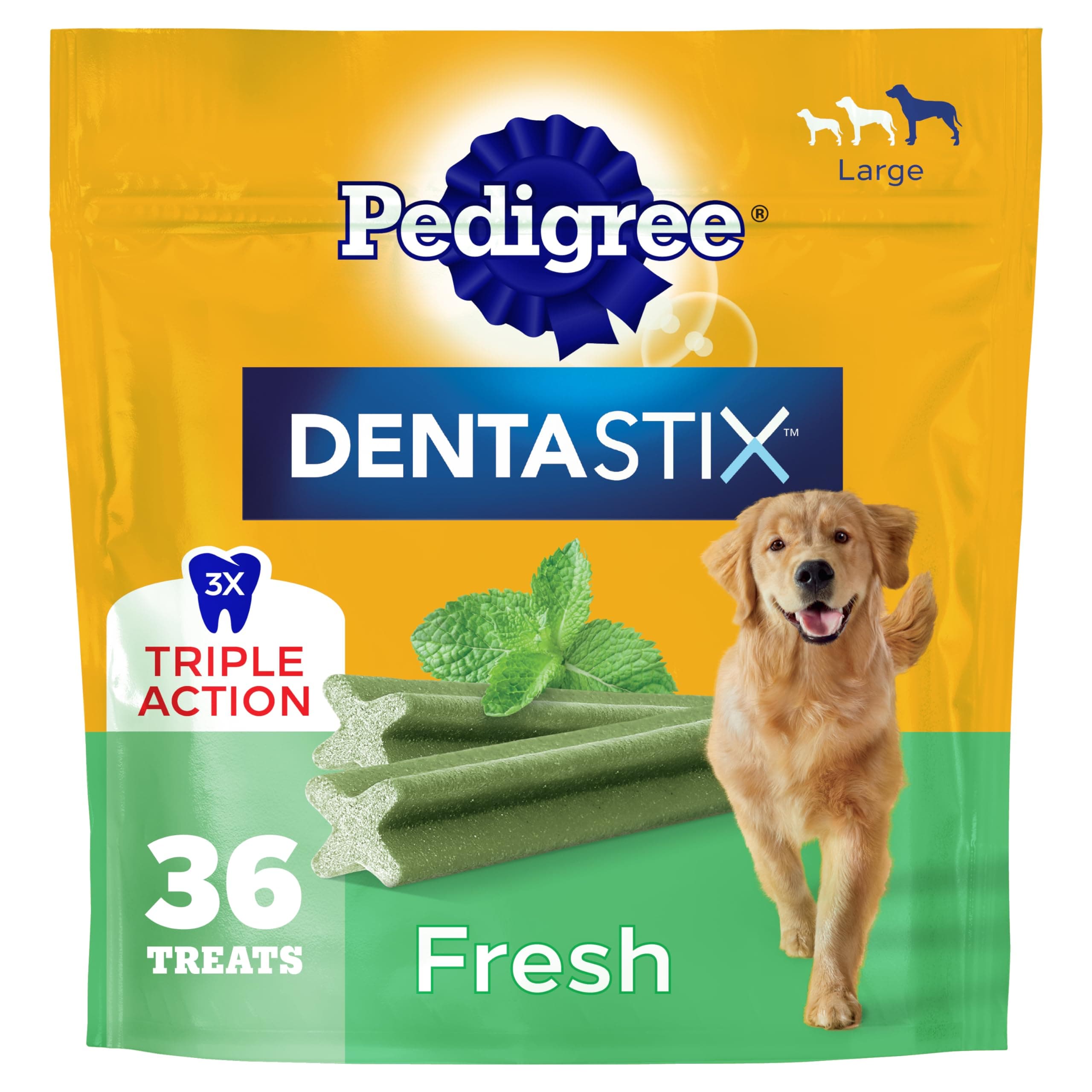
Important safety note: dog dental treats are not designed for cats. Use cat-specific products for cats and follow your vet’s guidance, especially if your cat has a history of vomiting, food sensitivities, or dental disease.
Brush vs finger brush vs gauze: decision criteria
- •Finger (bare): best for trust-building; limited cleaning.
- •Finger brush: often tolerated earlier; can be bulky for small mouths.
- •Small cat toothbrush: best cleaning once accepted; takes longer to train.
- •Gauze wrap on finger: good intermediate step; “wipes” plaque, less pokey than bristles.
If your cat is on Day 10+ and still hates bristles, stay with gauze and toothpaste longer. Consistency beats tool upgrades.
Error recovery after a bad session
Bad sessions happen: you bumped a sore spot, your cat got startled, or you tried to “just get one more tooth.” What you do next determines whether you lose a week of progress.
Immediately after a bad moment (same minute)
- •Stop contact.
- •Turn your body slightly away (less confrontational).
- •Toss a treat a short distance so your cat can move away and decompress.
- •End with your “all done” cue.
The 48-hour reset plan
For the next 1–2 days:
- •Do only the last easy step your cat enjoyed (often cheek rubs + treat).
- •Keep sessions under 10 seconds.
- •Avoid the brush entirely until body language is green again.
If your cat suddenly refuses after doing well
That pattern often points to discomfort. Check for:
- •Mouth odor increase, drooling, one-sided chewing
- •Redness at the gumline or visible tartar lumps
- •Reluctance to eat hard food
If any show up, pause training and call your vet. A strong cat teeth brushing routine is built on comfort.
Progress tracking template
Tracking prevents the most common beginner mistake: advancing too fast because “yesterday went fine.” Use this template in a notes app.
Daily log (copy/paste)
- •Date / Time:
- •Location (couch, table, etc.):
- •Reward used:
- •Goal step (Day # or custom):
- •Green signals observed:
- •Yellow signals observed:
- •Red signals observed (Y/N):
- •What I touched (cheek, lip lift, tooth, brush):
- •Duration (seconds):
- •Rating (0–5):
- •Next session plan:
Rating guide (0–5)
- •0: red signals, session stopped
- •1: tolerated warm-up only
- •2: tolerated goal step briefly with yellow signals
- •3: tolerated goal step with mostly green signals
- •4: relaxed, ate rewards normally, easy finish
- •5: voluntarily approached and “asked for” the session
Advance only after two sessions rated 3+ at the same step.
Practical long-term maintenance plan
Once your 14 days are complete, your job is to make the routine sustainable.
Your realistic goal: frequency over perfection
- •Best case: brush daily (even 20 seconds).
- •Solid goal: 3–5 times per week.
- •If your cat is highly sensitive: 2–3 times per week plus vet-approved support strategies.
A consistent cat teeth brushing routine at moderate frequency beats an on-and-off daily plan that collapses under stress.
The “minimum viable session” (for busy nights)
If you’re tired or your cat is restless:
- •Do cue → 2 cheek strokes → 1 lip lift → treat → done.
This keeps the habit alive so you don’t re-train from zero.
Rotate rewards to prevent boredom
Some cats burn out on the same treat. Keep two options and alternate. A steady go-to like Greenies Feline Smartbites, Cat Treats Healthy Recipe, Indoor Cat Treats, Tuna Flavor, 2.1 oz. Pack can be your “default,” with a higher-value backup for brush days.
When to level up the cleaning goal
After 3–4 weeks of stable tolerance:
- •Gradually increase coverage (more back teeth, then canines).
- •Keep pressure very light; you’re disrupting plaque, not scrubbing a pan.
When to involve your vet
Plan a dental check if:
- •Breath worsens despite routine
- •Gums bleed frequently during gentle contact
- •You see brown tartar at the gumline
- •Your cat resists more over time (possible pain)
Brushing helps most when it’s paired with appropriate veterinary dental care.
If you’d like, tell me your cat’s age, temperament (wiggler vs sentinel), and what step triggers pushback most—I can adapt the 14-day plan into a personalized cat teeth brushing routine with alternative rewards and handling positions.
Oral Care Cluster
More in this topic
guide
Dog Dental Care Importance: Why Brushing Matters
guide
Best Dental Chews for Dogs: Vet-Smart Buyer's Guide
guide
Cat Dental Disease Signs: 10 Clues Your Cat Needs a Vet
guide
Daily Pet Oral Care in 5 Minutes: A Practical Pet Oral Care Routine for Fresher Breath

guide
How to Brush Dog Teeth Without Stress: A Practical Home Workflow That Actually Sticks
guide
Dog Bad Breath Home Care Plan: What to Do Before It Gets Worse
Frequently asked questions
How long should a beginner cat teeth brushing routine take each day?
In the first week, aim for 10–30 seconds total, including rewards. The “contact” portion can be just 1–5 seconds. Short, repeatable sessions build tolerance faster than longer sessions that trigger escape behavior.
What if my cat won’t let me open their mouth at all?
Don’t open the mouth. Focus on lip-line touch and brief lip lifts, then brush only the outer surfaces once tolerated. Most plaque accumulates near the gumline on the outside of teeth, and many cats can learn to accept that without wide mouth opening.
Are dental treats enough instead of brushing?
Dental treats can help reduce plaque for some pets, but they don’t reliably clean the gumline the way brushing does. Use treats as support and as a training reward, not as a replacement. Always choose cat-specific products for cats and ask your vet if your cat has dental disease or dietary needs.
