
guide • Oral Care
How to Brush Dog Teeth Without Stress: A Practical Home Workflow That Actually Sticks
A routine-engineered system to brush dog teeth without stress—designed for busy households, sensitive dogs, and real-life constraints.
By Lucy Anderson • March 2, 2026 • 7 min read
Table of contents
- Outcome target and routine constraints
- Define the outcome in measurable terms
- Identify your constraints (so the system fits your life)
- What “without stress” looks like
- Environment design for consistency
- Choose a brushing station (one location, one setup)
- Control the traffic
- Build a brushing kit you don’t have to assemble
- Sequence architecture: what happens first and why
- The workflow in 6 stages (designed for consent)
- Stage 1: Prime (5–10 seconds)
- Stage 2: Mouth handling micro-dose (10 seconds)
- Stage 3: Toothpaste introduction (10–20 seconds)
- Stage 4: Tool contact (10–30 seconds)
- Stage 5: Brushing strokes (20–90 seconds)
- Stage 6: Close the loop (10–60 seconds)
- Two “no-drama” handling positions
- Execution cadence for busy schedules
- The “two-track” cadence: training track + hygiene track
- Minimum effective dose schedules
- Where it fits in your day (habit stacking)
- Product-fit matrix by household scenario
- Scenario 1: Head-shy dog who avoids the brush
- Scenario 2: Large dog, strong jaws, busy owner
- Scenario 3: Senior dog or dog with possible dental discomfort
- Scenario 4: Multi-pet home (dog + cat)
- Scenario 5: Puppy in the “bite everything” phase
- Mistakes that create regression
- Rushing past consent signals
- Brushing only when breath is bad
- Starting with the front teeth because it’s easier
- Adding restraint when the dog resists
- Using chews as a substitute instead of a support
- 30-day implementation plan
- Days 1–7: Install the station and the cue
- Days 8–14: Add lip lift + toothpaste as the bridge
- Days 15–21: Introduce brush contact, not brushing
- Days 22–30: Start plaque-disruption reps (tiny but real)
- FAQ and next-step decisions
- Should I brush daily or focus on fewer, calmer sessions?
- What if my dog only lets me brush one side?
- Are dental chews enough?
- When should I talk to my vet?
- Next-step decisions to lock the routine
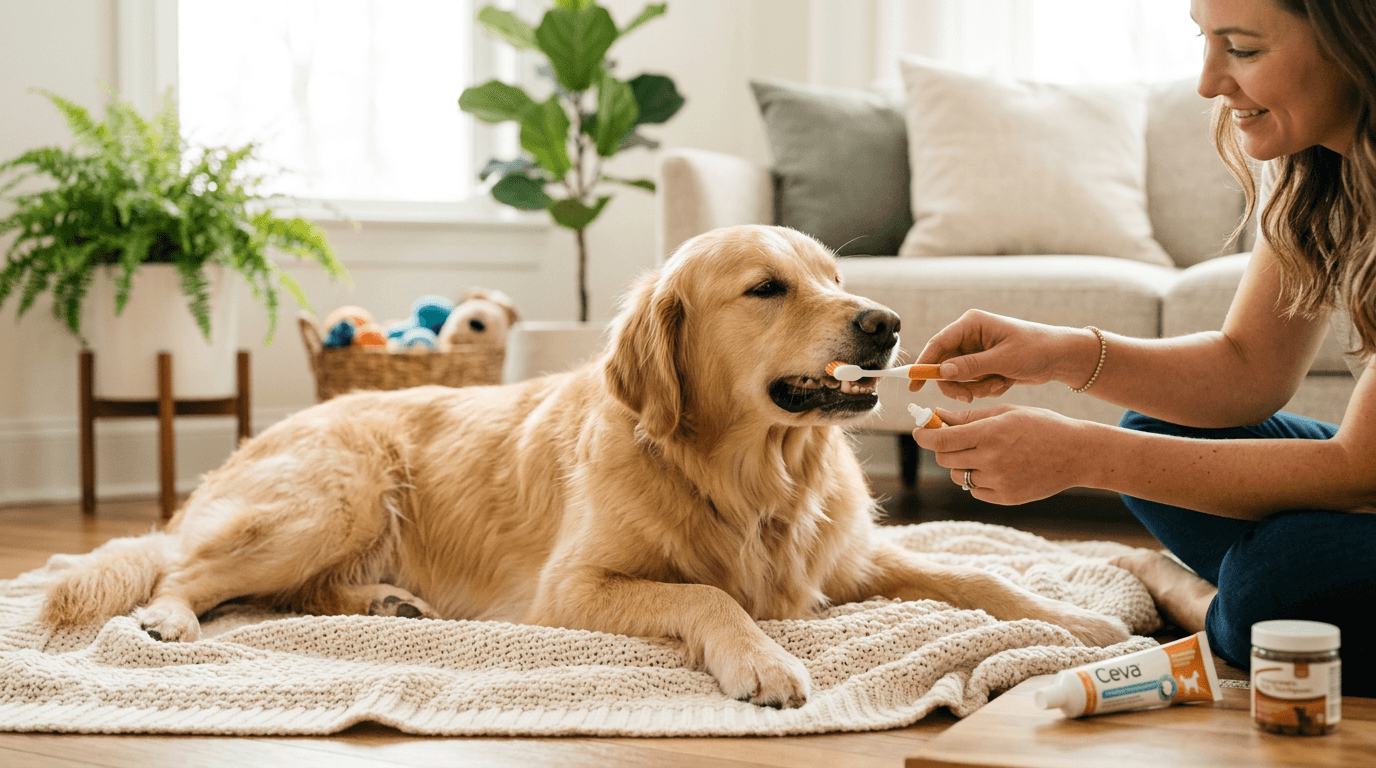
Brushing your dog’s teeth shouldn’t feel like a nightly wrestling match. The goal is a repeatable household workflow: small, predictable steps that your dog can consent to, that you can execute even when you’re tired.
This guide is written like a home “system design” rather than a list of tips. You’ll build a routine that survives missed days, travel weeks, multi-pet chaos, and dogs who hate having their mouth touched.
Outcome target and routine constraints
Define the outcome in measurable terms
Your target isn’t “perfect brushing.” Your target is reduced plaque and gum inflammation over time with a routine your household can keep.
Use these benchmarks:
- •Minimum viable outcome (MVO): 3 brush sessions/week where you contact the outer surfaces of the upper teeth (especially the back molars) for 20–40 seconds total.
- •Standard target: 5–7 sessions/week, 60–120 seconds total, with calm body language (no avoidance, no growling, no pinned ears).
- •Stretch goal: Comfortable lip lift + brushing outer surfaces of all teeth, plus periodic vet dental checks.
If you can consistently hit MVO without stress, you can scale up.
Identify your constraints (so the system fits your life)
Most “brush your dog’s teeth daily” advice fails because it ignores constraints. Write down what’s true in your home:
- •Time constraint: You realistically have 2 minutes, not 10.
- •Handling constraint: Dog is head-shy, dislikes restraint, or has a bite history.
- •Environment constraint: Kids, multiple pets, small apartment, noise sensitivity.
- •Caregiver constraint: More than one person brushes, but each has different skill.
- •Dog constraint: Puppy teething, senior with arthritis, brachycephalic mouth shape, or history of painful dental disease.
Design choice: If your dog shows pain signs (yelping, sudden head jerks, snapping when lips are lifted, one-sided chewing, drooling, bad breath that appeared quickly), treat that as a medical flag and schedule a vet exam before pushing training.
What “without stress” looks like
“Brush dog teeth without stress” doesn’t mean your dog loves it. It means:
- •Your dog can opt in and opt out.
- •The routine ends before your dog escalates.
- •Over weeks, tolerance increases rather than erodes.
A good rule: Stop while the dog is still successful. You’re building trust, not finishing a quota.
Environment design for consistency
Your environment should make brushing the default and make avoidance harder for humans (not for the dog).
Choose a brushing station (one location, one setup)
Pick a consistent station that matches your dog’s comfort:
- •Small/medium dogs: On a non-slip mat on a couch or bed (if they feel safe there).
- •Large dogs: Kitchen corner or hallway with a rug runner for traction.
- •Nervous dogs: Quiet room away from doors/windows.
Add two anchors:
- Non-slip surface (mat/towel). Slipping increases stress fast.
- A predictable “start cue” (you say “teeth time,” you place the mat, you open the toothpaste). Predictability reduces surprise.
Control the traffic
If your dog is easily distracted, “teeth time” should be a low-traffic event:
- •Put other pets behind a baby gate.
- •Give kids a job (“hold the timer,” “sprinkle treats”) but keep hands away from the dog’s face.
Build a brushing kit you don’t have to assemble
The most common failure point is friction: brush is missing, dog walks away.
Keep a small bin in the brushing station with:
- •Toothbrush or finger brush
- •Dog toothpaste
- •A towel
- •A high-value reinforcer (tiny treats)
- •Optional: a dental chew to finish the session
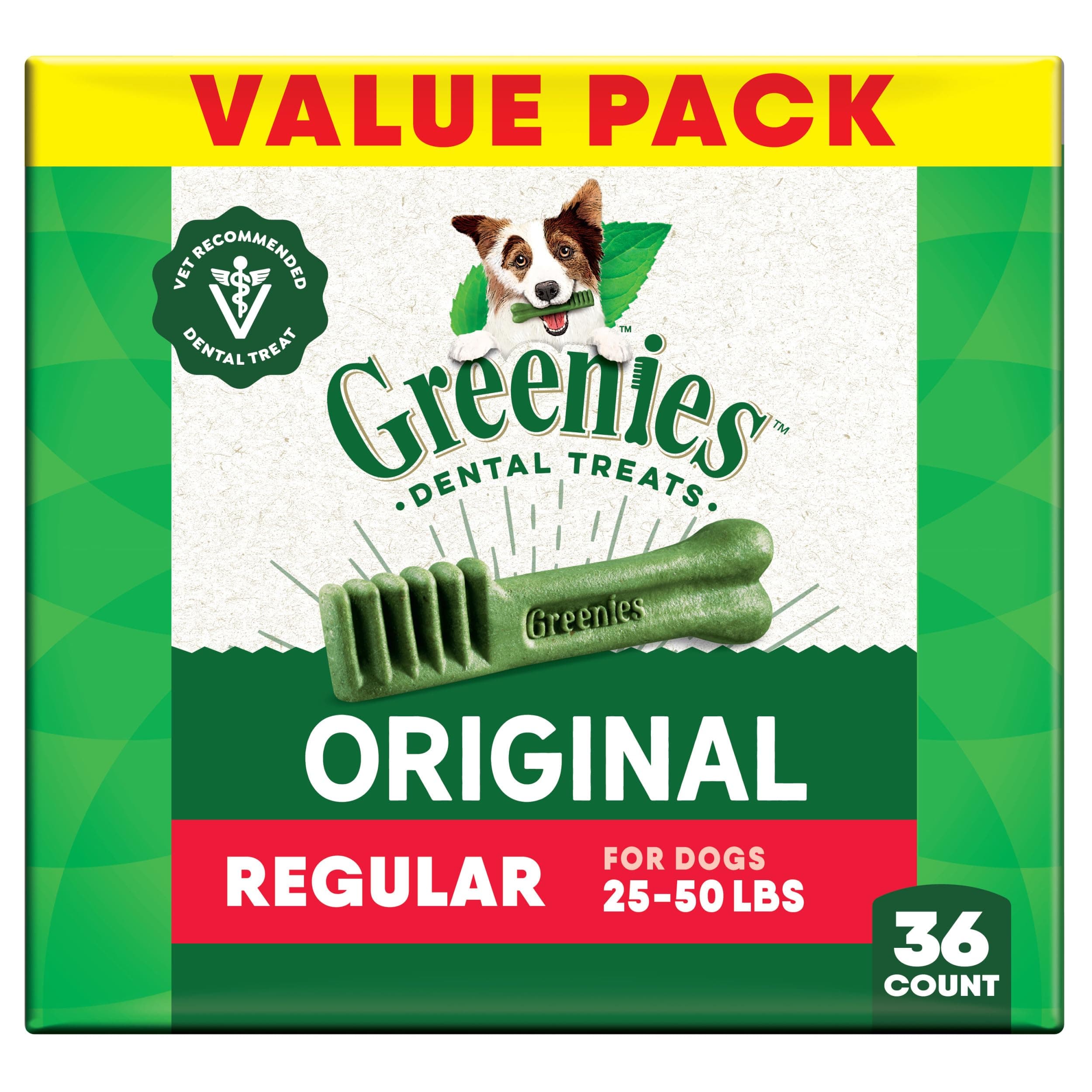
If you already use dental chews, store them next to the kit so the dog learns: calm cooperation = predictable payoff. Products like Greenies Veterinarian-Recommended Adult Natural Dental Dog Treats Regular Size, Dog Dental Chews, Original Flavor, 36 oz. Pack, 36 Count can fit well as an “end cap” reward for appropriate dogs (more on tradeoffs later).
Sequence architecture: what happens first and why
This is the core: a repeatable sequence that reduces stress by preventing surprises and avoiding restraint battles.
The workflow in 6 stages (designed for consent)
Think of each stage as a gate. You only progress if your dog stays relaxed.
Stage 1: Prime (5–10 seconds)
Purpose: bring arousal down and signal a predictable routine.
- •Bring dog to the station.
- •Ask for an easy behavior (sit, chin rest, or “touch” to your hand).
- •Give 1 treat.
If your dog is already tense (panting, whale eye, backing away), skip brushing and do a 20-second “station = treats” session instead.
Stage 2: Mouth handling micro-dose (10 seconds)
Purpose: teach that facial touch is brief and safe.
- •Touch cheek for 1 second → treat.
- •Lift lip for 0.5 seconds → treat.
- •End before the dog pulls away.
Concrete example: A rescue who hates face handling might only tolerate a lip lift on one side at first. That’s fine. You’re building a habit loop, not symmetry.
Stage 3: Toothpaste introduction (10–20 seconds)
Purpose: convert toothpaste into a positive cue.
- •Let dog lick a pea-sized smear from your finger.
- •Touch finger to outer canine tooth for 1 second → treat.
If your dog fixates on licking, don’t fight it. Licking is a low-stress interaction that keeps the mouth near you.
Stage 4: Tool contact (10–30 seconds)
Purpose: teach brush feel without pressure.
- •Show brush → treat.
- •Touch brush to outer teeth (no scrubbing) → treat.
Decision criteria: If the dog mouths the brush, don’t yank it away (that can trigger chase/chew). Hold steady, let them investigate, then trade for a treat.
Stage 5: Brushing strokes (20–90 seconds)
Purpose: plaque disruption with the least conflict.
- •Focus on outer surfaces of the upper teeth first. That’s where plaque commonly accumulates, and it’s easiest access.
- •Use small circles or short back-and-forth strokes.
- •Prioritize this order:
- Upper back molars (both sides)
- Upper canines
- Lower teeth (if dog tolerates)
Practical time hack: Don’t aim for the entire mouth every session. Aim for one quadrant per session (e.g., upper left today, upper right tomorrow). Consistency beats completeness.
Stage 6: Close the loop (10–60 seconds)
Purpose: end on a predictable reward so the routine stays stable.
- •Say “all done.”
- •Give a reward: play, cuddle, or a dental chew if appropriate.
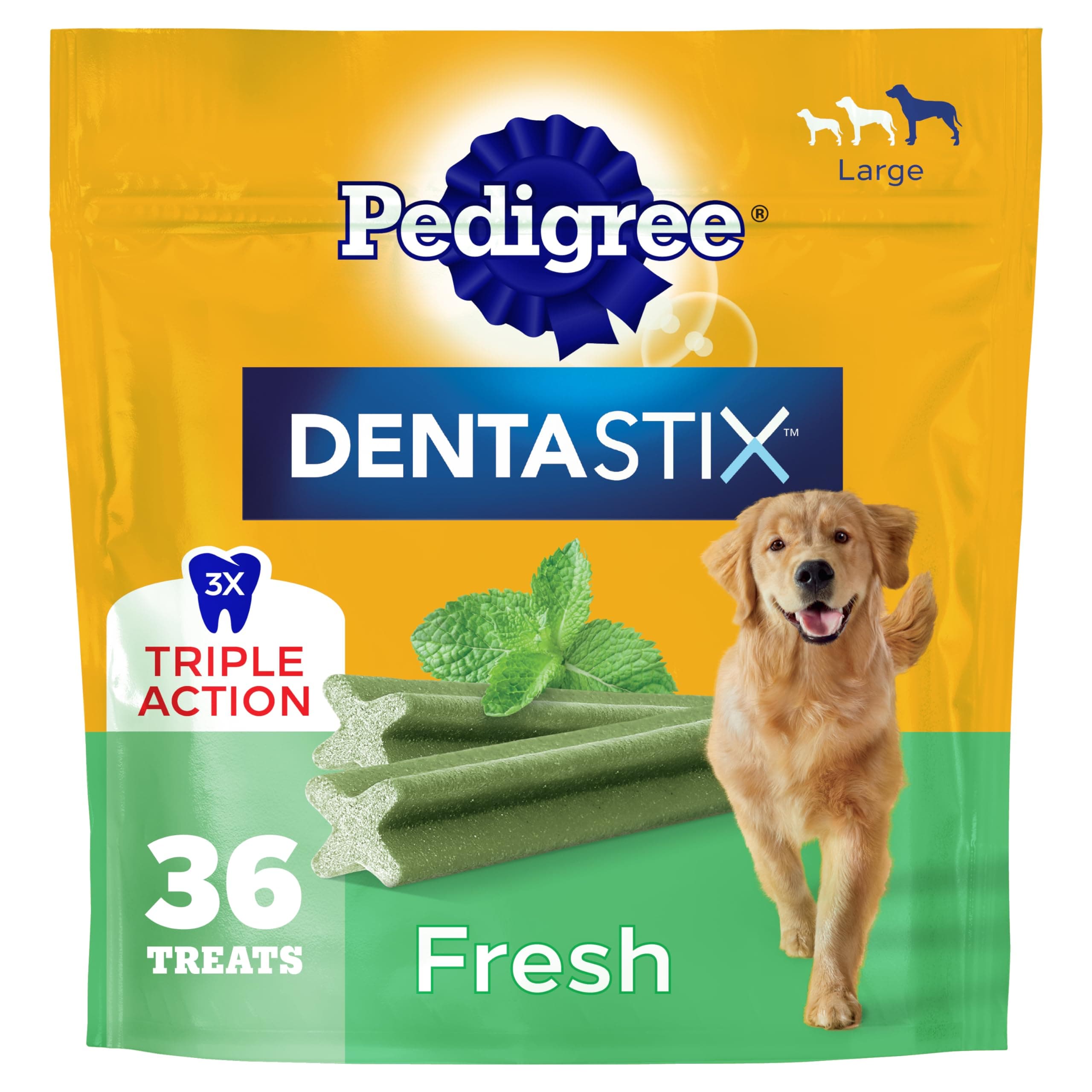
If chews are part of your system, match the chew to your dog’s size and chewing style. Large-breed households sometimes use products like Pedigree Dentastix Dog Dental Treats, Large Breed Dog Treats, Fresh Flavor, 1.87 lb. Bag (36 Treats Total) as a convenient finish after brushing.
Two “no-drama” handling positions
Choose the position that minimizes restraint.
1) Side-by-side stance (best for large dogs): Dog stands facing forward; you stand next to them facing the same direction. Your forearm can gently stabilize the head without grabbing.
2) Sit-between-knees (best for small/medium dogs who like closeness): You sit on the floor, dog sits between your legs facing away. You lift the lip from the side.
Avoid the common mistake of looming over the dog’s face. That posture can feel threatening.
Execution cadence for busy schedules
The “two-track” cadence: training track + hygiene track
Busy households do better with two tracks:
- •Training track (low pressure): 3–5 days/week, 30–60 seconds, focus on comfort and cooperation.
- •Hygiene track (plaque disruption): 2–7 days/week, 30–120 seconds, focus on actual brushing.
When life gets messy, protect the training track. If your dog learns that teeth time becomes stressful when you’re rushed, you’ll pay for it later.
Minimum effective dose schedules
Pick one:
- •Schedule A (realistic baseline): Mon/Wed/Fri brushing; Tue/Thu handling + toothpaste lick; weekend flexible.
- •Schedule B (micro-sessions): Daily 45 seconds total, but split into two 20–30 second sessions (morning + evening). Great for dogs who hate long sessions.
- •Schedule C (two caregivers): Caregiver 1 does handling/toothpaste; Caregiver 2 does brush strokes. This reduces frustration for both the dog and the human.
Where it fits in your day (habit stacking)
Attach brushing to a stable anchor:
- •After last potty break
- •Right before dinner (food is a built-in reinforcer)
- •After nightly crate/bed routine
Avoid anchoring it to a chaotic time (kids bedtime meltdown, mail delivery time, doorbell-heavy hours).
Product-fit matrix by household scenario
To “brush dog teeth without stress,” product choice matters because it changes friction, taste acceptance, and how much handling is required.
Scenario 1: Head-shy dog who avoids the brush
Best fit:
- •Finger brush or gauze wrap initially (less invasive)
- •High-palatability toothpaste to create approach behavior
Tradeoff: Finger tools can encourage chewing/biting. If your dog has a history of nipping, use a long-handled brush and keep sessions very short.
Scenario 2: Large dog, strong jaws, busy owner
Best fit:
- •Short, efficient brushing (upper back molars) + consistent end reward
- •Optional dental chew as part of the “close the loop”
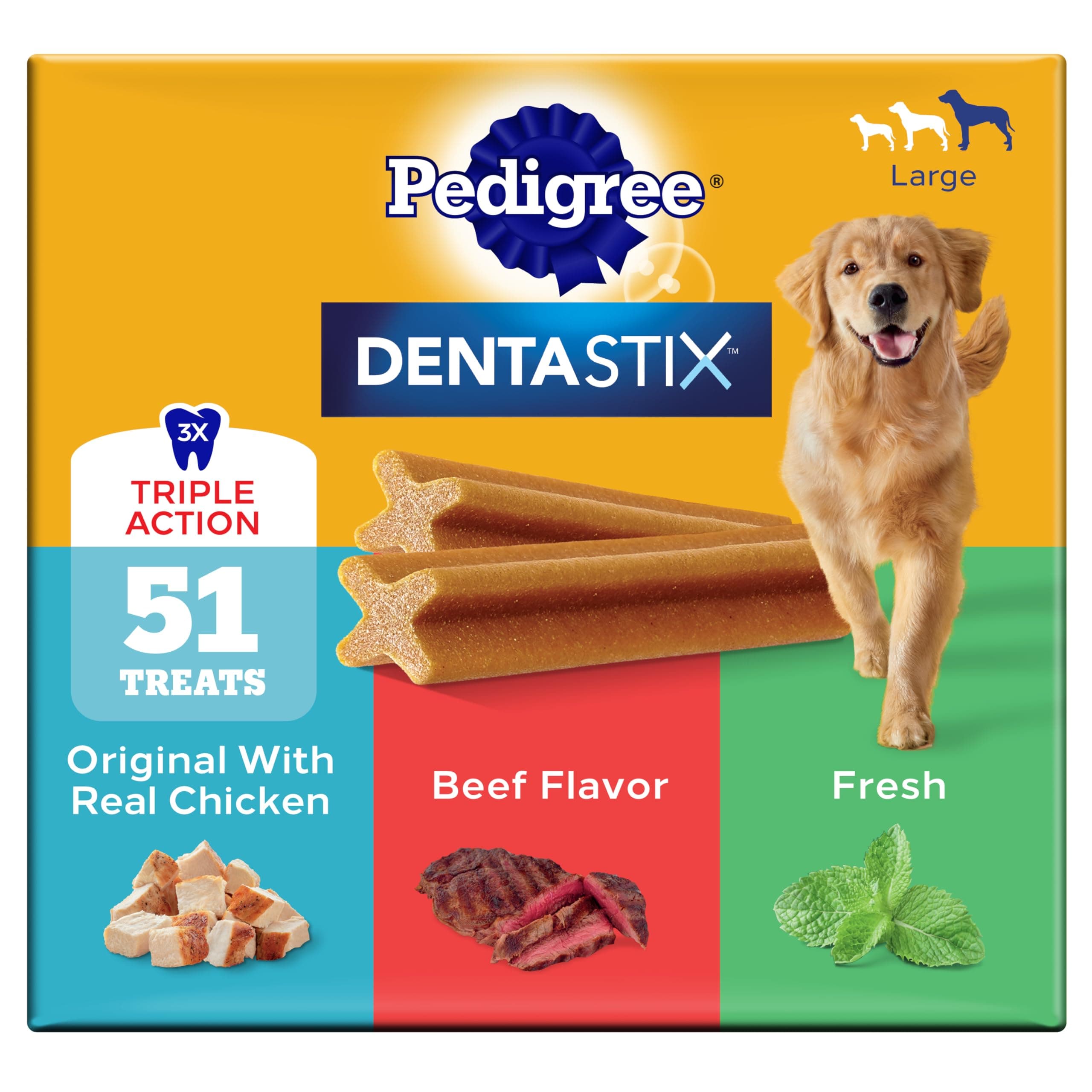
Chew options: Pedigree Dentastix Large Dog Treats, Original, Beef & Fresh, 2.73 lb. Variety Pack (51 Treats Total) can be useful for households that need convenience and predictability.
Tradeoffs to consider:
- •Chews add calories; adjust meals if weight is a concern.
- •Some dogs gulp; choose size and supervise.
- •Chews support oral care but don’t replace brushing for many dogs.
Scenario 3: Senior dog or dog with possible dental discomfort
Best fit:
- •Vet exam first if discomfort is suspected
- •Ultra-gentle handling; shorter sessions; avoid pressing on sore gums
Tradeoff: You may need professional cleaning and a “maintenance-only” home routine afterward.
Scenario 4: Multi-pet home (dog + cat)
Best fit:
- •Separate stations or separate times to prevent competition and arousal
- •Distinct cues (“teeth time” for dog, different cue for cat)
If you’re already running a multi-pet treat system, keep rewards species-appropriate. For cats, products like Greenies Feline Smartbites, Cat Treats Healthy Recipe, Indoor Cat Treats, Tuna Flavor, 2.1 oz. Pack can help you reinforce cooperative behavior while you work on the dog routine—without creating food jealousy.
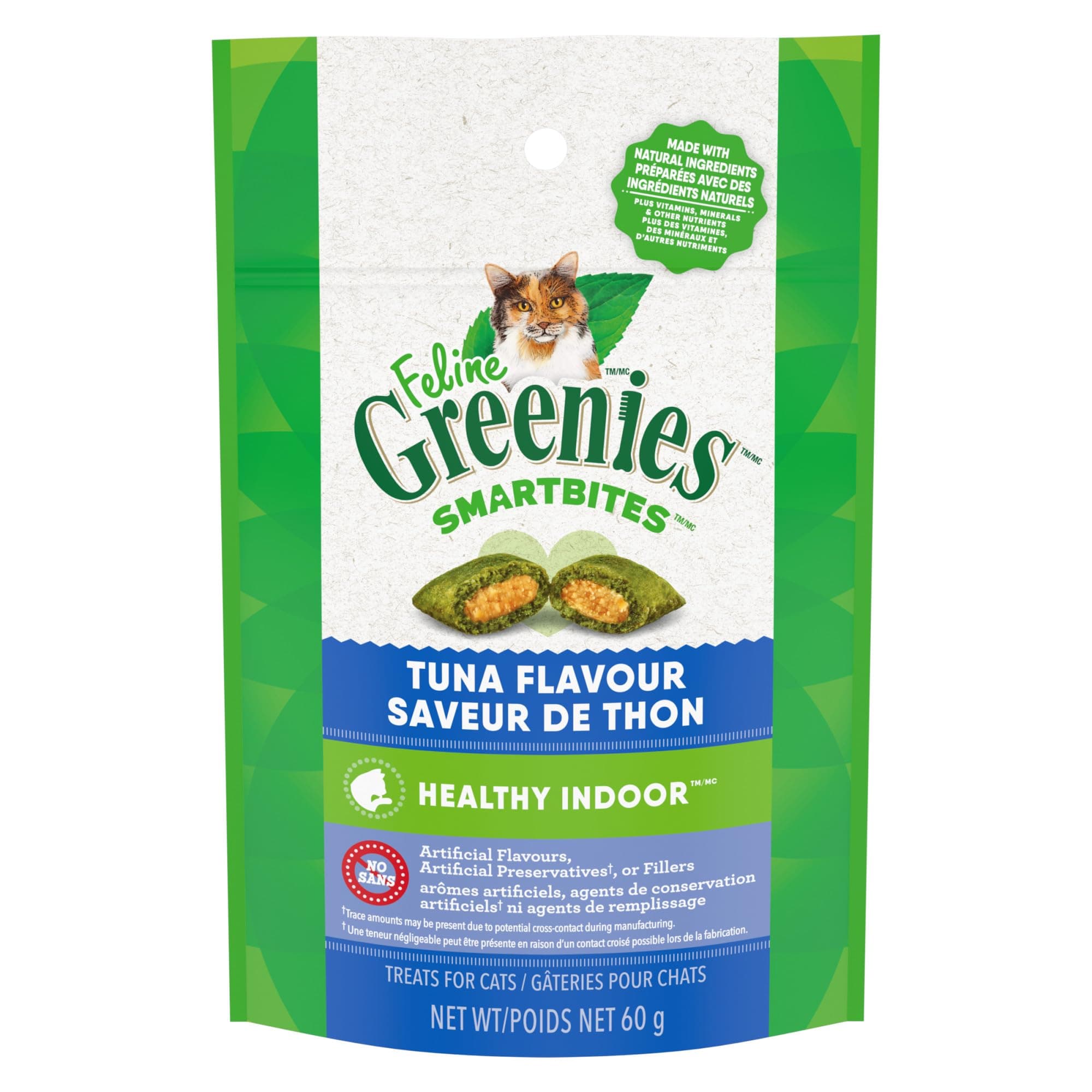
Tradeoff: If the cat appears during dog brushing, some dogs get overstimulated and the session falls apart. Use a door or gate.
Scenario 5: Puppy in the “bite everything” phase
Best fit:
- •Short handling reps (5–15 seconds)
- •Brush as a target to lick, not something to chew
Tradeoff: Don’t turn brushing into a tug toy. If puppy starts chomping, end calmly and retry later.
Mistakes that create regression
These are the patterns that make dogs hate toothbrushing over time.
Rushing past consent signals
Regression pattern: Dog turns head away, you chase the muzzle, dog learns avoidance works or escalates to snapping.
Fix: Treat head turns as information. Pause, lower criteria, reward stillness, and end early.
Brushing only when breath is bad
Regression pattern: Long gaps, then a sudden intense session. Dogs don’t generalize “rare intense handling” as safe.
Fix: Keep the routine frequent but small. Two calm 30-second sessions/week beat one stressful 5-minute session.
Starting with the front teeth because it’s easier
Front teeth are easier for humans but don’t always deliver the biggest hygiene payoff.
Better approach: Teach tolerance at the front during training reps, but spend brushing time on the upper back teeth when you do hygiene reps.
Adding restraint when the dog resists
Holding the dog down can “solve” today but breaks tomorrow.
Fix: Use positioning and stationing, not force. If you need physical restraint for safety, stop and rebuild with a trainer/vet behavior professional.
Using chews as a substitute instead of a support
Dental chews can help, but if you remove brushing entirely, plaque can still progress—especially in small breeds.
Use chews as:
- •A reward for calm cooperation
- •A fallback on travel days
- •A supplemental routine on non-brush days
For many families, Greenies Veterinarian-Recommended Adult Natural Dental Dog Treats Regular Size, Dog Dental Chews, Original Flavor, 36 oz. Pack, 36 Count is easiest to deploy consistently, which matters more than chasing a perfect product.
30-day implementation plan
This is a progression that prioritizes habit formation first, then brushing duration.
Days 1–7: Install the station and the cue
Goal: Dog willingly comes to the station.
- •4–6 days this week, do “teeth time” with no brush.
- •Sequence: mat down → cue → touch cheek 1 second → treat → all done.
- •If dog is hesitant, just reward standing on the mat and end.
Success metric: Dog approaches the station when you pick up the kit.
Days 8–14: Add lip lift + toothpaste as the bridge
Goal: Dog tolerates brief lip lift and enjoys toothpaste.
- •Keep sessions under 60 seconds.
- •Add: lip lift 0.5–2 seconds → treat.
- •Toothpaste: let dog lick from finger; touch finger to outer teeth.
Success metric: Dog stays in position through 3–5 micro-reps without backing away.
Days 15–21: Introduce brush contact, not brushing
Goal: Brush becomes a neutral object.
- •3–5 sessions: show brush → treat.
- •Touch brush to outer canines and premolars for 1 second → treat.
- •End before any chewing starts.
Success metric: Dog allows 5–10 brush touches total (split across sides).
Days 22–30: Start plaque-disruption reps (tiny but real)
Goal: 20–40 seconds of gentle brushing on outer upper teeth.
- •Choose one side per day.
- •Do 5 seconds brushing → treat → 5 seconds brushing → treat.
- •Finish with a predictable reward.
Optional: If a dental chew helps you maintain compliance, use it after brushing (not before), and keep calories in mind. Large-breed households sometimes prefer Pedigree Dentastix Dog Dental Treats, Large Breed Dog Treats, Fresh Flavor, 1.87 lb. Bag (36 Treats Total) for routine simplicity.
Success metric: Dog’s body stays loose; no escalation; you can complete short reps 3+ days/week.
FAQ and next-step decisions
Should I brush daily or focus on fewer, calmer sessions?
If daily brushing makes you rush and your dog starts avoiding you, it backfires. Start with 3x/week calm sessions, then scale up. The best schedule is the one you can repeat without stress.
What if my dog only lets me brush one side?
That’s normal early on. Treat it like a two-lane road: run the “easy side” for hygiene today, and do one micro-rep on the “hard side” for training. Over time the hard side catches up.
Are dental chews enough?
Chews can support oral health, but many dogs still benefit from brushing—especially small breeds prone to tartar. Use chews as reinforcement and supplementation. For example, you might brush 3–5 days/week and use a chew on non-brush days, such as Greenies Veterinarian-Recommended Adult Natural Dental Dog Treats Regular Size, Dog Dental Chews, Original Flavor, 36 oz. Pack, 36 Count or a large-dog option like Pedigree Dentastix Large Dog Treats, Original, Beef & Fresh, 2.73 lb. Variety Pack (51 Treats Total), depending on your dog.
When should I talk to my vet?
Do that if you see bleeding gums, sudden bad breath, visible brown tartar, pawing at the mouth, decreased appetite, or your dog resists touch that used to be fine. Pain makes “training” unfair and ineffective.
Next-step decisions to lock the routine
Pick one decision in each category:
- •Cadence: 3x/week baseline or daily micro-sessions?
- •Station: kitchen rug, couch mat, or bathroom (quiet) spot?
- •Reward: tiny treats vs. end-of-session dental chew?
- •Division of labor: one caregiver does it all or split roles?
Once those choices are stable, brushing becomes a normal household loop instead of a constant re-decision.
Oral Care Cluster
More in this topic
guide
Dog Dental Care Importance: Why Brushing Matters
guide
Best Dental Chews for Dogs: Vet-Smart Buyer's Guide
guide
Cat Dental Disease Signs: 10 Clues Your Cat Needs a Vet
guide
Daily Pet Oral Care in 5 Minutes: A Practical Pet Oral Care Routine for Fresher Breath
guide
Dog Bad Breath Home Care Plan: What to Do Before It Gets Worse
guide
Cat Teeth Brushing Routine for Beginners: A Behavior-First 14-Day Plan
Frequently asked questions
How do I brush dog teeth without stress if my dog hates mouth handling?
Build consent in tiny steps: first reward standing at the brushing station, then brief cheek touches, then half-second lip lifts, then toothpaste licks, and only then introduce brush contact. Keep sessions under 60 seconds and end before your dog pulls away. If you push through avoidance, you teach your dog that toothbrushing predicts restraint, which creates long-term regression.
What teeth should I focus on first for the best results?
Start with the outer surfaces of the upper teeth, especially the back molars. They tend to accumulate plaque and are often the highest payoff area for short sessions. You do not need to open your dog’s mouth wide—most home brushing can be done with a simple lip lift and small circular strokes.
Can I use dental treats instead of brushing?
Dental treats can help support oral care, but they usually work best as a supplement or a reward that helps you maintain a brushing habit. Many dogs—especially small breeds—still build tartar without brushing. A practical system is brushing 3–5 days per week and using a dental chew on non-brush days or as an end-of-session reinforcer, while managing calories and supervising chewing.
