
guide • Oral Care
Dog Bad Breath Home Care Plan: What to Do Before It Gets Worse
A practical, comparison-led dog bad breath home care plan with clear decision criteria, step-by-step workflows, and tradeoffs—so you know what to do and when to call the vet.
By Lucy Anderson • March 1, 2026 • 7 min read
Table of contents
- What actually matters in this comparison
- The 4 drivers of dog breath (and why they change the plan)
- What “wins” depends on your constraint
- Baseline criteria and scoring method
- Criteria (0–5 each)
- A realistic target score
- Side-by-side workflow analysis
- Option A: Toothbrushing (gold standard when you can do it)
- Option B: Dental chews (high compliance, variable results)
- Option C: Dental wipes or gels (bridge tool for “no-brush” dogs)
- Option D: Water additives (low effort, low certainty)
- Option E: Diet tweaks + “stop the stink sources” (high leverage in specific scenarios)
- Option F: Veterinary dental cleaning (not “home care,” but the reset button)
- Cost, effort, and consistency tradeoffs
- The practical triangle
- Calorie budget is a hidden cost
- The consistency threshold (the part most plans ignore)
- Which option wins by user profile
- Profile 1: “My dog won’t let me brush”
- Profile 2: “I can do a routine, I just need a plan”
- Profile 3: “Multi-pet house, I’m overwhelmed”
- Profile 4: “My dog is older and already has tartar”
- Profile 5: “My dog’s breath is awful but teeth look okay”
- Transition strategy if changing tools
- Stepwise upgrade path (lowest friction)
- If you’re switching chew brands
- Common decision mistakes
- Mistake 1: Treating tartar like plaque
- Mistake 2: Choosing the “best” tool you won’t use
- Mistake 3: Using chews to cover serious dental pain
- Mistake 4: Not supervising chews (choking or gulping risk)
- Mistake 5: Cross-feeding pet dental treats
- Final recommendation framework
- Step 1: Classify the situation
- Step 2: Choose your anchor tool (pick one)
- Step 3: Add one support tool (optional but often worth it)
- Step 4: Set a 21-day checkpoint
- A simple starting plan most owners can follow
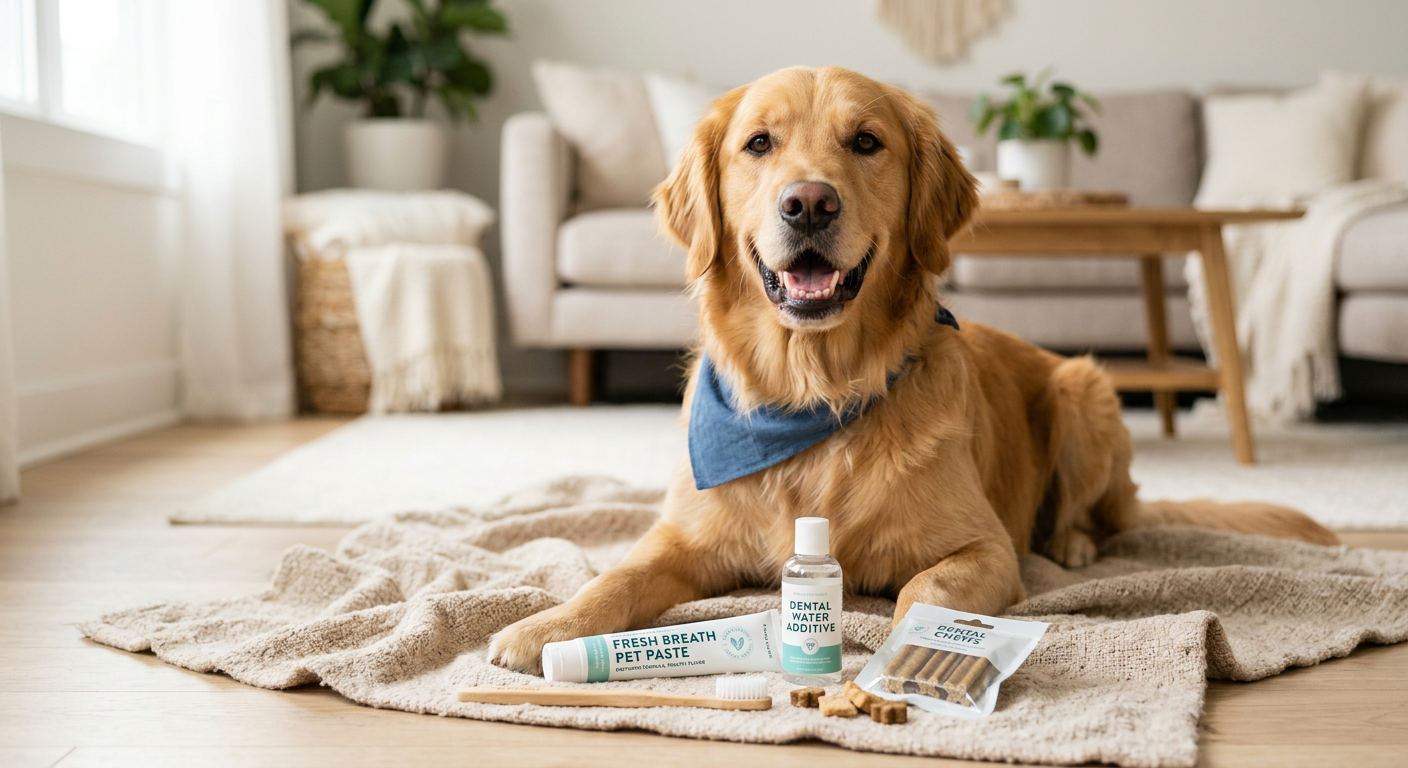
Bad breath in dogs is common—but it’s rarely “just breath.” Most of the time, odor is the byproduct of bacteria living on plaque and under the gumline. The good news: a solid dog bad breath home care plan can slow plaque buildup, improve breath, and reduce the odds of painful dental disease.
The hard truth: no single tool works for every dog. A chew that helps one dog may do almost nothing for another, and brushing only works if you can do it consistently. This guide compares the most realistic at-home options and shows you how to choose (and combine) them without wasting time or money.
Before you start: if breath suddenly turns foul (especially with drooling, pawing at the mouth, bleeding gums, facial swelling, or refusing food), skip the home experiment and call your vet. Sudden changes can signal a broken tooth, abscess, foreign object, or systemic illness.
What actually matters in this comparison
When owners say “my dog’s breath stinks,” they usually want one of two outcomes:
- Breath that’s less offensive day-to-day
- Lower long-term risk of periodontal disease (which is what leads to tooth loss and chronic pain)
Those outcomes overlap, but they’re not identical.
The 4 drivers of dog breath (and why they change the plan)
- •Plaque on teeth (surface-level): This is where brushing and certain dental chews can help the most.
- •Tartar (hardened plaque): Home care can’t reliably remove tartar that’s already cemented on. You can slow new buildup, but old tartar usually needs veterinary dental cleaning.
- •Gumline and pockets (below the gum): The smell often comes from bacteria living where you can’t see. Brushing helps, but deep pockets typically require professional treatment.
- •Non-dental causes: GI issues, kidney disease, diabetes, sinus/nasal problems, or eating things outside (trash, poop, dead stuff). If breath smells like ammonia/urine, acetone/sweet, or a strong metallic odor, treat it as a medical flag.
What “wins” depends on your constraint
This is why comparison matters:
- •If your constraint is time, chews and water additives are easier than brushing—but typically weaker for true plaque control.
- •If your constraint is your dog’s tolerance, wipes and gels can be a bridge.
- •If your constraint is budget, brushing is the cheapest long-term tool, but costs more in effort.
Baseline criteria and scoring method
To keep this practical, we’ll score common home-care options using the same criteria. You can reuse the scoring method for your own household.
Criteria (0–5 each)
1) Effect on plaque/biofilm (0–5)
- •0 = mostly cosmetic odor masking
- •5 = meaningfully disrupts plaque regularly
2) Likelihood you’ll do it consistently (0–5)
- •0 = unrealistic in real life
- •5 = easy to maintain daily
3) Dog acceptance (0–5)
- •0 = dog fights you every time
- •5 = dog happily participates
4) Safety and fit (0–5)
- •Considers choking risk, ingredient sensitivity, calorie load, and suitability for puppies/seniors
5) Cost efficiency (0–5)
- •Looks at ongoing cost per month relative to likely benefit
A realistic target score
- •18–22: strong plan for most homes (often a combo)
- •14–17: workable plan, expect gradual improvement
- •<14: you’ll likely stall; consider changing tools or getting a dental exam sooner
Side-by-side workflow analysis
Below are the most common “workflows” owners actually use. The best dog bad breath home care approach usually combines one mechanical option (brushing/chew) plus one “make it easier to keep up” option.
Option A: Toothbrushing (gold standard when you can do it)
Typical workflow: 30–90 seconds, ideally daily (minimum 3x/week).
How to do it without a wrestling match: 1) Start with a finger brush or soft brush and let your dog lick dog-safe toothpaste. 2) Brush only the outer surfaces (cheek-side) first; that’s where most plaque sits. 3) Aim for a “C-shape” sweep along the gumline, not aggressive scrubbing. 4) End before your dog is over it. Consistency beats perfection.
Tradeoffs (explicit):
- •Best plaque disruption, but the highest effort.
- •If you can only manage once a week, it may improve smell briefly but won’t compete with daily bacteria regrowth.
Scoring (typical): Plaque 5, Consistency 2–4, Acceptance 2–4, Safety 5, Cost 5.
Best for: owners who can build a routine (after walks, before bed) and dogs who tolerate mouth handling.
Option B: Dental chews (high compliance, variable results)
Typical workflow: 1 chew daily or as directed, given when you can supervise.
Dental chews can reduce plaque through mechanical abrasion and saliva stimulation. They’re often the easiest “yes” in a household—especially if brushing is a non-starter.
Where they shine:
- •Owners who won’t brush consistently
- •Dogs who love chewing (and don’t gulp)
- •Households that need a predictable habit (after breakfast = chew)
Where they disappoint:
- •Dogs who swallow chews quickly (less contact time)
- •Dogs with heavy tartar already in place (chews can’t undo cemented buildup)
- •Calorie-sensitive dogs if you don’t adjust meals
Product examples to consider (use by size and supervise):
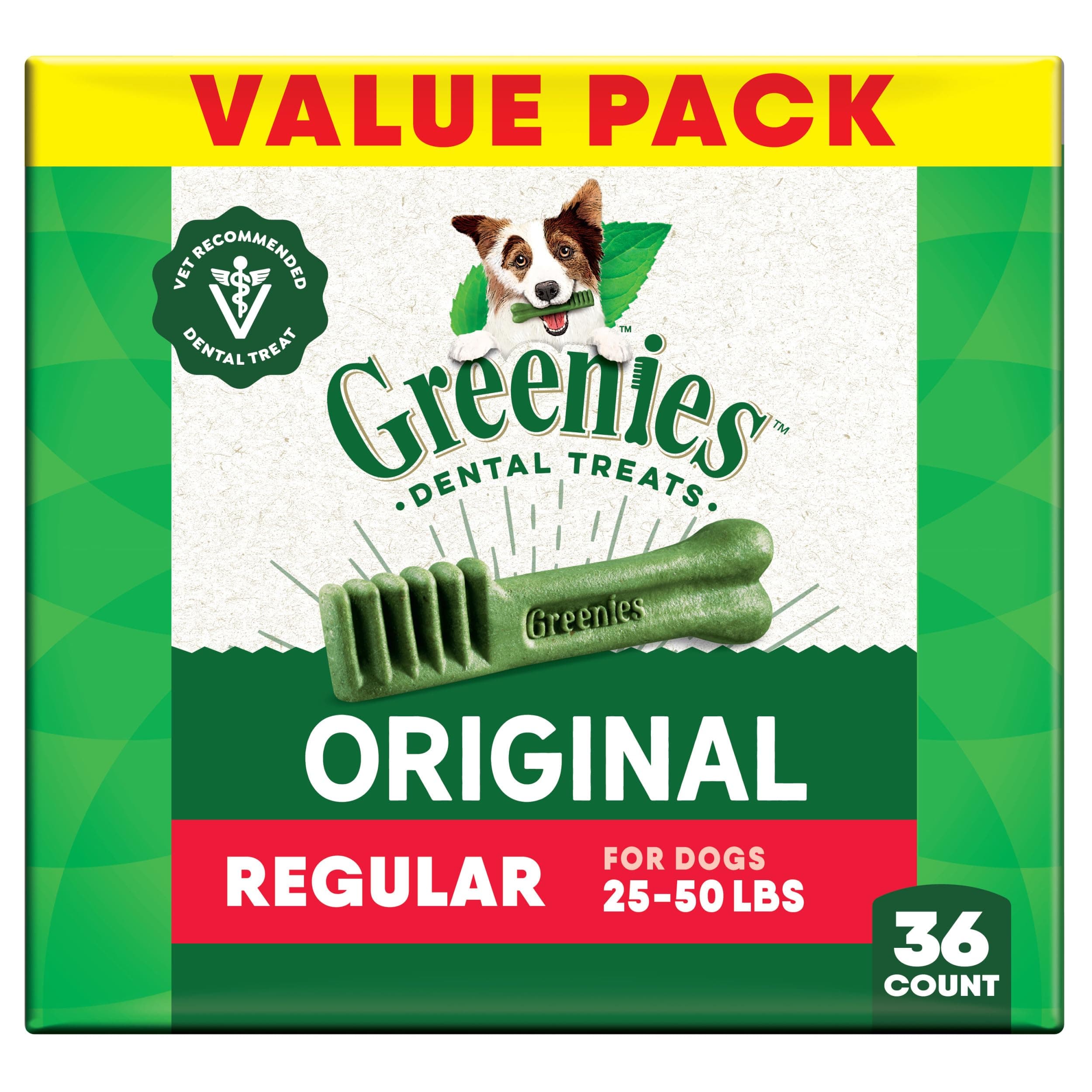
- •For a widely used daily chew: Greenies Veterinarian-Recommended Adult Natural Dental Dog Treats Regular Size, Dog Dental Chews, Original Flavor, 36 oz. Pack, 36 Count
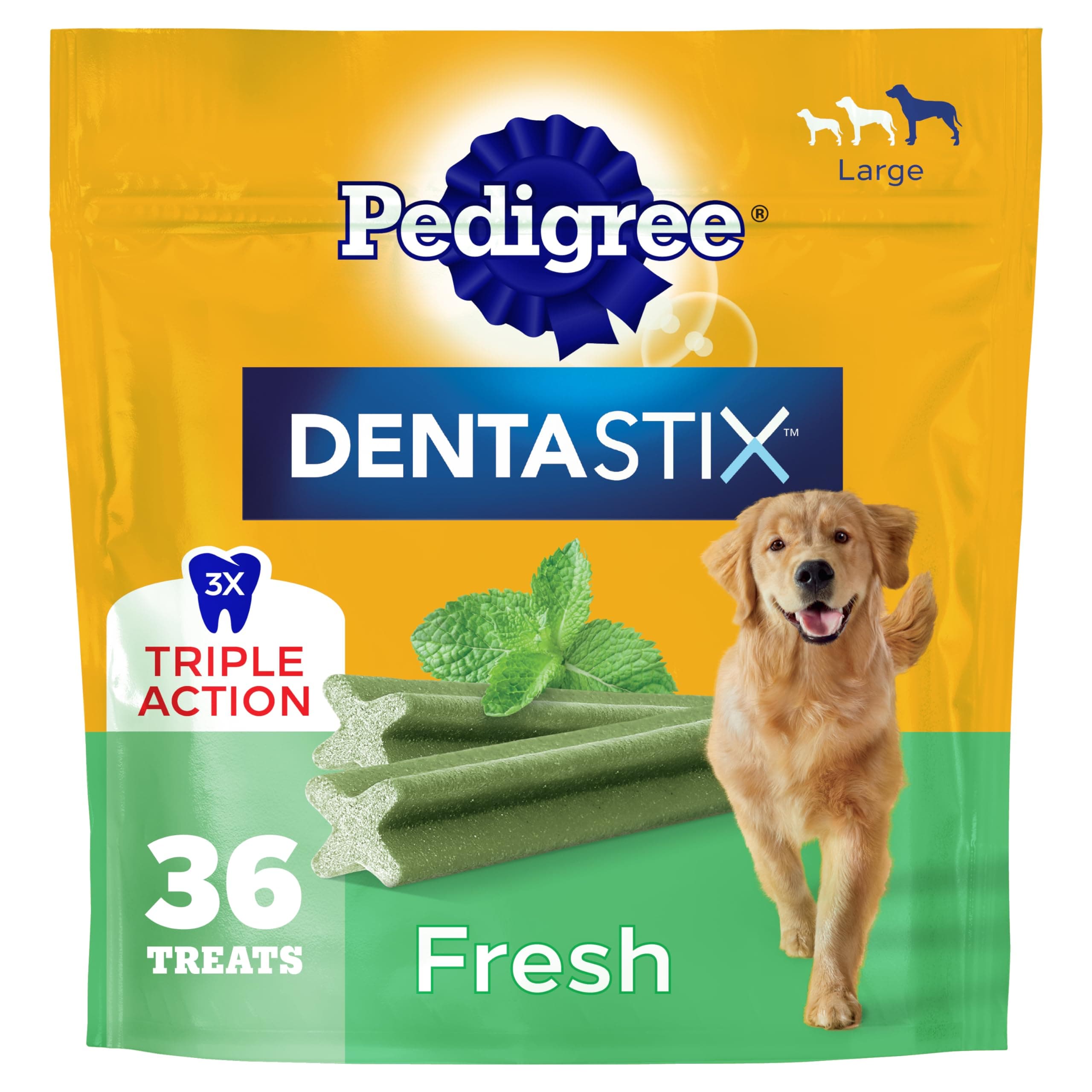
- •For large-breed households: Pedigree Dentastix Dog Dental Treats, Large Breed Dog Treats, Fresh Flavor, 1.87 lb. Bag (36 Treats Total)
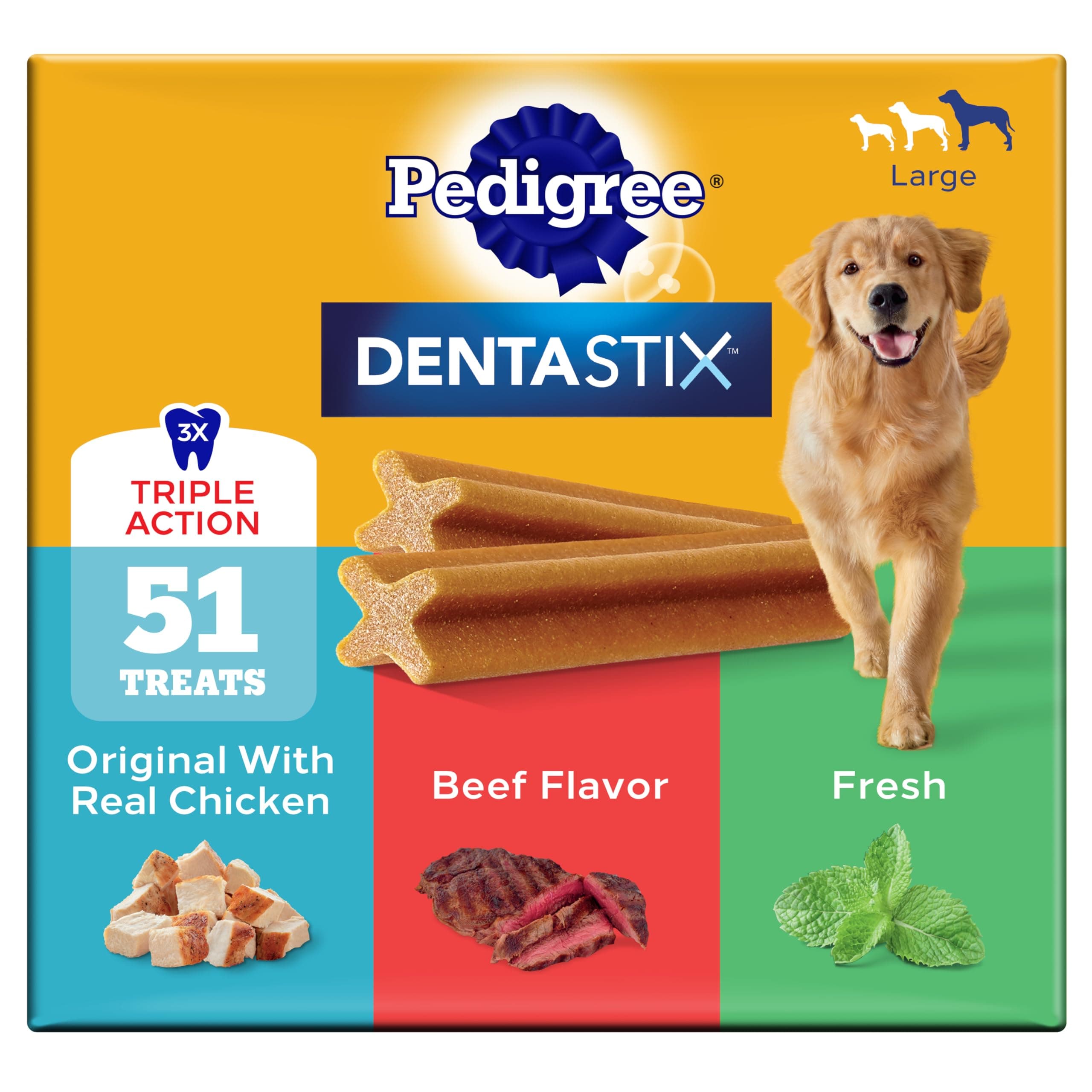
- •If you want a longer-lasting supply with variety: Pedigree Dentastix Large Dog Treats, Original, Beef & Fresh, 2.73 lb. Variety Pack (51 Treats Total)
Tradeoffs (explicit):
- •Easiest consistency but less precise than brushing.
- •Helps many dogs, but results depend on chew time, jaw style, and existing tartar.
Scoring (typical): Plaque 2–4, Consistency 4–5, Acceptance 4–5, Safety 3–4, Cost 2–4.
Best for: busy owners, dogs that refuse brushing, and as an add-on to reduce plaque between brush sessions.
Option C: Dental wipes or gels (bridge tool for “no-brush” dogs)
Typical workflow: 20–60 seconds daily, focusing along the gumline.
Wipes/gels can be a practical compromise when your dog won’t accept a brush but will tolerate quick mouth contact.
Tradeoffs (explicit):
- •Better than doing nothing, but generally less effective than a brush because you don’t get bristle-level mechanical disruption.
- •Still requires daily-ish consistency.
Scoring (typical): Plaque 2–3, Consistency 3–4, Acceptance 3–4, Safety 4–5, Cost 3.
Best for: sensitive seniors, small dogs with tight mouths, or any dog in “training mode” toward brushing.
Option D: Water additives (low effort, low certainty)
Typical workflow: add to drinking water per label; refresh daily.
Water additives can reduce odor-causing bacteria, but results vary because:
- •Some dogs drink less when water tastes different.
- •It’s easy to dose inconsistently.
- •Contact time and concentration vary throughout the day.
Tradeoffs (explicit):
- •Lowest effort option, but also one of the least predictable.
- •Best as a “support tool,” not your only strategy.
Scoring (typical): Plaque 1–2, Consistency 4–5, Acceptance 2–4, Safety 3–4, Cost 3.
Best for: owners who need something automatic, multi-dog households (if all will drink it), and as an add-on to brushing/chews.
Option E: Diet tweaks + “stop the stink sources” (high leverage in specific scenarios)
This isn’t a product category so much as a reality check: sometimes breath is worsened by what your dog is ingesting.
High-impact scenarios:
- •Poop eating or cat litter snacking: the breath problem is behavioral/access-related. Use baby gates, covered litter boxes, litter box location changes, and supervised yard time.
- •Fish-based foods or rich treats: some dogs smell noticeably worse on certain proteins.
- •GI upset: if breath improves then worsens with soft stool, gas, or reflux-like lip licking, treat it as a digestive issue, not just teeth.
Tradeoffs (explicit):
- •Can be the fastest fix when the cause is dietary/behavioral.
- •Does not replace plaque control if the mouth is the real source.
Scoring (typical): Plaque 0–1, Consistency 3–5, Acceptance 5, Safety 3–5, Cost 3–5.
Option F: Veterinary dental cleaning (not “home care,” but the reset button)
If your dog already has thick tartar, red gumlines, or you smell that deep “rotting” odor, home care often fails because you’re trying to maintain a mouth that’s already diseased.
Tradeoffs (explicit):
- •Highest cost upfront, but can be the most cost-effective if it prevents extractions and chronic pain.
- •Requires anesthesia; risk varies by dog’s age/health and your clinic’s standards.
When to stop DIY and book an exam:
- •Bleeding gums, visible gum recession, loose teeth
- •One-sided chewing, dropping kibble, mouth sensitivity
- •Facial swelling or nasal discharge
- •Breath that returns within days despite consistent home care
Cost, effort, and consistency tradeoffs
If you want a plan you’ll actually stick to, decide which resource you’re spending: time, money, or “dog cooperation.”
The practical triangle
- •Brushing: lowest money cost, highest effort cost
- •Chews: medium money, low effort
- •Wipes/gels: medium money, medium effort
- •Water additives: low-to-medium money, lowest effort, lowest certainty
- •Vet cleaning: highest money upfront, lowest ongoing effort, biggest reset
Calorie budget is a hidden cost
Dental chews are still treats. If your dog gains weight easily, the tradeoff may be: better breath now vs higher calories daily.
Concrete example:
- •If you add a daily chew, reduce dinner by a small amount (ask your vet for a safe adjustment or use the food’s calorie guide).
- •If your dog is a “treat accountant” who begs more after a chew, brushing + tiny reward can be a better weight-neutral plan.
The consistency threshold (the part most plans ignore)
Plaque bacteria rebound quickly. A tool that’s “pretty good” but used daily often beats the “best” tool you use once a week.
Rule of thumb:
- •If you’ll brush 4–7 days/week, brushing should be your anchor.
- •If you’ll brush 0–2 days/week, pick chews or wipes as the anchor and treat brushing as a bonus.
Which option wins by user profile
Use these profiles to pick an approach without overthinking it.
Profile 1: “My dog won’t let me brush”
Winner: dental chews + wipe/gel bridge
- •Start daily chews (supervised). Large dogs may do well with options like Pedigree Dentastix Dog Dental Treats, Large Breed Dog Treats, Fresh Flavor, 1.87 lb. Bag (36 Treats Total).
- •Add wipes 3–7x/week just along the outer gumline.
Tradeoff: you’re buying compliance. Results vary, but this is often the fastest “real-life” improvement.
Profile 2: “I can do a routine, I just need a plan”
Winner: brushing + occasional chew
- •Brush 4–7x/week.
- •Add a chew on busy days or after boarding/grooming weeks. A common daily option is Greenies Veterinarian-Recommended Adult Natural Dental Dog Treats Regular Size, Dog Dental Chews, Original Flavor, 36 oz. Pack, 36 Count.
Tradeoff: more effort, but strongest long-term protection.
Profile 3: “Multi-pet house, I’m overwhelmed”
Winner: default to the easiest consistent action
- •Dogs: choose one daily chew product you can keep on auto-pilot (for example, a variety pack like Pedigree Dentastix Large Dog Treats, Original, Beef & Fresh, 2.73 lb. Variety Pack (51 Treats Total)).
- •Then add brushing 2–3x/week as the “upgrade” habit.
Tradeoff: you’re prioritizing consistency over maximum plaque control.
Profile 4: “My dog is older and already has tartar”
Winner: veterinary exam + gentle maintenance
- •Get an oral exam; discuss whether a dental cleaning is appropriate.
- •At home: soft brushing or wipes, plus chews only if your dog chews safely and doesn’t have fragile teeth.
Tradeoff: home care alone may not catch up to existing disease.
Profile 5: “My dog’s breath is awful but teeth look okay”
Winner: rule out non-dental causes while starting light oral care
- •Check for stool issues, diet changes, scavenging, or sinus symptoms.
- •Start brushing or chews for 2–3 weeks; if no improvement, book a vet visit.
Tradeoff: chasing breath alone can miss medical problems.
Transition strategy if changing tools
A lot of dog bad breath home care plans fail during transitions—when dogs resist the new routine or owners change too much at once.
Stepwise upgrade path (lowest friction)
1) Week 1: pick one anchor habit
- •Example: one dental chew daily after breakfast.
2) Week 2: add a 10-second mouth touch
- •Lift the lip, touch the outer teeth, reward.
3) Week 3: add brushing/wipe 3x/week
- •Keep sessions short; quit while your dog is still calm.
4) Week 4+: push toward your target
- •Brush more often if tolerated; or keep chews as the main tool and add wipes for the front teeth (where plaque is visible).
If you’re switching chew brands
Switching is usually easy, but watch for:
- •Stool changes (rich treats can soften stool)
- •Food allergies/sensitivities
- •Gulping behavior (choose an appropriate size and supervise)
Common decision mistakes
These are the mistakes that waste the most time (and often lead to worsening dental disease).
Mistake 1: Treating tartar like plaque
If you see hard yellow/brown buildup, that’s tartar. Home care can slow new buildup but won’t reliably remove what’s already there.
Mistake 2: Choosing the “best” tool you won’t use
A perfect brushing plan used once a week loses to a decent plan used daily. Be honest about your schedule.
Mistake 3: Using chews to cover serious dental pain
If your dog has gum bleeding, drops food, or chews on one side, a daily chew can delay the vet visit while disease progresses.
Mistake 4: Not supervising chews (choking or gulping risk)
Even well-known dental treats should be given when you can watch. If your dog tries to swallow large pieces, consider a different size, a different texture, or switch to brushing/wipes.
Mistake 5: Cross-feeding pet dental treats
In multi-pet homes, dogs and cats steal each other’s treats. Cat treats are formulated differently, and you don’t want to accidentally turn dental care into a free-for-all snack bar.
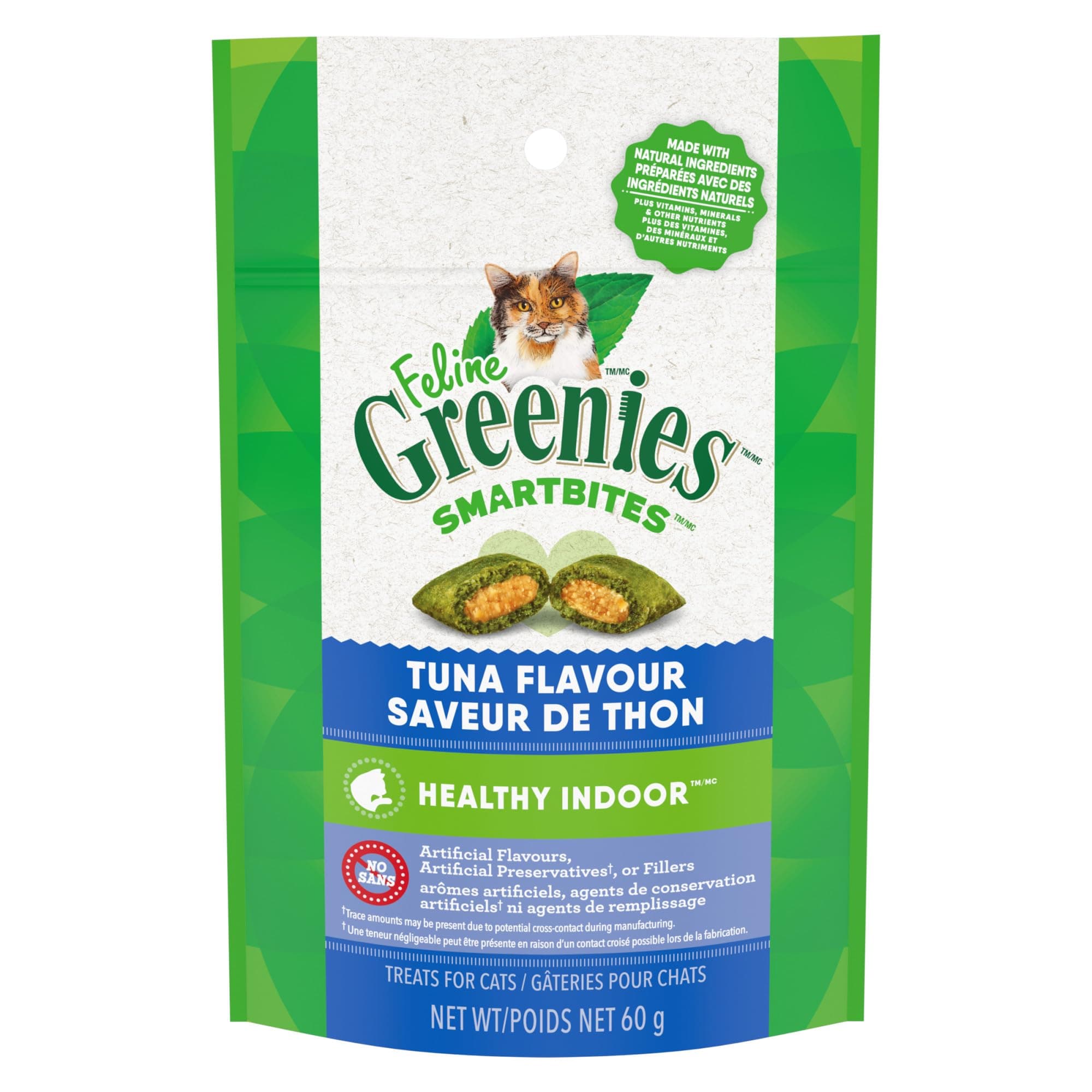
If you use cat dental-style treats for your cat, keep them separate (and up high). Example: Greenies Feline Smartbites, Cat Treats Healthy Recipe, Indoor Cat Treats, Tuna Flavor, 2.1 oz. Pack.
Final recommendation framework
Use this framework to pick a plan you can start today—and know when it’s time to escalate.
Step 1: Classify the situation
- •Mild: breath is noticeable but gums look pink, dog eats normally
- •Moderate: visible plaque/tartar, mild gum redness, breath persists daily
- •Severe: bleeding gums, pain signs, loose teeth, swelling, breath is intense and deep
Step 2: Choose your anchor tool (pick one)
- •If you can brush 4–7x/week: make brushing the anchor.
- •If brushing is currently a no: make a daily chew the anchor (supervised) and add wipes.
- •If you truly can’t add effort right now: water additive can be a temporary anchor, but plan to upgrade.
Step 3: Add one support tool (optional but often worth it)
- •Chew on busy days (or as daily anchor)
- •Wipes/gels to target front teeth and gumline
- •Behavior/diet controls if scavenging or poop-eating is involved
Step 4: Set a 21-day checkpoint
At 3 weeks, you should see at least one of these:
- •Less “morning breath”
- •Less visible film on teeth
- •Less gum redness at the edges
If breath is unchanged (or worse), don’t keep cycling products. Book a vet oral exam; you may be dealing with tartar, gum pockets, or a non-dental cause.
A simple starting plan most owners can follow
- •Daily: one supervised dental chew (choose the right size; adjust food if needed)
- •3x/week: 30–60 seconds brushing or wiping outer teeth
- •Weekly: quick mouth check (redness, swelling, broken teeth)
That combination is often the sweet spot for dog bad breath home care: strong enough to matter, realistic enough to maintain.
Oral Care Cluster
More in this topic
guide
Dog Dental Care Importance: Why Brushing Matters
guide
Best Dental Chews for Dogs: Vet-Smart Buyer's Guide
guide
Cat Dental Disease Signs: 10 Clues Your Cat Needs a Vet
guide
Daily Pet Oral Care in 5 Minutes: A Practical Pet Oral Care Routine for Fresher Breath
guide
How to Brush Dog Teeth Without Stress: A Practical Home Workflow That Actually Sticks
guide
Cat Teeth Brushing Routine for Beginners: A Behavior-First 14-Day Plan
Frequently asked questions
How long should dog bad breath home care take to work?
For plaque-driven odor, many owners notice improvement within 7–21 days if they’re consistent. Daily chews or brushing usually help breath first, while gum health and visible film can take longer. If there’s no improvement by about 3 weeks—or breath worsens—schedule a vet oral exam to rule out tartar, gum pockets, a cracked tooth, or a non-dental cause.
Are dental chews as good as brushing for bad breath?
Not usually. Brushing is more direct and typically more effective at disrupting plaque at the gumline, but it only works if you can do it regularly. Dental chews tend to win on consistency and dog acceptance, but results vary based on how long your dog chews and how much tartar is already present. For many homes, the best compromise is brushing a few times per week plus a daily chew.
When is bad breath in dogs an emergency?
Call your vet promptly if bad breath comes on suddenly or is paired with drooling, pawing at the mouth, bleeding gums, facial swelling, trouble eating, or a tooth that looks broken. Also treat ammonia/urine-like breath, sweet/acetone breath, or significant lethargy as urgent flags, since they can be linked to systemic illness—not just dental buildup.
