
guide • Oral Care
Daily Pet Oral Care in 5 Minutes: A Practical Pet Oral Care Routine for Fresher Breath
A 5-minute daily checklist that actually fits real life—plus clear tradeoffs between brushing, wipes, chews, and hybrid routines for fresher breath.
By Lucy Anderson • March 2, 2026 • 7 min read
Table of contents
- What actually matters in this comparison
- Baseline criteria and scoring method
- Side-by-side workflow analysis
- Option A: Toothbrushing focus (best impact, higher training cost)
- Option B: Dental wipe or gel focus (easier compliance, lower ceiling)
- Option C: Dental chews/treats focus (highest convenience, variable impact)
- Option D: Hybrid 5-minute routine (best real-world balance)
- Cost, effort, and consistency tradeoffs
- The honest tradeoff table (plain language)
- Concrete budget examples (how owners actually implement it)
- The consistency math (why 5 minutes works)
- Which option wins by user profile
- If you have a puppy/young dog (high training payoff)
- If you have a senior dog with existing tartar
- If your dog is a gulper/fast swallower
- If your cat won’t tolerate brushing
- If your main constraint is time (busy household)
- If your dog gets bored easily
- Transition strategy if changing tools
- Step-down stress plan (3 stages)
- Switching from chews-only to hybrid (realistic for most owners)
- If your pet has a bad association already
- Common decision mistakes
- Mistake 1: Treating breath as the only metric
- Mistake 2: Buying a chew that doesn’t match chewing style
- Mistake 3: Ignoring calories until weight creeps up
- Mistake 4: Going too hard when gums are inflamed
- Mistake 5: Expecting home care to remove hard tartar
- Final recommendation framework
- Step 1: Pick your primary tool (impact vs compliance)
- Step 2: Add one “support” tool if it increases consistency
- Step 3: Define your 5-minute checklist (copy/paste)
- Step 4: Re-score after 2 weeks
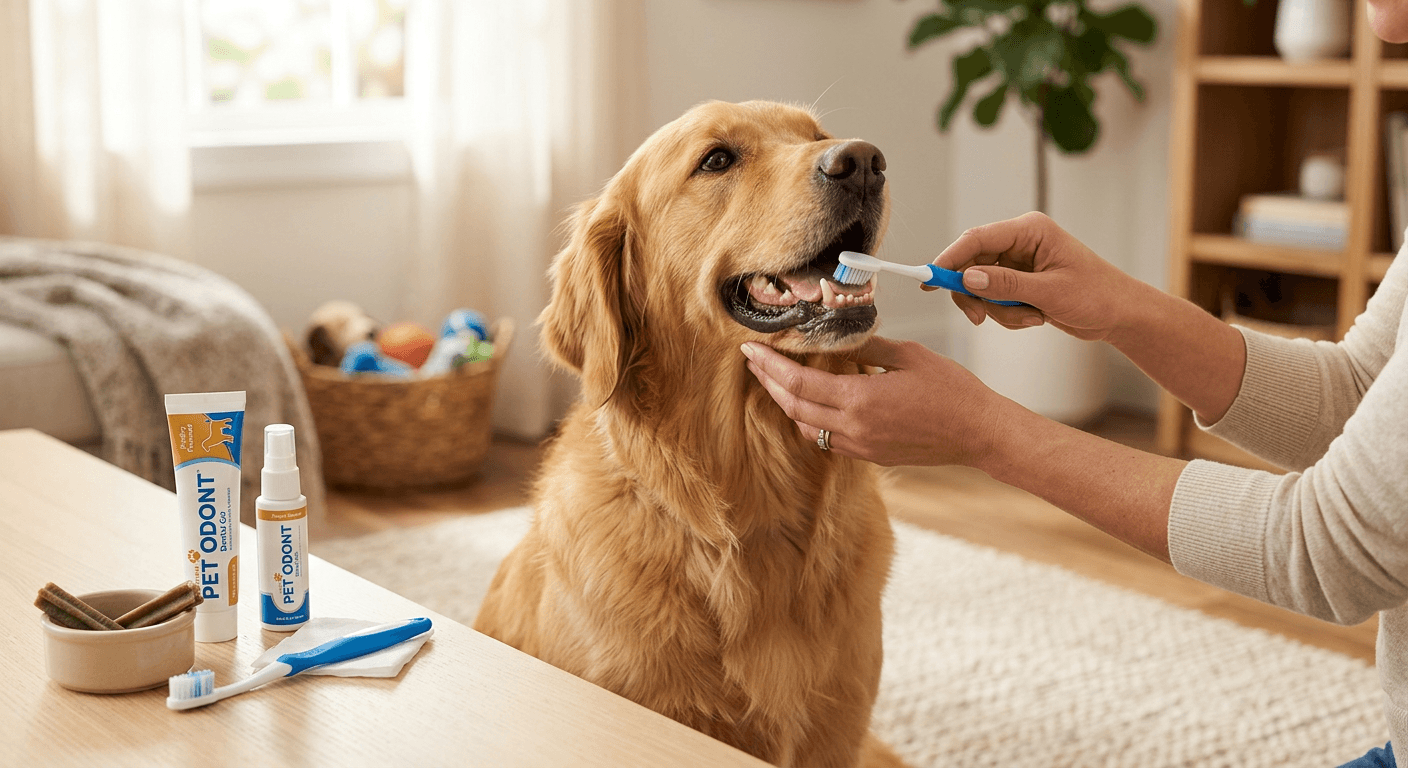
Bad breath is usually the first thing you notice—but it’s rarely the real problem. The real goal of a daily pet oral care routine is to slow plaque from turning into tartar (the hard stuff that needs a professional cleaning), protect gums, and keep your pet comfortable.
Here’s the good news: you don’t need a 30-minute spa routine. You need a repeatable 5-minute workflow that matches your pet’s personality and your schedule. This guide is comparison-led on purpose: brushing, wipes/gels, dental chews, and hybrid routines all “work” differently, and the best choice depends on tradeoffs you can actually live with.
What actually matters in this comparison
A daily pet oral care routine only succeeds if it does three things at the same time:
1) Reduces plaque at the gumline
- •Breath improvements can come from masking odor or scraping tongue, but gumline plaque is what drives gingivitis.
- •The gumline (where tooth meets gum) is the non-negotiable target. Anything that never reaches it is a breath-only tool.
2) Is safe enough to do every day
- •Daily means you need low-risk tools: pet-safe ingredients, appropriate chew size, and techniques that don’t trigger stress or defensive biting.
- •The “best” product that causes vomiting, diarrhea, or a fight is not best—it’s unused.
3) Is consistent in your home
- •Consistency beats intensity. Brushing twice a week plus daily chew might beat brushing “perfectly” for three days and then quitting.
When pet owners ask for “fresher breath,” what they usually want is one of these outcomes:
- •Short-term breath improvement (days)
- •Medium-term gum improvement (weeks)
- •Long-term tartar control (months)
Different tools win different timelines.
Baseline criteria and scoring method
To compare options fairly, score each routine (0–5) across six criteria. Add your totals, but treat “Safety” and “Consistency” as gatekeepers—if those are low, the total doesn’t matter.
Scoring criteria (0–5 each): 1) Gumline plaque control (Impact): How well it disrupts plaque at the gumline. 2) Breath improvement (Speed): How quickly it reduces odor. 3) Pet acceptance (Compliance): How likely your pet will allow it daily. 4) Safety & digestive tolerance: Choking risk, GI upset risk, ingredient tolerance. 5) Time & convenience: Can you do it in 5 minutes without setup drama? 6) Cost efficiency: Monthly cost per consistent day of use.
Important baseline rules before you score anything:
- •If you see bleeding gums, loose teeth, facial swelling, or one-sided chewing, stop “home dentistry” and book a vet exam. Home care is prevention, not a fix for advanced disease.
- •If your pet has a history of pancreatitis, needs strict calories, or has food allergies, chews and treats need extra scrutiny.
- •For cats (and many small dogs), “one big chew” is often a poor fit—size and chewing style matter.
Side-by-side workflow analysis
Below are four realistic 5-minute workflows. Each has clear wins and clear drawbacks.
Option A: Toothbrushing focus (best impact, higher training cost)
5-minute workflow
- •0:30: Settle pet (mat or couch), lift lip briefly, give a tiny reward.
- •3:00: Brush outer surfaces only (cheek side). Focus on back molars and gumline.
- •1:00: Quick “touch-up” front teeth + canine teeth.
- •0:30: Reward + done.
What it’s best at
- •Highest plaque disruption at the gumline when done well.
- •Best long-term bet for reducing gingivitis progression.
Tradeoffs (be honest)
- •Requires training and handling tolerance. Many pets need 1–3 weeks to accept it.
- •Your technique matters; “scrubbing teeth tops” doesn’t do much.
Who it fits
- •Puppies/kittens in training, food-motivated adults, pets with a history of dental issues.
Common failure mode
- •Owners aim for a full-mouth perfect brush and burn out. The sustainable version is “outer surfaces only, especially back teeth.”
Option B: Dental wipe or gel focus (easier compliance, lower ceiling)
5-minute workflow
- •1:00: Let pet lick a tiny bit of gel off finger (or show wipe, reward).
- •3:00: Wipe/gel along outer gumline (one side then the other).
- •1:00: Hit back molars again (where tartar loves to build).
What it’s best at
- •A bridge routine for pets that hate brushes.
- •Good for daily habit building because it feels less intrusive.
Tradeoffs
- •Lower mechanical plaque disruption than bristles.
- •Some pets hate finger-in-mouth more than a brush—test calmly.
Who it fits
- •Cats that won’t tolerate brushing, senior dogs with handling sensitivity, households trying to rebuild consistency.
Common failure mode
- •Wiping only the front teeth because it’s easier. Tartar typically concentrates on upper back teeth.
Option C: Dental chews/treats focus (highest convenience, variable impact)
Dental chews can be an excellent “compliance tool”—you’ll actually do it every day. But they’re not a magic eraser. They work by mechanical abrasion (chewing) and sometimes added ingredients.
5-minute workflow
- •0:30: Confirm correct size and your pet is supervised.
- •4:00: Chew time while you watch (especially for gulpers).
- •0:30: Quick lip lift check: gumline redness? heavy tartar? note it.
Good options to consider (natural mentions)
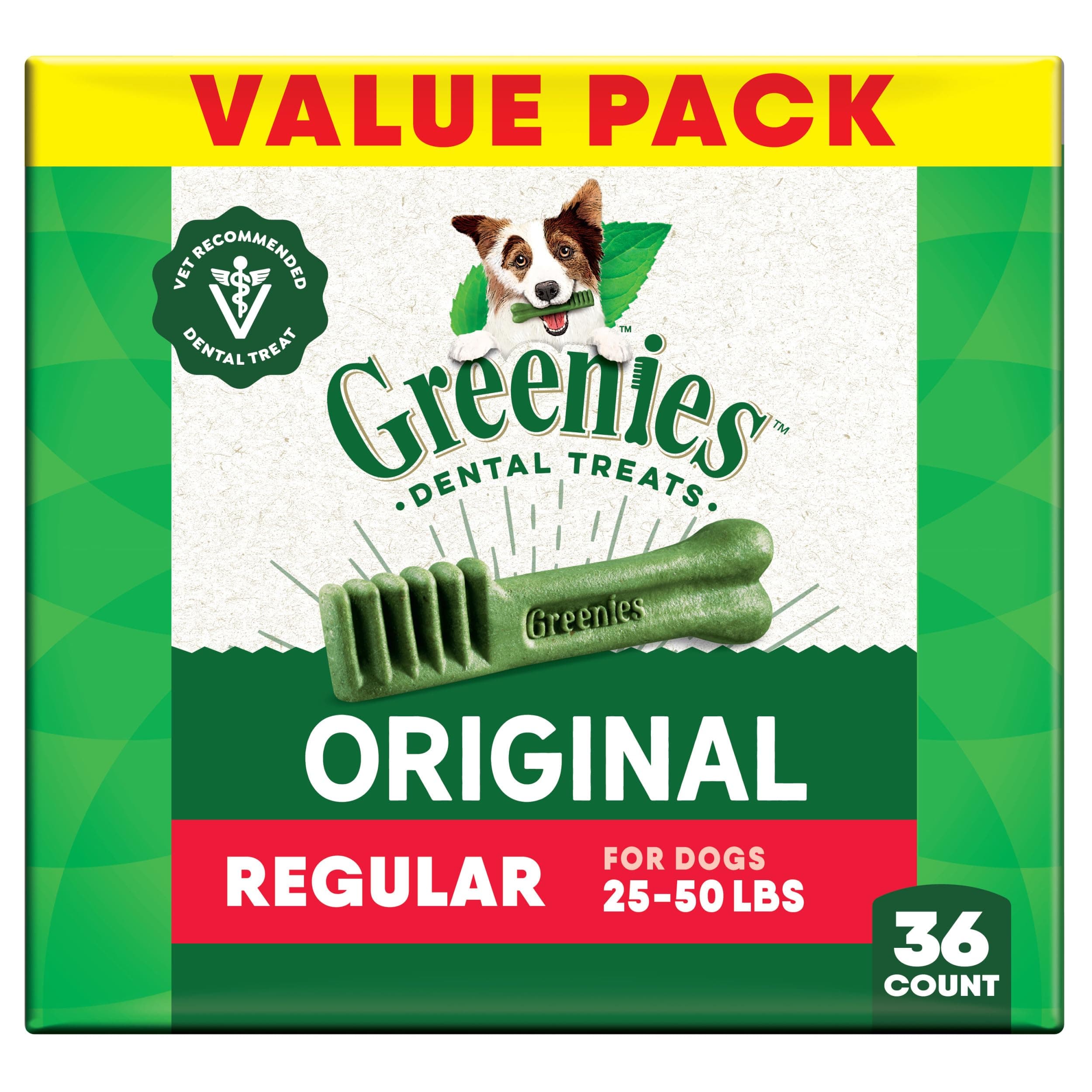
- •For many adult dogs, a daily chew like Greenies Veterinarian-Recommended Adult Natural Dental Dog Treats Regular Size, Dog Dental Chews, Original Flavor, 36 oz. Pack, 36 Count is popular because it’s simple: one chew, consistent routine.
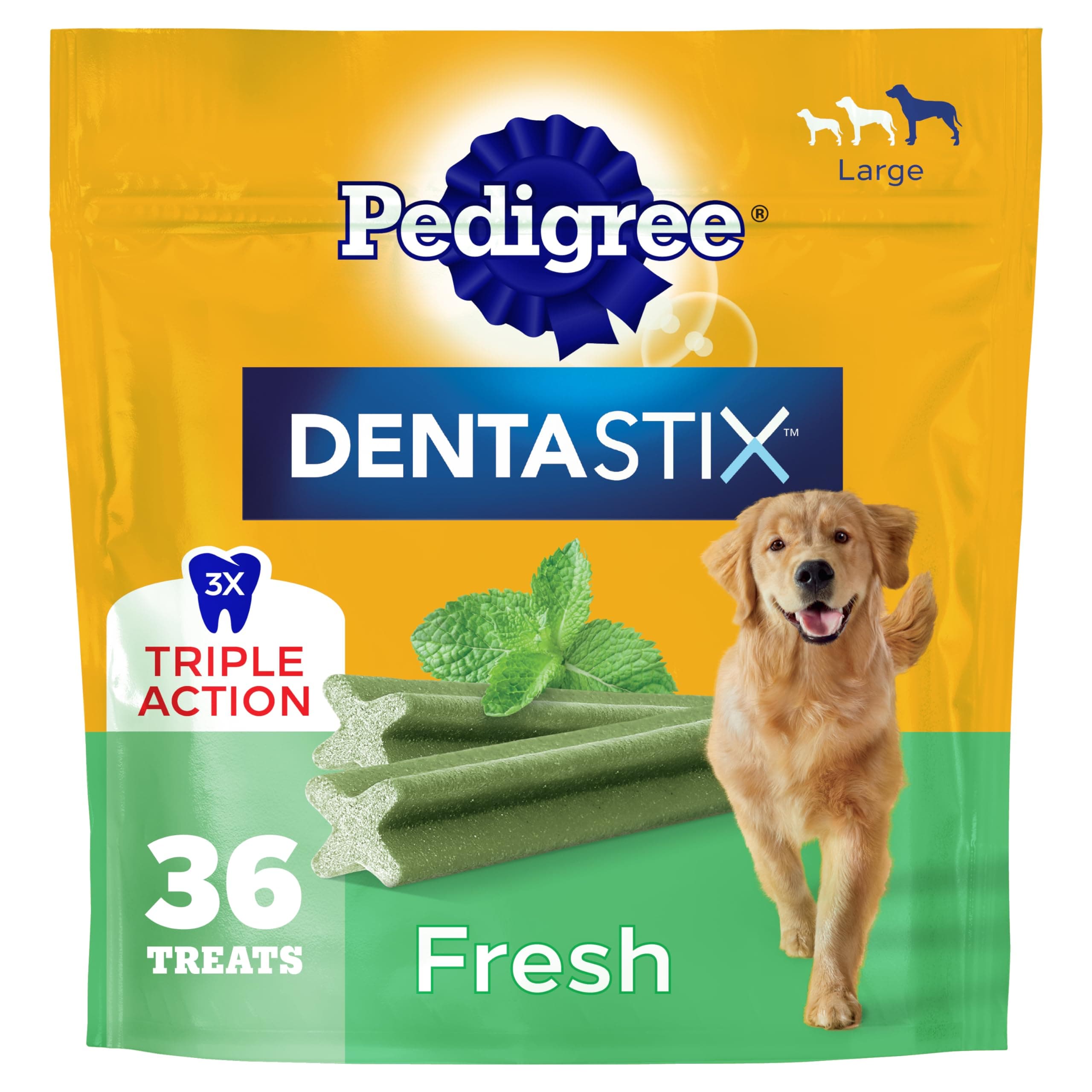
- •If you have a large-breed dog and want a dedicated dental stick format, Pedigree Dentastix Dog Dental Treats, Large Breed Dog Treats, Fresh Flavor, 1.87 lb. Bag (36 Treats Total) is an easy “daily after dinner” option.
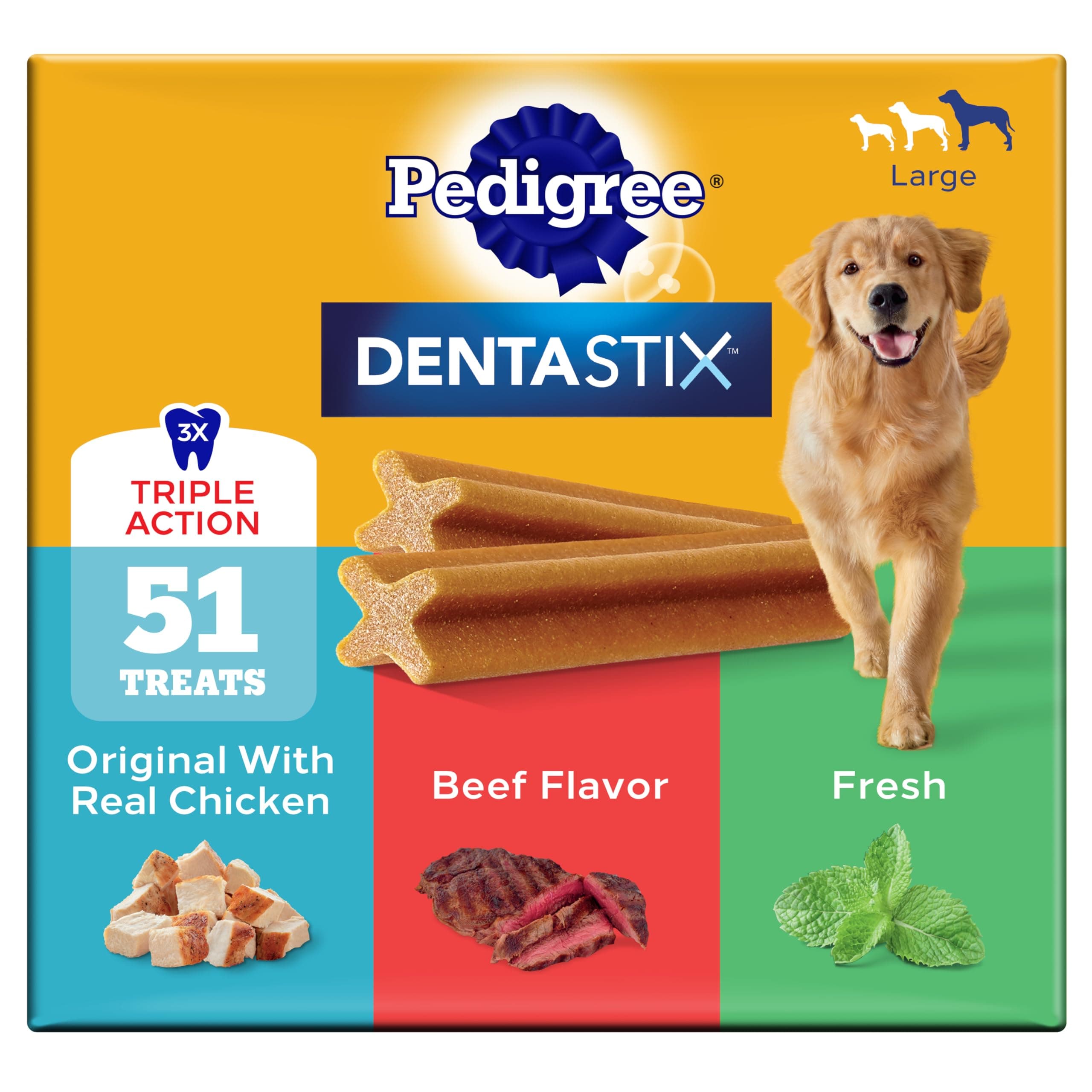
- •If your dog gets bored with one flavor, rotating can improve compliance; a variety option like Pedigree Dentastix Large Dog Treats, Original, Beef & Fresh, 2.73 lb. Variety Pack (51 Treats Total) may help you stay consistent.
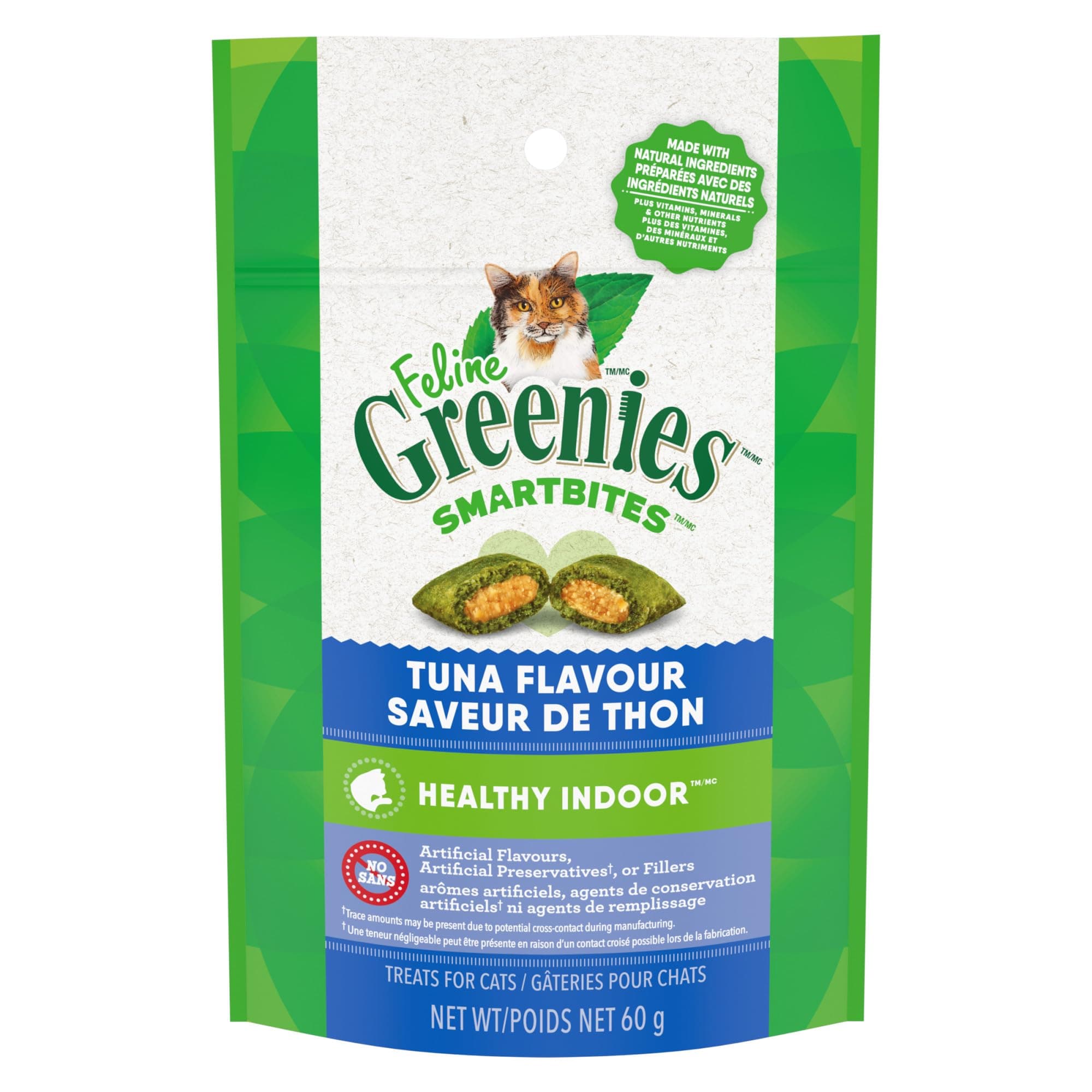
- •For cats, dental “treat routines” are often more realistic than brushing for many owners. A product like Greenies Feline Smartbites, Cat Treats Healthy Recipe, Indoor Cat Treats, Tuna Flavor, 2.1 oz. Pack can slot into a nightly ritual—just treat it as support, not a substitute for vet dental care.
What it’s best at
- •Compliance: most pets happily participate.
- •Breath improvement can be noticeable quickly, especially if the mouth is generally healthy.
Tradeoffs
- •Impact depends on chewing style. A gulper who swallows fast gets less mechanical benefit.
- •Adds calories. If your pet is overweight or on a prescription diet, you must account for it.
- •Not ideal for pets with sensitive stomachs or ingredient triggers.
Who it fits
- •Busy owners, multi-dog households, pets that won’t tolerate mouth handling.
Common failure mode
- •Using chews as the only tool for a pet that already has heavy tartar and red gums. Chews can’t remove hard tartar.
Option D: Hybrid 5-minute routine (best real-world balance)
This is the routine most pet owners keep long-term because it mixes high-impact work with high-compliance work.
5-minute workflow (dog version)
- •2:30: Brush outer surfaces of upper teeth (upper back teeth first).
- •1:00: Brush lower outer teeth (quick pass).
- •1:00: Give a dental chew as the “finish” (supervised).
- •0:30: Quick lip lift check + note any changes.
5-minute workflow (cat version)
- •1:30: Gel or wipe along outer gumline (short, calm session).
- •1:00: Play (wand toy) to end on a high note.
- •1:00: Dental treat routine (measure portion).
- •1:30: Quick visual check while they’re relaxed.
What it’s best at
- •You still get gumline disruption from brushing/wiping.
- •The chew/treat reinforces cooperation so tomorrow is easier.
Tradeoffs
- •Slightly higher cost than “one product only.”
- •Requires a tiny bit of planning (keep tools in one place).
Cost, effort, and consistency tradeoffs
Instead of chasing the “best” routine on paper, match the routine to the friction points in your home.
The honest tradeoff table (plain language)
- •Brushing wins on impact but loses on training time. If your pet fights it, you’ll skip days, and the impact drops fast.
- •Wipes/gels win on habit formation but have a lower ceiling than brushing. They’re often a practical stepping-stone.
- •Chews/treats win on convenience but can lose on calories, chewing style variability, and digestive tolerance.
- •Hybrid wins on consistency for many households, because the “reward component” reduces daily resistance.
Concrete budget examples (how owners actually implement it)
- •“I’m on a tight budget” dog plan: brush 3–4x/week + smaller daily habit (lip lift check + brief brush on upper back teeth). Add chews only on days you know you’ll skip brushing.
- •“I can’t touch my cat’s mouth” cat plan: daily treat routine + twice-weekly wipe attempt. Your goal is a calm touch near lips, not a wrestling match.
- •“My dog has a sensitive stomach” plan: prioritize brushing/wipes; treat chews as occasional, and introduce any new chew slowly (half portion for a few days).
The consistency math (why 5 minutes works)
A “perfect” routine you do 20% of the time loses to a “pretty good” routine you do 80–90% of the time. Your daily pet oral care routine should feel almost too easy—because that’s what survives busy weeks.
Which option wins by user profile
Use these profiles to pick a winner quickly.
If you have a puppy/young dog (high training payoff)
- •Winner: Option A (brushing focus) or Option D (hybrid).
- •Why: early training makes a lifetime difference.
- •Tradeoff to accept: short sessions for 2–3 weeks are normal.
If you have a senior dog with existing tartar
- •Winner: Option D (hybrid), but pair with a vet dental plan.
- •Why: you need gumline work, but comfort matters.
- •Tradeoff to accept: you may not be able to reverse tartar at home.
If your dog is a gulper/fast swallower
- •Winner: brushing or wipes; chews become “bonus,” not the core.
- •Why: fast swallowing reduces chew contact time.
- •Tradeoff to accept: convenience drops; impact rises.
If your cat won’t tolerate brushing
- •Winner: Option B (wipes/gel) + treat-based reinforcement.
- •Why: many cats accept brief gumline wipes more than bristles.
- •Example: end the session with a measured portion of Greenies Feline Smartbites, Cat Treats Healthy Recipe, Indoor Cat Treats, Tuna Flavor, 2.1 oz. Pack so the routine predicts something good.
If your main constraint is time (busy household)
- •Winner: chews/treats or hybrid.
- •Example for large dogs: Pedigree Dentastix Dog Dental Treats, Large Breed Dog Treats, Fresh Flavor, 1.87 lb. Bag (36 Treats Total) works well as a consistent “after dinner” anchor.
- •Tradeoff to accept: monitor calories and chewing safety.
If your dog gets bored easily
- •Winner: hybrid with flavor rotation.
- •Example: rotate a variety chew pack like Pedigree Dentastix Large Dog Treats, Original, Beef & Fresh, 2.73 lb. Variety Pack (51 Treats Total) to protect compliance.
Transition strategy if changing tools
If your current routine is “nothing,” the fastest way to fail is to start with 5 minutes of forced brushing. Transition in steps so your pet learns predictability.
Step-down stress plan (3 stages)
Stage 1: Mouth comfort (3–7 days)
- •Goal: pet accepts lip lift + gentle cheek touch.
- •Do: lift lip for one second, reward, end.
- •If your pet backs away, shorten the session further.
Stage 2: Add the tool without the work (3–7 days)
- •Let them lick pet toothpaste from the brush/finger.
- •Touch the brush to one tooth, reward, end.
Stage 3: Build the “back teeth first” habit (ongoing)
- •Target upper back teeth for 10–15 seconds per side.
- •Add time only if your pet stays relaxed.
Switching from chews-only to hybrid (realistic for most owners)
- •Keep the chew as the ending reward so you don’t lose compliance.
- •Brush for 30–60 seconds first. Yes, that short. Consistency matters more than duration.
If your pet has a bad association already
- •Change the context: different room, new mat, different time of day.
- •Use a calmer posture: sit beside them instead of leaning over their face.
Common decision mistakes
These are the traps that make owners quit—and how to avoid them.
Mistake 1: Treating breath as the only metric
- •Fresher breath can happen while gum disease progresses.
- •Fix: do a weekly “lip lift check” for gum redness and brown tartar at the gumline.
Mistake 2: Buying a chew that doesn’t match chewing style
- •A dainty chewer may not get enough abrasion; a gulper may swallow too fast.
- •Fix: supervise and watch how long it takes. If it’s gone in under a minute, don’t expect big dental impact.
Mistake 3: Ignoring calories until weight creeps up
- •Dental chews and treats add up quickly over months.
- •Fix: treat them like food, not “free dental tools.” Reduce meal portions accordingly if needed.
Mistake 4: Going too hard when gums are inflamed
- •Aggressive brushing on inflamed gums can make pets refuse future sessions.
- •Fix: shorten sessions; prioritize gentle gumline contact; ask your vet if pain control or a dental exam is needed.
Mistake 5: Expecting home care to remove hard tartar
- •Tartar is mineralized plaque and usually needs professional scaling.
- •Fix: use home care to prevent new buildup after a cleaning, not to undo years of buildup.
Final recommendation framework
If you want a simple way to decide, use this framework and pick the highest-scoring option you can do almost every day.
Step 1: Pick your primary tool (impact vs compliance)
- •If your pet tolerates brushing: choose brushing (Option A or D).
- •If brushing is a fight: choose wipes/gel (Option B) as your primary tool.
- •If your schedule is the main blocker: choose chews/treats (Option C) but commit to supervision and calorie control.
Step 2: Add one “support” tool if it increases consistency
- •If you brush: add a chew as a reward (hybrid), such as Greenies Veterinarian-Recommended Adult Natural Dental Dog Treats Regular Size, Dog Dental Chews, Original Flavor, 36 oz. Pack, 36 Count if it fits your dog’s size and diet.
- •If you use chews: add a 30–60 second gumline brush/wipe twice a week.
Step 3: Define your 5-minute checklist (copy/paste)
Use this daily checklist and keep it easy:
- Look (10 seconds): lip lift, quick glance at gum redness and tartar.
- Gumline contact (2–3 minutes): brush or wipe outer surfaces, back teeth first.
- Reinforce (1–2 minutes): supervised chew or measured dental treats.
- Log mentally (10 seconds): any bleeding, worsening odor, or one-sided chewing.
Step 4: Re-score after 2 weeks
- •If you’re skipping days: your routine is too hard. Downgrade complexity, not commitment.
- •If breath improves but gums still look red: increase gumline contact time, not treats.
A daily pet oral care routine doesn’t need to be perfect to work. It needs to be repeatable, safe, and targeted at the gumline—five minutes at a time.
Oral Care Cluster
More in this topic
guide
Dog Dental Care Importance: Why Brushing Matters
guide
Best Dental Chews for Dogs: Vet-Smart Buyer's Guide
guide
Cat Dental Disease Signs: 10 Clues Your Cat Needs a Vet
guide
How to Brush Dog Teeth Without Stress: A Practical Home Workflow That Actually Sticks
guide
Dog Bad Breath Home Care Plan: What to Do Before It Gets Worse
guide
Cat Teeth Brushing Routine for Beginners: A Behavior-First 14-Day Plan
Frequently asked questions
Is brushing really necessary if I use dental chews every day?
Dental chews can help, but they’re not the same as brushing. Chews rely on chewing time and contact with the gumline—fast swallowers often get less benefit. Brushing (even 30–60 seconds on the outer gumline) is more direct plaque disruption. If you can’t brush daily, a realistic upgrade is a hybrid: chew daily for consistency plus brushing or wiping a few times a week for higher-impact gumline care.
What’s the fastest 5-minute routine for noticeably fresher breath?
For many pets with otherwise healthy mouths, the fastest routine is: 2–3 minutes of gumline contact (brush or wipe outer surfaces, focusing on upper back teeth) followed by a supervised dental chew or measured dental treats. Breath can improve within days, but if odor is strong, persistent, or paired with red gums or heavy tartar, schedule a vet dental exam—home care won’t remove hardened tartar.
My pet hates having their mouth touched—what should I do first?
Start with a comfort-based transition, not full brushing. For 3–7 days, practice a one-second lip lift and reward, then end. Next, introduce the tool without “doing the work” (let them lick toothpaste, touch one tooth, reward). Only when your pet stays relaxed do you build toward short gumline sessions. If your pet shows pain signs (yelping, pulling away suddenly, pawing at the mouth), pause training and ask your vet to rule out dental pain.
