
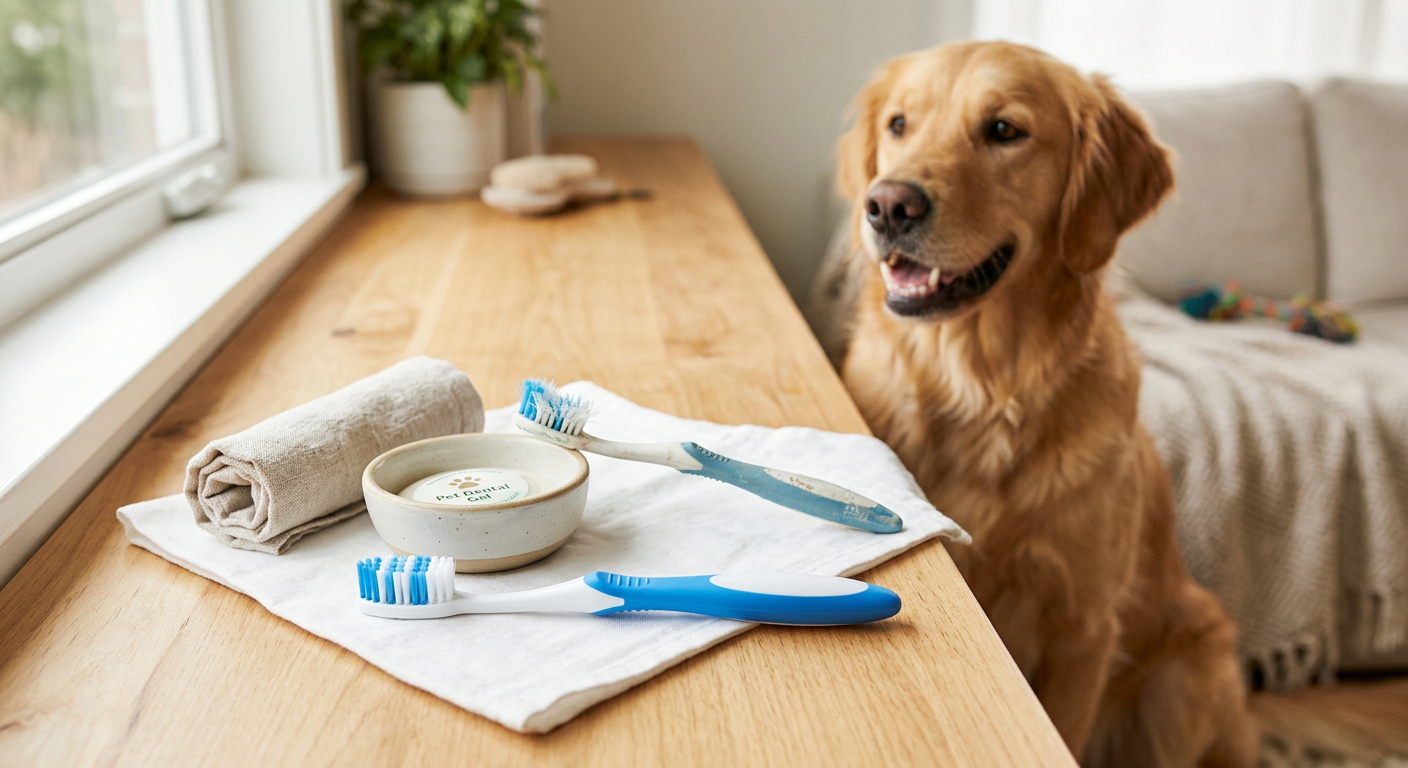
guide • Oral Care
How Often Should You Replace a Dog Toothbrush? A Practical Guide for Real Homes
Most dogs need a new toothbrush every 1–3 months, sooner if bristles fray or your dog chews it. Use this guide to choose the right replacement rhythm.
By Lucy Anderson • February 20, 2026 • 7 min read
Table of contents
- What actually matters in this comparison
- 1) Cleaning effectiveness (plaque removal at the gumline)
- 2) Tissue safety (frayed bristles, sharp edges, chewed heads)
- 3) Hygiene and drying (the hidden driver)
- 4) Consistency (the tool you’ll actually use)
- Baseline criteria and scoring method
- The four criteria (0–5 each)
- How to translate the score into replacement timing
- Side-by-side workflow analysis
- Option A: Manual dog toothbrush (classic)
- Option B: Finger wipes (fast, lower drama)
- Option C: Electric toothbrush + water flosser hybrid (high power, higher setup)
- Option D: Dental chews (support tool, not a toothbrush)
- Cost, effort, and consistency tradeoffs
- If you brush daily (high consistency)
- If you brush 1–3x/week (average consistency)
- If brushing causes conflict (low consistency)
- Which option wins by user profile
- Profile 1: The enthusiastic chewer
- Profile 2: The sensitive, suspicious dog
- Profile 3: The busy household that still wants results
- Profile 4: The high-maintenance oral care household
- Transition strategy if changing tools
- Step 1: Keep the habit, change the tool second
- Step 2: Use “micro-sessions” to avoid battles
- Step 3: Reduce chewing opportunities
- Step 4: Replace proactively during transitions
- Common decision mistakes
- Mistake 1: Waiting for the brush to look terrible
- Mistake 2: Storing a wet brush in a closed container
- Mistake 3: Using one brush for multiple dogs
- Mistake 4: Over-relying on dental chews to fix tartar
- Mistake 5: Choosing the “most advanced” tool and quitting
- Final recommendation framework
- 1) Start with a default schedule, then adjust
- 2) Replace immediately if any of these are true
- 3) Choose the tool that maximizes consistency without sacrificing safety
- 4) Make your decision with one question
Keeping your dog’s mouth healthy isn’t only about brushing “more.” It’s about using a brush that still works. Worn bristles don’t reach the gumline well, chewed heads can irritate tissue, and a brush that never fully dries can get funky fast. So when should you replace dog toothbrush tools—and when is it worth switching to wipes, electric options, or dental chews?
This guide is comparison-led on purpose: replacement timing depends on your dog’s behavior (chewer vs. gentle), your routine (daily vs. weekly), and what “tool” you’re actually using.
What actually matters in this comparison
When pet owners ask how often to replace a dog toothbrush, they usually mean one of two problems:
- “Is my brush still cleaning well?”
- “Is this brush getting gross or unsafe?”
Those are different, and you’ll make better decisions if you separate them.
1) Cleaning effectiveness (plaque removal at the gumline)
A toothbrush “fails” long before it looks disgusting. The bristles are the business end—when they flare outward, mat down, or flatten, they stop sweeping plaque off the tooth surface, especially right where plaque hardens into tartar.
Concrete example:
- •If you brush nightly but your dog’s back molars still feel rough or you see yellow buildup near the gumline within 2–3 weeks of a dental cleaning, the brush may be too worn, too large, or too soft to do the job.
2) Tissue safety (frayed bristles, sharp edges, chewed heads)
Dogs rarely brush like humans. Many chomp. A chewed brush can develop sharp plastic edges or uneven bristle “spikes” that scratch gums.
Concrete example:
- •Your dog tolerates brushing for 20 seconds, then clamps down and tries to chew the head. If you see shredded bristles after a few sessions, replacement should be measured in weeks, not months.
3) Hygiene and drying (the hidden driver)
Even if the brush looks fine, a brush that stays wet in a closed container or travel bag is more likely to smell or grow biofilm. Hygiene isn’t about perfection—it’s about avoiding the easy mistakes.
Practical rule:
- •If the brush doesn’t fully air-dry between uses, shorten the replacement cycle and change storage (upright, open-air).
4) Consistency (the tool you’ll actually use)
A “perfect” toothbrush schedule fails if the tool sparks daily battles. Sometimes switching tools reduces stress and increases frequency, which can outperform a theoretically better method.
Tradeoff to keep in mind:
- •A standard toothbrush can clean best, but if your dog fights it and you only brush twice a month, you may get better real-world results using finger wipes more often.
Baseline criteria and scoring method
To make replacement timing less guessy, score your current setup using four criteria. You’ll end up with a replacement interval that matches your home.
The four criteria (0–5 each)
1) Bristle integrity
- •5: Bristles stand straight; no flare; head intact
- •3: Minor splay; still feels even
- •1: Flattened, flared, or patchy; chewed areas
2) Gum comfort
- •5: No gum redness after brushing; dog allows gumline contact
- •3: Occasional mild irritation or avoidance
- •1: Bleeding, obvious tenderness, dog yelps/pulls away
3) Hygiene/drying
- •5: Rinses clean, no odor, dries fully upright
- •3: Slight smell occasionally; dries slowly
- •1: Musty smell, slimy feel, stored in closed case wet
4) Compliance (your dog + you)
- •5: You brush 4–7x/week without drama
- •3: 1–3x/week, some resistance
- •1: Rarely, high stress, dog bites the brush
How to translate the score into replacement timing
- •16–20 points: Replace every 2–3 months (unless bristles show wear earlier)
- •10–15 points: Replace every 4–8 weeks
- •4–9 points: Replace every 2–4 weeks and/or change tools
Why this works: the more chewing, moisture, and resistance you have, the faster the brush stops being effective and the more likely it becomes a hassle.
Side-by-side workflow analysis
Below is a practical comparison of four “tools” pet owners actually use. The goal isn’t to crown one winner for everyone—it’s to match the tool to your dog and your routine.
Option A: Manual dog toothbrush (classic)
Workflow: Paste on brush → lift lip → short strokes at gumline → rinse → air-dry.
When replacement is usually needed:
- •Daily brushers with gentle dogs: every 8–12 weeks
- •Average households (3–4x/week): every 6–10 weeks
- •Chewers or dogs that bite the head: every 2–6 weeks
Clear replace-now triggers:
- •Bristles flare outward or feel soft and matted
- •The head is visibly chewed or uneven
- •Any odor that returns even after rinsing
Tradeoffs:
- •Best control and gumline access (high upside)
- •Most likely to become a “wrestling match” (compliance risk)
Option B: Finger wipes (fast, lower drama)
Finger wipes aren’t a toothbrush replacement in terms of mechanical scrubbing, but they can be a realistic upgrade over inconsistent brushing.
A convenient example is HealthyPal Pet Dental Finger Wipes for Dogs & Cats – 50 Mint Flavor Dog Dental Wipes + Mint Fresh Breath Spray, Dog Tooth Brushing Kit.
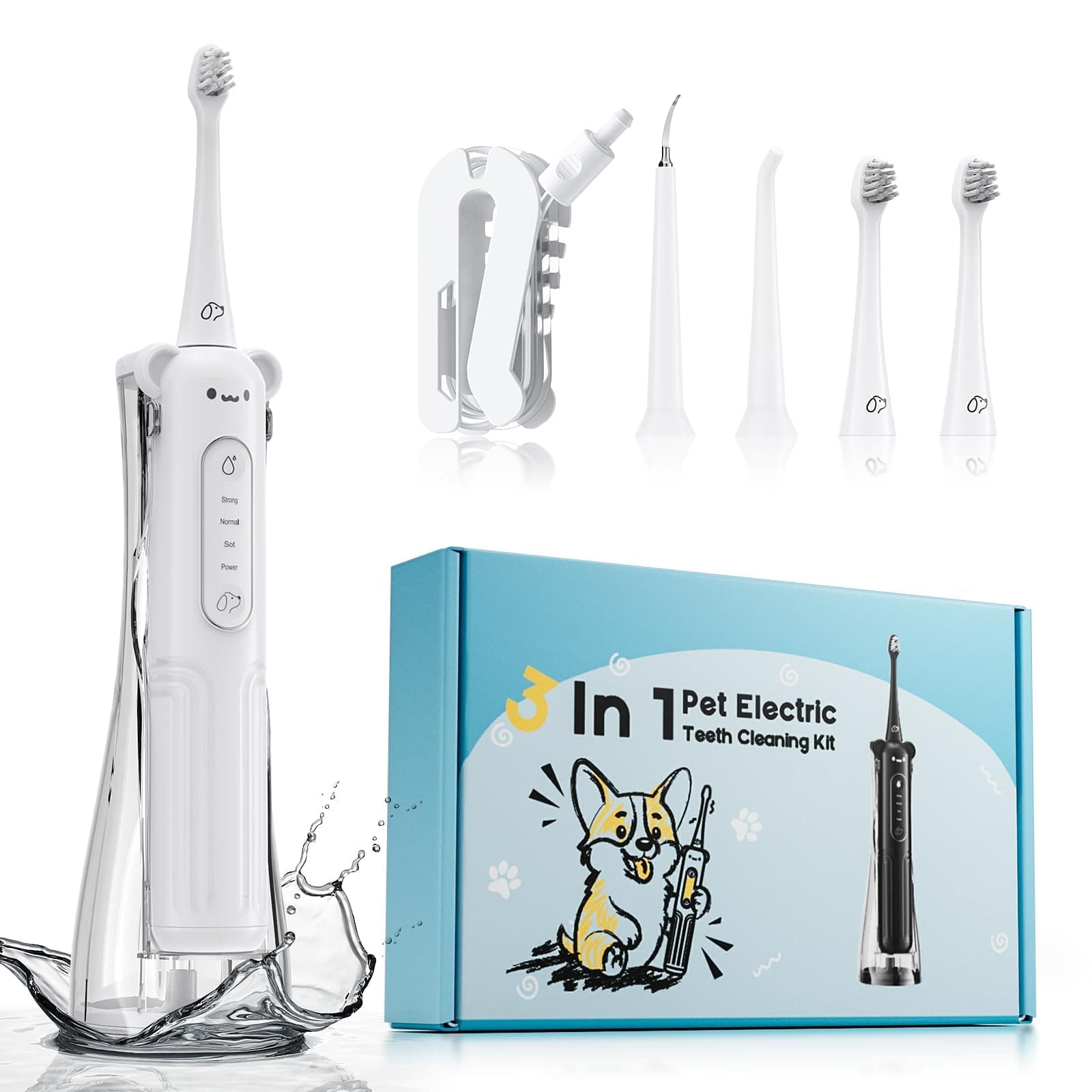
Dog Tooth Brushing Kit, 3-in-1 Dog Electric Toothbrush with Water Flosser, Dog Teeth Cleaning Tools with 3 Modes, Deep Cleaning Kit for Dogs and Cats, IPX7, 1100mAh Battery, White
Brand: UNINGOPI
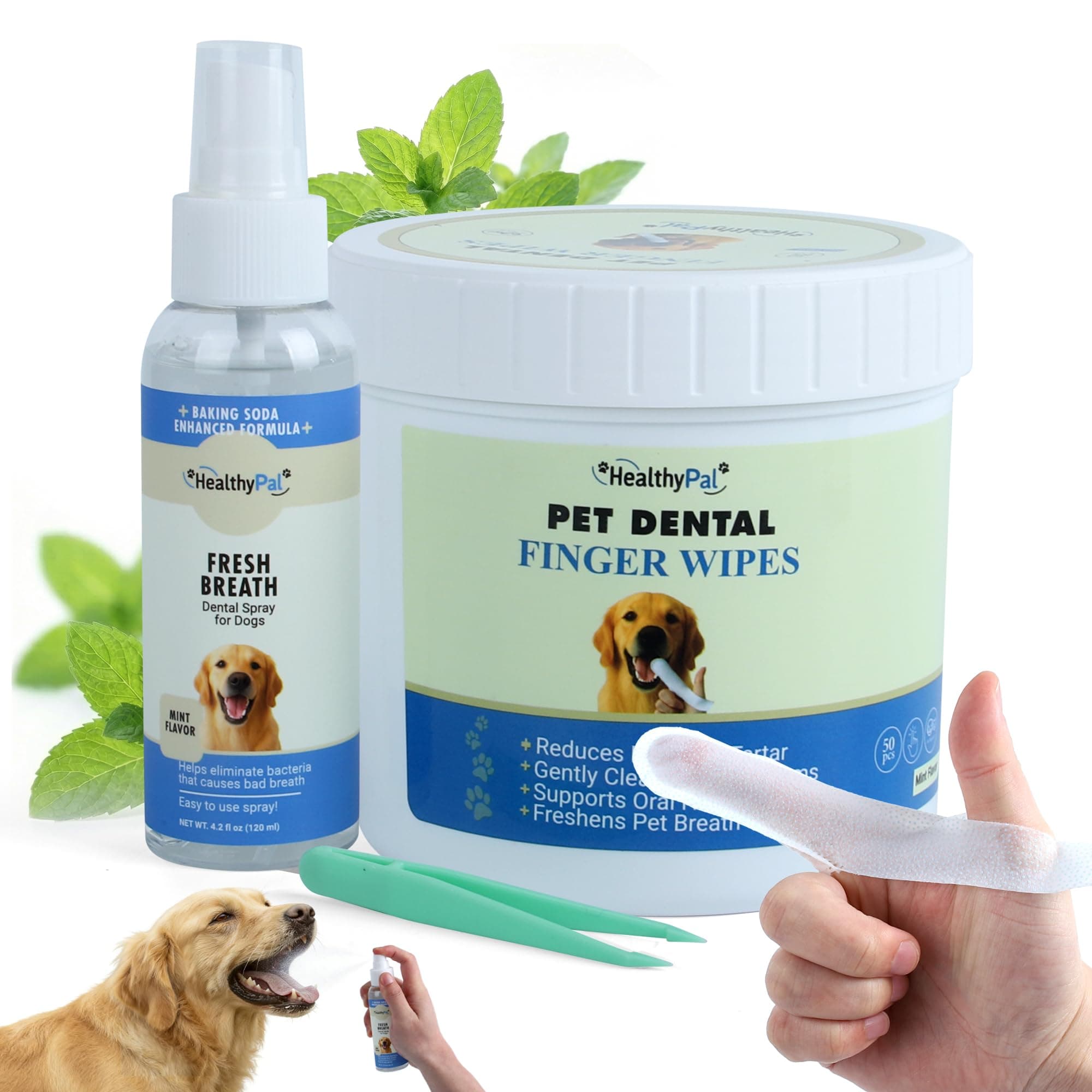
Pet Dental Finger Wipes for Dogs & Cats – 50 Mint Flavor Dog Dental Wipes + Mint Fresh Breath Spray, Dog Tooth Brushing Kit, Helps Remove Bad Breath & Plaque & Tartar Buildup
HealthyPal
Workflow: Wrap wipe → rub outer tooth surfaces and gumline → toss.
Replacement timing:
- •Wipes are single-use, so you’re not “replacing a brush,” you’re managing supply and consistency.
Where wipes win:
- •Dogs that panic when the brush enters the mouth
- •Puppies learning mouth handling
- •Travel weeks (better than skipping)
Where wipes lose:
- •Heavy tartar formers: wipes may not provide enough scrubbing power
Tradeoff language:
- •Lower cleaning power per session, but higher likelihood you’ll do it 5–7 days/week.
Option C: Electric toothbrush + water flosser hybrid (high power, higher setup)
Electric tools can improve plaque disruption for some dogs, especially when your manual technique is inconsistent. One example in this category is the UNINGOPI Dog Tooth Brushing Kit, 3-in-1 Dog Electric Toothbrush with Water Flosser.
Workflow: Charge device → choose mode → brief contact on each quadrant → optional gentle water floss → rinse attachments → dry.
Replacement timing (heads/attachments):
- •If your dog tolerates it and you keep it clean: every 2–3 months for brush heads is a reasonable baseline
- •If chewing happens or bristles deform: replace immediately
Where electric wins:
- •You struggle to scrub effectively with a manual brush
- •Your dog accepts vibration
Where electric loses:
- •Noise/vibration sensitivity (many dogs dislike it)
- •Higher cleaning potential, but higher chance you quit due to setup time
Tradeoff language:
- •Higher ceiling for plaque removal, higher friction to maintain and keep sanitary.
Option D: Dental chews (support tool, not a toothbrush)
Dental chews can reduce plaque mechanically and support breath, but they don’t replace gumline brushing—especially for dogs prone to tartar.
Two common choices:
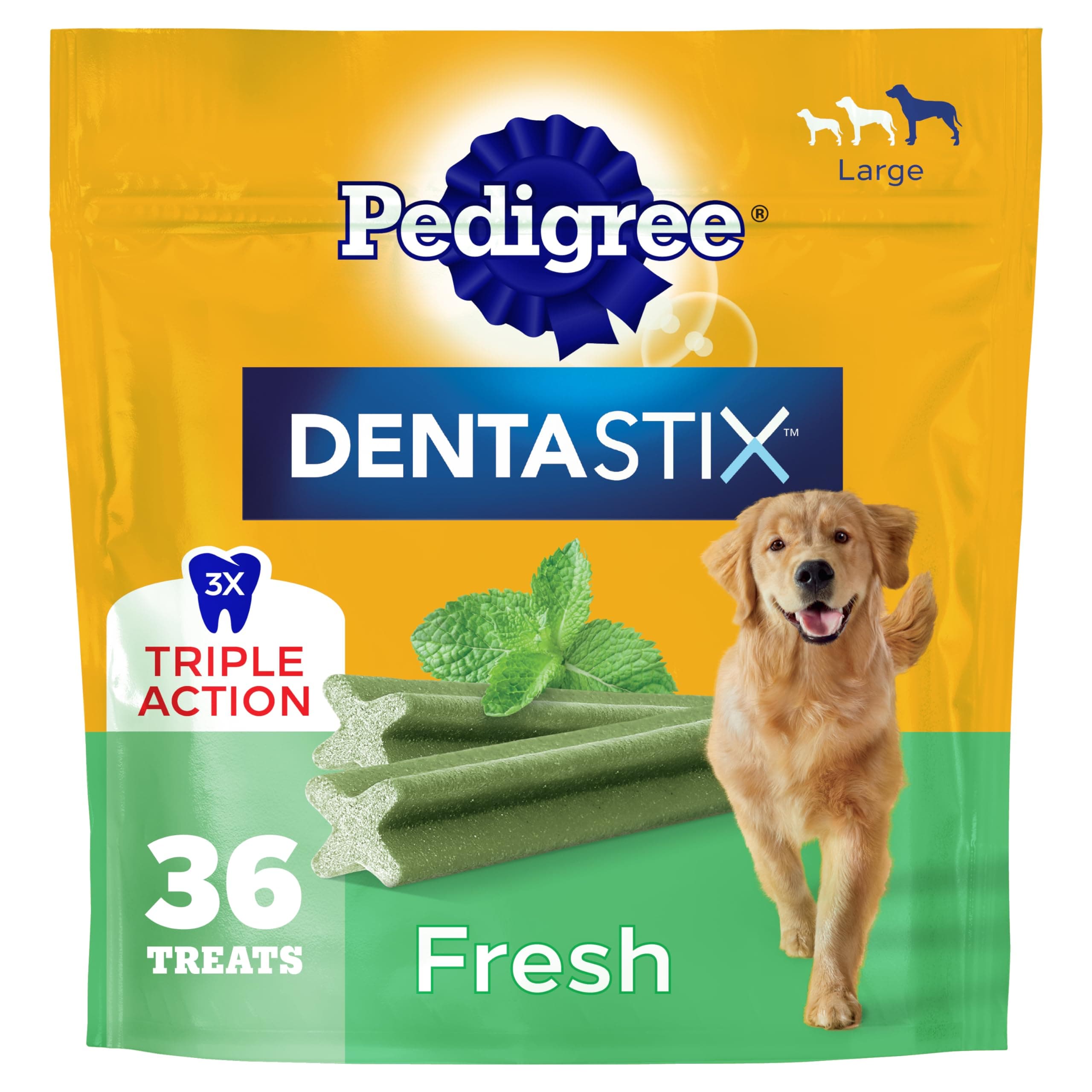
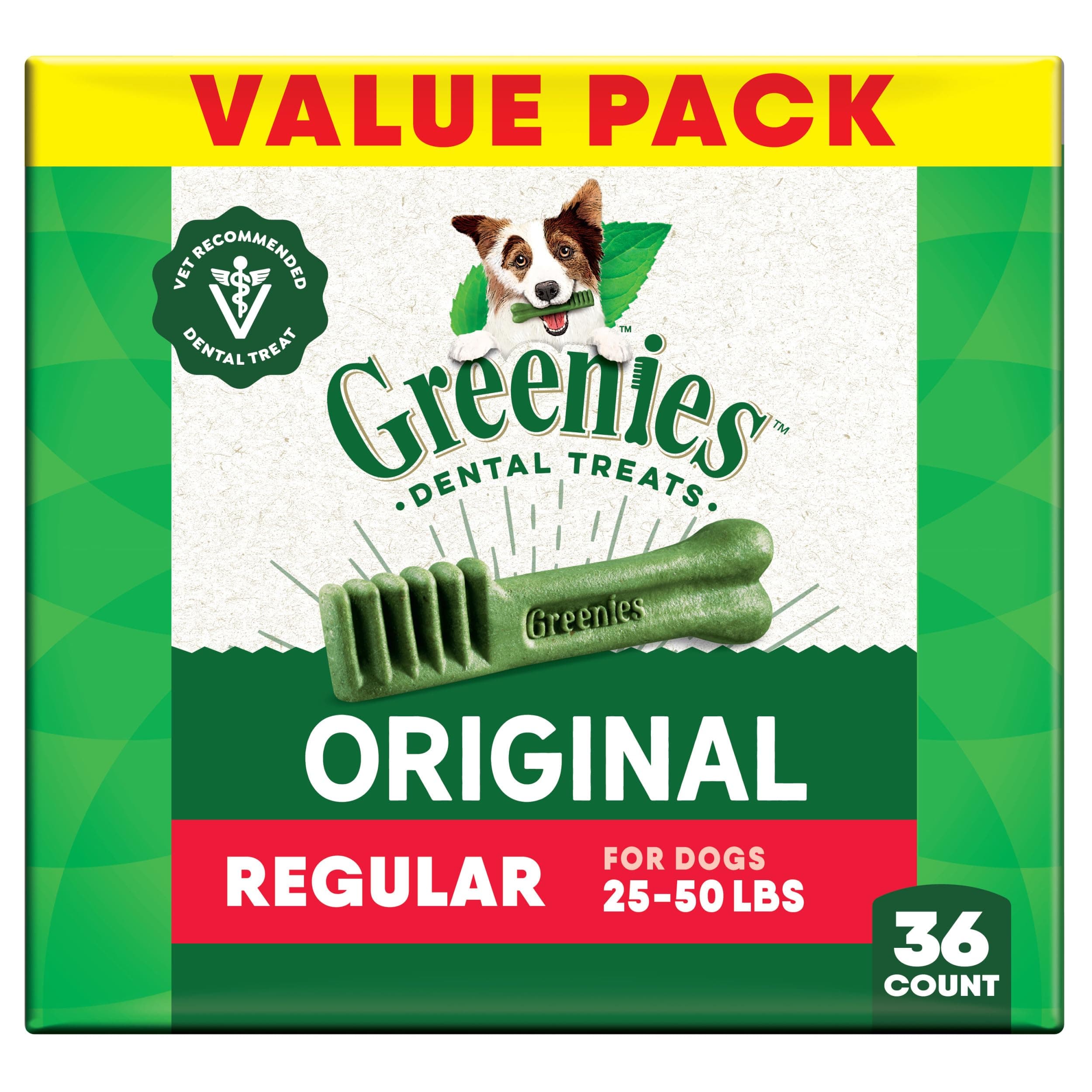
Workflow: Give chew → supervise → remove small broken chunks.
Replacement timing:
- •No brush to replace, but the “decision” is frequency and fit (size/chew style).
Where chews win:
- •You need an easy daily add-on
- •Your dog is already cooperative with treats
Where chews lose:
- •They don’t target every tooth surface evenly
- •Calories and ingredient sensitivities can be a constraint
Tradeoff language:
- •Excellent consistency, moderate cleaning effect; best as a complement, not a replacement.
Cost, effort, and consistency tradeoffs
Replacement schedules aren’t just about dental science—they’re about what you can sustain.
If you brush daily (high consistency)
- •Cost: Higher toothbrush consumption (because you use it more)
- •Benefit: Bristles wear faster, but you’re preventing tartar from forming in the first place
- •Replacement target: Usually every 8–12 weeks, sooner with chewing
If you brush 1–3x/week (average consistency)
- •Cost: Lower brush cost, but higher dental risk over time
- •Effort: Each session feels more intense because there’s more plaque
- •Replacement target: every 4–8 weeks is often more realistic, because bristles “age” via drying/contamination and occasional chewing
If brushing causes conflict (low consistency)
- •Cost: You may waste brushes because they get destroyed early
- •Effort: High emotional cost; avoidance loops form quickly
- •Practical tradeoff: A lower-intensity tool done frequently may outperform a “better” tool done rarely
Concrete scenario:
- •If your dog tolerates finger wipes nightly but fights a toothbrush, wipes + a few “real brushing” sessions per week can be a better plan than a toothbrush you dread using.
Which option wins by user profile
Think of this as matchmaking. Pick the winner based on your dog’s behavior and your household rhythm.
Profile 1: The enthusiastic chewer
Signs: Bites the brush head, chews handles, shredded bristles.
Best fit:
- •Short manual sessions + faster replacement (2–6 weeks)
- •Consider finger wipes on days you can’t safely brush: HealthyPal wipes
Why: Manual brushes may be effective, but they get destroyed. Wipes keep you consistent without creating a chew toy.
Profile 2: The sensitive, suspicious dog
Signs: Lip licking, head turn, avoidance when brush approaches.
Best fit:
Why: You’re buying cooperation first, then upgrading cleaning power.
Profile 3: The busy household that still wants results
Signs: You intend to brush daily but reality says 2–3x/week.
Best fit:
- •Manual brush (replace every 4–8 weeks)
- •Dental chews on non-brush days (to keep momentum)
Why: This reduces the “all-or-nothing” trap.
Profile 4: The high-maintenance oral care household
Signs: Small breed tartar buildup, prior dental procedures, bad breath returns fast.
Best fit:
- •Consistent brushing + consider an electric option if tolerated: UNINGOPI kit
- •Replace heads/brushes promptly (often every 4–8 weeks if heavy use)
Why: These dogs benefit most from higher mechanical cleaning—if you can keep the routine.
Transition strategy if changing tools
If you’re switching because your current brush keeps failing (or your dog hates it), do it in a way that protects consistency.
Step 1: Keep the habit, change the tool second
For 7 days, keep the same time of day (after dinner, before bed). Swap the tool to something the dog will accept.
Example:
- •Week 1: Use finger wipes nightly.
- •Week 2: Add a toothbrush session 2 nights/week.
- •Week 3: Increase to 4 nights/week.
Step 2: Use “micro-sessions” to avoid battles
Instead of forcing a 60-second brush:
- •Do 10 seconds on the outer surfaces of upper teeth
- •Stop while it’s still going okay
This is not a compromise; it’s a strategy to build tolerance so you can eventually reach molars and gumline.
Step 3: Reduce chewing opportunities
If your dog destroys brushes:
- •Only bring the brush out at brushing time
- •Keep one hand stabilizing the muzzle gently
- •Angle the brush so the dog can’t clamp directly on the head
Step 4: Replace proactively during transitions
During training phases, brushes often get chewed. Plan a shorter interval (2–4 weeks) so you’re not trying to “make do” with a damaged tool.
Common decision mistakes
Mistake 1: Waiting for the brush to look terrible
By the time bristles are obviously flattened, cleaning quality has already dropped. If you’re asking “should I replace dog toothbrush now?” and you see splaying, the answer is usually yes.
Mistake 2: Storing a wet brush in a closed container
This is how you get odor and slime even if you replace on schedule. Rinse thoroughly and air-dry upright.
Mistake 3: Using one brush for multiple dogs
It’s tempting, but it’s a hygiene and behavior headache. Each dog should have their own brush (and replace on their own wear schedule).
Mistake 4: Over-relying on dental chews to fix tartar
Chews can help slow plaque, but they won’t reliably clean along the gumline, especially for small breeds and dogs with crowded teeth.
Mistake 5: Choosing the “most advanced” tool and quitting
Electric tools can be great, but if your dog hates vibration or you hate cleanup, you’ll stop using it. A simpler tool used consistently wins.
Final recommendation framework
Use this framework to decide your replacement interval and whether you should switch tools.
1) Start with a default schedule, then adjust
- •Default for most households: replace every 1–3 months
- •Adjust shorter if: chewing, fraying, odor, brush stays wet, brushing is daily
- •Adjust longer only if: bristles remain straight, brush dries fully, dog is gentle, you brush a few times/week
2) Replace immediately if any of these are true
- •Bristles are flared, flattened, or missing
- •The head is chewed or has sharp edges
- •The brush smells musty or feels slimy after rinsing
- •Your dog’s gums look more irritated after brushing than before
3) Choose the tool that maximizes consistency without sacrificing safety
- •If brushing causes conflict: use HealthyPal finger wipes as your “floor,” then build up to brushing
- •If you want higher cleaning potential and your dog tolerates it: consider an electric approach like the UNINGOPI 3-in-1 kit, but commit to cleaning and replacing heads on time
- •If you need a simple daily support: add dental chews like Greenies or Dentastix on non-brush days
4) Make your decision with one question
If you only change one thing this month, make it this:
- •“Will this choice make me more likely to clean my dog’s teeth four times a week?”
Then set a reminder to replace dog toothbrush tools before they fail—because the best brush is the one that still cleans and still gets used.
Oral Care Cluster
More in this topic
guide
Dog Dental Care Importance: Why Brushing Matters
guide
Best Dental Chews for Dogs: Vet-Smart Buyer's Guide
guide
Cat Dental Disease Signs: 10 Clues Your Cat Needs a Vet
guide
Daily Pet Oral Care in 5 Minutes: A Practical Pet Oral Care Routine for Fresher Breath
guide
How to Brush Dog Teeth Without Stress: A Practical Home Workflow That Actually Sticks
guide
Dog Bad Breath Home Care Plan: What to Do Before It Gets Worse
Frequently asked questions
How often should I replace a dog toothbrush if I brush daily?
For daily brushing, a realistic replacement interval is about every 8–12 weeks, assuming the brush is rinsed well and air-dried upright. Replace sooner if the bristles flare, the head gets chewed, or the brush develops a persistent odor—those are practical signs the brush is no longer cleaning effectively or safely.
What are the clearest signs it’s time to replace my dog’s toothbrush?
Replace right away if you see splayed/flattened bristles, missing bristle tufts, a chewed head with sharp edges, or you notice a musty smell or slimy feel that returns after rinsing. Also replace if brushing suddenly seems to irritate gums more than usual—worn or damaged bristles can scrape rather than sweep.
Can I use dental wipes or dental chews instead of a toothbrush?
They can be useful, but they’re not identical substitutes. Finger wipes can be a better real-world option for dogs that won’t tolerate brushing because they’re easier to do consistently, though they usually provide less mechanical scrubbing than bristles. Dental chews can support plaque control and breath, but they don’t reliably clean along the gumline or every tooth surface. Many homes get the best results by combining methods: brushing when possible, wipes on hard days, and chews as a daily support.
