
guide • Cat Behavior & Enrichment
Indoor cat territory setup: shelves, hideouts & peace at home
Learn how to map your home as a 3D cat territory with shelves, hiding spots, and smart resource placement to reduce tension and prevent conflict.
By PetCareLab Editorial • March 6, 2026 • 17 min read
Table of contents
- Why “Territory Mapping” Matters for Indoor Cats
- How Cats Use Space: The 3D Map (Vertical + Horizontal + Social)
- Vertical territory: height = safety + information
- Horizontal territory: routes, chokepoints, and ownership
- Social territory: scent is the invisible fence
- Step 1: Assess Your Current Indoor Cat Territory Setup (A Quick Home Audit)
- A. Where are the chokepoints?
- B. Where are the “safe exits”?
- C. Count resources and measure how “shareable” they are
- D. Watch the “traffic times”
- Step 2: Build Vertical Pathways (Shelves, Trees, and “Cat Highways”)
- What a good shelf system looks like
- Two proven layouts: choose one based on your floorplan
- Product recommendations (with what to look for)
- Common mistakes with shelves (and how to avoid them)
- Step 3: Create Hiding Spots That Calm (Not Traps)
- The three types of hiding spots every home should have
- Step-by-step: build “two-exit” hiding in 10 minutes
- Product recommendations for hiding spots
- Common mistake: putting hiding in the wrong location
- Step 4: Prevent Conflict with Smart Resource Placement (Litter, Food, Water, Scratching)
- Litter boxes: privacy, access, and multiple routes
- Food: separate feeding lanes to reduce guarding
- Water: add stations where cats already travel
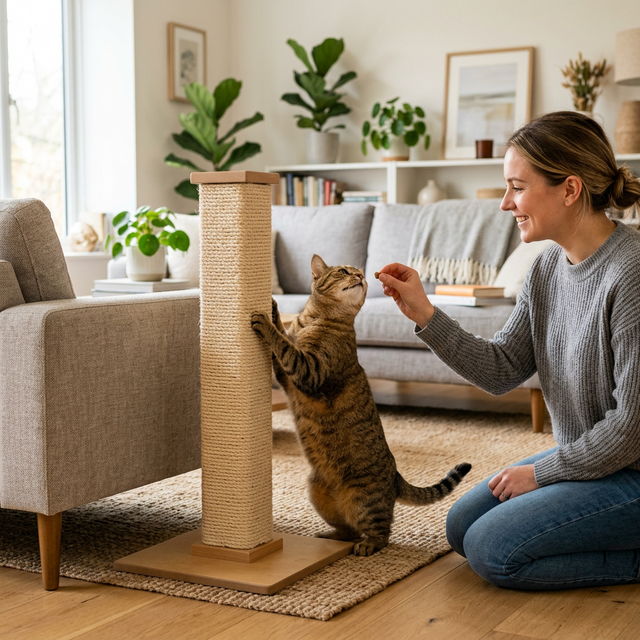
- Scratching: turn it into “territory signage”
- Step 5: Territory Mapping for Multi-Cat Homes (Routes, Zones, and “No-Drama” Design)
- The “traffic engineering” approach
- Build zones: shared + private
- Real-world scenario: “They fight at night”
- Breed note: energetic cats need more “map,” not just more toys
- Step 6: Daily Enrichment That Supports the Territory (Not Chaos)
- Step-by-step: a 15-minute “peace routine”
- Use your layout to “stagger” activity
- Step 7: Common Mistakes to Avoid (These Cause Most Indoor Territory Problems)
- 1) Too few high-value resting places
- 2) Resources clustered in one location
- 3) Single-exit hiding spots in multi-cat homes
- 4) Punishing normal communication
- 5) Adding a new cat without remapping territory
- Step 8: Recommended Products and Setup Bundles (With Practical Comparisons)
- Bundle A: Small apartment, single cat
- Bundle B: Two cats with mild tension
- Bundle C: High-energy breed (Abyssinian/Bengal-like energy) + companion cat
- Quick comparisons: what to buy first?
- Step 9: Troubleshooting: If You Still See Chasing, Staring, or Hiding
- If one cat blocks hallways or doorways
- If chasing escalates into fights
- If a cat hides constantly
- If the problem is one specific location (like the litter box area)
- Step 10: A Simple Weekend Plan to Upgrade Your Indoor Cat Territory Setup
- Saturday: build the map
- Sunday: reinforce with routines
Why “Territory Mapping” Matters for Indoor Cats
Cats don’t experience your home as “a couple rooms.” They experience it as a 3D territory made of routes, vantage points, hiding zones, resource stations, and social boundaries. When that territory is poorly organized—too flat, too few escape routes, litter boxes placed like bottlenecks, beds in high-traffic areas—cats feel trapped. And when cats feel trapped, you’ll see the classic indoor problems: chasing, blocking hallways, swatting near litter boxes, hiding, overgrooming, nighttime zoomies, and “random” aggression.
A well-planned indoor cat territory setup does three big things:
- •Reduces conflict by giving cats options (multiple paths, multiple exits, multiple resources).
- •Builds confidence in timid cats by creating safe, predictable zones and vertical retreats.
- •Improves enrichment by turning the home into a “cat map” with routes, stations, and meaningful activities.
Think of this as interior design for feline psychology: you’re not just adding shelves—you’re designing a peaceful traffic system.
How Cats Use Space: The 3D Map (Vertical + Horizontal + Social)
Vertical territory: height = safety + information
Cats are ambush predators and cautious prey animals at the same time. Height lets them:
- •Observe without engaging
- •Avoid threats without running past them
- •Rest where they won’t be startled
In multi-cat homes, vertical options are often the difference between “mild tension” and “daily fights.”
Breed examples:
- •Maine Coon: often confident climbers who enjoy large, stable platforms; they’re big, so shelf depth and sturdiness matter.
- •Abyssinian: famously active and curious; they benefit from connected routes and tall trees to burn energy.
- •Persian: many prefer lower, wider perches and cozy hideaways rather than extreme heights (not a rule—just a common trend).
Horizontal territory: routes, chokepoints, and ownership
Hallways, doorways, stairs, and narrow passes become chokepoints. A confident cat can “own” them just by sitting there. If another cat must pass through to reach food, water, or a litter box, you’ve unintentionally created a conflict generator.
Social territory: scent is the invisible fence
Cats “read” the home via scent: facial rubbing, scratching, sleeping spots, and shared resting areas. Your goal is to help cats build a shared group scent without forcing contact.
Real-world scenario:
- •Two cats get along “most of the time,” but one swats the other near the hallway litter box. That’s not random aggression; it’s often resource guarding + traffic blocking. Fix the map, and the behavior often softens dramatically.
Step 1: Assess Your Current Indoor Cat Territory Setup (A Quick Home Audit)
Before buying anything, do a 15-minute audit. Grab a notebook (or your phone) and map these:
A. Where are the chokepoints?
Common chokepoints include:
- •Hallways with a single route
- •Doorways to the litter box room
- •The base of stairs
- •The only path to a sunny window
Red flag: If a cat can sit in one spot and control access to litter, food, water, or the main resting area.
B. Where are the “safe exits”?
A hiding spot is only calming if it has at least two escape options—or the cat feels cornered.
- •Single-exit boxes or cubbies can become traps in multi-cat homes.
- •Under-bed spaces can be calming if the cat isn’t regularly chased into them.
C. Count resources and measure how “shareable” they are
As a starting point for multi-cat homes:
- •Litter boxes: number of cats + 1 (spread out, not all together)
- •Water stations: 2+ in different rooms
- •Resting zones: multiple, with some elevated and some enclosed
The key isn’t just quantity—it’s distribution. Three litter boxes in one laundry room still create a single guarded doorway.
D. Watch the “traffic times”
Observe during:
- •Morning feeding
- •Evening zoomies
- •Guest visits
- •Vacuum or noisy events
Look for:
- •Staring and freezing
- •One cat taking the long way around
- •Sudden sprints (often “get away” behavior, not play)
Step 2: Build Vertical Pathways (Shelves, Trees, and “Cat Highways”)
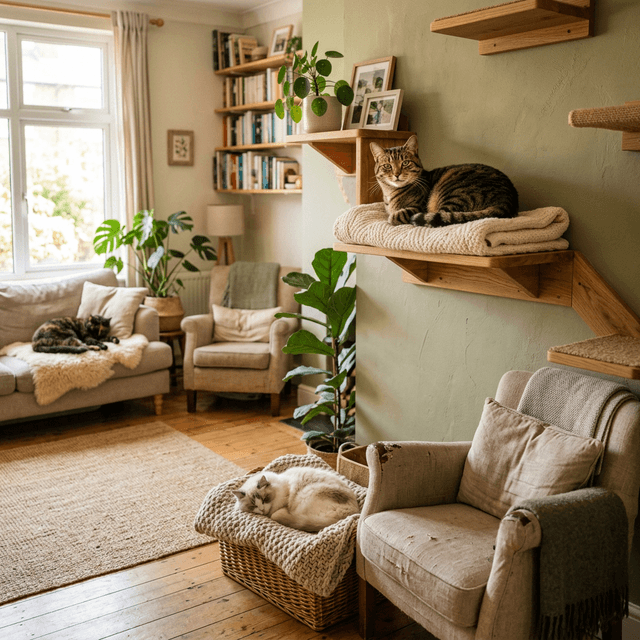
Vertical territory is your best conflict-prevention tool because it creates parallel movement: one cat can travel up high while another stays on the floor.
[IMAGE_PLACEHOLDER_1]
What a good shelf system looks like
Aim for:
- •A start point (tree, ottoman, sturdy chair)
- •A route (2–5 connected shelves)
- •A destination (window perch, high bed, top platform)
Spacing guidelines (practical, not perfect):
- •Between steps: ~10–14 inches vertically for many cats; athletic cats can do more
- •Shelf depth: at least 10–12 inches; larger cats often prefer 12–14 inches
- •Shelf length: 18+ inches for lounging; shorter “step” shelves are fine as connectors
Breed-specific considerations:
- •Ragdoll: can be heavy-bodied and less “springy.” Use wider steps and lower spacing.
- •Bengal/Savannah (hybrids vary by household legality/ethics): very athletic; they thrive with tall, complex routes and strong enrichment. They also need sturdier hardware due to intensity of use.
- •Scottish Fold: some may have mobility issues; keep routes gentle and prioritize ramps or lower steps.
Two proven layouts: choose one based on your floorplan
Layout A: Perimeter Highway (best for conflict prevention)
- •Shelves run along the walls to connect rooms
- •Minimizes forced face-to-face encounters on the floor
- •Ideal for homes with narrow hallways
Layout B: Zone Towers (best for small apartments)
- •One tall, sturdy cat tree in each key zone (living room + bedroom)
- •Add a couple wall shelves for “exit ramps”
- •Works when you can’t drill a full shelf network
Product recommendations (with what to look for)
You can build a great setup with either wall shelves or trees—just pick stable, cleanable, and cat-safe options.
Wall-mounted shelves & sets
- •Look for: solid wood or thick laminate, grippy surface (carpet tile, nonslip mat), and hardware rated well above your cat’s weight.
- •Great for: multi-cat routes, small spaces, and cats who like to observe from above.
Cat trees
- •Look for: wide base, heavy posts, and large top platforms (especially for big cats).
- •For big breeds (Maine Coon/Norwegian Forest Cat): choose “large cat” trees with oversized platforms and stronger sisal posts.
Window perches
- •Look for: weight rating, secure mount (suction can fail on humid/dirty windows), washable cover.
- •Great for: solo cats, anxious cats who calm by watching outdoors.
Common mistakes with shelves (and how to avoid them)
- •Mistake: One tall shelf with no intermediate steps
Fix: add “stair” shelves so cats don’t have to leap big gaps.
- •Mistake: A single high perch that becomes a “throne”
Fix: offer two comparable high spots in the same room so one cat can’t monopolize.
- •Mistake: Slippery surfaces
Fix: add traction (carpet squares, cork, nonslip pads). Confidence increases instantly.
Pro-tip: If you’re seeing staring or “stalking” from a high perch, don’t remove height—add more height options and alternate routes so the targeted cat can move without crossing the line of sight.
Step 3: Create Hiding Spots That Calm (Not Traps)
Hiding is not “bad behavior.” It’s a coping strategy. The goal is to provide healthy hiding so cats don’t choose unhealthy hiding (behind the fridge, inside the couch, or in the litter box).
[IMAGE_PLACEHOLDER_2]
The three types of hiding spots every home should have
- Enclosed + elevated (best for confidence)
- •Example: a covered bed on a shelf, a cat condo halfway up a tree
- Enclosed + ground level (best for seniors, shy cats)
- •Example: a side-opening cave bed, a covered crate with blanket
- Semi-hidden “lean-to” spots (best for social cats who want distance)
- •Example: bed behind a chair, under a side table with two exits
Step-by-step: build “two-exit” hiding in 10 minutes
You don’t need fancy furniture.
- Pick a quiet corner where your cat already likes to linger.
- Place a small table or bench there.
- Add a soft bed underneath.
- Drape a blanket over one side to create partial cover.
- Make sure there are two ways out (front + side).
- Add a scratcher nearby to encourage scent marking.
This setup helps timid cats feel safe without becoming isolated.
Product recommendations for hiding spots
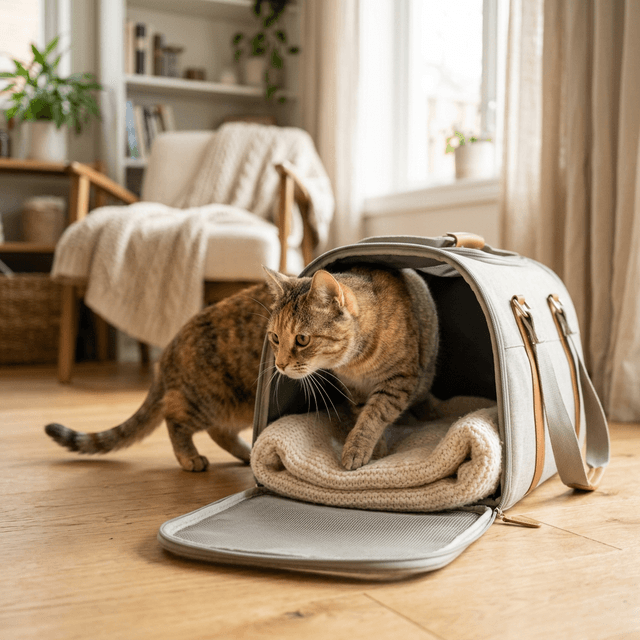
Cat cave beds
- •Best for: cats who like enclosed sleep
- •Choose: machine-washable, not too small (cats hate tight caves that press whiskers)
Covered “cat condos” built into trees
- •Best for: multi-cat homes (vertical hiding reduces chasing)
Tunnels
- •Best for: play and quick retreats
- •Choose: crinkly or quiet based on your cat’s noise tolerance; collapsible for small spaces
Common mistake: putting hiding in the wrong location
Avoid placing the only hideaway:
- •next to the litter box (can create guarding)
- •in the middle of the living room (too exposed)
- •at the end of a dead-end hallway (trap feeling)
Pro-tip: If one cat routinely ambushes another, add a hiding spot near the victim’s most-used route (like the path to the litter box) and a second escape route via shelves or furniture. You’re building safety into the commute.
Step 4: Prevent Conflict with Smart Resource Placement (Litter, Food, Water, Scratching)
Most “cat drama” is territory + resources. Even cats who are bonded can squabble if resources force them into close contact.
Litter boxes: privacy, access, and multiple routes
Key principles:
- •Put boxes in socially neutral spots (not near a dominant cat’s favorite perch).
- •Avoid dead ends.
- •Avoid placing a box so a cat can be cornered while using it.
Practical placement examples:
- •Instead of one litter room with a single doorway, use two rooms: one box in a bathroom, one in an office, one in a bedroom corner.
- •If you must keep a box in a laundry room, keep the door open and add a second exit path (e.g., remove clutter, keep a clear route around the washer).
Litter box style comparisons:
- •Open boxes: better for ventilation and escape visibility; often preferred in multi-cat homes.
- •Covered boxes: can help with scatter/odor but may create ambush opportunities and trap feelings.
- •Top-entry boxes: reduce tracking but can be hard for seniors or arthritic cats and can feel like a “single-exit tunnel.”
Food: separate feeding lanes to reduce guarding
If one cat eats fast and patrols, use:
- •Physical separation: feed in different rooms
- •Vertical separation: one cat eats on a counter-height shelf (only if safe and allowed), another on the floor
- •Puzzle feeders: slow the “vacuum eater” and reduce post-meal bullying
Product recommendations:
- •Microchip feeders for households where one cat steals food (common with mixed diets: weight-loss food vs. kitten food).
- •Slow feeders/puzzle bowls for cats who scarf and then antagonize.
Water: add stations where cats already travel
Cats drink more when water is:
- •away from food (many cats prefer separation)
- •in multiple rooms
- •fresh and wide (some dislike whisker contact with narrow bowls)
Fountain vs. bowl:
- •Fountain: encourages drinking for many cats; requires cleaning (biofilm builds fast).
- •Wide ceramic/stainless bowl: low maintenance and often preferred by cats who dislike motor noise.
Scratching: turn it into “territory signage”
Scratching is communication: “I live here.” If you don’t give cats good scratch zones, they’ll make their own (couch corners and doorframes).
Place scratching options:
- •near entrances (territory borders)
- •near sleeping areas (wake-up stretch scratch)
- •near conflict zones (hallways/chokepoints) to redirect energy and share scent
Scratchers checklist:
- •Vertical (sturdy post, 30+ inches tall if possible)
- •Horizontal (cardboard or sisal mat)
- •Angled (for cats who like a compromise)
Step 5: Territory Mapping for Multi-Cat Homes (Routes, Zones, and “No-Drama” Design)
This is where territory planning shines. Your goal is not constant togetherness—it’s choice.
The “traffic engineering” approach
Think like a city planner:
- •Cats need multiple routes between key locations.
- •Cats need rest stops (perches and hides) along routes.
- •Cats need bypass options so they don’t have to pass the cat who’s in a mood.
A simple multi-cat route setup:
- •A cat tree near the living room entrance (on-ramp).
- •Two wall shelves along the hallway (overpass).
- •A second cat tree or shelf near the bedroom (off-ramp).
- •A ground-level hide near the litter box area (safe waiting zone).
Build zones: shared + private
A balanced home has:
- •Shared zones (where cats can coexist): living room perches, window areas with two seats
- •Private zones (where a cat can decompress): quiet bedroom corner, office shelf, covered bed away from traffic
If one cat is timid (common in rescues or young cats placed with an assertive resident), prioritize private zones first. Confidence often improves once the timid cat has predictable ownership of a space.
Real-world scenario: “They fight at night”
Common pattern:
- •Evening zoomies + narrow hallway + one cat blocks access to bedroom or litter box.
Fix:
- Add a hallway shelf path so the blocked cat can pass above.
- Add a second litter box in a different room.
- Add a tall scratch post near the hallway entrance.
- Add an evening play routine (see next section).
Breed note: energetic cats need more “map,” not just more toys
- •Siamese/Oriental Shorthair: very social and vocal; they often do better with structured interactive time and vertical perches near people.
- •Bengal: high drive; without complex territory + daily active play, they may create conflict through boredom.
- •British Shorthair: often more laid-back, but still benefits from predictable routes and cozy elevated lounges.
Step 6: Daily Enrichment That Supports the Territory (Not Chaos)
A great indoor cat territory setup works best when cats have appropriate outlets. Otherwise, they’ll use each other as entertainment.
Step-by-step: a 15-minute “peace routine”
Do this once or twice daily, especially in multi-cat homes:
- Separate cats if one tends to dominate play (use a door or baby gate if needed).
- Interactive wand play for 5–8 minutes per cat (mimic prey: hide, pause, sprint).
- Treat scatter or puzzle feeder to end the hunt (eating is the “catch”).
- Place a calm rest option nearby (bed on a shelf, cozy cave).
- Short grooming session if your cat enjoys it (helps with group scent in friendly cats).
This routine reduces stalking and surprise pounces that trigger fights.
Use your layout to “stagger” activity
- •Put a wand-toy basket near the living room cat tree so play ends on a perch, not on the couch where ambushes happen.
- •Put puzzle feeders in separate corners so cats don’t crowd.
- •Rotate toys weekly; leave only a few out to keep novelty high.
Pro-tip: If you have one “instigator” cat, increase their vertical routes + puzzle feeding first. Many conflict cases improve when that cat has an appropriate daily job.
Step 7: Common Mistakes to Avoid (These Cause Most Indoor Territory Problems)
1) Too few high-value resting places
One window perch for two cats is like one good chair at a party. Add a second perch or shelf nearby.
2) Resources clustered in one location
Food, water, and litter all in one room creates predictable guarding. Spread stations across the home.
3) Single-exit hiding spots in multi-cat homes
Covered beds and boxes are great—until another cat blocks the opening. Choose two-exit designs or position hides so a cat can slip out another way.
4) Punishing normal communication
Hissing, growling, and swatting are often distance-increasing signals. Punishment increases anxiety and can escalate aggression. Instead, adjust the environment and manage encounters.
5) Adding a new cat without remapping territory
When a new cat arrives, the map changes. Add:
- •extra litter boxes
- •additional perches
- •more hiding options
- •separated feeding stations
Even bonded pairs may need “territory expansion” when routines change.
Step 8: Recommended Products and Setup Bundles (With Practical Comparisons)
[IMAGE_PLACEHOLDER_3]
Below are “bundles” you can mix and match depending on your space and cat personalities. (These are category recommendations so you can choose reputable brands available in your area.)
Bundle A: Small apartment, single cat
- •1 sturdy mid-height cat tree with a top platform
- •1 window perch (or a tree placed by the window)
- •1 tunnel or cave bed with easy access
- •1 vertical scratch post + 1 cardboard scratcher
- •1 puzzle feeder for dinner
Best for: solo cats, first-time cat parents, limited drilling options.
Bundle B: Two cats with mild tension
- •2 comparable “thrones” (two trees or tree + shelf system) in the main room
- •2–3 wall shelves to create a bypass route (even a short hallway run helps)
- •3 litter boxes distributed across at least 2 areas
- •2 water stations
- •2 scratching stations in different zones
Best for: cats who chase occasionally, stare, or block hallways.
Bundle C: High-energy breed (Abyssinian/Bengal-like energy) + companion cat
- •Tall, sturdy tree + extended wall shelf route (perimeter highway)
- •Multiple puzzle feeders (rotate styles)
- •Heavy-duty wand toys (supervised) + kicker toys
- •Large scratch posts with thick sisal
- •Training platform (clicker training perch or mat)
Best for: cats who “get into everything” and create conflict through boredom.
Quick comparisons: what to buy first?
If your budget is limited, prioritize in this order:
- Additional litter box in a new location (often the fastest conflict reducer)
- Sturdy vertical perch/tree (gives safety and a new route)
- Scratchers placed at chokepoints (redirect and share scent)
- Second water station (supports health and reduces crowding)
- Puzzle feeder + wand toy routine (reduces boredom aggression)
Step 9: Troubleshooting: If You Still See Chasing, Staring, or Hiding
If one cat blocks hallways or doorways
- •Add a vertical bypass (shelves/tree near the doorway).
- •Move a resource so the blocked cat doesn’t have to pass through.
- •Feed in separate rooms for 2–3 weeks to reset routines.
If chasing escalates into fights
- •Separate temporarily and reintroduce with scent swapping and controlled visual access.
- •Increase resources (especially litter) and add hiding + vertical routes.
- •Consider pheromone diffusers as an adjunct (not a substitute for territory fixes).
If a cat hides constantly
- •Add a quiet zone with food/water/litter nearby (short-term “safe room” setup can help).
- •Provide elevated enclosed resting spots (confidence builder).
- •Rule out medical issues (pain, urinary problems, GI issues) with a vet—behavior changes can be health-related.
If the problem is one specific location (like the litter box area)
That’s almost always a map problem:
- •Add a second box elsewhere.
- •Improve lighting and reduce noise (washers, vents).
- •Ensure two approach routes and no dead ends.
Pro-tip: Think “reduce forced interaction.” Most conflict prevention comes from giving cats ways to share a home without constantly negotiating who gets to pass.
Step 10: A Simple Weekend Plan to Upgrade Your Indoor Cat Territory Setup
If you want a concrete, low-stress way to implement this, here’s a realistic weekend plan.
Saturday: build the map
- Identify 2 chokepoints and 2 calm zones.
- Add one vertical anchor (tree or shelf start) in the main room.
- Add one bypass element (2–3 shelves, or furniture arranged as stepping stones).
- Create one two-exit hideaway near a high-traffic area.
- Add or relocate one litter box to a second area.
Sunday: reinforce with routines
- Start a daily 15-minute peace routine (play -> eat -> rest).
- Add a scratcher at each chokepoint.
- Set up separated feeding lanes if there’s any guarding.
- Observe: who uses what, when, and where tension still appears.
- Adjust placement by inches, not feet—small changes often matter.
When your indoor cat territory setup is working, you’ll notice:
- •fewer surprise ambushes
- •less hallway staring
- •more relaxed shared lounging (with distance)
- •better litter box confidence
- •more predictable daily rhythms
If you tell me how many cats you have, their ages/breeds (or best guesses), and your floorplan “problem spots,” I can suggest a territory map layout (shelves + hides + resource placement) that fits your exact space.
Topic Cluster
More in this topic

Frequently asked questions
What does territory mapping mean for indoor cats?
Territory mapping is organizing your home like a 3D landscape of routes, lookout points, hiding zones, and resource stations. It helps cats move without feeling trapped, reducing stress behaviors like blocking, chasing, and swatting.
How can shelves and vertical space reduce cat conflict?
Vertical space creates multiple paths and “pass-by” options so cats don’t have to confront each other in narrow hallways or doorways. Adding shelves, cat trees, and perches also provides safe observation spots, which lowers tension and increases confidence.
Where should I place litter boxes, beds, and food to prevent bottlenecks?
Spread key resources across different zones so one cat can’t guard them, and avoid tight corners or single-entry areas that force ambush-style encounters. Choose quiet, low-traffic locations for resting spots and ensure cats have at least two exit routes from common areas.
