

guide • Nail Care
How to Trim Rabbit Nails at Home: Quick-Stop Tips
Learn how to trim rabbit nails safely at home, avoid the quick, and stop minor bleeding fast. Simple tools, calm handling, and quick-stop tips included.
By PetCareLab Editorial • March 10, 2026 • 14 min read
Table of contents
- Why Rabbit Nail Trims Matter (And Why “Just Let Them Wear Down” Usually Fails)
- Rabbit Nail Anatomy 101: The Quick, the “Sweet Spot,” and What You’re Actually Cutting
- Clear vs. Dark Nails (And Why Dark Nails Aren’t “Harder,” Just Less Visible)
- The Shape Clue: Where to Cut for a Clean Trim
- Before You Start: Tools, Setup, and Choosing the Right Clippers
- Recommended Tools (With Practical Comparisons)
- My “Vet Tech Friend” Picks (Practical, Not Fancy)
- Quick-Stop Kit (Set This Up Before You Clip Anything)
- Handling and Restraint: The Calm, Safe Way (No Wrestling, No Trance)
- Golden Rules
- Three Safer Position Options (Choose What Fits Your Rabbit)
- Breed Examples: Handling Differences You’ll Actually Notice
- Step-by-Step: How to Trim Rabbit Nails (The Method That Prevents Quick Cuts)
- Step 1: Pick the Right Time (This Matters More Than People Think)
- Step 2: Set Up Your Station
- Step 3: Identify the Toes (And Don’t Forget the “Thumb” Nail)
- Step 4: Find the Quick (Clear Nails) or Read the Cut Surface (Dark Nails)
- Step 5: Make the Cut (Angle and Pressure)
- Step 6: Repeat in Sets (Don’t Force All Nails in One Go)
- Quick-Stop Tips: What to Do If You Hit the Quick (And How to Stay Calm)
- If It Bleeds: Do This Immediately
- When to Call a Vet
- Aftercare for a Quick Nick
- Real-Life Scenarios (And Exactly How I’d Handle Them)
- Scenario 1: “My Rabbit Panics the Moment I Touch His Feet”
- Scenario 2: “My Lop Has Dark Nails and I Can’t See Anything”
- Scenario 3: “My Senior Rabbit’s Nails Are Thick and Curved”
- Scenario 4: “My Flemish Giant’s Nails Feel Like Hooves”
- Common Mistakes (And How to Fix Them Fast)
- How Often to Trim Rabbit Nails (And How to Tell Without Guessing)
- The “Hook Test”
- The “Snag Test”
- A Practical Schedule That Works
- Product Recommendations (And What to Look for When Shopping)
- Nail Clippers: What “Good” Means
- Styptic: Your Best Safety Net
- Lighting: The Underrated Upgrade
- Comfort Tools That Reduce Squirming
- Training Your Rabbit to Tolerate Nail Trims (So It Gets Easier Every Month)
- Mini Training Plan (5 Minutes a Day)
- Safety Notes: When Not to Trim at Home
- Quick FAQ: Answers to the Stuff Everyone Asks
- Can I trim rabbit nails with human nail clippers?
- Should I bathe my rabbit to soften nails first?
- My rabbit hates being picked up. Can I still trim nails?
- How do I know if I cut too short if there’s no bleeding?
- Putting It All Together: A Simple, Reliable Home Routine
Why Rabbit Nail Trims Matter (And Why “Just Let Them Wear Down” Usually Fails)
If you’re searching for how to trim rabbit nails, you’re already ahead of the game—because overgrown nails are one of the most common (and most preventable) rabbit care problems I see.
In the wild, rabbits cover lots of abrasive ground. In our homes, even active rabbits rarely get enough natural wear from carpet, rugs, and soft bedding to keep nails at a safe length. Over time, nails can:
- •Catch on carpet or blankets, causing painful tears or broken nails
- •Change how your rabbit stands, leading to sore hocks (especially on hard flooring)
- •Make jumping and traction harder, increasing the chance of slips and sprains
- •Curve and twist, potentially growing into paw pads in severe neglect cases
- •Make handling stressful, because long nails mean every squirm can scratch you (and scare your rabbit)
A good trim schedule is not vanity grooming—it’s basic mobility care.
Rabbit Nail Anatomy 101: The Quick, the “Sweet Spot,” and What You’re Actually Cutting
Rabbit nails are like tiny layered tubes of keratin. Inside is the quick: a bundle of blood vessels and nerves. Cut into the quick and it hurts and bleeds.
Key points that make rabbits different from, say, dogs:
- •Rabbits can have clear, light, or dark nails, even on the same rabbit.
- •The quick in rabbits often extends farther toward the tip than people expect, especially if nails have been long for a while.
- •Rabbit nails are more fragile than they look—twisting pressure can split them.
Clear vs. Dark Nails (And Why Dark Nails Aren’t “Harder,” Just Less Visible)
- •Clear/light nails: You can often see the pink quick. You trim a few millimeters past the quick.
- •Dark nails: You usually can’t see the quick. You trim in tiny increments and read the cut surface (more on that soon).
The Shape Clue: Where to Cut for a Clean Trim
If you look at the nail from the side, there’s usually a subtle curve or “hook.” The safest goal is to remove the hook and leave a blunt, slightly angled end—not to chase the nail down to a “short” look.
Before You Start: Tools, Setup, and Choosing the Right Clippers
The fastest way to make nail trims harder is using the wrong tool. You want a tool that makes a clean cut with minimal squeeze.
Recommended Tools (With Practical Comparisons)
1) Small animal nail clippers (scissor-style)
- •Best for: most pet rabbits, beginners
- •Pros: controlled, easy to see what you’re doing
- •Cons: cheap versions can crush instead of cut
2) Human nail clippers (large or angled)
- •Best for: very small nails, tiny breeds (Netherland Dwarf), emergency use
- •Pros: common, surprisingly effective on small nails
- •Cons: harder to angle; can cause splitting if dull
3) Cat nail clippers
- •Best for: medium rabbit nails, good middle-ground option
- •Pros: sharp, compact
- •Cons: some are bulky for tiny paws
4) Grinder/Dremel
- •Best for: confident handlers, rabbits who tolerate sound/vibration
- •Pros: less risk of “oops I took too much”
- •Cons: noise scares many rabbits; risk of heat if you hold too long
My “Vet Tech Friend” Picks (Practical, Not Fancy)
- •Sharp cat/small animal scissor-style clippers for most homes
- •Styptic powder (or cornstarch as backup) for quick-stop safety
- •A bright headlamp for visibility (game-changer for dark nails)
- •Non-slip mat to prevent scrambling
Pro-tip: If you’re trimming dark nails, a headlamp plus a flashlight angled under the nail can help reveal the quick’s shadow. It’s not perfect, but it improves your odds.
Quick-Stop Kit (Set This Up Before You Clip Anything)
Have these within arm’s reach:
- •Styptic powder (best option) or styptic pencil
- •Cornstarch or flour (backup if you don’t have styptic)
- •Gauze squares or paper towels
- •A small bowl (to pour styptic into—don’t dip a bleeding nail into the main container)
- •Treats: tiny pieces of banana, herbs, pellets, or a favorite leafy green
Handling and Restraint: The Calm, Safe Way (No Wrestling, No Trance)
Rabbits have delicate spines and powerful back legs. The biggest risk during nail trims isn’t the clip—it’s a sudden kick while being restrained.
Golden Rules
- •Never hold a struggling rabbit on a high surface without a secure grip and a non-slip mat.
- •Avoid “scruffing.” It’s stressful and unsafe.
- •Skip “trancing” (flipping onto the back until they freeze). Some rabbits appear calm but are actually in a fear response.
Three Safer Position Options (Choose What Fits Your Rabbit)
1) The “Bunny Burrito” (Towel Wrap) Best for: squirmy rabbits, nervous rabbits, beginners How it helps: controls legs gently, reduces sudden kicks
2) The “On-the-Floor Kneel” Best for: confident rabbits who hate being held You sit on the floor, rabbit between your legs on a mat, supporting the chest.
3) Two-Person Method Best for: first-time trims, large breeds (Flemish Giant), rabbits with history of panic One person holds and comforts, the other trims.
Pro-tip: If your rabbit is prone to lunging or kicking, do trims on the floor. The risk of a fall is far more dangerous than a slightly imperfect nail length.
Breed Examples: Handling Differences You’ll Actually Notice
- •Netherland Dwarf / Holland Lop: Often wiggly and quick. Smaller paws = easier clipping, but harder to keep still. Burrito method works well.
- •Mini Rex: Usually more tolerant, but watch for sensitive feet and stress signs. A calm floor setup often works.
- •Lionhead: May have fluff hiding the toes—trim fur around feet if needed (carefully) so you can see nails.
- •Flemish Giant: Strong legs and big nails. Two-person handling is safest; use sturdy clippers and support the body fully.
Step-by-Step: How to Trim Rabbit Nails (The Method That Prevents Quick Cuts)
This is the exact workflow I recommend at home—slow, controlled, and repeatable.
Step 1: Pick the Right Time (This Matters More Than People Think)
Trim when your rabbit is:
- •calm after a meal
- •relaxed during their usual “chill” time
- •not in the middle of zoomies
Avoid trimming right after a stressful event (vet visit, loud guests, cleaning the enclosure).
Step 2: Set Up Your Station
You want:
- •bright light (headlamp preferred)
- •non-slip surface
- •tools open and ready
- •quick-stop supplies within reach
Step 3: Identify the Toes (And Don’t Forget the “Thumb” Nail)
Most rabbits have:
- •4 nails on each back foot
- •5 nails on each front foot (including the dewclaw “thumb” on the inside)
People commonly miss the front dewclaws—those are the ones that get overgrown and curl.
Step 4: Find the Quick (Clear Nails) or Read the Cut Surface (Dark Nails)
For clear nails:
- •Look for the pink quick.
- •Aim to cut 2–3 mm in front of the quick (more margin if you’re nervous).
For dark nails: “slice-by-slice” method
- •Clip 1 mm at a time.
- •Look at the cut end:
- •Chalky, dry center = you’re still in the safe zone
- •A small darker dot appears in the center = you’re getting close
- •A moist, shiny center or a visible pink/gray core = stop, you’re at the boundary
Pro-tip: With dark nails, your goal is not “short.” Your goal is consistently safe. Short comes later as the quick recedes with regular trims.
Step 5: Make the Cut (Angle and Pressure)
- •Hold the paw gently but securely—support the toe.
- •Cut at a slight angle, following the nail’s natural slope.
- •Use one clean squeeze. Avoid “crunchy” partial cuts.
If the nail is very thick (common in older rabbits or giants), take a small “cap” off first to test your position.
Step 6: Repeat in Sets (Don’t Force All Nails in One Go)
A very normal approach is:
- •Front paws today
- •Back paws tomorrow
Or even:
- •4 nails per session, multiple sessions per week
The win is low stress and consistency, not finishing in one dramatic event.
Quick-Stop Tips: What to Do If You Hit the Quick (And How to Stay Calm)
Even experienced people sometimes nick the quick. It’s not a character flaw; it’s anatomy plus movement. What matters is how you respond.
If It Bleeds: Do This Immediately
1) Stay calm and keep your rabbit secure. Sudden release can lead to a panic jump and injury.
2) Press styptic powder onto the bleeding tip. Use a gauze square or your fingertip to apply pressure.
3) Hold steady pressure for 30–60 seconds. Don’t keep checking every two seconds; that breaks the clot.
4) If you don’t have styptic, use cornstarch. It’s not as strong but often works.
5) Once bleeding stops, keep your rabbit quiet for a few minutes.
When to Call a Vet
Call your rabbit-savvy vet if:
- •bleeding doesn’t stop after 10 minutes
- •the nail is torn high up toward the base
- •your rabbit is limping, extremely stressed, or you see swelling later
Aftercare for a Quick Nick
- •Keep flooring clean and dry for the next 24 hours.
- •Avoid rough digging boxes that might reopen it.
- •Watch for signs of pain: favoring the foot, hiding more than usual, refusing food.
Pro-tip: A rabbit that’s stressed may stop eating. If your rabbit won’t eat within a few hours after a bad trim attempt, that’s more urgent than the nail itself—contact your vet.
Real-Life Scenarios (And Exactly How I’d Handle Them)
Scenario 1: “My Rabbit Panics the Moment I Touch His Feet”
This is common—feet are vulnerable.
Try:
- •Desensitization sessions (30–60 seconds daily):
- •touch shoulder → touch foreleg → touch paw → briefly touch toe
- •treat after each step
- •Start with one nail per day.
- •Use the burrito wrap so the rabbit feels contained and secure.
Avoid:
- •chasing your rabbit around the room (teaches fear)
- •“getting it over with” by force (creates long-term resistance)
Scenario 2: “My Lop Has Dark Nails and I Can’t See Anything”
Do:
- •headlamp + bright room light
- •clip 1 mm slices
- •stop when you see a darker center dot
If your rabbit tolerates it, a grinder can refine the tip after you clip—but don’t introduce the grinder on the same day you’re learning clippers.
Scenario 3: “My Senior Rabbit’s Nails Are Thick and Curved”
Senior rabbits often move less, so nails overgrow faster.
Do:
- •trim more frequently (every 3–4 weeks instead of 4–6)
- •take small cuts to avoid cracking
- •check for arthritis signs—handling might need extra support
Also assess the environment:
- •add gentle traction (washable rugs, foam mats with blankets)
- •keep litter boxes easy to enter to encourage movement
Scenario 4: “My Flemish Giant’s Nails Feel Like Hooves”
You’re not imagining it—giants have big, sturdy nails and strong legs.
Best approach:
- •two-person method
- •stronger clippers (cat clippers may be too small)
- •trim in stages: hook off today, refine next session
Common Mistakes (And How to Fix Them Fast)
These are the issues that most often cause bleeding, stress, or broken nails.
- •Cutting too much at once: switch to “slice-by-slice,” especially on dark nails
- •Bad lighting: add a headlamp; don’t rely on a dim lamp
- •Twisting the clipper while cutting: keep the clipper steady; support the toe
- •Holding the rabbit too high: do floor trims to prevent falls
- •Skipping the dewclaw: check inner front toes every time
- •Waiting too long between trims: long nails mean long quicks; schedule trims so the quick can recede
- •Trimming right after a stressful event: pick calm times to prevent panicked kicking
Pro-tip: If nails have been long for months, the quick will be long too. Trim just a tiny amount weekly for a month—this can encourage the quick to recede safely.
How Often to Trim Rabbit Nails (And How to Tell Without Guessing)
Most rabbits need trims every 4–6 weeks, but that range varies based on:
- •activity level
- •flooring type
- •age (seniors often need more frequent trims)
- •breed size (bigger rabbits often grow faster and wear less indoors)
The “Hook Test”
If you place your rabbit on a flat surface and see nails curving under or hear clicking on hard flooring, it’s time.
The “Snag Test”
If nails snag blankets, carpet, or your clothing during handling, they’re too long.
A Practical Schedule That Works
- •Start: every 3–4 weeks until you’re confident and nails are at a safe length
- •Maintenance: every 4–6 weeks
- •Long-quick rehab: tiny trims weekly for 4–8 weeks (safer than big cuts)
Product Recommendations (And What to Look for When Shopping)
I’m not going to pretend there’s one magic brand, but there are clear features that matter.
Nail Clippers: What “Good” Means
Look for:
- •sharp blades (clean cuts)
- •small, precise cutting area
- •comfortable grip so you don’t squeeze awkwardly
Avoid:
- •dull bargain clippers that crush the nail
- •bulky dog guillotine-style clippers (awkward on rabbit toes)
Styptic: Your Best Safety Net
- •Styptic powder is the most reliable for quick-stop at home.
- •Keep it in your rabbit first-aid kit and check the expiration date.
If you can’t get styptic immediately:
- •cornstarch is a reasonable temporary backup
Lighting: The Underrated Upgrade
- •LED headlamp: hands-free and consistent
- •Small flashlight: helpful for dark nail visibility
Comfort Tools That Reduce Squirming
- •non-slip bath mat
- •soft towel for burrito wrap
- •high-value treats used only for nail sessions
Training Your Rabbit to Tolerate Nail Trims (So It Gets Easier Every Month)
The long-term goal isn’t perfect obedience—it’s predictable, low-stress cooperation.
Mini Training Plan (5 Minutes a Day)
- Day 1–3: touch shoulder/foreleg, treat
- Day 4–7: touch paw briefly, treat
- Week 2: hold paw for 1–2 seconds, treat
- Week 3: introduce clipper sound nearby, treat
- Week 4: clip one nail, end session, jackpot treat
This approach works especially well for sensitive breeds and personalities—many Netherland Dwarfs and Holland Lops do best with this gradual method.
Pro-tip: End on a win. One calm nail trim is better than five stressful ones that teach your rabbit to fear the entire process.
Safety Notes: When Not to Trim at Home
Home trims are great for most rabbits, but there are times to hand it off to a rabbit-savvy vet or groomer:
- •your rabbit has a history of spinal injury or severe panic
- •you can’t safely restrain without struggling
- •nails are severely overgrown and curling into paw pads
- •your rabbit has painful pododermatitis (sore hocks) or active foot wounds
- •you suspect an infection, swelling, or broken nail near the base
If you’re unsure, schedule one professional trim and ask them to show you the quick on your rabbit’s nails—seeing it once in person can make everything click.
Quick FAQ: Answers to the Stuff Everyone Asks
Can I trim rabbit nails with human nail clippers?
Yes, especially for small breeds and small nails. Use sharp clippers and avoid twisting pressure. For thicker nails, small animal or cat clippers are usually better.
Should I bathe my rabbit to soften nails first?
No. Rabbits generally shouldn’t be bathed—it’s stressful and can cause hypothermia. Good lighting and sharp tools matter more than “softening” nails.
My rabbit hates being picked up. Can I still trim nails?
Usually yes. Try floor-based methods, towel wraps, or a two-person approach. Many rabbits tolerate nail trims better when they don’t feel “lifted and trapped.”
How do I know if I cut too short if there’s no bleeding?
If you see a moist, shiny center at the cut surface (especially on dark nails), you’re at the edge. Stop there next time and take smaller slices.
Putting It All Together: A Simple, Reliable Home Routine
If you want a repeatable plan for how to trim rabbit nails without drama, use this:
- •Choose a calm time and set up bright lighting
- •Use a non-slip surface and a towel wrap if needed
- •Clip one nail at a time with steady support
- •For dark nails: slice-by-slice, stop at the “dark dot”
- •Keep styptic ready and know exactly how to use it
- •Break the session into small chunks and reward generously
- •Trim on a schedule so nails stay manageable and the quick recedes
Nail trims are one of those rabbit care skills that feel intimidating until you build a routine. Once you do, it becomes a quick, low-stress check-in that protects your rabbit’s comfort, posture, and mobility for life.
Topic Cluster
More in this topic

guide
How to Trim Dog Nails: A Step-by-Step Guide for Beginners
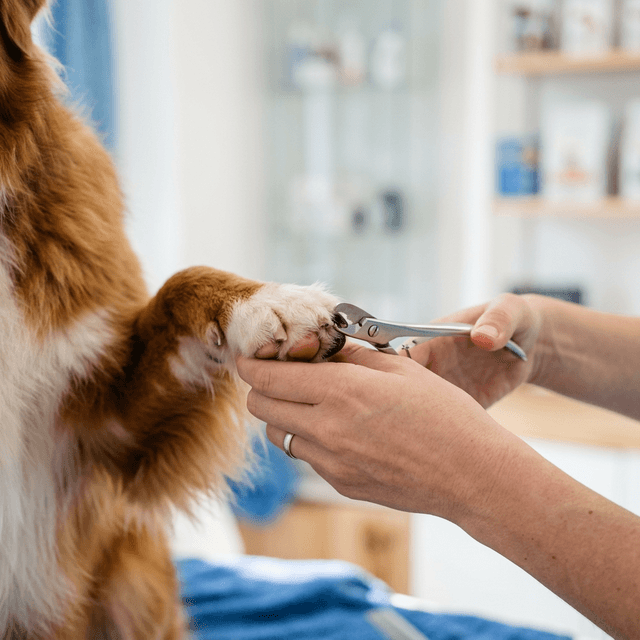
guide
Nail grinder vs clippers for dogs: which is best for your pet?

guide
Dog Nail Trimming at Home: Safe Step-by-Step Routine (Clippers vs Grinders vs Scratch Boards)
guide
How to Trim Rabbit Nails Safely: How to Trim Rabbit Nails Without Hitting the Quick
guide
How to Trim Rabbit Nails Safely: No Scratches, No Panic
guide
How to Trim Rabbit Nails at Home Without Stress: Quick Safe Steps
Frequently asked questions
How often should I trim my rabbit’s nails?
Most rabbits need nail trims every 4–8 weeks, depending on growth and activity level. Check nails monthly and trim once they start to curve or click on hard floors.
What if I accidentally cut the quick?
Stay calm and apply styptic powder (or cornstarch in a pinch) with firm pressure for 30–60 seconds. If bleeding doesn’t stop within a few minutes or the nail won’t clot, contact an exotics vet.
Can rabbits wear their nails down naturally indoors?
Usually not—carpet, rugs, and soft bedding don’t provide enough abrasion to keep nails short. Even active house rabbits typically still need routine trims to prevent snagging and foot strain.
