

guide • Nail Care
How to trim rabbit nails at home (no kicking, no bleeding)
Learn how to trim rabbit nails at home with calm handling, good lighting, and quick-safe snips. Reduce kicking, avoid bleeding, and know what to do if you nick the quick.
By PetCareLab Editorial • March 12, 2026 • 15 min read
Table of contents
- Why Rabbit Nail Trims Matter (And Why They’re So Hard)
- Know the Nail: Quick, Length Targets, and What You’re Looking At
- What the “Quick” Is (And Why It’s the Whole Game)
- How Short Should Rabbit Nails Be?
- Breed Examples: Different Nails, Different Challenges
- Tools and Products That Actually Help (With Comparisons)
- Clippers: Which Type Is Best?
- Must-Have Add-ons (These Prevent Bleeding and Panic)
- Product Recommendations (Practical, Not Hype)
- Prep: Set Up the Room So Your Rabbit Doesn’t Practice Escape
- Choose the Right Location
- Build a “Nail Trim Station” Before You Pick Them Up
- Timing Matters More Than You Think
- Handling Without Kicking: Positions That Keep Everyone Safe
- The #1 Rule: Support the Chest and Keep Feet From Dangling
- Option A: The “Bunny Burrito” (Best for Most Home Trims)
- Option B: Two-Person Trim (Ideal for Big Rabbits or Strong Kickers)
- Option C: Floor Tuck Position (For Rabbits Who Hate Burritos)
- What About Trance (Putting Rabbits on Their Back)?
- Step-by-Step: How to Trim Rabbit Nails at Home (Safely, Even With Black Nails)
- Step 1: Do a Quick Health Check First
- Step 2: Identify the Nails (How Many and Where)
- Step 3: Improve Visibility (This Is Where Most Success Comes From)
- Step 4: Hold the Paw Correctly (So You Don’t Pinch)
- Step 5: Make the Cut — Small, Confident Snips
- Step 6: Reward and Reset
- Step 7: Know When to Stop
- “No Bleeding” Plan: What to Do If You Nick the Quick (And How to Prevent It Next Time)
- If Bleeding Happens: The 60-Second Fix
- When Bleeding Is Not “Normal” (Call a Vet)
- How to Prevent Future Quick Cuts
- Common Mistakes That Cause Kicking, Fear, or Injury
- Mistake 1: Trimming on Slippery Floors
- Mistake 2: Trying to Do All Nails in One Stressful Session
- Mistake 3: Holding Too Tight (Or Too Loose)
- Mistake 4: Cutting at a Weird Angle
- Mistake 5: Forgetting the Dewclaw
- Mistake 6: Chasing Your Rabbit First
- Real-Life Scenarios (And What to Do in Each)
- Scenario 1: “My Lop Kicks the Second I Touch the Back Feet”
- Scenario 2: “My Netherland Dwarf Is Tiny and Fast—He Spins Away”
- Scenario 3: “My Rabbit Has Jet-Black Nails and I Can’t See Anything”
- Scenario 4: “My Flemish Giant Is Sweet but Strong”
- Scenario 5: “My Rabbit Hates Towels—Burrito Makes It Worse”
- Frequency, Maintenance, and Training: Make Trims Easier Every Month
- How Often Should You Trim?
- Conditioning: Teach “Paw Handling” Without the Clippers
- Safety Checklist and Quick Reference (Print This in Your Head)
- Before You Start
- During the Trim
- After the Trim
- When Home Trimming Isn’t the Right Call
- Best Expert Tips for “No Kicking, No Bleeding”
Why Rabbit Nail Trims Matter (And Why They’re So Hard)
If you’re searching for how to trim rabbit nails at home, you’re probably dealing with one (or more) of these realities:
- •Your rabbit kicks like a tiny kangaroo the second the clippers come out
- •You’re terrified of cutting the quick (the blood vessel inside the nail)
- •Your rabbit’s nails are hooking into carpet, snagging fleece, or clicking on hard floors
- •You’ve had a bad experience—blood, panic, and a bunny who now “knows” what nail day means
Nail trims are not optional for most pet rabbits. Unlike wild rabbits who naturally wear nails down with constant digging and running, house rabbits often live on soft flooring (carpet, rugs, blankets) that doesn’t grind nails down enough. Overgrown nails can:
- •Change foot posture (they start walking differently to avoid pressure)
- •Increase risk of sore hocks (painful foot ulcers, especially on wire/rough surfaces)
- •Cause nail tears if a long nail catches on fabric
- •Make rabbits more likely to scratch you or themselves by accident
The good news: you can learn to trim nails safely at home with less kicking and near-zero bleeding risk. The key is not “holding tighter.” It’s using the right tools, body positions, lighting, and a plan that respects how rabbits react to restraint.
Know the Nail: Quick, Length Targets, and What You’re Looking At
Before you clip anything, it helps to understand the nail structure.
What the “Quick” Is (And Why It’s the Whole Game)
Inside each nail is the quick—a blood vessel and nerve. Cutting it hurts and bleeds. Your job is to cut the nail tip while staying a safe distance from the quick.
- •In light/clear nails, the quick often appears as a pinkish tube inside the nail.
- •In dark/black nails, you can’t see it clearly, so you use technique and lighting.
How Short Should Rabbit Nails Be?
A practical target: when the rabbit is standing normally on a flat surface, the nails should not curl under and should look neat and slightly pointed, not long and hooked.
You’re not trying to make them “cat short.” Rabbits need nails for traction and normal movement. Think: tidy, not blunt.
Breed Examples: Different Nails, Different Challenges
Rabbits aren’t one-size-fits-all. Here’s what I see commonly:
- •Holland Lop / Mini Lop: Often wriggly, may hate being lifted. Nails can grow fast; lops also tend to be more prone to stressy body language when restrained.
- •Netherland Dwarf: Small nails but intense “NOPE” energy. They can spin and kick fast—use a calmer, low-to-the-ground approach.
- •Rex rabbits: Their fur and foot structure can make them more prone to sore hocks; keeping nails properly trimmed helps reduce pressure issues.
- •Flemish Giant: Big nails, big strength. You need sturdy clippers and a confident hold; “two-person trims” are often best.
- •Lionhead: Fluffy legs can obscure nails; you’ll need extra time to part fur and good lighting.
Tools and Products That Actually Help (With Comparisons)
The right gear makes nail trims dramatically easier. Here’s what I recommend as a vet-tech-style home setup.
Clippers: Which Type Is Best?
1) Small animal scissor-style clippers (my go-to)
- •Pros: Precise, easy to control, less “crushing” than dull guillotine styles
- •Cons: Needs a steady hand; keep them sharp
2) Guillotine-style clippers
- •Pros: Some people like the feel and leverage
- •Cons: If the blade is dull, it can crush/split the nail and increase wiggles
3) Pet nail grinder (Dremel-style)
- •Pros: Great for black nails because you can remove tiny amounts
- •Cons: Noise/vibration scares many rabbits; risk of overheating the nail if you hold too long
If your rabbit is already nervous, start with quiet scissor-style clippers rather than a grinder.
Must-Have Add-ons (These Prevent Bleeding and Panic)
- •Styptic powder (or styptic pencil): Stops bleeding fast if you nick the quick
- •Cornstarch (backup): Works in a pinch for minor bleeding
- •A bright headlamp: Makes quick visibility way better—especially for dark nails
- •Non-slip mat or towel: Prevents sliding, which triggers panic
- •High-value reward: A small piece of cilantro, parsley, a pellet portion, or a tiny banana slice (sparingly)
Pro-tip: A headlamp aimed at the paw is one of the most underrated tools for trimming rabbit nails at home. Better visibility = fewer mistakes = calmer sessions.
Product Recommendations (Practical, Not Hype)
- •Small animal nail clippers: Look for “small pet” or “cat” size with sharp stainless blades
- •Headlamp: Any lightweight LED headlamp with a focused beam
- •Styptic powder: Common pet brands are fine; store it where you trim so you’re not rummaging mid-bleed
- •Towels: A medium towel plus a smaller “burrito towel” gives you options depending on rabbit size
Prep: Set Up the Room So Your Rabbit Doesn’t Practice Escape
Most nail-trim disasters happen because the environment invites a chase or a fall.
Choose the Right Location
Pick a small, quiet room with:
- •A closed door (no running under the bed)
- •No slippery surfaces (tile = panic skating)
- •A stable surface if you’re trimming on a table (but many rabbits do better on the floor)
If your rabbit is a kicker, I prefer floor trims. Less risk if they lunge.
Build a “Nail Trim Station” Before You Pick Them Up
Lay out:
- •Clippers
- •Styptic powder + tissue/cotton round
- •Treats
- •Towel(s)
- •Headlamp or bright lamp
- •A phone timer (seriously—short sessions help)
Timing Matters More Than You Think
Aim for a time when your rabbit is naturally calmer:
- •After a meal
- •During their usual rest period
- •Not right after you’ve been chasing them for anything (meds, cleaning, etc.)
A great realistic goal: trim 4–8 nails per session at first. It’s better to do two short sessions than one wrestling match.
Handling Without Kicking: Positions That Keep Everyone Safe
Rabbits kick to protect their spine and feet—this is instinct, not “bad behavior.” Your job is to prevent the big kick cycle: slip → panic → thrash → more restraint → more panic.
The #1 Rule: Support the Chest and Keep Feet From Dangling
Dangling legs trigger panic. Always keep your rabbit:
- •Close to your body
- •With their feet supported against something (your torso, a towel, a mat)
Option A: The “Bunny Burrito” (Best for Most Home Trims)
This is my most reliable method for no kicking.
Steps:
- Lay a towel flat.
- Place your rabbit in the center, facing sideways.
- Wrap one side snugly over the back and under the body.
- Wrap the other side over, creating a secure burrito.
- Leave one paw out at a time.
Key details:
- •Snug, not tight—you should be able to slide a finger under the towel.
- •Keep the rabbit’s body low and stable.
Pro-tip: If the burrito is loose, rabbits will “swim” out with their shoulders. Wrap higher across the shoulders while keeping the neck comfortable.
Option B: Two-Person Trim (Ideal for Big Rabbits or Strong Kickers)
This is fantastic for a Flemish Giant or any rabbit who turns trims into CrossFit.
- •Person 1: Holds the rabbit securely, supports chest and hips, gently controls which paw is presented
- •Person 2: Clips and rewards
This setup reduces how long each paw is restrained and usually leads to calmer sessions.
Option C: Floor Tuck Position (For Rabbits Who Hate Burritos)
Some rabbits fight towels but tolerate a “tuck.”
- •Sit on the floor with legs in a V
- •Place rabbit between your thighs, facing away
- •Light pressure with your thighs supports their sides (not squeezing)
- •One hand lifts a paw slightly; the other clips
This works well for confident, ground-oriented rabbits who feel safer when not lifted.
What About Trance (Putting Rabbits on Their Back)?
You’ll see this online, but I don’t recommend it for routine home nail trims. “Trancing” can look calm, but it’s often a fear freeze response, not relaxation. Some rabbits tolerate it; many become more stressed over time. If you must use a back position, keep it brief and avoid forcing it.
Step-by-Step: How to Trim Rabbit Nails at Home (Safely, Even With Black Nails)
Here’s the practical method I teach most owners. If you follow this, you’ll massively reduce kicking and bleeding.
Step 1: Do a Quick Health Check First
Before trimming, glance at:
- •Feet for redness, swelling, sores
- •Nails for cracks, bends, or previous tears
- •Toe alignment (if something looks off, stop and consult a vet)
If a nail is broken, bleeding, or hanging, that’s not a routine trim—get guidance.
Step 2: Identify the Nails (How Many and Where)
Rabbits typically have nails on:
- •Front feet: usually 4 nails + a dewclaw (small “thumb” nail higher up)
- •Back feet: usually 4 nails
The dewclaw is easy to miss and commonly overgrows into a hook.
Step 3: Improve Visibility (This Is Where Most Success Comes From)
- •Use a headlamp or put a lamp behind the paw to backlight the nail.
- •Part fur with your fingers to fully see the nail base.
For fluffy breeds (Lionhead), take a few seconds to separate fur. Rushing here causes mistakes.
Step 4: Hold the Paw Correctly (So You Don’t Pinch)
Gently stabilize the toe you’re trimming:
- •Support the paw with your fingers
- •Avoid pulling toes sideways
- •Keep the rabbit’s leg close to the body (less leverage to kick)
Step 5: Make the Cut — Small, Confident Snips
For light nails (quick visible):
- Locate the pink quick.
- Cut the nail 2–3 mm in front of the quick (a safe buffer).
- If nails are very long, don’t try to take them “perfect” in one trim—take a little now, then trim again in 1–2 weeks to let the quick recede gradually.
For dark nails (quick not visible): Use the “slice method”:
- Take tiny slivers off the tip.
- After each cut, look at the cut surface:
- •If it’s dry and flaky/white-ish: you’re still in the safe nail tip
- •If you see a gray/pink oval or the center looks moist: stop—you're close to the quick
- Stop early rather than chasing a perfect length.
Pro-tip: With black nails, your goal is “shorter than yesterday and safe,” not “as short as possible.” Consistency beats bravery.
Step 6: Reward and Reset
After 1–2 nails:
- •Give a small reward
- •Pause 10–20 seconds
- •Release pressure and let your rabbit breathe
This prevents the escalation that leads to kicking.
Step 7: Know When to Stop
Stop if you see:
- •Rapid breathing, wide eyes, frantic twisting
- •Loud tooth grinding (pain/stress)
- •You can’t get a safe angle
- •Your hands are shaking (seriously—this is when quick cuts happen)
You can always finish later. Rabbits remember the emotional experience more than the nail length.
“No Bleeding” Plan: What to Do If You Nick the Quick (And How to Prevent It Next Time)
Even skilled people occasionally nick a quick—especially with black nails or overgrown nails. The difference is knowing how to respond calmly.
If Bleeding Happens: The 60-Second Fix
- Stay calm and keep the rabbit supported.
- Press a pinch of styptic powder onto the nail tip.
- Hold gentle pressure with tissue/cotton for 30–60 seconds.
- Check: if bleeding continues, reapply and hold again.
If you don’t have styptic:
- •Use cornstarch and pressure
- •Avoid flour if possible (messy; not ideal)
Most quick nicks stop quickly with styptic and pressure.
When Bleeding Is Not “Normal” (Call a Vet)
Call your vet if:
- •Bleeding doesn’t stop after a few minutes of repeated pressure/styptic
- •The nail is torn up into the toe
- •Your rabbit becomes lethargic or won’t bear weight afterward
How to Prevent Future Quick Cuts
- •Improve lighting (headlamp)
- •Cut less per nail; aim for “multiple trims over time”
- •Use sharper clippers (dull blades crush and force harder pressure)
- •Trim more often so nails never get extremely long
Common Mistakes That Cause Kicking, Fear, or Injury
These are the patterns I see most when owners struggle with how to trim rabbit nails at home.
Mistake 1: Trimming on Slippery Floors
If your rabbit’s feet slide, they panic. Use a towel, yoga mat, or carpeted spot.
Mistake 2: Trying to Do All Nails in One Stressful Session
A full set is great—if your rabbit tolerates it. If not, do “fronts today, backs tomorrow.”
Mistake 3: Holding Too Tight (Or Too Loose)
- •Too tight: rabbit feels trapped → thrashing
- •Too loose: rabbit escapes mid-cut → accidents
Aim for secure support, not a squeeze.
Mistake 4: Cutting at a Weird Angle
Cutting sideways can split the nail or pull the toe. Clip with the blades aligned so you remove the tip cleanly.
Mistake 5: Forgetting the Dewclaw
That little nail grows into a sharp hook fast. Always check it.
Mistake 6: Chasing Your Rabbit First
If you have to chase to catch them, you’ve already spent your “trust budget.” Instead:
- •Lure into a pen area with a treat
- •Do trims right after a calm cuddle (if they like that)
- •Use a predictable routine so it’s not a surprise ambush
Real-Life Scenarios (And What to Do in Each)
Scenario 1: “My Lop Kicks the Second I Touch the Back Feet”
Common with Mini Lops and other rabbits who feel vulnerable in the rear.
What helps:
- •Start with front feet only for a week or two to build a calm ritual
- •Use a burrito and expose one back foot by rotating the wrap slightly
- •Keep the back feet supported—don’t lift the leg high
- •Two-person method is a game-changer here
Scenario 2: “My Netherland Dwarf Is Tiny and Fast—He Spins Away”
Small rabbits can twist like eels.
What helps:
- •Trim on the floor with the rabbit between your thighs
- •Use a smaller towel for a snug wrap
- •Do 2–4 nails, reward, stop; repeat later the same day if they’re calm
Scenario 3: “My Rabbit Has Jet-Black Nails and I Can’t See Anything”
Very common in mixed breeds, Dutch rabbits, and many dark-coated rabbits.
What helps:
- •Headlamp + backlighting
- •Slice method (tiny trims)
- •Consider a grinder only if your rabbit tolerates sound and vibration (many don’t)
Scenario 4: “My Flemish Giant Is Sweet but Strong”
Big rabbits can accidentally hurt themselves if they launch.
What helps:
- •Two-person trim
- •Sturdy clippers (cat/small dog size often works better than tiny ones)
- •Keep them on the floor; minimize lifting
Scenario 5: “My Rabbit Hates Towels—Burrito Makes It Worse”
Some rabbits associate towels with restraint.
What helps:
- •Use a non-slip mat instead of a towel wrap
- •Do a tuck position with gentle side support
- •Work in very short bursts with frequent pauses
Frequency, Maintenance, and Training: Make Trims Easier Every Month
A nail trim shouldn’t feel like a quarterly crisis. The calmer your routine, the less you’ll fight.
How Often Should You Trim?
Most rabbits need trimming every 4–8 weeks, but it varies with:
- •Flooring (carpet vs. hard floors)
- •Activity level
- •Nail growth rate
- •Age (older rabbits may move less)
If nails are currently long, trim more frequently (every 2–3 weeks) with small cuts until you reach a healthy length.
Conditioning: Teach “Paw Handling” Without the Clippers
On non-trim days, practice for 30 seconds:
- Touch paw → treat
- Lift paw 1 second → treat
- Hold toe gently → treat
- Introduce clippers nearby without cutting → treat
This turns nail trims from “surprise predator event” into “predictable routine.”
Pro-tip: If you only touch paws on nail day, your rabbit learns the pattern and will resist sooner. Random tiny sessions build trust fast.
Safety Checklist and Quick Reference (Print This in Your Head)
Before You Start
- •Clippers sharp
- •Styptic ready
- •Good lighting (headlamp if possible)
- •Non-slip surface
- •Plan to stop early if stress escalates
During the Trim
- •Support chest and feet
- •One paw at a time
- •Small snips, especially on dark nails
- •Reward frequently
After the Trim
- •Check for bleeding
- •Let your rabbit decompress
- •Make a note: which nails were hard, which method worked
When Home Trimming Isn’t the Right Call
Some rabbits truly need professional help, and that’s not a failure—it’s good judgment.
Consider a vet or experienced groomer if:
- •Your rabbit has a history of spine injury or severe stress with restraint
- •Nails are severely overgrown or curling into pads
- •Your rabbit is aggressive or panics to the point of self-injury
- •You can’t safely restrain without risking a fall
If you do go pro, ask to watch and learn. Many clinics will show you safe handling and where to cut.
Best Expert Tips for “No Kicking, No Bleeding”
- •Short sessions win. Stop while it’s still going okay.
- •Use gravity, not force. Keep the rabbit low and supported; don’t hold them high.
- •Light is everything. Headlamp/backlight reduces quick cuts dramatically.
- •Trim more often, cut less each time. Especially for long nails and dark nails.
- •Two-person trims are not cheating. They’re safer and calmer for many rabbits.
- •Your calm matters. Slow breathing and steady hands prevent accidents.
If you want, tell me your rabbit’s breed/size and whether the nails are light or dark, and I’ll suggest the best exact position (burrito vs tuck vs two-person) and a trim schedule that fits your setup.
Topic Cluster
More in this topic

guide
How to Trim Dog Nails: A Step-by-Step Guide for Beginners
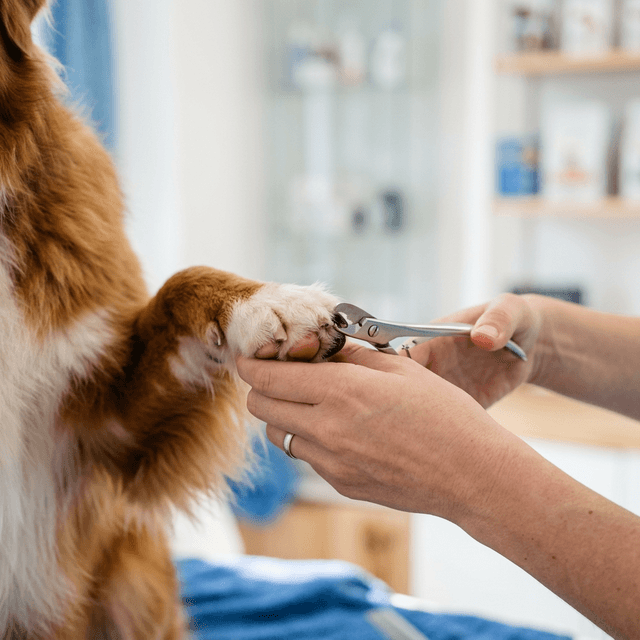
guide
Nail grinder vs clippers for dogs: which is best for your pet?

guide
Dog Nail Trimming at Home: Safe Step-by-Step Routine (Clippers vs Grinders vs Scratch Boards)
guide
How to Trim Rabbit Nails Without Stress: Calm Home Method
guide
How to Trim Rabbit Nails Safely: Avoid the Quick + Bleeding
guide
How to Trim Rabbit Nails at Home: Quick Stops, Tools & Calm Holds
Frequently asked questions
How often should I trim my rabbit’s nails?
Most rabbits need a trim every 4-8 weeks, but it depends on growth rate and how much their nails wear down naturally. Check nails weekly and trim before they start catching on fabric or clicking heavily on hard floors.
What should I do if I accidentally cut the quick and it bleeds?
Stay calm and apply gentle pressure with clean gauze, then use styptic powder or cornstarch to help clotting. If bleeding doesn’t stop within several minutes or your rabbit seems unwell, contact an exotics vet for guidance.
Can I use regular nail clippers to trim rabbit nails?
Small pet nail clippers (often labeled for cats or small animals) usually work best because they fit the nail and give you control. Avoid dull or oversized human clippers, which can crush the nail and increase the risk of splitting or sudden movement.
