

guide • Nail Care
How to Trim Black Dog Nails Safely: How to Trim Black Dog Nails
Learn a safe, repeatable method for trimming black dog nails without hitting the quick, with cues to cut slowly and confidently.
By PetCareLab Editorial • March 12, 2026 • 12 min read
Table of contents
- Why Black Dog Nails Are Tricky (And Why You’re Right to Be Cautious)
- Nail Anatomy You Can “See” Without Seeing the Quick
- The “Underside Dot” Method (Your Best Visual Cue)
- The Curve and Hook Clue
- Sound and Feel
- What You Need: Tools That Make Black Nails Safer
- Clippers vs Grinders: Which Is Better for Black Nails?
- Product Recommendations (Reliable Options)
- Optional but Very Helpful
- Before You Trim: Set Up for Success (This Prevents 80% of Problems)
- Pick the Right Time
- Condition the Routine (Especially for Nervous Dogs)
- Positioning: Stable Dog + Stable You
- Check the Paw Health First
- Step-by-Step: How to Trim Black Dog Nails Safely (Avoid the Quick)
- Step 1: Identify What “Too Long” Looks Like
- Step 2: Hold the Paw Correctly
- Step 3: Trim in Tiny Slices (Not One Big Cut)
- Step 4: Use the Correct Angle (This Matters a Lot)
- Step 5: Know When to Stop
- Step 6: Smooth Edges
- Real-World Examples: How the Method Changes by Breed and Nail Type
- Thick Black Nails (Labs, Rottweilers, Pit Bulls)
- Tiny Black Nails (Pugs, Frenchies, Toy Mixes)
- Long-Quick Nails (Dogs Who Rarely Get Trimmed)
- Common Mistakes (And Exactly What to Do Instead)
- Mistake 1: Trying to Get “Perfect Length” in One Session
- Mistake 2: Cutting Straight Across
- Mistake 3: Skipping Rewards Until the End
- Mistake 4: Holding the Paw Too Tightly
- Mistake 5: Using Dull Clippers
- If You Hit the Quick: Calm, Fast First Aid (No Panic)
- What to Do Immediately
- When to Call the Vet
- How Often to Trim Black Nails (And How to Make the Quick Recede)
- Quick Recession Strategy (The Safe Way)
- Choosing Products: My Practical “What to Buy” Cheat Sheet
- If You Want the Safest Learning Setup
- If Your Dog Hates Noise or Vibration
- If You Have a Strong, Thick-Nailed Dog
- Expert Tips That Make Black Nails Much Easier
- Use a “Reference Nail”
- Trim After a Bath (Sometimes)
- Don’t Forget the Dewclaws
- Make It a Two-Person Job If Needed
- Consider a Professional Reset
- When It’s Not a DIY Job: Safety and Behavior Red Flags
- Quick Recap: The Safe Formula for Black Nails
Why Black Dog Nails Are Tricky (And Why You’re Right to Be Cautious)
If you’ve ever trimmed a dog’s clear nails, you know the basic idea: avoid the pink area (the quick) and you’re good. With black nails, you lose that visual guide—so trimming feels like guessing. The goal of this guide is to replace guessing with a safe, repeatable method so you can confidently learn how to trim black dog nails without hitting the quick.
A dog’s nail has:
- •The outer shell (hard keratin)
- •The quick (living tissue with blood vessels and nerves)
When you cut into the quick, it’s painful and it bleeds—sometimes a lot. The good news: black nails aren’t “harder,” they’re just harder to read. With the right setup, angles, and a slow approach, you can trim safely.
Common black-nail breeds you might be working with:
- •Labrador Retrievers (often have thick, dark nails)
- •Rottweilers and Dobermans (strong nails, can be quicky)
- •Pugs and French Bulldogs (tiny black nails; easy to over-trim)
- •Dachshunds (quick can be long if nails are overgrown)
- •Mixed breeds with black nails on some feet and clear nails on others (great for learning comparisons)
Nail Anatomy You Can “See” Without Seeing the Quick
You can’t see the quick well in black nails from the outside, but you can read nail clues:
The “Underside Dot” Method (Your Best Visual Cue)
When you trim small slices off the end, look at the cut surface of the nail.
- •At first, the center looks chalky/crumbly (dead keratin)
- •As you get closer, the center becomes darker and smoother
- •Right before the quick, you’ll often see a small dark dot or oval in the center (this is the “stop sign”)
That dot is your warning: take one tiny shaving or stop entirely.
The Curve and Hook Clue
Overgrown nails curve and hook downward, which often means the quick has grown forward too.
- •If the nail looks like a hawk’s beak, assume the quick is longer than normal
- •Plan to trim gradually over multiple sessions rather than trying to “fix it” in one go
Sound and Feel
This sounds odd, but it helps:
- •Dead nail often trims with a dry “snap”
- •Close to the quick, the nail may feel denser, and your dog may start to show discomfort (pulling away, tensing)
Don’t rely on this alone—but combine it with visuals for extra safety.
What You Need: Tools That Make Black Nails Safer
Black nails are a “visibility problem,” so your equipment should improve control and feedback.
Clippers vs Grinders: Which Is Better for Black Nails?
Both can work. Here’s the practical difference:
Guillotine-style clippers
- •Pros: quick, cheap
- •Cons: can crush thick nails, less control, not my favorite for big dogs
Scissor-style clippers (recommended for most)
- •Pros: strong leverage, cleaner cut, good control
- •Cons: still possible to take off too much if you rush
Nail grinders (great for black nails)
- •Pros: remove nail slowly, easy to “sneak up” on the quick, smoother edges
- •Cons: noise/vibration, can overheat nail if held too long
If you’re nervous about cutting into the quick, a grinder is often the safest learning tool—especially for small dogs with tiny black nails (Pugs, Chihuahuas, Yorkies) or dogs that jerk their feet.
Product Recommendations (Reliable Options)
I’m not sponsored—these are commonly liked by groomers and vet staff:
Clippers
- •Miller’s Forge scissor-style (solid, long-lasting, great for thick nails)
- •Safari Professional nail trimmer (good mid-range choice)
Grinders
- •Dremel 7350 (Cordless Pet Nail Grooming Tool) or similar Dremel pet models (powerful, consistent)
- •Casfuy style grinders (often quieter; fine for small/medium nails)
Light and visibility
- •A bright headlamp or clip-on LED light (hands-free = safer)
- •A white towel under the paw to reflect light upward
Emergency supplies (non-negotiable)
- •Styptic powder (Kwik Stop) or styptic pencil
- •If you don’t have styptic: cornstarch or flour as a backup (not as effective, but can help)
Optional but Very Helpful
- •Lick mat + peanut butter (xylitol-free), canned food, or cream cheese
- •Treat pouch for rapid reinforcement
- •Non-slip mat so your dog feels stable
Before You Trim: Set Up for Success (This Prevents 80% of Problems)
Pick the Right Time
Trim when your dog is:
- •Calm and slightly tired (after a walk)
- •Not hyped, hungry, or overstimulated
If your dog is already anxious about paws, plan short sessions (even one nail per day is legitimate progress).
Condition the Routine (Especially for Nervous Dogs)
If your dog hates nail trims, don’t start by wrestling them. Start by teaching, “Paw handling = treats.”
Try this for 3–7 days:
- Touch paw → treat
- Hold paw 2 seconds → treat
- Tap nail with clipper/grinder OFF → treat
- Turn grinder ON across the room → treat
- Bring grinder closer → treat
- Touch nail with grinder briefly → treat
Pro-tip: If your dog is panicking, you’re moving too fast. The goal is “tolerates calmly,” not “endures.”
Positioning: Stable Dog + Stable You
Choose a position that reduces sudden movement:
- •Small dogs: on a table with a non-slip mat, or on your lap
- •Medium/large dogs: lying on their side, or standing with you supporting the leg
Real scenario:
- •A Labrador that leans and pulls: have them stand, tuck their hip against your thigh, and lift one paw at a time.
- •A French Bulldog that squirms: place them on a counter-height surface with a mat and give continuous licking from a lick mat.
Check the Paw Health First
Don’t trim if you see:
- •Red, swollen nail beds
- •Broken nails
- •Licking/chewing that suggests infection
- •Limping
In those cases, call your vet—pain changes behavior and makes trimming unsafe.
Step-by-Step: How to Trim Black Dog Nails Safely (Avoid the Quick)
This is the core method I teach pet parents when they ask how to trim black dog nails confidently.
Step 1: Identify What “Too Long” Looks Like
General rule:
- •Nails should not click loudly on hard floors when walking (some light clicking is okay depending on gait and flooring)
- •A standing dog’s nails shouldn’t push the toes sideways
But don’t obsess over “perfect length.” Safety and comfort come first.
Step 2: Hold the Paw Correctly
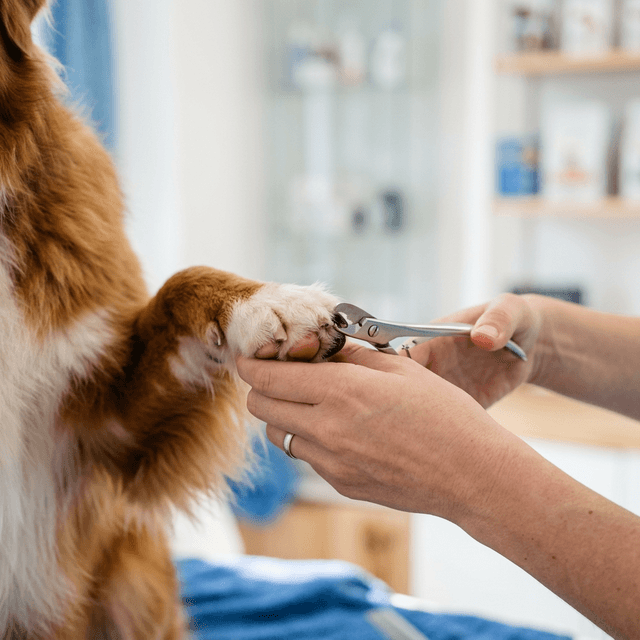
- •Support the toe you’re trimming so it doesn’t wobble
- •For front paws: gently hold the paw, thumb on top, fingers under
- •For back paws: support the hock (ankle) and keep the leg in a natural position
Avoid pulling the leg far out to the side—many dogs resist because it feels unstable.
Step 3: Trim in Tiny Slices (Not One Big Cut)
With black nails, your default is multiple small trims.
Using clippers:
- Start with a small cut—just the very tip
- Examine the cut surface
- Repeat in tiny increments until you see the “stop sign” center (dark dot/oval)
Using a grinder:
- Touch nail for 1–2 seconds, then lift off
- Rotate and repeat
- Check often; stop when you see the center change
Pro-tip: With a grinder, avoid heat buildup. If the nail feels warm, pause for 10–20 seconds.
Step 4: Use the Correct Angle (This Matters a Lot)
Most quicking happens because people cut straight across or too deep.
Aim for:
- •A trim that follows the nail’s natural slope
- •Remove length from the end, not the side walls
If the nail is hooked:
- •Take off the hook gradually
- •Don’t chase the “perfect” curve in one session
Step 5: Know When to Stop
Stop if:
- •You see a dark center dot/oval
- •The center looks pinkish/grey and moist
- •Your dog suddenly reacts strongly (pulls, yelps)
- •You’re unsure
Leaving the nail slightly longer is always better than hitting the quick.
Step 6: Smooth Edges
Rough edges snag carpets and can make dogs hate trims more.
- •Use a grinder briefly or a nail file
- •For thick nails (Rottweiler, Lab), smoothing helps prevent splits
Real-World Examples: How the Method Changes by Breed and Nail Type
Thick Black Nails (Labs, Rottweilers, Pit Bulls)
Challenges:
- •Nails are dense, so big cuts feel tempting
- •Guillotine clippers may crush or splinter
Best approach:
- •Use sturdy scissor clippers or a powerful grinder
- •Trim tiny slices; check the cut surface after each
Scenario: A 2-year-old Lab with long nails that click loudly. Owner tries one big cut and quicks two nails—dog now fights trims. Fix:
- •Reset with lick mat + one paw per session
- •Grind weekly to slowly encourage quick recession
Tiny Black Nails (Pugs, Frenchies, Toy Mixes)
Challenges:
- •The quick may be proportionally large
- •Nails are small, so “one snip” can be too much
Best approach:
- •Grinder is excellent here for micro-control
- •Use a headlamp and go slow
Scenario: A Pug with nails that look like little black beads. You can’t judge length. Fix:
- •Grind a little, check center, stop early
- •Repeat again in 5–7 days
Long-Quick Nails (Dogs Who Rarely Get Trimmed)
If nails have been long for months, the quick grows forward. You cannot safely trim them down to “ideal” in one go.
Best approach:
- •Trim small amounts every 5–10 days
- •Goal: stimulate quick to recede over time
If your dog tolerates it, frequent tiny trims are the fastest safe path.
Common Mistakes (And Exactly What to Do Instead)
Mistake 1: Trying to Get “Perfect Length” in One Session
What happens: you cut too deep, dog loses trust, quick may bleed. Do this instead:
- •Set a goal like “all nails shortened a little” rather than “as short as possible.”
Mistake 2: Cutting Straight Across
What happens: you remove too much thickness at once and hit the quick. Do this instead:
- •Trim at a gentle angle following the nail’s slope.
Mistake 3: Skipping Rewards Until the End
What happens: dog only learns nail trims are stressful. Do this instead:
- •Pay frequently: treat after each nail or even after each successful paw hold.
Mistake 4: Holding the Paw Too Tightly
What happens: dog struggles more, you lose precision. Do this instead:
- •Support calmly and securely, but don’t squeeze.
Mistake 5: Using Dull Clippers
What happens: nail crushes or splinters, making the experience painful. Do this instead:
- •Replace or sharpen clippers; thick nails need strong blades.
If You Hit the Quick: Calm, Fast First Aid (No Panic)
Even pros quick a nail sometimes. What matters is how you respond.
What to Do Immediately
- Stay calm—your dog reads your stress.
- Apply styptic powder to the bleeding nail tip.
- Use firm pressure for 30–60 seconds.
- Keep your dog still (licking can restart bleeding).
If you don’t have styptic:
- •Press cornstarch or flour into the tip and hold pressure.
When to Call the Vet
Call your vet if:
- •Bleeding continues longer than ~10 minutes despite pressure/styptic
- •The nail is cracked up into the nail bed
- •Your dog is limping or the toe is swollen
- •Your dog has a clotting disorder or is on blood thinners
Pro-tip: Don’t “test” the nail again after a quicking. End the session on a win—do something your dog loves and resume another day.
How Often to Trim Black Nails (And How to Make the Quick Recede)
Most dogs do well with:
- •Every 2–4 weeks for maintenance
- •Every 5–10 days if nails are long and you’re trying to shorten safely
Quick Recession Strategy (The Safe Way)
The quick recedes when the nail is kept shorter consistently—but it’s gradual.
A simple plan:
- •Trim/grind a tiny amount weekly
- •Keep sessions short and positive
- •Track progress: take a quick photo of one nail every 2 weeks
Signs you’re on the right track:
- •Less clicking on floors
- •Nails look less hooked
- •You can trim a bit more each session without reaching the quick
Choosing Products: My Practical “What to Buy” Cheat Sheet
If You Want the Safest Learning Setup
- •Grinder (Dremel-style)
- •Headlamp
- •Styptic powder
- •Lick mat
Why: you can remove nail slowly, see the center change, and keep your dog busy.
If Your Dog Hates Noise or Vibration
- •High-quality scissor-style clippers
- •Bright light
- •Styptic powder
Why: quiet and fast, as long as you stick to tiny slices.
If You Have a Strong, Thick-Nailed Dog
- •Heavy-duty scissor clippers (Miller’s Forge)
- •Optional grinder for smoothing
- •Non-slip floor mat
Why: you need clean cuts and good control.
Expert Tips That Make Black Nails Much Easier
Use a “Reference Nail”
Sometimes one nail is slightly lighter underneath or less thick. Use it to calibrate how much you can safely remove on the others.
Trim After a Bath (Sometimes)
Some nails soften slightly after bathing, making clipping smoother. This can help with thick, brittle nails—but don’t count on it if your dog gets slippery or wiggly.
Don’t Forget the Dewclaws
Dewclaws don’t wear down naturally and can curl into the skin.
Check:
- •Front dewclaws (common)
- •Rear dewclaws (some breeds/mixes)
Make It a Two-Person Job If Needed
Real-life example:
- •A nervous Dachshund may do best with one person feeding a lick mat while the other trims. This is not “cheating”—it’s smart handling.
Consider a Professional Reset
If nails are extremely overgrown or your dog is very reactive, a groomer or vet can help you start safely. Then you maintain at home with small weekly trims.
When It’s Not a DIY Job: Safety and Behavior Red Flags
Trim at home only if you can do it without a struggle. Stop and seek help if:
- •Your dog snaps or tries to bite (fear-based or pain-based)
- •Your dog screams or thrashes when paws are touched
- •Nails are ingrown, split, infected, or bleeding already
- •Your dog has severe arthritis and resents leg handling
A fear-free groomer or your vet team can often do a “comfort-focused” trim and teach you handling techniques.
Quick Recap: The Safe Formula for Black Nails
If you remember nothing else, remember this:
- •Use great light + stable positioning
- •Trim tiny slices (or grind in short touches)
- •Watch the cut surface for the center “stop sign”
- •Stop early and repeat more often rather than cutting deep once
- •Always have styptic powder ready
If you tell me your dog’s breed/size and whether you’re using clippers or a grinder, I can suggest an exact trimming plan (frequency, positioning, and the best “first nail” to start with).
Topic Cluster
More in this topic

guide
How to Trim Dog Nails: A Step-by-Step Guide for Beginners
guide
Nail grinder vs clippers for dogs: which is best for your pet?

guide
Dog Nail Trimming at Home: Safe Step-by-Step Routine (Clippers vs Grinders vs Scratch Boards)
guide
How to Trim Rabbit Nails Without Stress: Calm Home Method
guide
How to Trim Rabbit Nails Safely: Avoid the Quick + Bleeding
guide
How to Trim Rabbit Nails at Home: Quick Stops, Tools & Calm Holds
Frequently asked questions
How do I know where the quick is in black dog nails?
With black nails you usually can’t see the quick, so rely on a slow “trim a little at a time” approach. Watch the cut surface for a darker center or a moist, soft-looking spot and stop before you reach it.
What’s the safest way to trim black dog nails at home?
Trim in very small increments and check the nail after each cut, rather than taking one big clip. Good lighting, steady positioning, and frequent breaks help you stay accurate and keep your dog calm.
What should I do if I accidentally cut the quick?
Stay calm and apply firm pressure with clean gauze or a towel, then use styptic powder if you have it to stop the bleeding. If bleeding doesn’t slow after several minutes or your dog is very distressed, contact your vet.
