

guide • Nail Care
How to Stop Dog Nail Bleeding After Trimming (Fast + Safe)
Accidentally cut the quick? Stop the bleeding fast with simple first aid, then learn safer trimming habits to help prevent nail bleeds next time.
By PetCareLab Editorial • March 9, 2026 • 13 min read
Table of contents
- Dog Nail Bleeding After Trimming: What’s Happening (And Why It’s So Common)
- How to Stop Dog Nail Bleeding After Trimming (Fast First Aid Steps)
- Step-by-Step: The Fastest Way to Stop Bleeding
- What “Firm Pressure” Actually Means
- Best Products to Stop Nail Bleeding (And What I Recommend)
- No Styptic Powder? Use These Emergency Alternatives
- What NOT to Do (Common Mistakes That Make Bleeding Worse)
- Aftercare: Protect the Nail So It Doesn’t Start Bleeding Again
- Should You Bandage It?
- Licking: When It’s a Problem
- Pain Control: What’s Safe?
- When Nail Bleeding Is an Emergency (And When It’s Not)
- Call Your Vet (Same Day) If:
- Dogs at Higher Risk of Prolonged Bleeding
- Preventing It Next Time: The Real Secret Is Quick Management
- Understand Why Long Nails Make Bleeding More Likely
- The “Little and Often” Plan (Quick Recession Strategy)
- Step-by-Step: How to Trim Without Hitting the Quick
- Breed-Specific Nail Notes (Because Not All Nails Behave the Same)
- Choosing Tools: Clippers vs. Grinders (And What I’d Use)
- Nail Clippers: Pros, Cons, Best For
- Nail Grinders: Pros, Cons, Best For
- My Practical Recommendation (Most Homes)
- Training Your Dog to Tolerate Nail Trims (So You Don’t Rush and Cut Too Far)
- The 5-Minute Desensitization Routine
- Positioning That Prevents Sudden Jerks
- Product Recommendations and a Simple Home Nail-Care Kit
- Must-Haves
- Nice-to-Haves
- Comparison: Styptic Powder vs. Cornstarch
- Common Questions (Real-World Answers)
- “My dog’s nail won’t stop bleeding—what now?”
- “Can I keep trimming other nails after a bleed?”
- “Should I disinfect the nail?”
- “How do I know how short is ‘correct’?”
- Expert Tips to Prevent Future Nail Bleeds
- The Bottom Line: Fast Stop, Smart Prevention
Dog Nail Bleeding After Trimming: What’s Happening (And Why It’s So Common)
If you’ve ever clipped your dog’s nails and suddenly seen blood—your stomach drops. The good news: most nail bleeds look dramatic but are minor and very controllable if you act quickly.
A dog’s nail has two main parts:
- •The hard outer shell (keratin)
- •The quick: living tissue inside the nail that contains blood vessels and nerves
When you cut into the quick, it bleeds—and it hurts. This is most common when:
- •Nails are dark/black (you can’t see the quick)
- •Nails are overgrown (the quick has extended farther than normal)
- •Your dog jerks a paw at the wrong moment
- •Dull clippers crush instead of cleanly cutting
Real-life scenario: You’re trimming a Labrador’s thick nails. Everything’s fine until the dog shifts weight, and you clip a little too far. Now there’s blood on the floor and a pawprint trail. That’s the classic quick nick.
The goal of this article is simple: teach you how to stop dog nail bleeding after trimming fast, then show you how to prevent it so it doesn’t keep happening.
How to Stop Dog Nail Bleeding After Trimming (Fast First Aid Steps)
When a nail bleeds, your priorities are:
- Keep your dog calm and still
- Apply firm pressure and a clotting agent
- Protect the nail while it seals
Step-by-Step: The Fastest Way to Stop Bleeding
Follow this exact sequence:
1) Stay calm and secure the paw
- •Have your dog sit or lie down.
- •If your dog is wiggly, have someone gently hold them or use a non-slip surface (bath mat/yoga mat).
2) Blot once, don’t keep wiping
- •Use gauze or a paper towel to blot so you can see where bleeding is coming from.
- •Constant wiping can disrupt clotting.
3) Apply a clotting product (best option)
- •Dip the nail tip into styptic powder, or press powder onto the nail with a cotton swab.
- •Hold it in place with firm pressure for 30–60 seconds.
4) Keep pressure if it’s still oozing
- •Maintain steady pressure another 60 seconds.
- •Most quick nicks stop within 2–5 minutes.
5) Limit activity for the next 30–60 minutes
- •No zoomies, no running outside on rough ground.
- •Keep them on clean flooring if possible.
If it’s a bigger cut, it may take 10 minutes to fully stop. If it’s still actively bleeding after that, jump to the “When to Call the Vet” section.
What “Firm Pressure” Actually Means
A lot of people “tap” the nail and hope it stops. Don’t.
- •Press the clotting agent into the nail tip
- •Maintain consistent pressure (not pulsing, not checking every 5 seconds)
- •Use a timer if you have to—30 seconds can feel like forever when you’re anxious
Best Products to Stop Nail Bleeding (And What I Recommend)
These are common, reliable options:
1) Styptic powder (gold standard)
- •Works fast and is designed for this problem.
- •Great for multi-dog homes and frequent nail maintenance.
2) Styptic pencil
- •Convenient, but can be harder to apply to a wiggly dog or irregular nail edge.
- •Often works better for small nicks than bigger quick cuts.
3) Clotting gel
- •Less messy than powder.
- •Useful if you hate powder dust, but some gels work slightly slower.
Pro-tip: If you trim nails even once a month, keep a clotting product in the same container as your clippers. When you need it, you need it immediately.
No Styptic Powder? Use These Emergency Alternatives
If you’re mid-trim and don’t have proper supplies, you can still stop most bleeds.
Emergency options (in order of usefulness):
- •Cornstarch (best household alternative)
- •Flour (works, messier)
- •A clean bar of unscented soap (press nail into it to help seal)
How to use cornstarch/flour:
- Put a small pile in a shallow dish.
- Press the bleeding nail into it.
- Apply pressure for 60 seconds.
- Repeat once if needed.
Important: Avoid “cute hacks” like sugar or herbal powders—stick to what clots reliably.
What NOT to Do (Common Mistakes That Make Bleeding Worse)
Most nail bleeding gets worse because of one of these mistakes:
- •Repeatedly checking every few seconds
- •You pull off the forming clot, so it keeps bleeding.
- •Rinsing under water
- •Water can wash away clotting powder and prevent sealing.
- •Bandaging too tightly
- •Tight wraps can cause swelling, pain, or circulation problems.
- •Letting the dog run outside immediately
- •Dirt + movement can reopen the cut.
- •Using hydrogen peroxide or alcohol
- •This stings, irritates tissue, and doesn’t help clotting. Save those for certain wound-cleaning scenarios—this isn’t one of them.
Real scenario: A French Bulldog with short legs and a low body tries to scoot away. The owner keeps lifting and releasing the paw to “see if it stopped.” Ten minutes later, it’s still oozing because the clot never gets to stabilize.
Aftercare: Protect the Nail So It Doesn’t Start Bleeding Again
Once the bleeding stops, you’re not done yet. The quick is tender and easy to re-injure.
Should You Bandage It?
Usually, no—not for a tiny nick that stopped quickly. But a light bandage can help if:
- •Your dog keeps licking it
- •You need to walk outside right away
- •The cut was deeper and you want protection for a few hours
Safe bandage approach (short-term only): 1) Place a small square of gauze over the nail tip. 2) Wrap loosely with self-adhesive bandage (not tight). 3) Remove within 1–3 hours (so moisture doesn’t build up).
If your dog is a chewer, a bandage can become a snack. In those cases, a cone/e-collar for a short time is often safer.
Licking: When It’s a Problem
A couple licks? Fine. Constant licking can:
- •Reopen the clot
- •Introduce bacteria
- •Cause a sore, inflamed toe
If licking is nonstop, use:
- •An e-collar
- •A soft cone
- •A bootie (only if it stays clean and dry)
Pain Control: What’s Safe?
Do not give human pain meds unless your vet specifically instructs it. Some are dangerous for dogs.
Instead:
- •Keep activity low
- •Offer a calm chew or lick mat to settle them
- •If your dog seems very painful or the toe is swollen, call your vet
When Nail Bleeding Is an Emergency (And When It’s Not)
Most quick nicks are “home-manageable.” But you should know the red flags.
Call Your Vet (Same Day) If:
- •Bleeding continues longer than 10–15 minutes despite styptic + pressure
- •The nail is broken/split up into the nail bed
- •The toe is very swollen, hot, or your dog won’t bear weight
- •Your dog is acting weak, pale gums, or seems unusually lethargic
- •Your dog has a known bleeding disorder or is on meds that affect clotting (your vet can confirm)
Dogs at Higher Risk of Prolonged Bleeding
Some dogs bleed longer due to medical factors. Examples include:
- •Dogs with clotting disorders (like Von Willebrand disease—seen more in Doberman Pinschers)
- •Dogs on certain medications (your vet will tell you if this applies)
- •Senior dogs with underlying health conditions
If you own a breed with known clotting issues, keep styptic powder and your vet’s number handy before you ever trim nails.
Preventing It Next Time: The Real Secret Is Quick Management
Prevention is about two things:
- Better trimming technique
- Encouraging the quick to recede over time (especially in overgrown nails)
Understand Why Long Nails Make Bleeding More Likely
When nails are long, the quick extends farther. That means:
- •The “safe” area to cut is tiny
- •Even small cuts can hit the quick
This is common in small breeds like Chihuahuas and Shih Tzus, especially if they don’t walk on rough surfaces that naturally wear nails down.
The “Little and Often” Plan (Quick Recession Strategy)
If your dog’s nails are long, you’re not aiming for a perfect trim today. You’re aiming for progress.
- •Trim tiny slivers every 5–7 days
- •Over time, the quick typically recedes, allowing shorter nails safely
- •Pair with gentle filing for smoother edges
Pro-tip: Think of it like backing a car into a garage—small corrections are safer than big swings.
Step-by-Step: How to Trim Without Hitting the Quick
This is the technique I’d teach a friend:
1) Pick the right tool
- •Clippers: good for most dogs
- •Grinder: great for control, especially black nails
2) Get strong lighting
- •A bright lamp aimed at the paw makes a huge difference.
3) Hold the paw correctly
- •Support the toe you’re trimming.
- •Stabilize the foot so the dog can’t yank suddenly.
4) Cut in small slices
- •Don’t take big chunks.
- •For dark nails, trim a little, then check the cut surface.
5) Look for the “bullseye”
- •As you get close to the quick, you may see a darker/softer center.
- •Stop when you see a small dark dot or when the center looks moist.
6) Smooth with a grinder/file
- •This reduces sharp edges and lets you shorten safely in tiny increments.
Breed-Specific Nail Notes (Because Not All Nails Behave the Same)
- •Dachshunds: Often have long quicks and sensitive feet. Go slow, use frequent micro-trims.
- •German Shepherds: Active dogs may wear nails naturally, but dewclaws often still need trimming.
- •Poodles / Doodles: Hair between toes can hide nail length—trim paw hair so you can see clearly.
- •Greyhounds: Thin nails can split; grinders can be gentler than clippers.
- •Bulldogs: Many dislike paw handling—focus on desensitization and short sessions.
Choosing Tools: Clippers vs. Grinders (And What I’d Use)
Your tool choice affects bleeding risk.
Nail Clippers: Pros, Cons, Best For
Pros
- •Fast
- •Quiet (usually)
- •Great for thick nails with sharp blades
Cons
- •Easy to take off too much at once
- •Dull blades can crush nails, causing splits
Best for:
- •Calm dogs
- •Owners with steady hands
- •Dogs with clear/white nails (quick visible)
Nail Grinders: Pros, Cons, Best For
Pros
- •More control—remove tiny amounts
- •Great for black nails
- •Smooth finish reduces snagging
Cons
- •Noise/vibration can scare some dogs
- •Hair can get caught if you’re not careful
Best for:
- •Nervous dogs (once trained)
- •Black nails (like many Boxers, Rottweilers, Labs)
- •Owners who prefer gradual shaping
My Practical Recommendation (Most Homes)
- •Keep both if you can:
- •Clippers for bulk removal when nails are long
- •Grinder for controlled finishing and maintenance
If you only choose one and your dog has mostly dark nails, a grinder often reduces the chance of cutting the quick.
Training Your Dog to Tolerate Nail Trims (So You Don’t Rush and Cut Too Far)
Many quick nicks happen because the dog is struggling and the human tries to “just get it done.” Training prevents bleeding.
The 5-Minute Desensitization Routine
Do this daily for 1–2 weeks:
- Touch a paw for 1 second → treat
- Hold a paw for 2–3 seconds → treat
- Tap a nail with the clipper (no cutting) → treat
- Turn grinder on nearby (sound only) → treat
- Touch grinder to a nail for 1 second → treat
Keep sessions short. Quit while your dog is still relaxed.
Pro-tip: For dogs that hate paw handling (common in rescues), aim for “one nail a day” consistency rather than wrestling through all paws at once.
Positioning That Prevents Sudden Jerks
Try one of these:
- •Small dogs: on a table with a non-slip mat (safer for your back too)
- •Medium/large: dog lying on their side (“spa position”)
- •Cooperative dogs: standing, trimming one paw at a time
If your dog is thrashing, that’s a sign to pause and train rather than push through.
Product Recommendations and a Simple Home Nail-Care Kit
A good kit removes panic and prevents mistakes.
Must-Haves
- •Styptic powder or clotting gel
- •Gauze squares or cotton rounds
- •A bright light (headlamp works surprisingly well)
- •Quality clippers sized for your dog
- •Grinder (optional but very helpful)
- •Non-slip mat
- •Treats (high value)
Nice-to-Haves
- •Paw hair trimmers (for fluffy-footed breeds)
- •A nail file for quick smoothing
- •A cone/e-collar (for dogs who lick wounds)
Comparison: Styptic Powder vs. Cornstarch
- •Styptic powder:
- •Faster, purpose-built, more reliable
- •Better for deeper quick cuts
- •Cornstarch:
- •Works for minor nicks
- •Can fail on bigger bleeds and may take longer
If you trim regularly, styptic powder is worth it.
Common Questions (Real-World Answers)
“My dog’s nail won’t stop bleeding—what now?”
- •Apply styptic + pressure for a full 60 seconds without peeking.
- •Repeat once.
- •If still bleeding after 10–15 minutes, contact your vet or an urgent care clinic.
“Can I keep trimming other nails after a bleed?”
Usually yes, but only if:
- •Bleeding is fully stopped
- •Your dog is calm again
If your dog is stressed, stop. One bad experience can create long-term nail trim anxiety.
“Should I disinfect the nail?”
Not usually necessary for a simple quick nick. The key is:
- •Keep it clean and dry
- •Prevent licking
- •Watch for swelling, heat, or discharge over the next 24–48 hours
“How do I know how short is ‘correct’?”
A practical target:
- •Nails shouldn’t click loudly on hard floors (some light clicking can still happen in big dogs)
- •When standing, nails should not force toes to splay or shift
But don’t chase perfection in one session—especially with long quicks.
Expert Tips to Prevent Future Nail Bleeds
These are small changes that make a big difference:
- •Trim after a walk, not before: dogs are calmer and nails may be slightly softer.
- •Use fresh, sharp blades: dull clippers crush and split nails.
- •For black nails, switch to micro-trims + grinder finish.
- •Don’t forget dewclaws: they don’t wear down and can overgrow into the skin.
- •If you’re nervous, trim one paw per day—progress without pressure.
Pro-tip: If you hit the quick once, don’t try to “even it out” by cutting more. Stop, treat it, and revisit in a week.
The Bottom Line: Fast Stop, Smart Prevention
Knowing how to stop dog nail bleeding after trimming is a must for any dog owner. Most nail bleeds stop quickly with styptic powder + firm pressure, then a short period of calm aftercare. Prevention is about switching from “big trims” to small, frequent maintenance, using good lighting, sharp tools, and (when helpful) a grinder for control—especially on dark nails.
If you want, tell me your dog’s breed, approximate weight, and whether their nails are light or dark—I can suggest a trimming schedule and the best tool approach for your specific situation.
Topic Cluster
More in this topic

guide
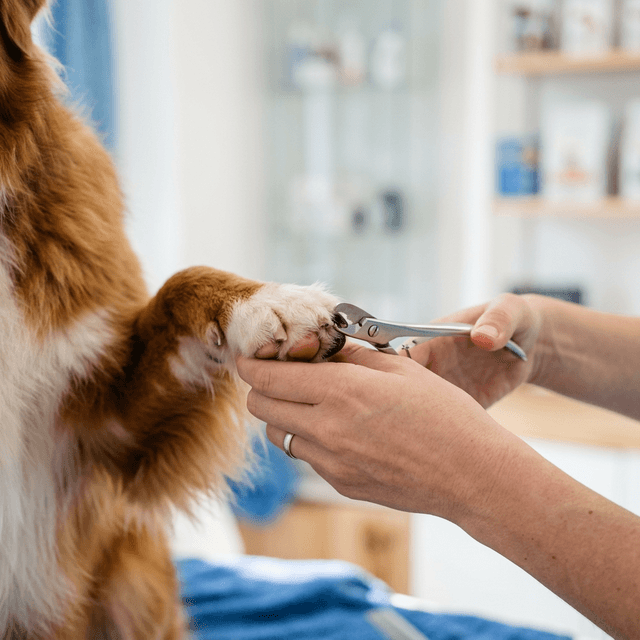
How to Trim Dog Nails: A Step-by-Step Guide for Beginners
guide
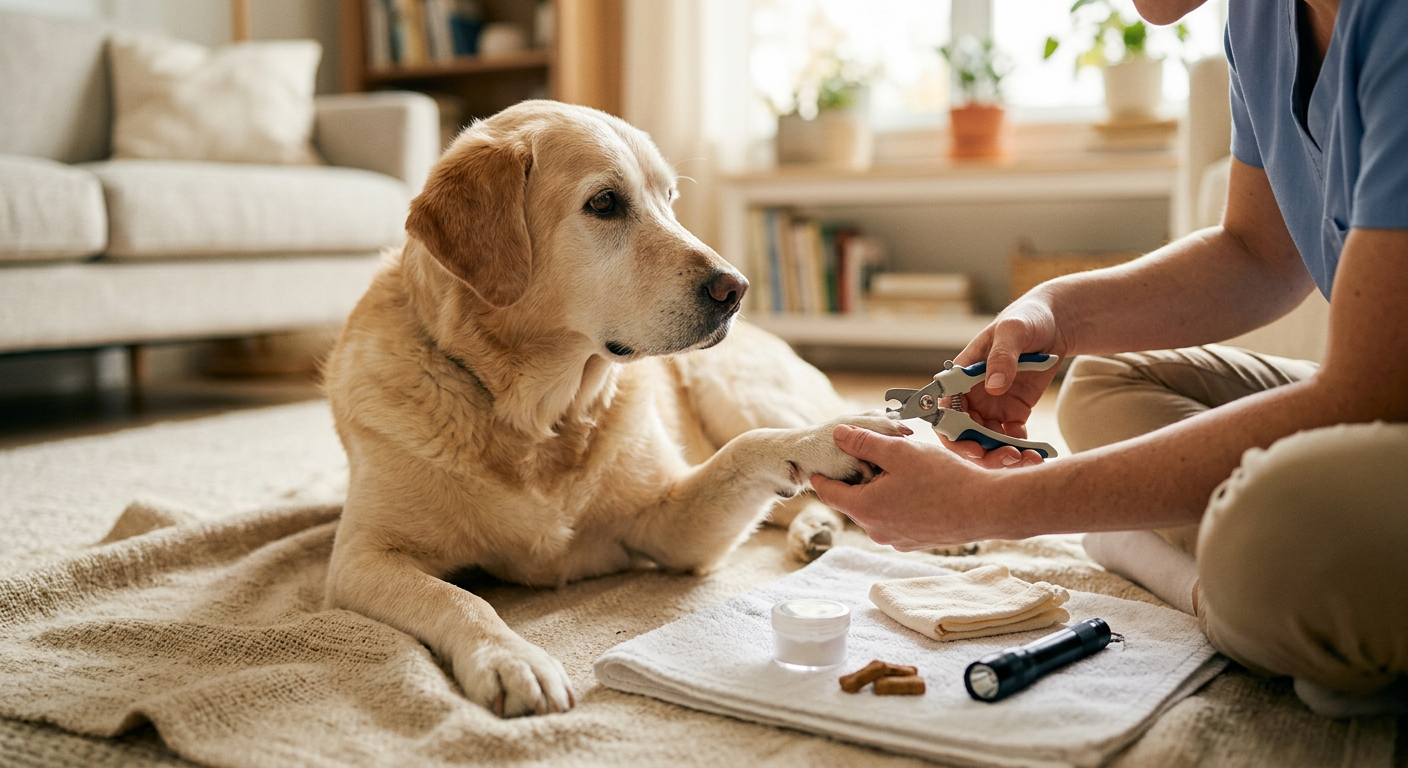
Nail grinder vs clippers for dogs: which is best for your pet?
guide
Dog Nail Trimming at Home: Safe Step-by-Step Routine (Clippers vs Grinders vs Scratch Boards)
guide
How to Trim Parrot Nails Safely at Home (No Bleeding)
guide
How to Trim Rabbit Nails Without Stress (Quick & Safe Guide)
guide
How to Trim Rabbit Nails Safely: No Biting, No Quicking
Frequently asked questions
How do I stop dog nail bleeding after trimming fast?
Apply firm, steady pressure with clean gauze or a paper towel for a few minutes, then use a styptic powder, styptic pencil, or cornstarch to help clot. Keep your dog calm and limit activity until the bleeding fully stops.
What if I don’t have styptic powder at home?
You can often stop minor bleeding with pressure alone, or by using cornstarch or flour as a temporary clotting aid. If bleeding continues or restarts easily, pick up styptic powder and avoid letting your dog lick the nail.
When should I call the vet for a bleeding nail?
Call your vet if bleeding won’t stop after 10–15 minutes of consistent pressure and clotting powder, or if your dog seems very painful, weak, or anxious. Also contact them if the nail is cracked, partially torn, or the toe looks swollen or infected.
