
comparison • Oral Care
Water Additive vs Brushing for Dog Teeth: What Actually Helps More?
Brushing removes plaque best, but water additives can help when your dog won’t cooperate yet. Use behavior-first steps to build a routine that sticks.
By Lucy Anderson • February 20, 2026 • 7 min read
Table of contents
- Pet behavior signals that shape the routine
- Green-light signals (you can progress)
- Yellow-light signals (slow down, change the plan)
- Red-light signals (stop and rebuild)
- Pain changes the entire equation
- Low-stress setup before any tool is used
- Choose the time and place your dog already relaxes
- Control the flavor and texture variables
- Make water additives “invisible” at first
- Handling protocol for better compliance
- The “two-second rule” for early sessions
- Positioning that reduces conflict
- Lip-lift > open-mouth
- Tactical workflow by session phase
- Phase 1: Acceptance (days 1–7)
- Phase 2: Contact (week 2)
- Phase 3: Brushing (weeks 3–6)
- Phase 4: Support tools (ongoing)
- Product choices by temperament and tolerance
- If your dog is handling-sensitive or mouth-shy
- If your dog is tolerant but impatient (wiggly, distracted)
- If your dog is noise- or vibration-sensitive
- If your dog already has visible tartar
- If your dog has dietary limits or sensitive stomach
- Error recovery after a bad session
- Step 1: Stop while you’re still safe
- Step 2: Pay the dog for the attempt
- Step 3: Rewind to the last easy win for 3–5 days
- Step 4: Change one variable at a time
- Progress tracking template
- Practical long-term maintenance plan
- The “minimum effective routine” most homes can sustain
- Example maintenance plans by lifestyle
- Busy weekday household (kids, late dinners)
- Mouth-shy dog in training
- Senior dog with mild arthritis (limited patience)
- When to involve your vet
- The bottom line
Dog dental care has a reputation for being a “should do” that rarely becomes a “we actually do.” And it’s not because owners don’t care—it’s because many dogs find mouth handling weird, stressful, or even scary.
So when people ask water additive vs brushing dog teeth, what they’re often really asking is: “What will my dog actually tolerate consistently—and will it still make a difference?”
Here’s the practical truth:
- •Brushing is the most effective at physically removing plaque at the gumline (where dental disease starts). If you can do it, it usually helps more.
- •Water additives can support fresher breath and reduce bacteria in the mouth, but they don’t “scrub” plaque off teeth. They’re often best as a support tool, not a replacement.
This article is built around behavior-first sequencing—because the “best” tool is the one your dog allows you to use calmly, repeatedly, and long-term.
Pet behavior signals that shape the routine
Before you pick between brushing and a water additive, watch what your dog is already telling you. Oral care fails most often because we skip this step and accidentally push past tolerance.
Green-light signals (you can progress)
Your dog:
- •Approaches you when the product comes out
- •Licks a toothbrush/finger brush willingly
- •Allows brief lip lifts without backing away
- •Takes treats with a soft body (loose tail, normal blinking)
If you have green lights, brushing is likely realistic with a gradual plan.
Yellow-light signals (slow down, change the plan)
Your dog:
- •Turns head away but stays in place
- •Licks lips repeatedly, yawns, or suddenly sniffs the ground
- •Becomes wiggly and can’t hold still
- •Accepts handling only if you “hold” them
Yellow lights mean you’re near the edge. This is where water additives, wipes, and micro-sessions can keep you making progress without creating a fight.
Red-light signals (stop and rebuild)
Your dog:
- •Freezes (stillness with hard eyes)
- •Growls, snaps, or thrashes
- •Runs away when you pick up dental items
- •Won’t take treats during the attempt
Red lights mean today is not a training day for brushing. Switch to the lowest-stress option and rebuild trust.
Pain changes the entire equation
If your dog suddenly resists mouth handling, drops food, paws at the face, has one-sided chewing, or has blood on toys—assume discomfort first. A water additive won’t fix pain, and brushing a painful mouth can create long-term aversion.
Low-stress setup before any tool is used
A calm setup is what makes “water additive vs brushing dog teeth” a real choice instead of a wrestling match.
Choose the time and place your dog already relaxes
Pick a predictable moment:
- •After a walk
- •After dinner
- •When your dog is already on their bed
Avoid high-arousal times (doorbell, zoomies, guests). Oral care is a cooperation task—don’t start when your dog’s nervous system is already spiking.
Control the flavor and texture variables
Many dogs refuse brushing because of taste, not the brush.
- •Start with a pet-safe toothpaste flavor your dog likes (poultry, beef, or peanut-butter style). If you don’t have toothpaste yet, start with a tiny smear of something dog-safe that’s high value (ask your vet if your dog has dietary restrictions).
- •If your dog hates bristles, start with a wipe or finger tool first.
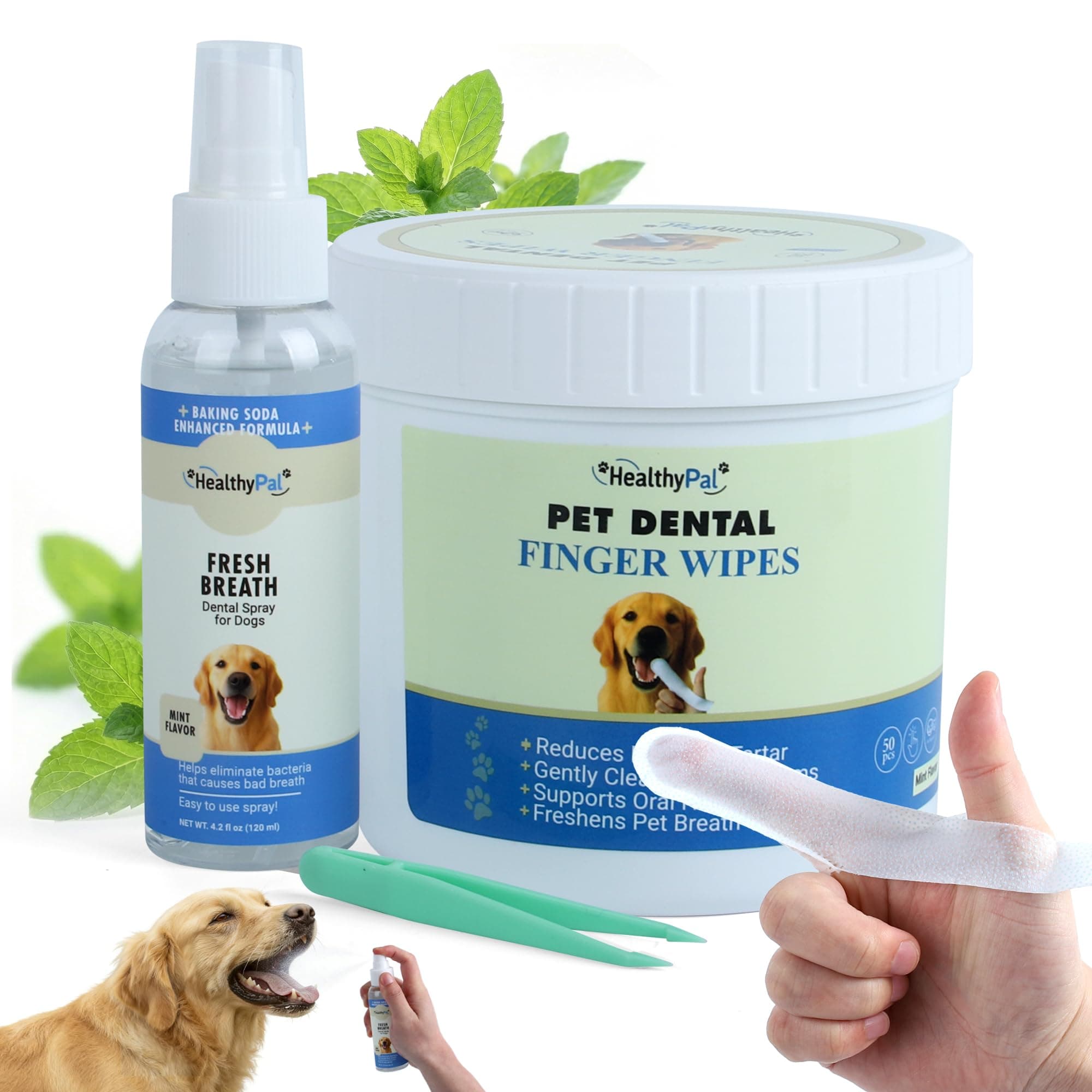
A gentle bridge option is a wipe product like HealthyPal Pet Dental Finger Wipes for Dogs & Cats – 50 Mint Flavor Dog Dental Wipes + Mint Fresh Breath Spray. It’s not a full substitute for brushing, but it often feels less intrusive than a brush.
Make water additives “invisible” at first
If you’re using a water additive, you want the first exposure to be uneventful:
- •Start with a partial dose (per label guidance) so taste changes are subtle.
- •Confirm your dog still drinks normally. If intake drops, stop and reassess—hydration matters more than dental support.
Water additives tend to be easiest for dogs who are handling-sensitive, but they can fail if your dog is picky about water taste.
Handling protocol for better compliance
The goal is consent-based handling: your dog stays because it’s tolerable and predictable—not because they’re restrained.
The “two-second rule” for early sessions
For the first week, aim for 2 seconds of mouth contact, then stop.
That sounds too short, but it’s how you prevent the “here we go again” reaction. Two seconds done calmly beats 30 seconds that creates avoidance.
Positioning that reduces conflict
Try these setups:
- •Side-by-side on the floor: Dog sits facing forward; you’re next to them, not looming over.
- •Chin-rest on a towel: Teach your dog to rest their chin on a folded towel for treats. This becomes your handling “on switch.”
- •Small dogs on a non-slip mat on a bench: Better ergonomics for you, less tipping and grabbing.
Avoid flipping your dog onto their back unless your dog already loves that kind of handling. Many dogs interpret it as restraint.
Lip-lift > open-mouth
Most effective brushing happens on the outer surfaces (cheek side) near the gumline. You usually do not need to pry the mouth open.
- •Use one finger to gently lift the lip.
- •Brush in small circles along the gumline.
- •Stop before your dog starts dodging.
This one adjustment improves tolerance more than any product choice.
Tactical workflow by session phase
This is the behavior-first sequence that lets you use the best tool your dog can handle today—and improve over time.
Phase 1: Acceptance (days 1–7)
Goal: your dog sees dental care as predictable and safe.
Options:
- •Water additive only while you build handling comfort.
- •Finger wipe swipe on one canine tooth, then treat.
Example: If you have a shy rescue who flinches when hands approach their face, start with the water additive (no handling) plus a quick touch to the cheek not the teeth, followed by a treat. You’re training the approach, not cleaning yet.
Phase 2: Contact (week 2)
Goal: brief tooth contact without stress.
- •Use a wipe or finger brush.
- •Target the big “easy” teeth first: the upper canines and the outside of the upper premolars.
If your dog tolerates wipes well, keep using HealthyPal Dental Finger Wipes as your stepping stone. You’re building the habit: touch-teeth → reward → done.
Phase 3: Brushing (weeks 3–6)
Goal: short, consistent brushing sessions.
- •Aim for 10–20 seconds total at first.
- •Focus on the gumline on the outer surfaces.
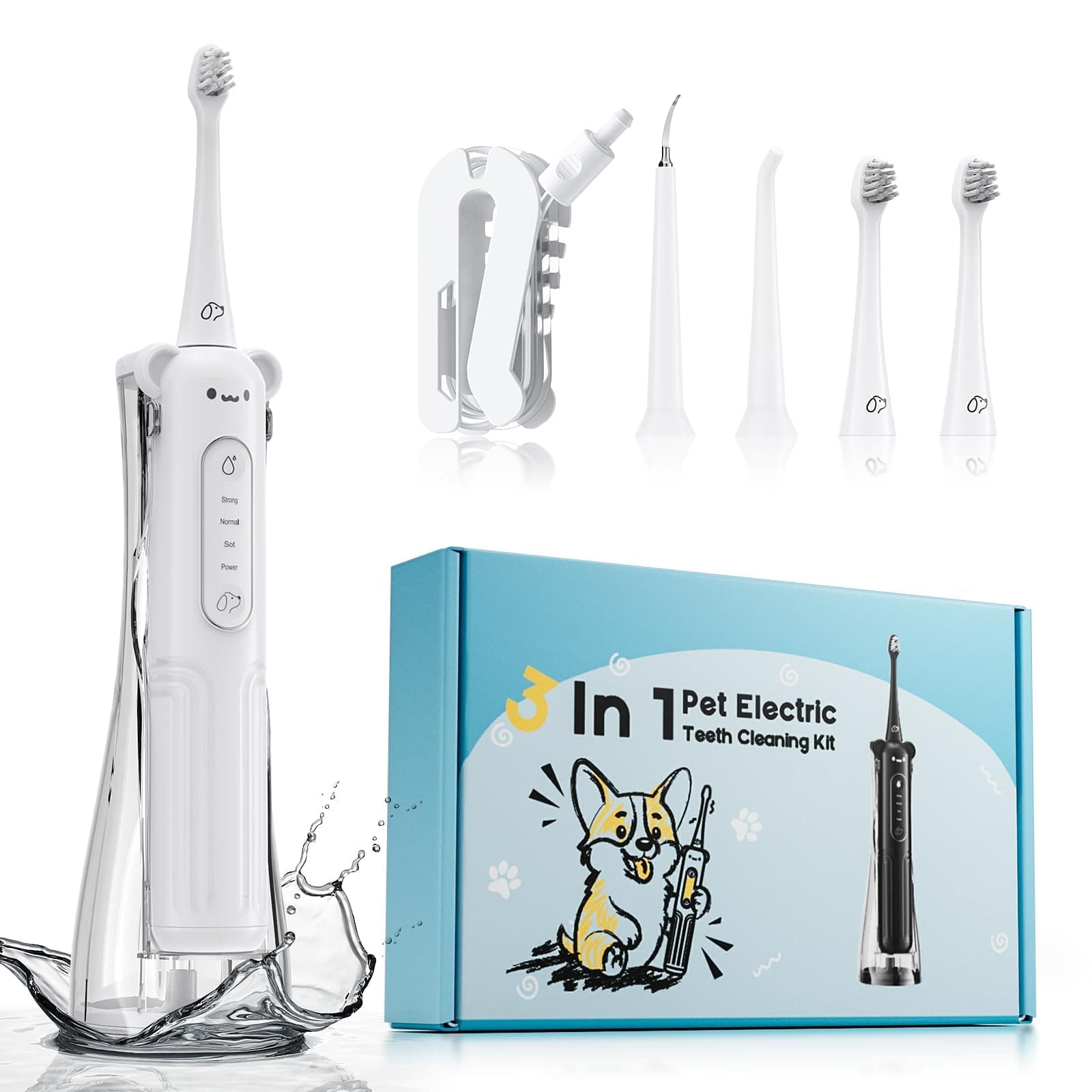
If your dog is tolerant and curious, an all-in-one tool like the UNINGOPI Dog Tooth Brushing Kit (3-in-1 electric toothbrush + water flosser) may help you reach more areas efficiently—but only if your dog is comfortable with sound/vibration and you introduce it slowly (off first, then on at a distance, then brief contact).
Phase 4: Support tools (ongoing)
Goal: fill the gaps when life happens.
Even great brushers miss days. That’s where support tools matter:
- •Dental chews can add mechanical abrasion and saliva stimulation.
- •Water additives can help on no-brush days.
- •Wipes can maintain familiarity with mouth handling.
For chews, products like Greenies Adult Natural Dental Dog Treats or Pedigree Dentastix (Large Breed) can be useful—especially for dogs who won’t tolerate brushing yet. Pick the right size, supervise chewing, and factor treats into daily calories.
Product choices by temperament and tolerance
This is where the water additive vs brushing dog teeth question becomes a decision tree instead of a debate.
If your dog is handling-sensitive or mouth-shy
Best starting stack:
- •Water additive (low conflict)
- •Dental wipes for brief tooth contact
- •Chews for additional mechanical help
Why: You’re reducing bacteria exposure while you teach your dog that facial handling predicts good things. Brushing may be the end goal, but trust comes first.
Scenario: A 2-year-old rescue who won’t let you touch their muzzle. Start with water additive and a daily chew, then train a chin-rest and lip-lifts. Add wipes before you ever introduce a brush.
If your dog is tolerant but impatient (wiggly, distracted)
Best starting stack:
- •Short, frequent brushing sessions (5–15 seconds)
- •Optional wipe on busy days
Why: These dogs often can brush well—they just can’t hold still for long. Keep sessions tiny.
Scenario: A 10-month-old adolescent who thinks the toothbrush is a toy. Practice “sit → lick toothpaste → brush 5 seconds → chew reward” and end before the grabby behavior starts.
If your dog is noise- or vibration-sensitive
Be cautious with:
- •Electric toothbrushes
- •Water flossers
These can be great tools for some dogs, but they can also create instant aversion if introduced too fast. If you’re interested in an electric option like UNINGOPI’s 3-in-1 kit, treat it like a desensitization project:
- •Day 1–3: show it, treat.
- •Day 4–7: turn it on across the room, treat.
- •Then: brief touch to shoulder, treat.
- •Then: one tooth, treat.
If your dog already has visible tartar
Important tradeoff: None of these tools “dissolve” established tartar effectively at home.
- •Brushing helps slow new plaque.
- •Water additive may help breath and bacterial load.
- •Chews may reduce soft buildup depending on chewing style.
But if tartar is thick or gums are inflamed, you may need a veterinary dental cleaning to reset the baseline.
If your dog has dietary limits or sensitive stomach
- •Water additives are usually low calorie.
- •Chews add calories and can cause GI upset in some dogs.
If your dog gets diarrhea from chews, don’t force it. Use brushing/wipes plus vet guidance.
Error recovery after a bad session
Bad sessions happen—your dog pulls away, you accidentally bump a sore tooth, the toothpaste tastes wrong, or you push too long. The key is not to “win”; it’s to preserve future cooperation.
Step 1: Stop while you’re still safe
If you see red-light signals (freeze, growl, snapping), end immediately. Continuing teaches your dog that escalation works and that dental care is threatening.
Step 2: Pay the dog for the attempt
Give a calm reward for staying near you—even if you did zero cleaning. This prevents the toothbrush from becoming a predictor of conflict.
Step 3: Rewind to the last easy win for 3–5 days
Examples:
- •If brushing failed, go back to one quick swipe with a wipe.
- •If wipes failed, go back to lip touch only.
- •If handling is the issue, lean on water additive for a week while retraining.
Step 4: Change one variable at a time
Common culprits:
- •Too much duration
- •Wrong time of day (dog is tired/cranky)
- •You tried to open the mouth
- •The dog dislikes mint flavor
If your dog dislikes the sensation of bristles, don’t keep insisting. Use a wipe like HealthyPal to rebuild comfort, then reintroduce a brush later.
Progress tracking template
Tracking makes this routine feel less like guesswork. You’re looking for trends: better tolerance, longer duration, less avoidance, improved breath, healthier gums.
Use this simple weekly log:
| Week | Tool used (additive / wipe / brush / chew) | Session length | Tolerance score (1-5) | Notes (what worked/what didn’t) |
|---|---|---|---|---|
| 1 | Water additive + lip touch | 2 sec | 2 | Turned head away, still took treats |
| 2 | Wipe on upper canines | 5 sec | 3 | Better with side-by-side position |
| 3 | Brush front + one side | 10 sec | 3 | Hated mint; switched flavor |
| 4 | Brush both sides | 20 sec | 4 | Calm after evening walk |
Tolerance score guide:
- •1 = avoids/refuses treats
- •2 = tense but allows briefly
- •3 = neutral, mild dodging
- •4 = relaxed, cooperative
- •5 = actively participates (chin-rest, approaches)
If you’re comparing water additive vs brushing dog teeth, this log makes the decision clear: if brushing tolerance is climbing, keep building it. If tolerance is stuck at 1–2, lean on additives/chews/wipes while you retrain handling.
Practical long-term maintenance plan
A realistic plan is better than an ideal plan you quit.
The “minimum effective routine” most homes can sustain
- •Brushing: 3–5x per week (short sessions) if your dog tolerates it
- •Water additive: daily, especially for dogs who won’t brush yet
- •Chew: 3–7x per week depending on calories and GI tolerance
- •Wipes: backup tool for travel, busy nights, or brushing plateaus
This layered approach is often the most practical answer to water additive vs brushing dog teeth: brushing does the heavy lifting; additives and chews keep you from falling to zero when life gets messy.
Example maintenance plans by lifestyle
Busy weekday household (kids, late dinners)
- •Mon/Wed/Fri: 15–30 seconds brushing
- •Tue/Thu: wipe swipe + chew
- •Daily: water additive
Mouth-shy dog in training
- •Daily: water additive
- •4x/week: 2–5 seconds wipe on one area
- •1–2x/week: chew (supervised)
- •Goal: increase wipe coverage before introducing brushing
Senior dog with mild arthritis (limited patience)
- •3x/week: very short brushing (focus on upper outer gumline)
- •Daily: water additive to support breath
- •Chews only if the dog can comfortably chew (many seniors prefer softer options)
When to involve your vet
Home care is prevention and maintenance. Your vet should be involved if you notice:
- •Bleeding gums, foul odor that returns quickly, or visible gum recession
- •Broken teeth, swelling, or facial asymmetry
- •Sudden refusal of brushing or chewing
Professional dental cleanings can reset the mouth so your home routine actually works.
The bottom line
If your dog allows it, brushing usually helps more because it physically removes plaque where disease starts. But if brushing isn’t tolerated, water additives can still be worthwhile—especially when paired with wipes and dental chews—because consistency beats intensity.
Start with what your dog can handle today, keep sessions tiny, and let comfort drive progress. That’s how oral care becomes a routine instead of a recurring battle.
Roundups Cluster
More in this topic

guide
Pet Feeding Station Setup: The Perfect Spot for Stress-Free Meals
guide
Best Indestructible Dog Toys for Aggressive Chewers
guide
10 DIY Cat Enrichment Ideas to Keep Your Cat Happy
guide
Positive Reinforcement Dog Training: A Complete Beginner's Guide
guide
Crate Training Puppy Schedule: Day-by-Day Plan for Success
guide
Leash Training Tips for Dogs: Stop Pulling and Enjoy Walks
Frequently asked questions
Is a water additive a replacement for brushing my dog’s teeth?
Usually, no. Brushing physically removes plaque along the gumline, which is where periodontal disease starts. A water additive can support fresher breath and reduce bacteria exposure, but it doesn’t scrub plaque off teeth. For many homes, the best approach is brushing when tolerated, with a water additive as a daily “baseline” on top—especially on nights you can’t brush.
My dog hates brushing—what should I do first?
Start with the lowest-stress option and rebuild tolerance in tiny steps. Use a water additive so you’re doing something immediately, then train brief facial handling (1–2 seconds), then a quick tooth touch with a wipe, and only later introduce a toothbrush. Keep sessions extremely short and end before your dog dodges or stiffens. If your dog shows sudden resistance, consider dental pain and check with your vet.
Do dental chews help if I can’t brush every day?
They can help as a support tool, especially for dogs who chew thoroughly. Chews provide some mechanical abrasion and can stimulate saliva, but they’re not equivalent to brushing for gumline plaque control. Choose the correct size, supervise chewing, and account for calories. Many owners combine chews with a water additive and occasional wipes or brushing to keep momentum even when daily brushing isn’t realistic.
