
comparison • Coat Care
Slicker Brush vs Undercoat Rake: Which Tool for Your Coat Type (and Your Pet’s Tolerance)?
Slicker brush vs undercoat rake: choose the right tool for your pet’s coat and comfort. Learn low-stress steps, workflow, and error recovery for better grooming sessions.
By Lucy Anderson • February 23, 2026 • 7 min read
Table of contents
- Pet behavior signals that shape the routine
- Green-light signals (you can continue)
- Yellow-light signals (slow down, change approach)
- Red-light signals (stop and reset)
- Low-stress setup before any tool is used
- Pick the location based on escape behavior
- Control the sensory load
- Prep your “payment system”
- Do a 10-second coat check (no tools)
- Handling protocol for better compliance
- The “one hand anchors, one hand grooms” rule
- Pressure: think “paintbrush,” not “scrub brush”
- Body map: safe zones first, sensitive zones last
- Tactical workflow by session phase
- Phase 1: Consent warm-up (30–90 seconds)
- Phase 2: Surface work (2–5 minutes)
- Phase 3: Undercoat reduction (1–4 minutes, optional)
- Phase 4: Finish and recovery (30–60 seconds)
- Product choices by temperament and tolerance
- The cautious pet (startles easily, avoids hands)
- The tolerant but tangled pet (lets you groom, coat mats easily)
- The heavy shedder with a dense double coat (dog)
- The short-haired “hair everywhere” cat
- Error recovery after a bad session
- Step 1: Stop before the pet “wins by fighting”
- Step 2: Identify what failed
- Step 3: Re-entry plan (next session)
- Progress tracking template
- Practical long-term maintenance plan
- For long coats and tangle-prone coats
- For double-coated dogs
- For short-haired cats and dogs
- A behavior-first upgrade path
If you’re stuck on slicker brush vs undercoat rake, you’re not alone. These tools can both reduce shedding and prevent tangles—but they feel very different on the skin, and they solve different problems.
Here’s the behavior-first truth: the “best” tool is the one your pet will reliably tolerate, used in a sequence that protects comfort. A perfect tool used with poor timing (too long, too much pressure, wrong area) creates resistance fast—especially for cats and sensitive dogs.
Below is a practical, coat-type and tolerance-based way to decide, plus a routine that keeps sessions calm.
Pet behavior signals that shape the routine
Before you pick a tool, watch the pet in front of you. Coat type matters, but tolerance determines what you can do today.
Green-light signals (you can continue)
- •Loose body, soft eyes, normal blinking
- •Leaning into brushing, offering a side or rump
- •Slow tail wag (dogs) or tail resting (cats)
- •Accepting treats between strokes, returning after short pauses
Yellow-light signals (slow down, change approach)
- •Skin twitching along the back (“twitchy back”)
- •Ears turning back, head turning to watch the tool
- •Sudden grooming of self, lip licking (dogs), or “air sniffing” distractions
- •Moving away but not fleeing
Red-light signals (stop and reset)
- •Whipping head around to mouth the tool/hand
- •Growling, hissing, swatting, or “freeze then explode” stillness
- •Tail lashing (cats), repeated thumping, or hard stare
- •Panting not related to heat/exercise
Behavior-first decision rule:
- •If your pet hits yellow within the first 10–20 seconds of contact, choose the gentler tool (often a soft slicker or flexible brush) and shorten the session.
- •If your pet stays green but the coat remains “packed” and shedding clumps persist, add an undercoat tool later in the session—after you’ve warmed up the skin and trust.
Low-stress setup before any tool is used
The easiest grooming happens when the environment does half the work.
Pick the location based on escape behavior
- •For cats: a stable surface (washer top with a towel, countertop with mat) often works better than the floor because they feel less “chased.”
- •For dogs: a non-slip rug is key; slipping turns brushing into a full-body stressor.
Control the sensory load
- •Keep your tools out of sight until you’re ready. Some pets react just to the visual cue.
- •Avoid noisy appliances or busy doorways.
- •Aim for calm timing: after a meal or a walk, not during peak zoomies.
Prep your “payment system”
You’re buying cooperation, not bribing. Use tiny, fast rewards.
- •Dogs: pea-sized soft treats.
- •Cats: lickable treat on a spoon or plate so your hands stay free.
Do a 10-second coat check (no tools)
Run fingertips lightly:
- •If you feel surface tangles (topcoat knots), a slicker is often step one.
- •If you feel dense, springy fluff that doesn’t separate to the skin (common in double coats), an undercoat rake may be needed—but only once the pet is settled.
Handling protocol for better compliance
Tools don’t create comfort—your hands do.
The “one hand anchors, one hand grooms” rule
- •Anchor: hold the collar/harness lightly (dogs) or support the chest/shoulders (cats).
- •Groom: move the tool with minimal pressure.
Anchoring reduces startle responses because the pet knows where the contact is coming from.
Pressure: think “paintbrush,” not “scrub brush”
Whether it’s a slicker brush or undercoat rake, most irritation comes from pressure and repetition on the same spot.
- •Use short strokes.
- •Lift the tool off between strokes (don’t drag).
- •Change zones frequently: 5–10 strokes, then move.
Body map: safe zones first, sensitive zones last
Start where most pets tolerate touch:
- •Chest side, shoulders, back of neck
Then move to medium tolerance:
- •Back, hips
Save sensitive areas for last:
- •Belly, armpits, groin, behind ears, tail base
This sequencing matters a lot in the slicker brush vs undercoat rake debate: rakes can feel “grabby” on sensitive skin, so you earn access by building calm first.
Tactical workflow by session phase
A good grooming session has phases. You’re not “finishing the coat”; you’re shaping a positive routine.
Phase 1: Consent warm-up (30–90 seconds)
Goal: create a predictable pattern.
- •Touch the tool to the shoulder once, treat.
- •One gentle stroke, treat.
- •Pause, breathe, check body language.
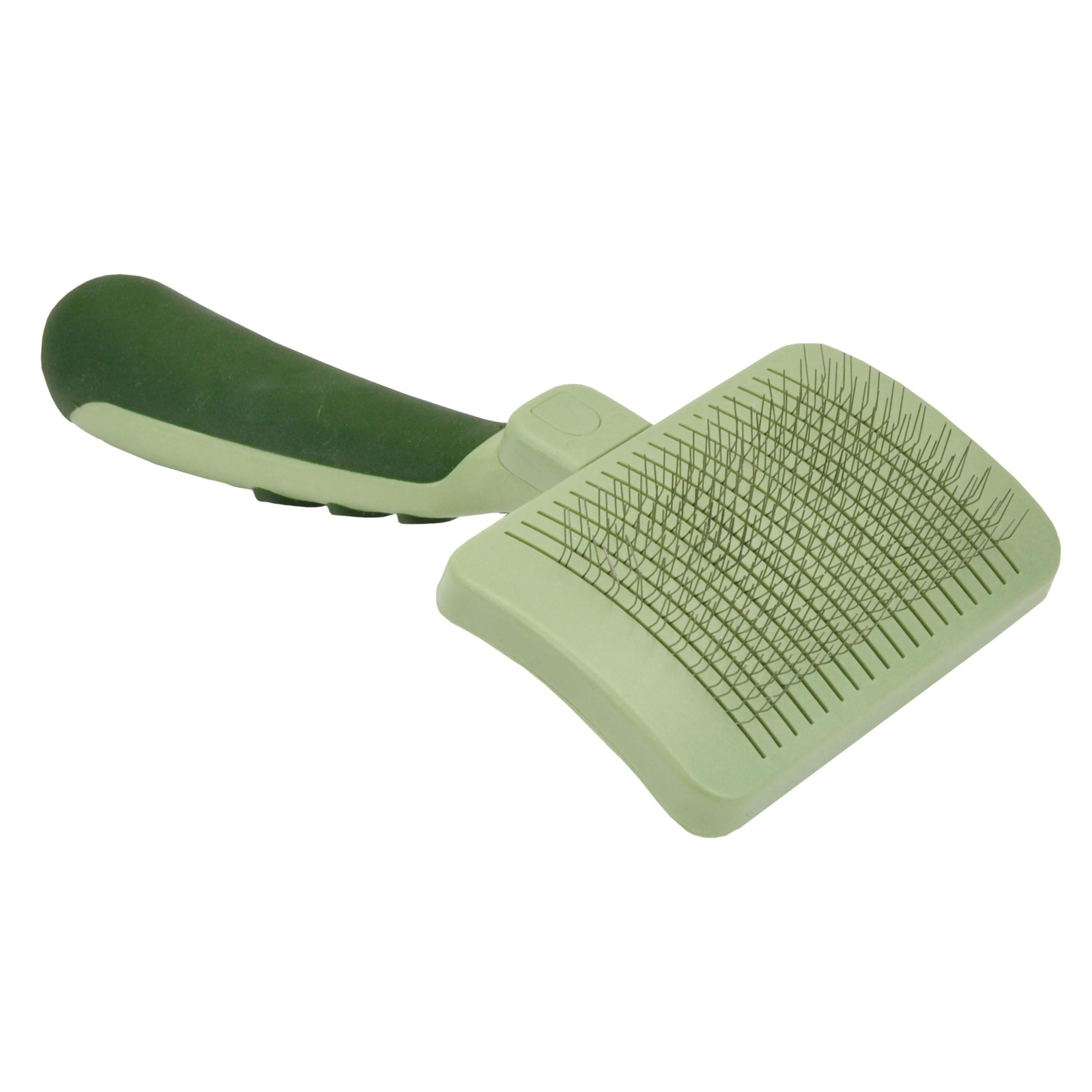
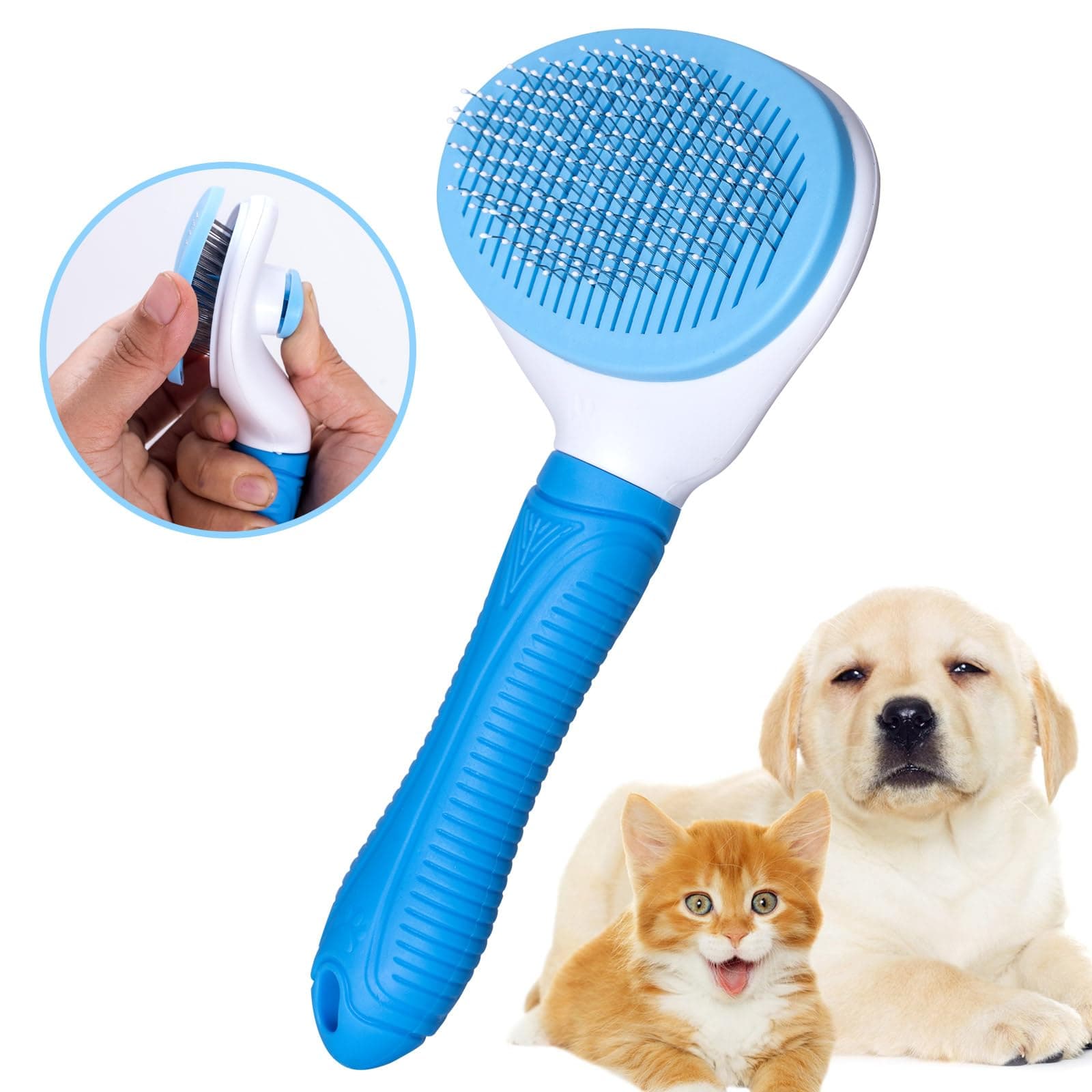
If you need a simple, cat-friendly slicker to start with, the Coastal Pet Safari Cat Self-Cleaning Slicker Brush is a practical option because you can clear hair quickly mid-session without fiddling (less downtime = less frustration).
Phase 2: Surface work (2–5 minutes)
Goal: remove loose topcoat hair and open the coat so deeper tools don’t snag.
Use a slicker brush when:
- •You see light matting, tangles, or “felted” areas starting.
- •Your pet has long or medium coat with feathering (collies, goldens, many mixed breeds).
- •Your pet is sensitive and you want a gentler first pass.
Technique tip: line brushing
- •Lift a section of coat with your free hand.
- •Brush small layers from ends toward skin.
- •Stop if you see pink skin or your pet flinches.
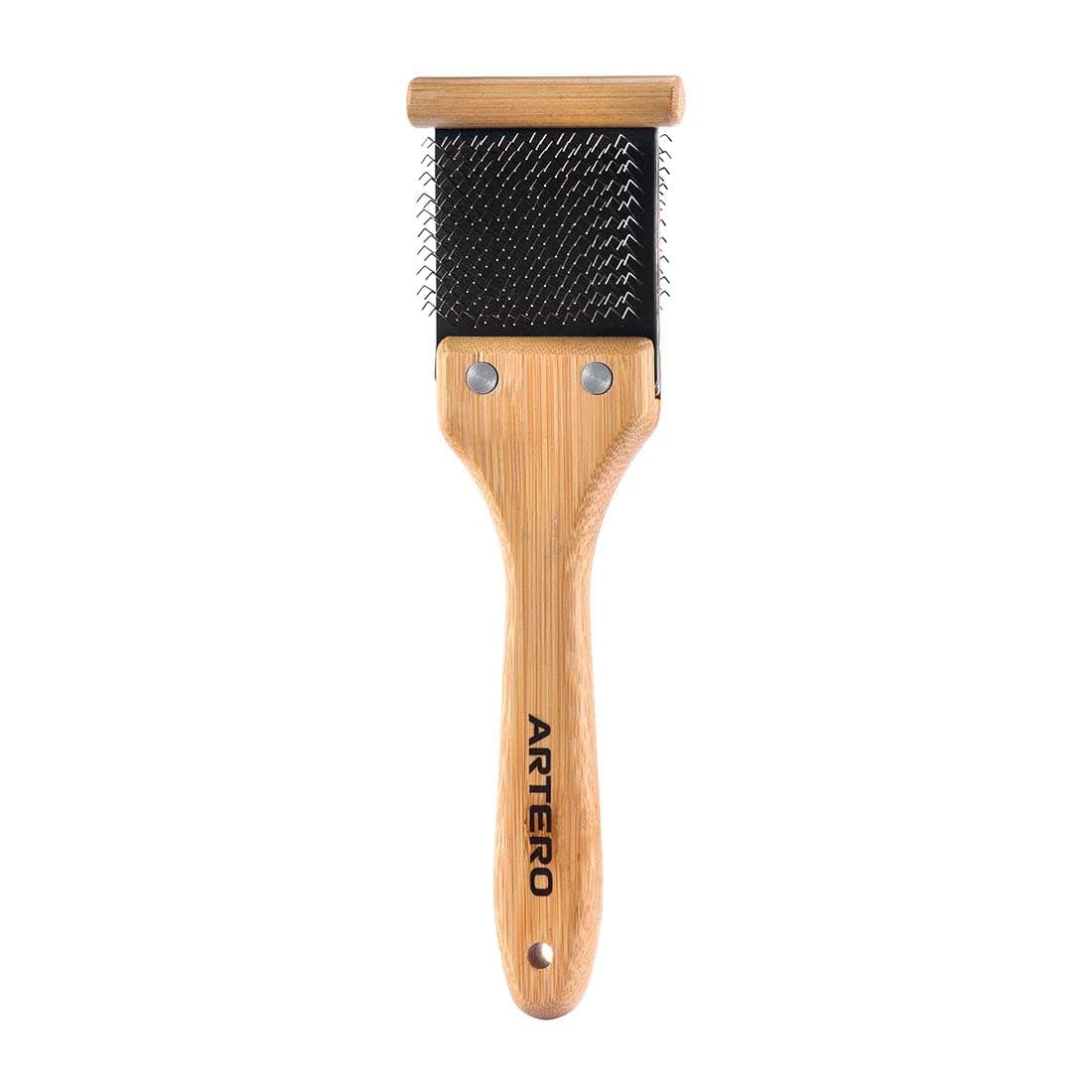
If your pet is wiggly or hates rigid brushes, a flexible option can help with comfort. The Artero Double Flexible Brush (2 in 1) is useful in this phase because flexibility reduces “scratchy” sensation that triggers avoidance.
Phase 3: Undercoat reduction (1–4 minutes, optional)
Goal: pull out impacted undercoat without scraping skin.
Use an undercoat rake when:
- •Your dog has a true double coat (husky, malamute, GSD, chow, many spitz types).
- •You feel dense undercoat that a slicker keeps gliding over.
- •Shedding comes out in tufts and keeps returning daily.
Technique tip: rake “with the grain,” micro-zones
- •Work in 2–3 inch sections.
- •Pull in the direction of coat growth.
- •Use very light pressure; let the teeth do the work.
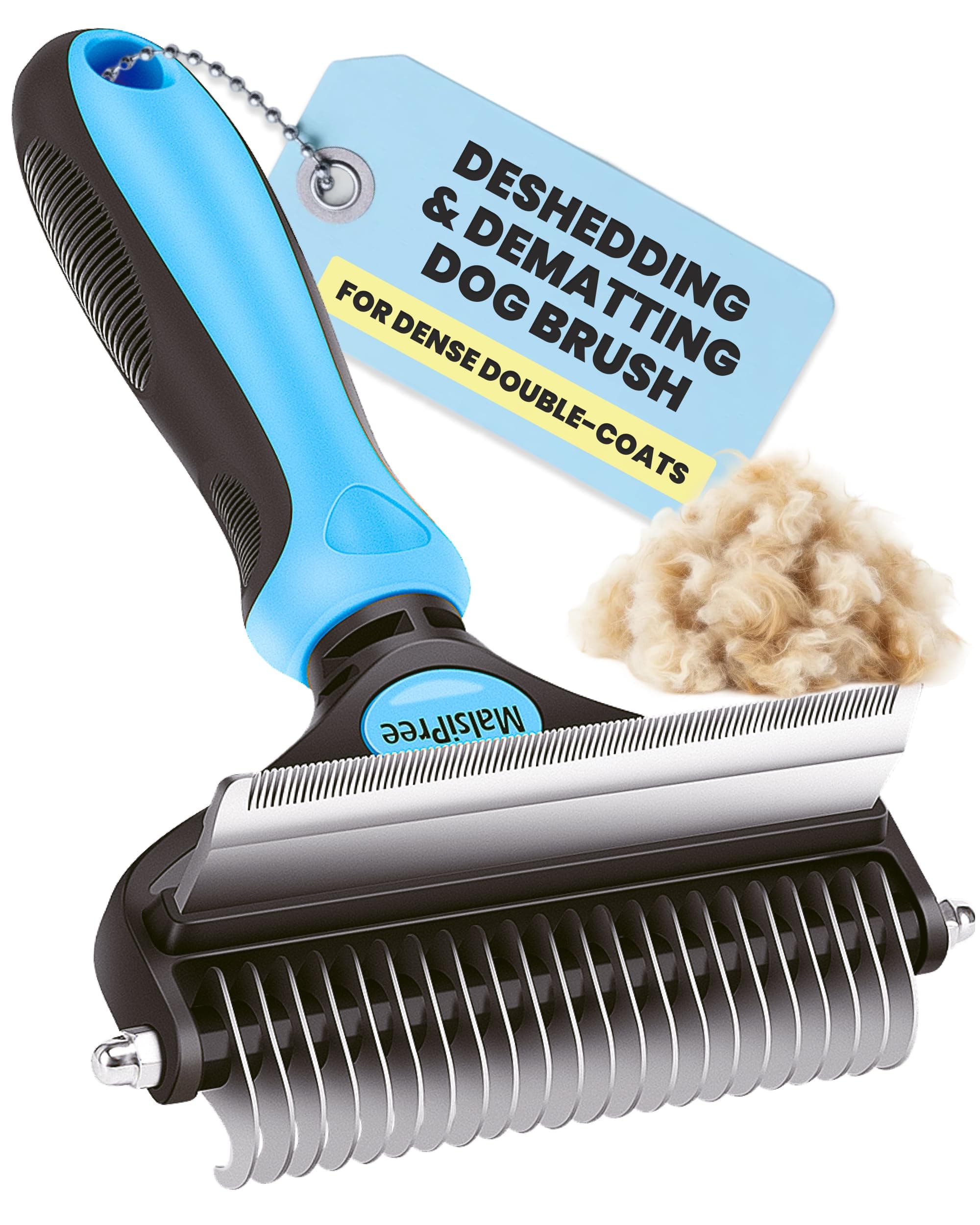
A 2-in-1 option like the MalsiPree Dog Brush for Shedding (2-in-1) can be helpful if you’re trying to reduce tool switching (which can trigger reactivity in some dogs). Use the gentler side first, then the rake side only if the pet stays relaxed.
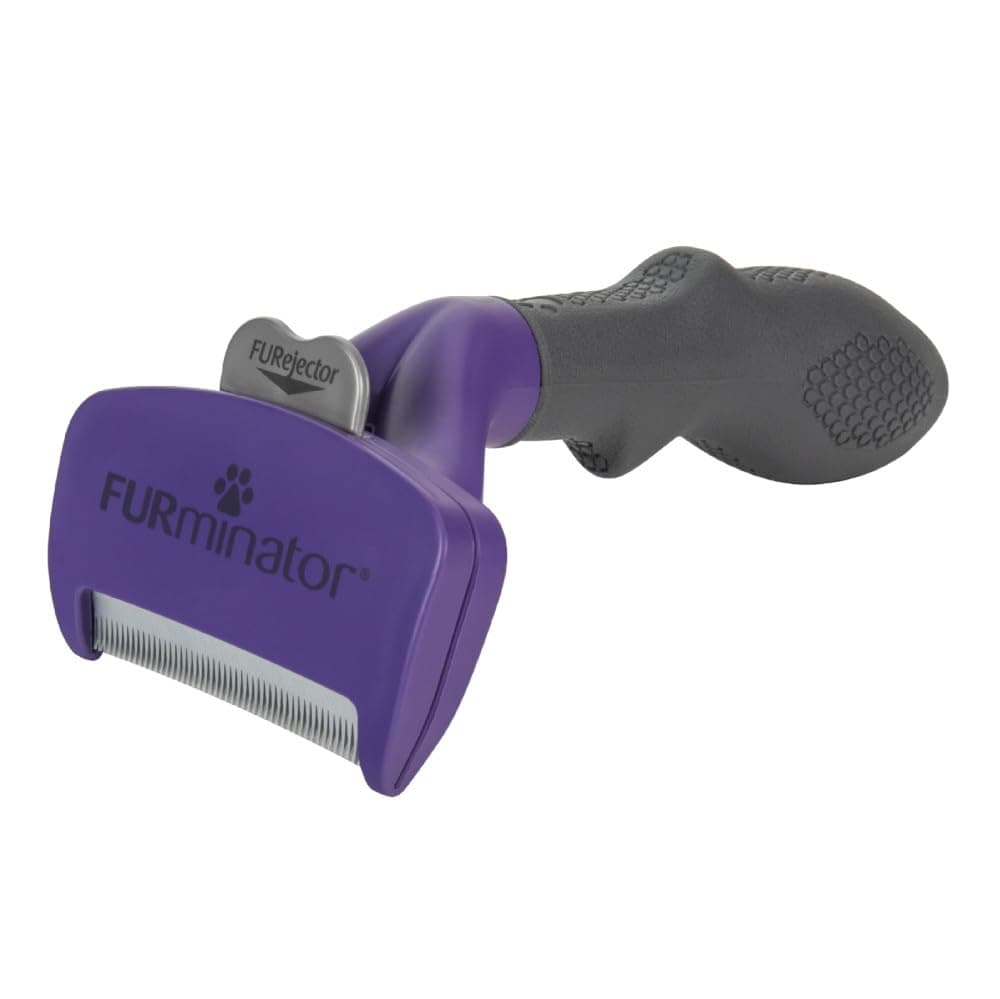
For short-haired cats that shed heavily, a deshedding tool can be effective—but it’s also easy to overdo. The FURminator deShedding Tool for Medium/Large Cats, Short Hair can remove a lot of loose hair quickly, so keep sessions short and stop at the first sign of skin sensitivity.
Phase 4: Finish and recovery (30–60 seconds)
Goal: end on a win.
- •Do 5 easy strokes on a favorite zone.
- •Give a “jackpot” treat.
- •Put tools away first, then release the pet.
Ending matters: if the last minute is uncomfortable, your pet remembers that and starts resisting earlier next time.
Product choices by temperament and tolerance
Your pet’s nervous system is part of the “coat type.” Here’s how to match tool feel to the pet.
The cautious pet (startles easily, avoids hands)
Best approach:
- •Start with a softer-feeling slicker or flexible brush.
- •Use 10–30 second mini-sessions multiple times per day.
Why: slickers can be introduced as “light touch,” while rakes can feel like they’re pulling.
Product idea: begin with the Artero Double Flexible Brush (2 in 1) for lower sensory intensity, then graduate to a rake only if the undercoat is truly packed.
The tolerant but tangled pet (lets you groom, coat mats easily)
Best approach:
- •Slicker first for detangling and line brushing.
- •Undercoat rake second only if you can reach skin without snagging.
If you’re grooming a cat with mild tangles and lots of loose hair, the Coastal Pet Safari Cat Self-Cleaning Slicker Brush fits the “do a little, often” style.
The heavy shedder with a dense double coat (dog)
Best approach:
- •Short slicker pass to open the coat.
- •Undercoat rake in small zones.
- •Repeat weekly during seasonal blow.
Product idea: the MalsiPree 2-in-1 Deshedding Brush & Undercoat Rake is a practical choice if you want one handle for the sequence.
The short-haired “hair everywhere” cat
Best approach:
- •Very short deshedding passes, then stop.
- •Focus on routine, not volume.
Product idea: the FURminator deShedding Tool for Medium/Large Cats, Short Hair can help, but treat it like a “high-powered” tool: 1–2 minutes, 1–2x/week to start, and avoid bony areas.
Error recovery after a bad session
Bad sessions happen: you hit a hidden knot, the cat got overstimulated, or the dog decided the rake is a threat. Recovery is about rebuilding predictability.
Step 1: Stop before the pet “wins by fighting”
If you push through, you teach them aggression/escape works. Instead:
- •Remove the tool.
- •Give space.
- •Toss treats away from you so they can decompress.
Step 2: Identify what failed
Common causes:
- •Too much pressure (especially with slickers)
- •Staying on one spot too long (creates skin soreness)
- •Jumping to sensitive zones early (belly, tail base)
- •Using an undercoat rake on tangles (it pulls painfully)
Step 3: Re-entry plan (next session)
- •Cut the session length in half.
- •Only groom the easiest zone (shoulder/chest side).
- •Reward after every 1–2 strokes.
- •Quit while the pet is still calm.
If mats are painful, don’t “train through” them. Consider professional grooming or safe dematting strategies—pain will undo your behavior work.
Progress tracking template
Use a simple tracking note on your phone. You’re looking for trends, not perfection.
Copy/paste template:
- •Date/time:
- •Tool used (slicker / undercoat rake / deshedding):
- •Session length (minutes):
- •Zones groomed:
- •Tolerance (green/yellow/red):
- •What the coat did (hair dust / tufts / snagging / mats found):
- •Treat type/payment rate:
- •Next time: one adjustment (shorter, different zone, different tool)
Two real-world examples:
- “Husky, spring shed: slicker 2 min + rake 2 min. Stayed green until tail base (yellow). Next time: tail base last, only 10 strokes.”
- “Short-haired cat: FURminator 60 sec. Yellow at hips. Next time: 30 sec, shoulders only, lick treat throughout.”
Practical long-term maintenance plan
Most coat problems are “spikes” caused by irregular grooming. A steady plan reduces both shedding and stress.
For long coats and tangle-prone coats
- •Frequency: slicker 3–5x/week (short sessions)
- •Undercoat rake: only as needed during shedding seasons or if coat feels packed
- •Rule: never use a rake to force through tangles; slicker and careful sectioning first
For double-coated dogs
- •Frequency: 1–2 longer sessions/week (10–20 minutes total, broken into phases)
- •During coat blow: add 2–3 mini-sessions/week
- •Sequence: surface open (slicker) -> undercoat reduction (rake) -> finish easy zone
For short-haired cats and dogs
- •Frequency: 1–2x/week, very short
- •Use high-efficiency tools sparingly; irritation can build even if the pet “tolerates” it
A behavior-first upgrade path
If you’re unsure in the slicker brush vs undercoat rake decision, build tolerance in layers:
- Teach calm contact with a gentle brush (flexible or soft slicker).
- Add line brushing habits (small sections, low pressure).
- Introduce the undercoat tool for seconds at a time, only on easy zones.
- Increase time only when your pet stays green for multiple sessions.
The payoff is a pet who doesn’t just “allow” grooming, but participates—because the routine stays predictable, comfortable, and worth it.
Roundups Cluster
More in this topic

guide
Pet Feeding Station Setup: The Perfect Spot for Stress-Free Meals
guide
Best Indestructible Dog Toys for Aggressive Chewers
guide
10 DIY Cat Enrichment Ideas to Keep Your Cat Happy
guide
Positive Reinforcement Dog Training: A Complete Beginner's Guide
guide
Crate Training Puppy Schedule: Day-by-Day Plan for Success
guide
Leash Training Tips for Dogs: Stop Pulling and Enjoy Walks
Frequently asked questions
Is a slicker brush or undercoat rake better for a double-coated dog?
For most double-coated dogs, a slicker brush is the better first step because it opens the coat and helps you find tangles without pulling deeply. An undercoat rake is often the better second step when the undercoat is dense or “packed” and shedding comes out in tufts. Use light pressure, work small sections, and avoid using a rake on tangles—detangle first or you’ll create pain and resistance.
Can an undercoat rake damage my pet’s coat or skin?
It can if you use too much pressure, rake the same spot repeatedly, or use it on mats/tangles. Rakes can feel grabby on sensitive skin areas (belly, armpits, tail base). Keep sessions short, move zones often, and stop if you see skin redness or your pet shows yellow/red stress signals. When in doubt, start with a gentler brush and build up tolerance before adding a rake.
What should I use for a short-haired cat that sheds a lot?
Short-haired cats often do best with brief, low-stress sessions rather than long deshedding marathons. A high-efficiency deshedding tool can remove a lot of loose hair quickly, but it’s easy to overdo—start with 30–60 seconds and watch for twitching, tail flicking, or irritation. Reward continuously (lick treats work well) and avoid bony or very sensitive areas.
