
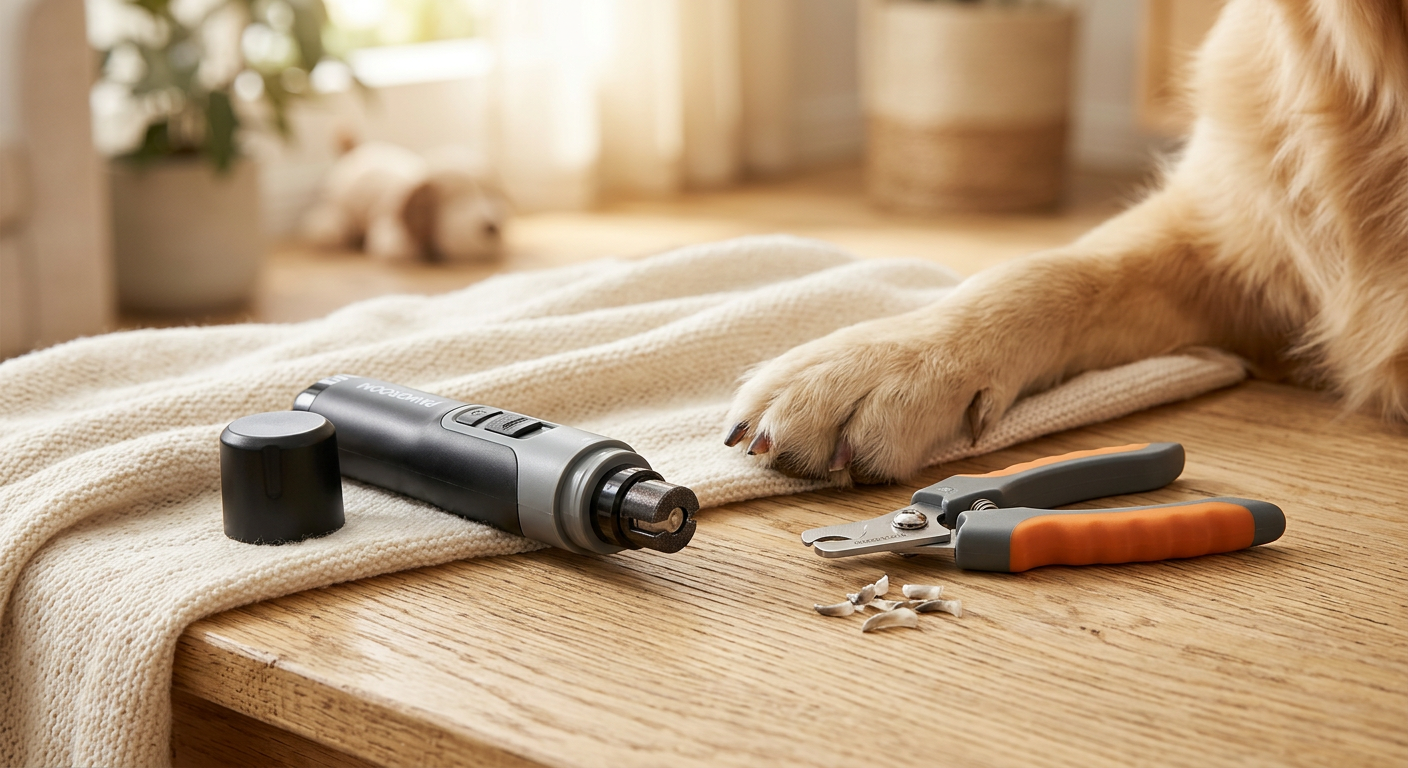
comparison • Nail Care
Nail Grinder vs Nail Clipper for Dogs: Which Is Better for Home Use?
Confused about nail grinder vs clipper? Compare safety, speed, stress, and results so you can pick the best at-home tool for your dog’s nails.
By Lucy Anderson • March 3, 2026 • 7 min read
Table of contents
- What actually matters in this comparison
- 1) Safety margin around the quick (especially with dark nails)
- 2) Your dog’s stress triggers (sound, pressure, restraint)
- 3) Finish quality (smoothness and snagging)
- 4) Time per session vs time per week
- 5) Nail type and growth pattern
- 6) Your own confidence and hand stability
- Baseline criteria and scoring method
- The scoring categories (0–5 each)
- Baseline scores (typical home user)
- Side-by-side workflow analysis
- Workflow A: Using nail clippers at home
- Workflow B: Using an electric nail grinder at home
- Workflow C: Using a scratch board as a low-stress supplement
- Cost, effort, and consistency tradeoffs
- Upfront cost vs ongoing cost
- Effort and fatigue
- Consistency: the hidden winner
- Noise and household logistics
- Which option wins by user profile
- 1) First-time dog owner who is nervous about bleeding
- 2) Dog with black nails and a history of quicking
- 3) Dog that panics at buzzing or vibration
- 4) Wiggly puppy (impulse control still developing)
- 5) Senior dog with thick nails
- 6) Multi-pet household (dogs + cats)
- 7) You want the lowest-drama routine possible
- Transition strategy if changing tools
- If you’re switching from clippers to a grinder
- If you’re switching from a grinder to clippers
- If you’re adding a scratch board
- Common decision mistakes
- 1) Choosing based on one dramatic incident
- 2) Trying to shorten overgrown nails in one session
- 3) Holding the paw in an awkward angle
- 4) Grinding too long in one spot
- 5) Ignoring dewclaws
- 6) Expecting silence and perfect cooperation immediately
- Final recommendation framework
- Step 1: Answer these four questions
- Step 2: Choose the “default” and the “backup”
- Step 3: Set a realistic maintenance rule
- Step 4: Define what success looks like
Keeping your dog’s nails short isn’t just cosmetic. Overgrown nails change paw angle, reduce traction on slick floors, snag on carpets, and can contribute to sore joints over time. The hard part isn’t knowing you should trim—it’s choosing the tool you’ll actually use consistently.
This guide breaks down nail grinder vs clipper for real home use: what matters, how each tool performs step-by-step, and which one wins in specific situations (wiggly puppies, black nails, anxious dogs, senior dogs, and multi-pet homes).
What actually matters in this comparison
Choosing between a grinder and a clipper is less about “which is best” and more about which tool lowers your risk, stress, and effort enough that you’ll keep up the habit. Here are the factors that truly move the needle at home.
1) Safety margin around the quick (especially with dark nails)
- •Clipper: One squeeze can cut too deep if you misjudge where the quick ends. That risk goes up with black nails, thick nails, and poor lighting.
- •Grinder: Removes nail gradually. You can stop frequently, which gives a bigger safety buffer.
Practical example: If your dog has black nails and jerks their paw mid-trim, a clipper can go from “fine” to “bleeding” in a split second. With a grinder, the worst-case slip is usually a little extra sanding, not a deep cut.
2) Your dog’s stress triggers (sound, pressure, restraint)
- •Clipper triggers: The squeeze pressure, the “snap” feeling, and sometimes a cracking noise on thick nails.
- •Grinder triggers: The buzzing sound, vibration, and the sensation of a spinning head near the toe.
A dog who hates paw handling may prefer the quick “snip and done.” A dog who hates sudden sensations may do better with slow grinding sessions paired with treats.
3) Finish quality (smoothness and snagging)
- •Clipper: Fast, but can leave a sharp edge that catches on blankets or scratches skin.
- •Grinder: Naturally rounds the nail, giving a smoother finish.
If your dog jumps on kids, a grinder’s rounded edge can make a noticeable difference in accidental scratches.
4) Time per session vs time per week
- •Clippers usually win per-session speed.
- •Grinders often win on weekly consistency because you can do “micro-trims” (30–90 seconds) more often with less fear of cutting too far.
5) Nail type and growth pattern
- •Thick, older nails and “ram’s horn” curves can be awkward with basic clippers.
- •Very long nails with long quicks often need gradual reduction over weeks—grinders and scratch boards can make this process less intimidating.
6) Your own confidence and hand stability
If your hands shake, your dog wiggles, or you’re simply nervous, the tool that lets you proceed gradually (grinder) can reduce errors. But if the grinder noise makes your dog thrash, clippers may be safer in practice.
Baseline criteria and scoring method
To keep this comparison practical, here’s a simple scoring method you can apply to your household.
The scoring categories (0–5 each)
- Quick-safety margin: How forgiving the tool is if you misjudge nail length.
- Dog tolerance: How likely your dog is to accept the tool with realistic training.
- Speed: How quickly you can finish one full paw cycle.
- Finish quality: Smoothness, rounding, reduced snagging.
- Owner usability: Hand fatigue, visibility, control, and learning curve.
- Consistency potential: How likely you are to keep a schedule for months.
Baseline scores (typical home user)
These are “average household” scores—your dog may flip them.
- •Nail clipper (traditional):
- •Quick-safety margin: 2/5
- •Dog tolerance: 3/5
- •Speed: 5/5
- •Finish quality: 2/5
- •Owner usability: 4/5
- •Consistency potential: 3/5
- •Electric nail grinder:
- •Quick-safety margin: 4/5
- •Dog tolerance: 3/5
- •Speed: 3/5
- •Finish quality: 5/5
- •Owner usability: 3/5
- •Consistency potential: 4/5
- •Scratch board / grinder board:
- •Quick-safety margin: 5/5 (for front nails)
- •Dog tolerance: 4/5 (many dogs enjoy it as a game)
- •Speed: 2/5
- •Finish quality: 4/5
- •Owner usability: 4/5
- •Consistency potential: 4/5
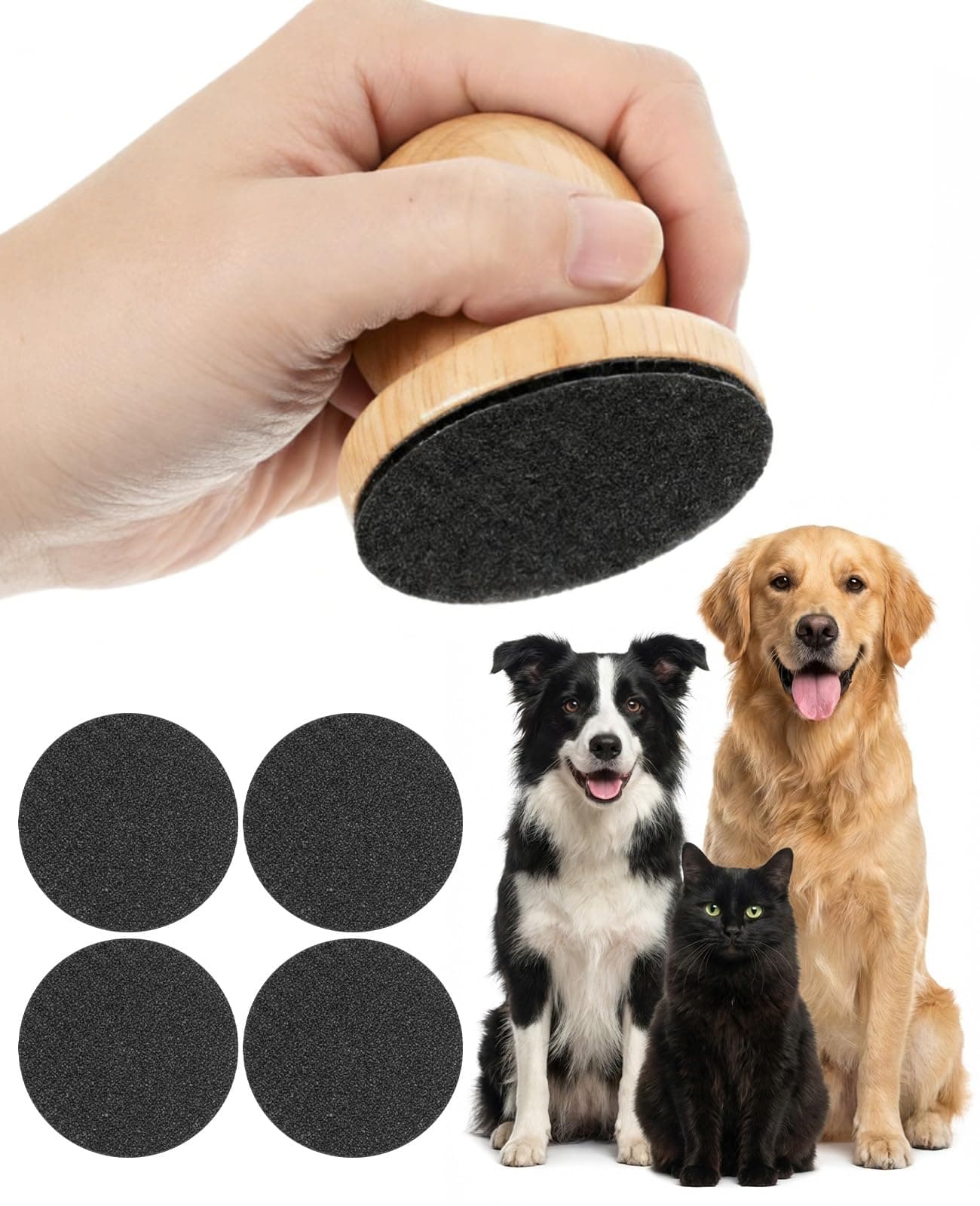
If you want a scratch-board option to supplement trimming, a product like the Dog Nail File, Grinder Board Scratch Pad with 4-Pack Replaceable Sandpaper Discs is designed for gentle, low-risk filing—especially useful for front paws.
Side-by-side workflow analysis
The biggest differences show up when you actually go through the steps at home. Below are realistic workflows (not idealized grooming-salon versions).
Workflow A: Using nail clippers at home
Best when: your dog tolerates paw handling, nails are light/transparent, you want speed, and you’re confident reading the quick.
1) Set the environment
- •Use bright light (phone flashlight angled from behind the nail helps).
- •Sit on the floor with your dog sideways against your leg or on a non-slip mat.
2) Find the cutting target
- •Aim for tiny slices, not one big cut.
- •For clear nails: stop before the pink quick.
- •For dark nails: look at the cut surface—when you see a darker, moist-looking center, you’re getting close.
3) Clip in “micro-snips”
- •Take 1–2 mm at a time.
- •Rotate slightly to follow the curve rather than cutting straight across.
4) Finish the edge
- •Use a manual file or a couple seconds of grinding to round the sharp rim.
Where clippers go wrong (real-world):
- •Dog pulls paw right as you squeeze.
- •Thick nails crush/splinter if blades are dull.
- •Owner tries to “get it done” in one cut and hits the quick.
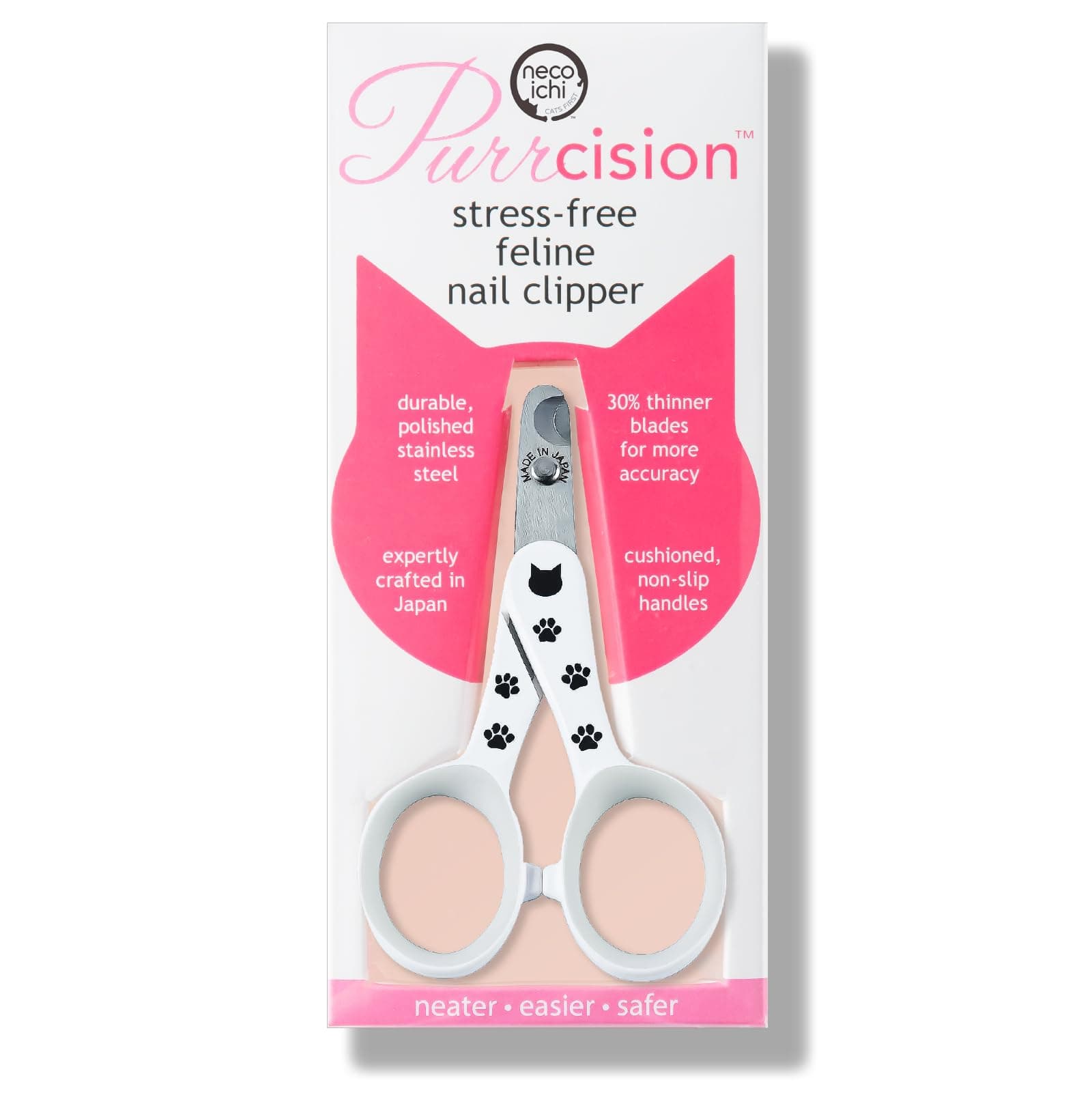
If you have cats too: A dedicated, sharp, small clipper is safer than using a bulky dog clipper. The NecoIchi - Purrcision Feline Nail Clippers are made for precision on small nails and can be a good separate tool for the household.
Workflow B: Using an electric nail grinder at home
Best when: black nails, nervous owners, you want a smooth finish, or you’re gradually shortening long nails over time.
1) Desensitize before you grind
- •Day 1–2: show the grinder, feed treats.
- •Day 3–4: turn it on across the room, feed treats.
- •Day 5+: touch the (off) grinder to a paw briefly, treat.
2) Positioning and grip
- •Hold the paw firmly but gently; support a toe with your fingers so it can’t twist.
- •Keep fur away from the grinding head (especially for fluffy paws).
3) Grind in short taps
- •Use “touch, lift, touch” for 1–2 seconds each. Continuous grinding generates heat.
- •Check the nail shape after every few taps.
4) Watch for the quick warning signs
- •You may see a small dark dot in the center as you approach.
- •Stop early; you can always do another micro-session tomorrow.
5) Round the tip
- •Lightly smooth the edges so the nail doesn’t snag.
Where grinders go wrong (real-world):
- •Dog panics at the sound and thrashes (risking toe injury).
- •Owner presses too long and heats the nail.
- •Hair gets caught if you’re not controlling the paw fur.
If you want a home-friendly grinder option, look for adjustable speeds and low noise. Two examples to compare are the Electric Dog Nail Grinder: Upgraded 5-Speed Quiet Dog Nail Trimmer for more control or the Dog Nail Grinder Electric Powerful 3 Speeds Dog Nail Clippers with Lights if you prefer built-in lighting.
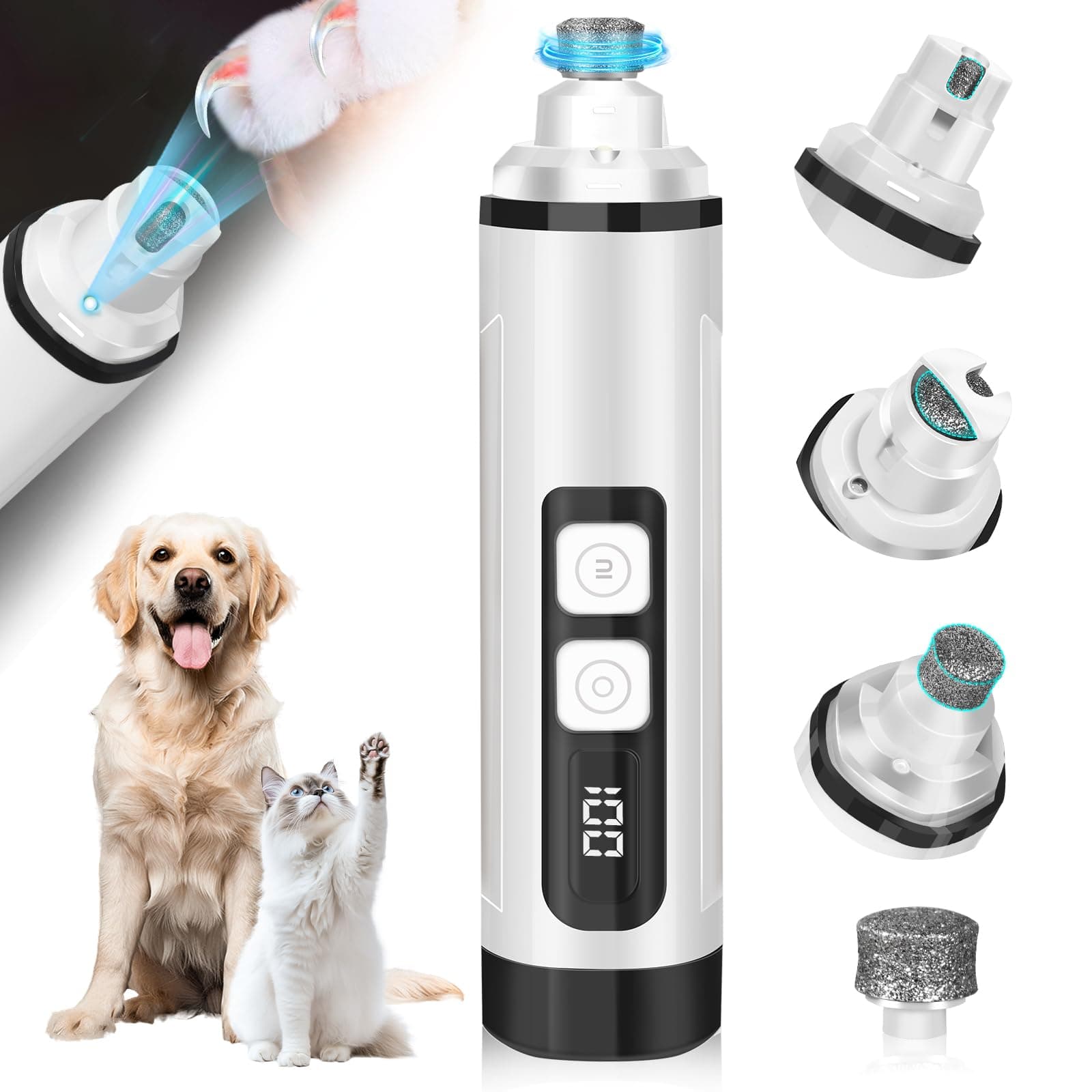
Dog Nail Grinder Electric Powerful 3 Speeds Dog Nail Clippers with Lights Quiet Cat Nail Clipper Painless Care Trimmers Tools for Small Medium Large Dogs and Cats (Black)
Brand: Javtoku
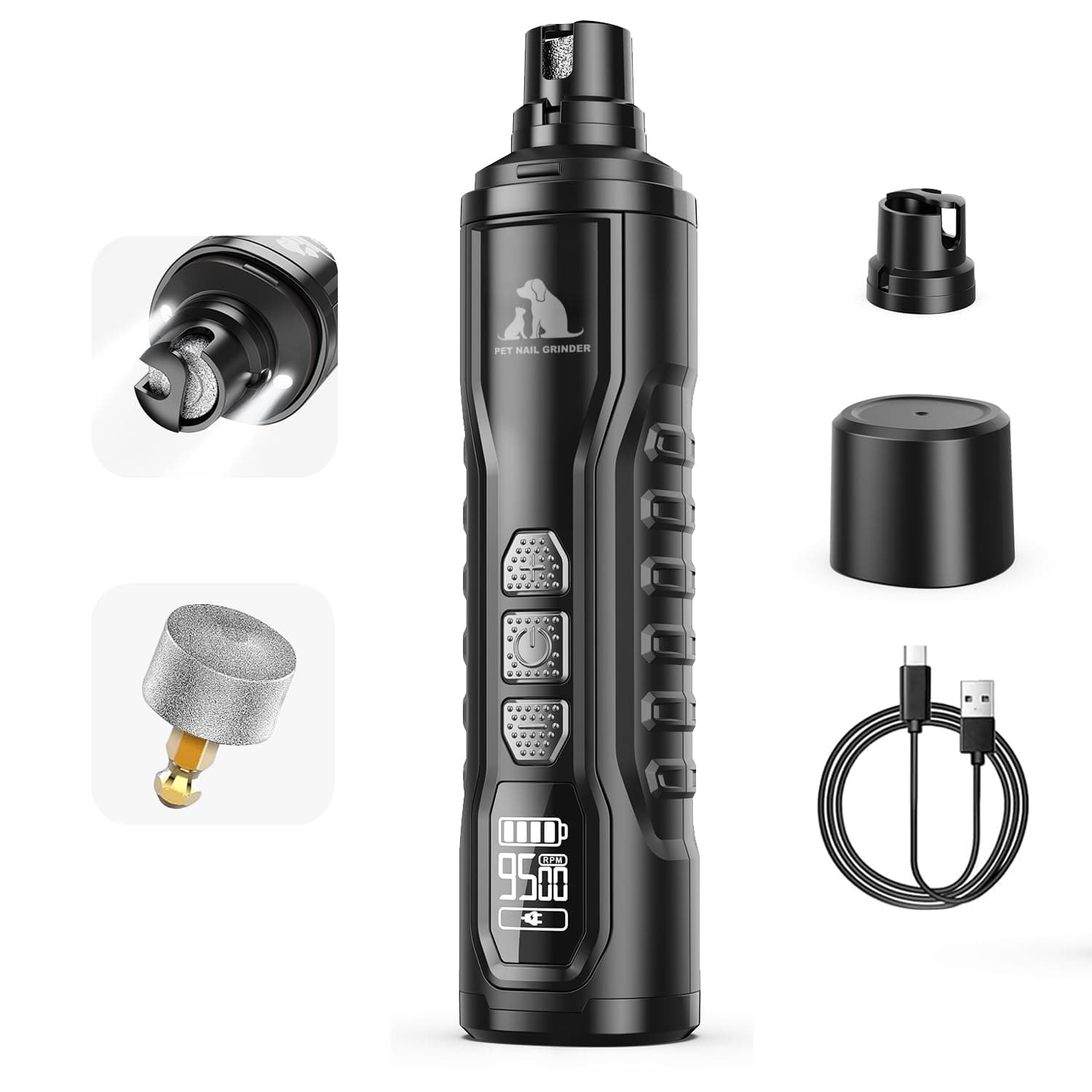
Electric Dog Nail Grinder: Upgraded 5-Speed Quiet Dog Nail Trimmer-Safe Painless Nail File for Claw Trimming & Grooming Care At Home for Dogs & Cats(Light Black)
Brand: Juveximzy
Workflow C: Using a scratch board as a low-stress supplement
Best when: dogs who hate paw restraint, owners who want a “game” approach, and households focused on maintenance.
- Teach “paw” or “touch” onto the board.
- Reward scratching behavior and gradually increase reps.
- Focus on front nails first (rear nails are harder with boards).
- Check dewclaws—boards often don’t address them.
Scratch boards are not a full replacement for every dog, but they can massively reduce the amount of clipping or grinding you need to do.
Cost, effort, and consistency tradeoffs
This is where the nail grinder vs clipper debate becomes very practical.
Upfront cost vs ongoing cost
- •Clippers: lower upfront cost; may need replacement when blades dull.
- •Grinders: higher upfront cost; replacement grinding bands/heads add ongoing cost.
- •Scratch boards: moderate upfront cost; sandpaper discs are consumables (but predictable and often inexpensive).
Effort and fatigue
- •Clippers: low time, but higher “mental load” if you’re scared of the quick.
- •Grinders: more time per session, but less fear for many owners once they learn the rhythm.
If your bottleneck is anxiety (you dread trimming day), grinders or scratch boards often improve long-term consistency.
Consistency: the hidden winner
Most nail problems come from inconsistency, not the tool itself. A “perfect” clipper is useless if you avoid it for two months.
A realistic, sustainable schedule:
- •Maintenance mode: every 1–2 weeks for most dogs.
- •Rehab mode (overgrown nails): 2–4 micro-sessions per week with a grinder (or short scratch-board sessions) to encourage the quick to recede gradually.
Noise and household logistics
- •If you live in an apartment with a noise-sensitive dog, the sound of a grinder may be the deal-breaker.
- •If you have kids and limited time, clippers may be the only tool you’ll reliably use.
Which option wins by user profile
Instead of one winner, here are the most common home scenarios and what tends to work best.
1) First-time dog owner who is nervous about bleeding
Winner: grinder (or scratch board + grinder)
- •The gradual approach builds confidence.
- •Plan: 30–60 seconds per paw over several days.
2) Dog with black nails and a history of quicking
Winner: grinder
- •Better visual control over incremental removal.
- •Use a lower speed and short touches; stop early and repeat next day.
3) Dog that panics at buzzing or vibration
Winner: clipper (with careful technique)
- •The session can be over in minutes.
- •Add a manual file afterward to remove sharp edges.
4) Wiggly puppy (impulse control still developing)
Winner: depends on the puppy’s trigger
- •If they hate restraint but tolerate sound: grinder in micro-sessions.
- •If they hate buzzing: fast clipper trims while they’re sleepy, plus treats.
Concrete approach: do one paw per day for a week. Puppies learn that nail care is short, predictable, and followed by something great.
5) Senior dog with thick nails
Winner: grinder + occasional clipper “bulk reduction”
- •Clippers can remove length quickly, grinder smooths and refines.
- •If nails are very thick, dull clippers can crush the nail—sharp tools matter.
6) Multi-pet household (dogs + cats)
Winner: separate tools for precision
- •Use a sturdy dog tool for dogs, and a small, sharp clipper for cats. For example, the NecoIchi - Purrcision Feline Nail Clippers keep cat trims controlled and clean.
7) You want the lowest-drama routine possible
Winner: scratch board + “touch-up” grinder
- •Board for frequent front-nail maintenance.
- •Grinder for rounding, rear nails, and dewclaws.
Transition strategy if changing tools
Switching tools is often when things go sideways. Dogs don’t usually hate “nail care”—they hate surprises.
If you’re switching from clippers to a grinder
1) Run a 7-day sound plan
- •Days 1–3: grinder appears, treats rain.
- •Days 4–5: grinder on for 1–2 seconds, treats.
- •Days 6–7: brief nail contact (1 second), treat jackpot.
2) Start with the easiest paw Most dogs have one paw they tolerate best—use it to build momentum.
3) Micro-sessions beat marathons Your goal is “calm repetition,” not finishing all nails on day one.
4) Keep the nails short via frequency Grinders shine when you do a little often.
If you’re switching from a grinder to clippers
1) Rebuild trust with pressure-free handling Handle toes, touch the clipper to nails without cutting, reward.
2) Clip only the very tip at first One tiny snip per nail is enough to restart the routine.
3) Use a file/grinder to smooth If the sharp edge is what your dog reacts to (snagging on fabric, licking paws), smoothing helps.
If you’re adding a scratch board
Teach it as a trick, not a grooming session:
- •Put the board down, cue “scratch,” reward.
- •End while your dog is still eager.
- •Check dewclaws weekly; they often need separate trimming.
Common decision mistakes
These are the pitfalls that make owners think a tool “doesn’t work,” when the real issue is technique or expectations.
1) Choosing based on one dramatic incident
One quicking episode can scare owners away from clippers for years. But if your dog can’t tolerate a grinder’s sound, clippers plus better lighting and micro-snips may still be the safest practical option.
2) Trying to shorten overgrown nails in one session
If nails are very long, the quick is long too. Pushing for “normal length today” increases injury risk.
Better plan: reduce a little, more often. A grinder makes this easier, but you can do it with clippers too if you take very small cuts.
3) Holding the paw in an awkward angle
Twisting joints to “get a better view” makes dogs pull away. Instead:
- •Bring the dog to your position (non-slip mat, good light).
- •Support the toe you’re working on.
4) Grinding too long in one spot
Heat buildup is real. If you feel warmth at the nail, you’ve held too long. Use short taps.
5) Ignoring dewclaws
Dewclaws don’t always touch the ground, so they don’t wear down naturally. They can curl and embed if neglected.
6) Expecting silence and perfect cooperation immediately
Even “quiet” grinders still make noise. Success usually comes from 5–10 short training exposures, not one long wrestling match.
Final recommendation framework
Use this framework to pick a tool you’ll use consistently—because consistency is what keeps nails comfortable.
Step 1: Answer these four questions
1) Are your dog’s nails dark or hard to see through?
- •Yes: lean grinder or scratch board + grinder.
- •No: either tool works; clippers become more attractive.
2) What does your dog dislike more: buzzing or squeezing?
- •Buzzing/vibration: lean clippers.
- •Squeezing/snap sensation: lean grinder.
3) Is your biggest constraint time or confidence?
- •Time: clippers.
- •Confidence: grinder.
4) Do you need a smooth, rounded finish?
- •Yes (kids, delicate skin, frequent jumping): grinder (or clip + file).
Step 2: Choose the “default” and the “backup”
For many homes, the best answer in the nail grinder vs clipper debate is not one tool—it’s a pairing:
- •Default: grinder for controlled shortening + smooth finish.
- •Backup: clippers for quick trims when the dog won’t tolerate grinding.
If you’re grinder-first, consider a controllable, multi-speed option like the Electric Dog Nail Grinder: Upgraded 5-Speed Quiet Dog Nail Trimmer. If you prefer a simpler speed setup with visibility support, compare it with the Dog Nail Grinder Electric Powerful 3 Speeds Dog Nail Clippers with Lights.
Step 3: Set a realistic maintenance rule
Pick one rule you can keep:
- •“Two nails per day after dinner,” or
- •“All paws every Sunday,” or
- •“Scratch board game 3x/week + dewclaws checked weekly.”
Step 4: Define what success looks like
A practical success metric: when your dog stands on a flat floor, nails should not click loudly with every step (some light clicking can still happen depending on paw structure and flooring). Another: nails should not snag blankets or leave scratch lines on skin.
If you’re deciding today and want the lowest-risk path for most homes, start with a grinder or scratch-board system for gradual control, then add clippers later if you need speed. If your dog is noise-sensitive, start with clippers and add filing for comfort.
Roundups Cluster
More in this topic

guide
Pet Feeding Station Setup: The Perfect Spot for Stress-Free Meals
guide
Best Indestructible Dog Toys for Aggressive Chewers
guide
10 DIY Cat Enrichment Ideas to Keep Your Cat Happy
guide
Positive Reinforcement Dog Training: A Complete Beginner's Guide
guide
Crate Training Puppy Schedule: Day-by-Day Plan for Success
guide
Leash Training Tips for Dogs: Stop Pulling and Enjoy Walks
Frequently asked questions
Is a nail grinder safer than clippers for dogs?
For many homes, yes—because a grinder removes nail gradually, giving you more chances to stop before hitting the quick. That said, a grinder can be less safe in practice if your dog panics at the sound and thrashes (toe twists are a real risk). The safer tool is the one your dog will tolerate calmly with short, controlled sessions.
What’s better for dogs with black nails: a grinder or clippers?
A grinder usually wins for black nails because you can shorten in tiny increments and check your progress frequently. Use short “tap” contacts (1–2 seconds), let the nail cool between touches, and stop when you see a small dark center forming. If your dog can’t tolerate the buzzing, use clippers with micro-snips under bright light and finish with a file or brief grinding for smoothness.
How often should I grind or clip my dog’s nails at home?
Most dogs do best with maintenance every 1–2 weeks, but dogs with fast nail growth or long quicks may need more frequent micro-sessions. If nails are overgrown, plan 2–4 short sessions per week (especially with a grinder) to gradually bring length down and encourage the quick to recede. Always check dewclaws weekly since they often don’t wear down naturally.
