
comparison • Hair Removal (Home)
Lint Roller vs Reusable Pet Hair Tool: Which One Wins Long Term?
Compare sticky lint rollers and reusable pet hair tools using a household “system” approach. Choose the right combo for your furniture, clothes, and schedule.
By Lucy Anderson • March 4, 2026 • 7 min read
Table of contents
- Outcome target and routine constraints
- Environment design for consistency
- Create “hair removal stations” (one per problem zone)
- Standardize containers and disposal
- Protect the high-value surfaces
- Sequence architecture: what happens first and why
- Stage 1: Reduce production (5–10 minutes, 2–4x/week)
- Stage 2: Bulk extraction from surfaces (3–8 minutes, most days)
- Stage 3: Precision finishing (30–90 seconds, as needed)
- Execution cadence for busy schedules
- The “2-2-10” cadence (low effort, high stability)
- Where each tool fits on a tight day
- Product-fit matrix by household scenario
- Scenario A: One cat, apartment, fabric couch, mostly indoor life
- Scenario B: Two dogs, kids, car-heavy lifestyle, fabric seats
- Scenario C: Long-haired cat + dark work wardrobe (black pants, coats)
- Scenario D: Allergy-sensitive household (guests react, you want “low-hair” baseline)
- Scenario E: Rugs and textured fabrics that trap hair
- Mistakes that create regression
- Using the wrong tool for the hair’s “attachment mode”
- Treating the couch like a single surface
- Buying one tool and expecting it to cover every job
- Waiting until the hair becomes “felt”
- Not planning for refills and cleanout
- 30-day implementation plan
- Days 1–3: Baseline and station setup
- Days 4–10: Lock in the daily minimum
- Days 11–17: Add the “high-friction surface” loop
- Days 18–24: Reduce transfer points
- Days 25–30: Optimize for your real schedule
- FAQ and next-step decisions
- What actually wins long term: lint roller or reusable pet hair tool?
- Is a reusable roller enough for clothes?
- What if my main problem is the couch and throw blankets?
- What should I do if hair is embedded in rugs and car mats?
- Next-step decisions: how to choose in one minute
Pet hair is not a single problem. It’s a pipeline problem: hair gets produced (shedding), transported (static, fabric weave, paws), and stored (couches, bedding, car seats, clothes). When people search lint roller vs pet hair remover, they’re usually trying to decide which tool stops the constant backslide.
Here’s the honest answer: sticky lint rollers win for speed and precision in the last 2 minutes before leaving the house, while reusable tools win for bulk removal and cost control—especially on furniture and cars. Long term, most homes do best with a two-tool system: a reusable tool for surfaces + a lint roller for final “appearance pass.”
Outcome target and routine constraints
Your “win condition” should be measurable and realistic. Define it like a household engineering spec:
- •Primary outcome target: “Visible hair-free” on the surfaces that matter (couch arms, throw blankets, work clothes, car seats) within a set time.
- •Secondary outcome target: Reduce how often you need deep clean resets (vacuuming upholstery, washing covers) because hair never gets a chance to build a felt-like layer.
- •Constraint 1: Time: Most pet owners can commit to 3–10 minutes per day, not 45-minute weekend marathons.
- •Constraint 2: Storage & access: The best tool is the one you can grab in 10 seconds. If it lives in a closet, it’s functionally dead.
- •Constraint 3: Surface variety: Hair behaves differently on cotton tees than on microfiber couches; one tool rarely dominates everywhere.
Define your baseline in 5 minutes:
- Pick two “public surfaces” (e.g., couch + your main jacket).
- Pick one “high-friction surface” (car seat, area rug, pet bed).
- Note where hair is worst: embedded in fabric, floating on top, or clinging by static.
That diagnosis tells you whether you need sticky adhesion (lint roller) or mechanical lift (reusable tool).
Environment design for consistency
A long-term solution isn’t just buying a better tool; it’s reducing the friction to using it.
Create “hair removal stations” (one per problem zone)
You want tools where hair lands, not where you wish you’d use them.
- •Entryway station (clothing + last look): A sticky lint roller with refills, plus a small trash bin.
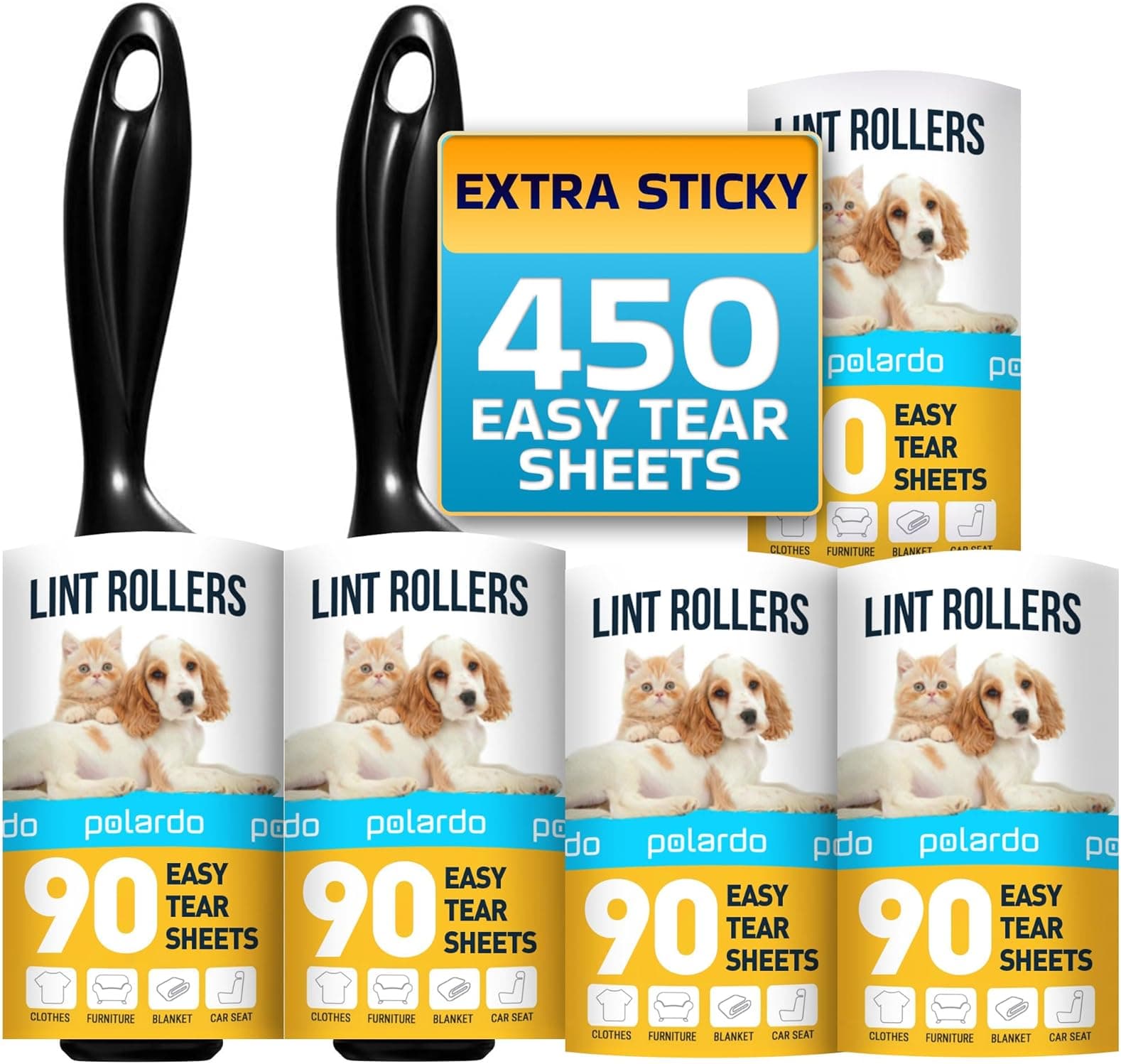
- •Example product: Lint Rollers for Pet Hair, Sticky, Remover for Couch, Clothes Furniture and Carpet. 5 Large Lint Rollers
- •Living room station (couch + throws): A reusable roller or scraping tool that handles bulk hair fast.
- •Example: ChomChom Roller Pet Hair Remover – Original Size Reusable Lint Roller
- •Laundry station (before washing): Laundry hair catcher tools + a small rake/scraper for rugs and mats.
- •Example kit: Pet Hair Removal Tool: 6 Pcs Dog Cat Hair Remover - Reusable Pet Hair Remover with Laundry Pet Hair Catcher
- •Grooming/“pet zone” station: A glove/mitt for quick de-shedding sessions that reduces what ends up on the couch in the first place.
- •Example: Pet Hair Removal Glove for Dogs & Cats, Reusable Electrostatic Pet Hair Remover Glove (Yellow)
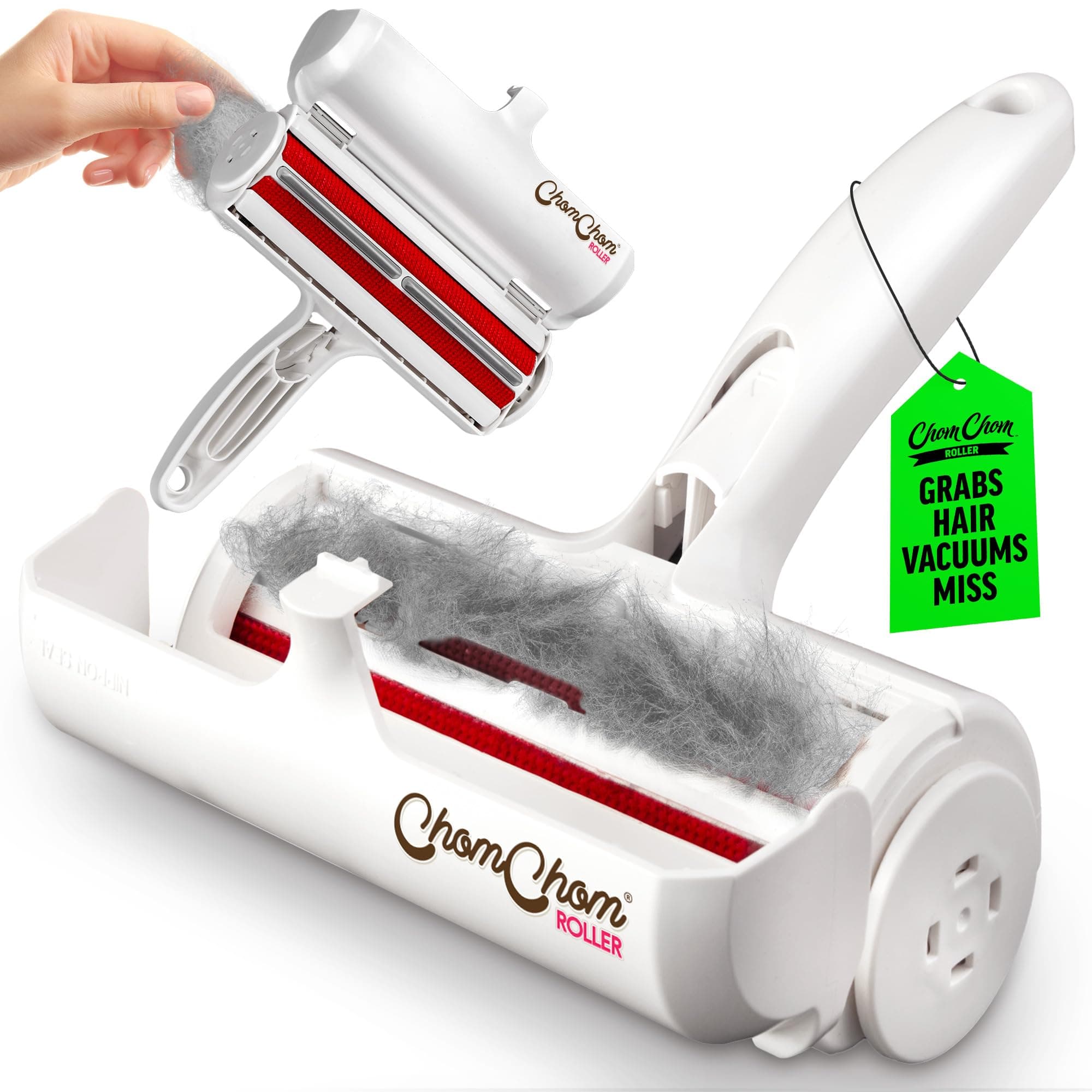
ChomChom Roller Pet Hair Remover – Original Size Reusable Lint Roller for Cat & Dog Hair on Furniture, Couch, Carpet, Car, Rugs & Bedding – Portable, Eco-Friendly (White)
ChomChom Roller
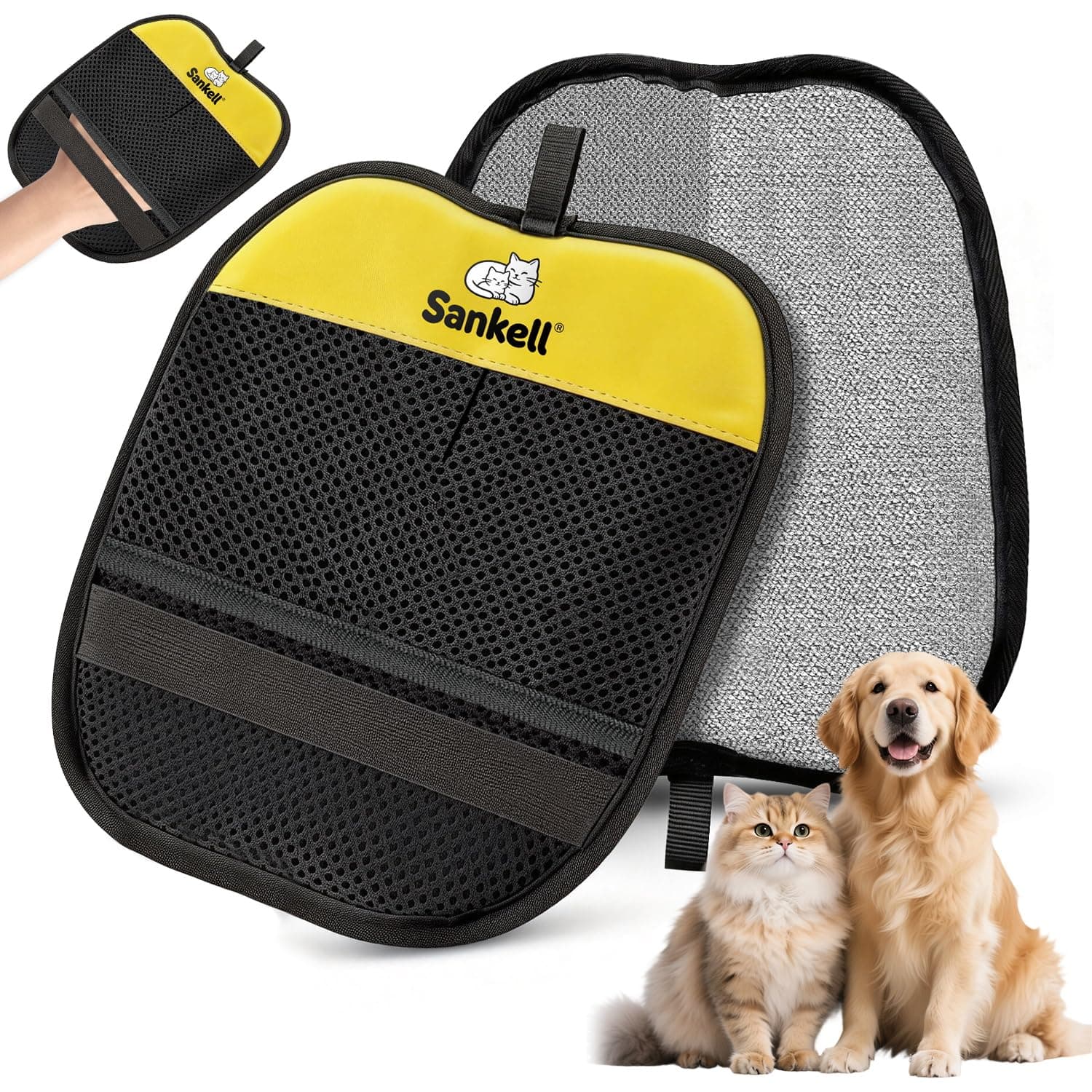
Pet Hair Removal Glove for Dogs & Cats, Newly Upgraded Reusable Electrostatic Pet Hair Remover Glove, Pet Hair Remover Mitt Tool for Couch, Furniture, Bed, Clothing, Carpet, Car Seat (Yellow)
Sankell
Standardize containers and disposal
Reusable tools collect hair—great—until the hair ball sits there and you avoid using the tool.
- •Keep a dedicated “hair waste” container near your living room station (a small lidded bin or a compostable bag tucked in a drawer works).
- •If you use sticky rollers, store refills beside the handle. A roller without sheets is like a vacuum without a bag.
Protect the high-value surfaces
If your couch is the battlefield, redesign it.
- •Use washable throws in the pet’s favorite two spots, not a decorative throw nobody touches.
- •Choose fabrics strategically: tight weaves release hair easier than plush knits.
- •Accept that “pet access” without cover design means you’re cleaning the couch itself every time.
Sequence architecture: what happens first and why
Think of this as a three-stage process. The order matters because hair either loosens, clumps, or embeds depending on what you do first.
Stage 1: Reduce production (5–10 minutes, 2–4x/week)
This is the upstream fix. You’re not removing hair from the house; you’re intercepting it at the source.
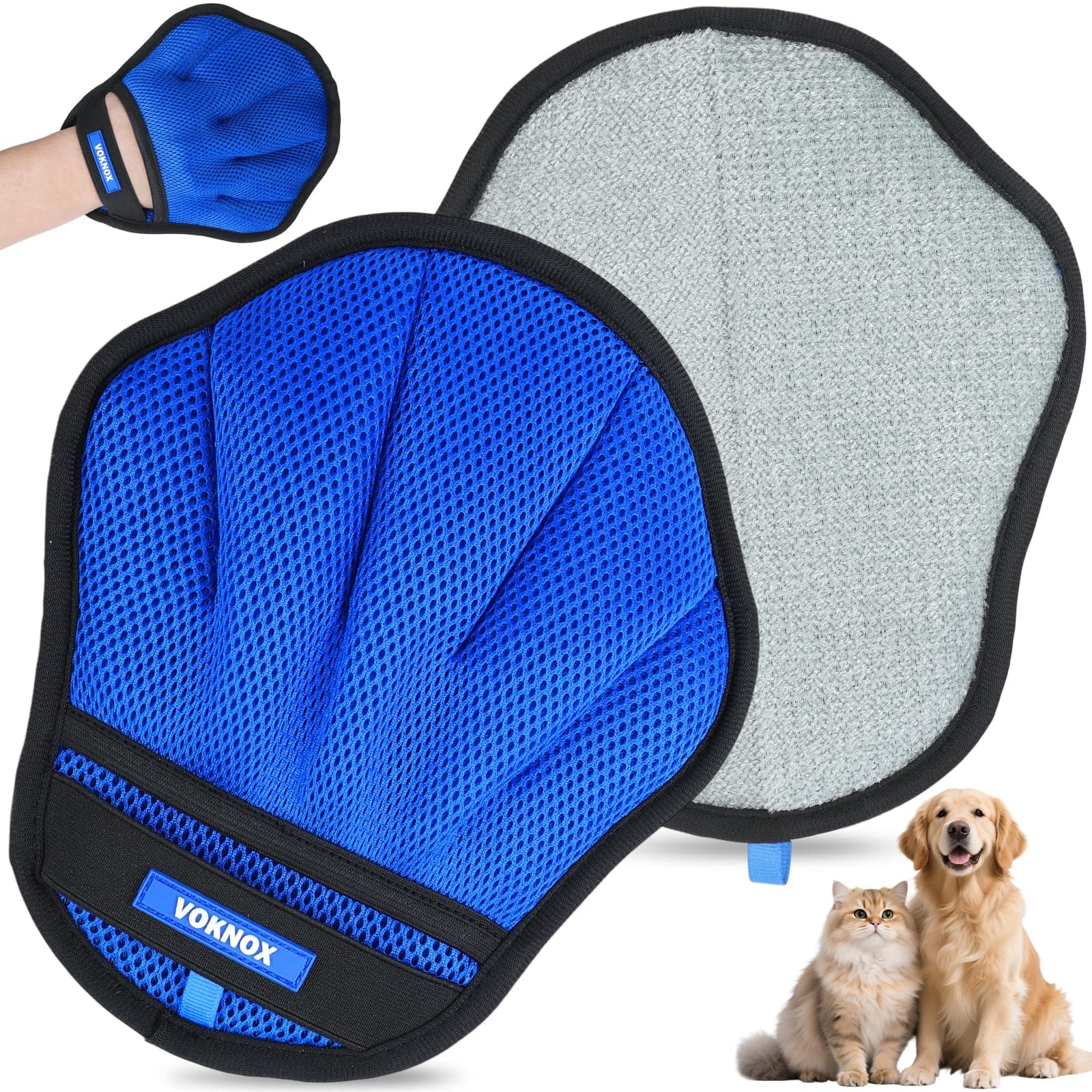
- •Use a grooming glove/mitt on your pet before peak shedding ends up in your textiles.
- •Practical example: If your dog sheds heavily after evening walks, do 3 minutes of glove grooming right when you get home. You’re catching hair when it’s already loosened.
- •Tool fit: A mitt like the Pet Hair Removal Glove (Yellow) is fast because it doubles as bonding time and doesn’t require setup.
Stage 2: Bulk extraction from surfaces (3–8 minutes, most days)
This is where reusable tools shine long term.
- •Use a reusable roller/scraper on couch cushions, throws, car seats, rugs.
- •Why reusable first: removing the “top layer” prevents you from burning through sticky sheets just to get the obvious hair.
- •Example workflow for a couch:
- Pull the throw off and do 10–20 passes with a reusable roller.
- Hit seams, armrests, and cushion edges.
- Only then use a sticky lint roller for the final detail pass if you want it photo-ready.
A product like the ChomChom Roller is built for this “bulk first” step: you can do a whole sofa without thinking about how many sheets you have left.
Stage 3: Precision finishing (30–90 seconds, as needed)
This is lint roller territory.
- •Use sticky rollers for black pants, knit sweaters, blazer sleeves, backpack straps, and any fabric where hair clings by static.
- •Scenario: You’re dressed for work, then the cat rubs on your legs. A reusable tool is overkill; a sticky roller is the correct last-mile tool.
- •Product example: Lint Rollers for Pet Hair (5 pack) makes sense when multiple people need one in different locations.
Execution cadence for busy schedules
A system only works if it fits the week you actually live.
The “2-2-10” cadence (low effort, high stability)
- •2 minutes daily: Bulk pass on the highest-visibility surface (usually couch arms + throw).
- •2 minutes daily: Clothing touch-up zone (entryway roller, especially during shedding season).
- •10 minutes twice a week: Deeper pass on car seats, rugs, pet bed area, plus a quick grooming session.
If you’re slammed, keep the habit alive by shrinking it:
- •“If I can’t do 10 minutes, I do 2 minutes.” Consistency beats occasional hero cleaning.
Where each tool fits on a tight day
- •Reusable tool: living room and car—fast, no consumables.
- •Sticky roller: your outfit right before leaving.
- •Grooming glove: while watching a show, outside, or right after walks.
Product-fit matrix by household scenario
Use the matrix like a decision engine. Choose the tool that reduces total labor (not just the fastest single moment).
Scenario A: One cat, apartment, fabric couch, mostly indoor life
- •Hair pattern: fine hair on cushions + clothing.
- •Best long-term setup:
- •Reusable roller for couch bulk removal: ChomChom Roller
- •Sticky roller for clothes: Lint Rollers for Pet Hair (5 pack)
- •Tradeoff: If you only buy one, choose reusable for the couch; keep a small sticky roller for emergencies.
Scenario B: Two dogs, kids, car-heavy lifestyle, fabric seats
- •Hair pattern: heavy load + ground-in hair on seats and mats.
- •Best setup:
- •Multi-tool kit for mats/rugs + laundry hair catchers: Pet Hair Removal Tool (6 pcs)
- •Reusable roller for seats and couch surfaces: ChomChom Roller
- •Sticky roller staged in the car for quick fixes
- •Tradeoff: Sticky rollers alone get expensive and you’ll run out at the worst time (before a school event).
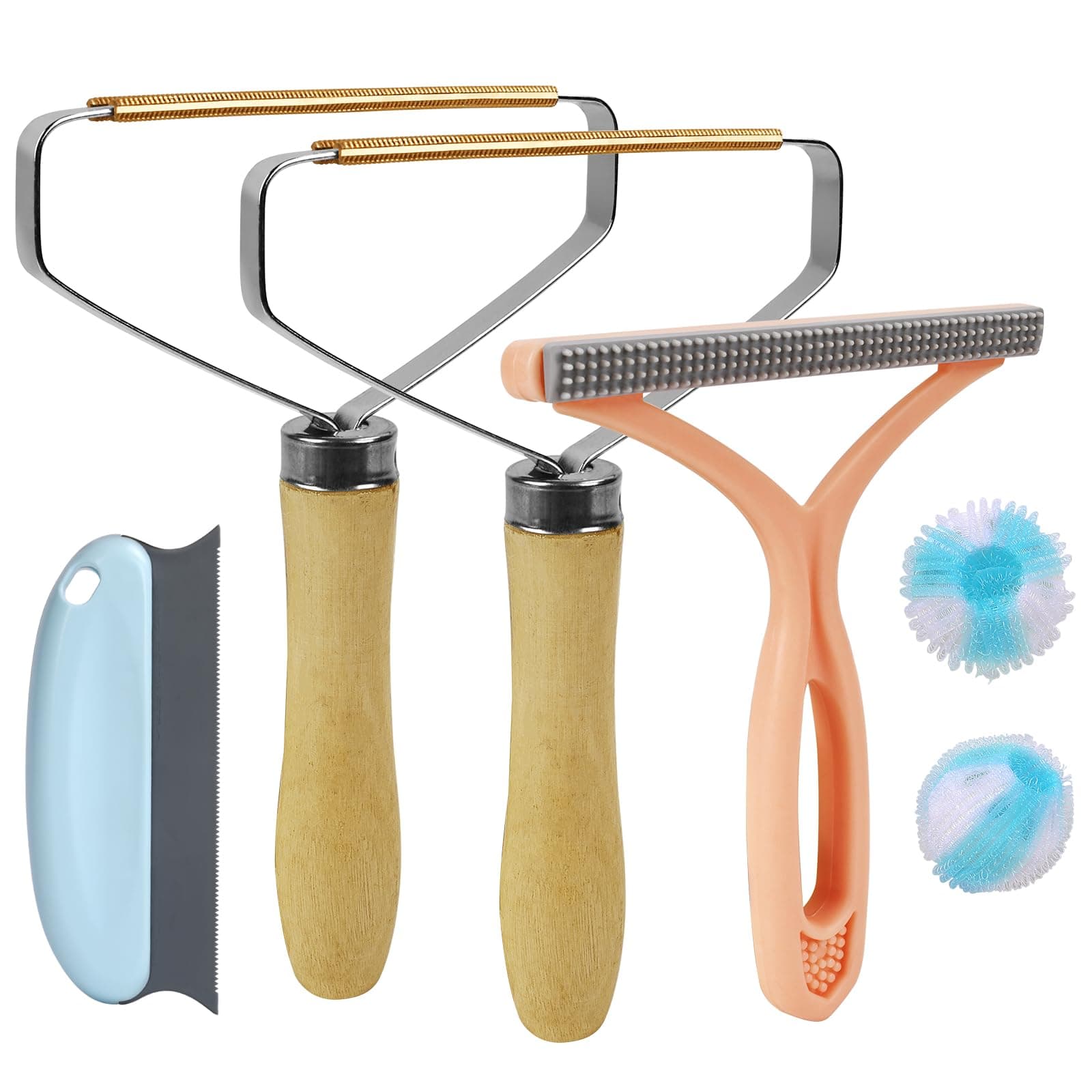
Pet Hair Removal Tool: 6 Pcs Dog Cat Hair Remover - Reusable Pet Hair Remover with Laundry Pet Hair Catcher - Portable Carpet Rake Scraper Fur Removal Tool for Rugs Car Mats Couch Furniture
Brand: Numhosai
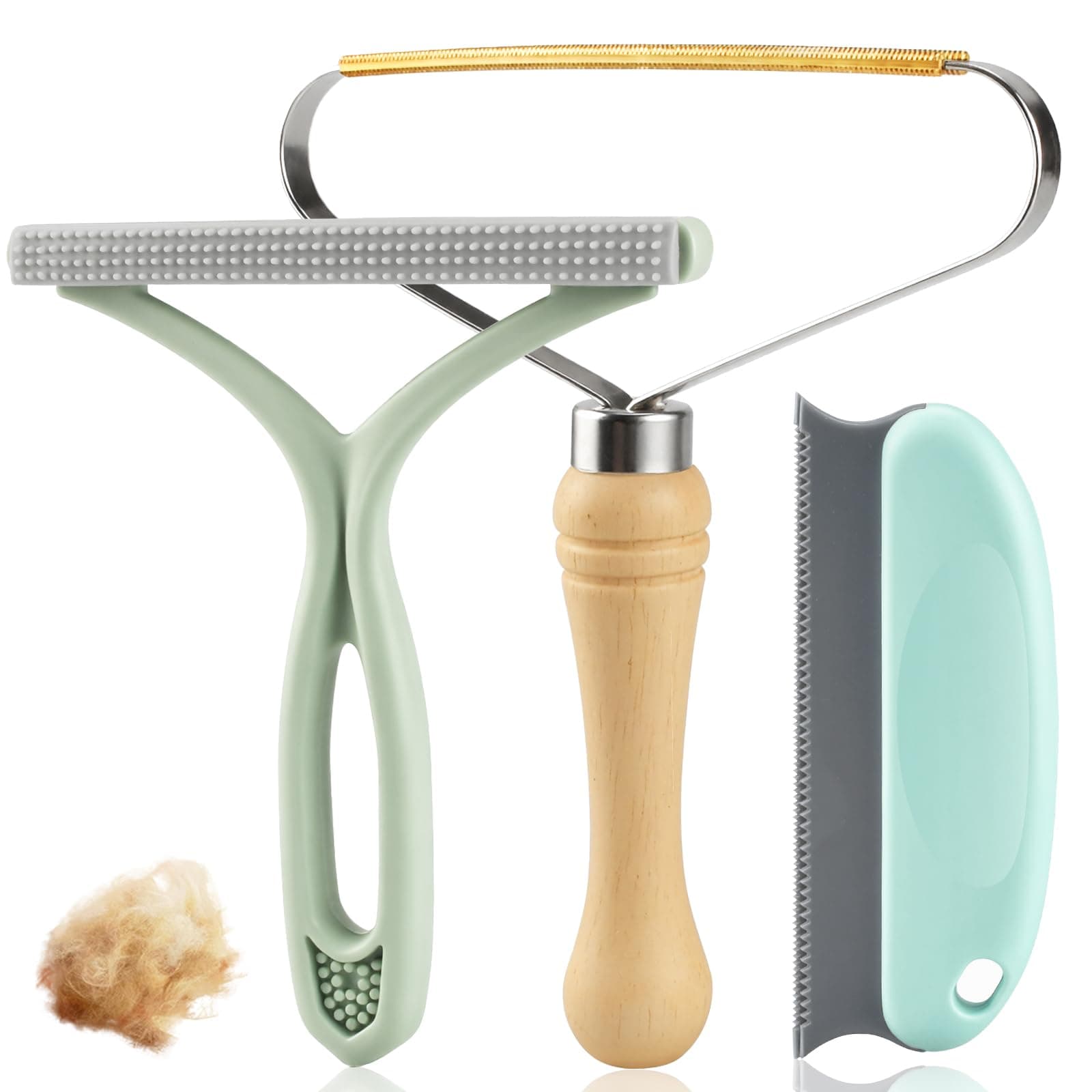
Pet Hair Removal Tool 3 Pack Dog Cat Hair Remover Carpet Scraper Rake Fur Removal Brush Lint Remover Shaver for Car Furniture Couch Green
Brand: AXEGY
Scenario C: Long-haired cat + dark work wardrobe (black pants, coats)
- •Hair pattern: highly visible “static cling” hair on clothes.
- •Best setup:
- •Sticky rollers for daily wardrobe: Lint Rollers for Pet Hair
- •Reusable tool for couch/bed to prevent transfer: ChomChom Roller
- •Tradeoff: You’ll still need consumables, but far fewer if you manage the “source surfaces.”
Scenario D: Allergy-sensitive household (guests react, you want “low-hair” baseline)
- •Hair pattern: you need fewer airborne fibers and less re-suspension.
- •Best setup:
- •Frequent bulk removal with a reusable tool (less waiting for “deep clean day”)
- •Grooming glove sessions to reduce shedding at the source: Pet Hair Removal Glove
- •Sticky roller as the “guest-ready” finishing step
- •Tradeoff: Reusable tools remove visible hair, but allergies may also require filtration and regular washing—don’t expect one tool to solve everything.
Scenario E: Rugs and textured fabrics that trap hair
- •Hair pattern: embedded hair that behaves like it’s woven in.
- •Best setup:
- •Scraper/rake tools for carpets and mats: Pet Hair Removal Tool (6 pcs)
- •Sticky rollers are a poor primary tool here (you’ll waste sheets and still feel stuck).
Mistakes that create regression
These are the failure points that make pet owners feel like “nothing works.”
Using the wrong tool for the hair’s “attachment mode”
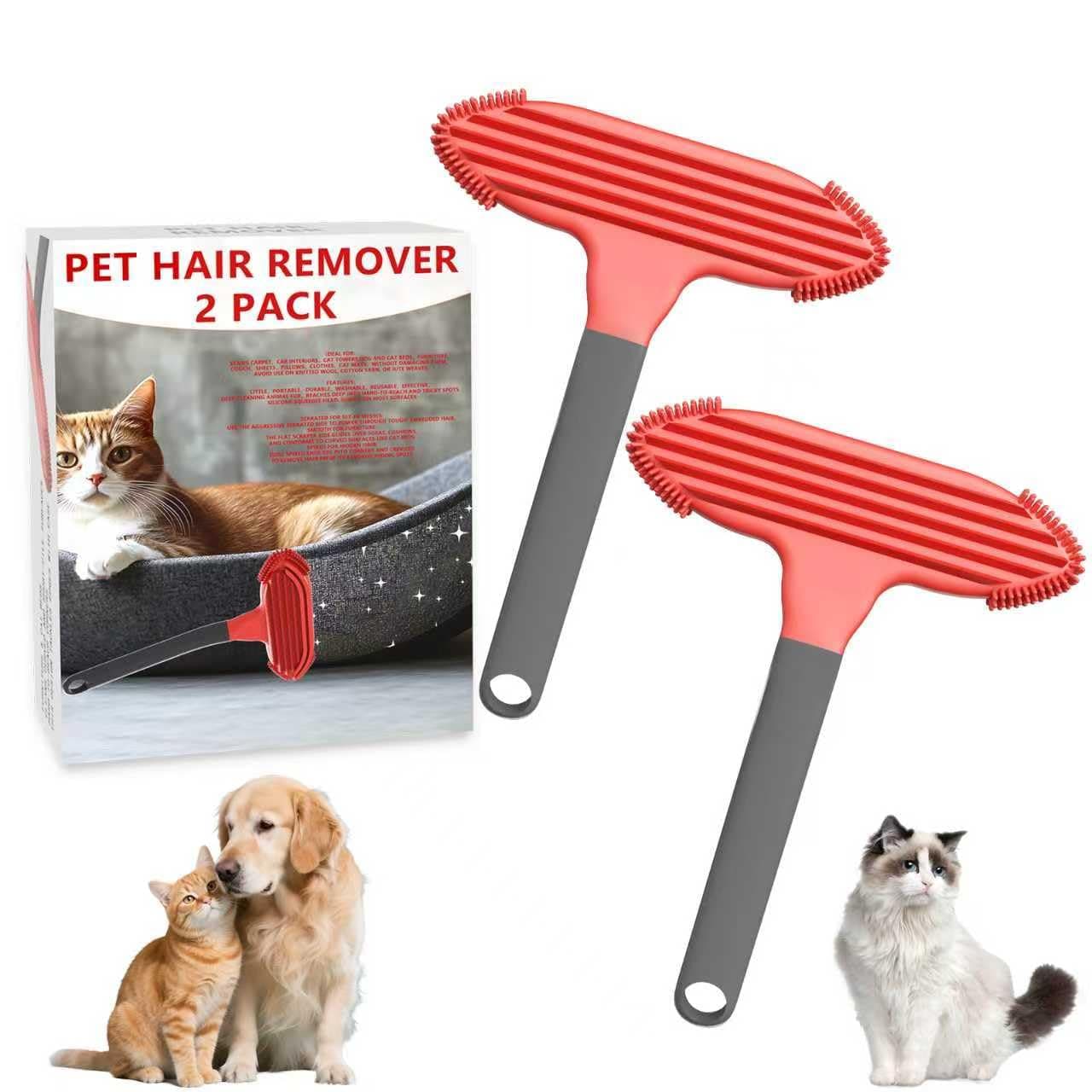
- •Embedded hair in rugs needs mechanical lift (rake/scraper), not sticky sheets.
- •Static cling on clothes needs adhesive contact (lint roller), not a couch-style reusable roller.
Treating the couch like a single surface
Couches have zones: flat areas, seams, piping, and textured panels.
- •If you only swipe the middle cushions, hair builds in seams and migrates back out.
- •Fix: Do a seam pass every other day (30 seconds total).
Buying one tool and expecting it to cover every job
This is the central flaw in the lint roller vs pet hair remover debate.
- •Sticky rollers are a precision tool with ongoing cost.
- •Reusable tools are a bulk tool with small maintenance requirements.
- •Treat them as complementary, not mutually exclusive.
Waiting until the hair becomes “felt”
Once hair compresses into fabric, removal time spikes.
- •Fix: short, frequent passes. Think “prevent buildup,” not “remove all hair forever.”
Not planning for refills and cleanout
- •Lint rollers: you run out of sheets and stop.
- •Reusable tools: you don’t empty the chamber or clean the edge, and performance drops.
- •Fix: tie maintenance to an existing routine (trash day, laundry day).
30-day implementation plan
This plan is designed to create a stable household routine, not a one-time cleaning burst.
Days 1–3: Baseline and station setup
- •Choose your two stations: entryway + living room.
- •Put the tools where you’ll actually use them.
- •Run a 10-minute “reset” once so you can maintain from a clean-ish baseline:
- •Couch bulk removal with a reusable tool.
- •Clothing roller pass on the most-used items.
Days 4–10: Lock in the daily minimum
- •Daily 2-minute couch/throw pass using a reusable tool (or scraper where needed).
- •Daily 30–60 seconds with a sticky lint roller on your “leaving the house” outfit.
- •If you have a heavy shedder, add 3 minutes of grooming glove time every other day.
Days 11–17: Add the “high-friction surface” loop
Pick one: car seat, area rug, or pet bed zone.
- •Twice this week, do a 10-minute focused pass.
- •If your car mats trap hair, bring in a scraper/rake from a kit like the Pet Hair Removal Tool set.
Days 18–24: Reduce transfer points
- •Wash throws and pet blankets on a schedule (not “when they look gross”).
- •Add a grooming session right before the pet’s highest-shed time (often after walks or during evening rest).
- •Re-evaluate: if you’re still rolling outfits daily, your couch/bed surfaces likely need more bulk removal.
Days 25–30: Optimize for your real schedule
- •Identify the step you skipped most often.
- •Reduce friction: duplicate tools (one lint roller upstairs, one by the door), or move the reusable tool to where you sit.
- •Decide your long-term tool mix:
- •If you’re burning through sticky sheets, you need more reusable bulk removal.
- •If the couch is fine but clothes look messy, you need a better staged lint roller routine.
FAQ and next-step decisions
What actually wins long term: lint roller or reusable pet hair tool?
Long term, reusable tools typically win on cost and sustainability for furniture, cars, rugs, and bedding, because you’re not buying refills constantly. Sticky lint rollers still win for fast, precise clothing touch-ups. Most households should run both: reusable for “bulk,” sticky for “finish.”
Is a reusable roller enough for clothes?
Sometimes, but it depends on fabric and static. On smooth cotton or low-static items, a reusable tool can work. On black pants, knits, and anything that clings, you’ll get better results from a sticky roller like Lint Rollers for Pet Hair.
What if my main problem is the couch and throw blankets?
Start with a reusable tool for bulk removal, such as the ChomChom Roller, and place it where you sit. Then add a sticky roller by the door for clothing. This two-step system prevents “couch-to-outfit” transfer from becoming a daily frustration.
What should I do if hair is embedded in rugs and car mats?
Skip sticky sheets as the primary solution. Use a mechanical scraper/rake style tool designed to pull hair up and out of fibers. A multipack like the Pet Hair Removal Tool (6 pcs) gives you options for different textures, plus laundry hair catchers to reduce carryover.
Next-step decisions: how to choose in one minute
If you want a simple decision rule:
- •Choose sticky lint roller first if your biggest pain is clothes, last-minute fixes, and highly visible hair.
- •Choose a reusable pet hair tool first if your biggest pain is couches, cars, bedding, rugs, and ongoing cost of refills.
- •If your pet sheds heavily, add upstream grooming with a mitt like the Pet Hair Removal Glove (Yellow) to reduce the load your surfaces ever see.
When you build the routine as a system—stations, sequence, cadence—the “lint roller vs pet hair remover” debate stops being about which is better and becomes about which job you’re solving.
Roundups Cluster
More in this topic

guide
Pet Feeding Station Setup: The Perfect Spot for Stress-Free Meals
guide
Best Indestructible Dog Toys for Aggressive Chewers
guide
10 DIY Cat Enrichment Ideas to Keep Your Cat Happy
guide
Positive Reinforcement Dog Training: A Complete Beginner's Guide
guide
Crate Training Puppy Schedule: Day-by-Day Plan for Success
guide
Leash Training Tips for Dogs: Stop Pulling and Enjoy Walks
Frequently asked questions
Which is better long term: a lint roller or a reusable pet hair remover?
For long-term household maintenance, reusable pet hair removers usually perform better on furniture, bedding, rugs, and car seats because they remove bulk hair without ongoing refill costs. Lint rollers still outperform for fast, precise touch-ups on clothes and high-static fabrics. The most reliable long-term setup is reusable for bulk removal plus a sticky lint roller for finishing passes.
Why do lint rollers feel like they stop working on couches and rugs?
On textured upholstery and rugs, hair often embeds into the fibers. Sticky sheets grab what is loose on the surface, but they struggle to lift hair that is mechanically trapped. That leads to wasted sheets and slow progress. In these cases, a reusable roller for furniture or a rake/scraper style tool for rugs and mats is a better primary tool, with a lint roller reserved for detailing.
How can I reduce pet hair so I’m not cleaning every day?
Reduce the amount of hair entering your environment by grooming consistently and by controlling transfer points. A 3–5 minute grooming session a few times per week (especially after walks or during heavy shedding) lowers the load. Then protect high-use couch spots with washable throws and do a 2-minute daily bulk pass with a reusable tool. This prevents buildup from reaching the point where you need long cleaning sessions.
