
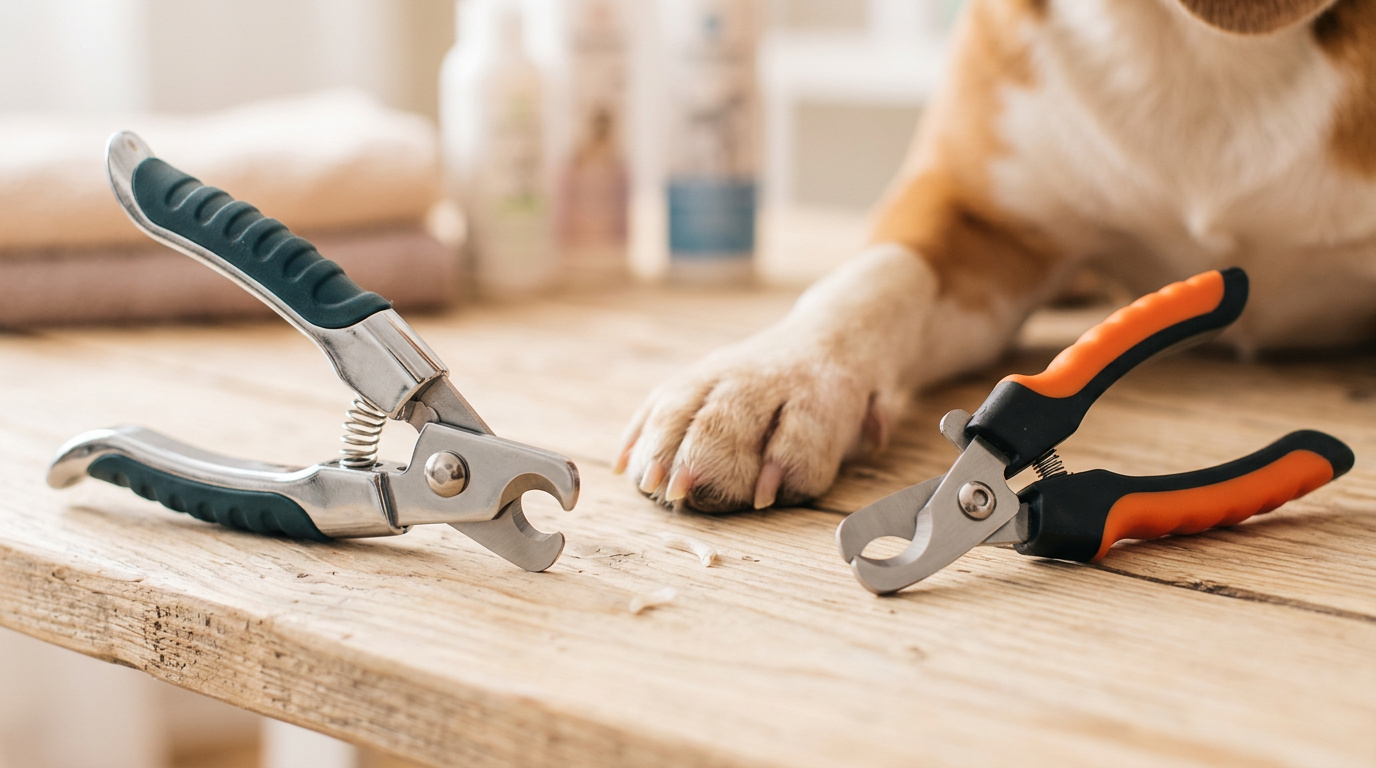
comparison • Nail Care
Guillotine Clipper vs Scissor Clipper for Dogs: Which Is Easier to Control?
Control matters more than speed. Learn how guillotine vs scissor clipper dog tools behave in real homes, and choose the one you can use calmly and consistently.
By Lucy Anderson • February 21, 2026 • 7 min read
Table of contents
- Outcome target and routine constraints
- The outcome target (what “good” looks like)
- Constraints that matter more than brand
- Environment design for consistency
- Build one nail-care station (reduce decision fatigue)
- Positioning rules (the “mechanical advantage” layer)
- Sound and friction control (for noise-sensitive dogs)
- Sequence architecture: what happens first and why
- Step 1: Choose the cut objective (remove hook, not “shorten nail”)
- Step 2: Decide your tool based on “control type”
- Guillotine clipper control profile
- Scissor (pliers-style) clipper control profile
- Step 3: Warm-up rep (before any cutting)
- Step 4: The cut method that reduces quicking
- Step 5: Finish the edge (prevent snagging and negative feedback)
- Execution cadence for busy schedules
- The 3-minute rule (most households)
- The micro-session menu (choose based on your day)
- When to schedule for best control
- Product-fit matrix by household scenario
- Scenario 1: Small dogs with thin nails (Chihuahua, Yorkie, Toy Poodle)
- Scenario 2: Large dogs with thick nails (Lab, Shepherd, Rottie)
- Scenario 3: Black nails where you can’t see the quick
- Scenario 4: Wiggly dogs that hate restraint
- Scenario 5: Households with kids, distractions, limited quiet time
- Scenario 6: Multi-pet home (dogs + cats)
- Mistakes that create regression
- Taking off “one big cut” to get it done
- Using a dull blade (crushing instead of cutting)
- Bad toe handling (pinching or twisting)
- Skipping edge smoothing
- Only trimming when nails are already too long
- 30-day implementation plan
- Days 1–3: Baseline and tool decision
- Days 4–10: Micro-cuts and confidence
- Days 11–20: Expand coverage without losing control
- Days 21–30: Stabilize the maintenance cadence
- FAQ and next-step decisions
- Is a guillotine clipper or scissor clipper easier to control?
- What if I’m scared of cutting the quick?
- My dog fights clippers—should I skip clipping entirely?
- I have dogs and a cat—can I use the same clippers?
- Next-step decisions (choose one path)
If you are comparing guillotine vs scissor clipper dog nail tools, the right question is not “Which one is best?” It is: Which design gives you predictable control in your household constraints—your dog’s comfort level, your hand strength, your lighting, your schedule, and your tolerance for risk around the quick.
Control is what prevents the two outcomes that derail nail care long-term: (1) a painful quick cut, and (2) wrestling that teaches your dog nail trims are scary. This comparison is written like a home system you can run repeatedly, not a one-off “tip list.”
Outcome target and routine constraints
The outcome target (what “good” looks like)
Aim for a routine that reliably produces these three results:
- Nails do not click on hard floors for most dogs (some thick nails will still lightly tap—listen for sharp, frequent clicking).
- The quick gradually recedes over weeks because you are taking small amounts often.
- Your dog stays under threshold (no struggling, no frantic panting, no “I’m never letting you touch my feet again” reaction).
When owners ask which clipper is easier to control, they usually mean: “Which tool helps me avoid cutting too much?” That is only part of control. The real control equation is:
- •Visibility control: can you see where the cut will land?
- •Pressure control: can you apply force smoothly without a sudden “snap”?
- •Angle control: can you keep a consistent cutting angle while holding a paw?
- •Dog control: can you pause and reset without losing position or pinching toes?
Constraints that matter more than brand
Before picking a tool style, define your household constraints:
- •Dog factor: small vs large; thick nails vs thin; black nails vs clear; squirmy vs still; history of quicking.
- •Human factor: grip strength, wrist pain, vision, comfort with “blade near paw,” ability to do short sessions.
- •Environment factor: lighting, floor traction, noise sensitivity, and whether you can keep a consistent station.
If your constraints include “my dog hates the clip sound” or “I can only do this in 3-minute windows,” you may end up with a hybrid system: clippers for one clean cut, then finishing with a grinder or scratch pad.
Environment design for consistency
Build one nail-care station (reduce decision fatigue)
Control improves when the setup is identical each time. Create a small “nail station” basket that lives in one place.
Include:
- •Your chosen clipper style (guillotine or scissor)
- •A light source (headlamp or bright desk lamp aimed at the paw)
- •A high-value reward that only appears for nail work
- •A towel or non-slip mat for footing
- •Styptic powder or cornstarch and a few cotton pads (for emergencies)
- •Optional: a finishing tool to smooth edges
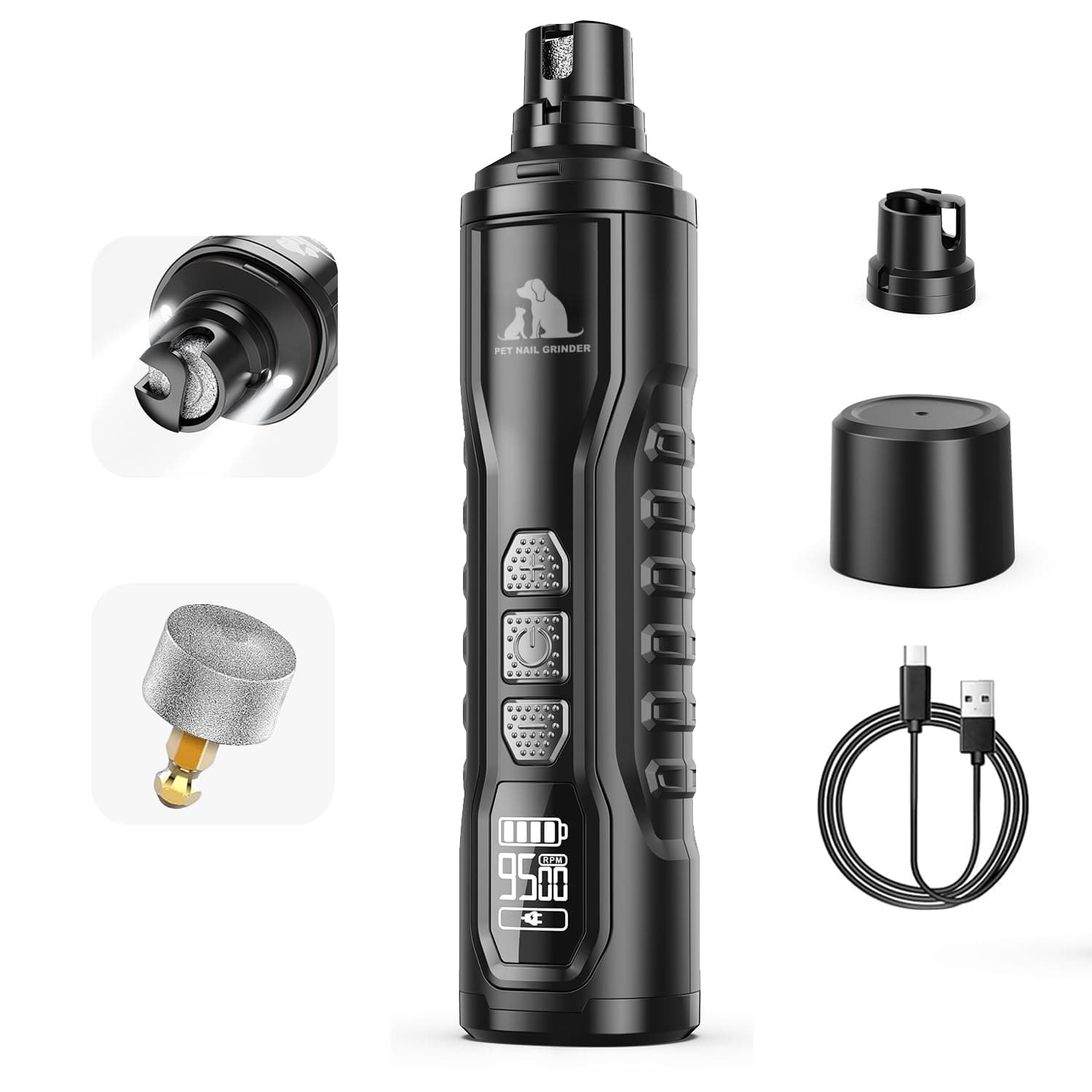
For smoothing, some dogs do better with a board than a buzzing tool. A scratch pad can turn “nail trimming” into a game: the Dog Nail File, Grinder Board Scratch Pad with 4-Pack Replaceable Sandpaper Discs is useful for dogs that naturally paw at targets. For dogs that tolerate vibration, a grinder can reduce sharp edges after a tiny clip—especially helpful with black nails where you want micro-adjustments. Two options to consider are the Electric Dog Nail Grinder: Upgraded 5-Speed Quiet Dog Nail Trimmer and the Dog Nail Grinder Electric Powerful 3 Speeds with Lights.
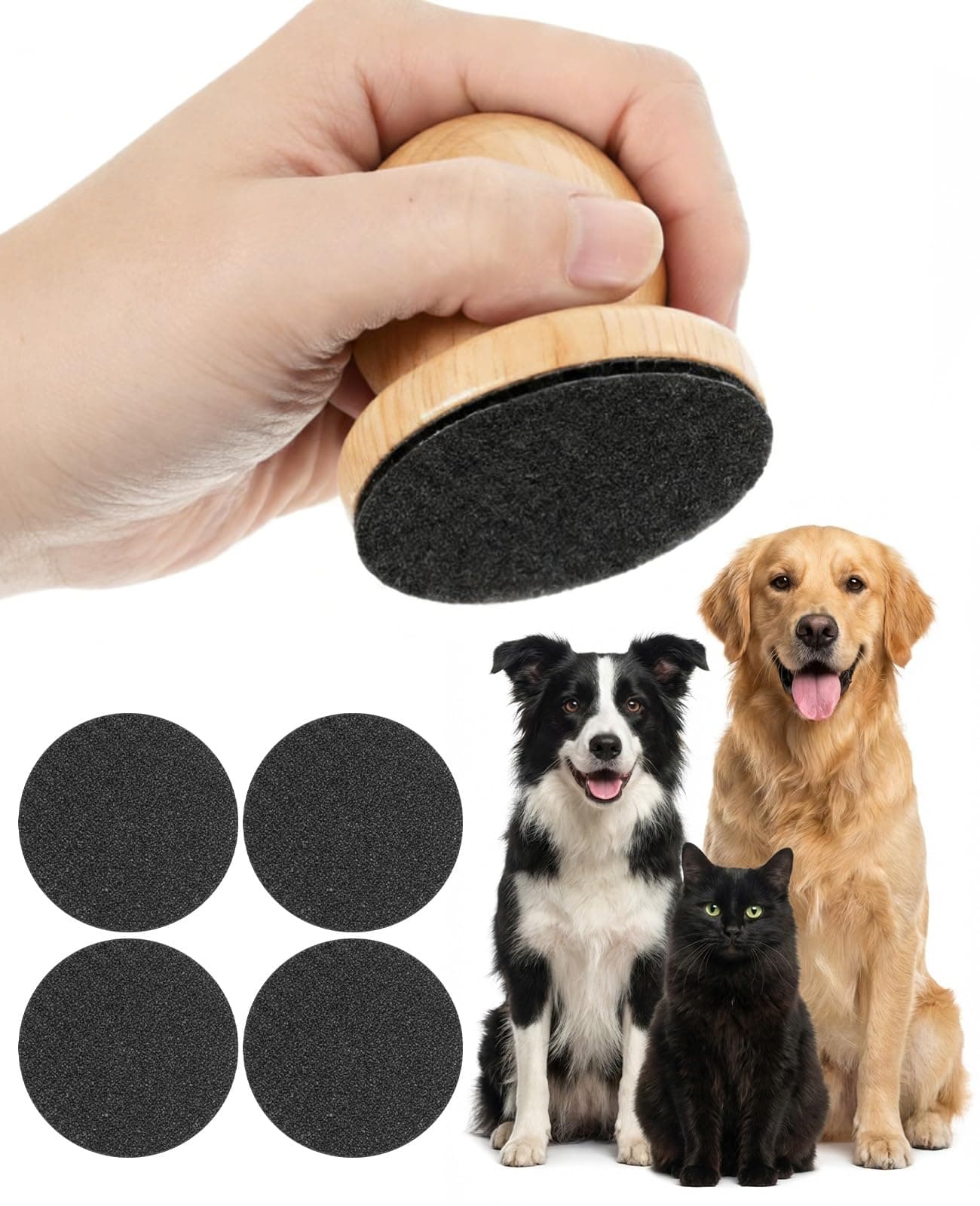
Dog Nail File, Grinder Board Scratch Pad with 4-Pack Replaceable Sandpaper Discs, Gentle Pet Nail Care Tool for Dogs and Cats
Brand: PASDUCHAS
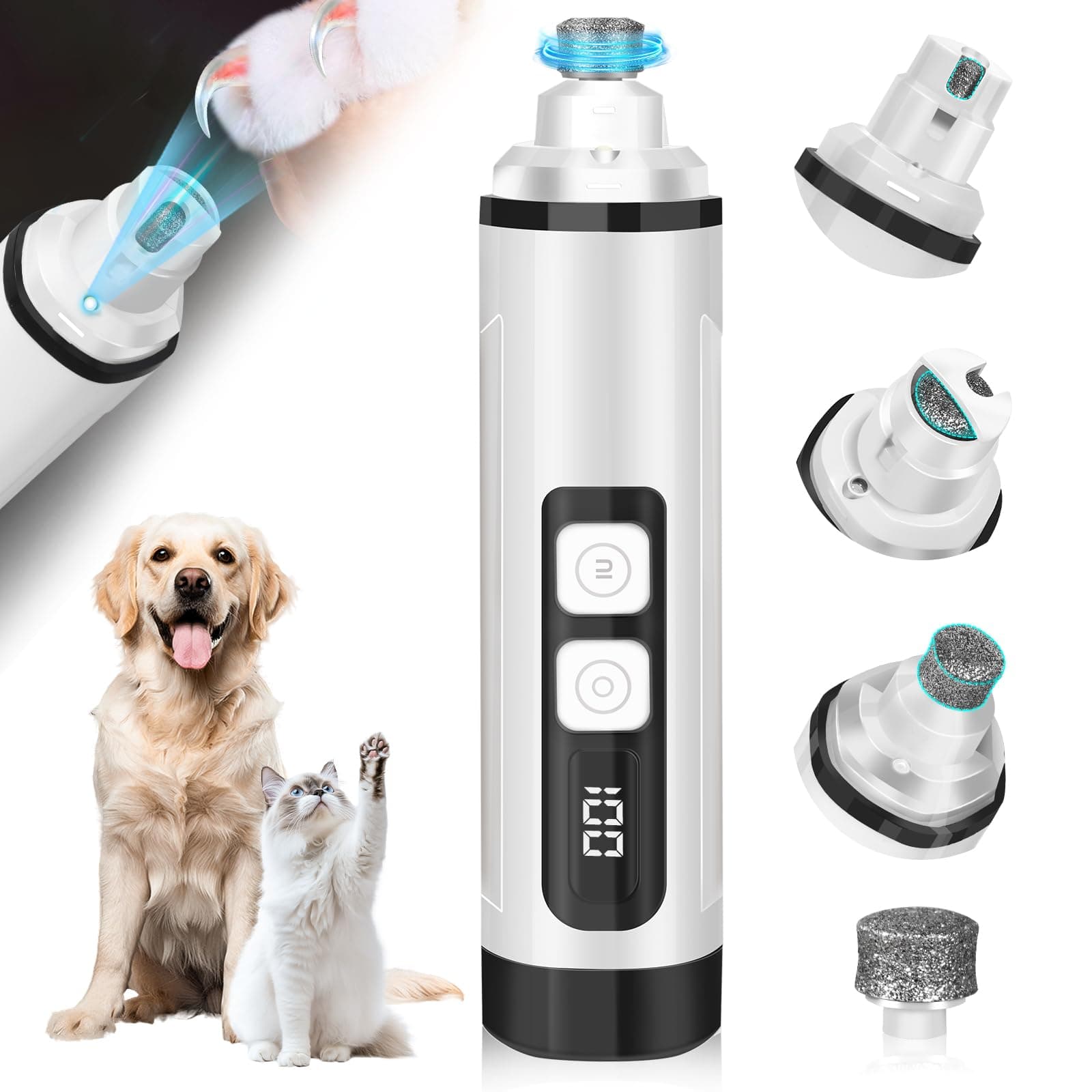
Dog Nail Grinder Electric Powerful 3 Speeds Dog Nail Clippers with Lights Quiet Cat Nail Clipper Painless Care Trimmers Tools for Small Medium Large Dogs and Cats (Black)
Brand: Javtoku
Positioning rules (the “mechanical advantage” layer)
A big control upgrade is positioning your body so the clipper isn’t doing all the work.
- •Sit, don’t hover. Sit on the floor or a stable chair so your hands are steady.
- •Anchor the paw. Rest the dog’s leg on your thigh or a folded towel. “Floating paw” = shaky cuts.
- •One nail at a time. Hold one toe gently but firmly. Avoid squeezing the whole paw; that spreads toes and changes nail angle.
- •Light the nail from the side. Side lighting reveals curvature and helps you see the “hook” you are removing.
Sound and friction control (for noise-sensitive dogs)
Guillotine clippers often make a distinct “pop,” while scissor clippers tend to make a “snip.” Some dogs care; some don’t. If your dog startles at noise, do a 2-day sound desensitization: show tool → treat; click/snip away from paw → treat; touch paw with tool (no cut) → treat.
Sequence architecture: what happens first and why
This sequence is designed to protect control. If you skip steps, you increase the odds of a quick cut or a wrestling match.
Step 1: Choose the cut objective (remove hook, not “shorten nail”)
Control improves when the goal is small and measurable.
- •For most dogs, your first-week objective is: remove the sharp hook that catches on fabric.
- •For long nails, your month-one objective is: shorten by tiny slices so the quick recedes.
Step 2: Decide your tool based on “control type”
Here is how each clipper design behaves in your hands.
Guillotine clipper control profile
A guillotine clipper cuts when a blade slides through a hole. You insert the nail tip, then squeeze.
You get good control if:
- •Your dog has small to medium nails.
- •You can line up the hole quickly without fumbling.
- •You can replace blades and keep them sharp.
You lose control when:
- •Nails are thick or hard (some large breeds): the cut can feel like it “crushes then snaps,” which is unpredictable.
- •Your dog pulls back: the nail can slide in the hole, changing cut depth.
- •You need high visibility: the hole can block your view of exactly where the blade will land.
Practical example: If you have a wiggly mini doodle with thin nails, a guillotine can be quick and neat—until the dog retracts the paw mid-insertion. That moment (inserting nail into hole) is the “control bottleneck.”
Scissor (pliers-style) clipper control profile
Scissor clippers cut like wire cutters: two blades close around the nail.
You get good control if:
- •Your dog has medium to large nails, especially thick nails.
- •You want more visibility of the cut line.
- •You rely on hand placement and leverage rather than aligning a hole.
You lose control when:
- •Your grip is weak or your wrist hurts (thick nails can require effort).
- •The clipper is dull: it can compress the nail before cutting, which can be uncomfortable.
Practical example: For a calm Labrador with thick nails, scissor clippers are usually easier to control because you can “stage” the blades exactly where you want and take a thin sliver off.
Step 3: Warm-up rep (before any cutting)
Do one warm-up rep that teaches the dog the pattern:
- •Touch paw for 1 second → treat
- •Touch nail with clipper body (not blade) → treat
- •Release paw → treat
This lowers resistance and gives you better control during the actual cut.
Step 4: The cut method that reduces quicking
Use the same micro-cut approach for both clipper types:
- •Cut paper-thin slices, not chunks.
- •Aim for a 45-degree cut following the natural slope of the nail, removing the hook.
- •Stop as soon as you see a change in the nail core:
- •Clear nails: you’ll see pink approaching.
- •Black nails: look for a darker center “dot” or a moist-looking middle—stop before it.
If you’re unsure, cut less and finish with a file/grinder. That’s where a tool like the Electric Dog Nail Grinder: Upgraded 5-Speed Quiet Dog Nail Trimmer can act like a “precision dial” after the clip.
Step 5: Finish the edge (prevent snagging and negative feedback)
Even a perfect cut can leave a sharp edge that catches on blankets—then your dog yanks a paw away next session.
- •For tolerant dogs: 2–3 seconds per nail with a grinder is enough.
- •For noise-sensitive dogs: use a scratch pad session instead. The Dog Nail File, Grinder Board Scratch Pad can be used as a “target touch” game: dog paws the board → treat.
Execution cadence for busy schedules
Consistency beats marathon sessions. Control improves when you are not rushed.
The 3-minute rule (most households)
Do nail care in 3-minute blocks, 3–5 days per week.
- •Day A: front paws (1–3 nails only)
- •Day B: back paws (1–3 nails only)
- •Day C: one “problem nail” + finish smoothing
If your dog is sensitive, the “win” is ending early while the dog is still calm.
The micro-session menu (choose based on your day)
- •Level 1 (20–40 seconds): touch paws + treats only
- •Level 2 (90 seconds): clip 1–2 nails
- •Level 3 (3 minutes): clip 4–6 nails + quick smoothing
This is how you keep the routine alive during busy weeks.
When to schedule for best control
- •After a walk: dog is calmer; nails may be slightly worn already.
- •After a bath (if your dog tolerates baths): nails can be a bit softer, reducing force spikes.
- •Avoid: right before guests arrive or when kids are running around—your attention is part of the control system.
Product-fit matrix by household scenario
Use this matrix to decide which clipper style is easier to control in your actual home.
Scenario 1: Small dogs with thin nails (Chihuahua, Yorkie, Toy Poodle)
- •Best control: often guillotine, because thin nails cut cleanly with low force.
- •Watch-outs: the “insert nail into hole” step can be tricky if the dog retracts quickly.
- •System tweak: do 1 nail, treat, release. Repeat.
Scenario 2: Large dogs with thick nails (Lab, Shepherd, Rottie)
- •Best control: usually scissor clippers for leverage and predictable cut path.
- •Watch-outs: dull blades increase crushing and discomfort.
- •System tweak: clip tiny slices; finish with a grinder like the Dog Nail Grinder Electric Powerful 3 Speeds with Lights to round edges.
Scenario 3: Black nails where you can’t see the quick
- •Best control: scissor clippers + grinder finishing.
- •Why: better visual staging of the cut; grinder lets you “sneak up” on length.
- •System tweak: stop when you see the dark center dot; switch to grinder for final shaping.
Scenario 4: Wiggly dogs that hate restraint
- •Best control: whichever tool is fastest for you without fumbling.
- •If you fumble with guillotine alignment, scissor may be easier.
- •System tweak: shift to cooperative care: brief sessions, consent test (touch paw; if they pull away, reset).
Scenario 5: Households with kids, distractions, limited quiet time
- •Best control: the tool that works in short, quiet reps.
- •Often: scissor clippers + scratch pad to offload some trimming to a game.
- •Add-on: Dog Nail File, Grinder Board Scratch Pad if your dog likes paw-targeting.
Scenario 6: Multi-pet home (dogs + cats)
Even if this article is dog-focused, a consistent station helps all pets.
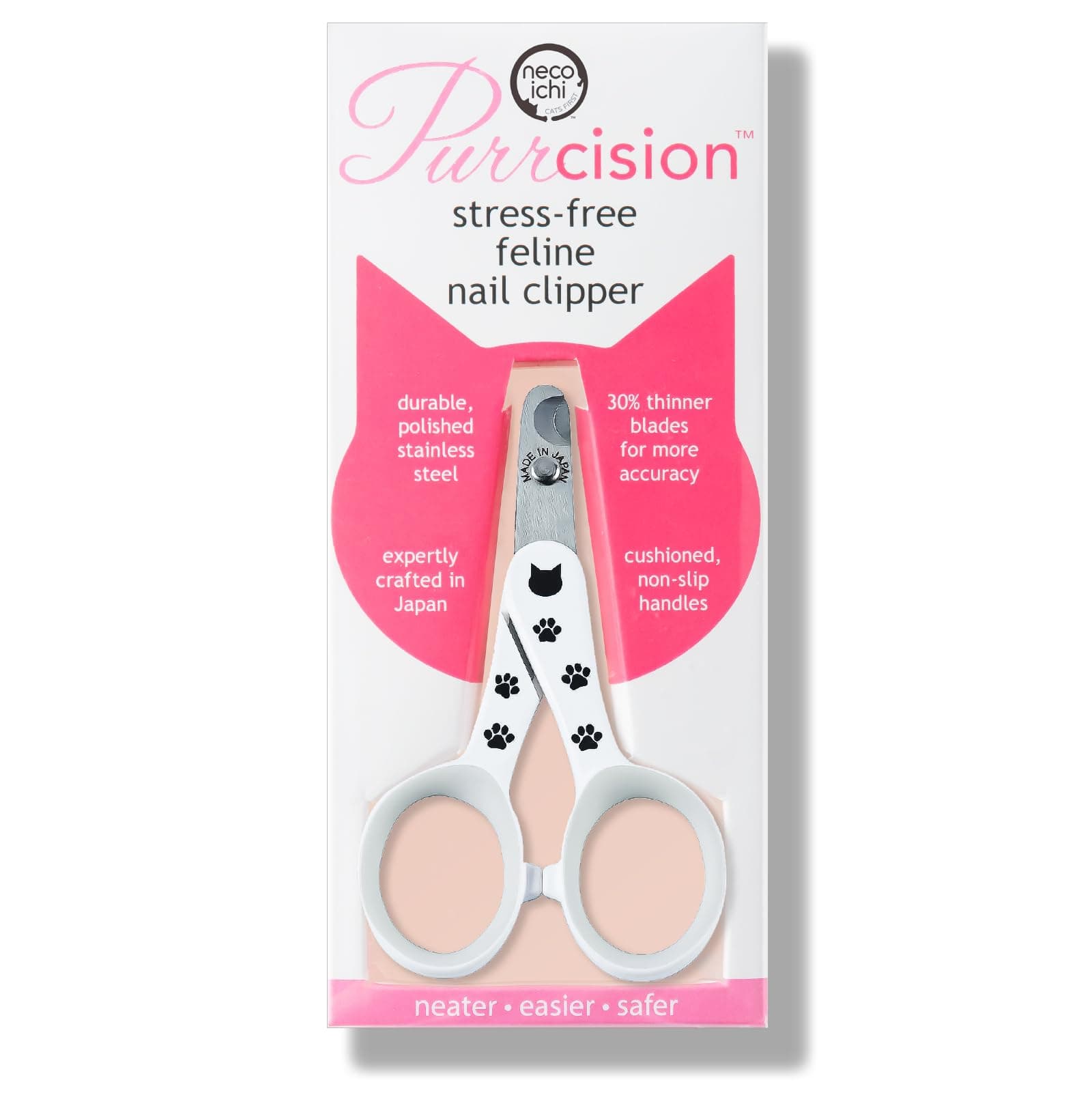
- •Keep cat-specific clippers in the same station so you don’t improvise with the wrong tool. The NecoIchi - Purrcision Feline Nail Clippers can be a good dedicated option for cats (and sometimes very tiny dog nails), while your dog uses their own appropriately sized clipper.
Mistakes that create regression
These are the errors that make nail care harder next month than it is today.
Taking off “one big cut” to get it done
This is the fastest path to quicking and fear. Even if you don’t hit the quick, a big cut can flex the nail and feel unpleasant.
Fix: build the habit of micro-slices. If you want shorter nails, increase frequency—not cut size.
Using a dull blade (crushing instead of cutting)
Both guillotine and scissor clippers lose control when dull.
- •Guillotine: blade drags and can split nail layers.
- •Scissor: compresses nail before it cuts.
Fix: replace blades or the tool on a schedule. If you feel you have to “muscle it,” the tool is not doing its job.
Bad toe handling (pinching or twisting)
Owners often squeeze the paw to “hold still,” which spreads toes and changes nail presentation.
Fix: hold one toe gently; support the paw on a surface; let the rest of the paw relax.
Skipping edge smoothing
A sharp edge catches on fabric, the dog jerks away, and suddenly you have a “my dog won’t let me trim nails” problem.
Fix: 1–2 seconds of smoothing per nail. If your dog dislikes buzzing, use a scratch pad game or a manual file.
Only trimming when nails are already too long
Long gaps increase the chance you try to “catch up” in one session.
Fix: maintain a cadence (even one nail per day). The quick recedes through repetition.
30-day implementation plan
This plan assumes you are starting from “inconsistent nail trims” and want a routine that improves control week over week.
Days 1–3: Baseline and tool decision
- •Pick your primary clipper (guillotine or scissor) based on the scenario matrix.
- •Set up your station with lighting, treats, and styptic.
- •Do zero cutting if your dog is nervous: just paw touches and tool presentation.
Success metric: your dog allows 5 paw touches calmly.
Days 4–10: Micro-cuts and confidence
- •Clip 1–2 nails per session, 4–6 sessions total this week.
- •End every session with a “win”: a jackpot treat, a short play, or a chew.
- •If you have black nails, add grinder finishing for 1 nail to build tolerance (start with 1 second on, treat, off).
Success metric: you can remove the hook from at least 6 nails without resistance.
Days 11–20: Expand coverage without losing control
- •Increase to 3–5 nails per session if your dog stays relaxed.
- •Introduce a smoothing routine (grinder or scratch pad) after clipping.
- •If your dog resists one paw (often back feet), work that paw alone on alternate days.
Success metric: you complete both front paws over 2–3 sessions with minimal pulling away.
Days 21–30: Stabilize the maintenance cadence
- •Move to your sustainable schedule:
- •Busy homes: 3 minutes, 3 days/week.
- •High-growth nails: 2–3 nails daily.
- •Decide whether you keep a hybrid system:
- •Clippers for the main cut
- •Grinder/scratch pad for precision and smoothing
Success metric: nail clicking noticeably reduces, and your dog’s body language stays neutral or positive at the station.
FAQ and next-step decisions
Is a guillotine clipper or scissor clipper easier to control?
For many owners, scissor clippers are easier to control because you can see the cut line and stage the blades precisely—especially on thick nails. Guillotine clippers can feel easier on small dogs with thin nails, but control drops if your dog pulls back during the “insert into hole” step.
What if I’m scared of cutting the quick?
Switch your definition of success from “short nails today” to “tiny trims often.” Take micro-slices and use a grinder as a precision tool afterward. A quiet variable-speed option like the Electric Dog Nail Grinder: Upgraded 5-Speed Quiet Dog Nail Trimmer can help you creep up on length.
My dog fights clippers—should I skip clipping entirely?
Not always, but you should change the system. Many dogs accept a scratch pad game more readily than restraint-based clipping. Try a board like the Dog Nail File, Grinder Board Scratch Pad for front nails, and maintain back nails with tiny scissor-clip slices plus rewards.
I have dogs and a cat—can I use the same clippers?
Use the right-sized tool for each pet. Cats generally need smaller, sharper clippers designed for thin curved nails, such as the NecoIchi - Purrcision Feline Nail Clippers. Mixing tools increases slipping and reduces control.
Next-step decisions (choose one path)
- If your dog has thick nails or you want maximum visual control: choose scissor clippers and add light smoothing with a grinder.
- If your dog is small with thin nails and you want low-force cuts: choose a guillotine clipper, but commit to micro-sessions to avoid alignment struggles.
- If your dog is noise-sensitive or hates restraint: build a scratch pad + micro-trim hybrid routine.
Roundups Cluster
More in this topic

guide
Pet Feeding Station Setup: The Perfect Spot for Stress-Free Meals
guide
Best Indestructible Dog Toys for Aggressive Chewers
guide
10 DIY Cat Enrichment Ideas to Keep Your Cat Happy
guide
Positive Reinforcement Dog Training: A Complete Beginner's Guide
guide
Crate Training Puppy Schedule: Day-by-Day Plan for Success
guide
Leash Training Tips for Dogs: Stop Pulling and Enjoy Walks
Frequently asked questions
Is a guillotine clipper or scissor clipper easier to control for dogs?
Scissor (pliers-style) clippers are usually easier to control because you can see the cut line and place the blades precisely, especially on thick nails. Guillotine clippers can be easy on small, thin nails, but control drops if your dog retracts the paw while you are aligning the nail in the hole.
What should I use if my dog has black nails and I can’t see the quick?
Use micro-cuts (paper-thin slices) and prioritize visibility: scissor clippers plus a grinder finish is a reliable system. Stop when you see a darker center dot or a moist-looking core, then use a grinder to round edges and make small adjustments without risking a deep cut.
My dog hates clippers—what’s the most realistic alternative?
A scratch pad or grinder-based routine can reduce restraint and make sessions shorter. A scratch board turns trimming into a paw-targeting game for front nails, while a quiet variable-speed grinder can smooth and shorten gradually. Many households succeed with a hybrid approach: minimal clipping for shape, then grinding for precision.
