
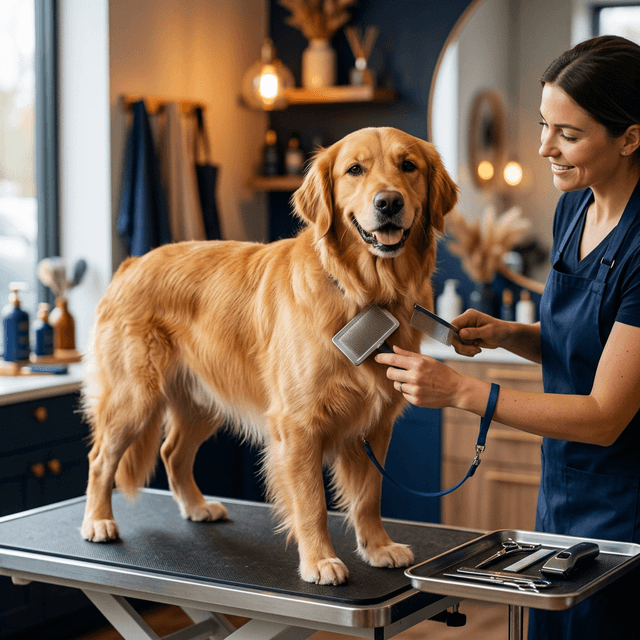
comparison • Hair Removal (Home)
Best Pet Hair Removers for Stairs and Upholstery: A Practical, Scenario-Led Comparison
Stairs and upholstery trap fur differently. Compare the best tools and workflows for apartments, family homes, and multi-pet households—so you can clean faster with less frustration.
By Lucy Anderson • February 26, 2026 • 7 min read
Table of contents
- Scenario map: apartment, family home, multi-pet
- 1) Apartment (small space, high visibility)
- 2) Family home (traffic + crumbs + fur)
- 3) Multi-pet (volume and variety)
- Constraints and risk profile per scenario
- Apartment constraints
- Family home constraints
- Multi-pet constraints
- Tailored workflow by scenario
- Apartment workflow (10-minute daily reset)
- Family home workflow (two passes: “crumb pass” then “hair pass”)
- Multi-pet workflow (tool stations + batch cleaning)
- Product picks matched to workload
- Best for stairs with embedded hair (especially carpeted steps)
- Best for upholstery speed (couches, cushions, bedding)
- Best for “final polish” and clothing emergencies
- Best for seams, tight spots, and “hands-on” control
- Time-saving tactics under pressure
- When guests are 20 minutes away
- When your stairs look clean until sunlight hits
- When hair keeps returning in the same spots
- What breaks in real life and how to adapt
- Problem: The carpet rake/scraper fuzzes your stair carpet
- Problem: The reusable roller stops “grabbing” on upholstery
- Problem: Sticky lint rollers feel wasteful or expensive
- Problem: You clean the stairs, then the dog immediately runs up and undoes it
- Weekly review framework
- 1) Identify your two worst zones
- 2) Match each zone to a primary tool
- 3) Set a realistic frequency
- 4) Track one metric that matters
- Final execution checklist
Pet hair behaves differently on stairs than it does on a couch. Stair treads act like a comb: fur gets pushed into the pile and gathers along corners and risers. Upholstery acts like Velcro: hair clings, especially to textured weaves and microfiber.
If you’re searching for a pet hair remover stairs solution, the most useful answer isn’t “buy one tool.” It’s matching the tool to your scenario, your fabric types, and how much time you realistically have.
Below is a scenario-led comparison with practical workflows, tradeoffs, and real-life adaptations.
Scenario map: apartment, family home, multi-pet
1) Apartment (small space, high visibility)
- •Typical surfaces: one sofa, one bed, one small rug, one set of stairs (often carpeted), car seats.
- •Common pain point: hair is always visible because you’re close to everything—your couch is also your dining chair.
- •Cleaning cadence: quick daily resets beat long weekend cleans.
Concrete example: You have a single cat who loves the top stair landing and a fabric couch. You can’t vacuum at midnight because neighbors complain, so you need a quiet, fast tool for the couch and a low-noise approach for stairs.
2) Family home (traffic + crumbs + fur)
- •Typical surfaces: multiple couches/chairs, carpeted stairs, throw blankets, kids’ bedrooms, entryway mats.
- •Common pain point: hair mixes with snack crumbs and tracked-in dirt; tools gum up faster.
- •Cleaning cadence: “bursts” between school, work, and activities.
Concrete example: A Labrador rides in the back seat, kids pile on the sectional, and the stairs are the main hallway. Hair accumulates fastest on the stair edges and couch armrests where hands and paws rub.
3) Multi-pet (volume and variety)
- •Typical surfaces: everything—stairs, rugs, multiple beds, cat trees, crates, car.
- •Common pain point: you’re not removing “some fur,” you’re managing a constant supply chain.
- •Cleaning cadence: systems and tool placement matter more than one perfect gadget.
Concrete example: Two cats and a shepherd mix fine undercoat with longer guard hairs. Your stairs collect “tufts” along the corners, and your couch looks clean until you sit down and your clothes turn into a lint magnet.
Constraints and risk profile per scenario
Apartment constraints
- •Noise limits: quiet tools win for late-night touchups.
- •Storage limits: compact, multipurpose tools are better than a collection.
- •Relationship risk: guests notice upholstery first; landlords notice stairs and carpets.
What can go wrong:
- •Over-scraping on delicate upholstery can roughen fibers or create pilling.
- •Sticky rollers can run out right before company arrives.
Family home constraints
- •Time fragmentation: you rarely get 45 uninterrupted minutes.
- •Mixed mess: fur + crumbs + dirt means some tools clog or smear.
- •Safety: tools left on stairs are trip hazards.
What can go wrong:
- •Aggressive scraping on stair carpet can fuzz the pile (especially on loops/berber-style carpet).
- •Using a sticky roller on large surfaces can become expensive fast.
Multi-pet constraints
- •Volume: tools need to handle repeated passes without failing.
- •Variety of hair types: fine undercoat behaves differently than coarse hair.
- •Burnout: if a workflow feels like a daily punishment, it won’t stick.
What can go wrong:
- •Reusable rollers can fill quickly and need frequent emptying.
- •Cheap rakes/scrapers can snag threads or leave lines on some fabrics.
Tailored workflow by scenario
Apartment workflow (10-minute daily reset)
Goal: keep stairs and couch “guest-ready” with minimal noise.
1) Couch first (2–4 minutes)
- •Use a reusable roller for fast surface pickup on cushions and armrests: ChomChom Roller Pet Hair Remover – Original Size Reusable Lint Roller (White).
- •Technique: short, firm strokes in one direction, then reverse direction once. The change in direction lifts hair that’s laying flat.
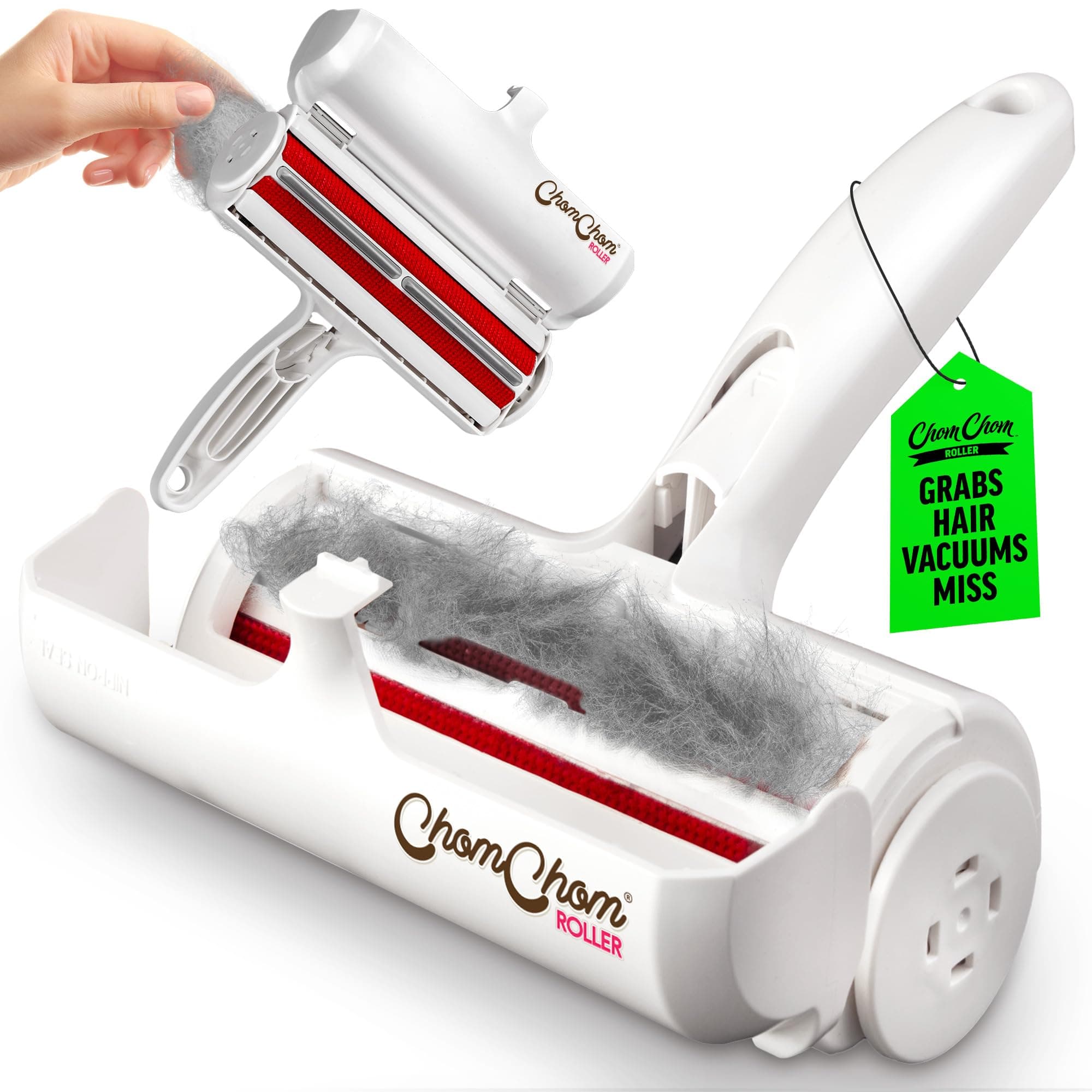
ChomChom Roller Pet Hair Remover – Original Size Reusable Lint Roller for Cat & Dog Hair on Furniture, Couch, Carpet, Car, Rugs & Bedding – Portable, Eco-Friendly (White)
ChomChom Roller
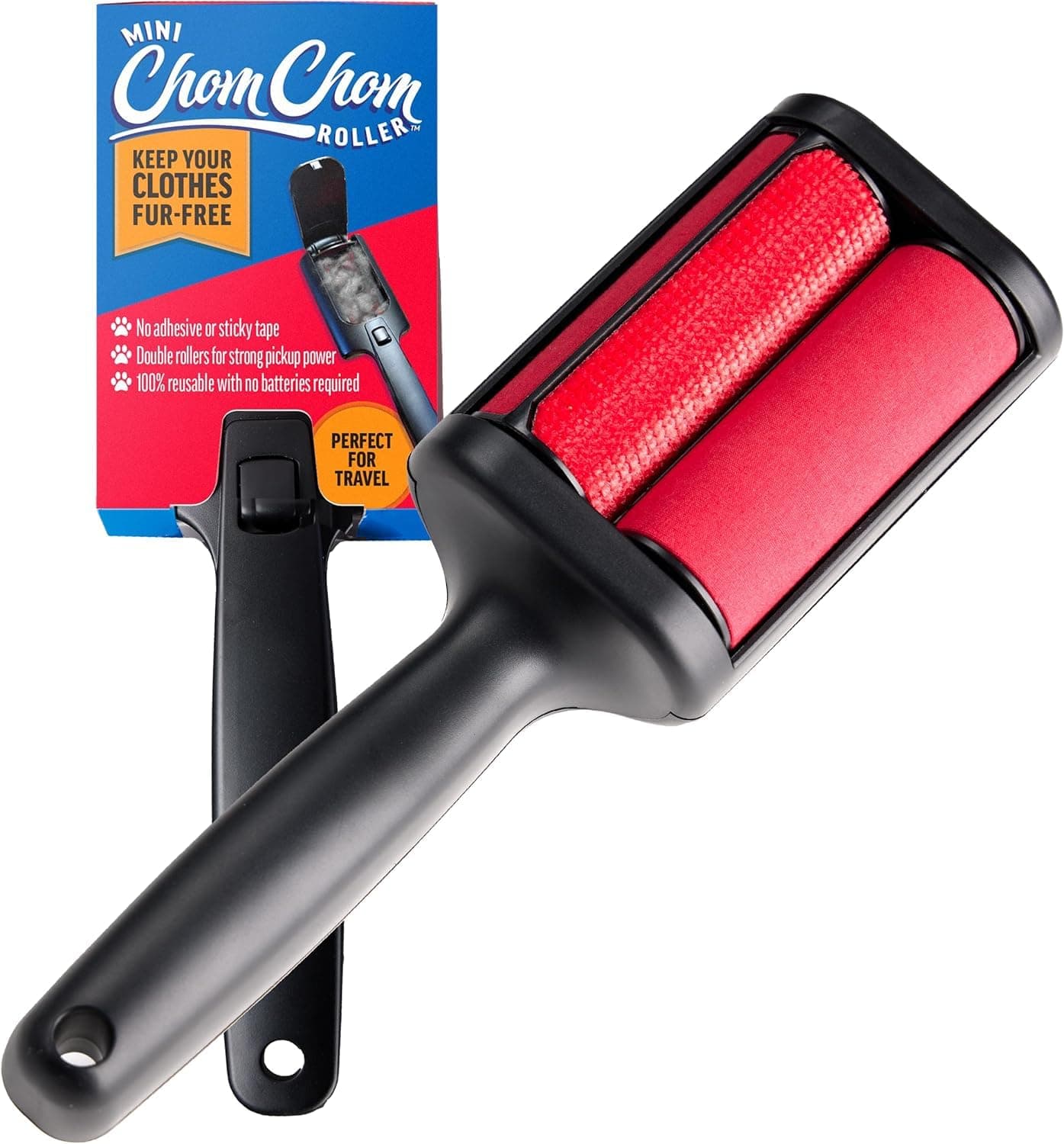
ChomChom Roller Pet Hair Remover – Reusable Lint Roller Pet Hair Removal Tool for Clothes, Couches, Cars and Travel - Cat Dog Hair Remover, Compact, No Sticky Refills Needed (Mini Roller)
ChomChom
2) Stairs second (4–6 minutes)
- •Focus on edges and corners where hair “dams” form.
- •If your stair carpet is medium pile, a small carpet rake/scraper style tool can pull embedded hair efficiently: Pet Hair Removal Tool: 6 Pcs Dog Cat Hair Remover (Reusable).
- •Technique: work one tread at a time. Pull hair toward the center to form a pile, then pick it up.
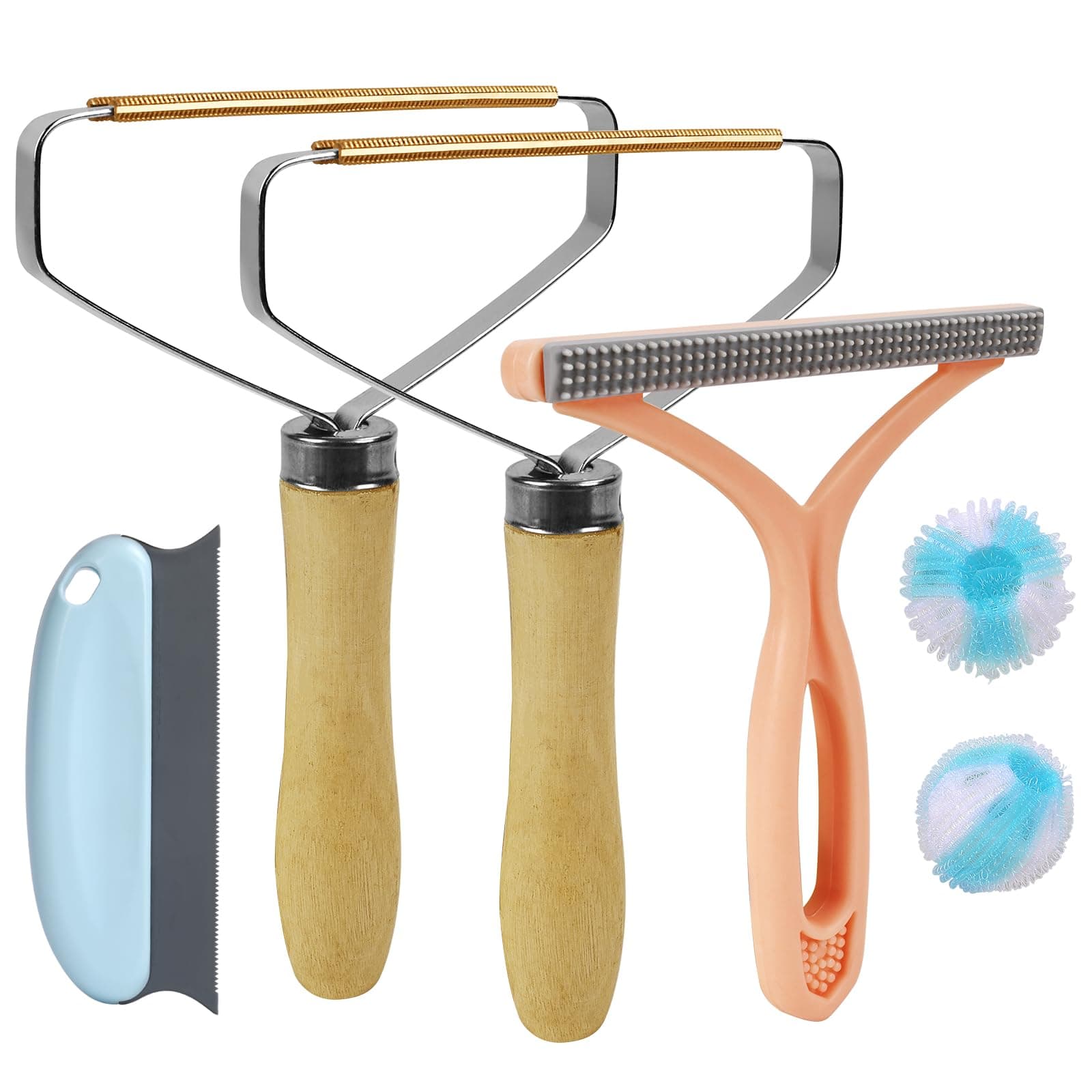
Pet Hair Removal Tool: 6 Pcs Dog Cat Hair Remover - Reusable Pet Hair Remover with Laundry Pet Hair Catcher - Portable Carpet Rake Scraper Fur Removal Tool for Rugs Car Mats Couch Furniture
Brand: Numhosai
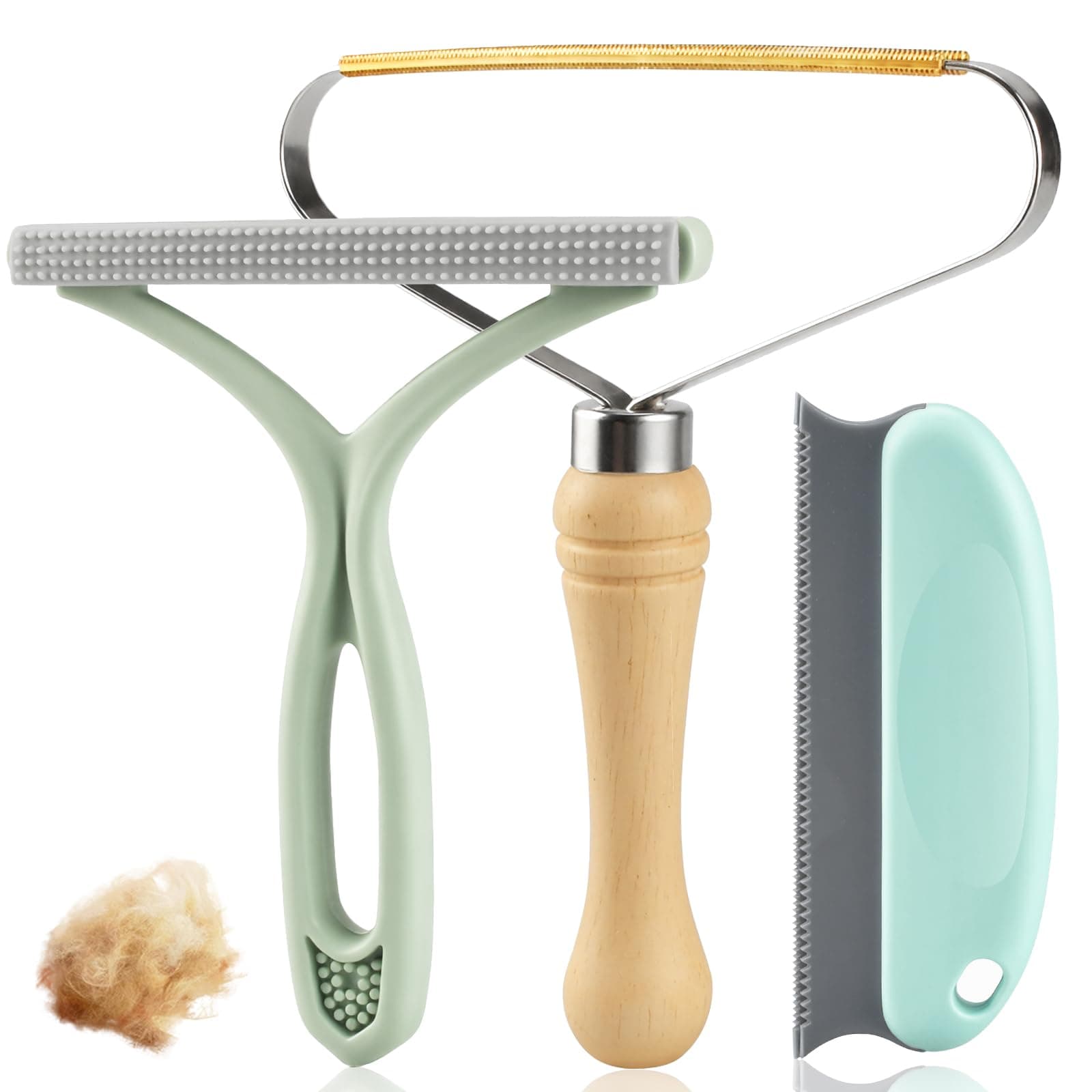
Pet Hair Removal Tool 3 Pack Dog Cat Hair Remover Carpet Scraper Rake Fur Removal Brush Lint Remover Shaver for Car Furniture Couch Green
Brand: AXEGY
3) Exit strategy (30 seconds)
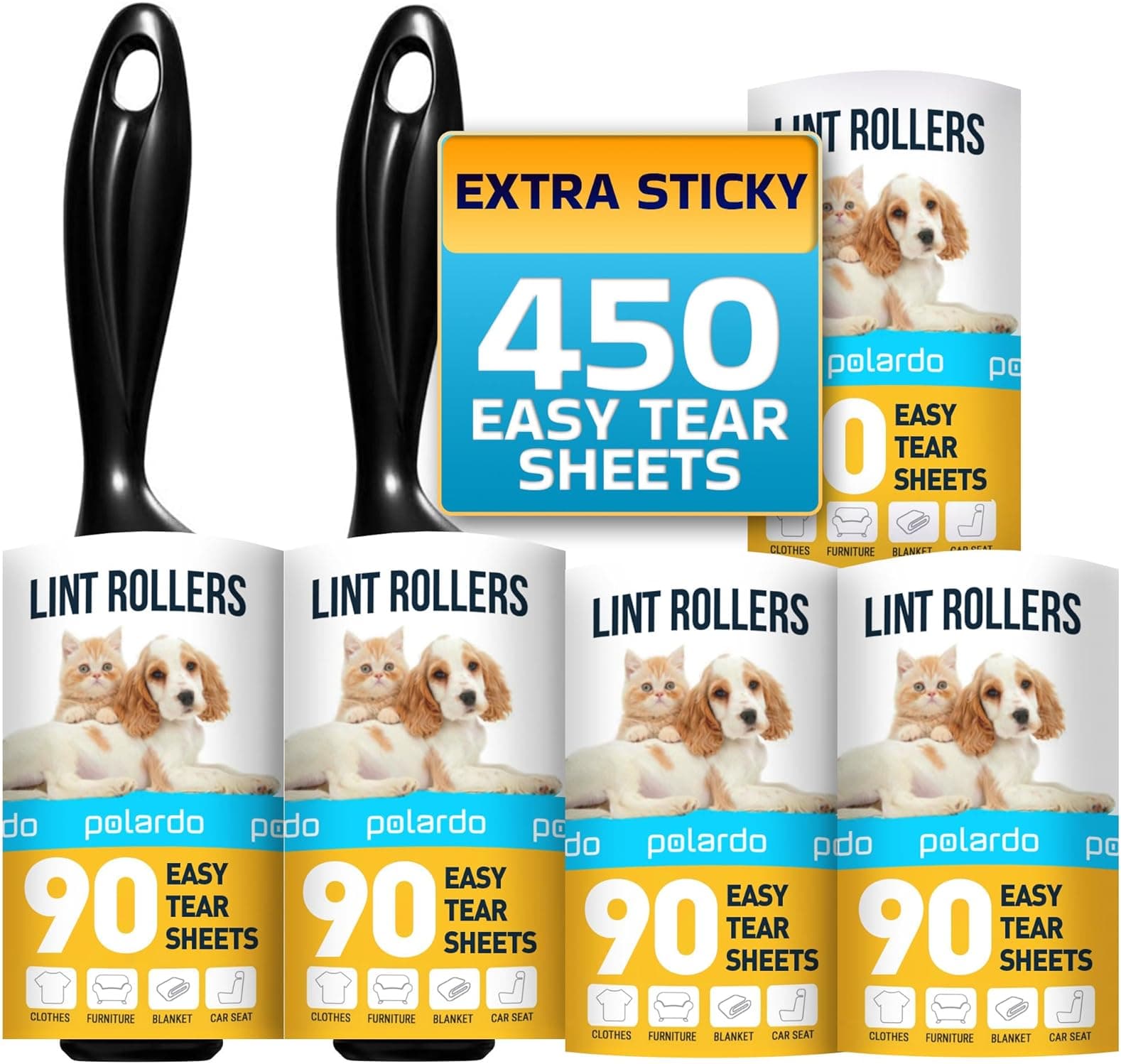
- •Keep one sticky roller near the door for clothes right before you leave: Lint Rollers for Pet Hair, Sticky (5 Large Lint Rollers).
Family home workflow (two passes: “crumb pass” then “hair pass”)
Goal: avoid turning fur into smudged debris.
1) Crumb pass on upholstery (5 minutes)
- •Shake blankets outside or over a trash can.
- •If upholstery has visible crumbs, do a quick pick-up first (even by hand or a vacuum if available) so your hair tool doesn’t clog.
2) Hair pass on upholstery (5–10 minutes)
- •Use the ChomChom-style tool for cushions and backs: ChomChom Roller Pet Hair Remover.
- •For seams and piping (where hair “wicks” into gaps), use your fingers inside a pet hair glove and rub along the seam to roll hair out: Pet Hair Removal Glove for Dogs & Cats (Yellow).
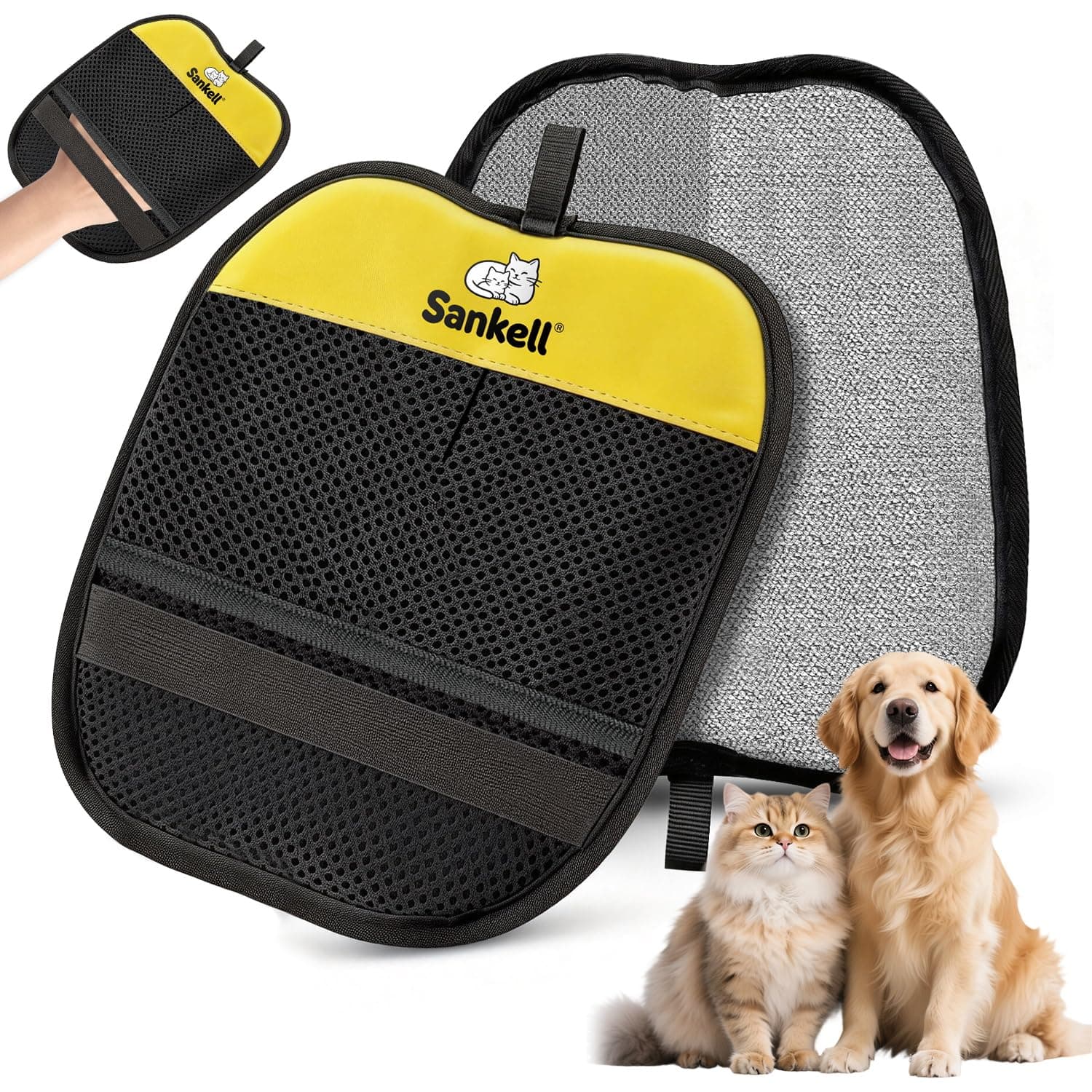
Pet Hair Removal Glove for Dogs & Cats, Newly Upgraded Reusable Electrostatic Pet Hair Remover Glove, Pet Hair Remover Mitt Tool for Couch, Furniture, Bed, Clothing, Carpet, Car Seat (Yellow)
Sankell
ChomChom Roller Pet Hair Remover – Original Size Reusable Lint Roller for Cat & Dog Hair on Furniture, Couch, Carpet, Car, Rugs & Bedding – Portable, Eco-Friendly (White)
ChomChom
3) Stairs (10 minutes, but targeted)
- •Don’t try to deep-clean every tread every time. Hit the “high-contrast zones”: bottom three steps (entry dirt), middle steps (traffic), top landing (pet nap spots).
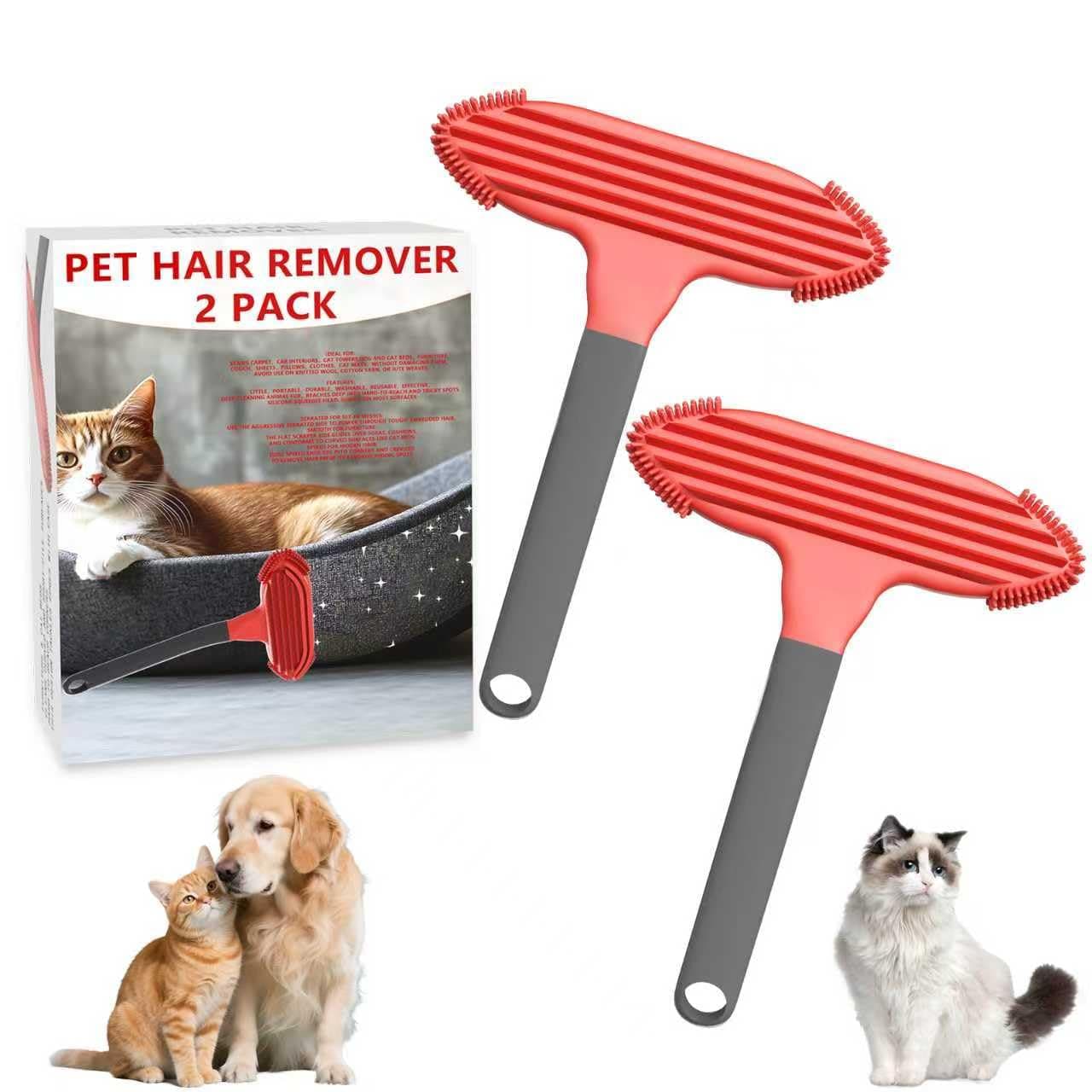
- •Use a rake/scraper tool cautiously: Pet Hair Removal Tool: 6 Pcs Dog Cat Hair Remover.
- •Technique: keep the angle shallow. If you see fuzzing, lighten pressure and switch to shorter strokes.
4) Kid clothes and school uniforms (2 minutes)
- •Sticky rollers are the fastest “no-argument” option: Lint Rollers for Pet Hair, Sticky (5 Large).
Multi-pet workflow (tool stations + batch cleaning)
Goal: stop chasing hair and start containing it.
1) Create tool stations
- •One station upstairs near the stairs.
- •One station in the living room.
- •Each station: a reusable roller + a glove or sticky roller backup.
2) Daily “collection sweep” (8–12 minutes)
- •Upholstery: reusable roller first (fast collection): ChomChom Roller Pet Hair Remover.
- •Stairs: scraper/rake for embedded hair every other day, not daily (protects carpet and your patience): Pet Hair Removal Tool: 6 Pcs Dog Cat Hair Remover.
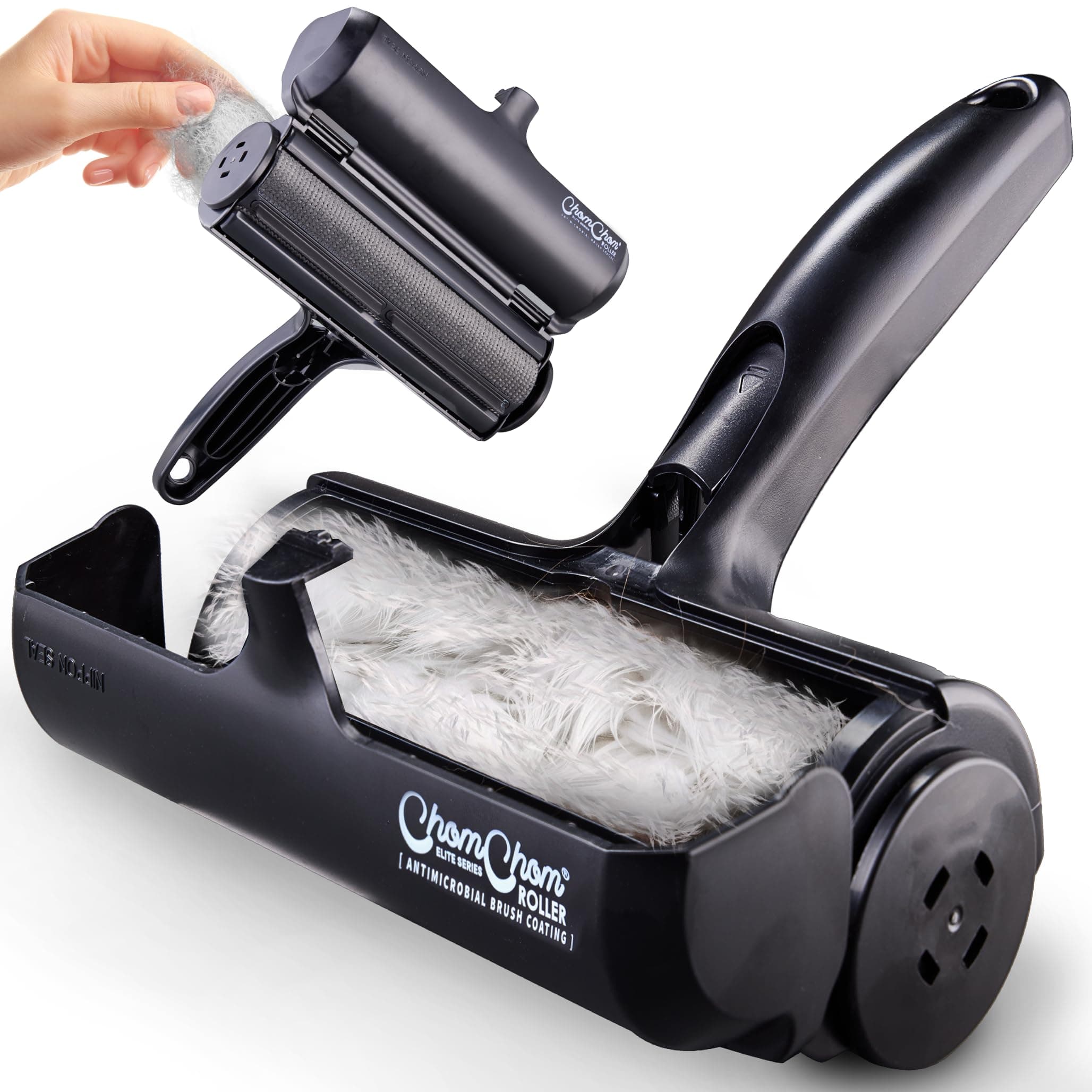
ChomChom Roller Pet Hair Remover – Original Size Reusable Lint Roller for Cat & Dog Hair on Furniture, Couch, Carpet, Car, Rugs & Bedding – Portable, Eco-Friendly (Black)
ChomChom
ChomChom Roller Pet Hair Remover – Original Size Reusable Lint Roller for Cat & Dog Hair on Furniture, Couch, Carpet, Car, Rugs & Bedding – Portable, Eco-Friendly (Black)
ChomChom Roller
3) Weekly “deep pull” on problem fabrics
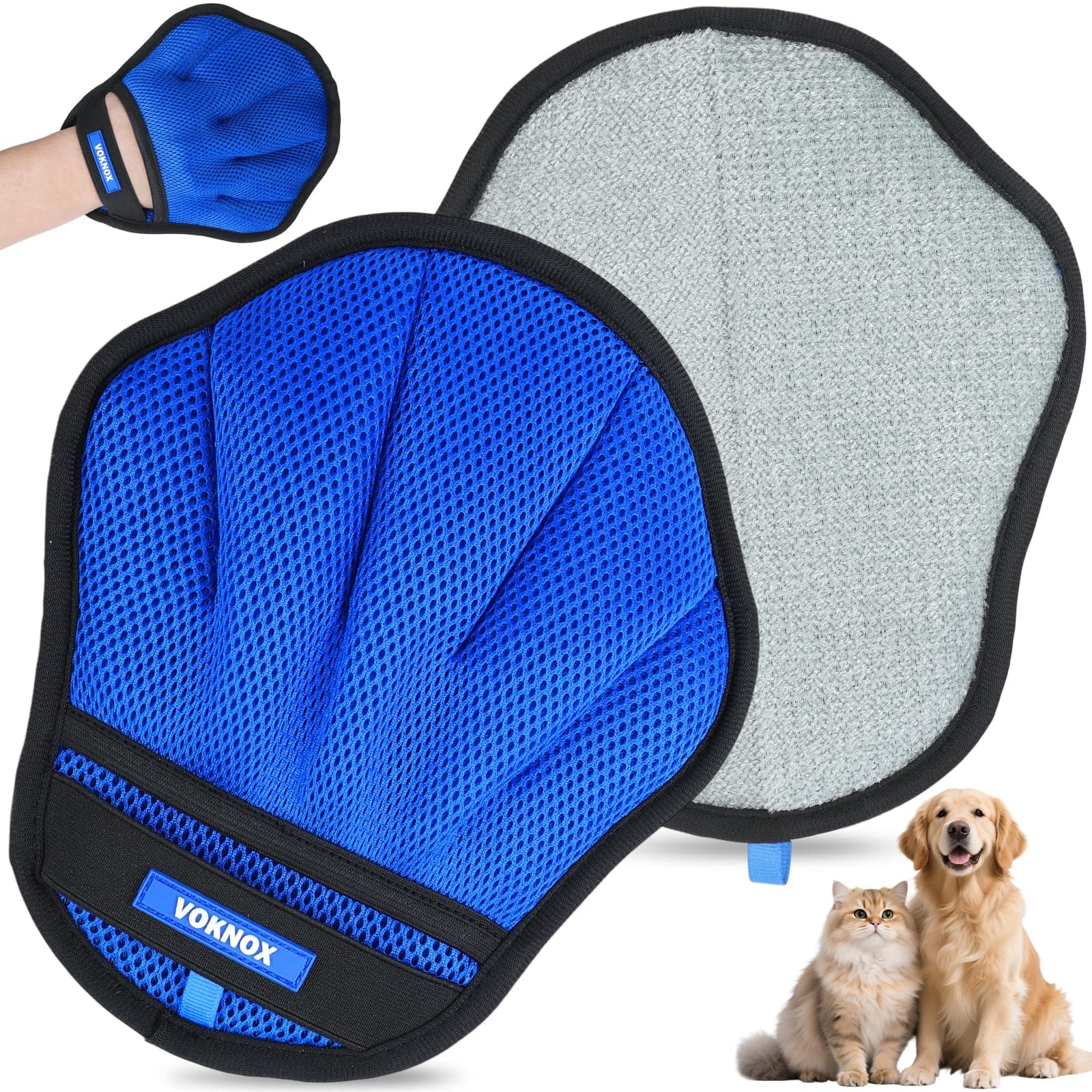
- •For microfiber couches that cling hair: use the glove slightly damp (not wet) and rub in one direction to roll hair into lines you can pick up: Pet Hair Removal Glove (Yellow).
- •Finish with a sticky roller only on the final visible layer (reduces refills): Lint Rollers for Pet Hair, Sticky.
Product picks matched to workload
Best for stairs with embedded hair (especially carpeted steps)
- •Pet Hair Removal Tool: 6 Pcs Dog Cat Hair Remover
- •Where it shines: carpeted stair treads, rug edges, car mats.
- •Tradeoffs: can snag delicate weaves; needs controlled pressure to avoid fuzzing.
- •Who it’s for: anyone whose main problem is “hair packed into the stairs,” not just loose fur.
Best for upholstery speed (couches, cushions, bedding)
- •ChomChom Roller Pet Hair Remover – Original Size
- •Where it shines: broad couch surfaces, throw pillows, bed comforters, area rugs.
- •Tradeoffs: needs emptying; less effective on hair deeply embedded in thick stair carpet.
- •Who it’s for: apartments and family rooms where upholstery is the constant battle.
Best for “final polish” and clothing emergencies
- •Lint Rollers for Pet Hair, Sticky (5 Large)
- •Where it shines: black pants, guest-ready couch pass, quick touchups.
- •Tradeoffs: ongoing cost; waste; can be slow for entire staircases.
- •Who it’s for: households that need predictable results in under 60 seconds.
Best for seams, tight spots, and “hands-on” control
- •Pet Hair Removal Glove for Dogs & Cats (Yellow)
- •Where it shines: couch seams, chair creases, stairs along the wall edge, car seat corners.
- •Tradeoffs: slower on large flat surfaces; depends on your technique.
- •Who it’s for: detail work and anyone who prefers a gentler approach on delicate fabric.
Time-saving tactics under pressure
When guests are 20 minutes away
- Start where people sit: couch seats and armrests.
- Do one visible stair lane: the side people use most.
- Finish with clothing lint pass at the door.
Tool combo that works fast:
- •Upholstery: ChomChom Roller
- •Clothes + final couch polish: Sticky Lint Rollers
When your stairs look clean until sunlight hits
Sunlight reveals hair trapped in the stair carpet’s “grain.” Instead of random scrubbing:
- •Pick a direction (top-to-bottom works best).
- •Use consistent strokes so you’re lifting the same way across treads.
- •On the last pass, lightly rake the edge where hair lines form: Pet Hair Removal Tool (6 Pcs).
When hair keeps returning in the same spots
That’s friction + habit.
- •Put a washable throw where the pet always lies.
- •Move the tool to the spot where you notice the hair (not where you store cleaning supplies).
- •For stair landings, keep a glove at the top so you can do a 30-second rub-and-collect: Pet Hair Removal Glove.
What breaks in real life and how to adapt
Problem: The carpet rake/scraper fuzzes your stair carpet
- •Likely cause: too much pressure or a looped/berber-style carpet.
- •Adaptation:
- •Reduce pressure and keep the tool flatter.
- •Use shorter strokes only on the edge bands.
- •Switch to glove + sticky roller for the final layer on delicate carpet: Pet Hair Removal Glove + Lint Rollers.
Problem: The reusable roller stops “grabbing” on upholstery
- •Likely cause: the internal compartment is full, or hair is stuck in fabric texture.
- •Adaptation:
- •Empty more often than you think—small emptying beats hard pressing.
- •Do one pass in a different direction.
- •For stubborn microfiber, pre-rub with the glove to lift hair tips: Pet Hair Removal Glove, then follow with ChomChom Roller.
Problem: Sticky lint rollers feel wasteful or expensive
- •Likely cause: using them as the primary tool for big surfaces.
- •Adaptation:
- •Use reusable tools for bulk removal, then sticky roller only for the final “camera-ready” layer.
- •Reserve sticky sheets for clothing, pillow accents, and guest-facing cushions: Lint Rollers for Pet Hair, Sticky.
Problem: You clean the stairs, then the dog immediately runs up and undoes it
- •Likely cause: timing and traffic.
- •Adaptation:
- •Clean stairs right after the last potty break or right before quiet time.
- •Do a “traffic lane only” approach on weekdays; full staircase on weekends.
Weekly review framework
A pet hair remover stairs plan works when you review the reality, not the ideal.
1) Identify your two worst zones
Pick exactly two:
- •Stair edges and corners
- •Landing (top or bottom)
- •Couch seats
- •Couch back where pets perch
- •Car seats
2) Match each zone to a primary tool
- •Embedded stair hair: Pet Hair Removal Tool (6 Pcs)
- •Upholstery bulk pickup: ChomChom Roller
- •Seams/edges: Pet Hair Removal Glove
- •Clothing + final polish: Sticky Lint Rollers
3) Set a realistic frequency
- •Apartment: 5–10 minutes daily, 20 minutes weekly.
- •Family home: 10 minutes every other day, 30–45 minutes weekly.
- •Multi-pet: 10–15 minutes daily, 45–60 minutes weekly.
4) Track one metric that matters
Choose one:
- •“Guest-ready couch in under 5 minutes”
- •“No visible hair lines on stair edges”
- •“Black pants pass lint test at the door”
If you’re failing your metric, don’t blame effort—change the tool placement or simplify the workflow.
Final execution checklist
- •Confirm stair carpet type: plush/cut pile tolerates raking better than looped/berber-style.
- •Pick a primary stair tool for embedded hair and a separate upholstery tool for broad surfaces.
- •Store tools where hair is noticed (top landing + living room), not where cleaning supplies live.
- •Use direction changes: one-way strokes, then reverse once to lift flattened hair.
- •Reserve sticky lint sheets for clothing and the final “polish” pass to control cost and waste.
- •If a tool fuzzes fabric, reduce pressure immediately and switch to glove + light sticky pass.
With the right pairing, your stairs stop being a fur trap and your upholstery stops being a lint roller for your clothes. The best setup is the one you’ll actually use on a Tuesday night—not just the one that works on a perfect Saturday.
Roundups Cluster
More in this topic

guide
Pet Feeding Station Setup: The Perfect Spot for Stress-Free Meals
guide
Best Indestructible Dog Toys for Aggressive Chewers
guide
10 DIY Cat Enrichment Ideas to Keep Your Cat Happy
guide
Positive Reinforcement Dog Training: A Complete Beginner's Guide
guide
Crate Training Puppy Schedule: Day-by-Day Plan for Success
guide
Leash Training Tips for Dogs: Stop Pulling and Enjoy Walks
Frequently asked questions
What works best as a pet hair remover for stairs with carpet?
For carpeted stairs where hair is embedded, a carpet rake/scraper style tool is usually the most effective because it pulls fur up from the pile instead of only lifting surface hair. Use light pressure and short strokes along edges and corners first (where hair packs in), then gather the loosened hair into a pile and remove it. If your stair carpet is looped (berber-style) or delicate, reduce pressure immediately and consider switching to a gentler glove method for the final layer.
Is a reusable roller or a sticky lint roller better for upholstery?
A reusable roller is typically better for day-to-day upholstery cleanup because it’s faster on large cushion surfaces and doesn’t require constant refills. Sticky lint rollers are best for the final “polish” pass (especially on visible accent pillows) and for clothing right before you leave. Many pet owners get the best results by doing bulk removal with a reusable roller, then using a sticky roller only where you need a flawless finish.
How do I keep pet hair from building up on stairs so fast?
Hair builds up on stairs because of traffic friction and because pets often pause on landings. To slow buildup, place a washable runner or mat at the landing if possible, clean the stair edges more frequently than the center, and time your stair cleanup for low-traffic windows (after the last potty break or during quiet time). Also keep a small tool at the top landing so you can do 30–60 second touchups instead of letting hair accumulate into a bigger job.
