
comparison • Hair Removal (Home)
Best Pet Hair Remover Tools in 2026: Data-Backed Roundup for Real Homes
A practical, tradeoff-first comparison of today’s most useful pet hair removers—based on repeatable tests across furniture, carpet, clothes, and cars.
By Lucy Anderson • February 28, 2026 • 7 min read
Table of contents
- What actually matters in this comparison
- 1) Surface match: fabric weave and pile height
- 2) Hair type: short, stiff vs long, soft
- 3) Cleanup workflow: where the hair goes
- 4) Speed vs finish
- Baseline criteria and scoring method
- Test surfaces (common household mix)
- What we score (0–10 per category)
- Tools covered in this roundup
- Side-by-side workflow analysis
- Reusable friction roller (best for furniture and bulk removal)
- Sticky lint rollers (best for clothes and “finish” work)
- Electrostatic glove/mitt (best for awkward shapes and gentle passes)
- Rake/scraper tools (best for rugs, mats, and embedded hair)
- Cost, effort, and consistency tradeoffs
- Upfront vs ongoing cost
- Effort curve (how it feels over a month)
- Consistency across surfaces
- Which option wins by user profile
- If your main issue is a fabric couch (daily shedding)
- If your main issue is clothing before leaving the house
- If your main issue is car mats and rugs (embedded hair)
- If you have a sensitive fabric household (delicate upholstery, throws)
- If you hate clutter and want one tool that covers “most” jobs
- Transition strategy if changing tools
- Step 1: Do one “reset clean” on your worst surface
- Step 2: Assign tools to locations (so you actually use them)
- Step 3: Set a realistic cadence
- Common decision mistakes
- Mistake 1: Buying a single tool for every surface
- Mistake 2: Using scraper-style tools on delicate upholstery
- Mistake 3: Overusing sticky rollers on large areas
- Mistake 4: Ignoring seams, edges, and under-cushion zones
- Mistake 5: Expecting hair removal tools to replace brushing
- Final recommendation framework
- 1) Identify your “primary battlefield”
- 2) Add one supporting tool to cover the gap
- 3) Decide based on your tolerance for consumables vs elbow grease
- Practical default pick for most households in 2026
Pet hair isn’t one problem. It’s a set of problems that show up in different places: couch seams, car floor mats, wool coats, low-pile rugs, high-pile carpets, and even clean laundry that somehow exits the dryer with fresh fur attached.
So when people ask for the best pet hair remover, what they usually mean is: “What tool will remove the most hair in my home, with the least frustration, and without ruining fabrics?”
This 2026 roundup is comparison-led on purpose. Instead of one “winner,” you’ll see what each tool does best, where it struggles, and how to build a simple system that keeps hair from piling up.
What actually matters in this comparison
A pet hair remover tool is only “best” if it fits your surfaces, your pets’ coat type, and your tolerance for repeat maintenance.
Here’s what consistently decides outcomes in real homes:
1) Surface match: fabric weave and pile height
- •Tight weaves (microfiber, canvas, performance fabric): Hair tends to sit on top and cling electrostatically. Tools that create friction or static often work fast.
- •Looser weaves (tweed, some upholstery blends): Hair can “thread” into the fabric. You need something that can pull hair free without snagging.
- •Low-pile rugs and car mats: Hair embeds and gets stomped in. A rake/scraper style tool can outperform rollers.
- •High-pile carpet: Hair hides deep; manual tools help, but a vacuum with the right brush is often the anchor.
2) Hair type: short, stiff vs long, soft
- •Short, stiff hair (many labs, pit mixes, some shorthair cats): It behaves like tiny needles. It wedges into fabric and can be stubborn on seats and rugs.
- •Long, soft hair (goldens, longhair cats): It forms clumps and “rolls” more easily. Many tools feel better on this hair type.
3) Cleanup workflow: where the hair goes
This is the hidden difference between tools that “work” and tools you’ll actually keep using.
- •Some tools collect hair into a chamber (low mess).
- •Some tools pile hair into tumbleweeds you have to pinch up (fine at home, annoying in the car).
- •Sticky rollers transfer hair to adhesive sheets (clean but consumable).
4) Speed vs finish
- •Speed tools remove the bulk quickly.
- •Finish tools remove the last 10–20% that makes clothing or cushions look clean.
Most households do best with a two-step combo: one tool for bulk + one for finishing.
Baseline criteria and scoring method
To keep this “data-backed” and repeatable, the core scoring compares how each tool handles the same tasks.
Test surfaces (common household mix)
- •Upholstered couch cushion (flat + seams)
- •Throw blanket (fleece or similar)
- •Low-pile rug
- •Car seat fabric + floor mat
- •Clothing (cotton tee + sweater/wool blend)
What we score (0–10 per category)
- •Removal efficiency: how much hair comes off in a set number of passes
- •Time-to-clean: how fast you can make the surface look acceptable
- •Fabric safety: risk of pilling, snagging, or abrasion
- •Mess control: how contained the removed hair is
- •Consistency: results across different surfaces
- •Ongoing cost: consumables and replacement frequency
Tools covered in this roundup
These are popular, practical categories that pet owners actually reach for:
- •Reusable friction roller: ChomChom Roller Pet Hair Remover – Original Size
- •Sticky sheet rollers: Lint Rollers for Pet Hair, Sticky… 5 Large Lint Rollers
- •Glove/mitt style: Pet Hair Removal Glove for Dogs & Cats (Yellow)
- •Rake/scraper multi-pack: Pet Hair Removal Tool: 6 Pcs Dog Cat Hair Remover…
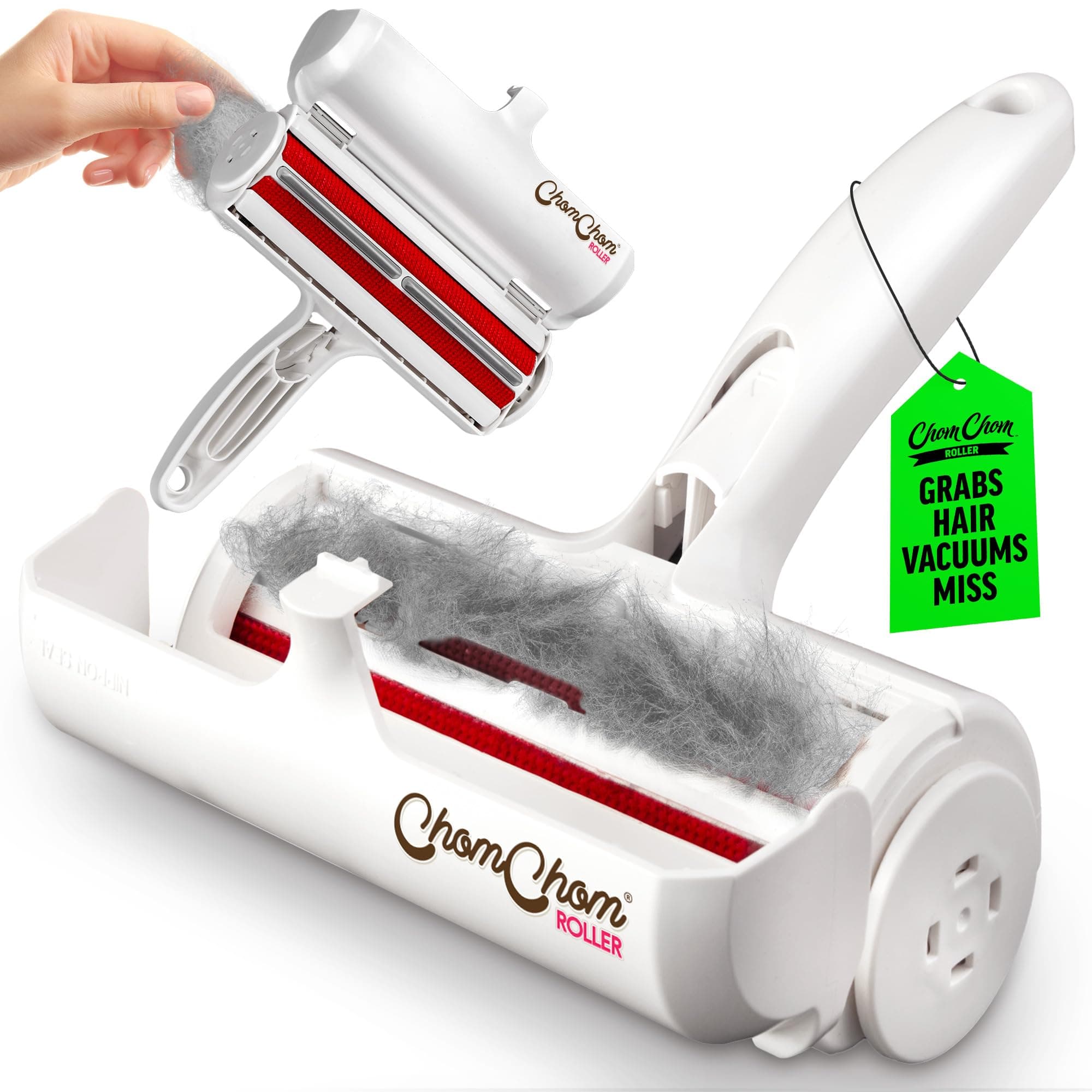
ChomChom Roller Pet Hair Remover – Original Size Reusable Lint Roller for Cat & Dog Hair on Furniture, Couch, Carpet, Car, Rugs & Bedding – Portable, Eco-Friendly (White)
ChomChom Roller
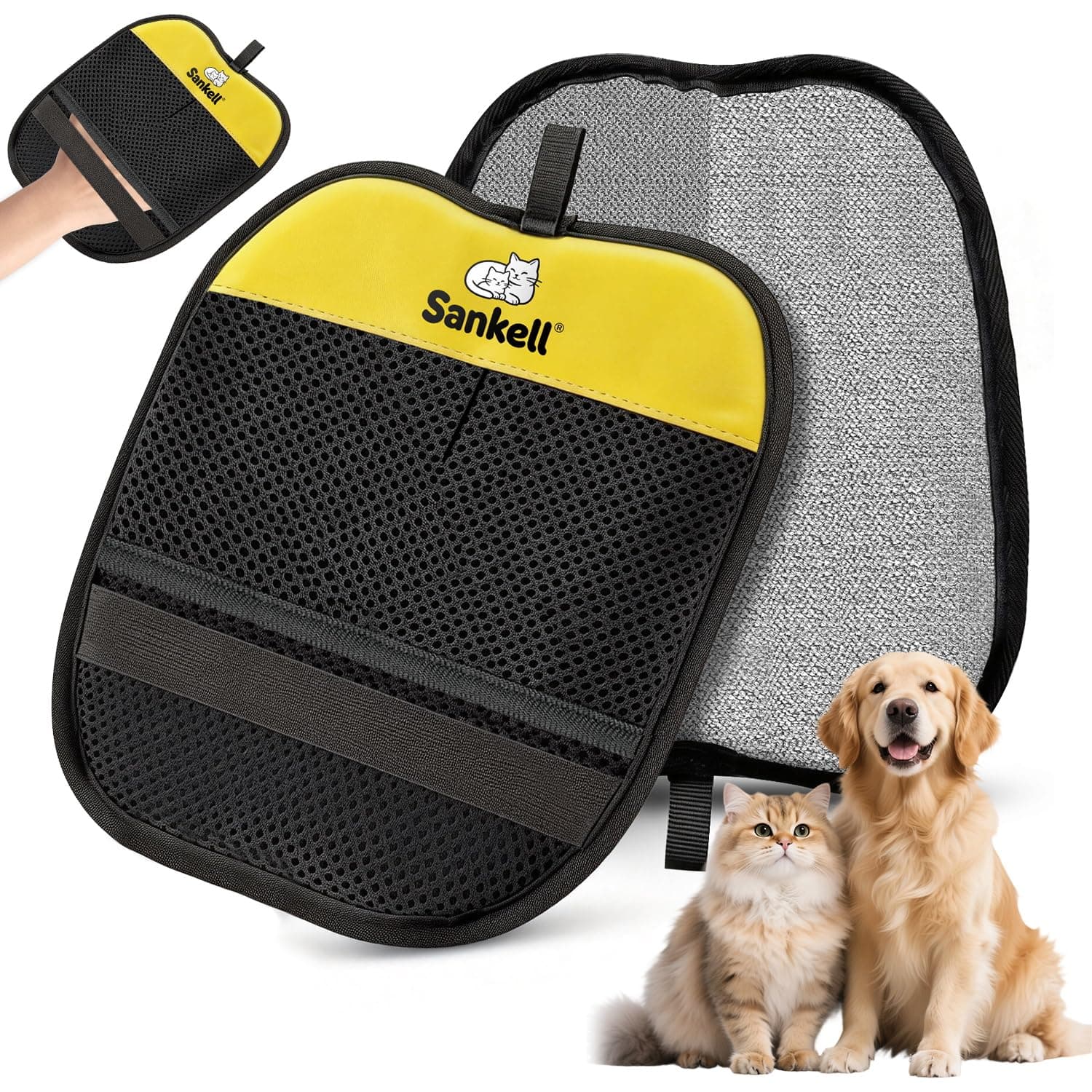
Pet Hair Removal Glove for Dogs & Cats, Newly Upgraded Reusable Electrostatic Pet Hair Remover Glove, Pet Hair Remover Mitt Tool for Couch, Furniture, Bed, Clothing, Carpet, Car Seat (Yellow)
Sankell
Side-by-side workflow analysis
Below is how these tools behave in the real “I have five minutes before guests arrive” workflow.
Reusable friction roller (best for furniture and bulk removal)
Product example: ChomChom Roller Pet Hair Remover – Original Size
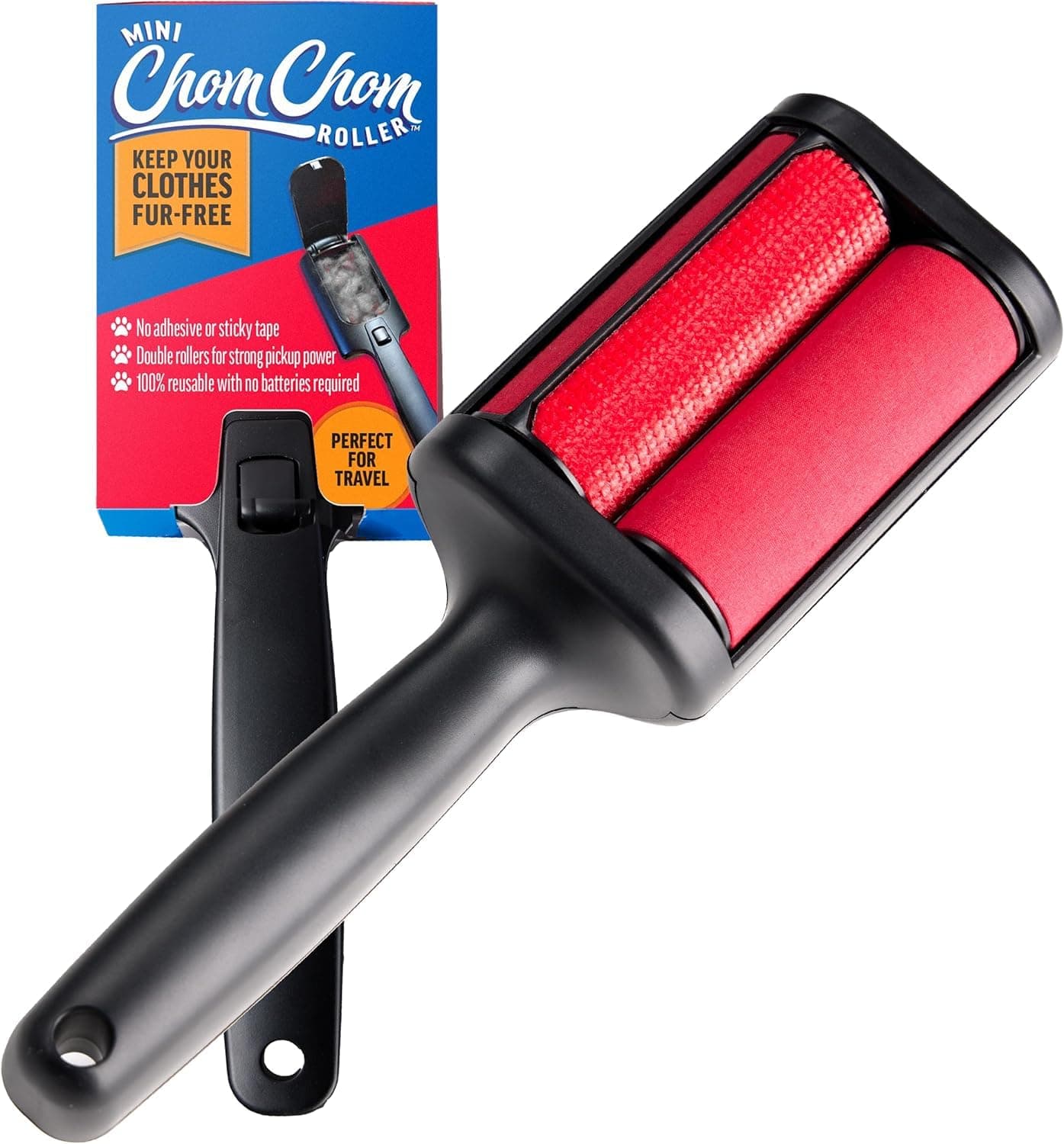
ChomChom Roller Pet Hair Remover – Reusable Lint Roller Pet Hair Removal Tool for Clothes, Couches, Cars and Travel - Cat Dog Hair Remover, Compact, No Sticky Refills Needed (Mini Roller)
ChomChom
ChomChom Roller Pet Hair Remover – Original Size Reusable Lint Roller for Cat & Dog Hair on Furniture, Couch, Carpet, Car, Rugs & Bedding – Portable, Eco-Friendly (White)
ChomChom
What it’s best at
- •Fast bulk pickup on couches, cushions, bedding, and many rugs
- •Collecting hair into an internal compartment (less airborne fluff)
Where it struggles
- •Tight corners and deep seams (you’ll need to angle it or follow with a smaller tool)
- •Some high-pile carpets where hair is buried below the surface
How to use it effectively (practical technique)
- •Use short, firm back-and-forth strokes for embedded hair.
- •On a couch, do flat areas first, then seams last so you don’t re-deposit hair.
- •Empty the chamber before it’s packed. A half-full chamber often performs better than a stuffed one.
Best scenario You have a fabric couch and a shedding cat, and you want a quick daily tool you can keep in the living room.
Sticky lint rollers (best for clothes and “finish” work)
Product example: Lint Rollers for Pet Hair, Sticky… 5 Large Lint Rollers
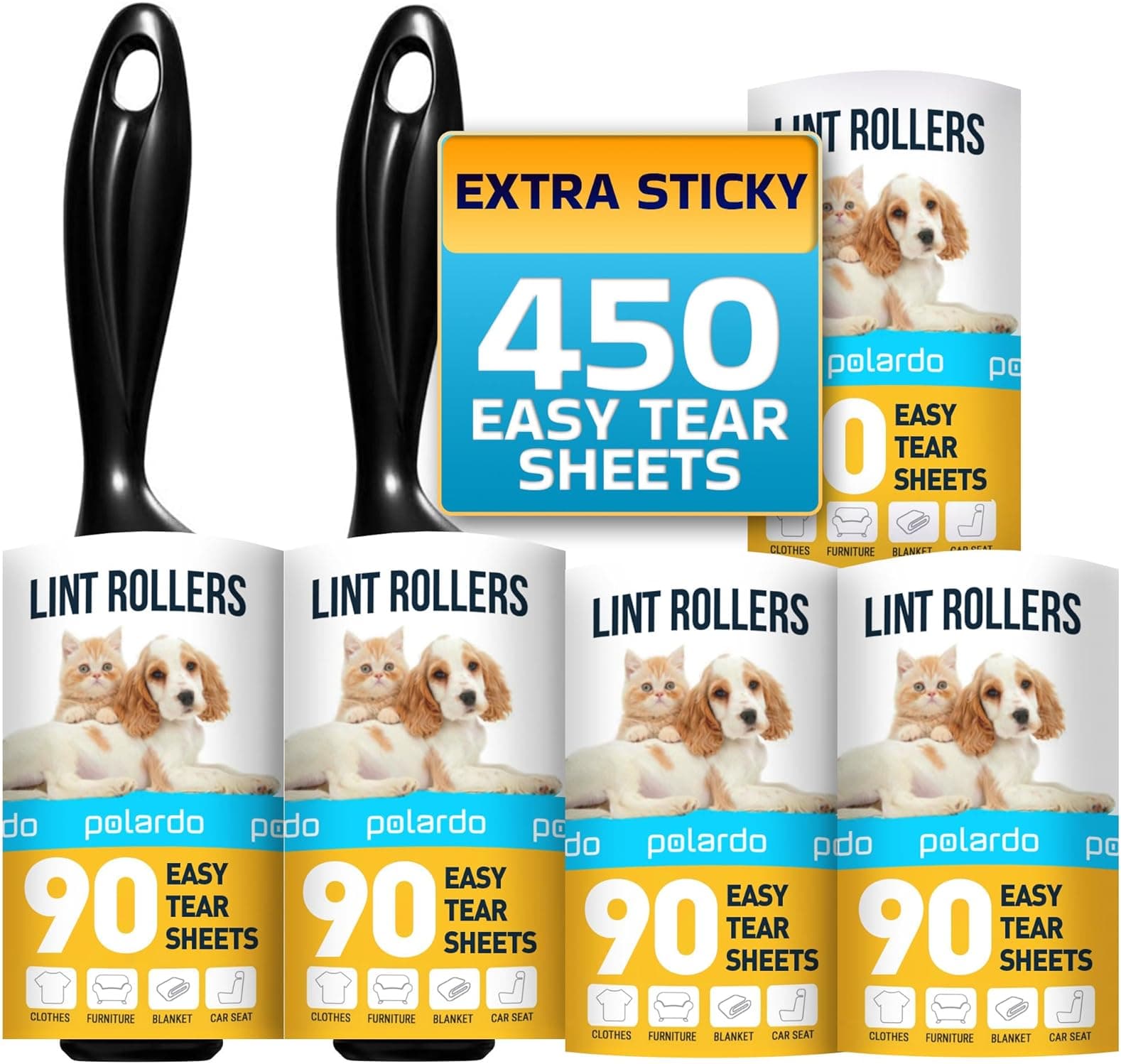
What it’s best at
- •Clothing, especially smooth cotton, leggings, and jackets
- •Final detailing after you’ve removed most hair with another tool
Where it struggles
- •Large furniture areas (you’ll burn through sheets quickly)
- •Thick blankets where adhesive loads up fast
How to use it effectively
- •Use light pressure; crushing the adhesive can reduce pickup.
- •Roll in one direction first to gather hair, then do a second pass crosswise.
- •Keep one in the entryway or car for emergency touch-ups.
Best scenario You don’t need to deep-clean carpets daily, but you do need your black hoodie to look presentable at work.
Electrostatic glove/mitt (best for awkward shapes and gentle passes)
Product example: Pet Hair Removal Glove for Dogs & Cats (Yellow)
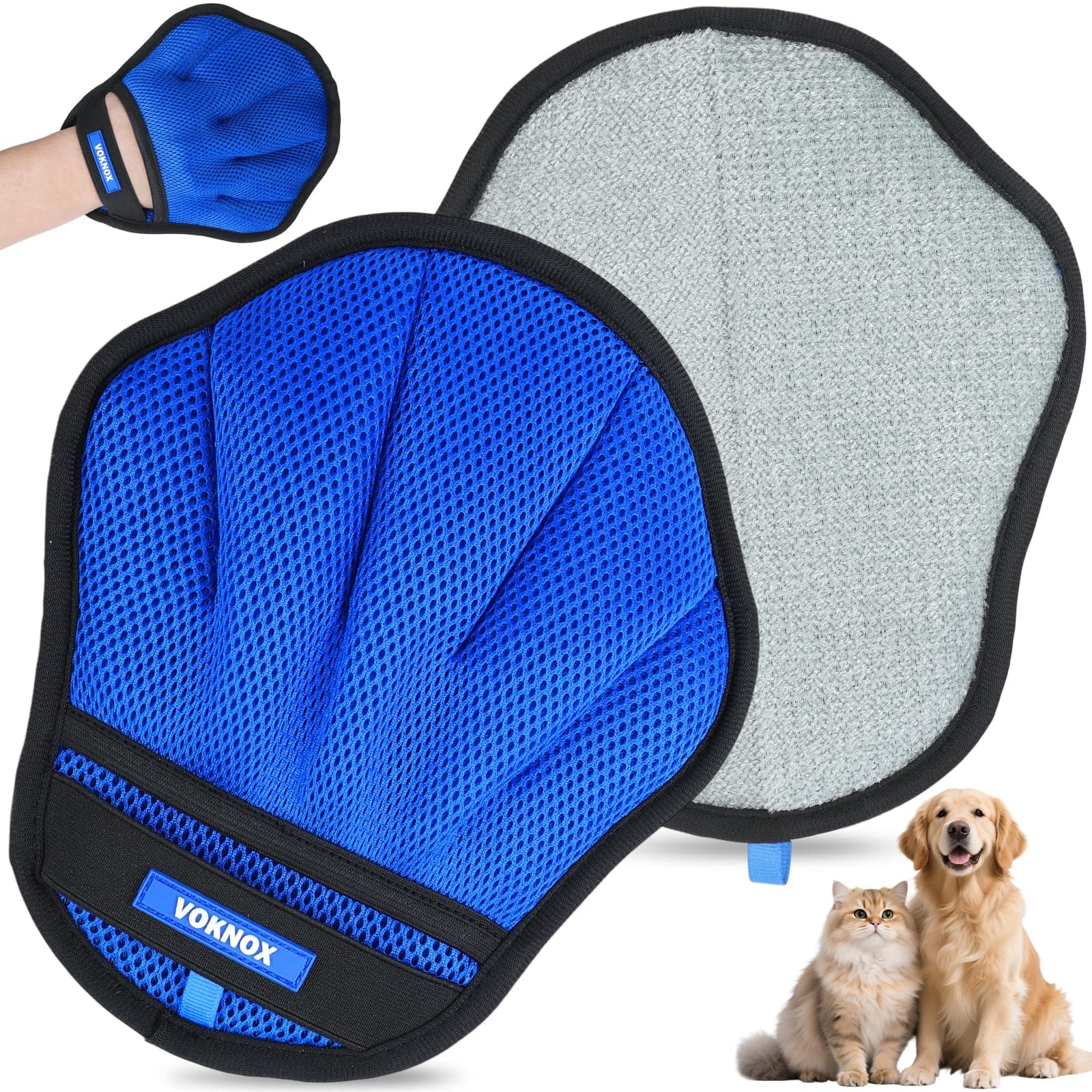
What it’s best at
- •Reaching around chair arms, along baseboards, and into pet-bed edges
- •Quick pickups on bedding, comforters, and some upholstery
- •Light-duty car cleanup (especially around seat edges)
Where it struggles
- •Heavy, embedded hair on rugs and mats (it can smear hair into clumps)
- •Consistency: static/friction depends on humidity and fabric type
How to use it effectively
- •Work in one direction, like you’re “brushing” the fabric.
- •If hair starts clumping, pinch the clumps off before continuing so you don’t redeposit them.
- •In humid weather, pair it with a roller or rake tool for more reliable results.
Best scenario You want a gentle, fast tool for bedding and furniture edges, and you value control more than maximum power.
Rake/scraper tools (best for rugs, mats, and embedded hair)
Product example: Pet Hair Removal Tool: 6 Pcs Dog Cat Hair Remover…
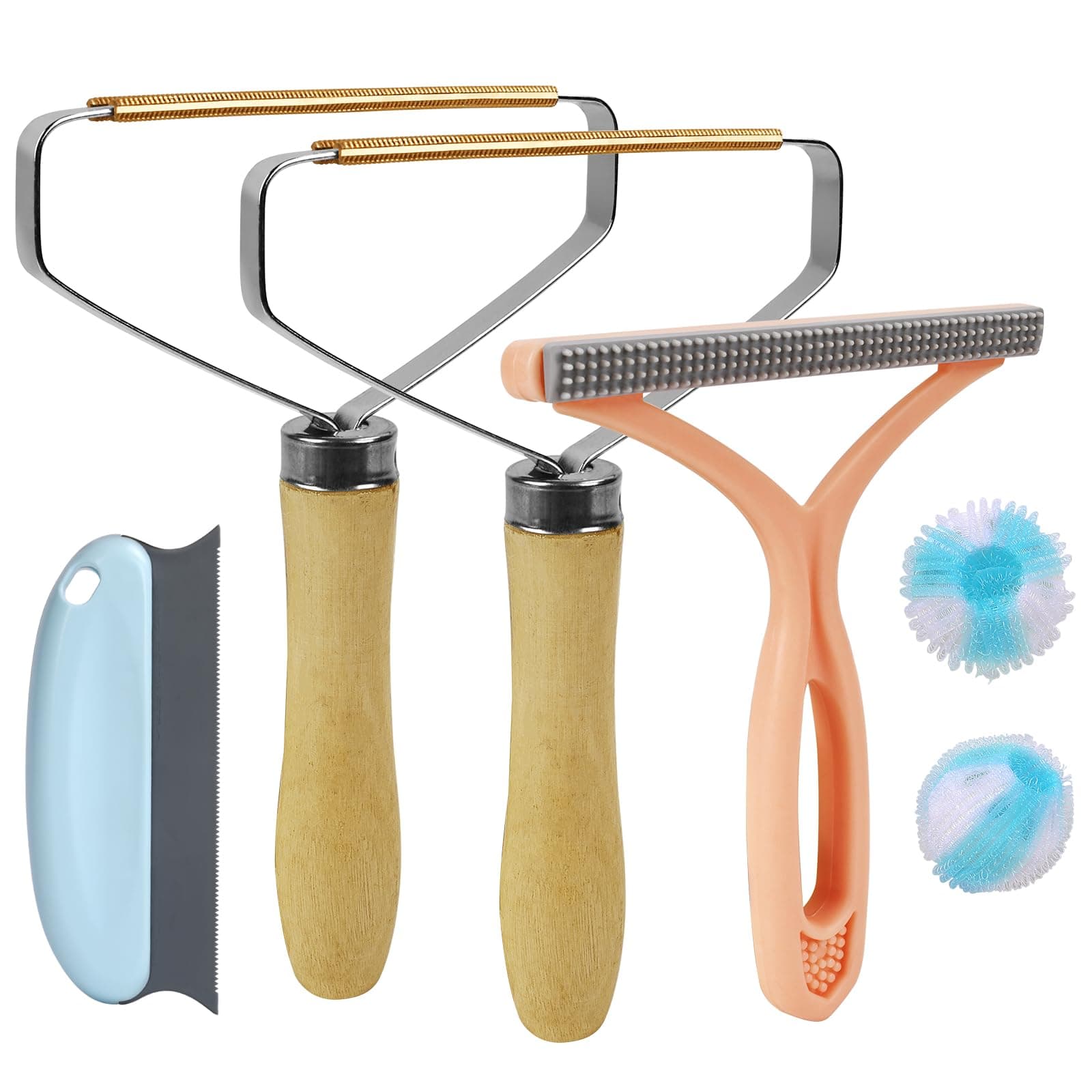
Pet Hair Removal Tool: 6 Pcs Dog Cat Hair Remover - Reusable Pet Hair Remover with Laundry Pet Hair Catcher - Portable Carpet Rake Scraper Fur Removal Tool for Rugs Car Mats Couch Furniture
Brand: Numhosai
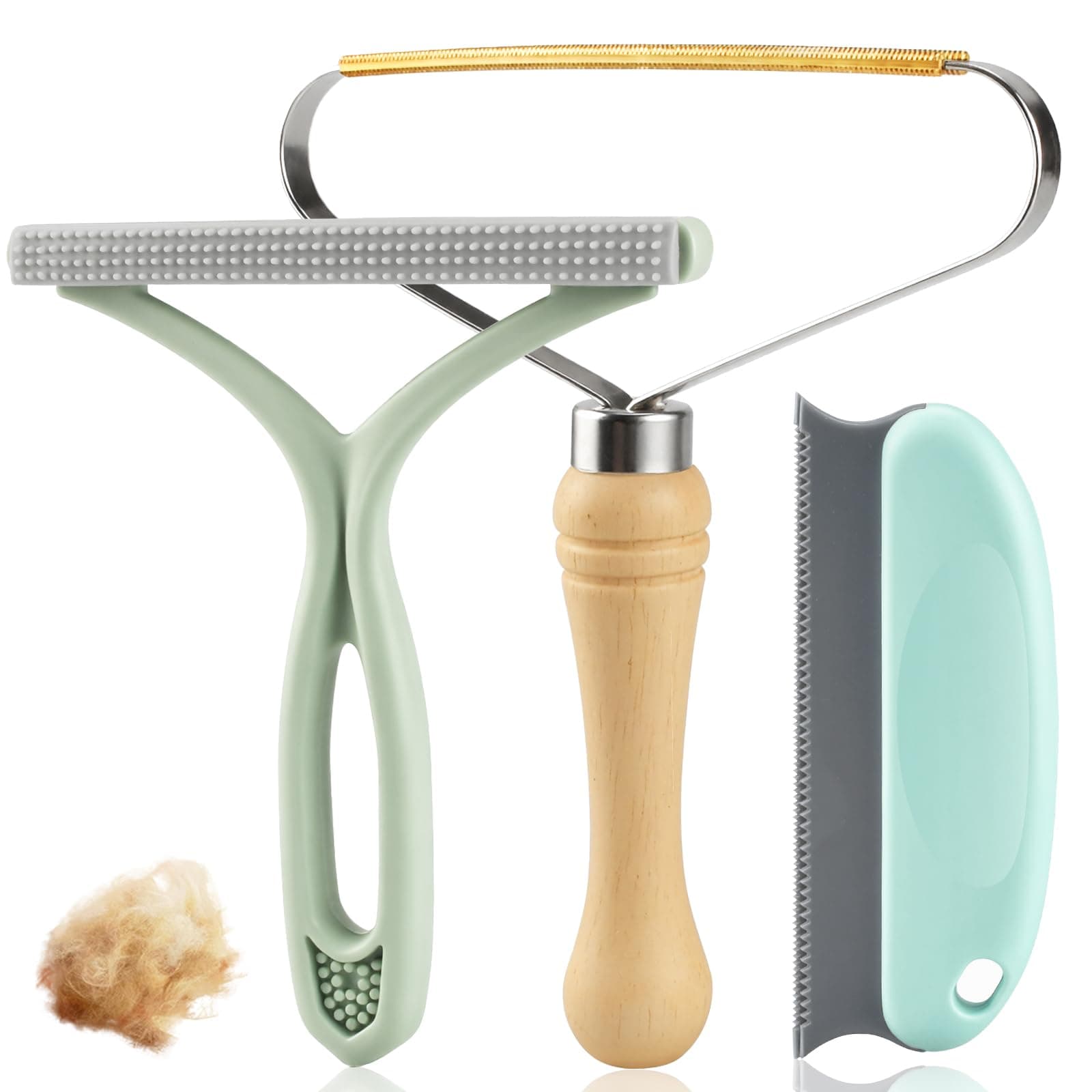
Pet Hair Removal Tool 3 Pack Dog Cat Hair Remover Carpet Scraper Rake Fur Removal Brush Lint Remover Shaver for Car Furniture Couch Green
Brand: AXEGY
What it’s best at
- •Low-pile rugs, entry mats, and car mats where hair is stomped in
- •Pulling out “invisible” embedded hair that rollers glide over
Where it struggles
- •Delicate fabrics and some upholstery: risk of snagging or pilling if used aggressively
- •Large, plush carpets can take effort; it’s effective but not always fast
How to use it safely (avoid damage)
- •Start in an inconspicuous corner. Use minimal pressure until you see hair lifting.
- •Use short strokes and lift the tool often; long scrapes can stress fibers.
- •Reserve the more aggressive scraper-style tools for rugs/mats, not sweaters or delicate upholstery.
Best scenario You have a dog that sheds short, stiff hair and your rugs or car mats are the main pain point.
Cost, effort, and consistency tradeoffs
If you’re choosing the best pet hair remover for 2026, think in terms of total cost and the effort you’ll actually maintain.
Upfront vs ongoing cost
- •Reusable roller (e.g., ChomChom): higher upfront cost, low ongoing cost. Good if you clean furniture often.
- •Sticky lint rollers: low upfront cost, ongoing refills (or multi-pack replacement). Best as a finishing tool or travel option.
- •Glove/mitt: low-to-mid upfront, no refills. Performance can vary with humidity and fabric.
- •Rake/scraper set: usually low-to-mid upfront, no refills. Potential “cost” is time and careful use to avoid fiber damage.
Effort curve (how it feels over a month)
- •Lowest daily friction: reusable roller on couch + quick empty
- •Lowest mental load for clothes: keep sticky rollers where you dress (closet/entry)
- •Most elbow grease but highest payoff on rugs: rake/scraper once weekly
Consistency across surfaces
- •Sticky rollers are the most consistent across different fabrics (especially clothing), but they’re expensive to use on large areas.
- •Reusable rollers are consistently strong on upholstery and bedding, but less perfect on deep carpet.
- •Rake/scraper tools are consistently strong on rugs and mats, but require surface caution.
- •Gloves can be great on some fabrics and underwhelming on others.
Which option wins by user profile
Use these profiles to pick the “best” tool for your reality.
If your main issue is a fabric couch (daily shedding)
- •Primary: ChomChom Roller Pet Hair Remover – Original Size
- •Secondary for seams/edges: Pet Hair Removal Glove (Yellow)
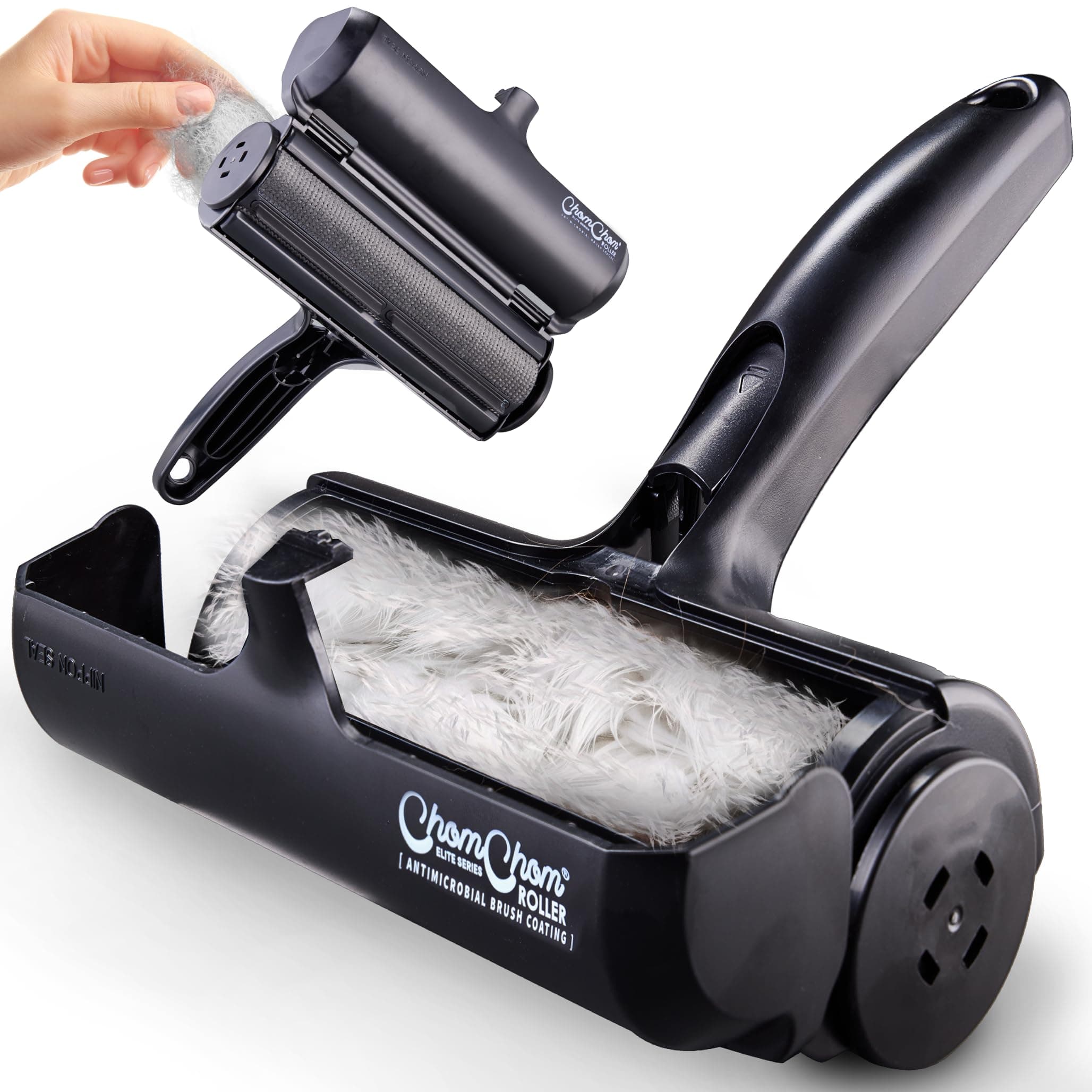
ChomChom Roller Pet Hair Remover – Original Size Reusable Lint Roller for Cat & Dog Hair on Furniture, Couch, Carpet, Car, Rugs & Bedding – Portable, Eco-Friendly (Black)
ChomChom
ChomChom Roller Pet Hair Remover – Original Size Reusable Lint Roller for Cat & Dog Hair on Furniture, Couch, Carpet, Car, Rugs & Bedding – Portable, Eco-Friendly (Black)
ChomChom Roller
Tradeoff: fast, low ongoing cost; may need a second tool for corners.
If your main issue is clothing before leaving the house
- •Primary: Lint Rollers for Pet Hair (5 Large)
- •Backup: reusable roller for furniture so clothes don’t get re-contaminated
Tradeoff: best finish, most consistent; ongoing refills.
If your main issue is car mats and rugs (embedded hair)
- •Primary: Pet Hair Removal Tool: 6 Pcs…
- •Secondary: sticky roller for seats/clothes touch-ups
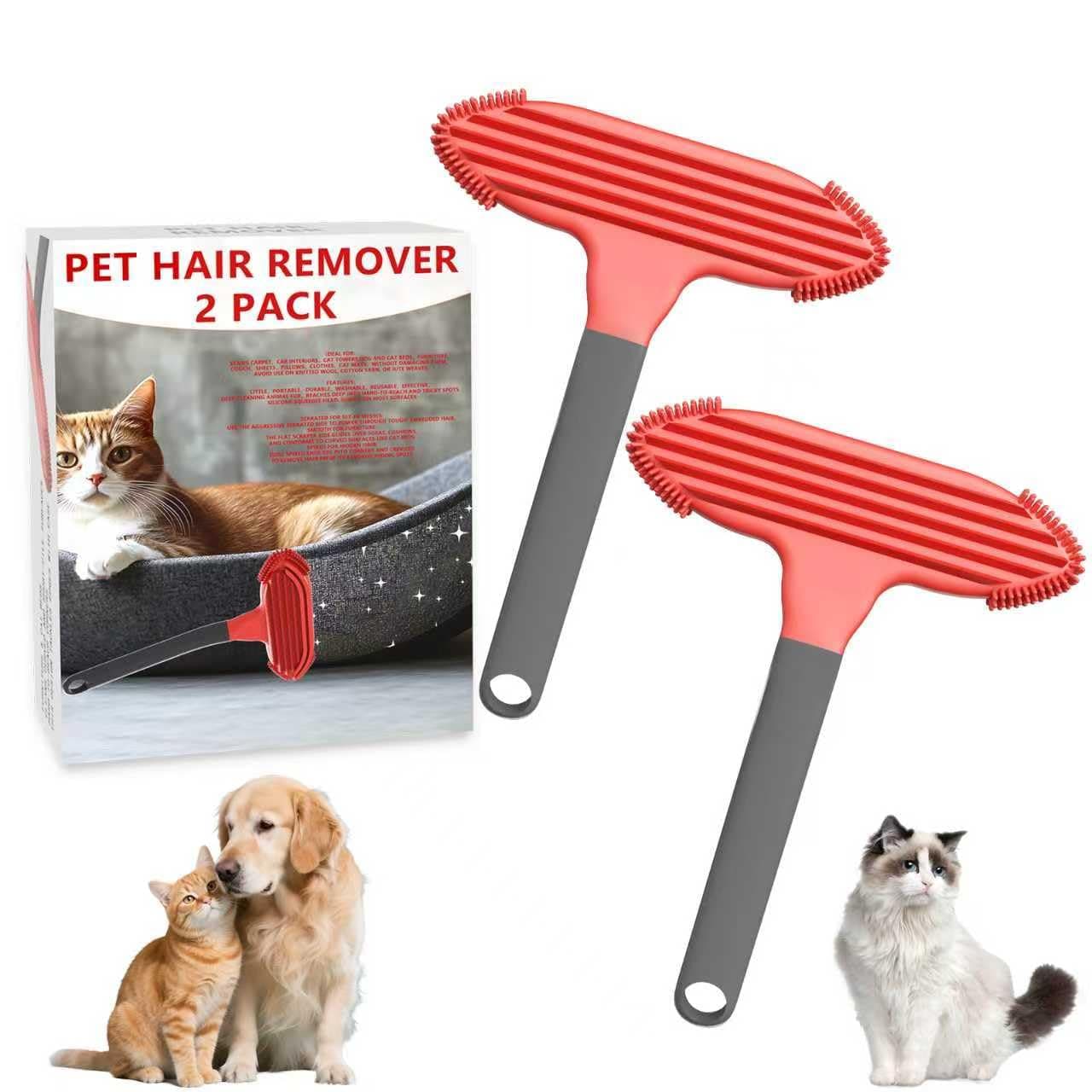
Tradeoff: most powerful on embedded hair; requires careful technique to avoid fiber wear.
If you have a sensitive fabric household (delicate upholstery, throws)
- •Primary: reusable roller (gentler than scraping)
- •Secondary: glove for gentle passes
Tradeoff: you may need more frequent light cleaning instead of occasional aggressive cleaning.
If you hate clutter and want one tool that covers “most” jobs
- •Choose the reusable friction roller first
- •Add a small sticky roller only if you regularly wear dark clothing
Tradeoff: one-tool simplicity vs not having a perfect clothing finisher.
Transition strategy if changing tools
Switching tools is less about buying something new and more about resetting your routine so hair doesn’t accumulate.
Step 1: Do one “reset clean” on your worst surface
Pick the surface that makes everything else feel dirty (often the couch or a rug).
- •Couch reset: use a reusable roller in overlapping passes; follow seams with a glove.
- •Rug/mat reset: use a rake/scraper tool in short strokes; vacuum afterward to collect loosened hair.
This reset matters because if hair remains embedded, you’ll feel like the new tool “doesn’t work,” even if it’s good.
Step 2: Assign tools to locations (so you actually use them)
- •Living room: reusable roller
- •Bedroom/bedding closet: glove (quick passes on comforters)
- •Entryway/closet/car: sticky lint roller
- •Laundry room/garage: rake/scraper tool for rugs and mats
Step 3: Set a realistic cadence
- •Daily (2–3 minutes): couch/bed top layer with reusable roller or glove
- •Weekly (10–20 minutes): rugs/mats with rake tool + vacuum
- •As needed (30 seconds): clothing with sticky roller
If you try to do everything weekly, hair builds up and each session gets harder.
Common decision mistakes
These are the choices that most often lead to disappointment—even when the tool is decent.
Mistake 1: Buying a single tool for every surface
No tool is equally good on couch, carpet, and sweaters. If you can swing a two-tool setup, you usually get better results with less effort.
Mistake 2: Using scraper-style tools on delicate upholstery
Rake/scraper tools can be amazing, but they can also rough up some fabrics. If your couch pills easily, don’t treat it like a car mat.
Mistake 3: Overusing sticky rollers on large areas
Sticky rollers are a finishing tool. If you’re rolling an entire sectional every weekend, the “ongoing cost” becomes your biggest frustration.
Mistake 4: Ignoring seams, edges, and under-cushion zones
Hair migrates to boundaries. If you only clean the flat surface, you’ll keep seeing hair reappear.
Mistake 5: Expecting hair removal tools to replace brushing
Less loose hair on the pet means less hair on the couch. Even a basic brushing routine (especially during shedding season) reduces the workload dramatically.
Final recommendation framework
Use this framework to choose the best pet hair remover for your home without overthinking it.
1) Identify your “primary battlefield”
- •Furniture/bedding: start with a reusable friction roller
- •Clothes: start with sticky lint rollers
- •Rugs/mats/car: start with a rake/scraper tool
2) Add one supporting tool to cover the gap
- •If you chose a reusable roller, add sticky rollers for clothing perfection.
- •If you chose sticky rollers, add a reusable roller to reduce how often you need adhesive sheets.
- •If you chose a rake tool, add a reusable roller for upholstery.
3) Decide based on your tolerance for consumables vs elbow grease
- •Prefer low ongoing cost: choose reusable tools first (roller, glove, rake)
- •Prefer lowest effort for clothes: accept consumables (sticky roller)
Practical default pick for most households in 2026
If you want the most broadly useful starting point for the “best pet hair remover” question, a reusable furniture roller like the ChomChom Roller Pet Hair Remover – Original Size is often the best anchor tool, then keep a pack of Lint Rollers for Pet Hair (5 Large) for clothing and last-mile touch-ups. If rugs and car mats are your pain point, add a dedicated embedded-hair option like the Pet Hair Removal Tool: 6 Pcs…. For edges and awkward shapes, a glove like the Pet Hair Removal Glove (Yellow) can make the routine feel easier.
When you match the tool to the surface—and build a simple two-step workflow—you spend less time fighting hair and more time enjoying your pets.
Roundups Cluster
More in this topic

guide
Pet Feeding Station Setup: The Perfect Spot for Stress-Free Meals
guide
Best Indestructible Dog Toys for Aggressive Chewers
guide
10 DIY Cat Enrichment Ideas to Keep Your Cat Happy
guide
Positive Reinforcement Dog Training: A Complete Beginner's Guide
guide
Crate Training Puppy Schedule: Day-by-Day Plan for Success
guide
Leash Training Tips for Dogs: Stop Pulling and Enjoy Walks
Frequently asked questions
What is the best pet hair remover for a fabric couch?
For most fabric couches, a reusable friction roller is the best starting point because it removes bulk hair quickly without constantly buying refills. Use it on flat cushion faces first, then clean seams and edges (where hair collects) with a glove/mitt or careful angled passes. If you need a perfectly “photo-ready” finish, keep a sticky lint roller for the final pass on throw pillows and clothing.
Do reusable pet hair rollers work on carpet and rugs?
They often work on low-pile rugs, but performance drops when hair is embedded or the pile is high. For rugs and especially car mats, a rake/scraper-style tool typically lifts more embedded hair with fewer passes. A practical workflow is: rake/scrape to pull hair up, then vacuum to remove the loosened hair and grit.
What’s the most cost-effective way to manage pet hair long-term?
Use a reusable tool for your largest surfaces (usually furniture or bedding) and reserve sticky lint rollers for clothes and quick touch-ups. This reduces ongoing consumable spending while keeping your “last 10%” finish when you need it. Combine that with a simple cadence—2–3 minutes daily on the couch and a weekly rug/mat deep clean—to prevent buildup that makes every session harder.
