
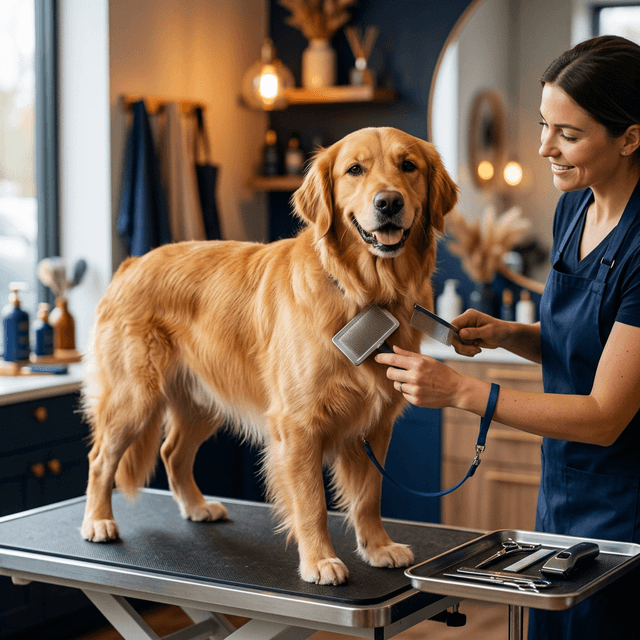
comparison • Bath Time
Bath Brush vs Grooming Glove: Which Is Better for Weekly Baths?
Bath brush vs grooming glove—compare comfort, coat results, and a behavior-first weekly bath routine with practical steps for real homes.
By Lucy Anderson • February 25, 2026 • 7 min read
Table of contents
- Pet behavior signals that shape the routine
- Read these signals before you pick a tool
- What the signals mean for bath brush vs grooming glove
- Low-stress setup before any tool is used
- Control the three biggest stressors: footing, temperature, noise
- Make shampoo application predictable
- Choose a rinse strategy for the head (where most pets object)
- Handling protocol for better compliance
- The “one hand anchors, one hand works” rule
- Pressure and speed: go slower than you think
- Compliance is built with micro-breaks
- Tactical workflow by session phase
- Phase 1: Entry and wetting (reduce surprise)
- Phase 2: Shampoo placement (less rubbing, more coverage)
- Phase 3: Scrub sequence (where bath brush vs grooming glove really matters)
- Phase 4: Rinse (the part that makes or breaks skin health)
- Phase 5: Exit, dry, and decompression
- Product choices by temperament and tolerance
- If your pet is tactile-sensitive or fearful
- If your pet has a thick coat or you need speed
- If your pet is wiggly but not fearful
- If your pet has itchy skin or you bathe weekly for allergies
- Error recovery after a bad session
- The 3-step reset (same day)
- The 72-hour plan (next sessions)
- When to change the plan
- Progress tracking template
- Practical long-term maintenance plan
- A sustainable weekly rhythm
- Keep your tools from becoming “the bad object”
- Maintain coat and skin between baths
- Decision rule you can trust
If you are stuck choosing between a bath brush vs grooming glove for weekly baths, the best answer is rarely about which tool is “stronger.” It is about which tool your pet will tolerate long enough for you to rinse thoroughly and end on a calm note. A perfect scrub that triggers panic often leads to worse coat, worse skin, and harder baths next week.
This comparison is written behavior-first: comfort, signals, and sequencing come first; cleaning power comes second. You will get decision criteria, scenario-based recommendations, and a workflow you can repeat weekly.
Pet behavior signals that shape the routine
Your pet’s behavior will tell you which tool is safer to introduce, where to start scrubbing, and when to stop.
Read these signals before you pick a tool
Look for patterns in the first 60 seconds of bath time. Those early signals predict the whole session.
- •Soft body, neutral tail, taking treats: you can usually use either tool and focus on efficiency.
- •Lip licks, whale eye, tucked tail, leaning away: default to the least intense sensation (often a glove) and shorter contact periods.
- •Freezing, hard stare, growl, repeated attempts to jump out: prioritize safety and a “rinse-and-go” session with minimal scrubbing; build tolerance over weeks.
- •Paw lifting, skin twitching when you touch certain areas: that zone may be painful, itchy, or overly sensitive. Choose gentler contact and avoid pressure.
What the signals mean for bath brush vs grooming glove
- •Grooming glove: typically feels more like “hand contact,” which many pets accept sooner. It is easier to modulate pressure and stop instantly.
- •Bath brush: often cleans faster on thick coats and can lift dirt and loose hair better, but the bristle feel can be too intense for tactile-sensitive pets.
Concrete example: a rescue dog who tolerates petting but panics when a brush appears often does better starting with a glove that “looks like your hand.” Once calm, you can switch to a brush for the back and rump only.
Low-stress setup before any tool is used
Setup is not about buying more gear. It is about removing the triggers that make your pet feel trapped, cold, or surprised.
Control the three biggest stressors: footing, temperature, noise
- •Footing: use a non-slip mat or a folded towel. Slipping is one of the fastest ways to create long-term bath fear.
- •Water temperature: aim for lukewarm. Too warm can increase itching; too cold makes pets brace and fight the process.
- •Noise and splash: a loud shower spray can be scarier than the brush. If your pet startles at water, use a controlled rinse tool.
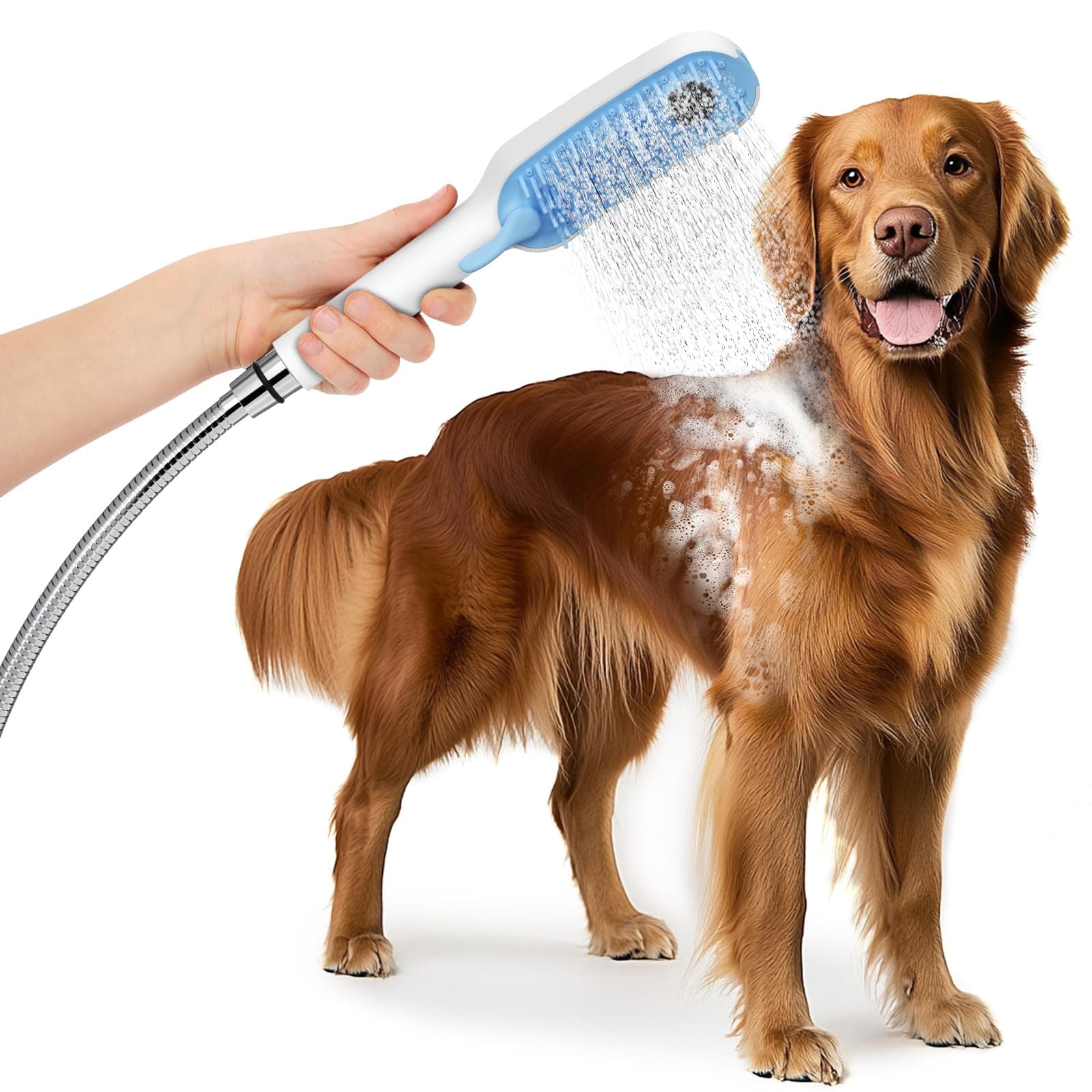
For many homes, a hand sprayer makes the biggest difference. If you are bathing a thick-coated dog, consider the SR SUN RISE Dog Shower Attachment for Thick Haired Dogs because consistent water pressure reduces the time you spend “re-wetting” the coat.
Make shampoo application predictable
Pets often react to the “surprise blob” of shampoo more than the scrubbing tool.
- •Pre-dilute shampoo in a cup or bottle so it spreads with less rubbing.
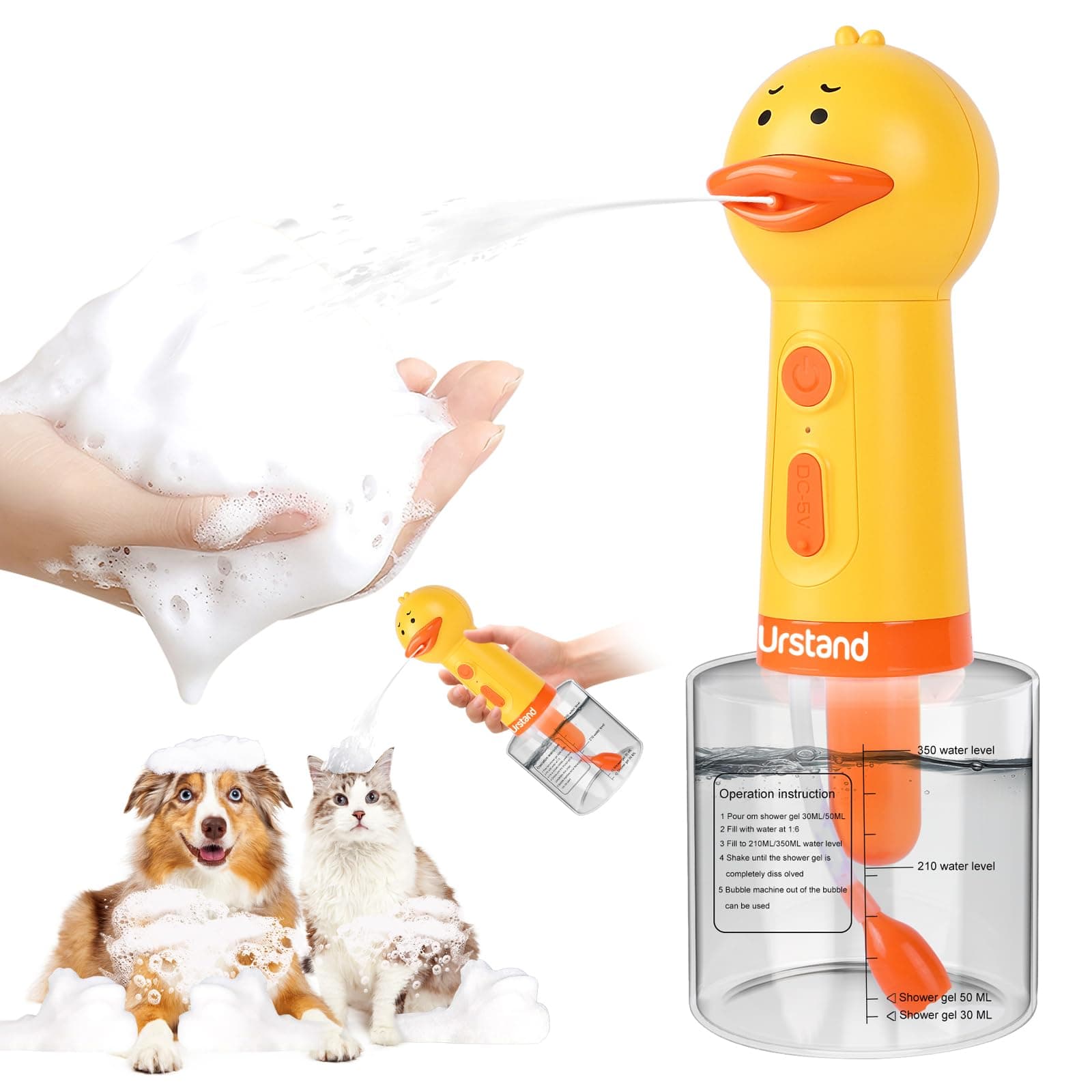
- •If your pet hates the first cold pour, consider foam delivery. A foamer can reduce the amount of scrubbing needed to distribute shampoo.
A tool like the Dog Foaming Soap Dispenser can help nervous dogs because you can apply product with lighter touch, then use a glove for minimal friction.
Choose a rinse strategy for the head (where most pets object)
Even pets who tolerate body rinsing often panic with water near the eyes and ears.
- •Use a slow, directional pour rather than a spray to the face.
- •Teach a chin-rest on your forearm or towel so the head is stable.
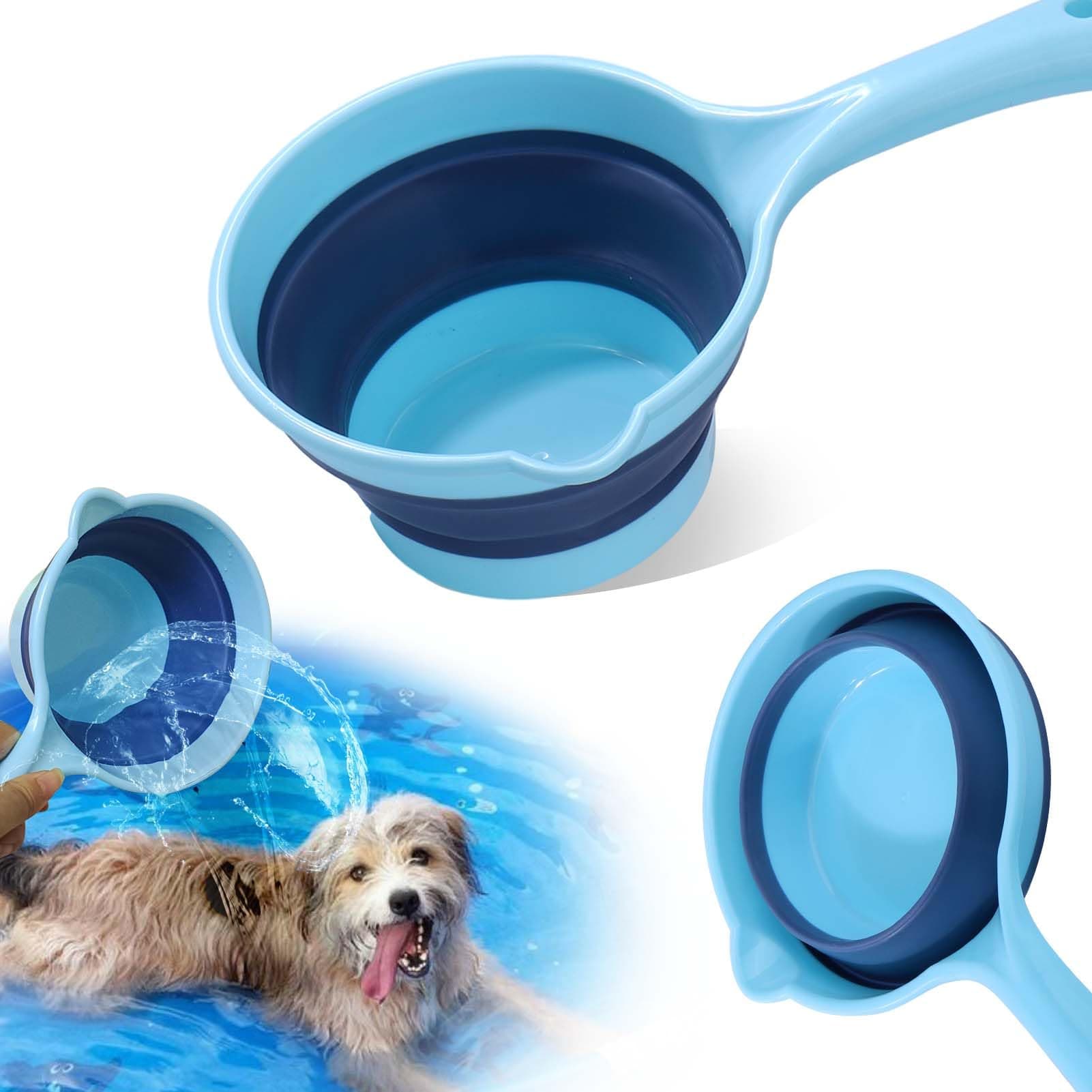
A flexible pour tool like the Dog Bath Rinse Cup helps you rinse the neck, cheeks, and behind the ears without the sound and splash of a sprayer.
Handling protocol for better compliance
Weekly baths are won or lost by handling. The goal is to keep your pet feeling guided, not restrained.
The “one hand anchors, one hand works” rule
- •Anchor hand: steady contact on the chest, shoulder, or collar area (not pulling). This reduces startle responses.
- •Working hand: glove or brush.
If you are solo bathing a medium-to-large dog, stand beside (not behind) your dog with your hip lightly blocking the exit side. It feels less like a trap than standing in front.
Pressure and speed: go slower than you think
A bath brush invites fast scrubbing. Fast scrubbing is exactly what many sensitive dogs interpret as “something is wrong.”
- •Use slow circles, then pause.
- •Count “one-two” per circle for the first minute.
- •Watch for skin twitching or sudden stillness; that is your cue to lighten pressure.
Compliance is built with micro-breaks
Instead of one long scrub until the dog explodes, build a rhythm:
- •10 to 15 seconds of contact
- •2 to 3 seconds pause
- •treat or calm voice
- •repeat
This works especially well with a grooming glove because your hand can shift from “washing” to “petting” without changing tools.
Tactical workflow by session phase
This is a repeatable weekly routine designed to improve tolerance over time. It works whether you pick a brush, a glove, or a combo.
Phase 1: Entry and wetting (reduce surprise)
Goal: warm, predictable water exposure before any scrubbing.
- •Start by wetting the back and shoulders first (least sensitive for most pets).
- •Avoid paws, belly, tail base, and head for the first 30 to 60 seconds.
- •If your pet startles at spray, switch to a lower spray mode or use a rinse cup.
Tool tip: thick coats soak slowly. A sprayer like the SR SUN RISE Dog Shower Attachment for Thick Haired Dogs helps you reach the undercoat faster so you do not over-handle the surface fur.
Phase 2: Shampoo placement (less rubbing, more coverage)
Goal: distribute product without turning it into a wrestling match.
- •Apply diluted shampoo in lines: along the spine, both sides of ribcage, and rump.
- •For sensitive pets, apply foam and spread with minimal friction.
If your dog has itchy skin or seasonal allergies, a gentle formula can reduce post-bath scratching. A set like Lillian Ruff PRO Formula Deodorizing Oatmeal Dog Shampoo & Conditioner is useful when you need weekly consistency without harsh stripping (always patch test if your pet is reactive).
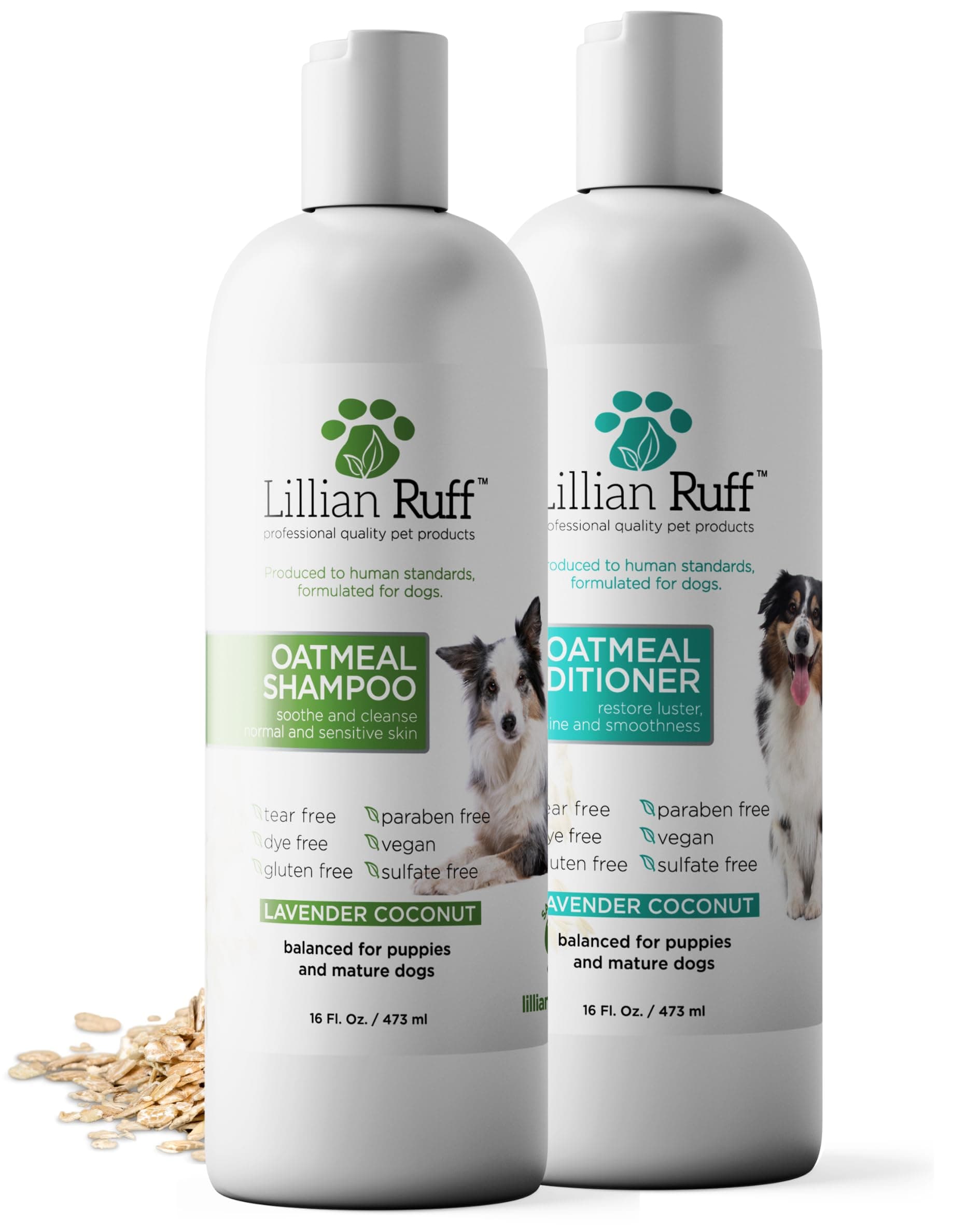
Lillian Ruff PRO Formula Deodorizing Oatmeal Dog Shampoo & Conditioner Set - Calm Itching & Allergies, Ultra-Nourishing Dry Skin Relief - Oatmeal, Aloe, Coconut Oil, Lavender & Provitamin B5, USA Made
Lillian Ruff Lillian Ruff
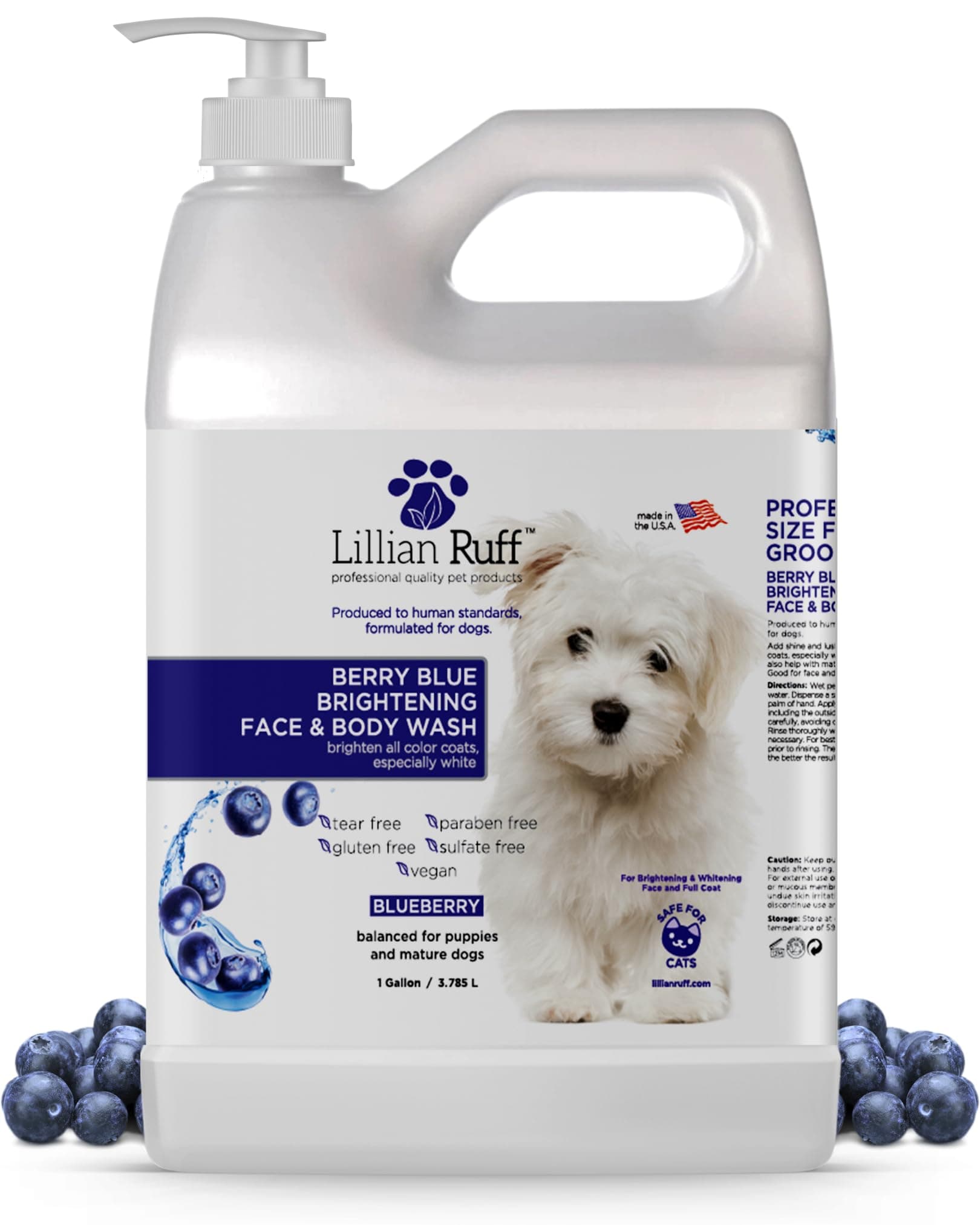
Lillian Ruff PRO Formula Berry Blue Brightening Pet Shampoo - Ultra-Hydrating Professional Whitening Dog Shampoo, Vivid Show-Quality Coat Enhancer, Tear Stain & Odor Eliminator, Vitamin B5, 128oz+Pump
Lillian Ruff Lillian Ruff
Phase 3: Scrub sequence (where bath brush vs grooming glove really matters)
Goal: start where your pet can win, then expand.
Suggested low-stress order:
- shoulders and back
- sides of the body
- rump and tail base (many dogs are sensitive here, so keep pressure light)
- chest
- legs (short strokes; many dogs dislike long brushing on legs)
- paws last (or skip and wipe if this is a known trigger)
How to use a grooming glove:
- •Flat palm, slow circles.
- •Keep contact continuous; lifting your hand repeatedly can feel like “grabby” restraint.
- •Use the glove to “pet-lather-pet” so the sensation stays familiar.
How to use a bath brush:
- •Let the brush rest on the coat before moving it.
- •Use small circles rather than fast back-and-forth.
- •Reduce pressure on bony areas (spine, hips, elbows).
Scenario example: short-coated, oily dog (like many pit mixes)
- •A glove can spread shampoo quickly and collect loose hair with less scratchiness.
- •A brush can still help, but only if the dog likes the sensation; otherwise the glove gives enough cleaning for weekly baths.
Scenario example: double-coated dog (like a husky mix) that “never seems fully rinsed”
- •A bath brush plus a strong rinse tool often wins, because you need penetration through the undercoat.
- •Work in layers: wet thoroughly, shampoo, brush in sections, rinse in sections.
Phase 4: Rinse (the part that makes or breaks skin health)
Goal: rinse until the coat feels squeaky-clean and water runs clear.
- •Rinse longer than you shampooed.
- •Lift armpits, groin folds, and under collar area; these trap suds.
- •If your pet hates the sprayer, rinse the head and neck with a cup.
The Dog Bath Rinse Cup is especially helpful for face-adjacent rinsing: you can pour from the back of the head forward, shielding eyes with your hand.
Phase 5: Exit, dry, and decompression
Goal: end the session with predictability so next week is easier.
- •Squeeze water out of the coat with your hands before towel contact.
- •Towel in the direction of hair growth; avoid aggressive rubbing on sensitive pets.
- •Give a calm “all done” cue and a short sniff walk or chew to decompress.
Product choices by temperament and tolerance
Instead of “which is better,” think “which is easier for my pet to accept weekly.” Weekly baths only work if you can repeat them.
If your pet is tactile-sensitive or fearful
Best starting point: grooming glove.
Why:
- •Looks and feels like your hand.
- •You can instantly reduce pressure without changing tools.
- •Easier to pair with treats and calm petting.
Upgrade path:
- •Glove for the first 4 to 6 minutes, then a brush only on the back for 30 seconds, then rinse. Increase brush time gradually.
Helpful pairing:
- •Foam application (less scrubbing needed) with the Dog Foaming Soap Dispenser.
If your pet has a thick coat or you need speed
Best starting point: bath brush (or brush + glove combo).
Why:
- •Faster mechanical cleaning and undercoat agitation.
- •Helps lift dirt around the rump, chest, and neck where grime builds.
Rules to keep it comfortable:
- •Keep the first brush contact on the shoulders, not the belly.
- •Use lower pressure than you would on dry fur.
Helpful pairing:
- •Strong, consistent rinse to shorten total handling time, such as the SR SUN RISE Dog Shower Attachment for Thick Haired Dogs.
If your pet is wiggly but not fearful
Best: whichever tool you can keep in contact without dropping.
- •A glove is hard to drop and lets you keep one steadying hand contact.
- •A brush may clean faster, but fumbling it can create stop-start frustration.
Practical choice:
- •Use glove for legs and chest (high wiggle zones), brush for back and rump (lower wiggle zones).
If your pet has itchy skin or you bathe weekly for allergies
Best: gentler contact + reliable rinse.
- •A glove often causes less micro-scratch than firm bristles.
- •Regardless of tool, shampoo residue is a common cause of post-bath itch.
Consider a soothing, consistent shampoo routine like Lillian Ruff PRO Formula Deodorizing Oatmeal Dog Shampoo & Conditioner, and treat rinsing as the main event.
Error recovery after a bad session
Bad sessions happen: a slip in the tub, a surprise cold spray, a dog that suddenly decides the brush is unacceptable. What you do next determines whether next week improves or gets worse.
The 3-step reset (same day)
- End on a small win: one calm rinse pour on the back, then stop.
- Dry and decompress: towel squeeze, then give space and a chew or food puzzle.
- No “makeup bath”: do not reattempt a full scrub the same day unless hygiene is urgent.
The 72-hour plan (next sessions)
- •Session A (2 to 3 minutes): no bath. Bring the tool into view, feed treats, touch shoulder once, end.
- •Session B (3 to 5 minutes): turn on water briefly at a distance, feed, turn off.
- •Session C: wet shoulders only, glove-pet for 20 seconds, rinse, end.
This “tiny exposure” approach prevents the tool (brush or glove) from becoming a predictor of forced restraint.
When to change the plan
Stop and consider veterinary advice if you see:
- •sudden pain when touched
- •hot spots, raw skin, strong odor that returns quickly
- •intense itching after every bath (could be residue, formula sensitivity, or skin infection)
Progress tracking template
Weekly baths improve fastest when you track the right data: not just cleanliness, but tolerance.
Use this template (copy into notes):
| Date | Tool used (glove/brush/both) | Stress signs (0-5) | What triggered stress? | What worked? | Rinse time (min) | Notes for next week |
|---|
How to score stress signs (0-5):
- •0: relaxed, takes treats
- •1: mild lip lick or brief lean-away
- •2: repeated turning head away, tense body
- •3: shaking, vocalizing, repeated escape attempts
- •4: freezing, growling, snapping warning
- •5: unsafe handling required to continue (stop session)
Your goal is not “perfect baths.” Your goal is a gradual drop in stress score while keeping rinse time adequate.
Practical long-term maintenance plan
Weekly baths are a system. The tool choice matters, but consistency and comfort matter more.
A sustainable weekly rhythm
- •Week 1-2: choose the most tolerated tool (often glove) and focus on full rinses, short scrubs.
- •Week 3-4: add 30 to 60 seconds of the second tool (brush or glove) in the easiest zone (shoulders/back).
- •Week 5+: keep the routine identical, and only increase difficulty one variable at a time (more time, new body area, stronger water mode, etc.).
Keep your tools from becoming “the bad object”
- •Store tools in the bathroom but bring them out during non-bath moments for treat pairing.
- •Wash and dry the glove/brush after each use so odor and residue do not irritate skin.
- •Replace tools that develop rough edges, cracked nubs, or warped bristles.
Maintain coat and skin between baths
- •Do a quick dry-brush or glove session 2 to 3 times per week to reduce shedding and matting, especially for double-coated dogs.
- •For dogs prone to odor, focus on thorough rinse and drying rather than extra shampoo.
- •If weekly bathing is for allergies, keep formula consistent and avoid “new scent” experiments that might trigger irritation.
Decision rule you can trust
If you are still unsure about bath brush vs grooming glove, use this rule:
- •If your pet’s biggest problem is tolerance and anxiety, start with the glove and build duration.
- •If your pet’s biggest problem is coat density and rinse difficulty, prioritize a brush (and a better rinse method).
- •If your pet is in the middle, use both: glove for sensitive zones, brush for high-dirt zones.
A weekly routine that your pet can handle calmly will beat a “perfect” scrub that only happens once a month.
Roundups Cluster
More in this topic

guide
Pet Feeding Station Setup: The Perfect Spot for Stress-Free Meals
guide
Best Indestructible Dog Toys for Aggressive Chewers
guide
10 DIY Cat Enrichment Ideas to Keep Your Cat Happy
guide
Positive Reinforcement Dog Training: A Complete Beginner's Guide
guide
Crate Training Puppy Schedule: Day-by-Day Plan for Success
guide
Leash Training Tips for Dogs: Stop Pulling and Enjoy Walks
Frequently asked questions
Is a grooming glove better than a bath brush for anxious dogs?
Often, yes. A grooming glove usually feels like normal petting, so it is easier to introduce without triggering avoidance. For anxious dogs, success depends on keeping pressure light, working in short bursts (10–15 seconds), and rinsing thoroughly. Many owners start with a glove for the first few weeks, then add brief brush time on the shoulders/back only once the dog stays relaxed.
Which tool cleans a thick, double coat better for weekly baths?
A bath brush typically cleans thick or double coats more efficiently because it can agitate through the topcoat and lift debris and loose hair. The bigger factor is rinsing: if the undercoat stays dry, shampoo will not distribute or rinse out well. Use a consistent sprayer to fully soak the coat before shampoo, then brush in sections and rinse in the same sections until water runs clear.
My dog scratches after baths—should I switch from brush to glove?
Switching to a glove can help if bristles are irritating sensitive skin, but post-bath itch is commonly caused by leftover shampoo/conditioner residue or incomplete drying. First, lengthen your rinse time (especially armpits, groin folds, and under the collar area). If your dog still scratches, try a gentler, soothing formula and keep the routine consistent. If itching is intense, sudden, or comes with redness or odor, talk with your vet.
